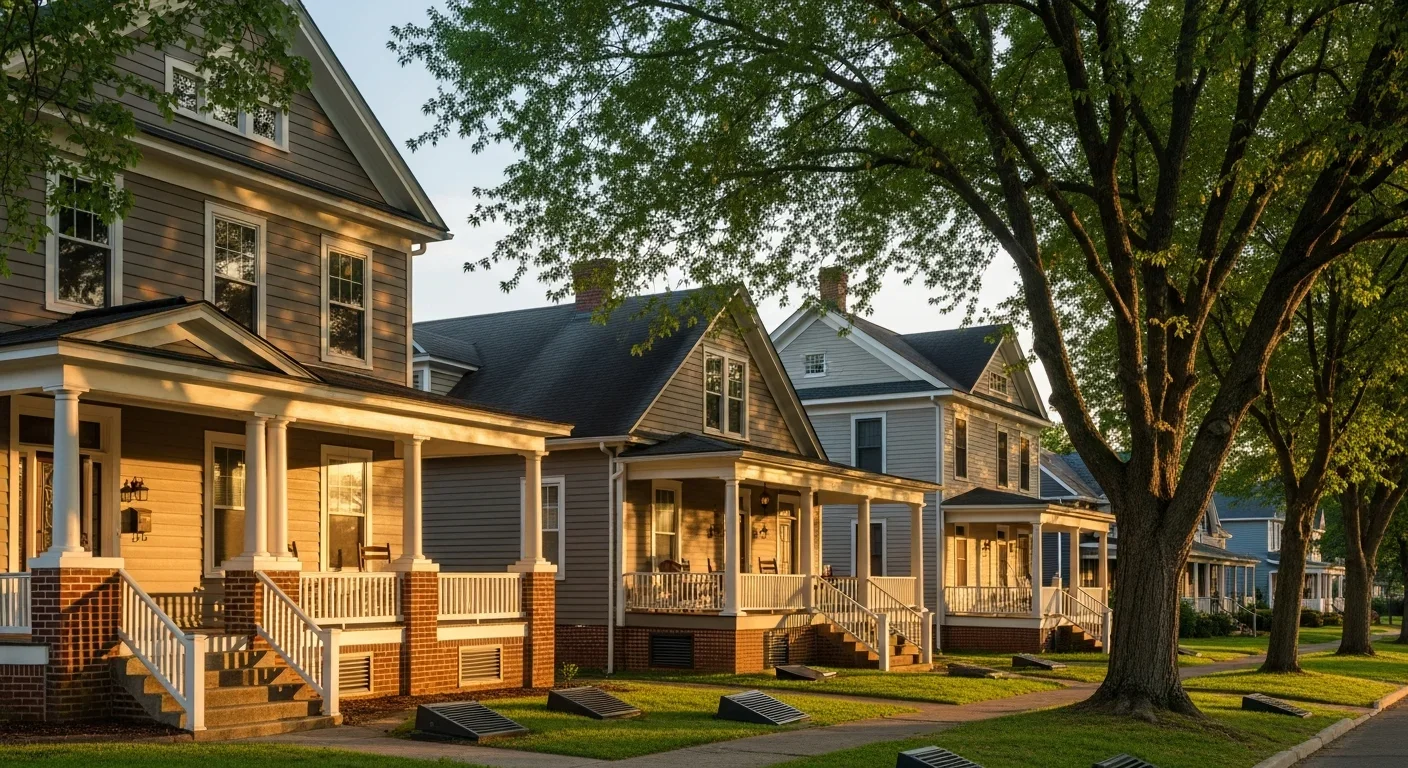
Lincolnton's Piedmont clay soil drains at less than 0.2 inches per hour, summer humidity climbs to 70-90%, and older homes throughout Lincoln Forest, Eastwood, and Highland View sit on vented crawl space foundations — a combination that makes crawl space mold one of the most common and underdiagnosed problems in Lincoln County. Palm Build's IICRC S520-certified team provides professional containment, full remediation, and the documentation your insurance carrier accepts.
35 miles from Lincolnton 45-60 min Response IICRC Certified
Lincolnton has four environmental factors that work together to make crawl space mold
one of the most common — and most underdiagnosed — problems in Lincoln County. Most
homeowners never see the damage until it has been growing for years.
Clay Soil + Poor Drainage
<0.2 in/hr
Soil drainage rate
The Cecil and Pacolet clay series under Lincoln County drains at less than 0.2 inches per hour. Ground moisture continuously migrates upward through the soil and into vented crawl spaces — keeping relative humidity at or above 70% for months at a time. This is the single most important driver of crawl space mold in Lincolnton.
South Fork Catawba Watershed
49.5"
Annual rainfall
Lincolnton's position within the South Fork Catawba and Indian Creek watershed means that even properties far from named waterways receive elevated groundwater and soil moisture after rainfall. The watershed's clay-dominated soil amplifies moisture retention, sustaining crawl space vapor pressure long after a rain event ends.
70–90% Summer Humidity
70–90%
Summer humidity
Lincolnton's humid subtropical climate drives summer relative humidity to 70–90%, with July as the wettest month. Vented crawl spaces are essentially open to this outdoor air — meaning the crawl space humidity closely tracks the outdoor humidity peak. At 70%+ sustained humidity, mold colonies grow and spread without any leak or water event at all.
Older Vented Crawl Spaces
1950s–80s
Dominant build era
A substantial share of Lincolnton's housing was built from the 1950s through the 1980s using vented crawl space foundations — a construction method that building science now recognizes as incompatible with humid Piedmont climates. Many of these homes have never had a professional moisture assessment, and mold has developed slowly and silently over years or decades.
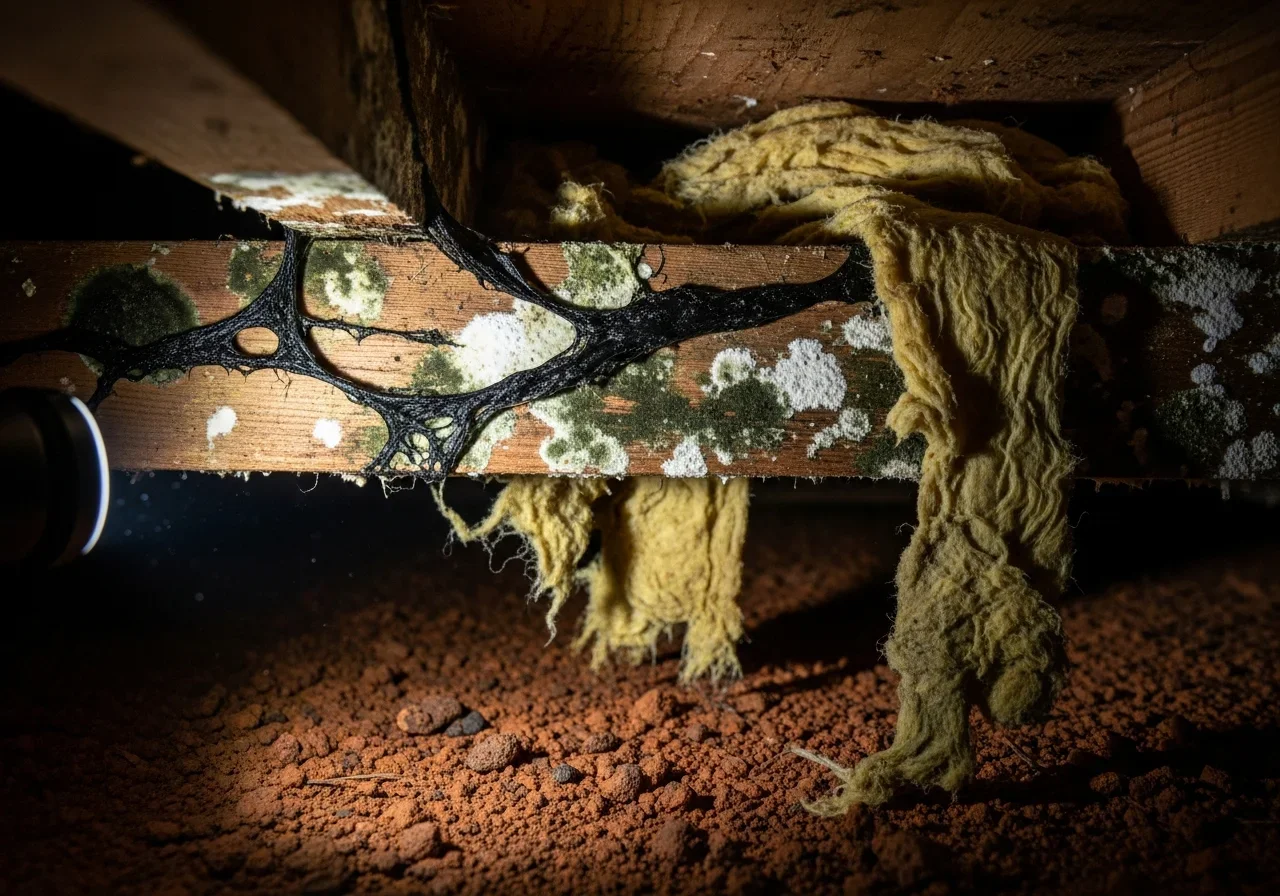
Mold colonies growing on floor joists beneath a Lincolnton home — the result of
sustained 70%+ humidity in a vented crawl space over clay soil. This pattern is
extremely common in Lincolnton's older housing stock.
Early Warning Signs
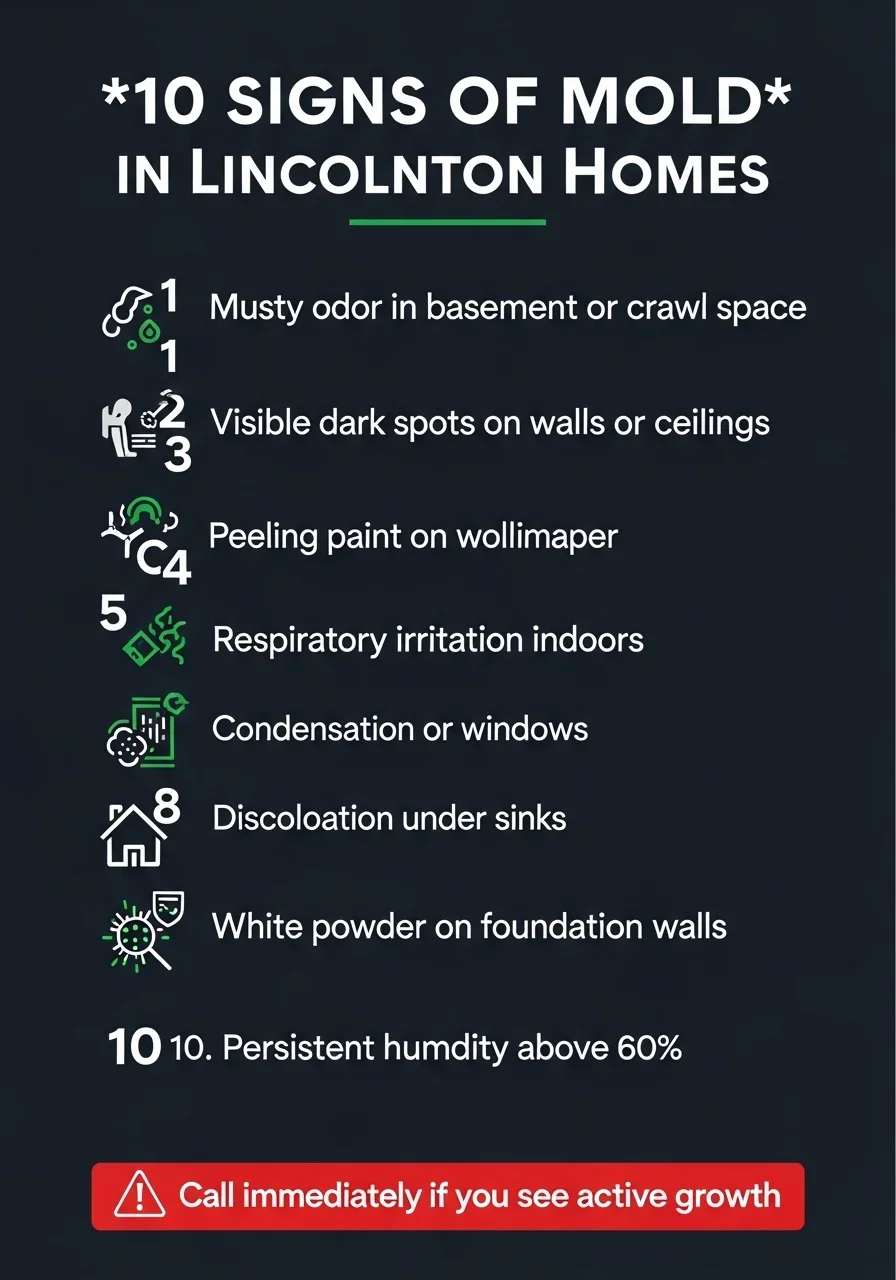
9 Signs of Mold in Your Lincolnton Home
Most Lincolnton homeowners don't discover crawl space mold until it has spread
significantly. Know these warning signs — catching it early reduces remediation cost by
50% or more.
1
Musty odor after rain or in humid weather
Frequent
2
Visible dark spots on walls, ceilings, or floor joists
Visible
3
Peeling paint or bubbling wallpaper
Visible
4
Water stains on drywall that appear or grow
Warning
5
Persistent respiratory irritation that improves outside
Health
6
Condensation on interior windows in summer
Frequent
7
Warping or buckling hardwood floors
Structural
8
Discoloration under sink cabinets or at floor seams
Visible
9
White powdery efflorescence on foundation walls
Structural
When to Call Palm Build Immediately
Any visible mold growth, musty odors that worsen after rain, or unexplained
respiratory symptoms that improve when you leave the house require immediate
professional assessment. In Lincolnton's humid climate, mold spreads from crawl
spaces to living areas faster than most homeowners expect — and remediation cost
increases sharply with scope. Call (704) 464-0121.
The Root Cause
Lincolnton Crawl Space Mold: Vented vs. Encapsulated
The majority of mold cases Palm Build finds in Lincolnton start in the crawl space — not
from a leak or flood, but from the vented design that is standard in pre-2000 Lincoln
County homes. Encapsulation is the permanent solution.
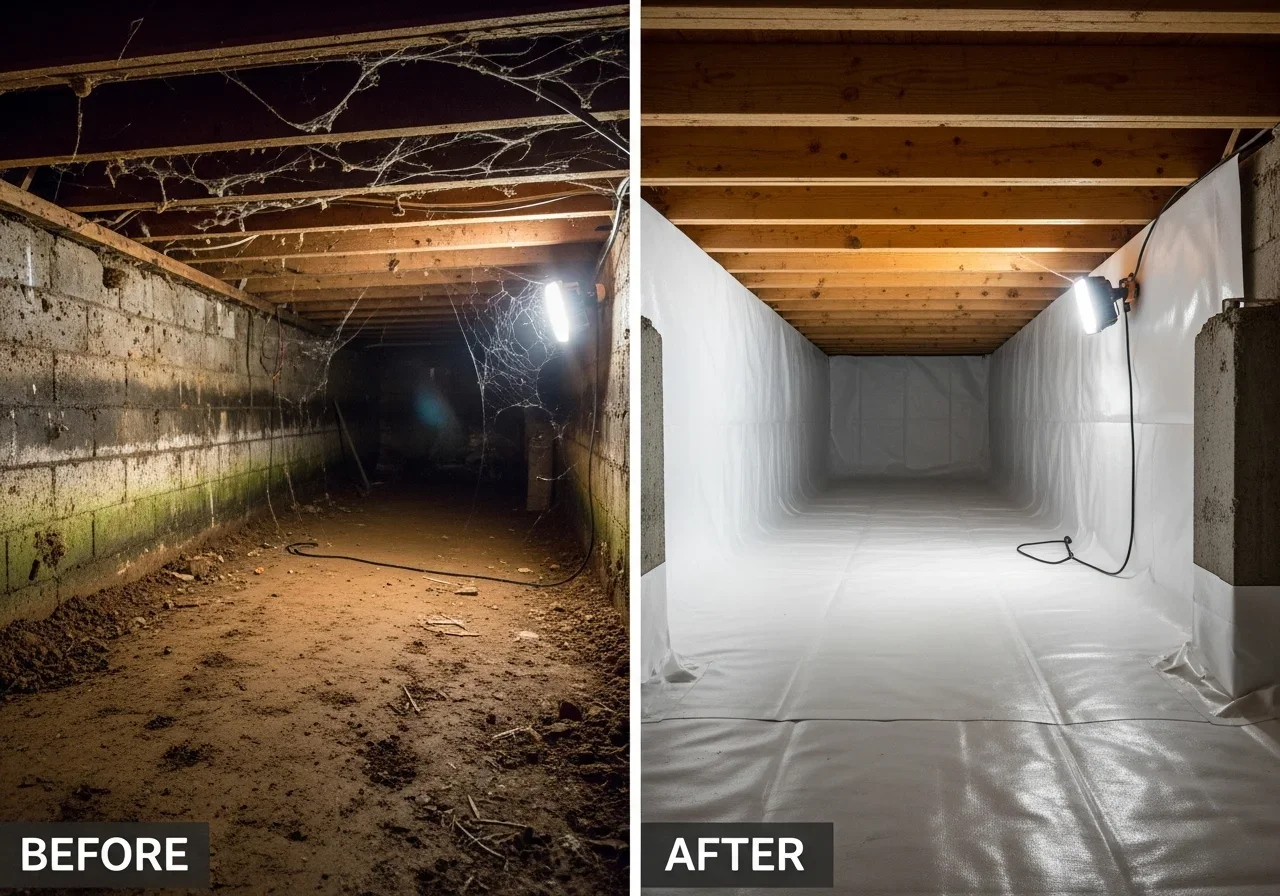
Before
Vented Crawl Space
Summer RH
70–90%
Mold Risk
High
Wood Moisture
18–25%+
Energy Cost
Higher
Lincolnton's vented crawl space standard — outdoor air enters through foundation vents, bringing summer humidity directly into contact with wood framing. This sustains mold growth without any leak or plumbing failure.
After
Encapsulated Crawl Space
Summer RH
45–55%
Mold Risk
Low
Wood Moisture
12–16%
Energy Cost
Lower
After Palm Build encapsulation — vapor barrier sealed to walls and piers, vents closed or sealed, dehumidifier installed. Humidity drops to safe levels, existing mold stops spreading, and energy costs often decrease.
Before: vented crawl space with mold growthAfter: encapsulated crawl space, clean and dry
Is Crawl Space Encapsulation Worth It in Lincolnton?
In Lincoln County's humid climate, encapsulation is not optional — it is the only
permanent solution to vented crawl space mold. Remediation without encapsulation removes
existing mold but leaves the moisture pathway open. Mold typically returns within 1-3
years. Encapsulation eliminates the moisture source, extends the life of floor framing,
and often reduces heating and cooling costs by 10-20%.
Palm Build follows the IICRC S520 Standard for Professional Mold Remediation — the same
standard your insurance carrier uses to evaluate remediation work. Every step is
documented, photographed, and verifiable.
01
Assessment & Moisture Mapping
Same day
We perform a complete mold assessment including visual inspection, moisture meter readings, and air quality sampling to document spore counts and species. For Lincolnton crawl spaces, we map the full extent of mold colonization on floor joists, sill plates, and cross bridging before scoping remediation.
02
Containment Setup
Before work begins
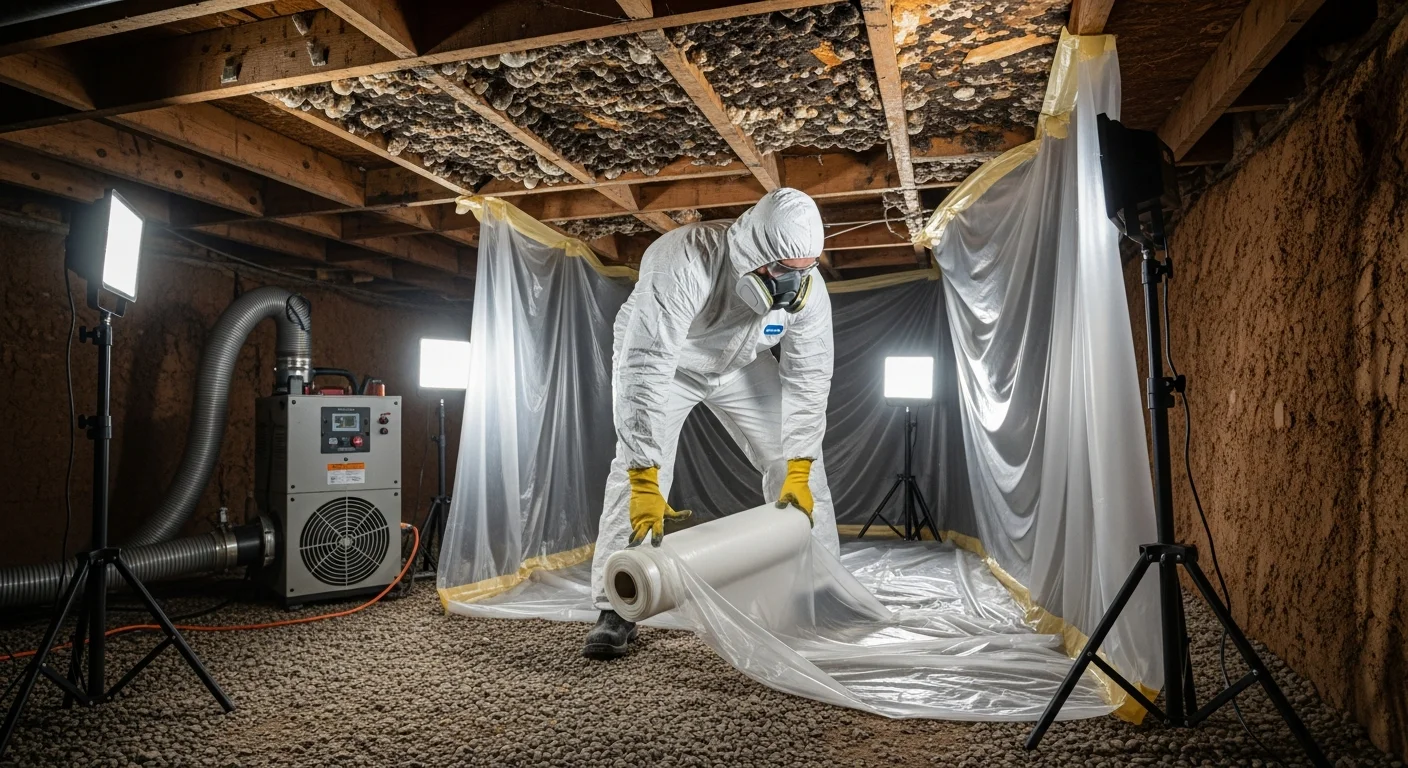
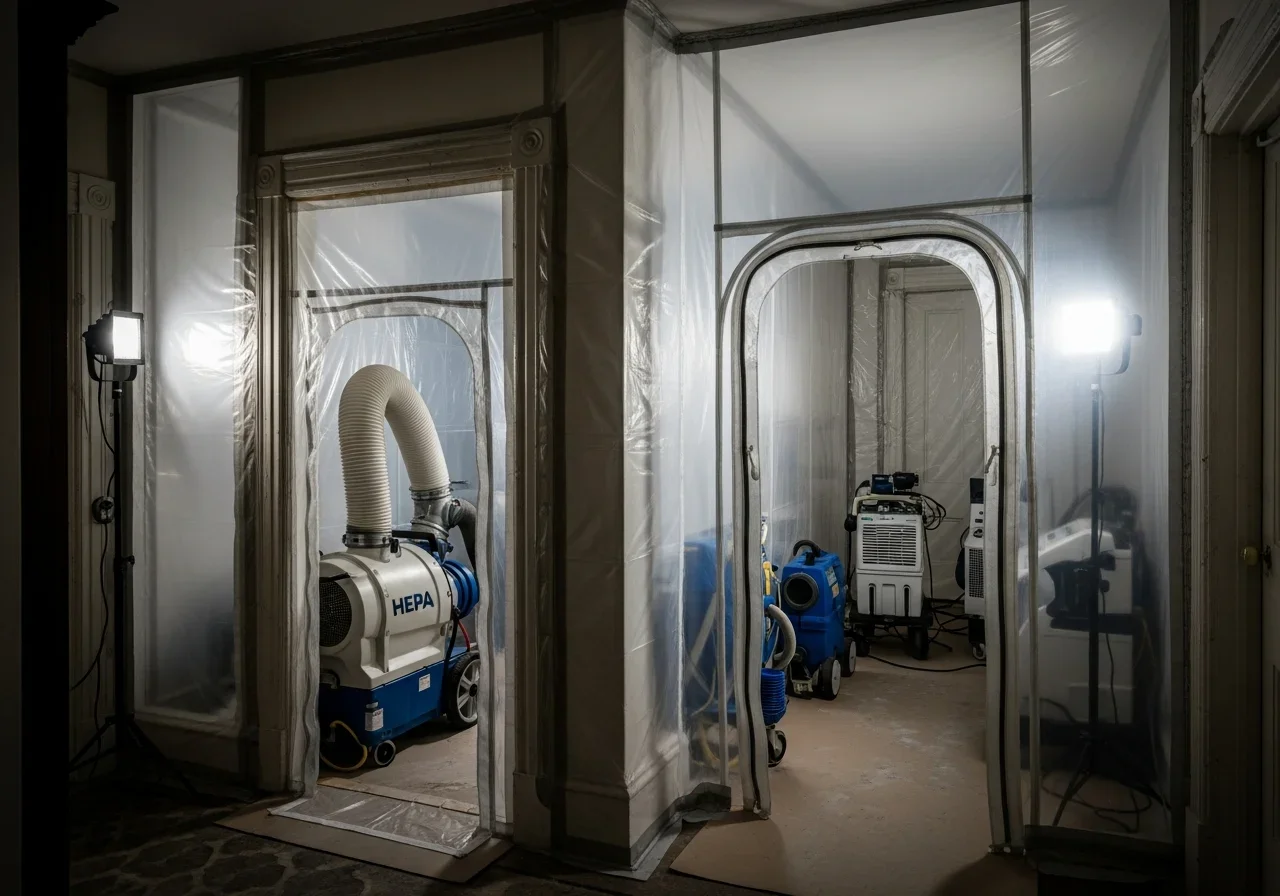
IICRC S520-compliant containment barriers isolate the affected area using 6-mil polyethylene sheeting sealed at all edges with tape. A negative pressure machine maintains the contained area at lower pressure than surrounding rooms, preventing spore migration to clean areas of your Lincolnton home.
03
HEPA Air Filtration
Throughout
High-efficiency HEPA air scrubbers run continuously throughout remediation, filtering airborne spores to 0.3 microns. This is especially important in Lincolnton crawl spaces where disturbing mold growth releases concentrated spore bursts that must be captured before they migrate to living areas above.
04
Mold Removal & Treatment
Days 1–3
Physical removal of mold-contaminated materials per IICRC S520 protocol. Wire brush or media-blast treatment of structural wood surfaces. Application of EPA-registered antimicrobial treatment to all affected surfaces. For Lincolnton crawl spaces, we address the full joist bay — not just the visible growth.
05
Moisture Source Correction
Concurrent
Removing mold without eliminating the moisture source guarantees regrowth. In Lincolnton homes, this typically means installing or upgrading crawl space encapsulation, closing vents, correcting grading that drains toward the foundation, and addressing any plumbing or HVAC issues discovered during assessment.
06
Post-Remediation Verification
Completion
Third-party clearance testing confirms remediation is complete before containment comes down. We provide a full documentation package including pre- and post-remediation air quality reports, moisture readings, photos, and treatment records — everything your insurer and a future home buyer's inspector will want to see.
Proper containment is non-negotiable — it prevents spores from spreading to clean areas
of your Lincolnton home during the remediation process.
Transparent Pricing
Mold Remediation Costs in Lincolnton, NC
Costs are driven by contamination scope, accessibility, and moisture source correction
requirements — not arbitrary pricing. Here are realistic ranges based on what we
encounter in Lincoln County.
Under 50 sq ft
Small Area
$1,500 – $4,000
Bathroom, closet, or isolated drywall section — typically from a contained leak
Single bathroom wall
Cabinet or closet interior
Small ceiling section
Most Common in Lincolnton
50–200 sq ft
Moderate Contamination
$4,000 – $8,000
Multiple rooms or partial crawl space — common in Lincolnton older homes
Multiple wall sections
Partial crawl space joists
Attic with ventilation mold
200+ sq ft
Full Crawl Space
$8,000 – $20,000+
Full crawl space remediation with encapsulation — the most common Lincolnton scenario
Full joist bay treatment
Vapor barrier installation
Drainage improvements
Lincolnton-Specific Cost Factors
Low crawl space clearance in older Lincoln County homes increases labor time
Clay soil moisture may require sump pump installation alongside encapsulation
Mid-century hardwood floors above crawl spaces often absorb moisture — may require flooring replacement
Summer humidity (70–90%) can extend drying time between remediation steps
Post-remediation encapsulation strongly recommended to prevent recurrence
NC Credentials Guide
Mold Remediation Licensing in North Carolina: What You Need to Know
This is the most important section on this page if you are comparing contractors. North
Carolina's regulatory reality creates a situation where homeowners must do their own
credential verification — and most don't know what to ask.
North Carolina Has No State Mold Remediation License
The NC State University Extension Healthy Homes program and the NC Department of Health and Human Services (DHHS) Occupational and Environmental Epidemiology division both confirm that no federal or state certification
programs exist for mold remediation providers in North Carolina.
This means any contractor can legally offer mold remediation services in Lincolnton
regardless of training, equipment, or methodology. The only consumer protection is
voluntary industry certification — primarily the IICRC S520 Standard for Professional Mold Remediation and the associated Mold Remediation Specialist (MRS) certification. These are what your insurance
carrier and any future home inspector will reference.
What to Ask Every Contractor
Current IICRC S520 certification (Mold Remediation Specialist or WRT)
Proof of general liability insurance with mold-specific coverage
Written scope of work referencing IICRC S520 protocol
Pre- and post-remediation air quality testing plan
Documentation process for insurance claim submission
References from completed NC residential projects
Red Flags to Avoid
Claims a "state license" exists for mold remediation (none exists in NC)
Provides verbal scope only — refuses written documentation
Does not offer or recommend post-remediation clearance testing
Prices significantly below all other estimates without explanation
Cannot name the specific certification they hold
Palm Build holds current IICRC S520 certification. We can show you our credentials,
our insurance documentation, and our remediation scope in writing before any work begins.
We welcome the comparison.
Insurance Coverage
Does Insurance Cover Mold Remediation in Lincolnton?
Coverage depends entirely on the cause of the mold. In Lincolnton, where crawl space
humidity drives much of the mold growth, the distinction between "covered event" and
"chronic moisture" is the key factor.
Mold caused by a covered sudden water event (burst pipe, storm leak)
Mold damage documented and connected to a covered water loss
Professional remediation costs up to policy sublimit
Mold from gradual crawl space humidity — not tied to a specific event
Pre-existing mold not connected to a covered claim
Mold resulting from deferred maintenance or neglect
Mold from flood damage (requires separate NFIP flood policy)
Why Fast Response Matters for Mold Coverage
NC policies typically include mold sublimits of $5,000–$10,000. When mold is
connected to a covered water loss, documenting the timeline is critical — carriers
expect homeowners to report and act promptly. Mold discovered months after a water
event is harder to tie to a covered cause, and coverage may be denied on "failure to
mitigate" grounds.
Palm Build documents the connection between the water loss and mold damage from hour
one — giving your claim the best possible foundation.
Our Work
Mold Remediation in Lincolnton Homes
From crawl space mold on floor joists to full encapsulation, Palm Build's
IICRC-certified team handles every stage of the remediation process in Lincoln County.
Mold on crawl space joists — typical finding under older Lincolnton homes
Containment and negative pressure setup before remediation begins
Palm Build technician in full PPE — IICRC S520 protocol
Post-remediation: clean crawl space with new vapor barrier
Why Palm Build
Why Lincolnton Homeowners Trust Palm Build for Mold Remediation
In a state with no mold remediation licensing, choosing the right company is your
responsibility. Here's exactly what Palm Build brings to every Lincolnton project.
IICRC S520 Certified
Palm Build holds current IICRC S520 Mold Remediation Specialist certification — the accepted industry benchmark in North Carolina and the standard your insurance carrier references. In a state with no licensing requirement, this certification is the primary way to separate qualified remediation from guesswork.
Charlotte Local — Knows Lincolnton
Our Charlotte team has worked in Lincoln County homes. We know the crawl space construction patterns in Lincoln Forest and Eastwood, the South Fork watershed flooding dynamics, and the clay soil moisture behavior that drives crawl space mold in this specific Piedmont region. Not a national brand dispatching an unknown subcontractor.
Root Cause Analysis Included
We don't just remove visible mold — we identify and document the moisture source. In Lincolnton, that almost always means evaluating crawl space ventilation, grading, drainage, and vapor barrier condition. Without addressing the moisture source, mold returns. We scope both the remediation and the prevention.
Third-Party Clearance Testing
We recommend and facilitate independent post-remediation clearance testing — an unbiased verification that mold levels have returned to normal. This documentation protects you at resale, supports your insurance claim, and confirms our work meets IICRC S520 clearance criteria.
Insurance Documentation Package
Every remediation project includes a complete documentation package: pre-remediation moisture readings, mold assessment report, containment and treatment records, and post-remediation clearance. Formatted for NC insurance carriers and structured to support your claim.
Same-Day Mold Assessments
Call (704) 464-0121 and we can typically schedule a same-day mold assessment in Lincolnton. We arrive with moisture mapping equipment, provide a written scope, and connect you with your insurance carrier before any work begins. No pressure, no sales tactics — just an honest assessment.
Lincolnton's mid-century housing stock requires IICRC-certified expertise — older
construction materials, low crawl space clearance, and decades of accumulated moisture
make proper technique non-negotiable.
Common Questions
Lincolnton Mold Remediation FAQ
Does North Carolina require a mold remediation license?
No. North Carolina has no state-specific mold remediation licensing requirement. The NC State University Extension Healthy Homes program and NC DHHS Occupational and Environmental Epidemiology both confirm that no federal or state certification programs exist for mold remediation providers. The IICRC S520 Standard for Professional Mold Remediation and the Mold Remediation Specialist (MRS) certification are the accepted industry benchmarks. Always ask your contractor to show current IICRC credentials — and be cautious of companies that cannot.
Why is mold so common in Lincolnton homes?
Three factors combine to make Lincolnton one of the most mold-susceptible communities in the Charlotte Metro area. First, Lincoln County sits on Cecil and Pacolet clay soil series that drains at less than 0.2 inches per hour — meaning water pools around foundations instead of infiltrating quickly. Second, Lincolnton averages 49.5 inches of rainfall per year, with July as the wettest month. Third, a large share of the housing stock was built in the mid-20th century with vented crawl space foundations — a design that is now understood to invite moisture migration from ground vapor into living spaces. Together these factors create year-round mold risk, especially in crawl spaces where relative humidity can exceed 70% for months at a time.
How much does mold remediation cost in Lincolnton NC?
Lincolnton mold remediation typically ranges from $1,500 to $4,000 for small localized areas like bathrooms or closets. Moderate contamination affecting multiple rooms or a partial crawl space costs $4,000 to $8,000. Full crawl space remediation with vapor barrier installation and moisture management ranges from $8,000 to $20,000 depending on square footage, access conditions, and the extent of structural damage. Lincolnton-specific factors that increase costs include older homes with low crawl space clearance and persistent clay soil moisture requiring supplemental drainage.
How fast can Palm Build respond to a mold issue in Lincolnton?
Our Charlotte-based team can reach any Lincolnton address in approximately 45 to 60 minutes. We provide same-day mold assessments with moisture mapping, air quality evaluation, and a detailed remediation scope. Call (704) 464-0121 to schedule — we respond to urgent situations immediately and can typically schedule non-emergency inspections within 24 hours.
Does homeowners insurance cover mold remediation in Lincolnton?
NC standard homeowner policies typically include mold coverage sublimits of $5,000 to $10,000. Mold resulting from a covered sudden water event — like a burst pipe or storm-driven roof leak — has better coverage prospects than mold traced to gradual crawl space moisture or chronic humidity. Because NC has no claim-specific deadline unlike some other states, document thoroughly and notify your carrier promptly. Palm Build connects mold damage to the original water loss event in our documentation wherever the claim history supports it.
How do I know if my Lincolnton crawl space has mold?
Musty odors that intensify after rain or in humid weather are the most common first sign. Other indicators include visible dark staining on floor joists (often dark gray, green, or black), unexplained allergy or respiratory symptoms indoors that improve when you leave the house, warping or buckling hardwood floors, and condensation on interior windows during summer. Homes built before 1990 with vented crawl spaces in Lincolnton should be professionally inspected at least every 2-3 years regardless of visible symptoms — ground moisture builds slowly and often goes undetected until structural wood is already compromised.
What is the difference between mold testing and mold remediation?
Mold testing (air sampling or surface sampling) quantifies the type and concentration of mold spores present and documents baseline and post-remediation conditions. Mold remediation is the physical removal, containment, and treatment of mold growth per IICRC S520 protocol — including containment barriers, HEPA air filtration, antimicrobial treatment, and disposal of affected materials. Palm Build performs both: we test to scope the problem, remediate to eliminate it, and test again after completion to verify the clearance criteria are met.
What areas of Lincoln County does Palm Build serve for mold remediation?
We serve all of Lincolnton and Lincoln County including Lincoln Forest, River Village, Eastwood, Abby Park, Beason Acres, Amy Acres, Wellington Park, Deer Creek, Highland View, Beatties Ford Park, Grazing Meadows, and the surrounding communities in ZIP codes 28092, 28093, 28037, 28080, 28033, and 28168. We also serve neighboring communities in Gaston County and Catawba County.
Mold Problem in Your Lincolnton Home? Get a Professional Assessment.
Lincolnton's clay soil, vented crawl spaces, and 49.5 inches of annual rainfall create year-round mold risk. Palm Build's IICRC S520-certified team provides same-day inspections, professional containment, and complete remediation with documentation your insurance carrier accepts.