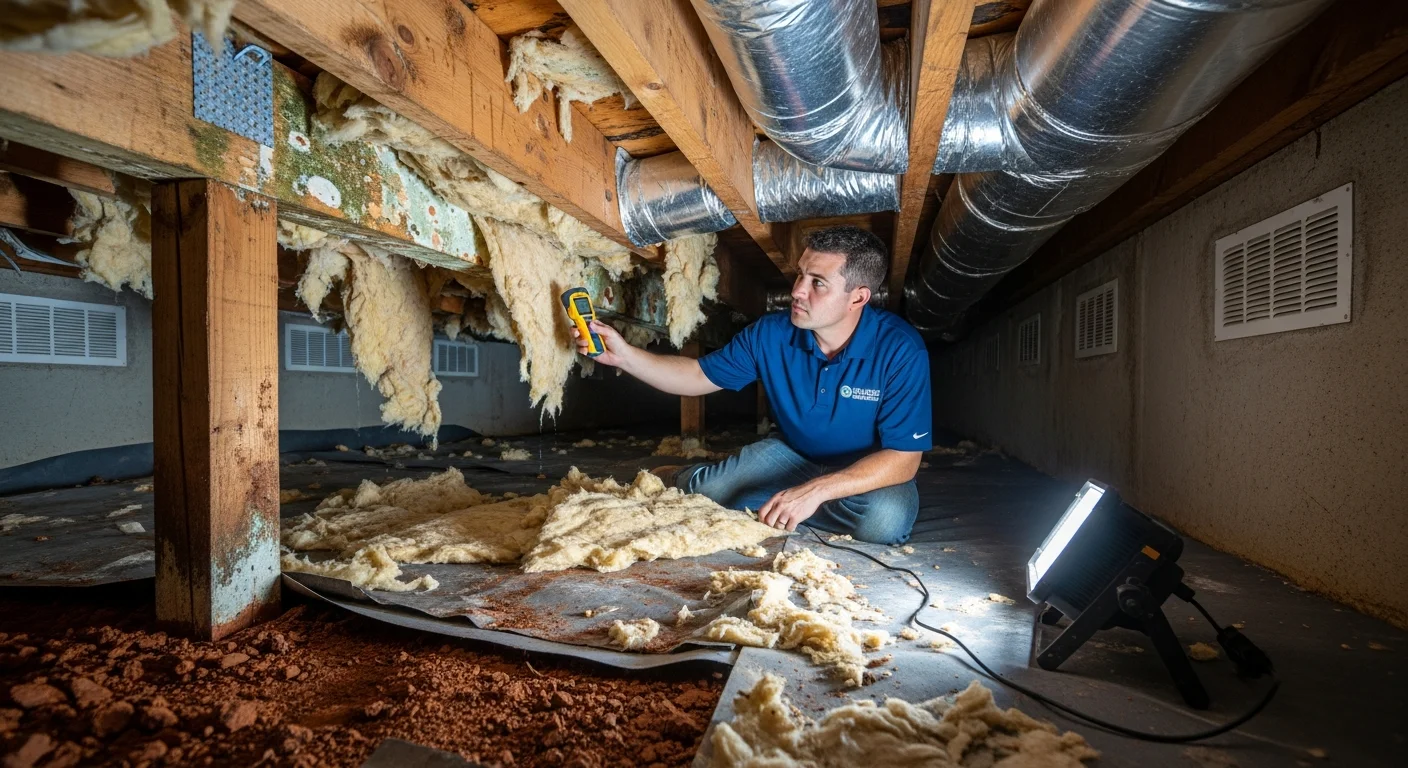
Palm Build technician inspecting mold growth on floor joists in a crawl space beneath a Kannapolis NC home with moisture meter and LED work lights
KANNAPOLIS NC — IICRC-CERTIFIED MOLD REMEDIATION

Mold Remediation in Kannapolis, North Carolina

Cabarrus County's Piedmont clay soil, crawl space construction, and humid subtropical climate create persistent mold conditions across Kannapolis. Palm Build's IICRC-certified technicians provide containment, removal, and moisture source correction — with the credentials that matter in a state with no mold licensing requirement.

Serving Kannapolis from Charlotte, NC 30-45 min Response IICRC Certified

30-45 min

Emergency Response

24/7

Dispatch Available

IICRC

Certified Technicians

Why Mold Thrives Here

Why Kannapolis Has a Persistent Mold Problem

Mold in Kannapolis is not a surprise \u2014 it is a predictable outcome of four converging risk factors that make this former mill town one of the most mold-prone communities in Cabarrus County. When these forces combine, mold can establish within 24-48 hours of any moisture event.

70-90%

Peak summer RH

Summer Humidity 70-90%

Kannapolis sits in the southern Piedmont where outdoor dew points exceed 65°F from late May through early October. Crawl spaces routinely reach 80-90% relative humidity — well above the 60% threshold where mold colonization becomes inevitable.
6-15 cm/hr

Clay infiltration rate

Piedmont Clay Soil

The Cecil and Enon series clays beneath Kannapolis have infiltration rates of just 6-15 cm/hour. After any rainfall, saturated clay holds water against foundations for days, continuously evaporating ground moisture into crawl spaces from below.

95%+

Crawl space RH with vents

Vented Crawl Spaces

Most Kannapolis homes were built with open foundation vents under outdated code assumptions that outside air would dry the crawl space. In reality, warm humid air entering a cooler crawl space raises relative humidity above 95%, causing immediate condensation on joists and ductwork.

~1985

Median home age

Aging Housing Stock (~1985)

Kannapolis’s dominant housing stock dates to the Cannon Mills era and later mill-village redevelopment. These homes have degraded vapor barriers, aging plumbing with slow leaks, and HVAC systems in crawl spaces that add condensation cycling to the moisture problem.

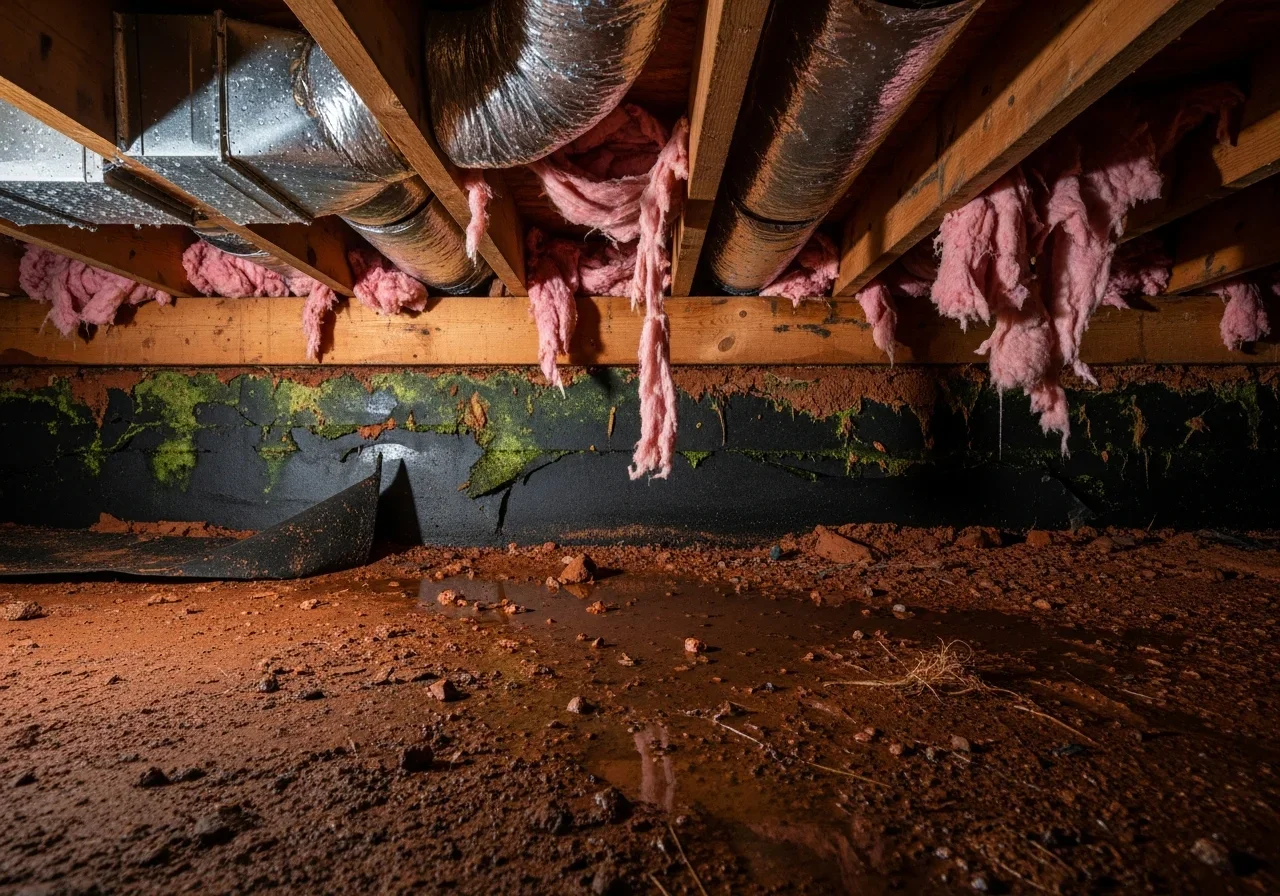
Moisture damage in a Kannapolis NC crawl space showing condensation on joists and mold growth from high humidity
Active moisture damage in a Kannapolis crawl space \u2014 sustained by clay soil saturation and vented foundation design allowing 70-90% humidity during summer months.

The Moisture Cycle

How Kannapolis Clay Soil Creates Chronic Mold Conditions

The Piedmont clay beneath Kannapolis drives a four-stage moisture cycle that makes crawl space mold inevitable without professional intervention. Understanding this cycle explains why surface cleaning always fails.

01

Rain Saturates Clay

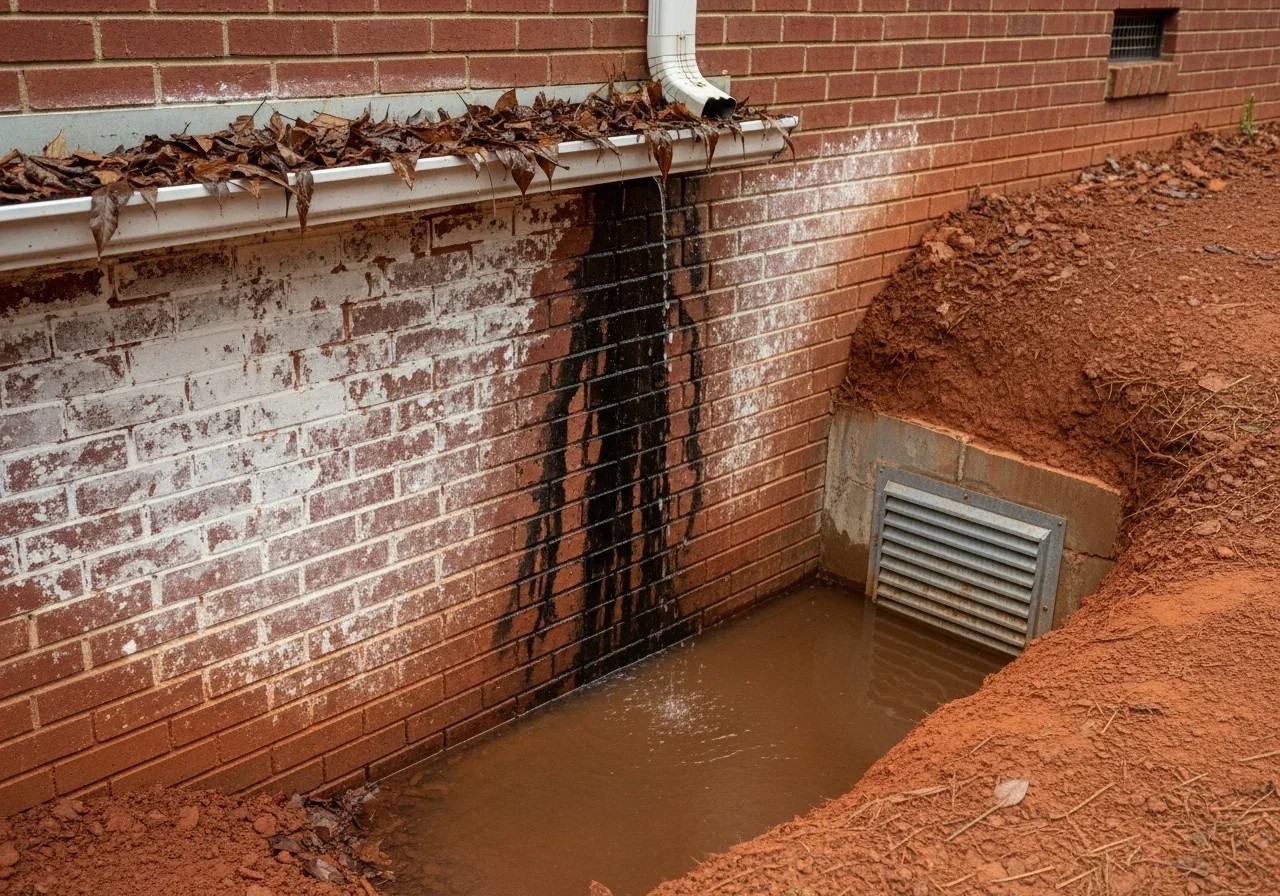
Piedmont Cecil clay absorbs rainfall slowly — just 6-15 cm/hour infiltration. Water pools against Kannapolis foundations for days, saturating the soil column and creating continuous hydrostatic pressure against crawl space walls.

02

Moisture Wicks into Crawl Space

Groundwater evaporates through bare soil and degraded vapor barriers into the crawl space. Capillary action draws moisture upward through clay, maintaining a constant humidity source even during dry spells between storms.

03

Condensation on Surfaces

When 85°F outdoor air at 75% RH enters a crawl space at 70°F through foundation vents, relative humidity jumps above 95%. Water condenses on every cool surface — joists, ductwork, metal hangers, and subfloor.

04

Mold Colonizes in 24-48 Hours

With sustained moisture above 60% RH and organic food sources (wood framing, paper-faced insulation), mold spores germinate and establish visible colonies within 24-48 hours. Without intervention, growth accelerates exponentially.

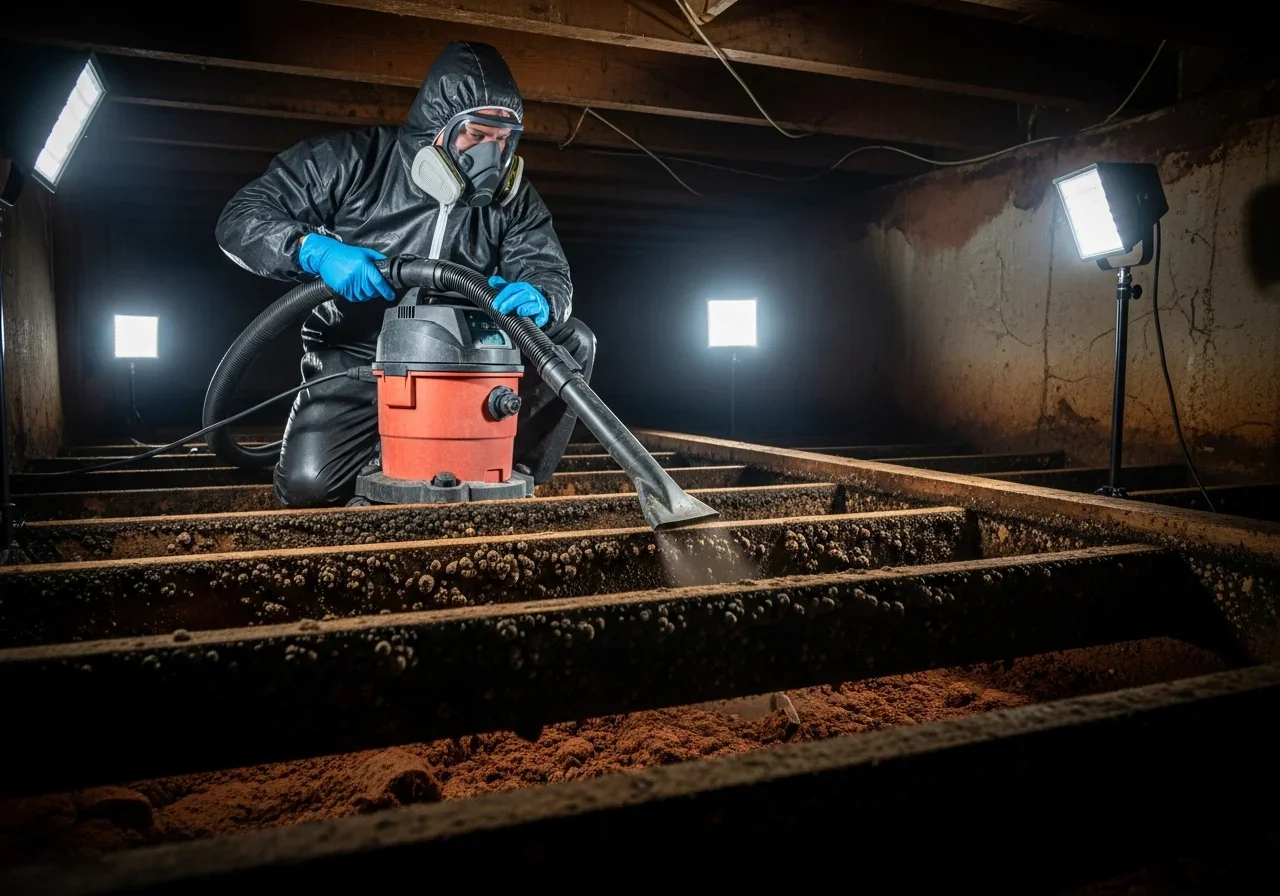
Palm Build technician performing HEPA mold removal in a Kannapolis NC crawl space
HEPA vacuuming and surface treatment removes active mold colonies from wood framing
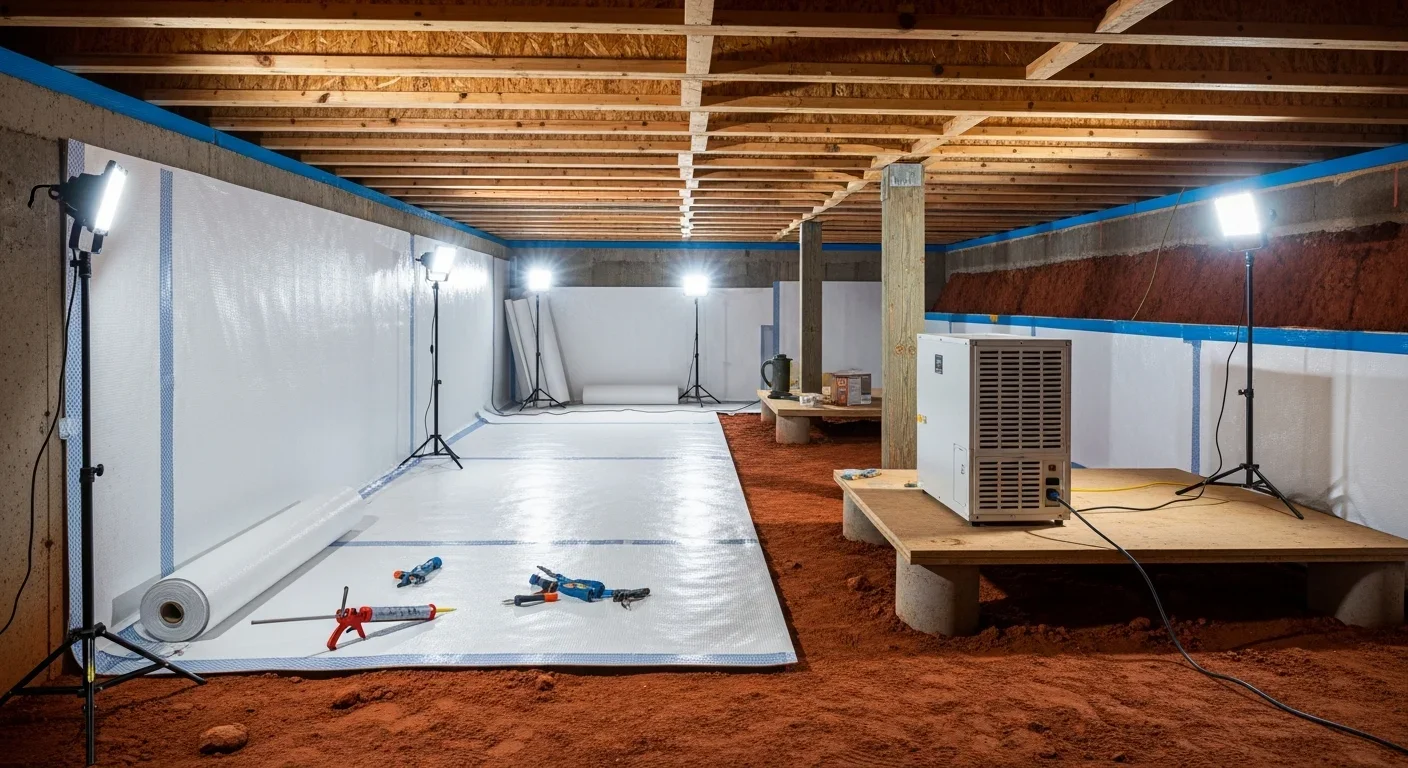
Completed crawl space encapsulation in a Kannapolis NC home with white vapor barrier and dehumidifier
Full encapsulation seals the moisture source — the only permanent solution for Piedmont clay
Foundation drainage issues at a Kannapolis NC home showing clay soil saturation against foundation walls
Clay soil holds water against foundations for days, feeding continuous moisture into crawl spaces
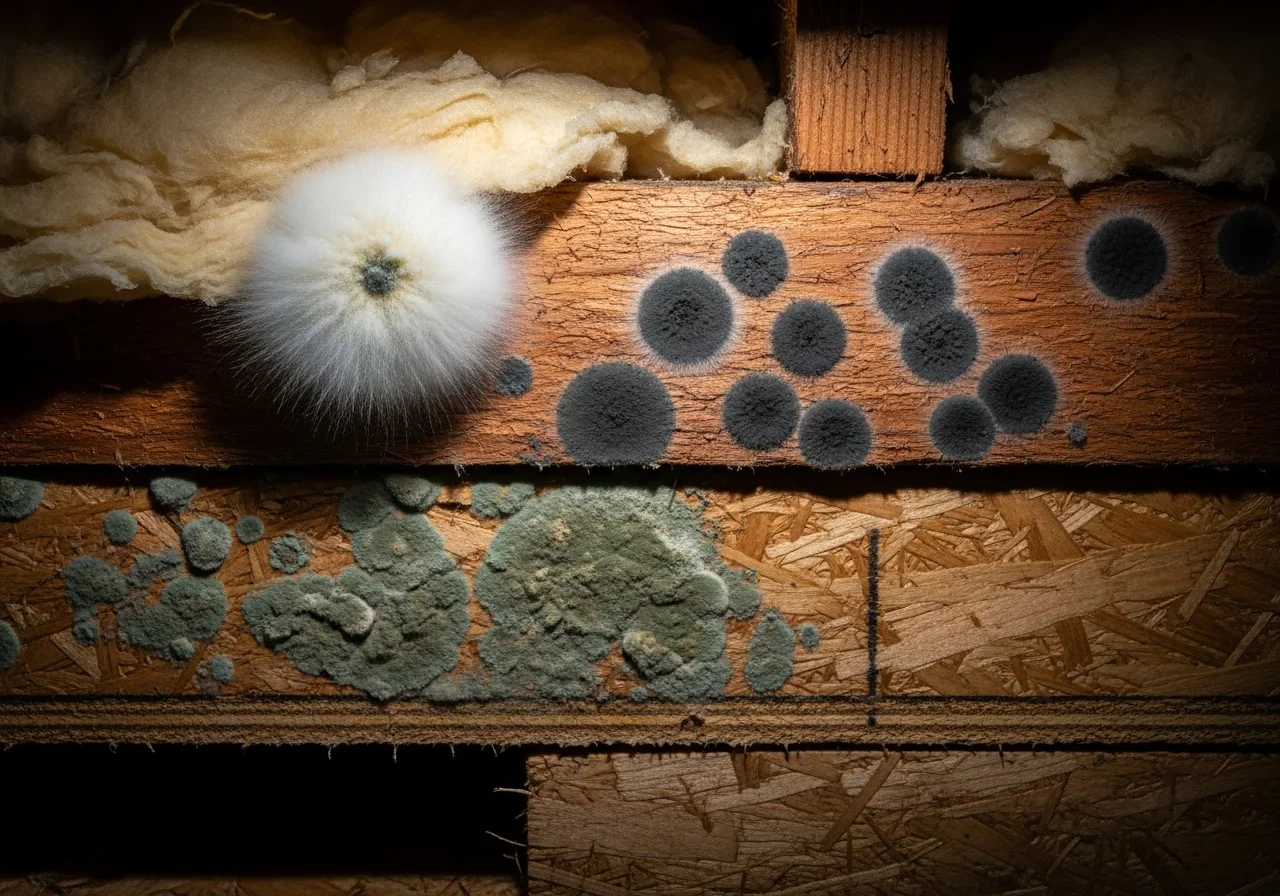
Different mold species identified during inspection in a Kannapolis NC home
Multiple mold species colonize simultaneously when conditions support sustained growth

NC Regulatory Landscape

Mold Licensing in North Carolina: What Kannapolis Homeowners Must Know

North Carolina has no state-specific mold remediation license requirement. The NC State University Extension Healthy Homes program confirms: "No federal or state certification programs exist for companies or individuals providing mold remediation services." The NC DHHS defers to voluntary industry standards.

This means anyone can legally offer mold remediation in Kannapolis. The accepted industry benchmark is IICRC certification \u2014 specifically the BSR-IICRC S520 standard for professional mold remediation procedures and the Mold Remediation Specialist (MRS) certification, which requires verifiable field experience and a proctored examination.

Verify IICRC S520 certification for any mold company you hire
Ask for MRS (Mold Remediation Specialist) credentials by name
Confirm WRT (Water Damage Restoration Technician) certification
Request proof of general liability and workers’ comp insurance
Structural repair requires a separate NC general contractor license
Ensure the company sets up containment and HEPA filtration on every job
Ask whether testing and remediation are performed by separate entities
Verify Cabarrus County permit compliance for any structural work

Palm Build Credentials

  • IICRC S520 certified remediation protocols
  • Mold Remediation Specialist (MRS) certified crew leads
  • Licensed NC general contractor for structural repairs
  • Full liability insurance and workers' comp coverage
  • WRT (Water Damage Restoration Technician) certified

Red Flags to Watch For

  • No IICRC certification or won't provide proof
  • Offers to "spray and seal" without removing contamination
  • Won't set up containment barriers or HEPA filtration
  • Same company does testing AND remediation (conflict of interest)

Neighborhood Risk Map

Kannapolis Neighborhoods Most Vulnerable to Mold

Mold risk varies significantly across Kannapolis based on construction era, foundation type, and proximity to Irish Buffalo Creek and Lake Fisher. Here is how your neighborhood ranks.

Critical

Rose Hill

1920s-1950s · Crawl/pier

Original Cannon Mills housing with century-old framing, no vapor barriers, exposed soil under homes

Common species: Stachybotrys, Aspergillus
Critical

Town & Country

1960s-1980s · Crawl space

Vented crawl spaces, aging plumbing with slow leaks, degraded vapor barriers on clay soil

Common species: Aspergillus, Penicillium
High

Lake Fisher Area

1970s-1990s · Crawl space

Proximity to lake increases ambient humidity, HVAC in crawl spaces creates condensation cycling

Common species: Cladosporium, Penicillium
High

Older In-Town Neighborhoods

1940s-1970s · Crawl/pier

Mill-era construction with minimal moisture management, aging cast-iron plumbing prone to slow leaks

Common species: Aspergillus, Stachybotrys
Moderate

Newer Subdivisions

2000s-Present · Crawl/slab

Tighter construction traps moisture if HVAC fails, engineered wood is moisture-sensitive

Common species: Cladosporium, Aspergillus
High

Irish Buffalo Creek Corridor

1960s-2000s · Crawl space

Floodplain proximity raises water table, clay soil stays saturated longer, frequent standing water events

Common species: Penicillium, Cladosporium
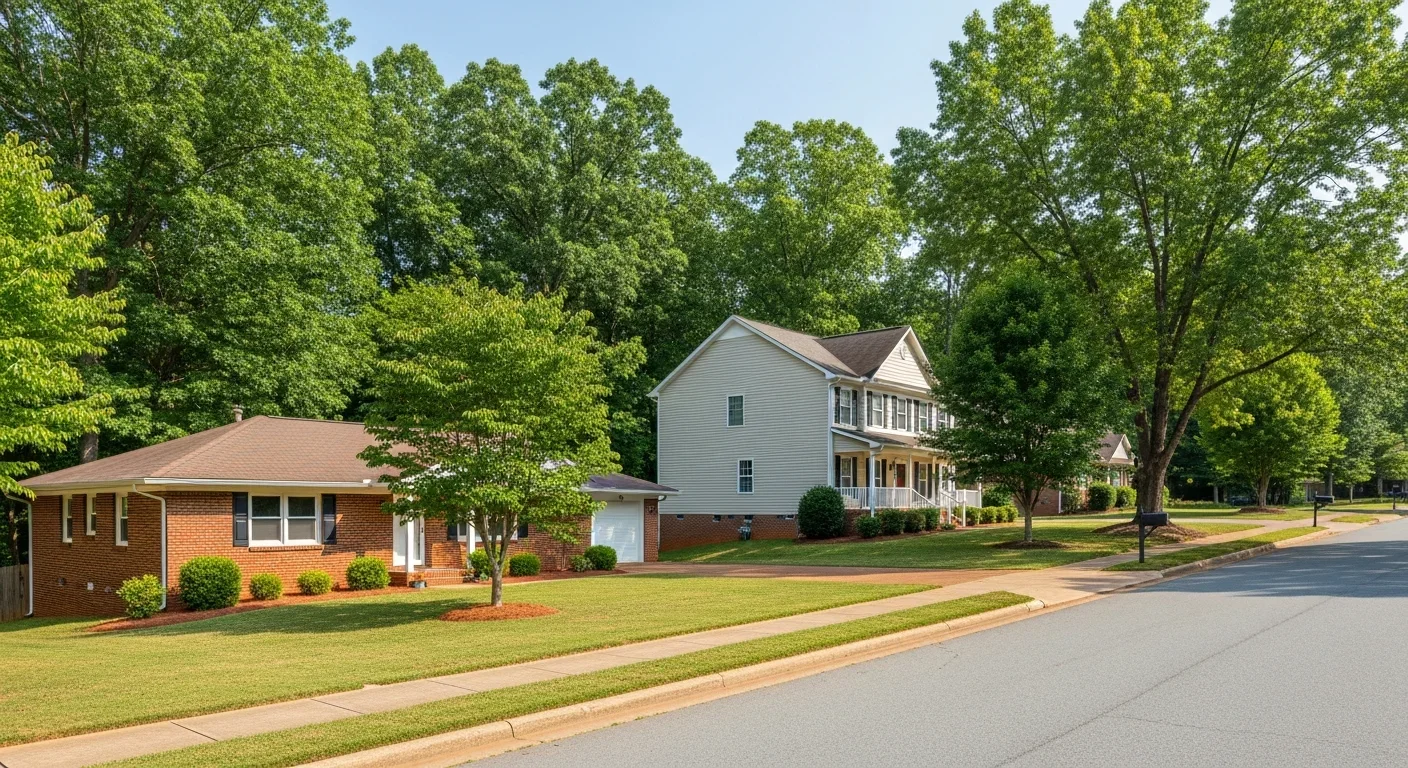
Typical Kannapolis NC residential neighborhood showing homes with crawl space foundations common in the Piedmont region
Kannapolis neighborhoods built during the Cannon Mills era feature crawl space foundations on Piedmont clay \u2014 the most vulnerable combination for chronic mold conditions.
IICRC S520 Protocol

Our 6-Step Mold Remediation Process for Kannapolis Homes

Professional mold remediation follows a strict IICRC S520 protocol. In Kannapolis, step four \u2014 source elimination \u2014 is what separates permanent results from temporary cosmetic cleanup that fails within one humidity season.

01

Comprehensive Mold Inspection

Day 1

Visual assessment, moisture meter readings on all framing, air quality sampling if needed. For Kannapolis crawl spaces, we check vapor barrier condition, foundation vent status, HVAC duct condensation, and wood moisture content on joists and sill plates.

02

Containment & Air Filtration

Day 1-2

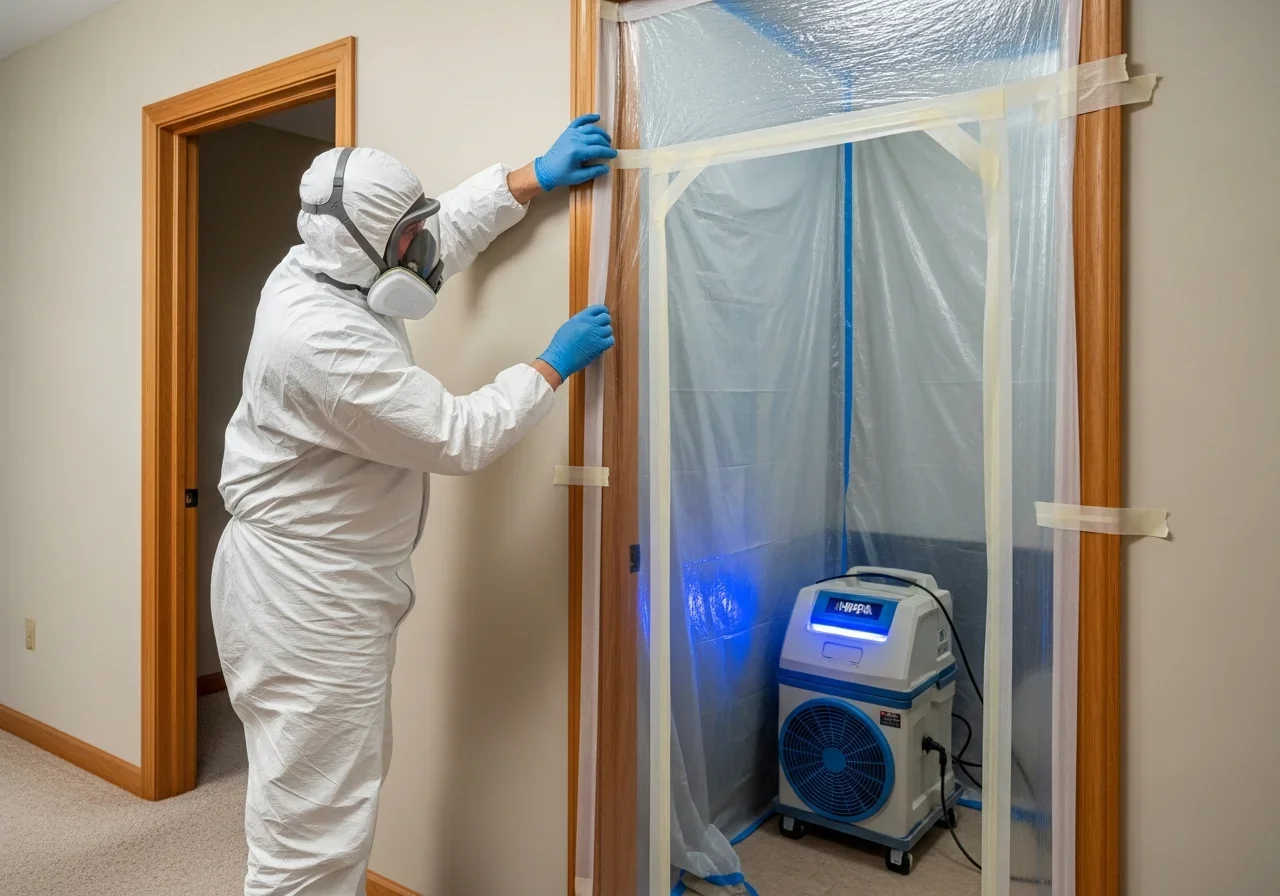
Negative air pressure containment with HEPA-filtered air scrubbers prevents cross-contamination to unaffected areas. Essential in Kannapolis homes where crawl space mold spores can migrate through floor systems into living spaces.

03

Mold Removal & Surface Treatment

Days 2-4

HEPA vacuuming, wire brushing, and sanding of affected wood surfaces. EPA-registered antimicrobial treatments applied to all accessible joists, rim joists, sill plates, and subfloor surfaces throughout the crawl space.

04

Source Elimination (Encapsulation)

Days 4-7

This is where most competitors fail. We seal foundation vents, install a heavy-duty vapor barrier over the clay soil, and deploy a commercial dehumidifier to maintain humidity below 55%. Source elimination, not just cosmetic removal.

05

Environmental Testing

Day 7

Independent third-party air quality and surface sampling verifies successful remediation. Clearance testing confirms spore counts have returned to acceptable levels and moisture readings are within safe range.

06

Post-Remediation Verification

Day 7-8

Final moisture readings, visual inspection, and clearance documentation provided for your records, insurance carrier, and any future real estate transactions. Complete photo documentation of all work performed.

Palm Build mold containment setup in a Kannapolis NC home with HEPA air scrubbers and negative pressure barriers

Why Source Elimination Matters in Kannapolis

Removing visible mold without sealing the moisture source is cosmetic, not remediation. In Kannapolis, the source is almost always the crawl space sitting on Piedmont clay. Our encapsulation protocol permanently breaks the moisture cycle.

1

Seal Foundation Vents

Stop outdoor humidity from entering the crawl space

2

Install Vapor Barrier

Heavy-duty barrier over Piedmont clay blocks ground moisture

3

Commercial Dehumidifier

Maintains humidity below 55% year-round

4

Verified Results

Third-party clearance testing confirms success

Schedule Mold Inspection

Seasonal Risk Calendar

When Mold Strikes in Kannapolis: A Seasonal Guide

Mold risk in Kannapolis follows a predictable seasonal pattern driven by Piedmont humidity, clay soil saturation, and temperature differentials. Understanding the cycle helps you act before damage escalates.

Moderate

Winter

Dec – Feb

Condensation Season

Temperature differentials between heated living spaces and cold crawl spaces create condensation on ductwork and framing. Slow plumbing leaks go unnoticed for weeks. Homes sealed tight for heating trap moisture indoors.

Triggers: HVAC condensation, plumbing leaks, poor ventilation

High

Spring

Mar – May

Activation Season

Rising temperatures and spring rainfall saturate Piedmont clay. Dormant mold spores activate as humidity climbs above 60% RH. April through May sees the sharpest acceleration in new mold growth across Kannapolis crawl spaces.

Triggers: Clay saturation, rising humidity, spore activation

Critical

Summer

Jun – Sep

Peak Mold Season

Outdoor dew points exceed 65°F continuously. Crawl space humidity reaches 80-90% RH. Mold grows at maximum speed — visible colonies can establish on clean wood within 48 hours. This is when most Kannapolis homeowners discover their mold problem.

Triggers: Sustained 70-90% RH, rapid colonization, peak discovery

Moderate-High

Late Season

Oct – Nov

Discovery Season

Cooling temperatures slow active growth but mold colonies established over summer remain. Fall home maintenance, HVAC inspections, and real estate transactions frequently reveal extensive mold that grew undetected all summer.

Triggers: Home inspections, HVAC service, real estate discovery

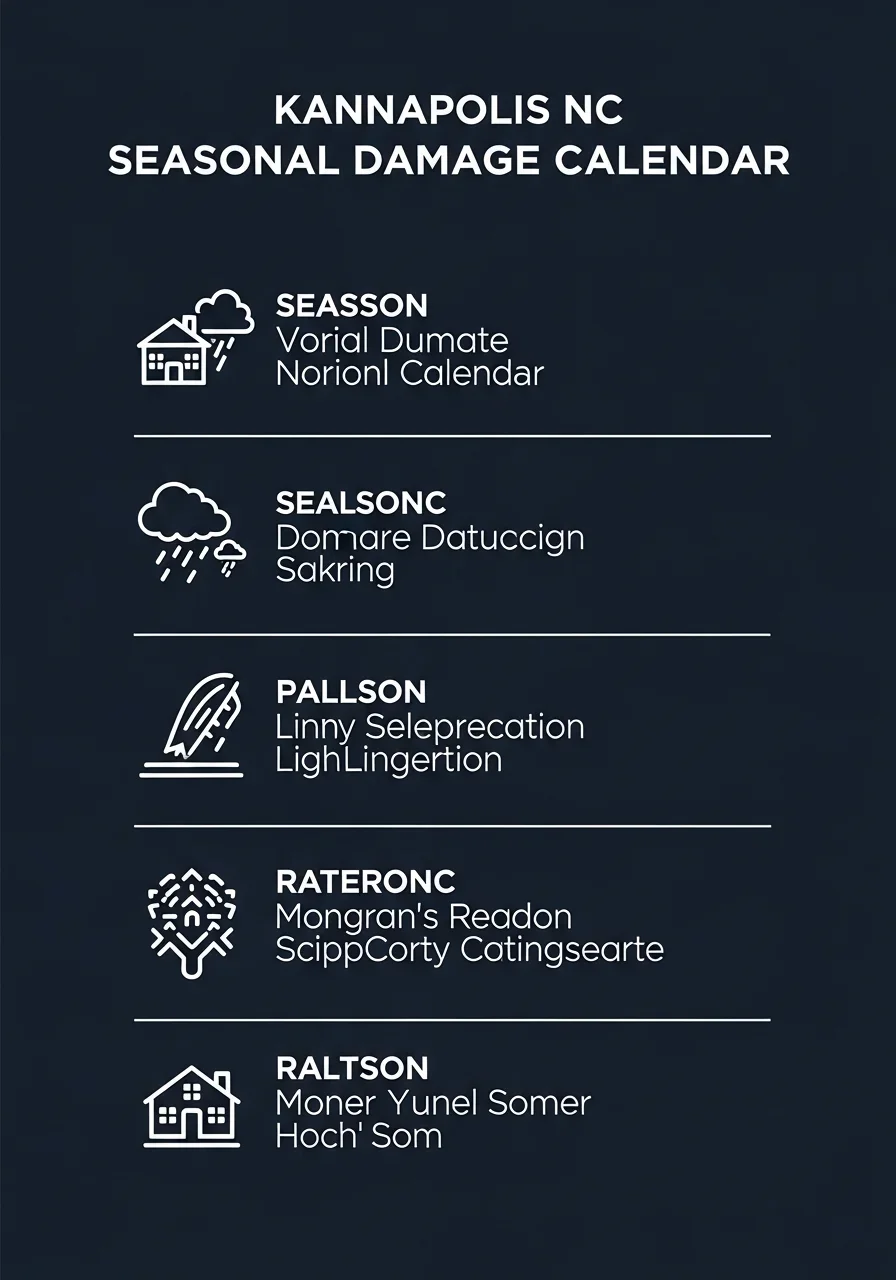
Seasonal mold and water damage risk calendar for Kannapolis NC showing peak risk periods throughout the year
Seasonal damage risk calendar for Kannapolis \u2014 June through September represents the peak mold growth window when crawl space humidity consistently exceeds 80% RH.

Species Identification

Common Mold Species Found in Kannapolis Homes

Different mold species require different remediation approaches. These four species account for over 90% of indoor mold findings in Kannapolis home inspections and crawl space assessments.

Aspergillus

Green, yellow, or white

High Risk

The most common indoor mold in Kannapolis homes. Over 180 species exist, many producing mycotoxins. Causes aspergillosis in immunocompromised individuals and chronic respiratory irritation in healthy adults. Thrives on wood, insulation, and dust.

Found on: Crawl space joists, HVAC ducts, attic sheathing

Common in: All Kannapolis neighborhoods

Penicillium

Blue-green

Moderate-High Risk

Spreads rapidly through water-damaged materials and is a strong allergen. Produces musty odors that are often the first sign of a hidden mold problem. Common in Kannapolis homes with slow plumbing leaks or condensation behind walls.

Found on: Water-damaged drywall, wallpaper, carpet padding

Common in: Town & Country, Older In-Town

Cladosporium

Olive-green to brown

Moderate Risk

Tolerates cooler temperatures than most molds, making it active year-round in Kannapolis. Commonly found on HVAC evaporator coils and in condensation-prone areas. Primary trigger for allergic rhinitis and asthma exacerbation.

Found on: HVAC systems, window sills, textiles

Common in: Lake Fisher, Newer Subdivisions

Stachybotrys

Black, slimy

Critical Risk

The infamous "black mold" requires sustained water saturation to grow. Produces satratoxins linked to serious respiratory effects and neurological symptoms. Found in Kannapolis homes with long-term water intrusion or chronic crawl space flooding.

Found on: Chronically wet drywall, wood, cellulose materials

Common in: Rose Hill, Irish Buffalo Creek

Important: Visual identification alone is unreliable. Lab analysis of air or surface samples is the only way to confirm mold species. Palm Build works with independent testing labs to provide accurate identification before developing your remediation plan.

Our Work

Mold Remediation in Kannapolis Homes

From crawl space mold to clay soil moisture \u2014 every image documents the conditions we encounter and resolve in Kannapolis and Cabarrus County homes.

Palm Build technician performing HEPA mold removal on contaminated wood joists in a Kannapolis NC crawl space
HEPA vacuuming and antimicrobial treatment of mold-contaminated joists in a Kannapolis crawl space
Completed crawl space encapsulation in a Kannapolis NC home with white vapor barrier and commercial dehumidifier
Full encapsulation with heavy-duty vapor barrier and commercial dehumidifier — the permanent solution
Professional mold containment setup in a Kannapolis NC home with HEPA air scrubbers and poly barriers
Negative air pressure containment prevents cross-contamination during active remediation
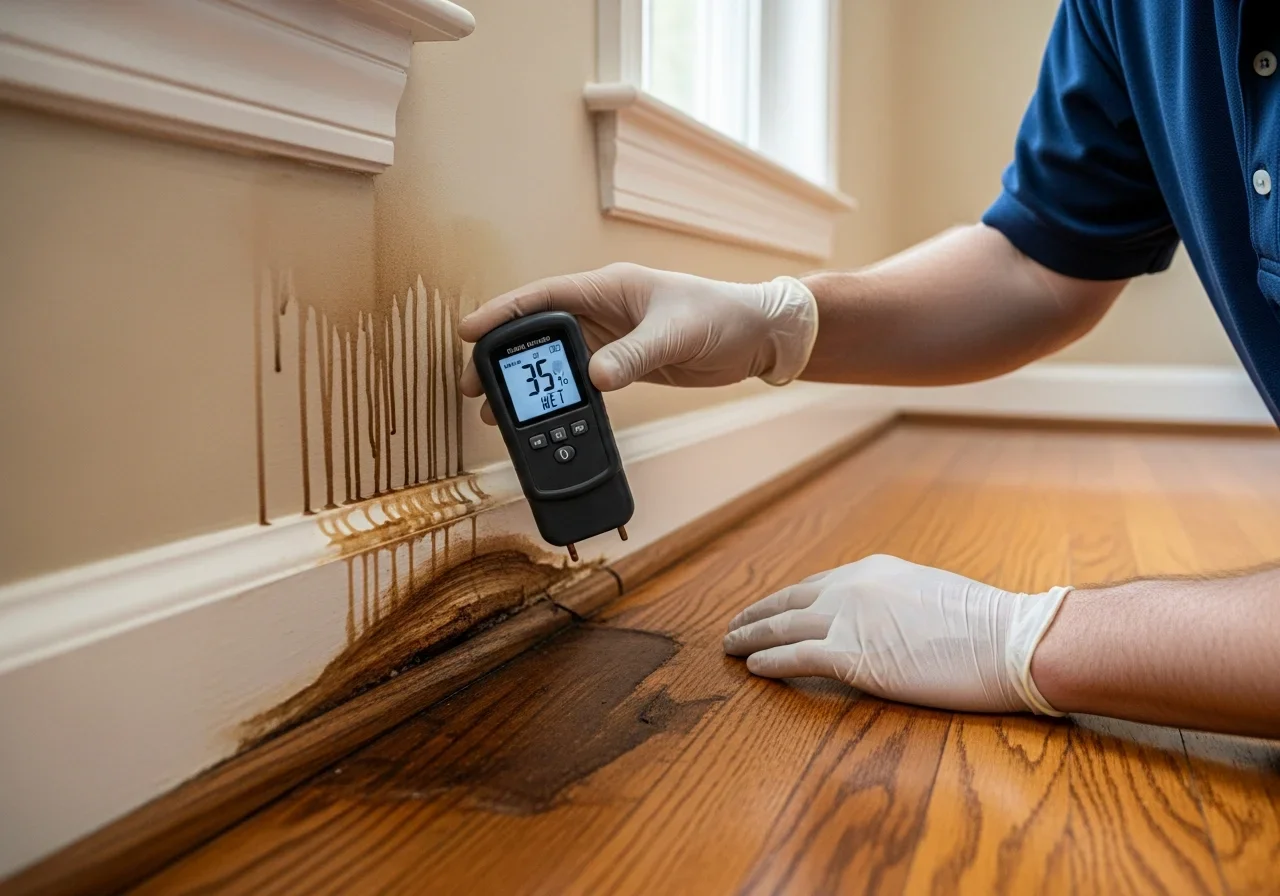
Professional moisture meter inspection showing elevated readings on wood framing in a Kannapolis NC home
Moisture meter confirms elevated wood moisture content — above 19% supports active mold growth

Kannapolis Pricing

Mold Remediation Costs in Kannapolis

Costs depend on contamination scale, materials affected, and whether crawl space encapsulation is needed. NC standard insurance policies often cap mold coverage at $5,000-$10,000 \u2014 Kannapolis crawl space projects frequently exceed this.

Standard Mold Issues

$1,500 - $8,000

Single bathroom/kitchen $1,500 - $4,000
Attic mold (limited area) $2,000 - $6,000
Small crawl space section $3,000 - $8,000
HVAC duct mold cleaning $2,000 - $5,000

Crawl Space / Whole House

$8,000 - $50,000+

Full crawl space remediation $8,000 - $20,000
Crawl space + encapsulation $15,000 - $35,000
Whole-house remediation $12,000 - $30,000
Multi-area or severe damage $20,000 - $50,000+

Early action saves thousands. A contained bathroom mold issue at $2,000 can escalate to full crawl space remediation at $20,000+ within a single Kannapolis humidity season. In the five-month mold window from May through October, delay is the most expensive decision.

Insurance Navigation

Mold Insurance Coverage in Kannapolis

Mold coverage in North Carolina is limited and varies significantly by carrier and policy. Since crawl space mold in Kannapolis often develops over months from humidity exposure, documentation of the triggering event is critical for successful claims.

Mold resulting from a covered sudden water event (burst pipe, appliance failure) is typically covered up to policy sublimits

Some NC carriers offer mold endorsements for additional premium — ask your agent about expanded coverage before you need it

NC standard policies sublimit mold coverage to $5,000-$10,000 — Kannapolis crawl space remediation with encapsulation frequently exceeds $15,000

Mold from gradual moisture, humidity accumulation, or long-term crawl space conditions is almost always excluded as "gradual damage"

Pre-existing mold discovered during renovation or a home inspection is not covered under any standard NC homeowners policy

Mold from deferred maintenance (clogged gutters, grading issues, unsealed crawl spaces) is excluded as a maintenance obligation

Palm Build's Approach to Kannapolis Mold Claims

When mold results from a covered water event, our documentation connects the mold to the original loss \u2014 moisture maps, timeline photos, and remediation scope all formatted for the adjuster. For non-covered crawl space mold (the most common scenario in Kannapolis), we provide transparent pricing and financing options so the work does not wait.

Discuss Your Mold Claim

Common Questions

Kannapolis Mold Remediation FAQ

Answers to the most common questions Kannapolis homeowners ask about mold, crawl spaces, insurance coverage, and remediation costs.

Does NC require mold remediation licensing?
No. NC has no state certification. IICRC S520 is the industry benchmark. Always verify credentials independently.
How do I know if I have mold?
Musty odors, visible discoloration, allergy symptoms, condensation on pipes, warped flooring. Crawl space mold is often invisible from the living space.
How much does remediation cost in Kannapolis?
Standard: $2,500-$8,000. Crawl space: $3,000-$12,000. Complex: $8,000-$30,000+. Average crawl space project: $4,000-$8,000.
Will mold come back?
Only if the moisture source isn't fixed. Palm Build addresses root cause: encapsulation, drainage, dehumidification.
What's the most common mold source?
Crawl space moisture from Piedmont clay soil holding water against foundations for days.
Should I test for mold first?
When visible mold exists, fix the moisture source first. Testing is useful for hidden mold, insurance docs, or post-remediation verification.
How long does remediation take?
Small areas: 1-2 days. Crawl spaces: 3-5 days. Multi-room: 1-2 weeks.
Does Palm Build serve all of Cabarrus County?
Yes. Kannapolis, Rose Hill, Lake Fisher, Concord, Harrisburg, China Grove, Landis, and surrounding communities.

Mold in Your Kannapolis Home? Get Expert Help.

Palm Build's IICRC-certified technicians provide full containment remediation, moisture source correction, and post-remediation verification for Cabarrus County homes. Call now for a mold assessment.

30-45 min Response IICRC Certified

More in Kannapolis

Other Palm Build Services in Kannapolis, NC