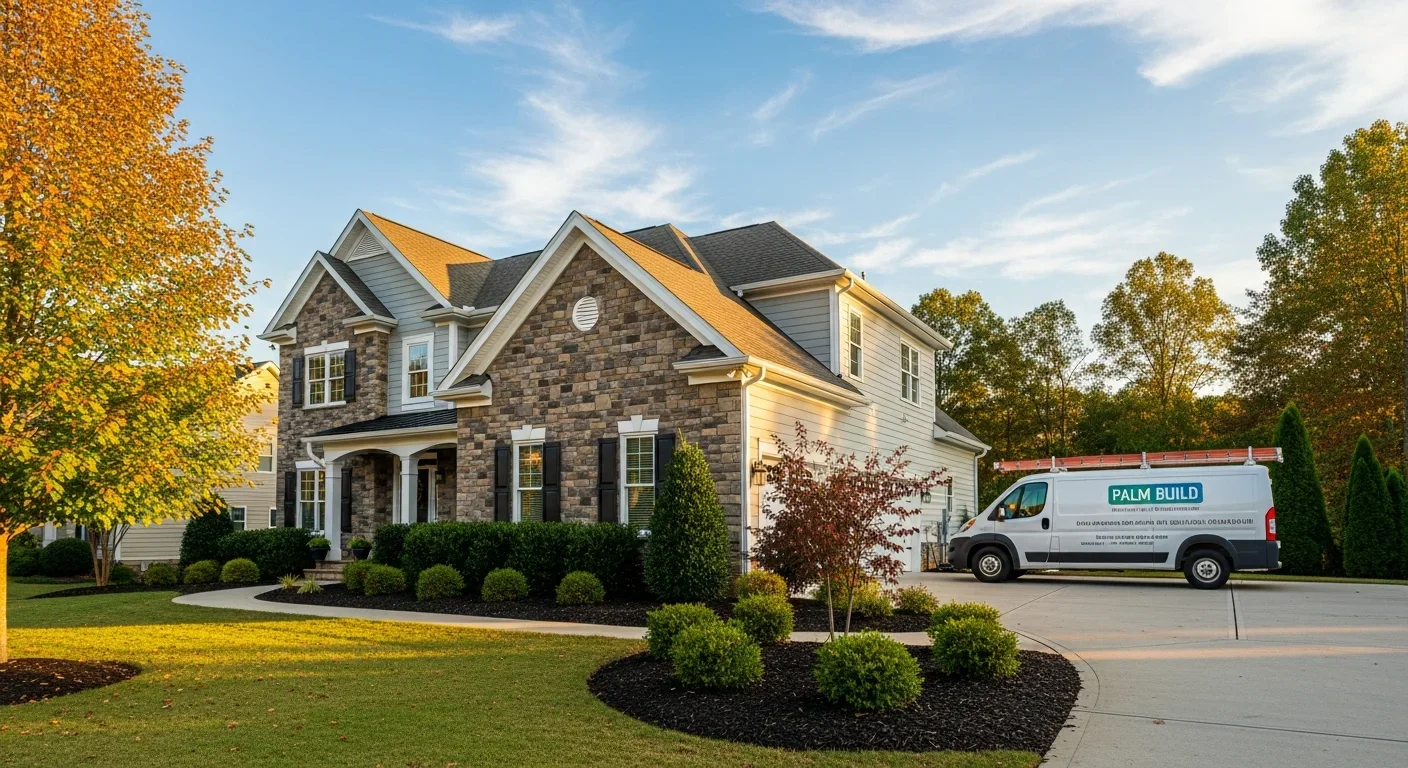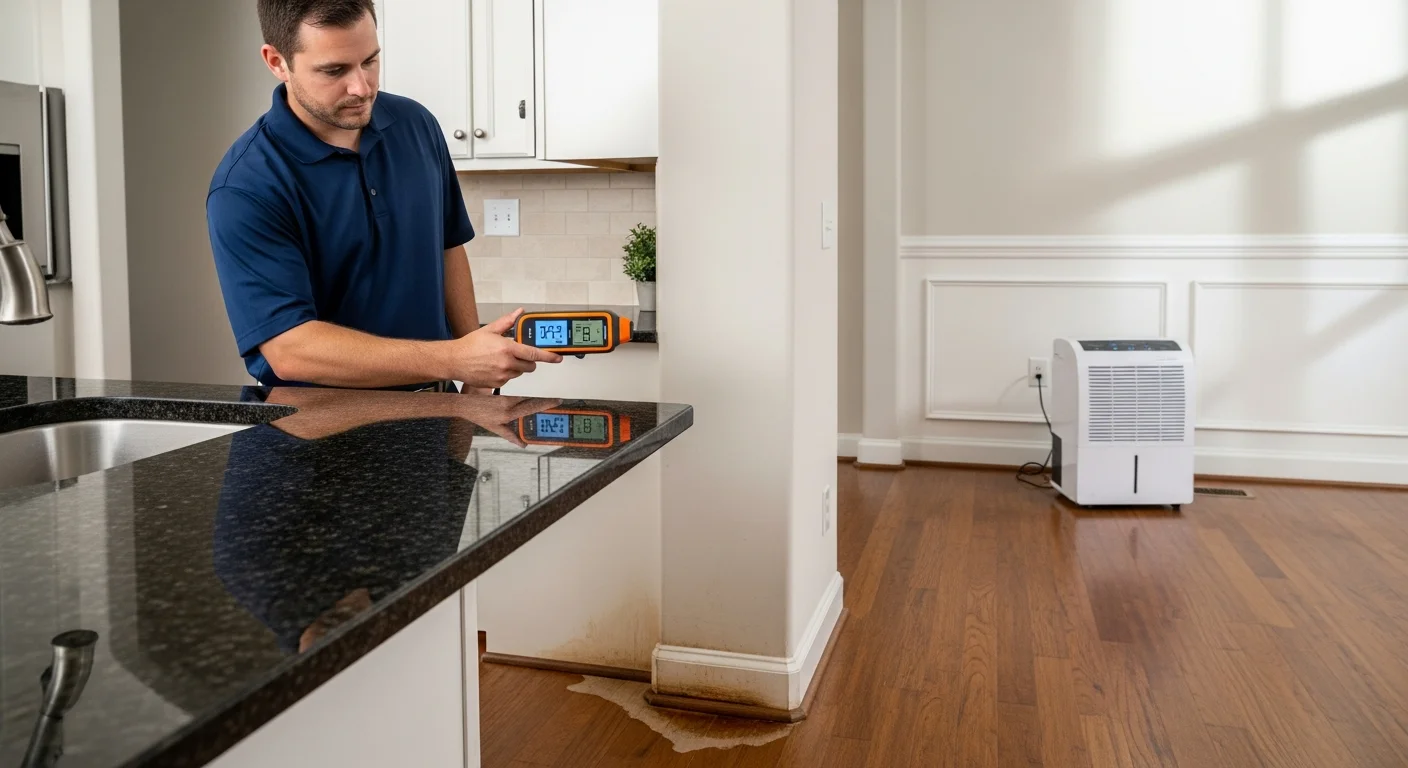
Palm Build technician using moisture meter on interior wall of modern Harrisburg NC suburban home during mold assessment
HARRISBURG NC — IICRC-CERTIFIED MOLD REMEDIATION

Mold Remediation in Harrisburg, North Carolina

Harrisburg's rapid growth produced thousands of homes with tight envelopes, complex HVAC, and premium finishes — but Piedmont clay soil and humid summers create mold conditions that don't care about build year. Palm Build's IICRC-certified technicians provide containment, removal, and moisture source correction with the credentials that matter in a state with no mold licensing.

Serving Harrisburg from Charlotte, NC 30 min Response IICRC Certified

30 min

Emergency Response

24/7

Dispatch Available

IICRC

Certified Technicians

Local Risk Factors

Why Harrisburg Homes Face Elevated Mold Risk

Harrisburg is one of the fastest-growing towns in the Charlotte metro \u2014 and both its new construction and its original housing stock face significant mold pressure. Piedmont humidity, clay soil, and the absence of state mold licensing create a risk profile that generic remediation companies routinely underestimate. Under these conditions, mold can begin growing in as little as 24 hours.

Summer Humidity 70-90%

70-90%

Summer humidity

Harrisburg sits in the southern Piedmont where summer dew points routinely exceed 65°F from late May through September. Relative humidity swings between 70-90% during this window, saturating crawl spaces and wall cavities with moisture that mold colonies exploit within 24-48 hours. Unlike coastal humidity that carries salt air, Piedmont humidity is clean moisture — ideal fuel for mold growth on organic building materials.
64.5% Growth = New & Old Homes

64.5%

Population growth

Harrisburg's population surged 64.5% between 2010 and 2020, producing thousands of new homes alongside the town's original 1980s-90s housing stock. Both generations face mold — but from different sources. Older homes battle crawl space moisture and aging plumbing leaks, while newer homes trap moisture inside tight building envelopes designed for energy efficiency. No era of Harrisburg construction is immune.

Piedmont Clay Soil Drainage

Clay

Piedmont soil type

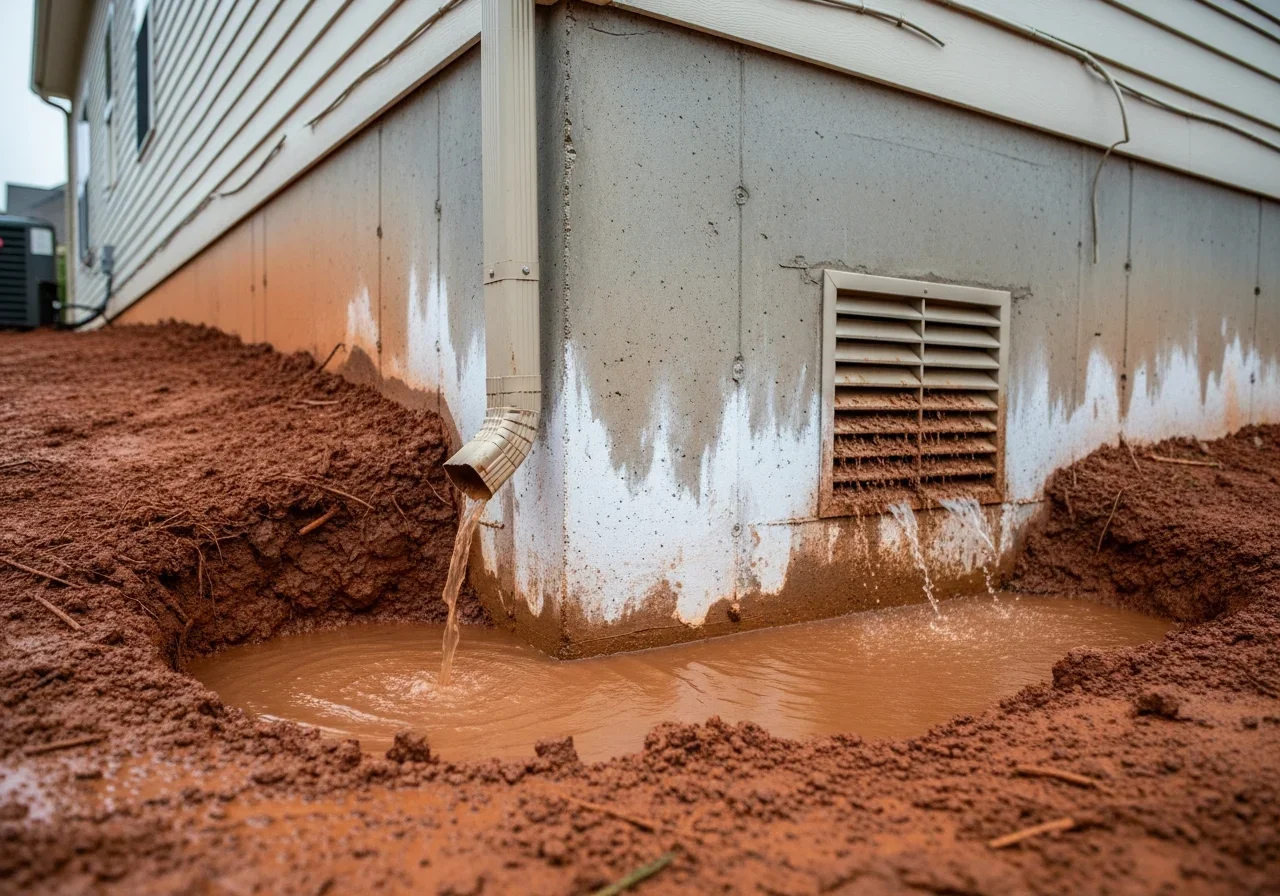
Harrisburg sits on Piedmont clay soil that drains poorly and holds water against foundations for days after rainfall. This clay acts as a moisture reservoir beneath crawl spaces, continuously releasing water vapor into the subfloor cavity. During heavy rain events — common from April through September — clay soil can become fully saturated, pushing hydrostatic pressure against foundation walls and creating moisture intrusion pathways that feed mold growth.

No NC State Mold License

None

State mold license

North Carolina does not require a state license or certification for mold remediation contractors. Anyone can advertise mold removal services with zero training, no insurance requirements, and no regulatory oversight. This means Harrisburg homeowners bear the full burden of vetting contractors — verifying IICRC certification, checking insurance, and confirming that the company follows S520 protocols rather than paint-over shortcuts.

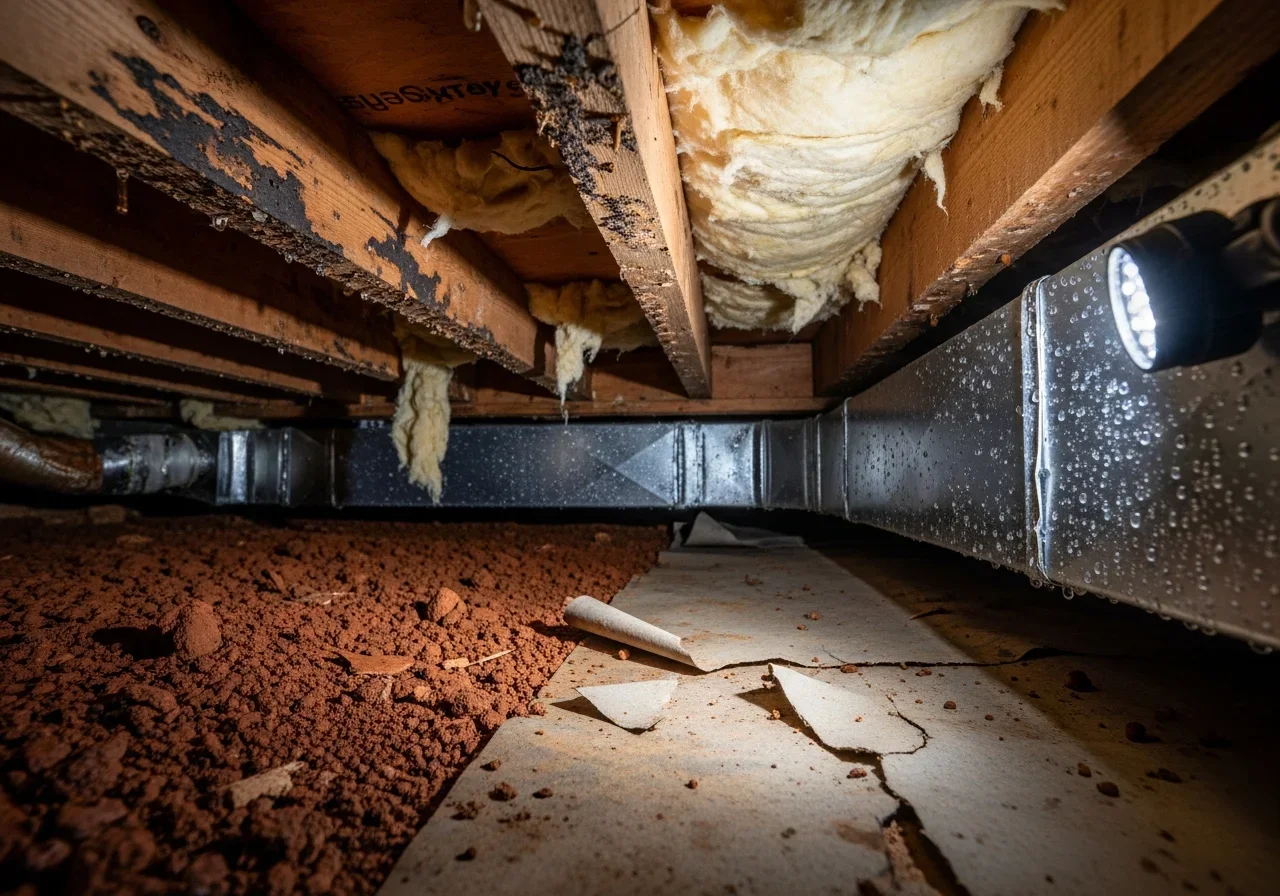
Moisture damage and mold growth in a Harrisburg NC crawl space showing condensation on floor joists from Piedmont humidity
Crawl space moisture damage in a Harrisburg home \u2014 Piedmont clay soil and summer humidity create persistent conditions for mold growth on floor joists and subfloor sheathing.

Old vs. New Construction

Where Mold Comes From in Harrisburg \u2014 By Home Era

Harrisburg's rapid growth means the town has two distinct housing generations, and each faces mold from different sources. Understanding which risks apply to your home helps target prevention and speeds remediation when problems surface.

Older Homes (1980s\u20131990s)

Original Harrisburg housing stock

Crawl Space Moisture Accumulation

Original vented crawl space designs draw humid Piedmont air underneath the home, where it condenses on cooler surfaces. Decades of moisture accumulation saturate floor joists, subfloor sheathing, and insulation — creating the single most common mold source in pre-2000 Harrisburg homes.

Deteriorated Vapor Barriers

Thin 6-mil vapor barriers installed in the 1980s and 1990s have torn, shifted, and degraded over time. Exposed soil continuously releases moisture into the crawl space cavity, and patching a 30-year-old barrier rarely solves the problem — full encapsulation is the only lasting fix.

Aging Plumbing Slow Leaks

Galvanized and early copper plumbing in older Harrisburg homes develops pinhole leaks and joint failures that drip for months behind walls before detection. By the time a homeowner notices a musty smell or water stain, mold colonies have been growing in the wall cavity for weeks.

Newer Homes (2010s+)

Post-boom construction

HVAC Condensation Failures

Newer homes run HVAC systems nearly continuously from May through September. Condensate drain lines clog with biofilm, drip pans overflow into attic spaces, and supply register sweating introduces moisture to wall cavities. These systems are designed for efficiency, not for 90% humidity.

Tight Envelope Moisture Trapping

Post-2010 energy code construction creates a tighter building envelope that traps indoor moisture from cooking, bathing, and breathing. Without adequate mechanical ventilation — which many Harrisburg builders skip — interior humidity builds up and condenses on cold exterior wall surfaces during temperature swings.

Bathroom Moisture in Walls

Master bath showers in newer homes generate significant steam in enclosed spaces. Without properly ducted exhaust fans (many builders vent into attics rather than outside), moisture penetrates drywall and accumulates behind tile surrounds. Mold behind shower walls is one of the most common findings in post-2015 Harrisburg homes.

New Homes Are Not Mold-Proof

Many Harrisburg homeowners assume that a 5- or 10-year-old home can't have mold. The reality is the opposite \u2014 tight modern construction traps moisture that older, leakier homes would have naturally ventilated away. We see mold behind shower walls, in HVAC closets, and inside attic spaces of homes that are less than three years old. The building envelope works as designed for energy efficiency; it just wasn't designed for Piedmont summer humidity without proper mechanical ventilation.

NC Licensing & Standards

Mold Remediation Standards in North Carolina

North Carolina does not require a specific state license for mold remediation \u2014 which means anyone can hang a shingle and call themselves a mold remediator. This makes choosing the right contractor in Harrisburg critical.

No NC State License Requirement

Unlike states such as Florida and Texas, North Carolina has no state licensing or certification requirement for mold remediation contractors. There is no state registry, no required training hours, and no regulatory oversight of remediation practices. This means the burden falls on Harrisburg homeowners to verify that their contractor follows industry standards, carries proper insurance, and employs certified technicians.

IICRC S520 Certification

Industry Standard Protocol

The IICRC S520 Standard for Professional Mold Remediation defines assessment procedures, containment protocols, removal methods, and post-remediation verification requirements. Palm Build follows S520 on every Harrisburg project — from a bathroom vanity to a full crawl space remediation. This is the benchmark that separates professional remediation from paint-over operations.

AMRT Certified Technicians

Applied Microbial Remediation Technician

Our remediation crews hold AMRT certification through the IICRC, demonstrating competency in microbial contamination assessment, remediation procedures, and safety protocols. This certification requires ongoing continuing education to maintain — ensuring our technicians stay current with evolving remediation science and Piedmont-specific moisture dynamics.

Licensed General Contractor

NC General Contractor License

Mold remediation often requires structural repairs — drywall replacement, subfloor reconstruction, crawl space encapsulation. Palm Build holds a North Carolina General Contractor license, allowing us to handle the full scope from remediation through rebuild without subcontracting. One team, one point of accountability, one insurance claim.

Questions to Ask Any Harrisburg Mold Remediation Contractor

Do your technicians hold current IICRC AMRT certification?

Do you follow IICRC S520 remediation protocols on every project?

Will you set up containment with negative air pressure before disturbing any mold?

Do you perform post-remediation air sampling with independent lab verification?

Are you licensed and insured for structural repairs after remediation?

Do you identify and address the moisture source — not just the visible mold?

Will you provide a written scope of work before starting?

Do you carry general liability insurance and workers’ compensation?

Radon Testing After Crawl Space Encapsulation

Harrisburg sits in a moderate radon risk zone. Crawl space encapsulation seals the soil surface, which can change radon gas dynamics beneath the home. We recommend radon testing after any crawl space encapsulation project \u2014 if levels exceed 4 pCi/L, a sub-slab mitigation system can be integrated into the encapsulation design. It's an inexpensive addition during the encapsulation process that can be significantly more costly to retrofit later.

Neighborhood Intelligence

Harrisburg Subdivision Mold Risk Profiles

Mold risk in Harrisburg follows predictable patterns based on subdivision build era, foundation type, and construction methods. Here's what we see in the communities where we respond most frequently.

Harrisburg Farm

High Risk

Built: 2015–2022

Tight building envelope trapping bathroom and cooking moisture; HVAC condensate failures in attic spaces

Common species: Cladosporium, Aspergillus

Rocky River Crossing

Critical

Built: 2005–2015

Crawl space humidity from clay soil combined with aging HVAC ductwork in unconditioned spaces

Common species: Stachybotrys, Chaetomium

Caldwell Station / Estates

High Risk

Built: 2005–2018

Larger homes with multiple HVAC zones creating condensation differentials across floors

Common species: Aspergillus, Penicillium

Farmington / The Farms

Critical

Built: 1990s–2005

Original vented crawl spaces on clay soil; deteriorated vapor barriers allowing ground moisture into subfloor cavities

Common species: Stachybotrys, Aspergillus niger

Robinson Church Corridor

High Risk

Built: 1980s–1990s

Oldest Harrisburg housing stock with galvanized plumbing leaks, poor original ventilation, and decades of crawl space moisture

Common species: Chaetomium, Cladosporium

Skybrook / Highland Creek (Harrisburg side)

Moderate

Built: 2008–2020

Newer slab-on-grade and conditioned crawl spaces but bathroom exhaust venting into attics rather than outside

Common species: Cladosporium, Penicillium
Our Harrisburg Process

How We Remediate Mold in Harrisburg Homes

Professional mold remediation follows IICRC S520 standards \u2014 a science-based sequence designed to eliminate contamination and prevent recurrence. Here's exactly what happens when you call Palm Build.

01

Inspection & Testing

Day 1

IICRC-certified inspectors assess visible mold, use moisture meters and thermal imaging to map hidden moisture, and collect air and surface samples for laboratory analysis. In Harrisburg homes, we always inspect crawl spaces, HVAC systems, and bathroom wall cavities in newer construction. Lab results identify species and spore counts within 24-48 hours.

02

Containment Setup

Day 1-2

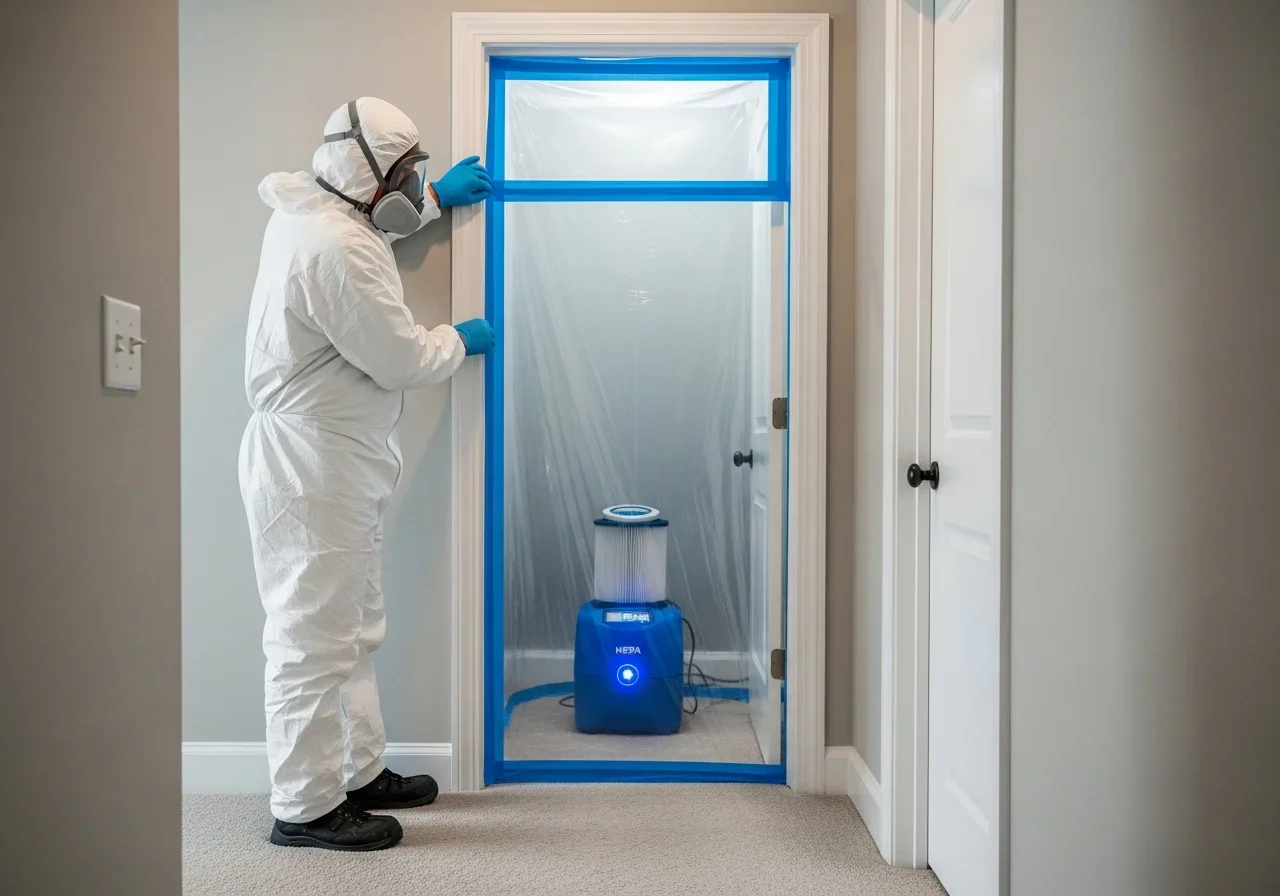
Polyethylene sheeting and negative air pressure machines isolate the affected area from the rest of the home. HEPA-filtered negative air prevents mold spores from spreading to clean areas during removal. For crawl space projects in Farmington and Rocky River Crossing, we seal the crawl space access and all floor penetrations before disturbing any growth.

03

HEPA Air Filtration

Continuous

Industrial HEPA air scrubbers run continuously throughout the remediation, capturing airborne spores down to 0.3 microns. In Harrisburg homes with crawl space mold, we position air scrubbers in both the crawl space and the living area above — spores migrate through floor penetrations, electrical outlets, and HVAC returns.

04

Mold Removal

Day 2-4

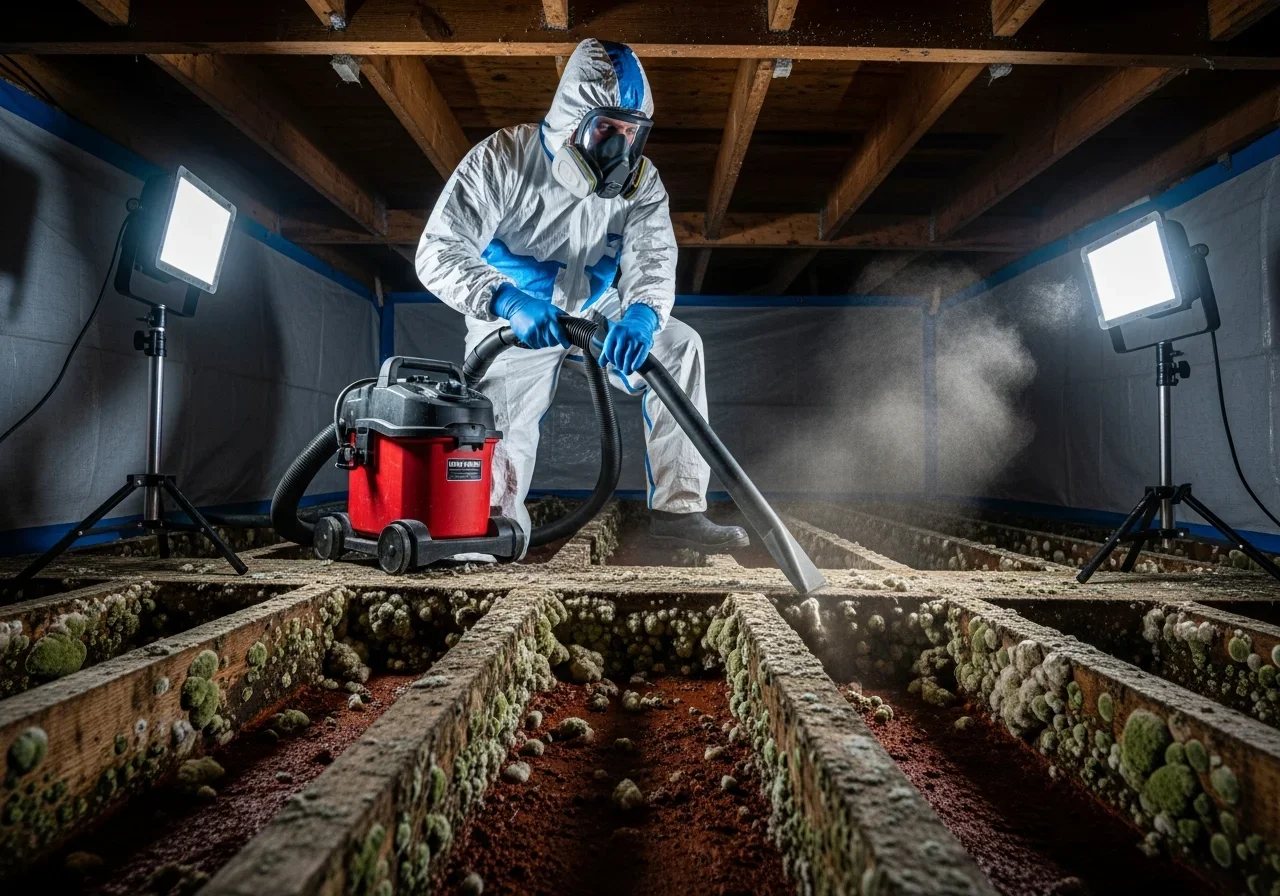
Trained technicians physically remove mold-contaminated materials: drywall, insulation, carpet padding, and severely affected structural wood. Surfaces that can be salvaged are cleaned using HEPA vacuums and antimicrobial agents. Crawl space joists and subfloor in older Harrisburg homes are sanded or media-blasted to remove surface mold growth.

05

Treatment & Prevention

Day 4-5

Antimicrobial treatments are applied to all affected surfaces to eliminate residual spores and prevent regrowth. For Harrisburg crawl spaces, this includes vapor barrier installation and dehumidifier placement to address the root moisture source. HVAC ducts are cleaned and treated if contaminated — a common finding in both older and newer Harrisburg homes.

06

Post-Remediation Verification

Day 5-7

Independent post-remediation air sampling confirms spore counts have returned to normal background levels. We provide a clearance report with lab results that satisfies insurance requirements and real estate transaction standards. Final moisture readings verify the source has been addressed — critical in Harrisburg where Piedmont humidity will reintroduce mold if the source persists.

Palm Build technician setting up mold remediation containment in a Harrisburg NC home with polyethylene sheeting and negative air machine

Why Our Harrisburg Process Works

1

Old & New Home Expertise

We understand crawl space moisture in 1990s homes and tight-envelope trapping in 2020s builds

2

IICRC S520 Certified

Every remediation follows the industry standard protocol — no shortcuts, no paint-over solutions

3

Root Cause Resolution

We don't just remove mold — we identify and address the moisture source that caused it

4

Lab-Verified Results

Independent post-remediation testing with lab-certified clearance documentation

Schedule a Mold Inspection

Know Your Risk Window

Harrisburg Seasonal Mold Risk Calendar

Mold risk in Harrisburg follows seasonal patterns shaped by Piedmont weather, clay soil moisture dynamics, and indoor humidity trapping. Understanding when your home is most vulnerable helps you catch problems before they become full remediation projects.

December – February

Low-Moderate

Winter Condensation Season

Outdoor mold activity drops, but sealed homes with heating systems create condensation on cold exterior walls and windows. Bathrooms and kitchens without adequate exhaust ventilation trap moisture that feeds existing colonies. Crawl spaces remain damp year-round — ground moisture evaporation from Piedmont clay continues regardless of outdoor temperature. Existing colonies slow but do not die. This is the best window for crawl space encapsulation before the next muggy season.

March – May

High

Spring Moisture Activation

Spring rainfall combined with warming temperatures push humidity into crawl spaces where cool surfaces trigger condensation. Outdoor mold counts rise sharply, loading HVAC intakes with spores. Any winter water damage that wasn’t properly dried becomes visibly moldy as temperatures climb above 60°F. Dormant crawl space colonies reactivate. Piedmont clay soil saturates with spring rain, increasing ground moisture vapor into subfloor cavities.

June – August

Critical

Peak Mold Growth Season

Summer dew points exceed 65°F from late May through September, pushing relative humidity to 70-90%. HVAC systems run continuously, and condensate line failures become a frequent cause of hidden moisture. Crawl space relative humidity in vented foundations across Farmington and Rocky River Crossing can exceed 85%. Mold can visibly colonize a crawl space joist in 48-72 hours. This is when bathroom moisture in newer homes creates the most problems behind shower walls.

September – November

Very High

Late Season Discovery

Hurricane season remnants push through with sustained rainfall. The muggy season doesn’t end until mid-October. Post-storm mold typically surfaces 2-4 weeks after water events. Crawl spaces that loaded with moisture all summer now harbor established mold colonies. Fall is when many Harrisburg homeowners first detect musty odors as they close up homes for winter — discovering mold that has been growing since June.

Our Work

Mold Remediation in Harrisburg

From crawl space mold colonies to foundation drainage repairs, here's what Palm Build's mold remediation work looks like across Harrisburg's communities.

Palm Build technician performing HEPA mold removal in a Harrisburg NC home with professional containment and air filtration equipment
HEPA mold removal in a Harrisburg home — industrial air scrubbers capture airborne spores down to 0.3 microns while technicians physically remove contaminated materials under full containment
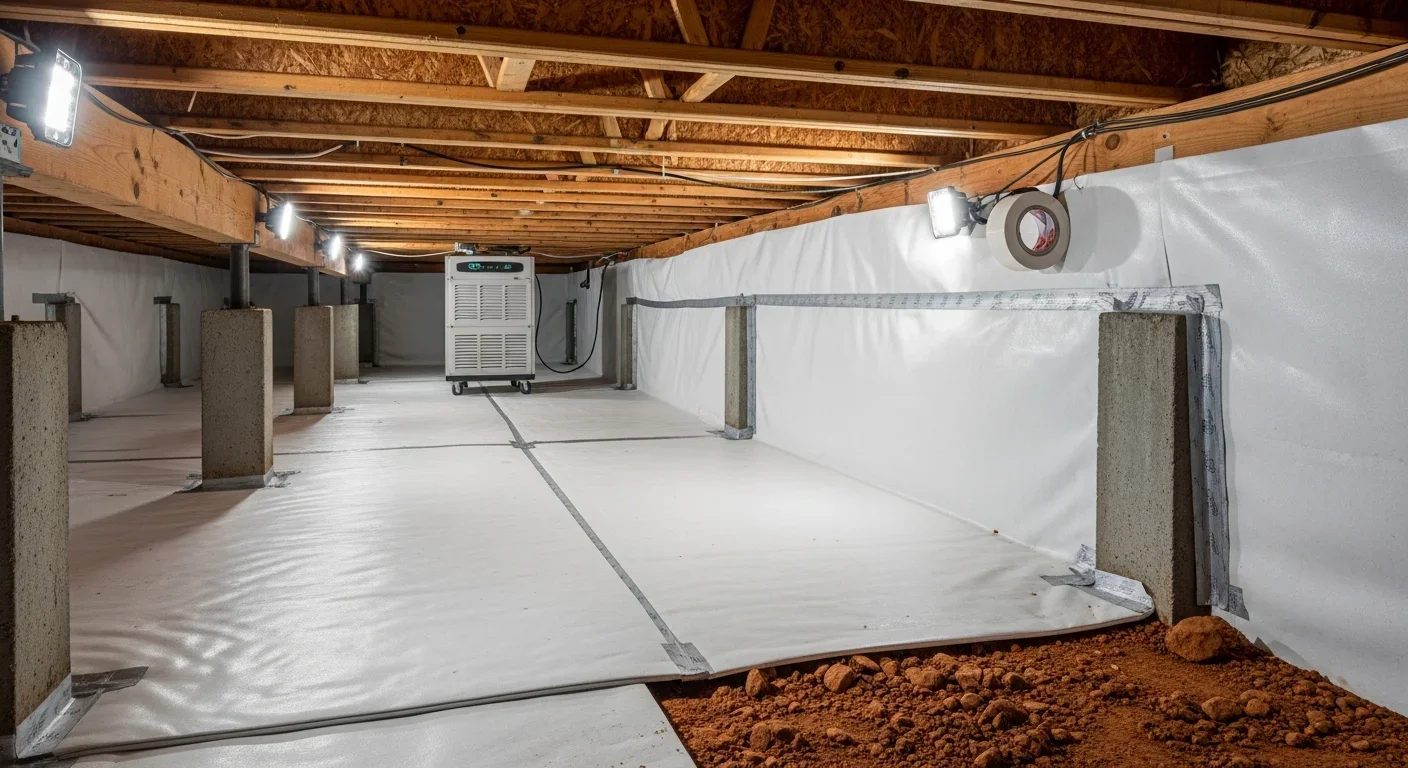
Completed crawl space encapsulation in Harrisburg NC with sealed vapor barrier and commercial dehumidifier installed after mold remediation
Crawl space encapsulation after remediation — 20-mil vapor barrier over Piedmont clay soil, sealed vents, and commercial dehumidifier maintaining humidity below 55% to prevent mold recurrence
Foundation drainage issues in a Harrisburg NC home showing water pooling against foundation walls from poorly draining Piedmont clay soil
Foundation drainage problems on Piedmont clay — water pooling against the foundation creates hydrostatic pressure that pushes moisture through walls and into crawl spaces where mold thrives
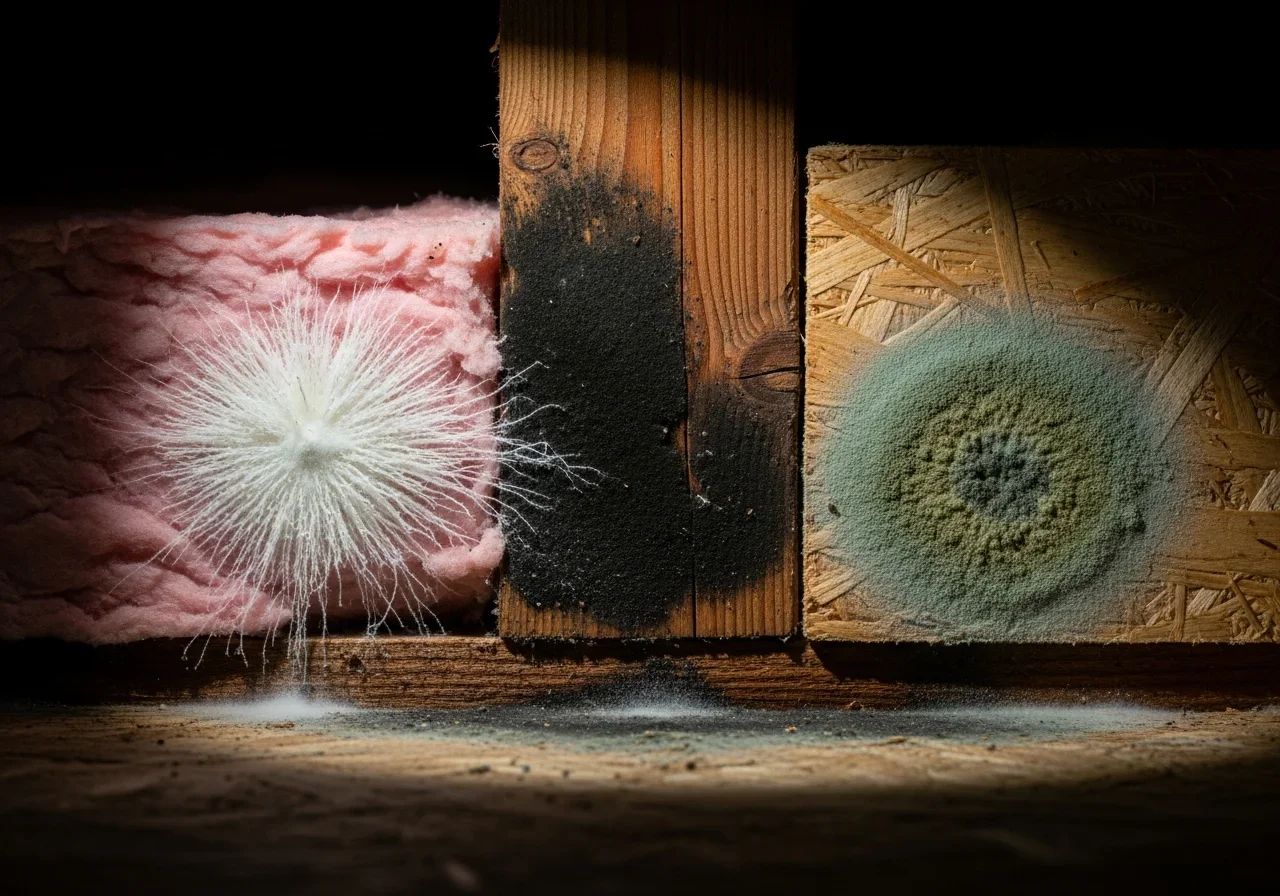
Laboratory identification of mold species found in Harrisburg NC homes including Stachybotrys Aspergillus and Cladosporium
Mold species identification from Harrisburg air samples — laboratory analysis identifies species and spore counts, guiding remediation protocols and post-clearance verification standards

Harrisburg Pricing

Mold Remediation Costs in Harrisburg

Remediation costs in Harrisburg reflect the scope of contamination, accessibility of affected areas, and whether the moisture source requires structural work to resolve. Crawl space projects on Piedmont clay soil consistently drive costs higher than standard single-room remediations.

Standard Mold Remediation

Isolated contamination, single area, accessible location

Small area (closet, under sink) $1,500 - $3,500

Isolated mold from a slow leak, less than 10 sq ft affected

Bathroom or kitchen $2,000 - $5,000

Mold behind shower walls, under vanity, or around kitchen plumbing

Single room remediation $2,500 - $6,000

One bedroom or living area with wall cavity mold from a water event

HVAC system cleaning $500 - $2,000

Mold in ductwork, coils, or drain pan from condensation

Typical standard project $2,000 - $6,000

Crawl Space / Multi-Room

Multi-area, crawl space + encapsulation, whole-home

Crawl space remediation $3,000 - $8,000

Mold on floor joists and subfloor from chronic humidity in Piedmont clay soil foundations

Crawl space + encapsulation $8,000 - $18,000

Full remediation plus 20-mil vapor barrier, commercial dehumidifier, and vent sealing

Multi-room remediation $8,000 - $15,000

Multiple rooms affected, HVAC contamination spreading spores throughout the home

Post-flooding mold remediation $5,000 - $12,000

Mold developing 2-4 weeks after a water event that was not properly dried

Typical complex project $10,000 - $20,000+

Why Crawl Space Remediation Costs More in Harrisburg

Harrisburg's combination of Piedmont humidity, clay soil, and crawl space foundations means that mold remediation alone is insufficient \u2014 the moisture source must be addressed permanently. This typically means crawl space encapsulation: sealing vents, installing a 20-mil vapor barrier over the clay soil, and adding commercial dehumidification. Without it, mold returns within one muggy season. The encapsulation adds $5,000-$10,000 to the remediation cost, but it's the only way to prevent recurrence in this climate.

Insurance Navigation

Mold Insurance Coverage in North Carolina

NC homeowners insurance and mold have a complicated relationship. Coverage depends almost entirely on what caused the mold \u2014 and most policies cap mold-related payouts well below actual remediation costs. With rising premiums across the Charlotte metro, documentation quality has never mattered more.

May Be Covered (With Sublimits)

Mold resulting from a covered water peril — burst pipe, appliance failure, or accidental discharge that led to mold growth

Emergency mold remediation required to prevent further damage after a covered water loss event

Structural repairs needed as part of mold remediation following a covered peril

Typically NOT Covered

Mold from maintenance neglect — slow leaks, poor ventilation, or failure to address known moisture problems are universally excluded

Chronic crawl space moisture — mold from humidity, ground vapor, or condensation in crawl spaces is considered a maintenance issue, not a covered peril

Mold from flooding (rising water) — requires separate flood insurance; standard policies exclude surface water and groundwater intrusion

Pre-existing mold discovered during renovation — coverage applies only to sudden, accidental events, not long-standing conditions

Mold exceeding policy sublimits — even covered mold claims are typically capped at $5,000-$10,000, far below what full crawl space remediation costs

The $5K-$10K Sublimit Problem

Even when mold is covered under your policy, most NC insurers impose a mold sublimit of $5,000-$10,000. A standard crawl space remediation in Harrisburg runs $3,000-$8,000. Add encapsulation to prevent recurrence, and you're looking at $8,000-$18,000 total. The gap between your sublimit and actual costs can be significant \u2014 especially for older homes in Farmington or Rocky River Crossing where crawl space remediation is most common.

Some carriers offer mold endorsements that increase sublimits to $25,000-$50,000 for an additional $100-$300 per year. If you own a Harrisburg home with a crawl space, this endorsement is worth serious consideration given rising premiums across the Charlotte metro market.

Documentation Tips for Harrisburg Homeowners

Report the Water Event Immediately

File your claim for the water event that caused the mold — not the mold itself. A covered water peril (burst pipe, appliance failure) gives you the strongest claim basis.

Document the Timeline

Photograph and video everything from the moment you discover the problem. Timestamped documentation proving mold resulted from a sudden event — not gradual neglect — is critical for claim approval.

Get Professional Testing

Independent air and surface sampling with laboratory analysis provides objective evidence of contamination type and severity. Lab reports carry more weight with adjusters than visual assessments.

Know Your Sublimit

Review your policy for mold sublimits before you need them. Most NC homeowners policies cap mold coverage at $5,000-$10,000. If your crawl space remediation will cost $12,000, you need to know that gap exists upfront.

Palm Build Handles the Documentation

We document every remediation project with the level of detail insurance adjusters require: pre-remediation lab results, moisture readings, containment photos, progress documentation, and post-remediation clearance testing. Our documentation connects mold to the covered water event and provides the timeline evidence adjusters need to process claims efficiently.

Insurance Claims Guide

The Palm Build Difference

Why Harrisburg Homeowners Choose Palm Build for Mold

IICRC S520 Certified

Every crew lead carries current IICRC Mold Remediation Specialist certification and follows S520 protocols on every Harrisburg project. Our technicians receive ongoing training in containment procedures, HEPA filtration systems, and antimicrobial application methods specific to Piedmont construction — both older crawl space homes and newer tight-envelope builds.

Old & New Home Expertise

Harrisburg has two distinct housing generations, and we understand the mold risks unique to each. For 1980s-90s homes, we specialize in crawl space moisture dynamics, deteriorated vapor barriers, and aging plumbing leaks. For 2010s+ construction, we address HVAC condensation failures, tight-envelope moisture trapping, and bathroom moisture behind shower walls. Different problems require different solutions.

Moisture Source Correction

We don’t just remove mold — we identify and address the moisture source that caused it. In Harrisburg, that often means crawl space encapsulation over Piedmont clay soil, HVAC condensate line repair, foundation drainage correction, or bathroom exhaust ducting to the exterior. Without correcting the source, mold returns within one muggy season regardless of how thorough the remediation was.

Premium Finish Preservation

As a licensed NC General Contractor, we handle the full rebuild after remediation — matching existing finishes, textures, and paint colors so the repaired area is indistinguishable from the original. For newer Harrisburg homes with premium finishes, this attention to detail matters. One team from remediation through rebuild means no finger-pointing between contractors and no gaps in accountability.

Palm Build completed mold remediation and restoration in a Harrisburg NC home showing premium finish quality

Licensed, Insured, Accountable

NC General Contractor license, IICRC certified technicians, full liability insurance, and workers' compensation coverage. We handle remediation and rebuild under one license, one contract, and one point of accountability.

Get a Free Assessment

Common Questions

Harrisburg Mold Remediation FAQ

Answers to the questions Harrisburg homeowners ask most about mold, remediation timelines, insurance coverage, and what makes Piedmont properties unique.

Mold in Your Harrisburg Home? Get Expert Help.

Palm Build's IICRC-certified technicians provide full containment remediation, moisture source correction, and post-remediation verification. Premium results for premium homes. Call now.

30 min Response IICRC Certified

More in Harrisburg

Other Palm Build Services in Harrisburg, NC