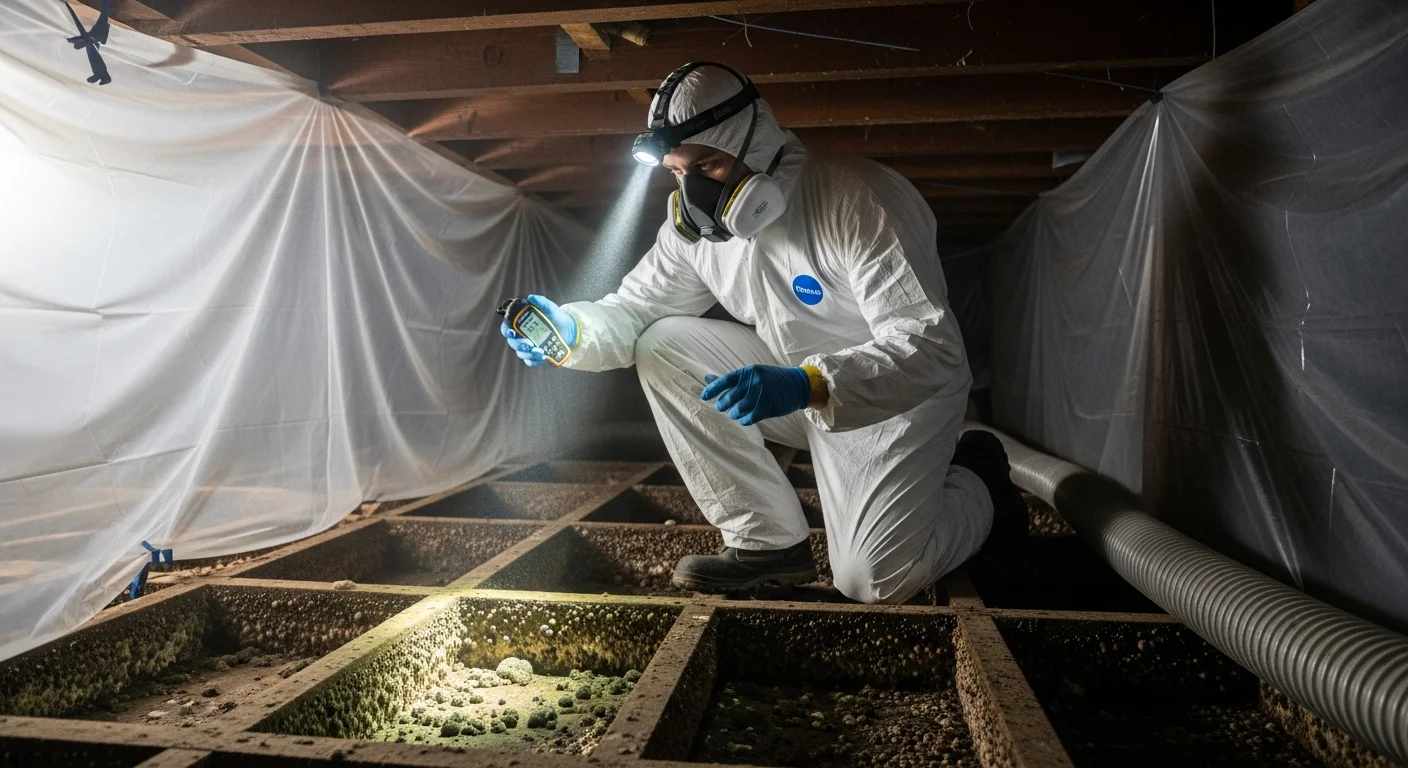
Mold Remediation in Blacksburg, South Carolina
South Carolina has no state mold inspector license — anyone can legally call themselves a mold remediation company in Cherokee County. Blacksburg's combination of 47-inch annual rainfall, Cherokee County clay acting as a continuous moisture pump, and a housing stock dominated by 1970s crawl space construction makes it one of the most mold-susceptible small towns in Upstate SC. Palm Build holds IICRC S520 certification — the only defensible benchmark in the state — and every Blacksburg remediation includes full containment, HEPA filtration, and verified post-remediation clearance.
45-75 min
Emergency Response
24/7
Dispatch Available
IICRC
Certified Technicians
Why Blacksburg Homes Are Prone to Mold
Four factors converge in Blacksburg to create near-constant mold pressure — most of them structural and predictable, none of them accidents.
Cherokee County Clay Soil Acts as a Moisture Pump
Cherokee County's Piedmont clay drains at a fraction of an inch per hour. After any rain event, the soil holds moisture at the surface for weeks — feeding vapor continuously into crawl spaces through ground-level vapor drive. The result is a near-constant moisture source under most of Blacksburg's older homes, regardless of what the weather is doing above ground.
Crawl Space Prevalence in 1970s Stock
Blacksburg's median home construction year is 1971. Homes built in that era used vented crawl space foundations — a design that, in Cherokee County's climate, creates a moisture trap. Warm humid air enters through vents, condenses on cooler wood surfaces, and provides the constant moisture that mold requires. Without encapsulation, these crawl spaces fight mold every summer.
A Muggy Season That Lasts 5 Months
From late May through late September, Blacksburg's dew points consistently climb above 70°F. At these humidity levels, any wet material — damp drywall, wet insulation, saturated wood — becomes a mold-colonization site within 24 to 48 hours. South Carolina's summer doesn't allow for gradual drying: every water event is also a mold event.
South Carolina Has No Mold License Requirement
A state-issued SC guidance document explicitly confirms there are no state or federal laws for mold remediation in South Carolina. Any contractor can legally offer mold services in Blacksburg without training, certification, or accountability. The IICRC S520 standard is the only meaningful benchmark — and most unqualified contractors in the area cannot document S520 compliance.
Signs of Mold in Blacksburg Homes
In Blacksburg's older stock — 1960s-1970s homes in Downtown, Garden Lakes, and Brown Burrough — mold often hides for years before visible signs appear. Here is what to look for.
Persistent Musty Odor
A musty, earthy smell that doesn't improve with ventilation — especially in lower-floor rooms or near crawl space access points — is the most reliable early indicator of mold growth in Blacksburg's older homes.
Discoloration at Floor Level
Black, green, or gray staining on baseboards, lower drywall panels, and around floor registers signals moisture intrusion from below. In 1970s homes with original plaster walls, these stains can appear far from the actual mold source.
Soft or Sagging Floors
When wood subfloor and joist assemblies absorb crawl space moisture for extended periods, they begin to soften. A floor that flexes more than it used to — especially over a crawl space — indicates moisture-damaged structural components.
Health Symptoms That Improve Away From Home
Persistent nasal congestion, headaches, fatigue, or respiratory irritation that consistently improves when you leave the home for extended periods is a clinical indicator of indoor mold exposure — even when no visible mold is present.
Efflorescence on Foundation Walls
White mineral deposits (efflorescence) on concrete block or brick crawl space walls indicate water has been moving through the masonry repeatedly — a direct pathway for moisture-driven mold growth on adjacent wood substrates.
Visible Mold on Surfaces
Any visible mold — regardless of color or size — on walls, ceilings, HVAC ducts, or crawl space framing requires professional assessment. What is visible at the surface is rarely the full extent of contamination.
If you notice any of these signs: do not disturb the mold. Attempting to clean visible mold without proper containment spreads spores through your HVAC system and into unaffected areas. Call for a professional assessment first.
South Carolina Mold Licensing: What Blacksburg Homeowners Must Know
The official SC position:
A state-issued South Carolina guidance document explicitly states: there are no state or federal laws, regulations, or standards for mold or indoor air quality in South Carolina. The former DHEC (now restructured into separate agencies) does not regulate mold and cannot test, monitor, or inspect for mold in homes or public buildings.
SC House Bill H.5109 (2025–2026 session) would create a certification framework for mold assessment and remediation providers. It has not yet passed into law. Until it does, ANSI/IICRC S520 is the only defensible benchmark.
Common Claims to Question Before You Sign
"This company is state-licensed for mold in South Carolina"
False — SC does not license mold inspectors or remediators. There is no state mold license. Anyone claiming otherwise is either misinformed or misleading you.
"We're certified by the state of South Carolina for mold work"
SC guidance explicitly states there are no state or federal certification programs for mold. State certification for mold remediation does not exist in SC.
"Our mold inspector is licensed"
SC does not license mold inspectors. The word "licensed" in this context has no legal meaning for mold work in South Carolina. Ask specifically for IICRC S520 documentation.
What to ask instead: Ask every contractor for their IICRC S520 certification documentation. Ask for a written scope of work tied to contamination level as defined by S520 Table 1. Ask for post-remediation clearance testing by an independent third party. These are the questions that distinguish qualified remediators from unqualified ones in South Carolina.
Crawl Space Mold in Blacksburg: The 5-Step Pathway
Crawl space mold is Blacksburg's most common property damage problem. Here is exactly how Cherokee County clay and vented crawl space design combine to produce it — in order, every time.
Clay Soil Stays Wet After Rain
Cherokee County clay drains at a fraction of an inch per hour. After a rain event, soil moisture at the foundation level remains elevated for weeks — continuously pressing against block walls and vents.
Vapor Drives Into the Crawl Space
Ground-level moisture vapor moves upward through the soil surface and through crawl space vents. In summer, warm humid outside air also enters through vents and loses heat when it contacts cooler surfaces below the floor.
Wood Surfaces Reach Mold-Permissive Moisture
Joists, subfloor plywood, and blocking absorb vapor until wood moisture content exceeds roughly 19% — the threshold at which mold colonization becomes likely. This can occur within days of a prolonged moisture event.
Mold Colonizes Joists and Subfloor
Without intervention, mold spores — present naturally in the air — find the wet wood and establish colonies. Growth accelerates in summer when temperatures are also favorable. Colonies can double in size every few days under ideal conditions.
Spores Enter Living Space
The stack effect pulls air from the crawl space into living areas through floor gaps, register boots, and subfloor penetrations. Mold spores and mycotoxins ride this airflow upward — affecting indoor air quality even when residents see no visible mold.
The fix isn't just remediation — it's moisture source elimination. Remediating mold without addressing the crawl space moisture source guarantees recurrence. Every Blacksburg mold remediation we perform includes a moisture source assessment and recommendation for permanent moisture control.
Our Mold Remediation Process in Blacksburg
Six steps — every one documented, every one required by ANSI/IICRC S520. No shortcuts, because in Cherokee County's climate, shortcuts mean recurrence.
Moisture Source Identification
Before any mold is disturbed, we identify and document the moisture source driving growth. Fixing mold without fixing the source is guaranteed recurrence — especially in Blacksburg crawl spaces where clay soil provides continuous vapor drive.
Full Containment Setup
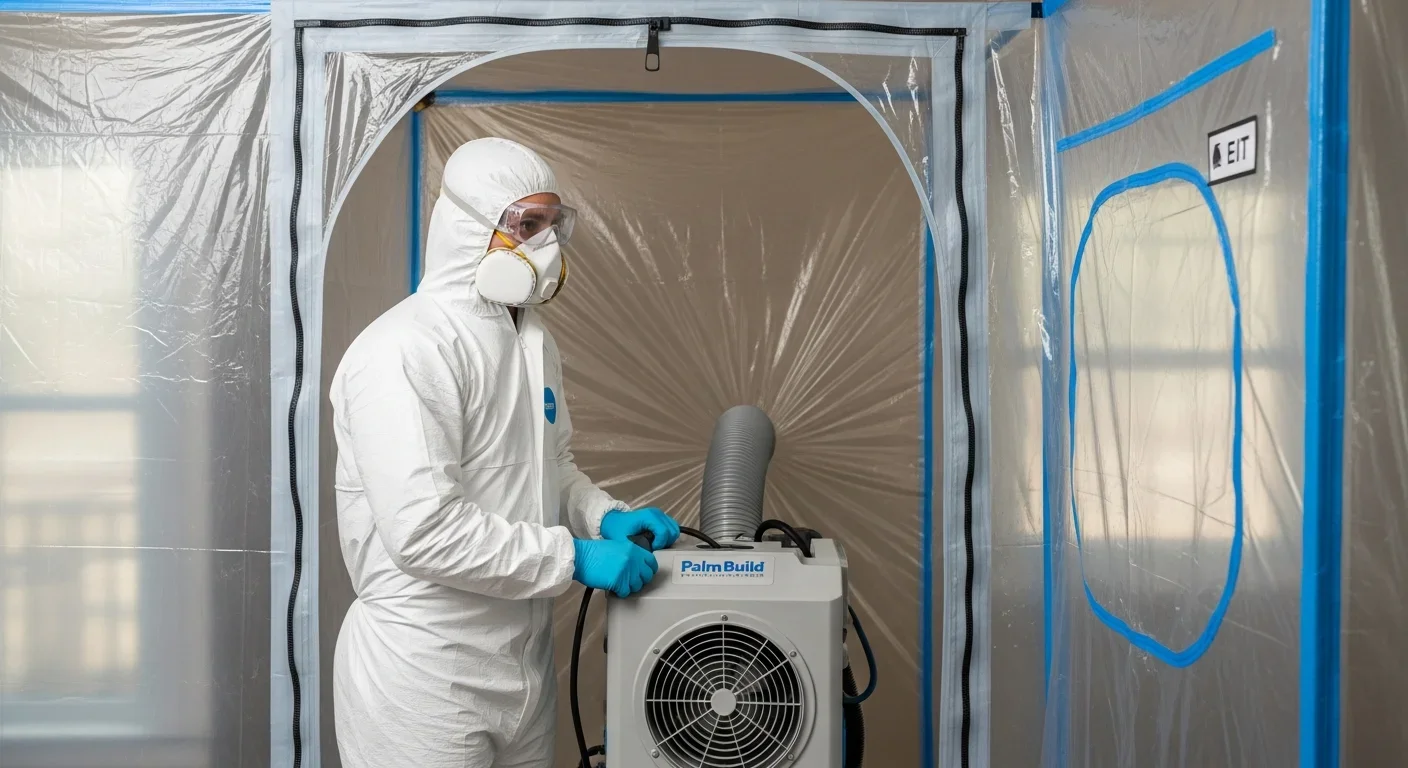
Polyethylene containment barriers isolate the work area. Negative air pressure using HEPA-filtered units prevents cross-contamination of unaffected areas. This step protects your family and your home during the entire remediation process.
HEPA Air Filtration
HEPA air scrubbers run continuously throughout remediation, capturing mold spores at 0.3 microns or larger. In Cherokee County's humid conditions, maintaining negative pressure and filtered airflow is critical during any mold disturbance.
Removal of Affected Materials
Porous materials (drywall, insulation, wood with deep penetration) are removed and disposed per IICRC S520 protocol. Semi-porous and non-porous surfaces are HEPA-vacuumed and treated with EPA-registered antimicrobial agents.
Post-Remediation Clearance Testing
Air samples are collected by an independent party after remediation is complete. Containment is not removed until sampling confirms spore counts have returned to acceptable levels. Written clearance documentation is provided for insurance and resale purposes.
Documentation Package
A complete IICRC S520-compliant documentation package: scope of work, containment records, material removal manifests, antimicrobial treatment logs, and post-clearance test results. Formatted for SC homeowners insurance claims and future property disclosure requirements.
Mold Remediation Costs in Blacksburg, SC
Cost ranges for Cherokee County homes — all estimates assume IICRC S520 protocol with independent post-clearance testing. Written estimates provided before any work begins.
Isolated Surface Mold
$500 – $1,500
Small, surface-level mold on non-porous materials (bathroom tile, painted drywall surface). Containment, HEPA treatment, antimicrobial application.
Standard Crawl Space Remediation
$1,500 – $5,000
Most common job in Cherokee County. Mold on joists and subfloor in a standard 1,000–1,500 sq ft crawl space. Includes containment, removal of affected wood, antimicrobial, and drying.
Crawl Space + Encapsulation
$4,000 – $8,000
Remediation plus vapor barrier installation and encapsulation to permanently address the moisture source. Recommended for all Blacksburg crawl space remediations to prevent recurrence.
Structural Joist Replacement
$8,000 – $15,000+
When mold has caused structural wood damage requiring sistering or replacement of joists and subfloor. Often discovered in Blacksburg's oldest 1950s-1960s stock with untreated crawl spaces.
What Affects Your Final Cost
Does Insurance Cover Mold Remediation in Blacksburg?
The Insurance Information Institute confirms that mold damage is generally not covered under standard homeowners policies — with narrow exceptions tied to covered water losses. Here is the Blacksburg reality.
When Mold May Be Covered
- Mold resulting directly from a burst pipe (documented sudden water loss)
- Mold from storm water intrusion through covered storm damage
- Secondary mold when homeowner acted promptly after a covered loss
When Mold Is Not Covered
- Mold from long-running crawl space moisture or deferred maintenance
- Mold from slow drips or gradual leaks
- Mold from flood water (requires separate NFIP flood policy)
- Pre-existing mold discovered during a claim for an unrelated event
How Our Documentation Changes the Outcome
Most mold claims in Blacksburg are denied because there is no documented link between a covered water event and the mold growth. When Palm Build responds to a water loss, we begin moisture documentation immediately — creating the evidentiary chain that connects Day 1 extraction to any subsequent mold finding. This documentation is specifically formatted to support South Carolina homeowners insurance claims with State Farm, USAA, SC Farm Bureau, Allstate, and other major carriers.
Before & After: Blacksburg Mold Remediations
From active mold colonies in Cherokee County crawl spaces to clean, verified, documented clearance — this is what IICRC S520 remediation produces.
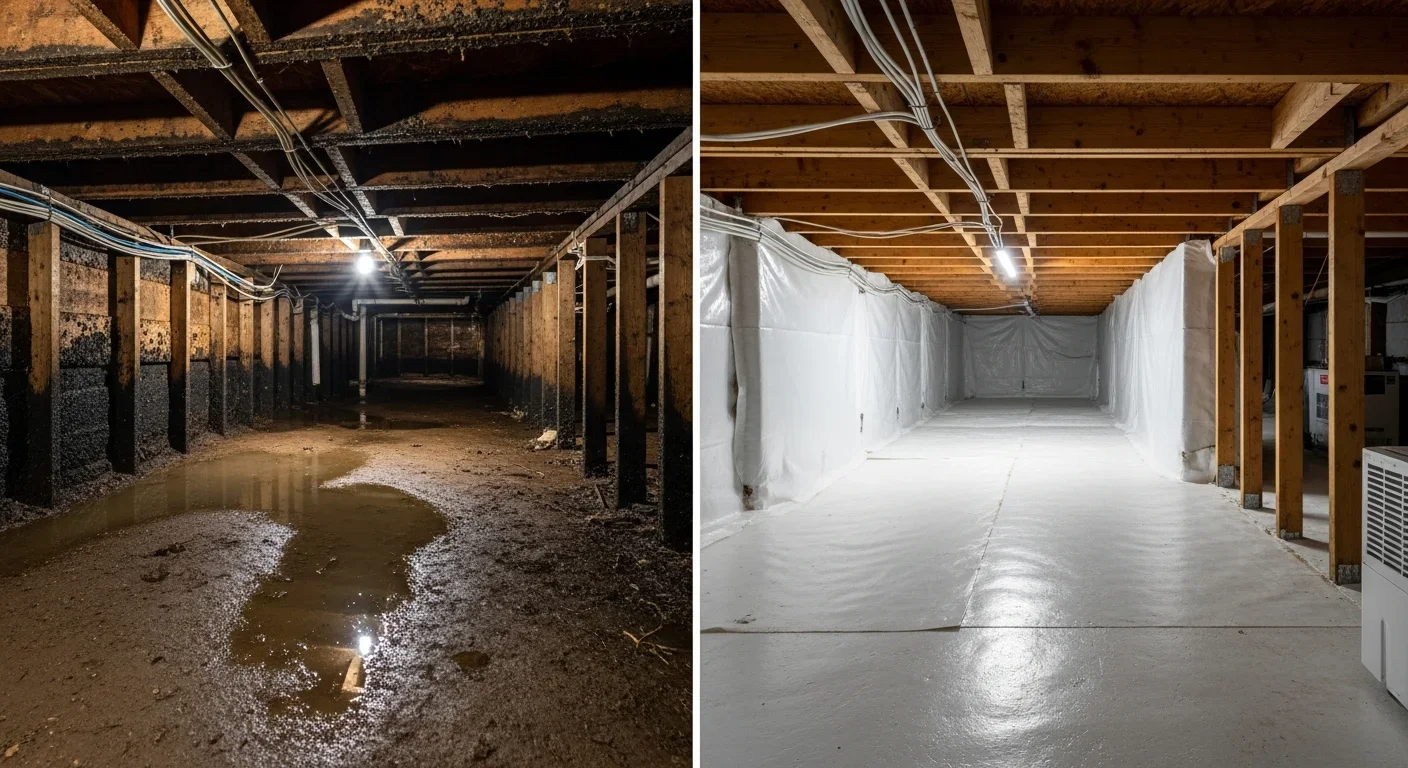
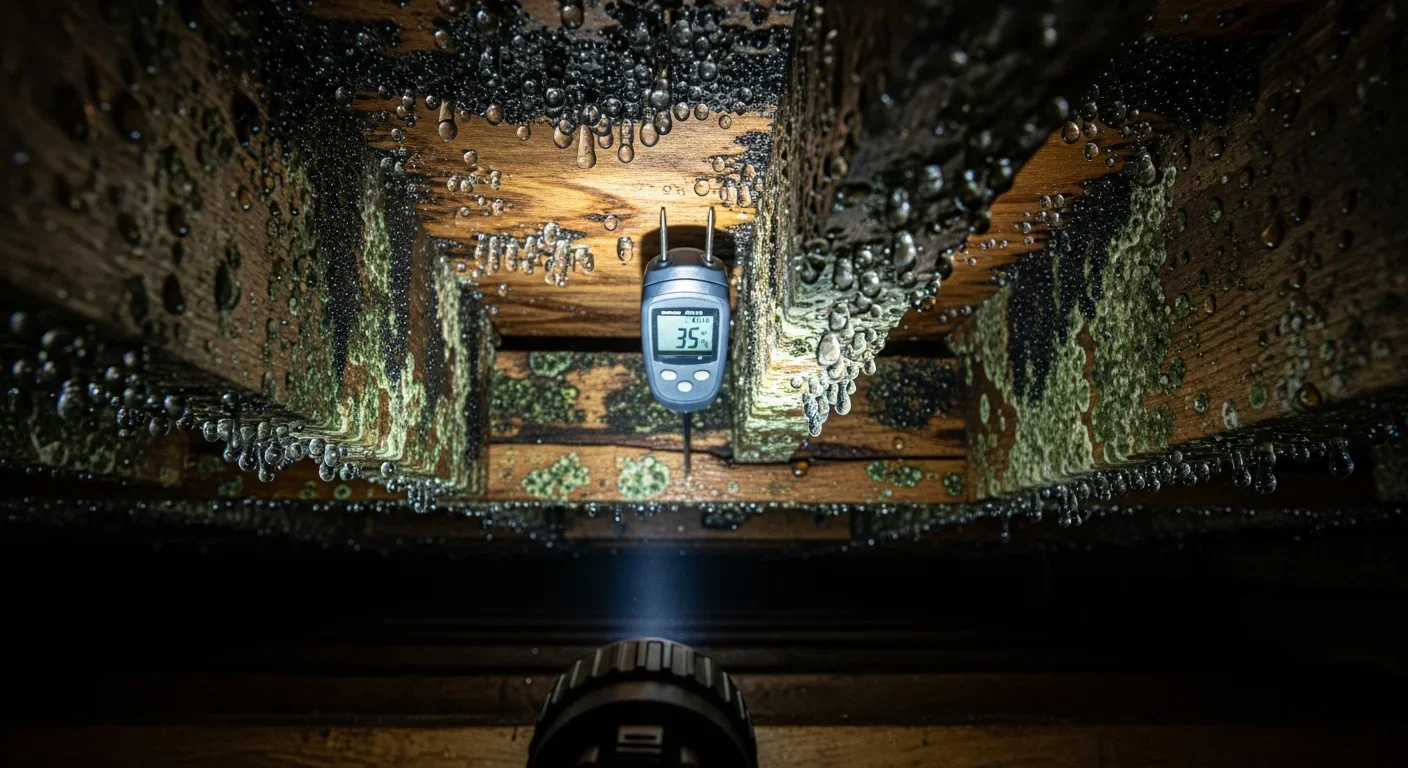
Every Blacksburg remediation ends with independent clearance testing. We do not consider a job complete until post-remediation air samples confirm spore counts are within acceptable parameters. You receive the clearance report — not just our word.
Why Blacksburg Homeowners Choose Palm Build for Mold Remediation
In a state with no mold licensing, these are the six things that actually differentiate a qualified remediator from an unqualified one.
IICRC S520 Certified
The only defensible mold remediation standard in South Carolina — where there is no state licensing. Every Palm Build technician is S520 certified and documents compliance on every Blacksburg job.
Independent Post-Clearance Testing
We collect post-remediation air samples through an independent third-party lab. We do not verify our own work — we verify it through data you can trust. Clearance documentation is included in every job package.
SC Insurance Documentation
Moisture source documentation, remediation scope, material removal manifests, and clearance results — formatted for SC homeowners carriers. State Farm, USAA, SC Farm Bureau, Allstate, and others.
Cherokee County Knowledge
We understand Blacksburg's clay soil moisture dynamics, 1970s crawl space vulnerabilities, and manufactured home remediation protocols. Most franchises applying one-size-fits-all methods in Cherokee County miss the moisture source entirely.
45-75 Minute Response
Fast response to mold assessment requests — Charlotte-based dispatch serves Cherokee County without the delays of a franchise routing service. Same-day assessments available for urgent situations.
Full Remediation Scope
From initial assessment through final clearance and coordination of moisture source repair — we manage the entire process. No subcontracting key steps to unqualified vendors.
Frequently Asked Questions — Blacksburg Mold Remediation
Specific answers about South Carolina mold regulations and Cherokee County conditions — not generic boilerplate.
Palm Build Restoration Services
Mold Guides for Cherokee County Homeowners
Mold in Blacksburg? Call for a Same-Day Assessment.
Cherokee County clay feeds mold year-round. SC has no mold license requirement — IICRC S520 is the only standard that matters. Our Charlotte team reaches Blacksburg in 45-75 minutes.