Holiday cooking fires spike every December through January, and older eastern Miramar homes built in the 1950s-1970s carry aging electrical systems that fail without warning. When fire and smoke damage strikes, CBS/stucco construction traps soot and smoke odor inside concrete block cavities where it persists for months. Palm Build's Deerfield Beach team responds 24/7 with emergency board-up, soot removal, HVAC decontamination, and full reconstruction — with the insurance documentation Florida carriers require.
Deerfield Beach — Minutes from Miramar Under 45 min Response IICRC Certified
Miramar's housing stock spans six decades — from 1950s CBS bungalows in eastern
neighborhoods like Foxcroft and Miramar Tropical to 2010s gated communities in
western Miramar like Sunset Falls and Monarch Lakes. This range creates a
combination of fire risk factors driven by aging electrical systems,
construction-era hazards like Chinese drywall, and South Florida's year-round HVAC
dependency that turns every duct system into a smoke highway.
Outdated Electrical in Eastern Miramar Homes (1950s-70s)
Critical
Miramar's oldest neighborhoods east of Palm Avenue — Foxcroft, Miramar Tropical, and Sun Land Park — contain homes built between the 1950s and 1970s with 100-amp or 150-amp electrical panels designed for window AC units and basic appliances. These panels now power central AC systems running 10-11 months per year, modern kitchens, home offices, and pool pumps. Decades of added circuits, DIY modifications, and handyman upgrades have left many homes with mismatched breakers, double-tapped circuits, and Federal Pacific or Zinsco panels known for failure to trip during overload. Aluminum wiring in the oldest stock creates additional arc-fault risk at every connection point.
Areas: Foxcroft, Miramar Tropical, Sun Land Park
Chinese Drywall Corroding Copper Wiring (2005-2008)
Critical
Miramar homes built during the 2005-2008 construction boom — particularly in Sunset Falls, portions of Silver Shores, and late-phase builds in Monarch Lakes — may contain Chinese-manufactured drywall that off-gasses hydrogen sulfide. This gas corrodes copper wiring, electrical connections, HVAC evaporator coils, and appliance components from within wall cavities. The corrosion creates resistance at wire connections, generating heat that can ignite surrounding materials. Because these are relatively newer homes with modern electrical loads, the combination of corroded connections and high amperage draw makes the fire risk particularly acute.
Areas: Sunset Falls, Silver Shores (2005-2008 builds), late-phase Monarch Lakes
Holiday Cooking Fires: December-January Peak
Seasonal
Miramar's diverse population drives a holiday cooking fire spike from late November through January. Deep-frying turkeys near lanai screens during Thanksgiving and Christmas, unattended stovetops during large family gatherings, and candle use near window treatments all contribute to seasonal kitchen fire incidents. January brings additional risk from rare cold snaps pushing overnight temperatures into the 30s-40s — residents in older eastern Miramar homes without central heating use portable space heaters placed too close to drapes and bedding, overloading circuits never designed for that electrical draw.
Areas: City-wide (peak Nov-Jan)
CBS/Stucco Construction Traps Smoke in Block Cavities
High
Nearly every Miramar home — from 1960s CBS bungalows in Foxcroft to 2010s construction in Sunset Falls — is built from concrete block and stucco (CBS). When fire occurs, smoke infiltrates the hollow cores of concrete block walls through microscopic cracks, mortar joints, and penetrations around electrical outlets and plumbing. Once inside, smoke becomes trapped — invisible from the surface but actively releasing odor compounds for weeks or months. In Miramar's 80%+ summer humidity, moisture continuously activates these trapped odor molecules, causing the smell to surge and recede with weather changes. Standard cleaning cannot reach smoke inside block cavities.
Areas: All Miramar neighborhoods (CBS construction city-wide)
Year-Round HVAC Spreads Smoke Through Ductwork
High
Miramar homes run air conditioning 10-11 months per year. When fire or smoke occurs, the HVAC system becomes a contamination distribution network — drawing smoke and soot particles into the return air, through the air handler, and out every supply register in the home. Within hours of a fire, every room connected to the duct system contains smoke residue, even rooms far from the fire origin. The ductwork itself becomes contaminated: soot coats interior surfaces, odor molecules bind to duct insulation, and particulate settles in every register boot and flex duct run. Skipping duct cleaning means the odor returns within days of surface cleaning.
Areas: All Miramar neighborhoods
Kitchen fire damage in a Miramar CBS home — soot coats stucco walls and spreads
through HVAC ductwork to every room
Miramar Fire Risk at a Glance
1950s-70s eastern homes with outdated electrical panels
Chinese drywall in 2005-2008 builds corroding copper wiring
Holiday cooking fires peak December through January
CBS/stucco traps smoke in hollow block wall cavities
Year-round HVAC spreads contamination through every duct
Neighborhood Fire Risk Profiles
Miramar Neighborhood Fire Risk Profiles
From 1950s-era homes in Foxcroft with original aluminum wiring to Chinese drywall-era
builds in Sunset Falls, every Miramar neighborhood carries a distinct fire risk profile
shaped by construction era, wiring type, and building materials.
Foxcroft / Miramar Tropical
Critical
Built: 1950s-1970sType: SFH original Miramar
Oldest wiring, aluminum circuits, Federal Pacific panels
Miramar's oldest housing stock with original aluminum wiring, undersized electrical panels, and ungrounded outlets. These homes were built for 1960s electrical loads — window AC units and a few appliances. Today they run central HVAC, multiple flat screens, EV chargers, and full kitchens on circuits never designed for it. Arcing behind CBS walls is the primary ignition source. Federal Pacific Stab-Lok panels are known for failure to trip during overload.
Sunset Falls
High
Built: 2005-2008Type: SFH gated community
Chinese drywall corrosion, copper wire degradation
Built during the Chinese drywall era, homes in Sunset Falls have documented sulfur off-gassing that corrodes copper wiring at junction boxes, outlet connections, and breaker terminals. The corrosion creates intermittent arcing inside walls — a fire hazard that standard inspections cannot detect without invasive testing. HVAC coils also corrode, compounding system failure risk.
Huntington
High
Built: 1980sType: SFH established neighborhood
1980s electrical systems, aging breaker panels
Huntington homes have 40-year-old electrical systems with original breaker panels entering failure age. Circuit breakers that should trip during overloads fail to activate — a well-documented issue with panels from this era. Combined with DIY electrical modifications common in older Miramar homes, the fire risk is elevated throughout the neighborhood.
Miramar Town Center
High
Built: 2005-2015Type: Mid-rise condos, mixed-use
Shared fire walls, multi-unit smoke migration via HVAC
Mid-rise condo and mixed-use buildings with shared fire-rated walls. While fire suppression systems limit flame spread, smoke migrates through HVAC plenums, electrical conduit penetrations, and plumbing chases into adjacent units. A kitchen fire in one unit can deposit soot in six neighboring units through shared air handling. HOA coordination and separate HO-6/master policy claims add complexity.
Newer construction with modern wiring, but the large kitchen layouts and active cooking culture produce grease fires at above-average rates. Dryer vent runs through CBS walls exceed recommended lengths, causing lint accumulation and potential ignition. HVAC systems circulate smoke rapidly through open floor plans. Lakefront humidity accelerates secondary soot damage.
Silver Shores
Moderate
Built: 2000-2005Type: SFH lakefront community
Appliance fires, smoke distribution via open floor plans
Modern CBS construction with standard electrical, but open-concept floor plans and large HVAC systems mean any fire event distributes smoke throughout the entire home within minutes. Lakefront humidity accelerates secondary damage — soot bonds to moisture on surfaces, making cleaning more difficult the longer it sits.
Riviera Isles
Moderate-Low
Built: 2001-2007Type: SFH waterfront gated
Potential Chinese drywall in 2005-2007 builds
Waterfront gated community with newer construction. Some homes built 2005-2007 may contain Chinese drywall — owners should verify remediation status. Primary fire risk comes from kitchen appliance fires and garage-origin electrical events. CBS construction means any smoke event requires cavity inspection.
Miramar Isles / Harbour Lakes
Low
Built: 1990s-2000sType: SFH suburban
Standard residential fire risk, cooking fires
Newer suburban homes with modern electrical systems and updated code compliance. Standard residential fire risks — cooking incidents, dryer vents, and electrical appliance failures. CBS block construction still requires specialized smoke remediation when events occur, but ignition risk is lower than older neighborhoods.
Our Fire Restoration Process
How We Restore Miramar Homes After Fire Damage
Fire restoration is more complex than water or mold because it involves multiple damage
types simultaneously — structural fire damage, soot contamination, smoke odor, and water
from fire suppression. Here's our six-step process tailored to Miramar's CBS
construction and Broward County code requirements.
01
Emergency Board-Up & Securing
Hours 1-4
02
Damage Assessment & Soot Classification
Day 1-2
03
Soot & Smoke Removal
Days 2-8
04
Structural Cleaning & HVAC Decontamination
Days 5-12
05
Odor Elimination
Days 8-21
06
Full Code-Compliant Reconstruction
Weeks 2-8+
01
Emergency Board-Up & Securing
Hours 1-4
We secure your Miramar home against weather, theft, and further damage. This includes boarding windows, tarping any roof damage, and securing doors. In South Florida, where afternoon thunderstorms develop daily from May through October, an unsecured fire-damaged home can sustain thousands in additional water damage within hours. For condo units in Miramar Town Center, we coordinate with HOA management and building security. Gated communities like Sunset Falls and Monarch Lakes require specific guard gate and HOA notification protocols before crews can begin work.
02
Damage Assessment & Soot Classification
Day 1-2
Our IICRC-certified team performs a comprehensive walk-through documenting every affected area with photos, video, and moisture readings. We classify the fire and soot type (protein, natural, synthetic), test for Chinese drywall contamination in 2005-2008 construction common in Sunset Falls and late-phase Monarch Lakes, assess structural integrity of CBS block walls and concrete tie-beam systems, and create a detailed scope of work. For older eastern homes in Foxcroft and Miramar Tropical, we evaluate original electrical systems as contributing factors. Documentation is formatted exactly how Broward County adjusters and Florida carriers expect to receive it.
03
Soot & Smoke Removal
Days 2-8
Professional soot removal uses chemistry matched to the specific soot type. HEPA vacuuming removes loose particulate, chemical sponges lift embedded residue, and wet cleaning with specialized detergents addresses remaining contamination on stucco walls, tile, cabinetry, and structural members. CBS construction requires specialized techniques to clean porous stucco without damaging the finish. For synthetic soot from plastics common in newer western Miramar homes, solvent-based cleaners and multiple passes are standard. Tile grout requires extraction to prevent permanent discoloration.
04
Structural Cleaning & HVAC Decontamination
Days 5-12
Deep cleaning of all structural surfaces including CBS block walls, concrete tie-beams, and roof trusses. Complete HVAC duct cleaning and coil sanitization is mandatory — systems run year-round in Miramar, continuously circulating residual smoke particles. Every supply register, return air boot, flex duct run, and the air handler itself must be professionally cleaned. In Miramar's CBS homes, smoke penetrates through electrical outlets and plumbing penetrations into block cavities, requiring specialized cavity treatment.
05
Odor Elimination
Days 8-21
Smoke odor elimination in Miramar requires multiple techniques due to 80%+ summer humidity. Thermal fogging penetrates CBS wall cavities where smoke becomes trapped in hollow block cores. Ozone treatment handles sealed and evacuated spaces. Hydroxyl generation treats occupied areas. Expect 2-3 additional treatment cycles compared to dry-climate restoration due to moisture reactivating trapped odor molecules. Odor verification testing confirms elimination before reconstruction begins — Florida's humidity means premature clearance leads to odor recurrence.
06
Full Code-Compliant Reconstruction
Weeks 2-8+
Drywall, stucco repair, tile, cabinetry, painting, electrical, plumbing, and finish work. Miramar falls within Broward County's building code jurisdiction, requiring all reconstruction to meet current Florida Building Code — impact-rated windows and doors, upgraded electrical to current NEC standards, and current insulation requirements. For older homes in Foxcroft and Miramar Tropical, reconstruction includes bringing the entire electrical system up to current code — eliminating the root cause of many fire incidents. We manage the full Broward County permitting and inspection process.
Why Our Miramar Fire Process Works
1
Rapid Response
Under 30-minute deployment from our Deerfield Beach headquarters to any Miramar address
2
CBS Expertise
Thermal fogging injection into hollow block cores — the only way to reach trapped smoke in CBS construction
3
Soot Classification
Chemistry matched to specific soot type (protein, natural, synthetic) prevents permanent staining of stucco
4
Insurance-Ready
Documentation formatted for Broward County adjusters from day one — critical under Florida's 1-year filing deadline
A single fire event creates distinct damage types that each require different
remediation techniques, timelines, and expertise. Addressing only the visible damage
while ignoring smoke trapped in wall cavities or soot contamination in ductwork leads to
persistent odor, hidden damage, and insurance disputes months later.
Kitchen Fires
Most Common
The most common fire type in Miramar homes. Kitchen fires produce protein soot — a nearly invisible, yellowish residue with an extremely pungent odor that penetrates every surface far beyond the kitchen. In Miramar's open-concept CBS homes, the residue spreads rapidly and bonds chemically to porous stucco. Standard household cleaners spread the residue and set stains permanently. Holiday cooking fires during Miramar's December-January peak season account for a disproportionate share of incidents, especially deep-frying near lanai areas.
Protein soot requires enzymatic cleaners and specialized degreasing
Thermal fogging with protein-specific solutions for CBS wall cavities
Multiple treatment cycles standard in Miramar humidity
Tile grout requires extraction to prevent permanent discoloration
Electrical Fires
Highest Structural Risk
The dominant structural fire risk in Miramar — driven by aging panels in 1960s-70s eastern neighborhoods and Chinese drywall corrosion in 2005-2008 western construction. Electrical fires produce intense heat within CBS wall cavities, charring wood framing while concrete block remains intact. The fire often smolders inside wall cavities for hours, making full damage invisible from the surface. Synthetic soot from burning wire insulation is toxic and extremely difficult to remove from porous stucco.
Full electrical system evaluation required before reconstruction
Solvent-based cleaners for synthetic soot on CBS surfaces
Thermal imaging to locate hidden hotspots in block cavities
Full PPE required due to toxic compounds from burned wiring insulation
Smoke Damage (CBS Cavities)
Secondary Damage
In Miramar's CBS construction, smoke infiltrates hollow cores of concrete block walls through microscopic cracks, mortar joints, and penetrations around electrical outlets and plumbing. Once inside, smoke becomes trapped — invisible from the surface but actively releasing odor compounds for weeks or months. Year-round HVAC operation distributes smoke to every room via ductwork within hours. In Miramar's 80%+ summer humidity, moisture continuously reactivates trapped odor molecules.
Thermal fogging injection into CBS block cavities
Complete HVAC duct cleaning and coil sanitization mandatory
Ozone treatment for sealed spaces, hydroxyl for occupied areas
Multiple treatment cycles over 2-4 weeks with odor verification
Soot Contamination (HVAC Distribution)
Whole-Home
Soot deposits on every surface exposed to smoke, and the type of soot determines cleaning chemistry. In Miramar's newer western homes with engineered flooring, foam insulation, and synthetic furnishings, fires produce predominantly synthetic soot — thick, black, sticky, and toxic — requiring the most aggressive cleaning protocols. HVAC systems running year-round draw soot into returns and distribute it through every supply register, contaminating the entire home.
Soot type classification determines cleaning chemistry
HEPA vacuuming for dry soot — never wipe, it smears and sets
Chemical sponges for medium contamination on stucco
Complete duct system cleaning including flex runs and register boots
Water Damage from Firefighting
Compounding Damage
Fire suppression water creates immediate secondary damage in Miramar's CBS homes. Water saturates concrete block walls, floods slab-on-grade floors, and soaks into drywall and insulation. In Miramar's 80%+ humidity, this water cannot evaporate naturally — within 24-48 hours, mold begins colonizing fire-damaged materials that are now also water-saturated. Addressing fire damage without simultaneously managing water damage leads to mold remediation on top of fire restoration.
Immediate water extraction from fire suppression runoff
CBS block-core drying to prevent mold in wall cavities
Dehumidification critical in Miramar humidity
Mold prevention treatment on all water-contacted surfaces
Kitchen fire damage showing protein soot on CBS stucco and tile surfaces — each soot
type requires different cleaning chemistry to avoid permanently setting stains.
Seasonal Patterns
Miramar Fire Risk Calendar
Miramar's fire risks follow two seasonal patterns: a sharp December-January spike from
holiday cooking and space heater fires, and a sustained summer escalation as aging
electrical systems strain under maximum AC loads. Underlying both: a constant baseline
risk from decades-old electrical infrastructure across the city.
December - January
Holiday Cooking & Space Heater Fires
Peak
Miramar's fire risk peaks from late November through January. Holiday cooking fires dominate — deep-frying turkeys near lanai screens during Thanksgiving and Christmas, unattended stovetops during large family gatherings, and candle use near window treatments throughout the holiday season. January brings additional risk when rare cold snaps push overnight temperatures into the 30s-40s. Residents in older eastern Miramar homes without central heating reach for portable space heaters, placing them too close to drapes and bedding while overloading circuits in homes with 1960s-era electrical panels.
Active months: Nov-Jan (peak Dec-Jan)
June - September
Electrical Overload From AC Strain
Seasonal High
Miramar's summer heat drives central AC systems to maximum capacity for months on end, stressing aging electrical panels and wiring. In eastern Miramar homes with 1960s-80s electrical — Foxcroft, Huntington, and Miramar Tropical — 100-amp and 150-amp panels serving modern AC loads, pool pumps, and kitchen appliances regularly exceed safe capacity. In western Miramar's 2005-2008 construction, Chinese drywall corrosion of copper wiring worsens under sustained summer electrical loads. Lightning strikes during South Florida's daily thunderstorms add power surge risk to already-stressed systems.
Active months: Jun-Sep
Year-Round
Electrical System Fires (Aging Infrastructure)
Constant
Miramar's aging electrical infrastructure creates fire risk every day of the year. Central AC systems running 10-11 months, pool pumps cycling daily, and modern appliances on decades-old circuits maintain constant load stress. Federal Pacific and Zinsco panels — known for failure to trip during overload — remain common in eastern Miramar neighborhoods. Aluminum wiring in the oldest 1960s homes creates persistent arc-fault risk at every connection point. Chinese drywall corrosion in 2005-2008 western Miramar homes is cumulative and progressive, worsening each year.
Active months: Jan-Dec
June - October
Lightning Strike Fires
Seasonal Moderate
South Florida is the lightning capital of North America, and Miramar averages 80-90 thunderstorm days per year concentrated from June through October. Lightning strikes can ignite fires directly — hitting roofs and igniting attic insulation and wood trusses, the most flammable structural component in CBS homes. Lightning also causes power surges that overload already-stressed electrical systems. Whole-home surge protectors are uncommon in older Miramar construction, leaving aging panels vulnerable to surge-induced failure and ignition.
Active months: Jun-Oct
Cost Guide
Fire Restoration Costs: Miramar vs National Average
Fire restoration costs in Miramar run 25-40% higher than national averages due to
Broward County building code requirements, CBS construction complexity, South Florida
labor and material premiums, and humidity-driven additional odor treatment cycles.
Emergency Board-Up & Securing
Miramar
$800 - $3,000
National Avg
$500 - $2,000
South Florida storm exposure requires tarping and weather protection same-day. Gated community access coordination adds time.
Smoke & Soot Cleaning
Miramar
$5,000 - $25,000
National Avg
$3,000 - $15,000
CBS stucco is porous — cleaning requires multiple passes with type-matched chemistry. Miramar's humidity drives additional treatment cycles vs dry climates.
Soot Removal (HVAC & Surfaces)
Miramar
$3,000 - $12,000
National Avg
$2,000 - $8,000
Year-round HVAC operation means complete duct system decontamination is always required. Every register boot, flex run, and the air handler must be cleaned.
Odor Treatment (Thermal Fog / Ozone)
Miramar
$4,000 - $15,000
National Avg
$2,000 - $8,000
Miramar's 80%+ humidity reactivates trapped smoke odor in CBS block cavities. 2-3 additional treatment cycles vs national average. Verification testing required.
Full Reconstruction
Miramar
$45,000 - $350,000+
National Avg
$30,000 - $200,000+
Broward County code requires impact-rated windows, reinforced connections, NEC electrical. Older home electrical modernization adds scope but eliminates fire risk.
Fire Is the Most Comprehensively Covered Peril
Unlike water or mold damage, fire is fully covered under standard Florida HO-3
policies — coverage disputes are rare compared to other claim types. Miramar
homeowners pay $5,000 to $10,000+ annually for insurance driven by hurricane and flood
risk, but fire coverage is fully included. Under Florida's 2022 reform, you have 1 year to file an initial claim. Palm Build provides detailed, line-item estimates formatted
for your insurance carrier within 48 hours of initial assessment.
Insurance Coverage
Fire Insurance Claims in Miramar: What's Covered
Fire is one of the most comprehensively covered perils under Florida homeowners
insurance. Unlike water or mold damage — which face significant coverage restrictions —
fire claims under a standard HO-3 policy rarely face outright denial. Miramar homeowners
pay $5,000 to $10,000+ annually for insurance, but fire coverage is fully included.
Florida law gives you one year from the date of loss to
file.
Florida Claim Filing Deadline: 1 Year from Date of Loss
1 Year
Initial and reopened claims must be filed within 1 year of date of loss
Fla. Stat. §627.70132
18 Months
Supplemental claims must be filed within 18 months of original claim date
Fla. Stat. §627.70132
Missing either deadline forecloses coverage entirely. Palm Build documents
damage from hour one so your claim filing meets these tight deadlines.
Standard HO-3 Fire Coverage Includes
Structural repair and reconstruction to pre-loss condition
Professional soot and smoke cleaning of all affected surfaces
Water damage from fire suppression (extraction and drying)
Contents restoration or replacement (furniture, electronics, clothing)
Additional Living Expenses (ALE) for temporary housing during restoration
Debris removal and hazardous material disposal
Code upgrades required during reconstruction (with ordinance-and-law endorsement)
Claim Documentation Requirements
What Palm Build provides from day one to support your fire claim
Immediate Photo & Video Evidence
Timestamped documentation of all fire, smoke, soot, and water damage before any cleanup begins — establishes baseline for insurance scope
Soot Type Classification Report
Professional classification of soot type (protein, natural, synthetic) determines cleaning protocols and justifies remediation costs to adjusters
Moisture Mapping (Fire Suppression Water)
Infrared thermal imaging and pin-type moisture readings document water damage from fire suppression — a separate damage category requiring its own remediation
Detailed Scope of Work
Line-item scope formatted for Broward County adjusters and Florida carriers — includes structural, cleaning, odor treatment, content, and reconstruction
Areas Where Fire Claims Get Disputed
Smoke Damage Without Visible Fire
Some carriers dispute smoke-only claims, arguing the damage is cosmetic. Professional soot classification and odor testing documentation proves contamination requires professional remediation — not just painting.
Contents Depreciation
Carriers may apply aggressive depreciation to smoke-damaged contents. Our detailed inventory with pre-loss condition documentation and professional cleaning assessments supports replacement value claims.
Pre-Existing Electrical Issues
If an electrical fire originates from known defects (Chinese drywall, aluminum wiring), some carriers argue maintenance neglect. Our documentation focuses on the sudden and accidental nature of the fire event itself.
Broward County Reconstruction Permits
Any fire reconstruction in Miramar requires Broward County building permits. All work must
meet current Florida Building Code — impact-rated windows and doors, reinforced roof
connections, upgraded electrical to NEC standards, and current insulation requirements.
For older homes in Foxcroft and Miramar Tropical, this means bringing the entire
electrical system to current code during reconstruction — which eliminates the root cause
permanently. Palm Build manages the full Broward County permitting and inspection process,
ensuring your reconstruction is code-compliant and fully covered under your insurance
ordinance-and-law endorsement.
Real fire and smoke restorations in Miramar CBS homes — from emergency board-up and soot
removal through full code-compliant reconstruction.
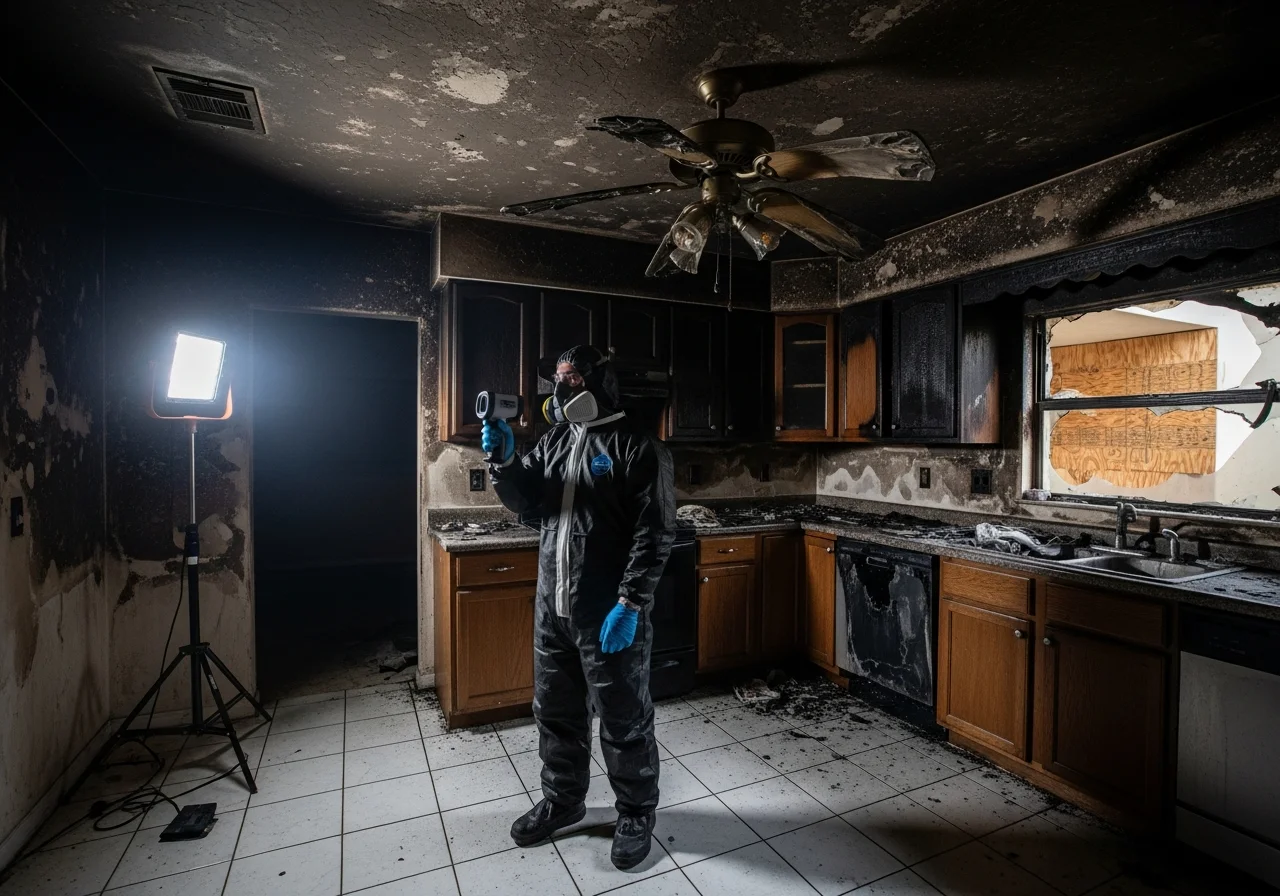
Kitchen fire damage with charred cabinets and protein soot coating on CBS stucco surfaces — each soot type requires different cleaning chemistry
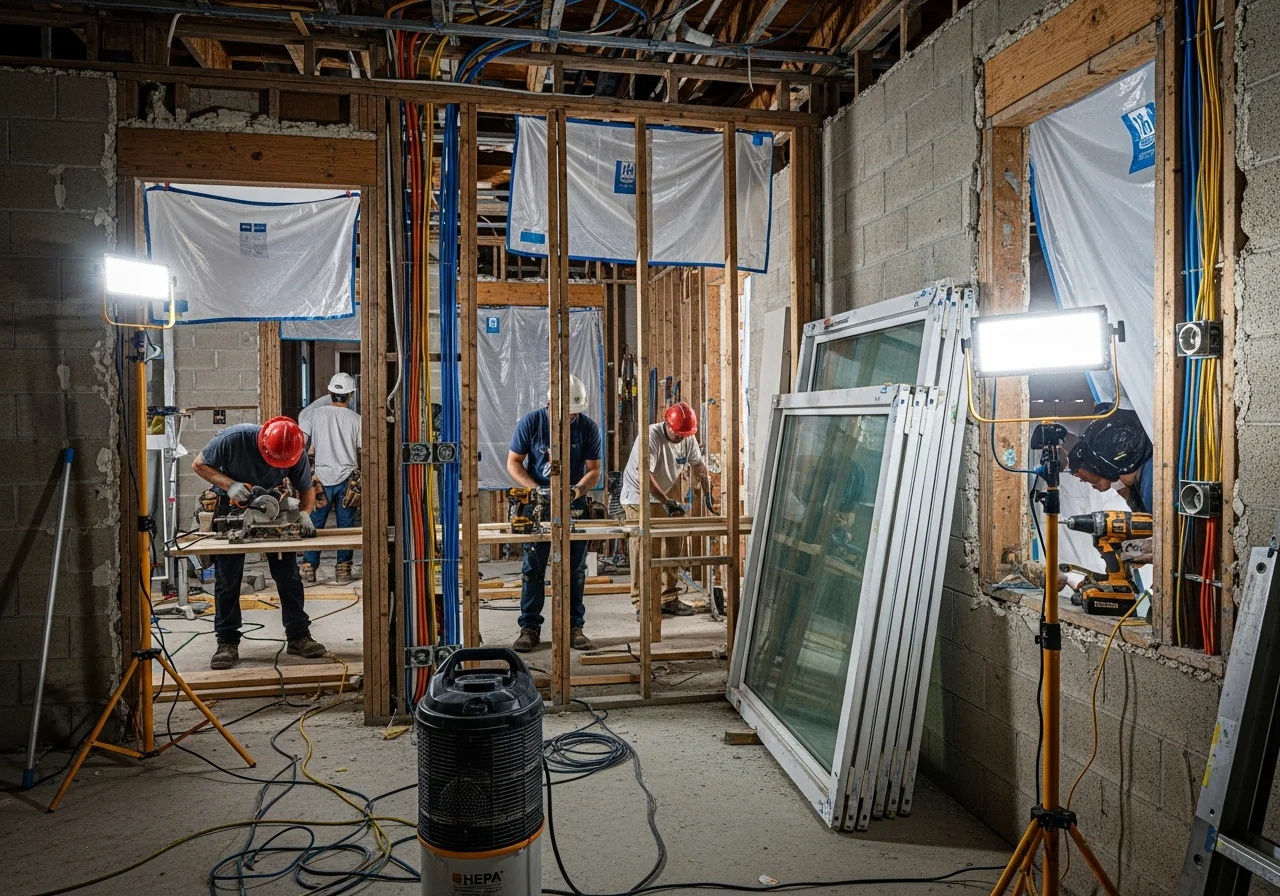
Reconstruction in progress — new framing, updated electrical to current NEC code, and CBS wall repair in a Miramar home
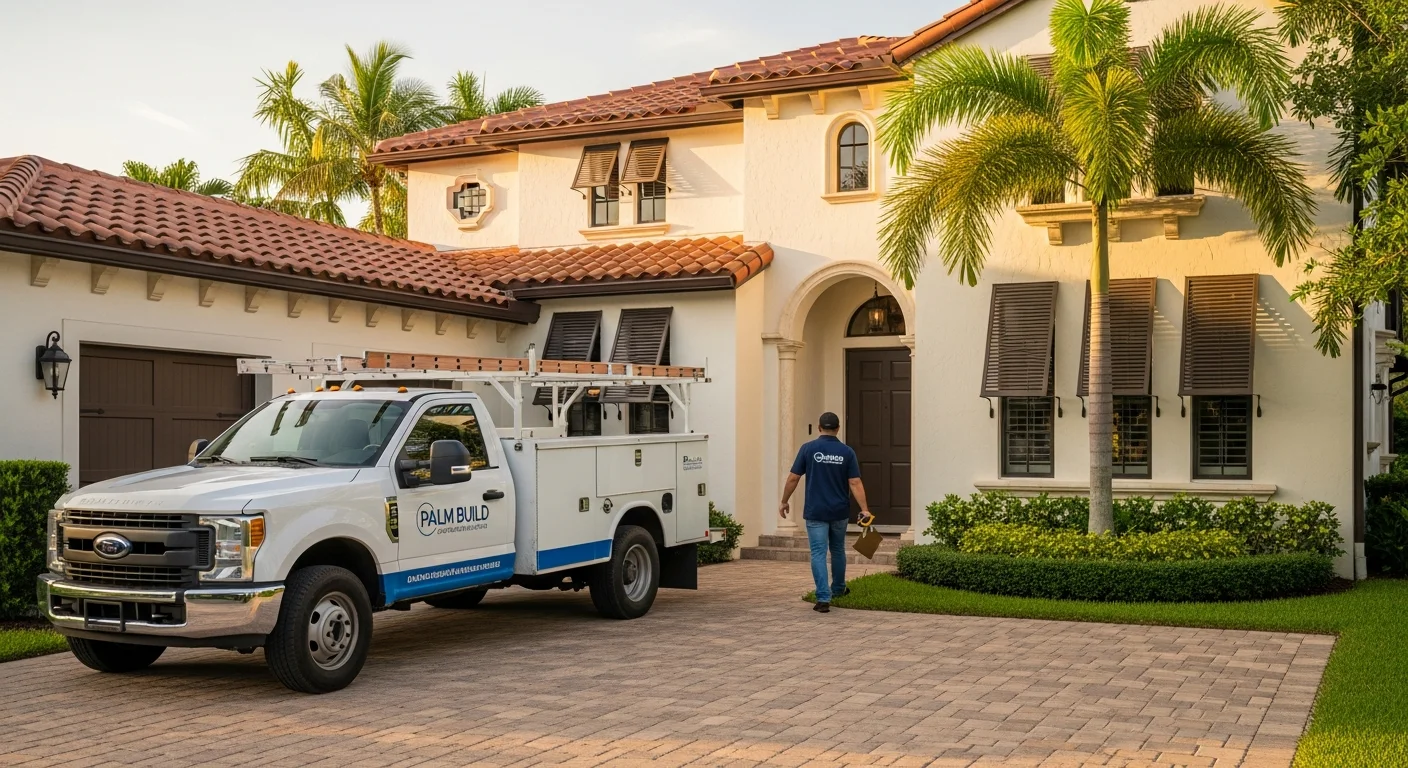
Palm Build responds to Miramar fire damage — our Deerfield Beach headquarters puts us under 30 minutes from any Miramar address
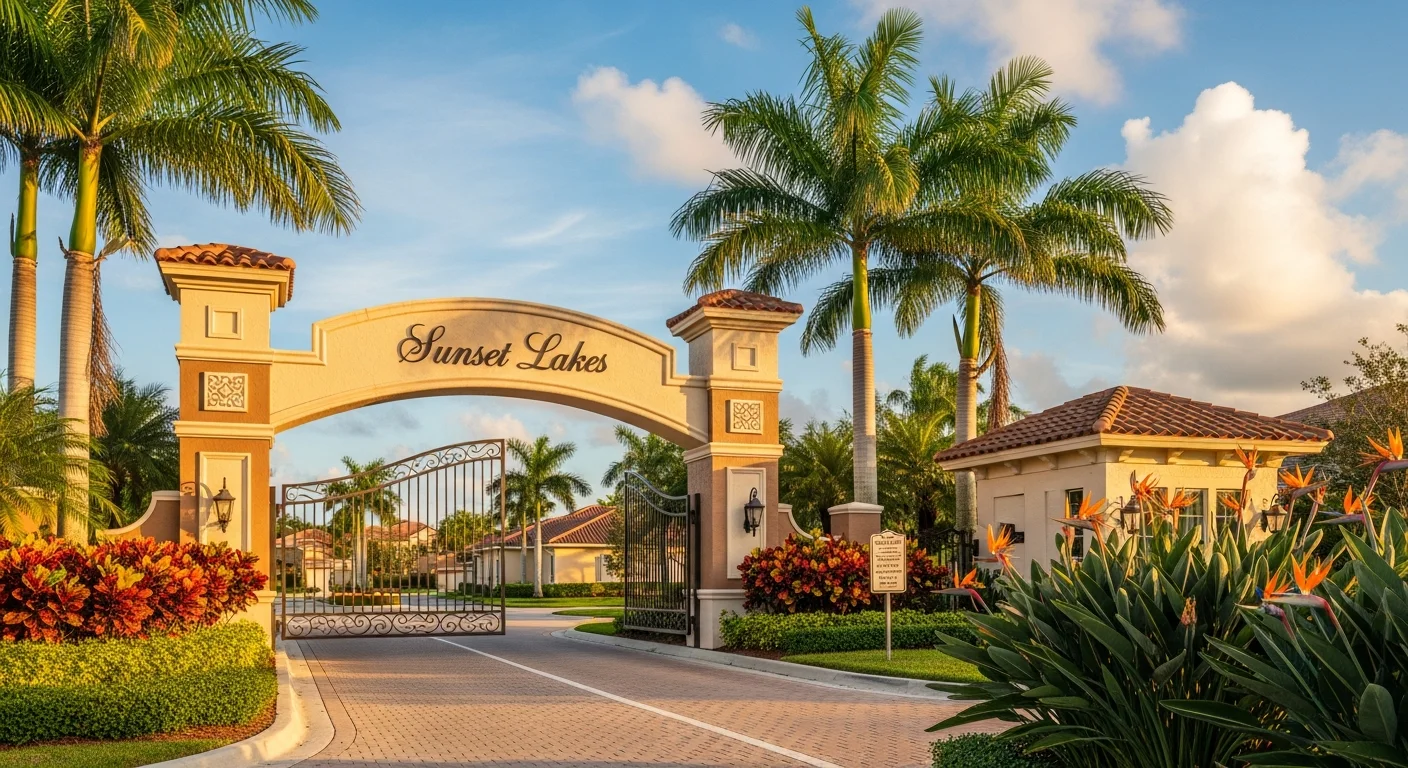
Serving all Miramar gated communities — Sunset Falls, Monarch Lakes, Silver Shores, Riviera Isles, and more
The Palm Build Difference
Why Miramar Homeowners Choose Palm Build After a Fire
Fire restoration demands a company that understands CBS construction, Broward County
code, and Florida's insurance landscape — all at once. Palm Build is that company.
Deerfield Beach HQ — Under 30 Minutes to Miramar
Our South Florida operations hub at 786 S Military Trail in Deerfield Beach puts us under 30 minutes from any Miramar address — from eastern neighborhoods like Foxcroft and Miramar Tropical to western gated communities like Sunset Falls and Monarch Lakes. Board-up, tarping, and soot stabilization begin the same hour you call.
IICRC Fire & Smoke Certified
Every crew lead holds current IICRC Fire and Smoke Restoration Technician (FSRT) certification. We follow the S540 standard for professional fire and smoke damage restoration — critical for both proper remediation and the insurance claim documentation that Florida carriers require for approval.
CBS Smoke Remediation Specialists
Miramar is built almost entirely from CBS spanning six decades of construction. Our team understands how smoke travels through block cavities, how soot bonds to porous stucco, how to inject thermal fog into hollow cores for odor elimination, and how to rebuild to current Broward County code — including impact-rated components.
Chinese Drywall & Aging Electrical Assessment
Miramar's unique housing hazards — Chinese drywall in 2005-2008 western construction and aging electrical in 1960s-70s eastern homes — require specialized assessment during fire restoration. We test for Chinese drywall contamination and evaluate electrical systems as part of our standard scope, ensuring the root cause is addressed during reconstruction.
Florida Insurance Documentation Experts
Florida's insurance landscape is uniquely complex — frequent carrier changes, assignment-of-benefits regulations, and strict documentation requirements. Our fire damage documentation is formatted exactly how Broward County adjusters and FL carriers expect to see it. For condo claims in Miramar Town Center, we provide separate packages for HO-6 and master policy submissions.
Full Reconstruction to Current Code
From emergency board-up through final punch list, Palm Build handles the entire project. For older homes in Foxcroft and Miramar Tropical, reconstruction includes bringing the entire electrical system to current NEC standards — eliminating the fire risk permanently. We manage the full Broward County permitting and inspection process.
Palm Build's rapid response from our Deerfield Beach headquarters means board-up, soot
stabilization, and damage assessment begin within the first hour of your call.
Common Questions
Miramar Fire & Smoke Cleanup FAQ
How quickly can Palm Build respond to fire damage in Miramar?
Our Deerfield Beach operations hub is approximately 25 minutes from most Miramar neighborhoods. We respond 24/7/365, typically arriving in under 45 minutes for emergency board-up and initial assessment. For fire damage, the first response priority is securing the structure — boarding windows, tarping roof penetrations, and preventing secondary damage from weather exposure or unauthorized entry.
Why does smoke odor persist in Miramar's CBS/stucco homes long after a fire?
CBS (concrete block structure) construction creates sealed cavities within the wall system. During a fire, smoke is forced into these cavities under pressure, and the porous nature of concrete block absorbs smoke compounds at a molecular level. Unlike drywall on wood framing — which can be removed and replaced — concrete block requires chemical treatment, thermal fogging, or hydroxyl generation to neutralize embedded odor. Standard cleaning only addresses surface soot and does not reach the smoke trapped inside the block cavities.
My Miramar home was built between 2005 and 2008 — should I be concerned about Chinese drywall and fire risk?
Yes. Homes built during that period in developments like Sunset Falls may contain Chinese drywall, which releases sulfur compounds that corrode copper wiring, electrical connections, and HVAC components. This corrosion increases electrical resistance at connection points, generating heat that can ignite surrounding materials. Warning signs include a persistent sulfur or rotten egg smell, blackened copper pipes or wiring, and premature failure of HVAC coils. If you suspect Chinese drywall, have a qualified inspector evaluate your home — the fire risk is real and increases over time.
Does homeowners insurance cover fire and smoke damage in Miramar?
A standard HO-3 homeowners policy typically covers fire and smoke damage, including structural repair, contents cleaning or replacement, and additional living expenses if the home is uninhabitable. However, Florida law (Fla. Stat. 627.70132) requires you to file your claim within 1 year of the loss date, with supplemental claims within 18 months. The 2022 AOB reform limits assignment of benefits, so work directly with your carrier. Your hurricane deductible (typically 2% of dwelling coverage) does not apply to fire losses — the standard deductible applies instead. Palm Build documents every phase of cleanup and reconstruction to support your claim.
Does Palm Build handle board-up services for fire-damaged homes in Miramar?
Yes. Emergency board-up is the first step in our fire damage response. We secure all compromised openings — broken windows, damaged doors, roof penetrations, and garage entries — to prevent weather damage, vandalism, and pest intrusion. In Miramar's HOA communities, an unsecured fire-damaged property can trigger code enforcement action and association fines within days. We carry the insurance certificates and vendor documentation that HOA management companies require before allowing work to proceed.
What causes most house fires in Miramar?
Holiday cooking fires account for a significant spike every December through January — unattended frying, grease fires, and oven incidents. Year-round, electrical system failures are the primary structural cause, particularly in older eastern Miramar homes in Foxcroft, Miramar Tropical, and Huntington where 1950s-1970s wiring was never upgraded for modern electrical loads. Dryer vent lint accumulation is another common cause. In 2005-2008 construction, corroded wiring from Chinese drywall off-gassing creates a hidden fire risk that homeowners rarely identify until an event occurs.
Will Palm Build coordinate with my HOA after fire damage in a Miramar gated community?
Yes. Most western Miramar neighborhoods are HOA-governed gated communities that require vendor pre-approval, proof of insurance, scope-of-work documentation, and architectural review board submissions before restoration and reconstruction can begin. Palm Build maintains relationships with HOA management companies throughout Broward County and carries all required insurance documentation. We handle the coordination so you can focus on your family — including distinguishing between homeowner responsibility and association responsibility for shared structural elements.
Does Palm Build pull permits for fire damage reconstruction in Miramar?
Yes. All reconstruction work requiring structural, electrical, plumbing, or mechanical modification is permitted through the City of Miramar Building Division in compliance with the Florida Building Code. Permits are required for wall reconstruction, electrical rewiring, roof repair, window replacement, and HVAC system work. Palm Build manages the entire permit process — application, inspection scheduling, and final sign-off — as part of our full-service reconstruction. Unpermitted work voids insurance coverage and creates title issues when you sell.
Trusted Vendors
Trusted local pros in Miramar
Outside our restoration scope, these are the vetted, licensed contractors we trust
alongside our work. Personally evaluated, reference-checked, and recommended by Palm
Build.
Every hour smoke sits in CBS walls, the damage deepens. Palm Build's IICRC-certified team arrives in under 45 minutes with emergency board-up, soot removal, and HVAC decontamination — before secondary damage compounds the loss.