Hotel water losses are typically multi-floor: a single in-room fixture failure or burst riser can affect 6-12 floors in under an hour. Vertical drying logistics, elevator coordination, equipment staging, and floor-by-floor moisture mapping are baseline expectations on any hotel water-loss response.
Hotel & Hospitality Restoration
Hotel Restoration That Keeps Your Doors Open
Hotels cannot rebook a room night that was lost to downtime. Palm Build runs hotel restoration as phased corridor and room-block work — guest occupancy stays open in unaffected wings, brand-standard finishes are preserved, and F&B reopens on the health-department schedule. Property managers and brand owners get a single point of accountability from first-call to reopening.
- Phased Room Blocks
- Brand Standards
- F&B Reopening
- ADA Compliant
What you need to know
Kitchen and laundry fires are the most common hotel fire scenarios. F&B kitchen fires impact hood, duct, and the dining room HVAC system; laundry fires (often dryer lint) impact mechanical and require immediate containment to keep guest floors out of the smoke path.
Brand standards govern the rebuild. Marriott, Hilton, Hyatt, IHG, Wyndham, and other flag programs each have specific finish, hardware, signage, and guest-room standards that the rebuild must satisfy. Palm Build coordinates with the brand quality team on every flagged property.
Phased work is the operating model. Room blocks, floor-by-floor, or wing-by-wing scheduling lets the hotel keep guests in unaffected areas. Noise and disruptive work runs in the late-night or early-morning windows defined by the operations team. Daily guest communication is part of the playbook.
F&B reopening triggers the health department. Restaurants, bars, banquet kitchens, pool decks, and breakfast service areas all require health-department reinspection after fire, water, or sewage events. Hood and duct decontamination, walk-in cooler condition, and ANSUL re-certification are the reopening checklist.
ADA Title III applies at every reopening. Accessible rooms, accessible routes, accessible parking, accessible entry hardware, and signage all need to meet current ADA standards on the rebuild — failing an ADA item at reopening can extend BI loss for days and trigger compliance complaints.
From the Field
What this work actually looks like
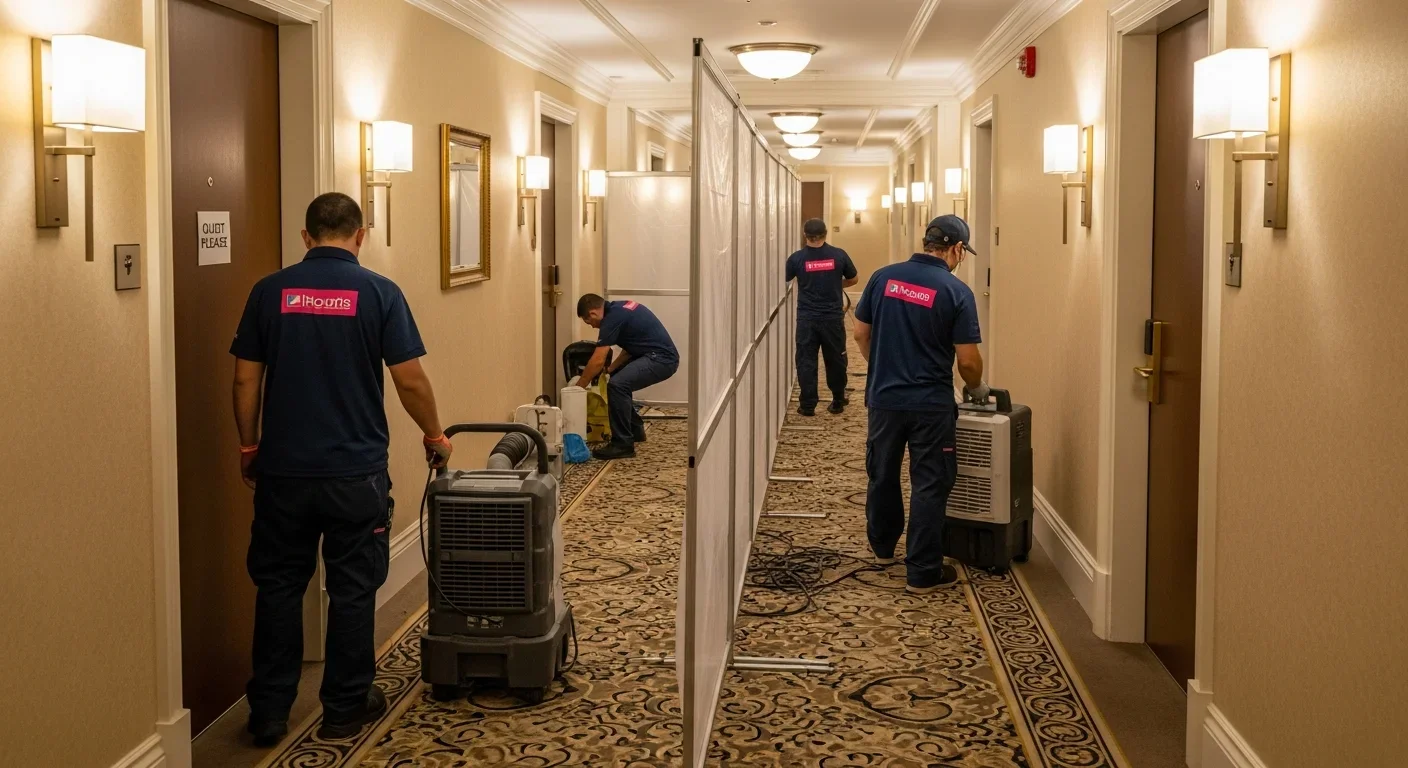
Phased corridor work with guest occupancy preserved
Critical-barrier containment seals the work zone from occupied guest rooms. Negative-air HEPA scrubbers run continuously. Quiet-please signage and access coordination protect the guest experience.
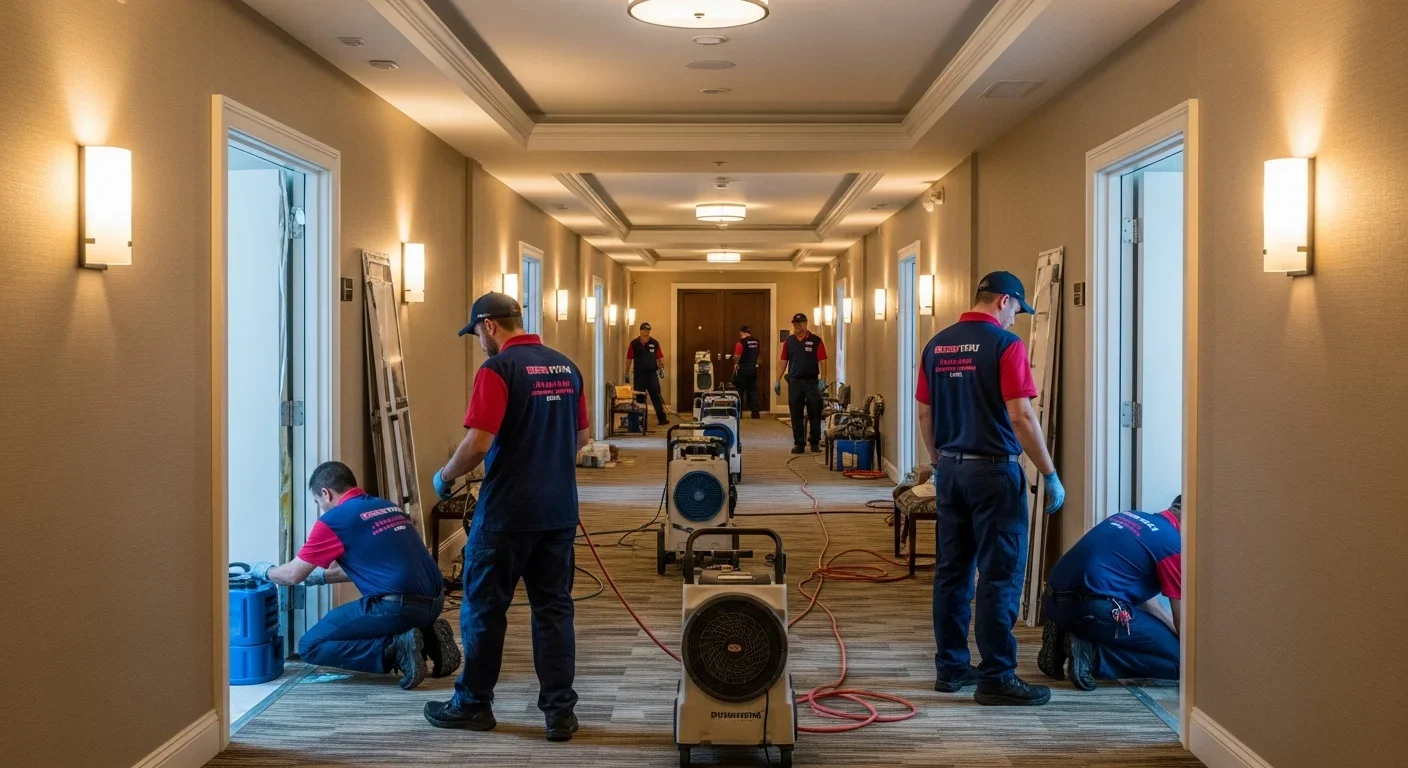
Upper-floor response with vertical drying logistics
Equipment staged via service elevator. Floor-by-floor moisture mapping. Riser and stack pipe failures traced through every affected level before drying setup begins.
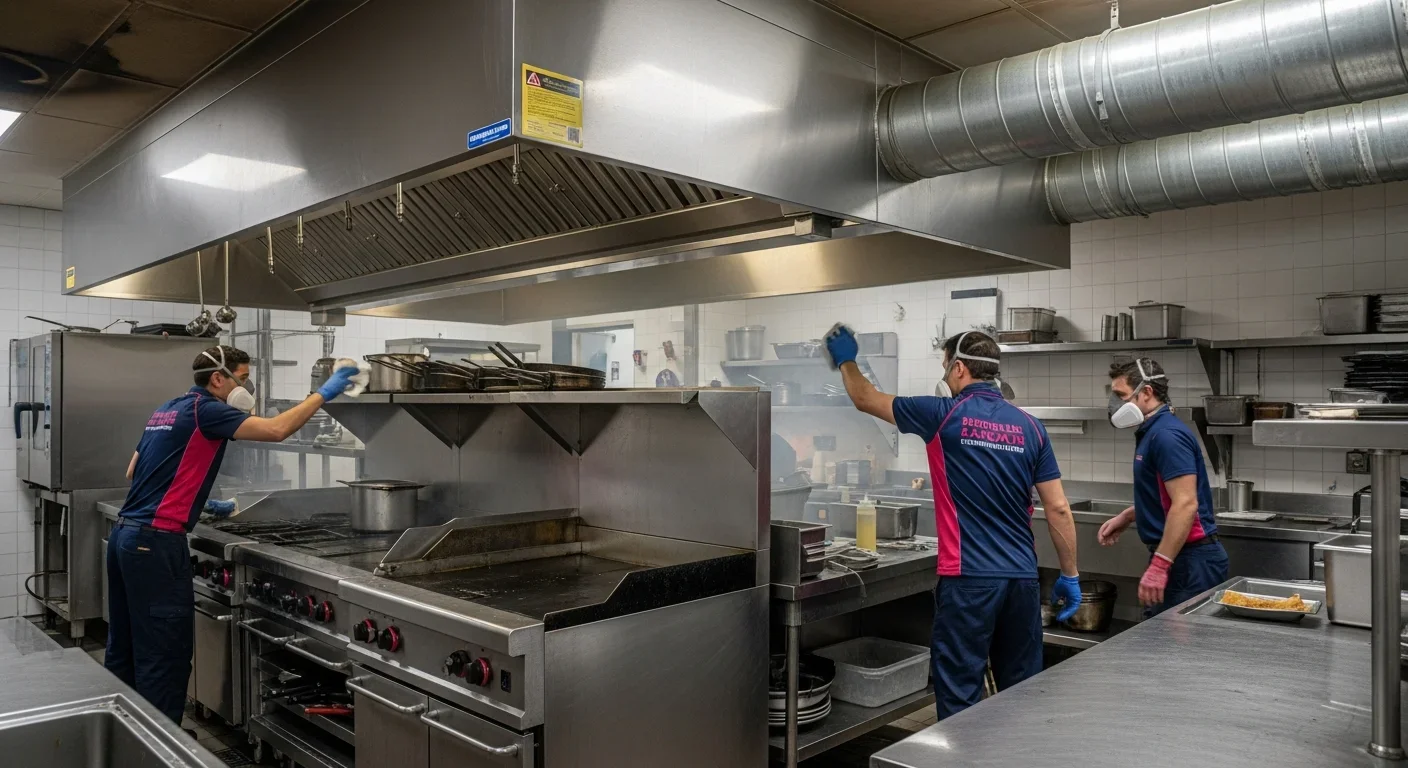
F&B kitchen fire — hood and duct decontamination
Hood, duct, and HVAC system decontaminated. ANSUL system re-certified. Health department reinspection scheduled for the day work is verified complete.
Professional Process
How this work is done right
Each step ensures quality, compliance, and minimal business interruption.
Rapid response with hotel ops coordination
After-hours dispatch within 60 minutes. Initial walk-through with the GM, chief engineer, and operations team. Affected room blocks and corridors identified. Vertical migration traced through every floor. Phased scope finalized before crews start work.
Phased containment and zone-by-zone execution
Critical-barrier containment seals the active work zone. HEPA negative-air runs continuously. Guest occupancy preserved in unaffected wings. Daily access coordination with housekeeping, front desk, and security. Brand quality team looped in on all rebuild scope.
F&B and life-safety coordination
Hood and duct decontamination, walk-in cooler condition assessment, ANSUL re-certification. Fire alarm and sprinkler impairment plans coordinated with AHJ. Pool deck and amenity-area scope handled with the same documentation discipline as the room blocks.
Reopening readiness and BI closeout
ADA Title III walkthrough, brand-standard quality review, health-department reinspection (where F&B was affected), and AHJ life-safety sign-off. Final completion package supports BI claim closeout and brand quality compliance reporting.
Regional considerations
Florida
Florida hospitality is hurricane-exposed. Coastal hotels in Palm Beach, Broward, and Miami-Dade need rapid post-storm response and FL Building Code (Chapter 11) reopening compliance. FL DBPR enforces hotel licensing and the Health Department oversees F&B reopening. Palm Build is FL state-licensed.
North Carolina
NC hospitality includes downtown Charlotte, Asheville, the Triangle, and the Outer Banks coastal corridor. Winter pipe bursts in older hotel stock are a common loss type. NC DHHS oversees F&B inspections; NC building code enforces commercial repair permitting. Palm Build is NC state-licensed.
South Carolina
SC hospitality concentrates in Charleston, Hilton Head, Myrtle Beach, and the Grand Strand. Hurricane and tropical storm exposure is significant. SC DHEC oversees F&B reopening. Tourist-season timing pressure makes phased work and rapid reopening especially valuable.
Related Commercial Services
Explore our other commercial restoration specialties
Related Guides
Connect this work with the bigger picture
Need commercial restoration?
Get a free commercial assessment. We evaluate damage, develop scope with your insurance company, and manage the entire restoration with minimal business interruption.