Warehouse water damage often originates from roof failures (storm damage, membrane deterioration), sprinkler system activations, and loading dock flooding. In large warehouses, a single roof breach can affect 50,000+ square feet before being detected, especially in facilities without leak detection systems.
Warehouse & Industrial Restoration
Restoring Warehouses and Industrial Facilities at Scale
Warehouses, distribution centers, and manufacturing plants require restoration at a fundamentally different scale. High ceilings, massive floor areas, heavy equipment, and millions of dollars in inventory demand industrial-grade solutions and logistics-aware project management.
- Large Scale
- Inventory Protection
- Production Recovery
- FL & NC
What you need to know
Inventory protection is frequently the highest-value priority. Warehouses may contain millions of dollars in products. Immediate action to cover, relocate, or elevate inventory can save far more than the cost of the restoration itself. We perform detailed inventory assessment to document losses and salvage what is possible.
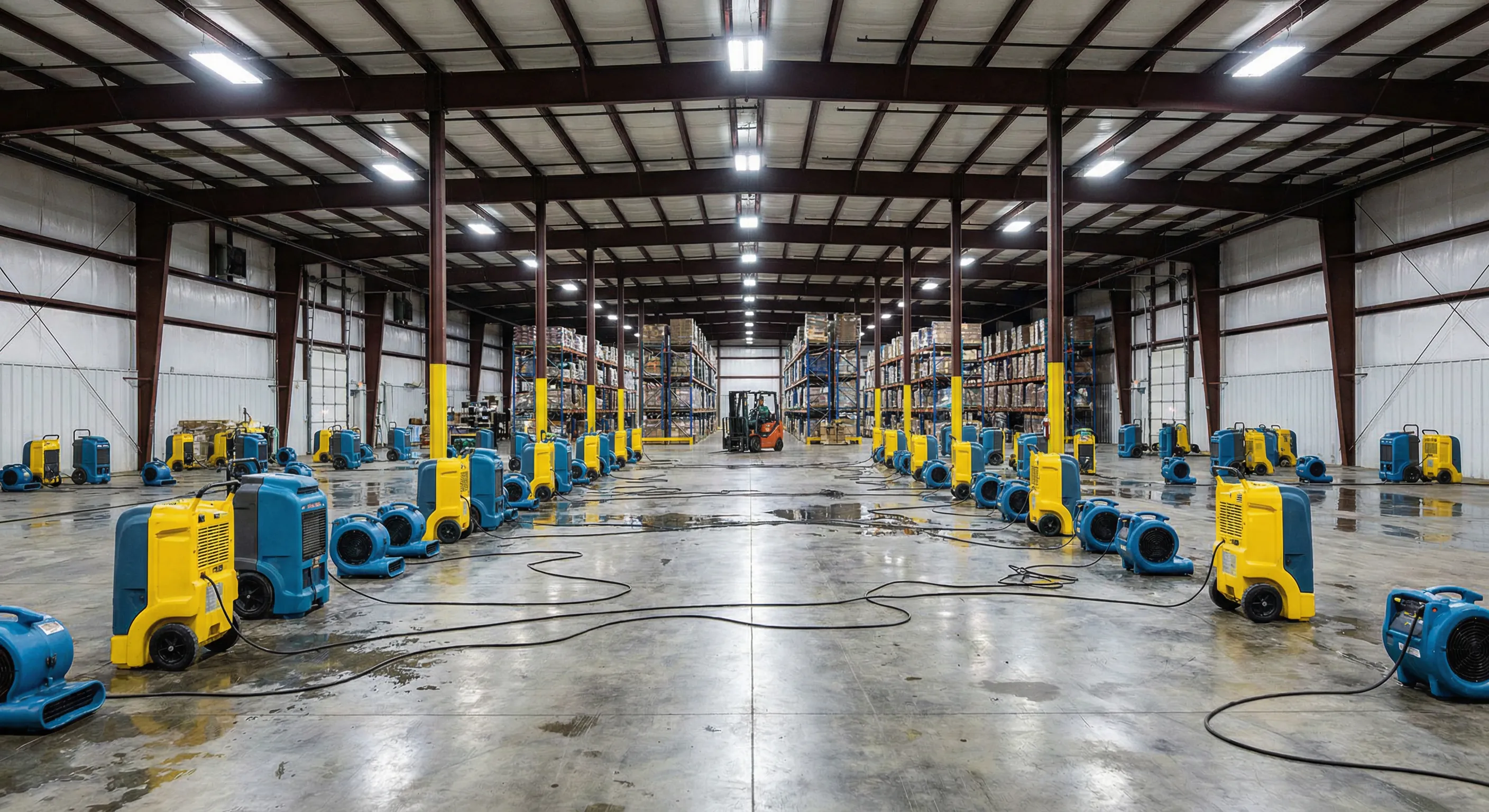
Industrial-scale drying requires equipment far beyond what residential or small commercial projects use. Desiccant dehumidifiers capable of processing 10,000+ CFH, high-capacity air movers, and sometimes temporary HVAC systems are deployed to dry facilities with 30-40 foot ceilings and concrete slab floors.
Manufacturing equipment requires specialist assessment after any water, fire, or storm event. Production machinery, conveyor systems, and electrical panels may need inspection by factory-certified technicians before restart. We coordinate with equipment vendors and arrange for testing and recalibration.
Supply chain commitments add urgency. Warehouses and distribution centers operate on tight logistics schedules. Restoring loading docks, shipping areas, and staging zones as early as possible allows partial distribution operations to resume while remaining areas are still being restored.
Environmental compliance is critical in industrial settings. Facilities may store chemicals, fuels, or hazardous materials that could be released during a disaster event. Contaminated water must be properly handled and disposed of per EPA and state environmental regulations.
From the Field
What this work actually looks like
Industrial-scale drying deployment
Rows of commercial dehumidifiers and air movers cover a 40,000 sq ft warehouse floor. Equipment positioned for optimal airflow to high ceilings.
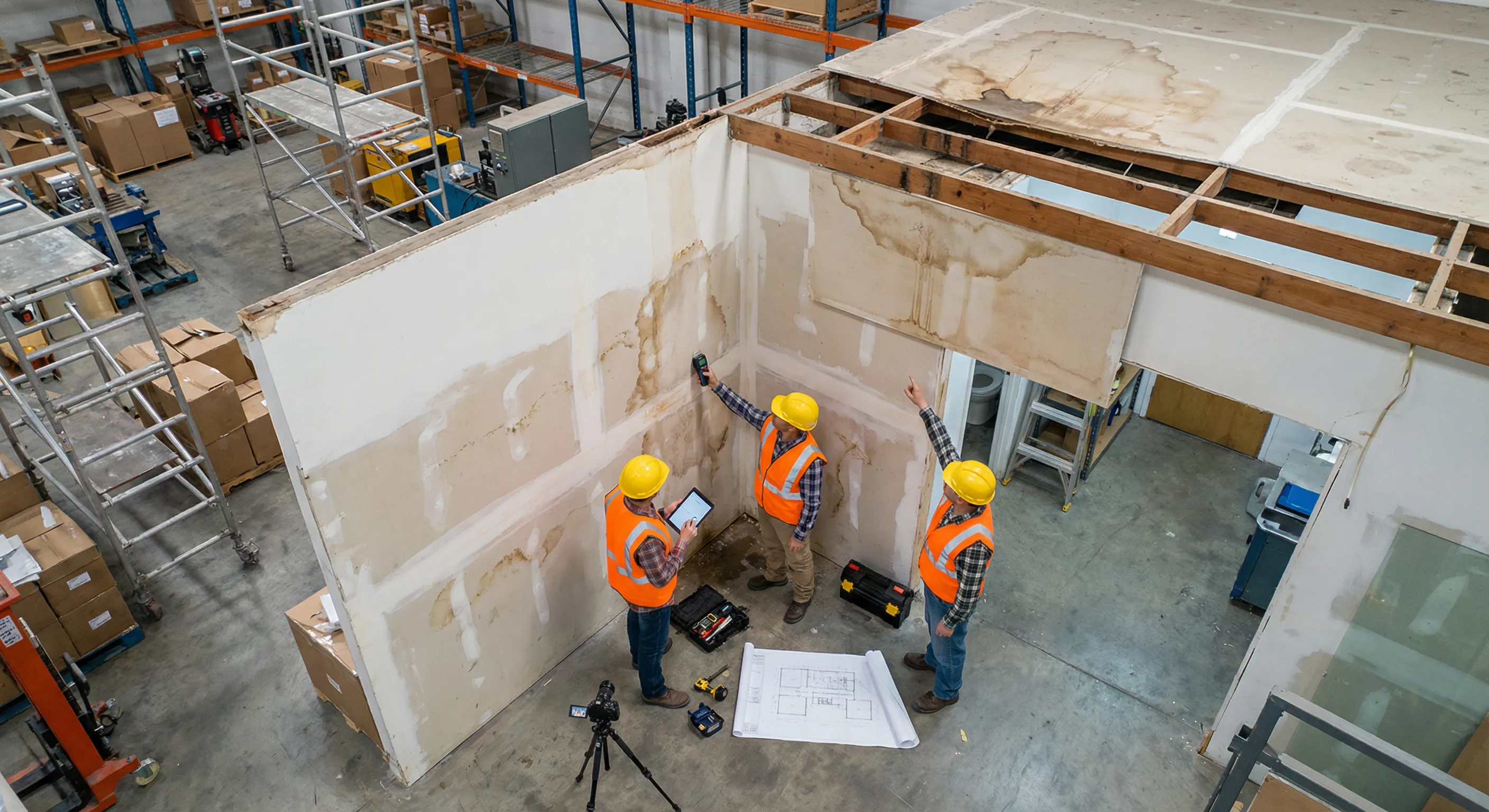
Damage assessment and inventory documentation
Team documents water damage extent and affected inventory. Detailed records support both property and contents insurance claims.
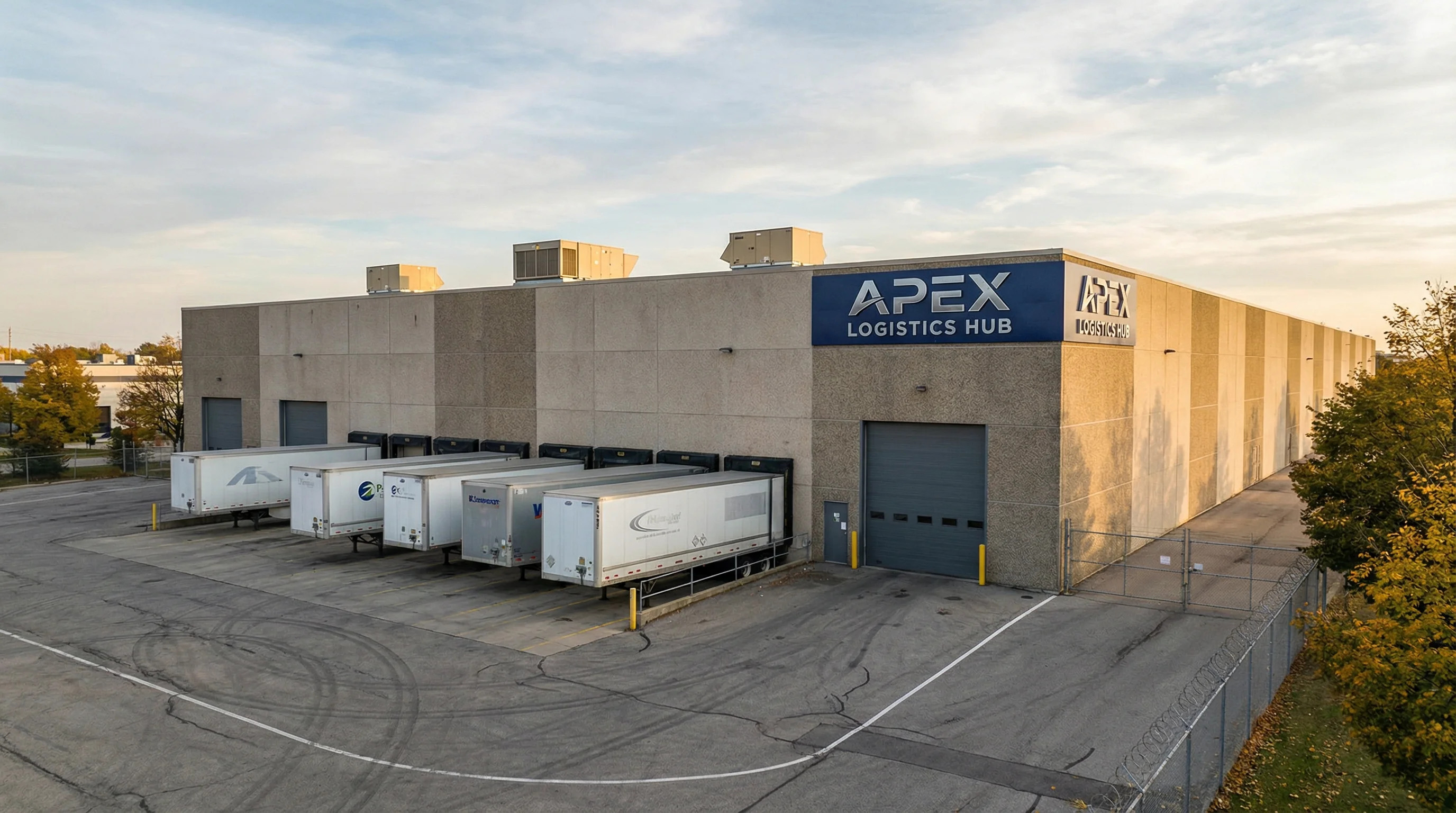
Warehouse facility with high-rack storage
Facilities with high-rack storage systems require specialized techniques to access upper levels for cleaning and damage assessment.
Professional Process
How this work is done right
Each step ensures quality, compliance, and minimal business interruption.
Emergency response and inventory triage
Immediate deployment of extraction equipment. Inventory assessed for salvageability and prioritized for protection. Damaged inventory documented with photos and records. Environmental hazards identified and contained. Loading docks assessed for partial operations.
Industrial-scale drying and decontamination
Desiccant dehumidifiers and high-capacity air movers deployed across the facility. Concrete slab moisture monitored daily. Structural steel and metal decking inspected for corrosion. HVAC and electrical systems assessed by specialists.
Equipment assessment and phased reopening
Production equipment inspected by certified technicians. Electrical systems tested before energizing. Phased reopening plan restores shipping, receiving, and production areas in priority order. Temporary power and climate systems bridged as needed.
Reconstruction and compliance closeout
Structural repairs to roof, walls, and flooring completed to code. Fire suppression and alarm systems re-certified. Final environmental clearance obtained if applicable. Complete documentation package compiled for insurance, regulatory records, and business continuity planning.
Cost Guidance
What to expect on pricing
Commercial restoration costs vary by damage extent, facility type, and location. These ranges reflect typical projects in our service areas.
Warehouse roof leak restoration
$20,000 - $150,000
Depends on leak duration and floor area affected. Includes drying, damaged inventory documentation, and ceiling/insulation replacement. Roof repair or replacement billed separately.
Large-scale warehouse flood
$100,000 - $1M+
Major water event affecting 25,000+ sq ft. Industrial drying, inventory loss documentation, concrete slab drying (can take weeks), and structural repairs. Business interruption often exceeds property damage cost.
Industrial fire restoration
$250,000 - $5M+
Industrial fires generate extreme heat and heavy soot. Structural steel inspection, equipment replacement, environmental cleanup, and complete facility rebuild. Large loss coordination typically required.
Regional considerations
Florida
Florida warehouses face hurricane roof damage as a primary threat. Metal deck and built-up roofing systems are vulnerable to wind uplift. Post-hurricane, warehouse restoration competes for roofing materials and labor with thousands of other damaged properties.
North Carolina
Charlotte and the Piedmont region have significant warehouse and distribution infrastructure along the I-85 corridor. Severe thunderstorms and occasional tornadoes cause roof damage and water intrusion. Winter freezes can burst fire sprinkler systems in unheated warehouse sections.
South Carolina
SC industrial facilities along the I-85 and I-26 corridors face storm exposure. Coastal warehouses in Charleston port areas add flood zone considerations. Inventory stored at ground level in flood zones requires rapid elevation or relocation during storm events.
Related Commercial Services
Explore our other commercial restoration specialties
Related Guides
Connect this work with the bigger picture
Need commercial restoration?
Get a free commercial assessment. We evaluate damage, develop scope with your insurance company, and manage the entire restoration with minimal business interruption.