Kitchen fires are the most common restaurant disaster. Grease fires, hood system failures, and electrical shorts in cooking equipment can cause extensive damage that goes far beyond the visible burn area. Smoke and soot travel through the entire HVAC system, contaminating dining areas, storage, and even adjacent tenant spaces.
Restaurant & Hospitality Restoration
Getting Your Restaurant Back Open After Damage
Kitchen fires, water damage from burst pipes, and storm damage to dining areas all threaten your revenue and your reputation. Restaurant restoration requires health department compliance, commercial kitchen expertise, and a timeline driven by the urgency to reopen and serve customers.
- Kitchen Fires
- Health Department
- Fast Reopening
- FL & NC
What you need to know
Health department compliance is non-negotiable for reopening. Every food contact surface must be professionally sanitized. Contaminated food inventory must be discarded and documented. Kitchen equipment (ovens, fryers, refrigerators, ice machines) may need specialized cleaning, recalibration, or replacement before passing health inspection.
Water damage in restaurants often stems from dishwasher line failures, ice machine connections, roof leaks above kitchen areas, or fire suppression system activations. The combination of water and food service creates an urgent mold risk that requires immediate response.
Smoke damage extends much further than fire damage. Even a contained kitchen fire can push smoke through the HVAC system into every room of the restaurant. Upholstered seating, fabric wall coverings, acoustic ceiling tiles, and textured walls all absorb smoke odor and require professional deodorization or replacement.
Revenue pressure drives timeline. Every day a restaurant is closed costs the business daily revenue plus fixed expenses (rent, insurance, payroll for key staff). Many restaurant owners underestimate how quickly losses accumulate, making restoration speed critical.
Insurance for restaurants often includes business interruption coverage with a defined waiting period and period of restoration. Documenting the timeline precisely, including any delays caused by permit processing or health department scheduling, directly affects the BI claim payout.
From the Field
What this work actually looks like
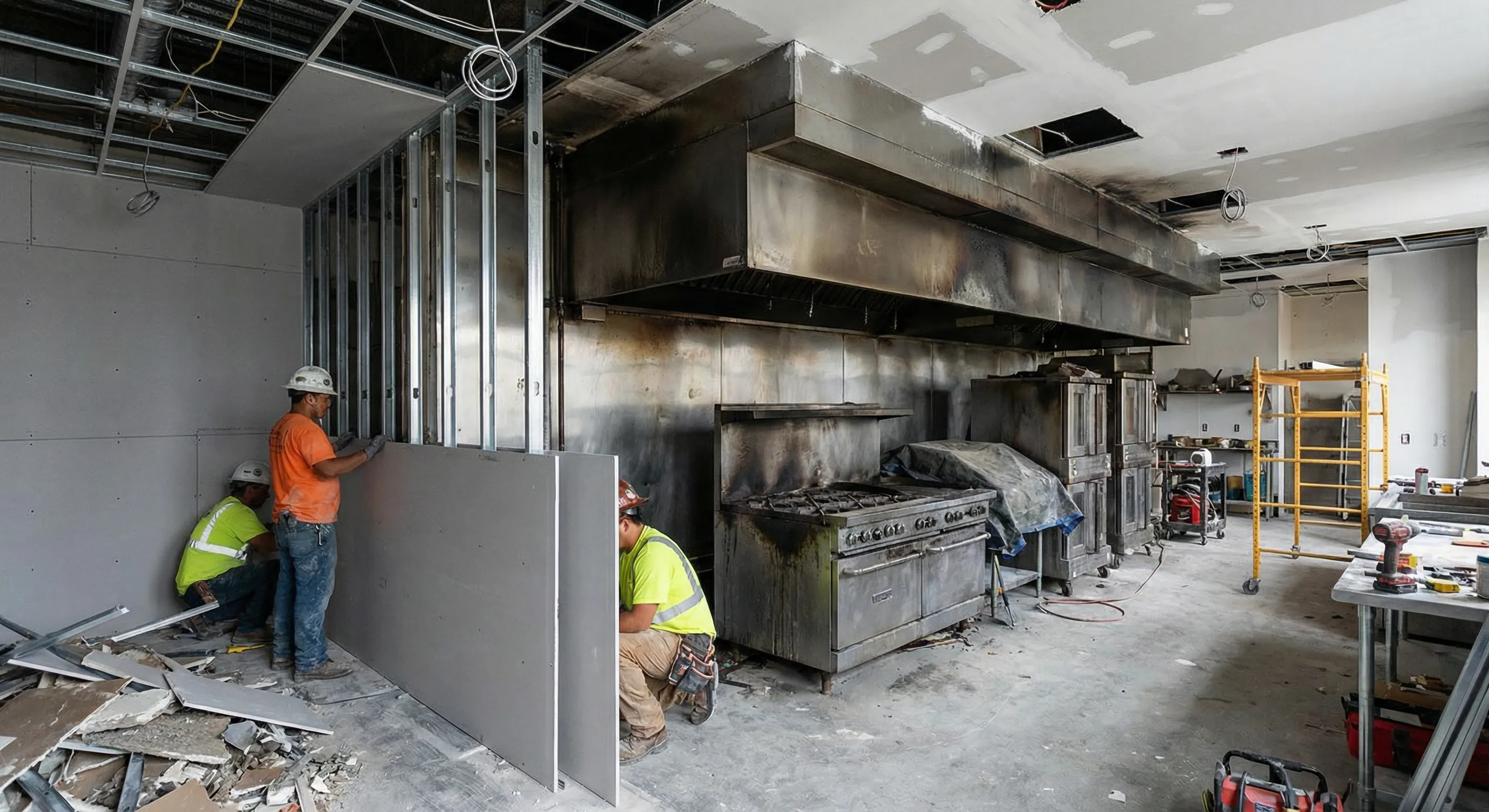
Kitchen reconstruction after grease fire
Fire damaged the exhaust hood, drywall, and ceiling structure. Complete rebuild of cooking line area including new hood system and fire suppression.
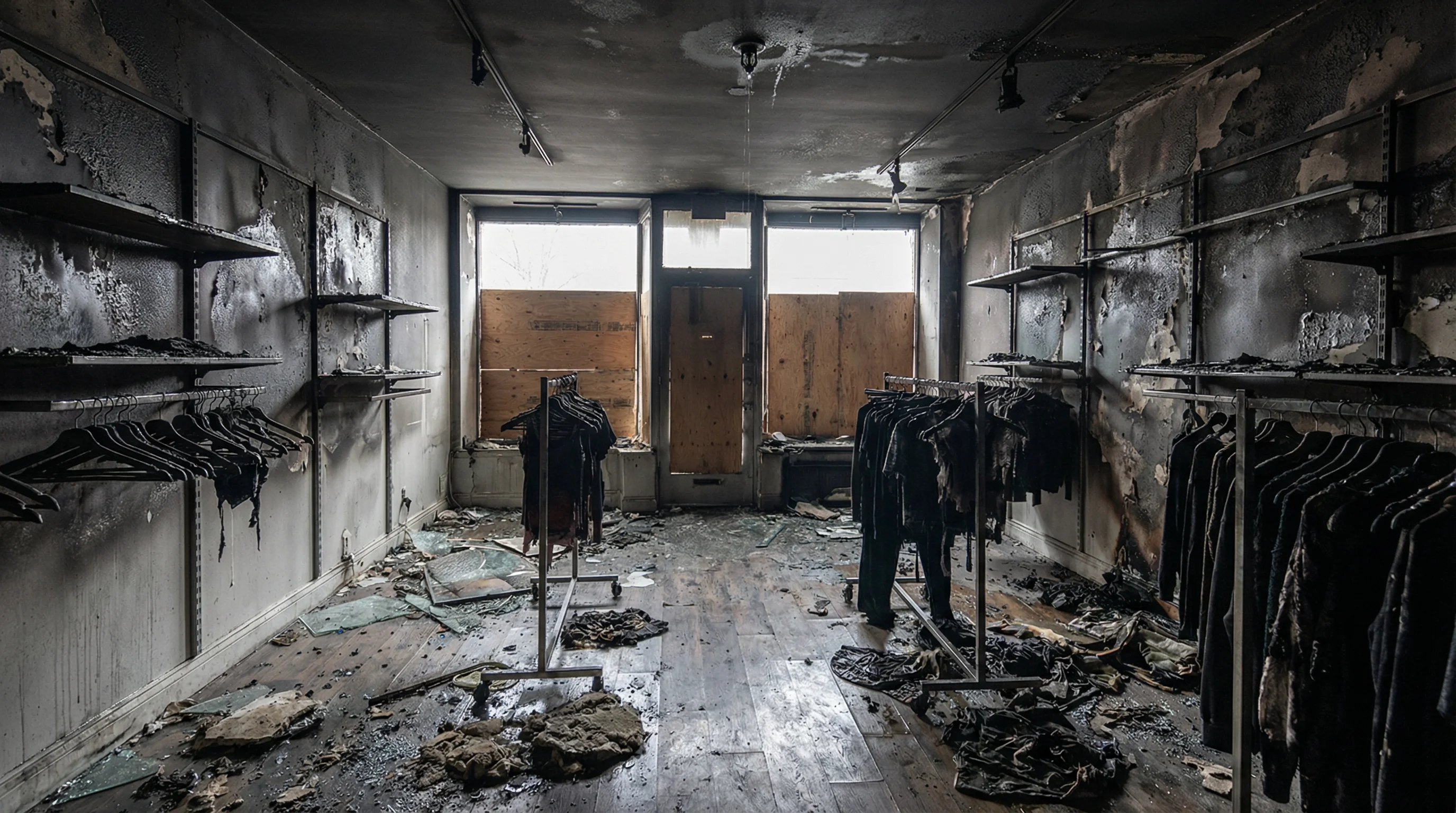
Fire and smoke damage assessment
Smoke damage extended throughout the dining room via the HVAC system. All upholstered seating and acoustic ceiling tiles required replacement.

Dining area fully restored and ready for reopening
Restaurant passed health department inspection and fire marshal review. Reopened within 6 weeks of the fire event.
Professional Process
How this work is done right
Each step ensures quality, compliance, and minimal business interruption.
Emergency stabilization and equipment protection
Fire department releases the scene. We perform emergency board-up, extract standing water from fire suppression, and protect undamaged equipment. Refrigeration units are assessed to determine if temperature-sensitive inventory is salvageable.
Damage assessment and health department coordination
Full scope of fire, smoke, water, and structural damage documented. Insurance notified and adjuster walkthrough scheduled. Health department contacted to understand re-inspection requirements specific to your jurisdiction.
Decontamination, demolition, and rebuild
Smoke and soot removed from all surfaces. HVAC system professionally cleaned. Damaged structure demolished and rebuilt to code. Kitchen equipment restored or replaced. All food contact surfaces sanitized to health department standards.
Inspections, permits, and grand reopening
Building inspection for any structural or electrical work. Fire suppression system re-certified. Health department final inspection. Certificate of occupancy or completion issued. Documentation package compiled for insurance closeout.
Cost Guidance
What to expect on pricing
Commercial restoration costs vary by damage extent, facility type, and location. These ranges reflect typical projects in our service areas.
Kitchen fire cleanup (contained)
$25,000 - $100,000
Fire contained to cooking area. Includes soot and smoke remediation, HVAC cleaning, equipment restoration, and health department prep. Does not include major structural reconstruction.
Full restaurant fire restoration
$100,000 - $750,000+
Extensive fire affecting kitchen, dining, and structure. Complete reconstruction including kitchen build-out, dining area finishes, HVAC, electrical, and plumbing. Timeline: 3-6 months typical.
Water damage restoration
$10,000 - $75,000
Depends on source, extent, and whether food inventory is affected. Includes extraction, drying, sanitization, and any necessary material replacement. Food inventory loss documented separately.
Regional considerations
Florida
Florida health department inspections are managed at the county level. Requirements vary between Miami-Dade, Broward, and Palm Beach counties. Hurricane damage to restaurant exteriors (windows, roofing) adds complexity when wind-driven rain contaminates kitchen areas.
North Carolina
NC restaurant inspections follow the NC Food Code. Kitchen fires in Charlotte and Raleigh area restaurants are among the most common commercial claims we handle. Winter pipe bursts in restaurants with exterior plumbing are also frequent.
South Carolina
SC DHEC oversees food service inspections. Tourism-dependent restaurants in Charleston, Myrtle Beach, and Hilton Head need expedited restoration aligned with seasonal demand. Off-season damage provides the best window for restoration.
Related Commercial Services
Explore our other commercial restoration specialties
Related Guides
Connect this work with the bigger picture
Need commercial restoration?
Get a free commercial assessment. We evaluate damage, develop scope with your insurance company, and manage the entire restoration with minimal business interruption.