Office water damage most commonly originates from burst pipes, sprinkler activations, HVAC condensate line failures, and roof leaks. In multi-story buildings, water migrates downward through elevator shafts, electrical chases, and floor penetrations, affecting multiple floors from a single source.
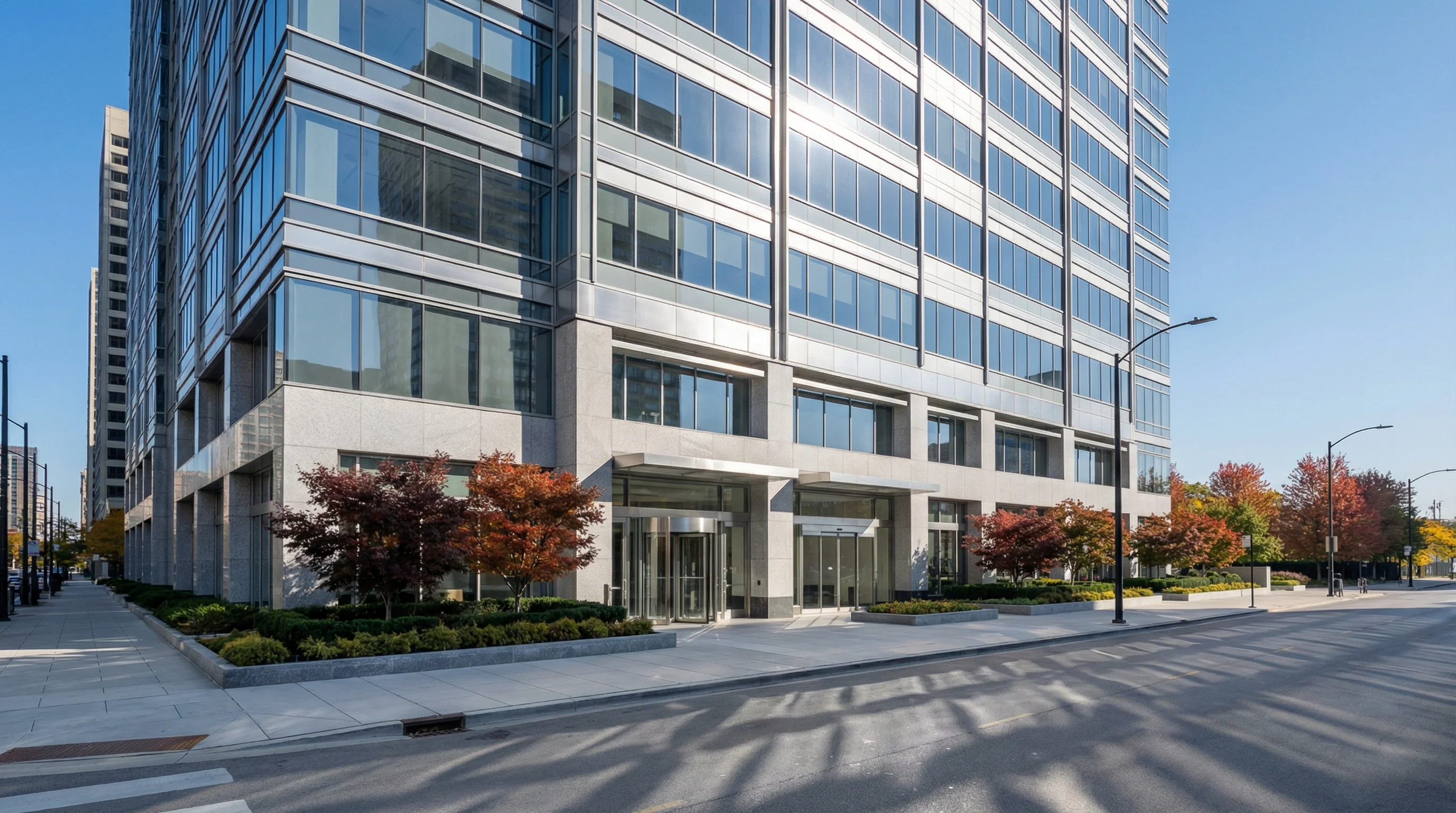
Office Building Restoration
Restoring Office Buildings With Minimal Business Disruption
Office buildings present unique restoration challenges: multiple tenants, critical IT infrastructure, complex HVAC systems, and high-rise logistics. This guide covers what property managers and building owners need to know about restoring office space after water, fire, or storm damage.
- Multi-Tenant
- IT Protection
- After-Hours Work
- FL & NC
What you need to know
Protecting IT infrastructure is often the most time-sensitive priority. Server rooms, network closets, and data centers require immediate isolation and climate control. We deploy portable cooling and dehumidification to prevent heat buildup and moisture damage to electronic equipment.
Multi-tenant buildings require coordinated communication. Each tenant has their own lease obligations, insurance, and business continuity concerns. We help property managers develop tenant communications, coordinate access schedules, and manage expectations across all affected parties.
After-hours restoration is standard practice for office buildings. Noisy work like demolition, extraction, and equipment relocation happens evenings and weekends. During business hours, containment barriers isolate work zones while tenants operate in unaffected areas.
Common area restoration (lobbies, elevators, restrooms, corridors) falls under the building owner policy, while tenant suite interiors may be covered by tenant policies. We document damage by area to support proper claim allocation between building and tenant insurance.
High-rise buildings add logistics complexity. Equipment must be transported vertically when elevators are down. Drying large floor plates requires strategic equipment placement and zoned monitoring. Structural drying in high-rises typically takes 20-40% longer than equivalent ground-level space.
From the Field
What this work actually looks like
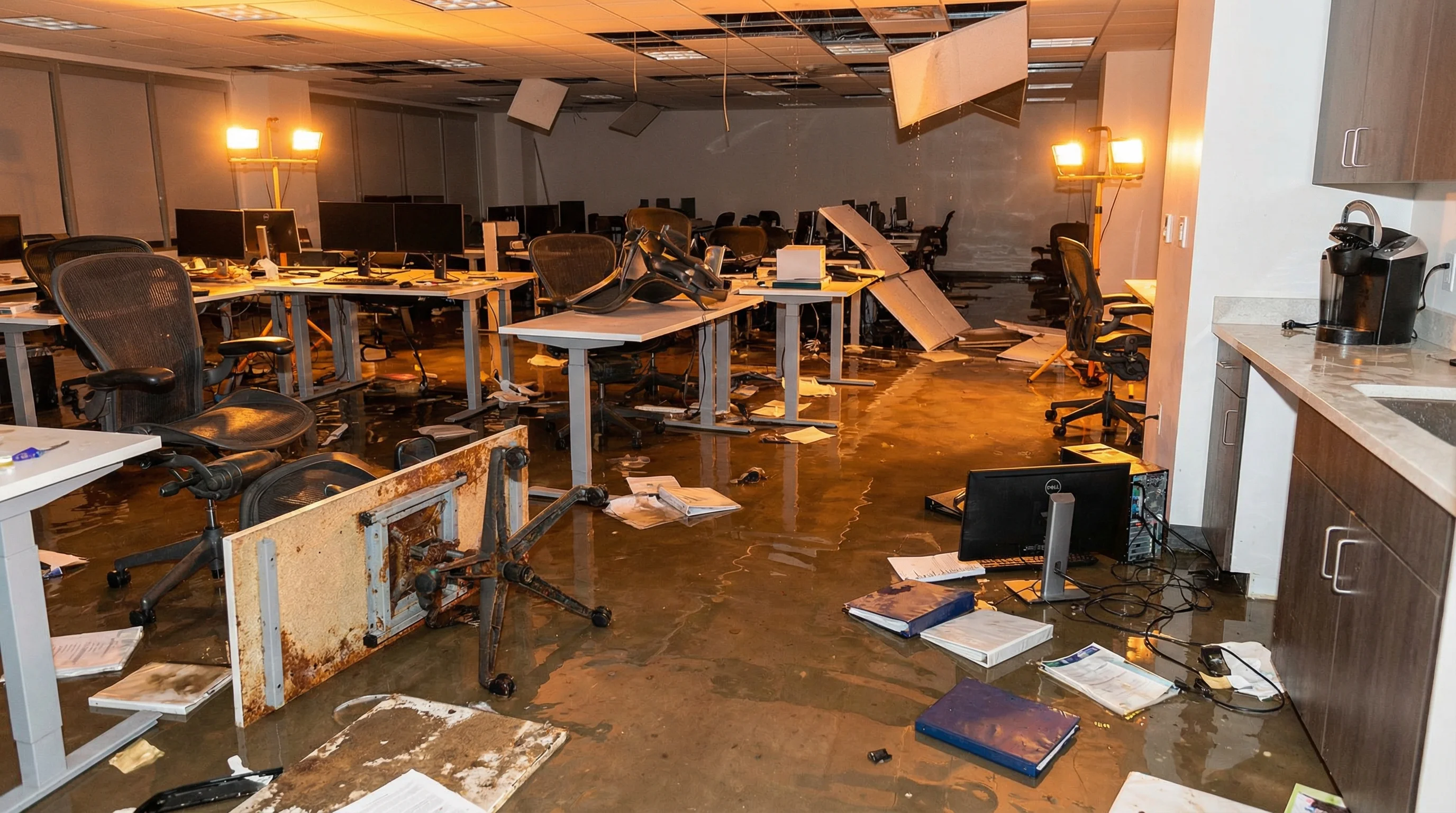
Multi-floor water damage from burst sprinkler line
Water migrated through three floors via elevator shaft and electrical penetrations. Required floor-by-floor drying and monitoring.
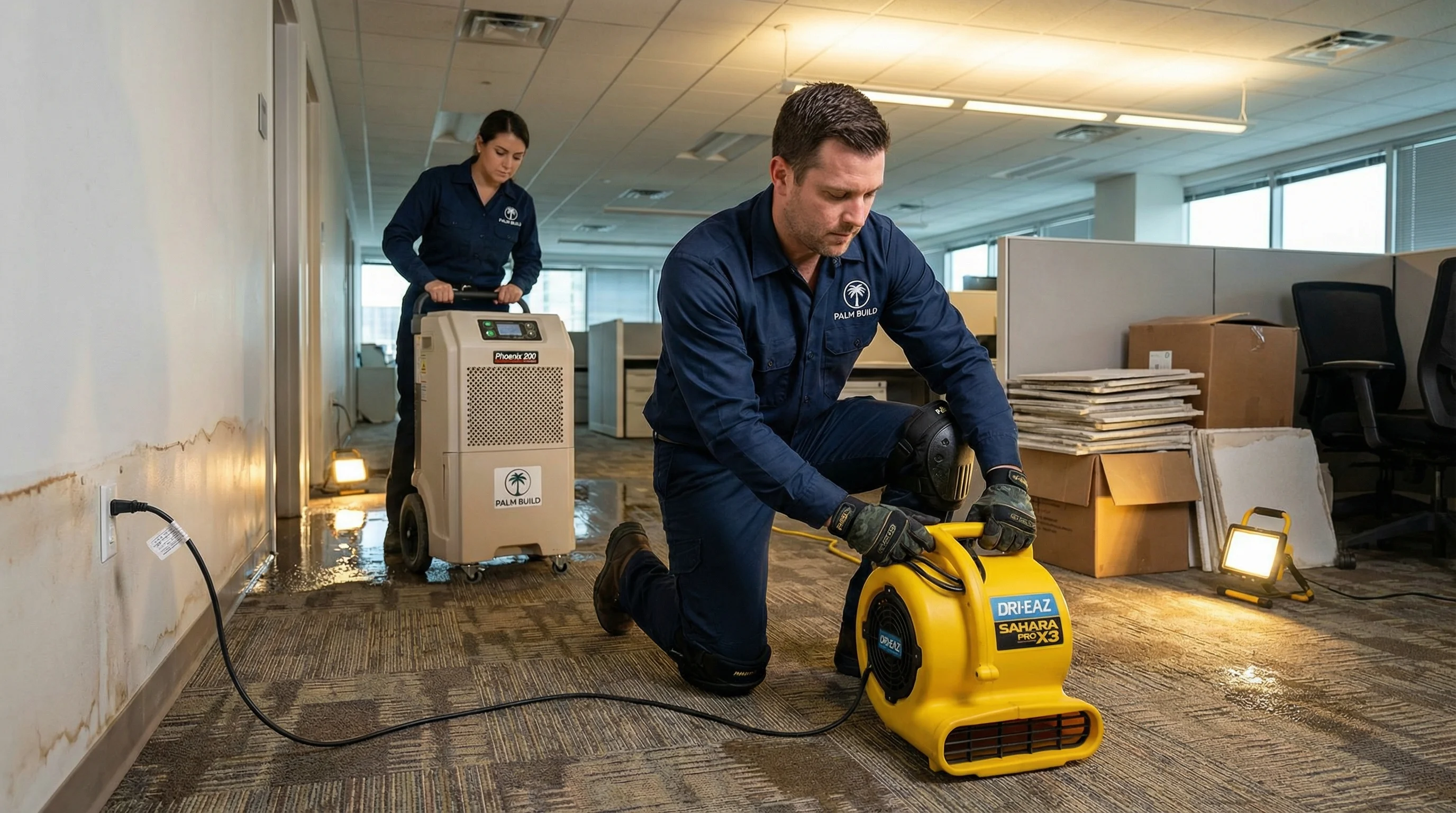
Industrial drying setup in affected office floor
Commercial dehumidifiers and air movers positioned for optimal airflow across 8,000 sq ft floor plate.
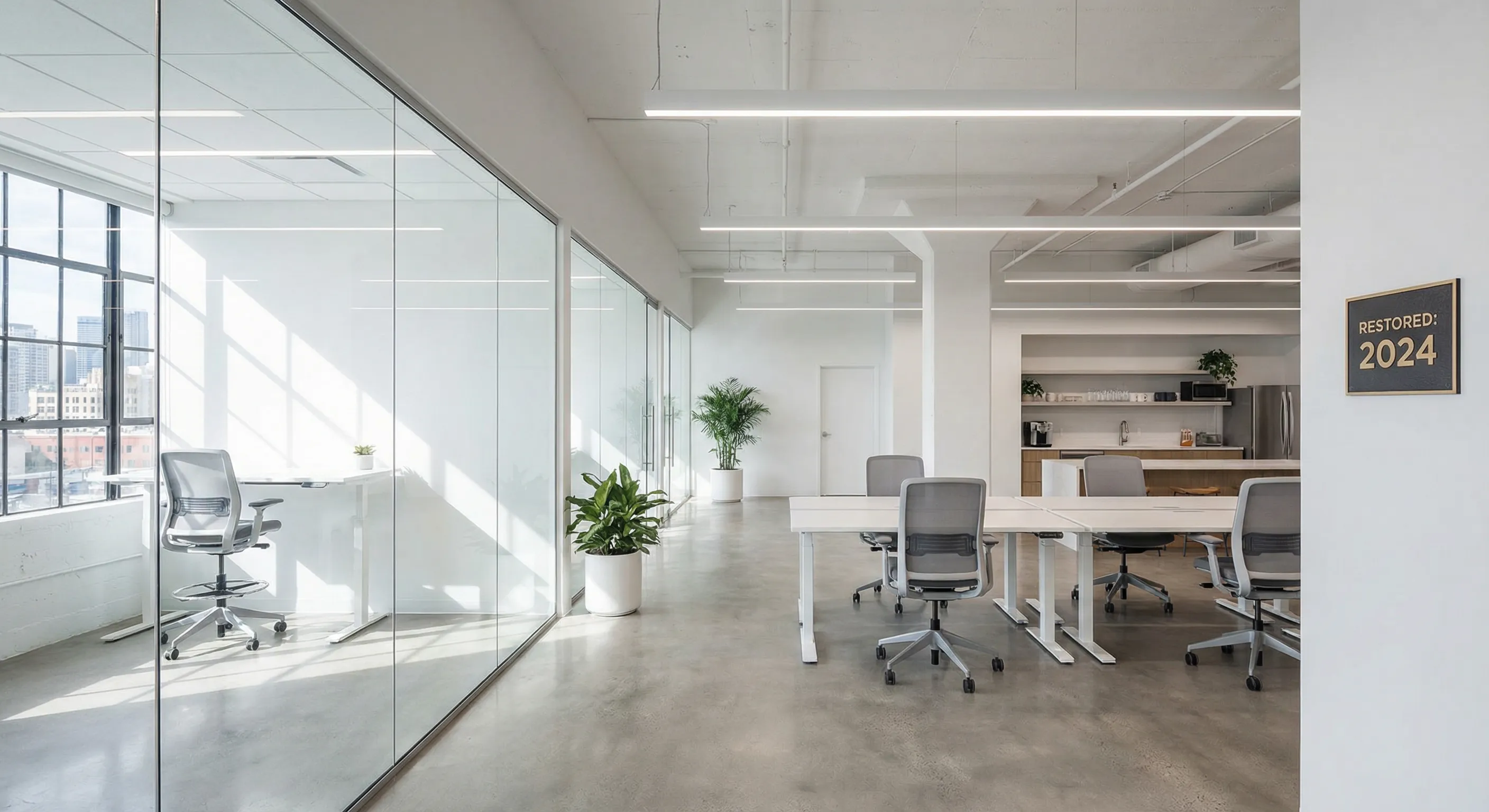
Completed office restoration with modern upgrades
Tenant used insurance reconstruction as an opportunity to modernize their workspace layout.
Professional Process
How this work is done right
Each step ensures quality, compliance, and minimal business interruption.
Emergency stabilization and IT protection
Water extraction begins immediately with priority given to server rooms, network closets, and electrical panels. Portable cooling deployed to maintain data center temperatures. Emergency power assessment for critical building systems.
Multi-floor damage assessment
Systematic floor-by-floor inspection using moisture meters and thermal imaging. Damage mapped by tenant suite and common area for proper insurance allocation. Building systems (HVAC, fire alarm, elevators) assessed for functionality.
Phased restoration with tenant coordination
Work plan developed to restore critical areas first. Containment barriers installed between active work zones and occupied spaces. After-hours scheduling implemented. Daily updates provided to property management for tenant communication.
Reconstruction and certificate of occupancy
Damaged building components rebuilt to current code. Tenant improvements restored to pre-loss condition. All systems tested and inspected. Final documentation package compiled for building and tenant insurance claims.
Cost Guidance
What to expect on pricing
Commercial restoration costs vary by damage extent, facility type, and location. These ranges reflect typical projects in our service areas.
Single floor water restoration
$15,000 - $80,000
Extraction, drying, and restoration of a single office floor (5,000-15,000 sq ft). Costs increase with carpet vs. hard surface, tenant improvements, and structural drying needs.
Multi-floor sprinkler event
$50,000 - $500,000+
Water migration affecting 2-5+ floors. Includes extraction, structural drying, content restoration, and reconstruction. Scale drives cost more than damage severity.
Office fire restoration
$100,000 - $1M+
Varies dramatically by fire extent. Includes smoke remediation throughout HVAC system, structural repair, electrical restoration, and complete tenant build-out reconstruction.
Regional considerations
Florida
Hurricane season drives much of the commercial office damage in FL. Post-storm water intrusion through compromised roofing and windows can affect entire buildings. Impact-rated glazing requirements apply to replacements in wind-borne debris regions.
North Carolina
Pipe bursts during winter freezes are the most common office building claim in Charlotte and the Piedmont. Multi-story buildings with exterior-facing sprinkler risers are particularly vulnerable. Older uptown Charlotte buildings may have legacy hazards.
South Carolina
Charleston and coastal SC office buildings face hurricane and flood exposure. Properties in flood zones may trigger substantial improvement thresholds. Historic district buildings require coordination with preservation requirements.
Related Commercial Services
Explore our other commercial restoration specialties
Related Guides
Connect this work with the bigger picture
Need commercial restoration?
Get a free commercial assessment. We evaluate damage, develop scope with your insurance company, and manage the entire restoration with minimal business interruption.