Margate's 75-80% average humidity, 1970s-era construction, and dense condo communities create ideal mold conditions. Palm Build's licensed Florida mold remediators respond from Deerfield Beach with HEPA containment, air scrubbing, and the multi-unit protocols that Margate's 55+ communities demand.
Deerfield Beach Office — ~5 miles to Margate 10-15 min Response IICRC Certified
Margate's specific combination of year-round subtropical humidity, aging 1970s CBS
concrete block construction, dense 55+ condo communities with shared plumbing, and
Florida's narrow 24-48 hour colonization window creates some of the highest baseline
mold risk in Broward County. Understanding why mold thrives here is the first step
toward permanent remediation — not just cosmetic cleanup.
75-80% Average Humidity
75-80%
Year-round RH
Margate sustains 75-80% relative humidity year-round — well above the 60% threshold where mold colonizes building materials. Air conditioning systems running continuously create persistent condensation on evaporator coils, drip pans, and supply vent surrounds. Unlike northern cities where winter provides a dry respite, Margate's subtropical climate keeps buildings perpetually mold-favorable. Every surface inside your home is exposed to moisture pressure 365 days a year.
1970s CBS Construction
1970s
Peak build era
The majority of Margate's housing stock was built between 1969 and 1985 using CBS (concrete block and stucco) construction — without the modern vapor barriers that current building codes require. Hollow block cavities trap moisture that enters through hairline stucco cracks created by decades of thermal cycling. Degraded vapor barriers in older homes offer zero resistance to moisture migration. Bath exhaust fans in many 1970s-era homes vent directly into attic spaces rather than outside, pumping humid air into the roof assembly.
Dense 55+ Condo Communities
Multi-unit
Shared risk
Margate's numerous 55+ condominium communities — Holiday Springs Village, Oriole Gardens, Oriole Golf & Tennis Club — create unique mold challenges. Shared plumbing stacks mean a leak in one unit sends water into walls shared with neighbors. Mold migrates between units through party wall cavities, shared HVAC plenums, and common plumbing chases. A single slow leak can contaminate multiple residences before anyone notices visible signs.
24-48 Hour Colonization Window
24-48 hrs
FL DOH guideline
The Florida Department of Health confirms that porous building materials must be dried or removed within 24-48 hours of water contact to prevent mold colonization. In Margate's high-humidity environment, this window is effectively shorter — ambient moisture prevents natural drying even after the water source is stopped. Any water event that isn't professionally extracted and dried within this window will produce mold. No exceptions.
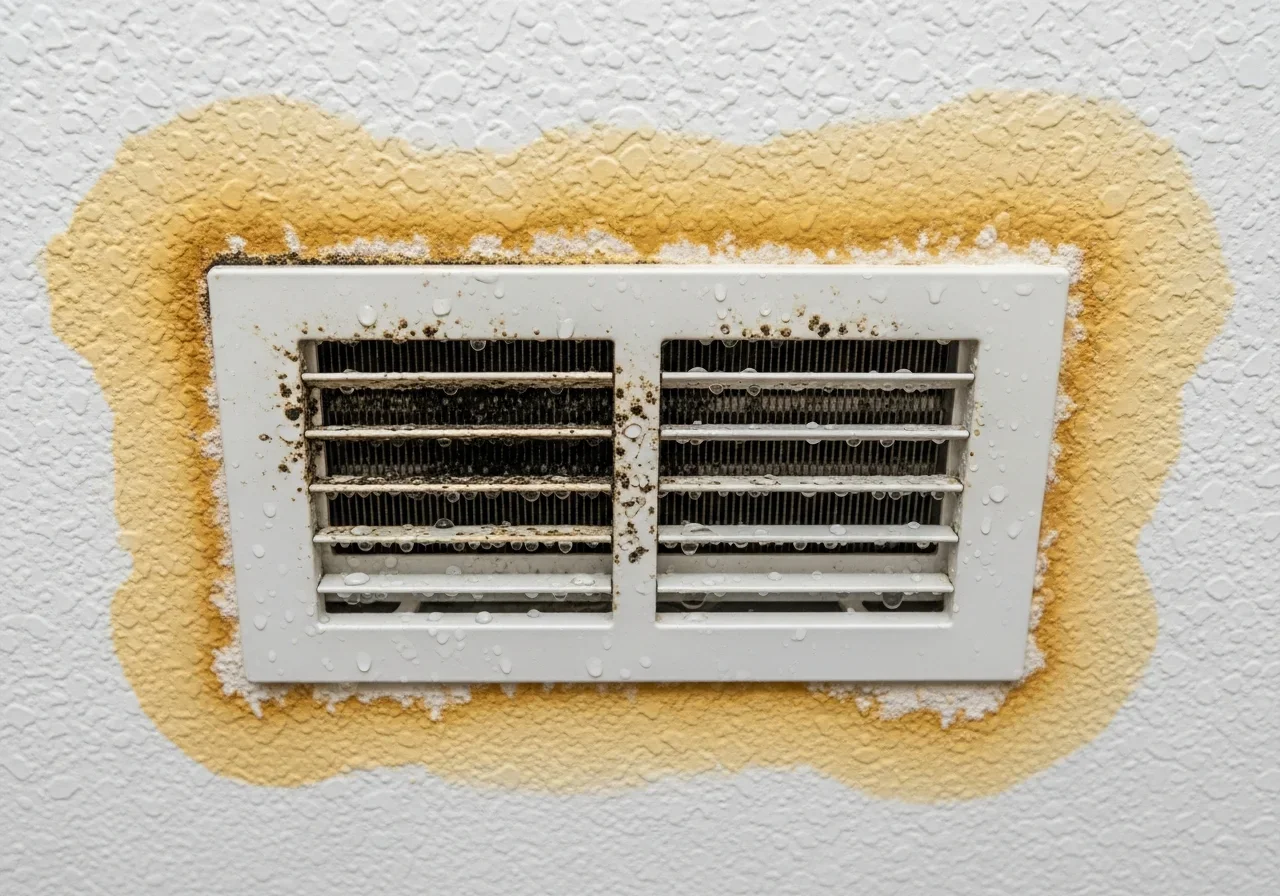
HVAC condensation mold in a Margate home — air conditioning systems running year-round
in 75-80% humidity create persistent condensation that feeds mold colonies inside
ductwork and air handlers.
Neighborhood Risk Profiles
Mold Risk by Margate Neighborhood
Every Margate neighborhood has mold risk — but construction era, proximity to canals,
and housing type create dramatically different risk profiles. Paradise Gardens' aging
HVAC systems, Oriole Gardens' shared wall cavities, and Holiday Springs Village's
canal-side humidity face the highest baseline exposure.
Paradise Gardens
Critical Risk1969-82
Aging HVAC systems and slow plumbing leaks drive mold behind bathrooms, under sinks, and inside HVAC closets. CBS block construction without modern vapor barriers allows moisture to migrate through wall cavities undetected. Many units have original ductwork that has never been replaced or cleaned.
Common locations: Behind bathrooms, under sinks, HVAC closets
Oriole Gardens
Critical Risk1973-79
Shared wall cavities between attached units allow mold to migrate from one residence to another through party walls and plenum spaces. Tile surrounds in bathrooms trap moisture behind grout lines that have deteriorated over decades. A single plumbing event in one unit can contaminate multiple neighboring residences.
Common locations: Party walls, plenum spaces, tile surrounds
Oriole Golf & Tennis Club
Critical Risk1972-79
AC condensate drain line backups are the primary mold trigger — clogged lines overflow into drip pans and surrounding wall cavities. Mold develops around supply vent surrounds, inside closets near air handlers, and on ceilings where condensate has migrated through the structure.
Common locations: Supply vent surrounds, closets, ceilings
Holiday Springs Village
High RiskMid-late 1970s
Canal-adjacent location elevates ambient humidity around already-porous CBS structures. Older window seals have deteriorated, allowing moisture intrusion during rain events and through daily condensation cycles. Window frames and slider tracks are chronic mold hotspots throughout the community.
Common locations: Window frames, slider tracks, exterior walls
Coral Bay
High Risk1990-2000
Lakefront humidity and complex roof-to-wall transitions create moisture entry points that feed attic space mold. Garage-to-living-space transitions trap condensation where temperature differentials are greatest. Newer construction but still vulnerable to the sustained humidity that defines Margate.
Common locations: Attic spaces, garage transitions, roof lines
Margate Estates
High Risk~1975
Polybutylene plumbing failures have caused widespread water damage throughout this neighborhood. Mold colonizes behind drywall, under vinyl flooring, and inside HVAC ductwork following slow leaks that go undetected for weeks. Many homes have had partial repairs that did not address hidden moisture in CBS wall cavities.
Common locations: Behind drywall, under vinyl, HVAC ducts
Southgate
Elevated Risk1970s
Low elevation and proximity to drainage infrastructure make this neighborhood vulnerable to storm flooding aftermath. Standing water during heavy rain events drives moisture into baseboards, behind kitchen and bathroom cabinets, and through laundry room walls. Repeated minor flooding creates chronic mold conditions.
Common locations: Baseboards, behind cabinets, laundry room walls
HOA & 55+ Community Protocols
Margate Condo Mold Remediation Playbook
Mold remediation in Margate's 55+ condo communities requires more than technical
expertise — it requires understanding HOA governance, shared insurance structures, and
the specific needs of senior residents. Palm Build has developed a dedicated protocol
for multi-unit mold projects in communities like Holiday Springs Village, Oriole
Gardens, and Oriole Golf & Tennis Club.
Every step is designed to minimize disruption to residents, satisfy board documentation
requirements, and ensure insurance coverage is properly allocated between master
policies and individual HO-6 policies.
Same-Day Board Documentation Package
When mold is discovered in a Margate condo unit, the HOA board needs documentation immediately — not in a week. Palm Build provides a same-day preliminary report including visual findings, moisture readings, affected areas, and recommended scope. This package gives the board what they need to authorize emergency remediation, notify affected neighbors, and initiate insurance claims. We format everything for board meetings and include photos suitable for resident communications.
Shared-Plumbing Isolation Protocol (HO-6 vs Master Policy)
In Margate's 55+ communities, mold from shared plumbing creates complex insurance situations. When a leak originates in common plumbing and damages a unit owner's interior, both the master policy and the owner's HO-6 policy may be involved. Palm Build documents the moisture origin point, traces the path through shared infrastructure, and provides separate scopes for common-element damage (master policy) and unit-interior damage (HO-6). We isolate the plumbing source before remediation begins to prevent recontamination from the same shared system.
Quiet-Hours and Resident-Sensitivity Scheduling
Many Margate 55+ communities have strict quiet hours, limited elevator access windows, and residents with health sensitivities. Palm Build schedules demolition, equipment operation, and material transport around community rules — typically working during approved hours with advance notice to adjacent residents. We use low-noise HEPA equipment where possible, coordinate elevator freight schedules for material removal, and provide advance notice to building management for hallway containment setup.
Multi-Unit Air Quality Monitoring
When mold remediation occurs in one condo unit, spore migration to adjacent units through shared walls, HVAC plenums, and plumbing chases is a real risk. Palm Build sets up continuous air quality monitoring in units above, below, and beside the work zone throughout the project. If spore counts rise in any adjacent unit, we expand containment before contamination spreads. Post-remediation clearance testing covers all monitored units, not just the primary work zone — giving the board and residents documented proof that the building is safe.
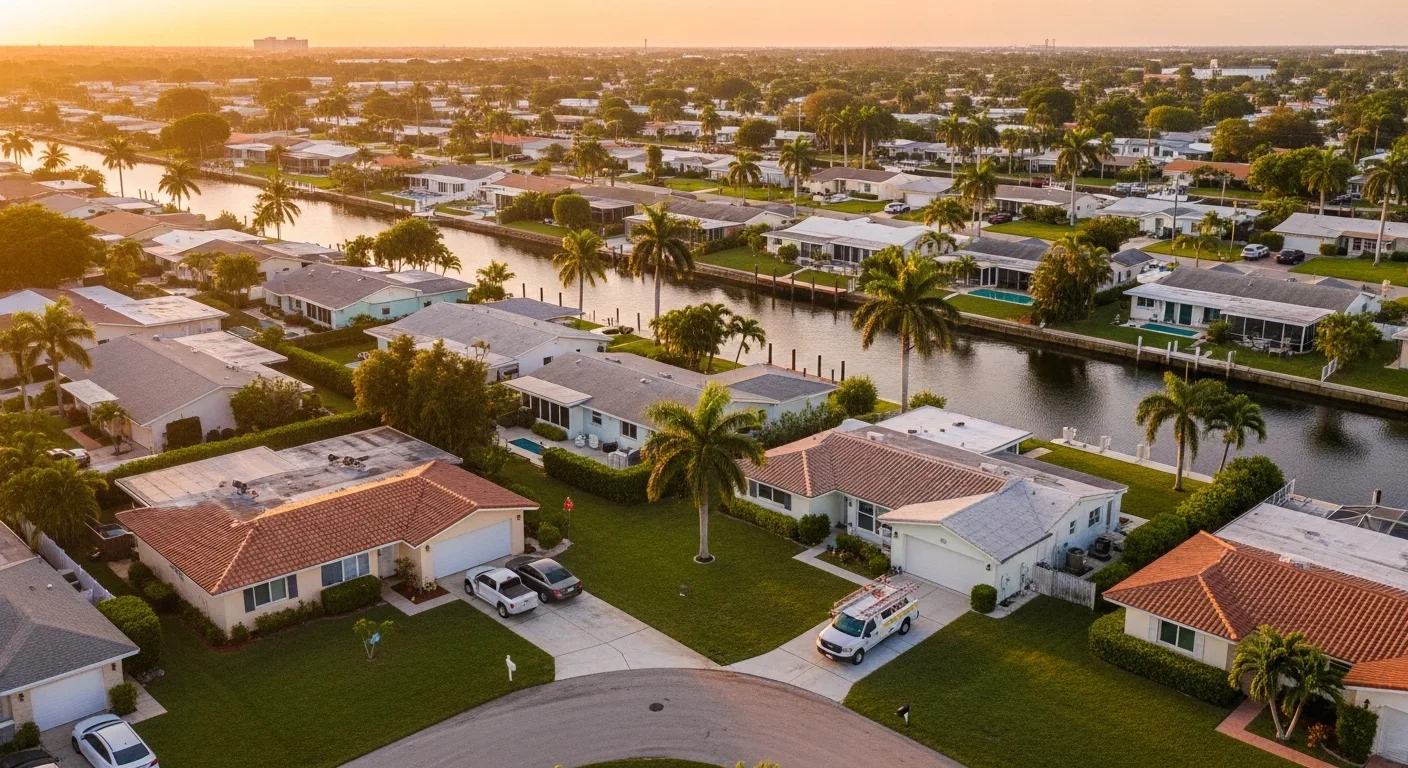
Aerial view of Margate's dense condo communities — shared plumbing stacks and party
walls between units create complex mold migration paths that require multi-unit
remediation protocols.
Board Members: Request Our HOA Package
Palm Build provides a complimentary mold risk assessment for Margate HOA boards
managing older communities. Our report covers common-element vulnerability, shared
infrastructure risk points, and recommended preventive protocols — formatted for board
presentation and resident communication. Contact us to schedule a building assessment.
FL Regulatory Landscape
Florida Mold Licensing: What Margate Homeowners Must Know
Florida has one of the strictest mold regulatory frameworks in the country. Under DBPR Chapter 468, Part XVI, the state requires separate licenses for mold
assessment and mold remediation — and explicitly prohibits the same company from
performing both on the same project within 12 months.
The Florida Department of Health provides guidance on mold exposure and health effects
but does not perform mold testing or enforce remediation standards — that
responsibility falls to the DBPR. In Broward County, where Margate's extreme humidity
makes mold ubiquitous, unlicensed operators are unfortunately common. Verify
credentials before hiring anyone.
Licensed Mold Remediator
Florida DBPR Chapter 468, Part XVI requires a specific mold remediator license for any company performing mold removal. This is a state-enforced requirement — not optional, not voluntary. Verify any company's license at MyFloridaLicense.com before signing a contract. Unlicensed mold removal is illegal in Florida and voids any warranty or insurance claim documentation.
Licensed Mold Assessor (Separate Entity)
Florida law mandates that mold assessment and mold remediation be performed by separately licensed entities. The same company cannot assess and remediate on the same property within 12 months. This conflict-of-interest separation prevents the company that finds the mold from profiting by removing it. Your mold assessment must come from an independent DBPR-licensed assessor.
IICRC Certifications (S520 + WRT)
Beyond state licensing, industry-standard certifications include IICRC S520 (Mold Remediation) and WRT (Water Restoration Technician). These certifications demonstrate training in professional remediation protocols, containment procedures, and moisture management. The IICRC S520 standard defines the remediation procedures that licensed remediators must follow.
Liability Insurance Requirements
Florida-licensed mold remediators must carry general liability insurance and pollution liability coverage. Mold remediation involves handling contaminated materials, using chemical antimicrobials, and creating containment zones — all activities that require specialized insurance. Request certificates of insurance before any work begins.
Coordinates with independent FL-licensed assessors for clearance
5 miles from Margate — 10-15 minute response
Red Flags to Watch For
No DBPR mold license or refuses to provide license number
Same company offers to assess AND remediate your mold
Offers to "spray and seal" without removing contamination
No containment barriers or HEPA filtration during work
Claims "no license needed" in Florida (false)
IICRC S520 Protocol
Our Margate Mold Remediation Process
Professional mold remediation follows a strict sequence defined by the IICRC S520
standard and Florida DBPR regulations. Here is exactly what happens when Palm Build's
licensed team arrives at your Margate home or condo.
01
Professional Mold Assessment
Day 1
02
Containment and Negative Air
Day 1-2
03
Material Removal and Cleaning
Days 2-4
04
Antimicrobial Treatment and HEPA Filtration
Days 4-5
05
Structural Drying and Humidity Control
Days 5-7
06
Clearance Testing and Restoration
Day 7-8
01
Professional Mold Assessment
Day 1
A DBPR-licensed mold assessor performs comprehensive visual inspection, infrared thermal imaging of CBS walls, and indoor air quality sampling. We identify the moisture source — HVAC condensation, shared plumbing failure, stucco crack intrusion, or slab vapor transmission — and classify contamination level per IICRC S520. Florida law requires assessment and remediation to be performed by separately licensed entities.
02
Containment and Negative Air
Day 1-2
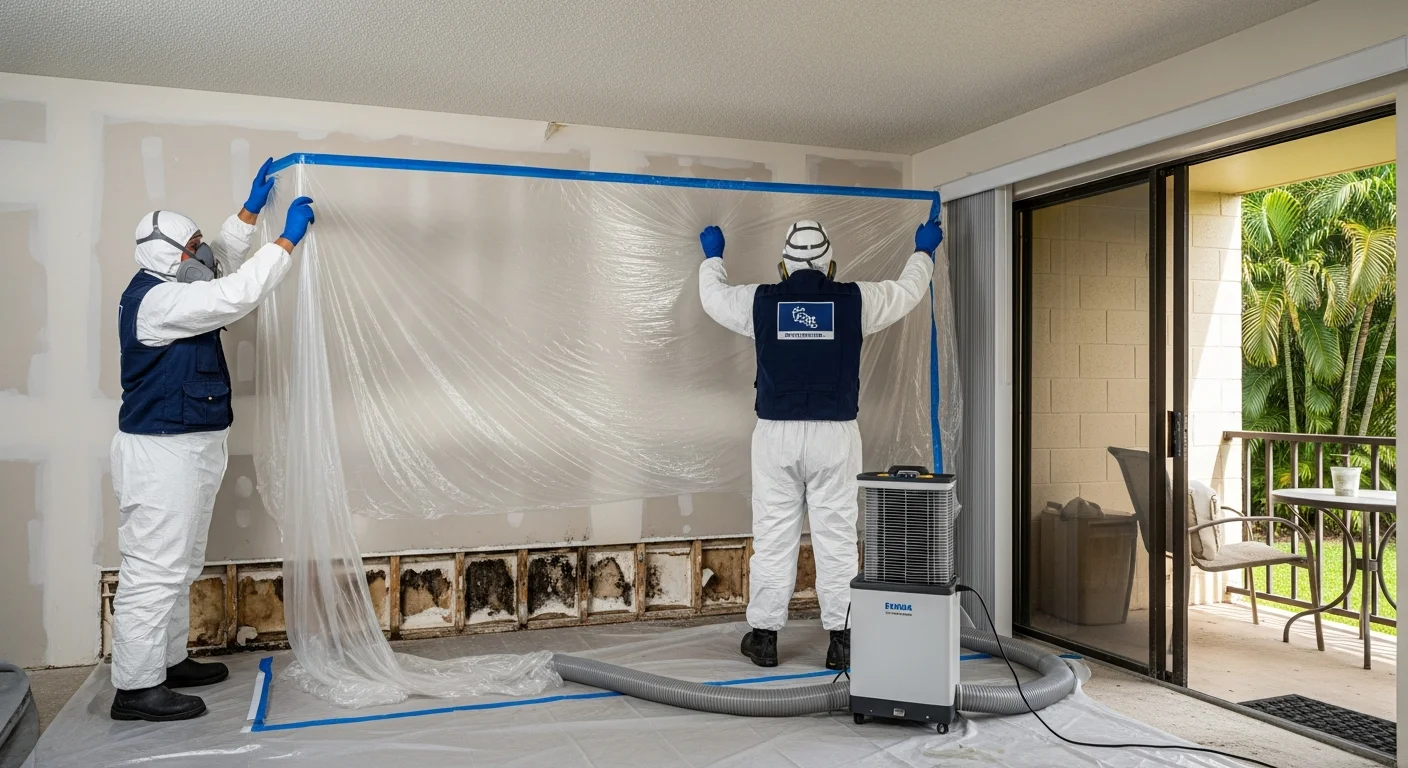
Sealed polyethylene containment barriers isolate affected areas, including CBS wall cavities and HVAC system components. HEPA-filtered air scrubbers create negative air pressure to prevent spore migration — critical in Margate's condo communities where mold can travel through shared walls and plumbing chases to adjacent units. In multi-unit buildings, adjacent units are monitored throughout the project.
03
Material Removal and Cleaning
Days 2-4
Contaminated materials are removed following FL DOH guidelines — affected drywall, insulation, flooring, and HVAC components are double-bagged for disposal. Salvageable CBS block surfaces are HEPA-vacuumed and media blasted to remove embedded mold from block pores. All contaminated materials are transported through sealed pathways to prevent spore release into clean areas of the building.
04
Antimicrobial Treatment and HEPA Filtration
Days 4-5
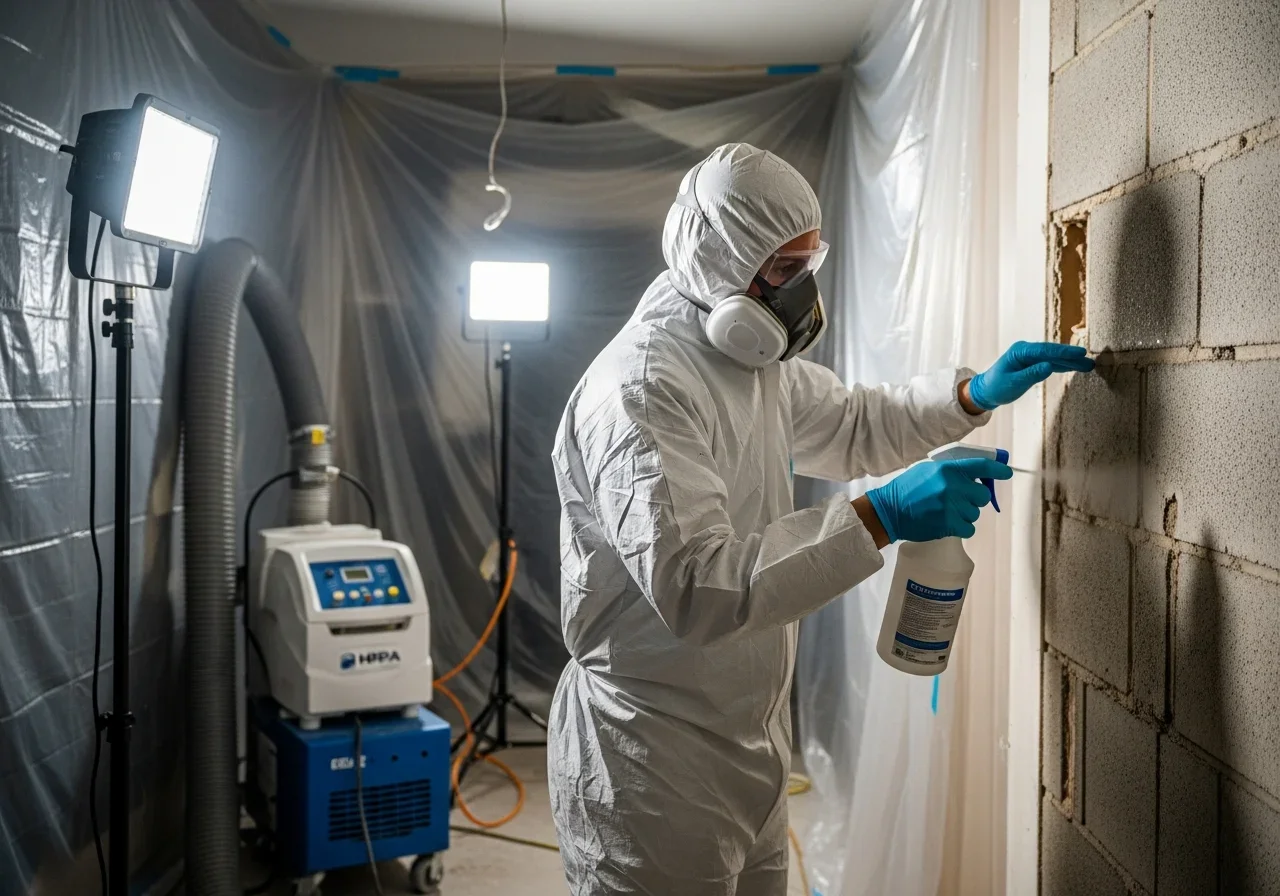
EPA-registered antimicrobial agents are applied to all treated surfaces — interior block wall faces, window bucks, slab edges, and HVAC components. Continuous HEPA air scrubbing runs throughout the treatment phase, capturing airborne spores down to 0.3 microns. For CBS construction, antimicrobial treatment penetrates the porous block surface to prevent recolonization.
05
Structural Drying and Humidity Control
Days 5-7
CBS concrete block construction requires extended drying times compared to wood-frame buildings. Block walls absorb and retain moisture deep within their cores — surface drying alone is insufficient. Commercial dehumidifiers and air movers run continuously with daily moisture readings until CBS walls reach target moisture content. In Margate's 75-80% ambient humidity, this phase cannot be rushed.
06
Clearance Testing and Restoration
Day 7-8
An independent DBPR-licensed mold assessor — separate from the remediator per Florida law — performs post-remediation air quality sampling and visual inspection. Spore counts must return to acceptable levels before containment is removed. Complete documentation is provided for your records, insurance carrier, and HOA board. Only after clearance is achieved does reconstruction of removed materials begin.
Why Containment Matters in Margate's Condo Communities
Disturbing mold without proper containment sends billions of spores airborne. In
Margate's dense condo communities, those spores can migrate through shared walls,
plumbing chases, and HVAC plenums to neighboring units within hours. Our containment
protocol ensures mold stays isolated during removal — protecting not just your unit,
but your neighbors.
1
Sealed Barriers
Polyethylene sheeting floor-to-ceiling on CBS walls
2
Negative Pressure
HEPA scrubbers pull air through containment zone
3
HVAC Isolation
AC system sealed to prevent spore distribution
4
Multi-Unit Monitoring
Adjacent unit air quality tracked throughout project
Unlike northern cities where winter freezing halts mold growth, Margate never drops
below mold-favorable conditions. The risk ranges from elevated to critical — it is never
low. Understanding the seasonal peaks helps time preventive maintenance and recognize
when emergency response is most likely needed.
January - April
Elevated RiskLower Rainfall Period
Lower rainfall does not mean lower mold risk in Margate. Humidity rarely drops below 65% even in the driest months — still above the 60% mold threshold. Poorly ventilated buildings with aging HVAC systems continue breeding mold year-round. This is also when slow leaks from deteriorating polybutylene plumbing in neighborhoods like Margate Estates are most commonly discovered, as homeowners returning from seasonal travel find damage that accumulated during their absence.
May - June
High RiskHVAC Overload Begins
HVAC systems shift into maximum duty as temperatures and humidity spike. Condensate volume surges as AC units work harder — clogged drain lines that survived the cooler months overflow under increased load. Condensation appears on supply vents, around air handlers, and on cold water pipes. Early summer storms bring wind-driven rain that penetrates aging stucco on CBS walls, creating new moisture entry points. Dormant mold colonies from the previous season reactivate rapidly.
July - September
Critical RiskPeak Mold Conditions
Maximum mold risk in Margate. Humidity sustains 80%+ for weeks at a time. Hurricane season brings wind-driven rain that penetrates stucco at angles normal rainfall cannot reach. Power outages from storms disable air conditioning, causing indoor humidity to spike above 85% within hours — and every surface in the home becomes a viable mold substrate. Flooding from overwhelmed drainage saturates slab-level construction. Post-storm mold blooms can appear throughout an entire home within 48 hours.
October - December
Moderate RiskLate Storm and Drying Season
Late-season tropical storms and hurricanes remain a threat through November. Buildings saturated during the wet season dry unevenly — exterior walls and rooflines shed moisture faster than interior CBS cavities and under-slab areas. This uneven drying reveals hidden mold as musty odors emerge from wall cavities that stayed wet all summer. Mold that established during July-September continues growing through this period and will not resolve without professional remediation.
Mold Does Not Die in Margate's "Dry Season"
Active mold colonies that established during the rainy season continue growing
through winter — Margate's humidity never drops low enough or long enough to kill
established mold. The lower-rainfall months slow new colony formation but do not
reverse existing contamination. Professional remediation is required to eliminate
mold regardless of season.
Common Mold Scenarios
Types of Mold Damage in Margate Homes
Margate's climate, 1970s CBS construction, and dense condo communities create six
distinct mold scenarios — each requiring different investigation and remediation
approaches. HVAC condensation mold and post-water-damage mold account for the majority
of professional remediation projects in the city.
HVAC Condensation Mold
Critical
Air conditioning systems in Margate run 365 days a year, generating persistent condensation on evaporator coils, drip pans, and inside ductwork. Clogged condensate drain lines back up water into the air handler cabinet and surrounding wall cavities. Once mold colonizes the air handler, the blower fan distributes spores through ductwork to every room — often before visible signs appear. In Margate's condo communities, shared HVAC plenums can spread contamination between units.
Post-Water-Damage Mold
Critical
Any water event that isn't professionally extracted and dried within 24-48 hours will produce mold in Margate's climate. Burst pipes, appliance failures, AC condensate overflows, and roof leaks all start the colonization clock. In 75-80% ambient humidity, porous building materials cannot air-dry fast enough to prevent mold — towels, fans, and open windows are never sufficient. CBS block walls absorb water deep into their cores, requiring commercial drying equipment.
CBS Wall Cavity Mold
High
Moisture trapped inside concrete block wall cores is invisible from the interior until colonies are well established. Water enters through hairline stucco cracks from decades of thermal cycling, through deteriorated window seals, and from slab capillary wicking. Without vapor barriers — absent in Margate's 1970s construction — this moisture has no exit path. By the time musty odors or dark spots appear on interior surfaces, cavity contamination is typically extensive.
Multi-Unit Migration Mold
High
In Margate's dense condo communities, mold travels through shared plumbing stacks, party wall cavities, and common HVAC plenums. A plumbing leak in one unit can send water through shared walls to multiple neighboring residences. Mold colonizing the shared wall cavity migrates in both directions — contaminating units that never experienced the original water event. Multi-unit remediation requires coordinated containment and adjacent-unit air quality monitoring.
Stucco Intrusion Mold
Elevated
Wind-driven rain during storms penetrates aging stucco through hairline cracks that are invisible to the naked eye. Decades of thermal expansion and contraction — stucco heating to 140+ degrees in afternoon sun then cooling rapidly — create micro-fractures that act as moisture entry points. Once inside the CBS wall cavity, this water cannot exit and feeds mold colonies that grow undetected behind interior drywall for months.
Bathroom and Laundry Mold
Common
Inadequate ventilation in 1970s-era Margate homes drives chronic mold behind bathroom walls, under kitchen cabinets, and around laundry connections. Many original bath exhaust fans vent into attic spaces rather than outside — pumping humid air directly into the roof assembly. Shower moisture migrates through CBS walls to adjacent rooms. Deteriorated grout and caulk around tubs and showers allows water into wall cavities at every use.
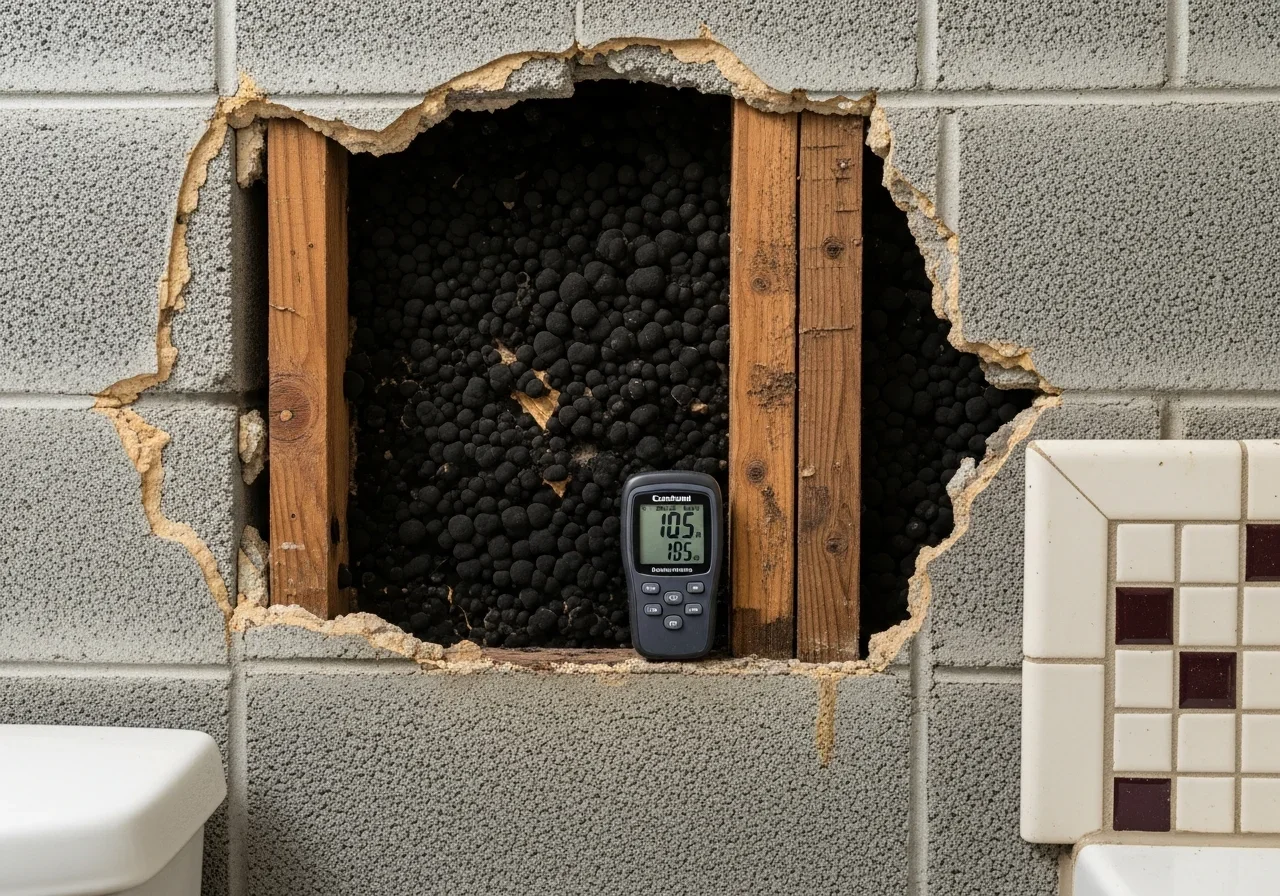
Mold colonization on CBS wall materials — hidden moisture inside block cavities
feeds growth that only becomes visible after extensive contamination.
Mold colonization on CBS wall materials — hidden moisture inside block cavities feeds
growth that only becomes visible after extensive contamination.
Warning Signs
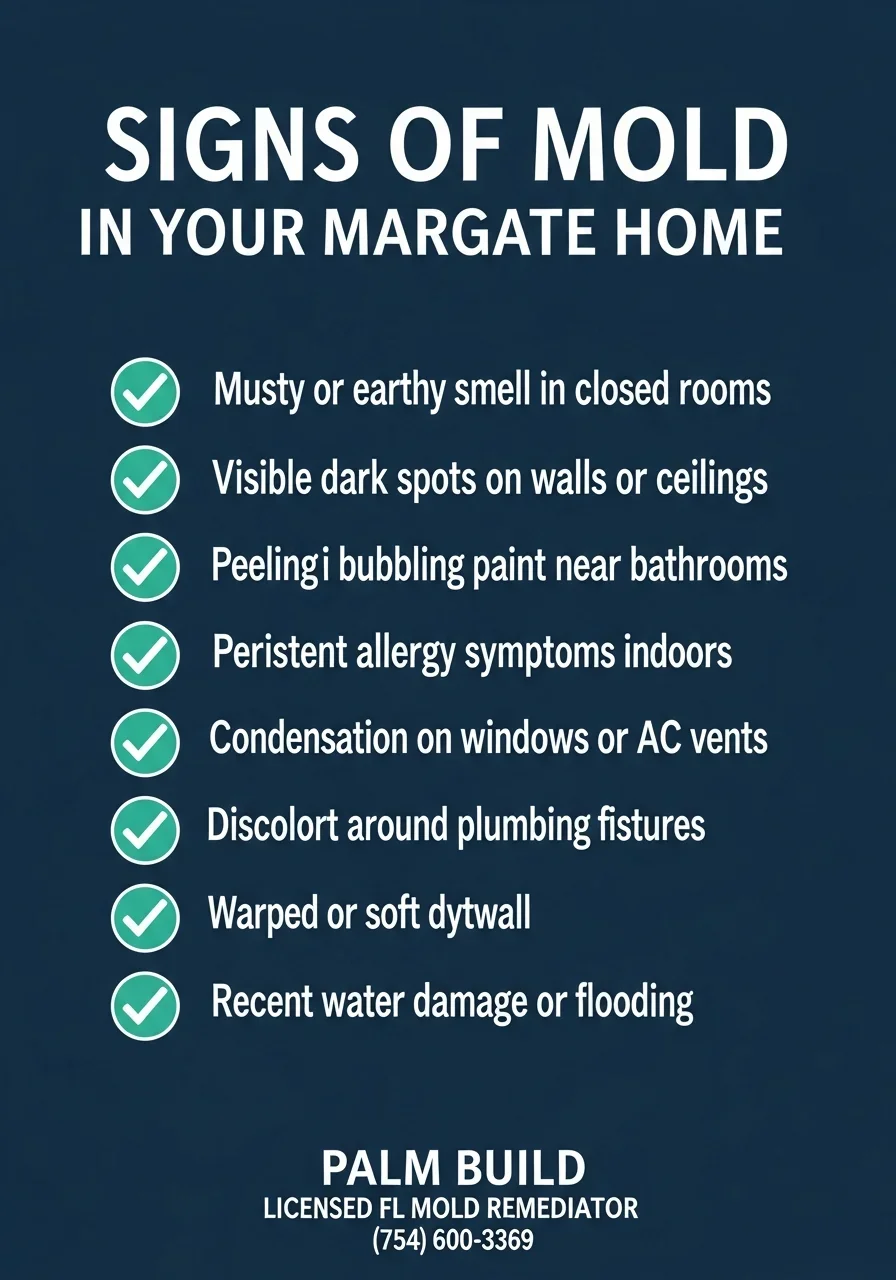
8 Signs You May Have Mold in Your Margate Home
Mold in Margate's CBS concrete block homes often grows hidden inside wall cavities and
HVAC systems for weeks before visible signs appear. These eight warning signs indicate
you may have active mold contamination that requires professional assessment.
Musty or Earthy Smell in Closed Rooms
A persistent musty or earthy odor — especially noticeable when you first enter a room that has been closed — is the most reliable early indicator of hidden mold. In Margate homes, this smell often originates from CBS wall cavities, HVAC closets, or behind bathroom walls where moisture has been trapped.
Dark Spots on Walls, Ceilings, or Baseboards
Dark spots or discoloration on interior surfaces indicate mold that has migrated from inside the wall assembly to the visible surface. By the time dark spots appear on drywall in a CBS home, the contamination behind the wall is typically far more extensive than what is visible.
Peeling or Bubbling Paint Near Bathrooms
Paint that peels, bubbles, or blisters near bathrooms, kitchens, or exterior walls signals moisture trapped behind the surface. In 1970s-era Margate homes where bath fans often vent into attic spaces rather than outside, bathroom moisture migrates through wall assemblies and causes paint failure.
Persistent Allergy Symptoms Indoors
Recurring sneezing, congestion, itchy eyes, or respiratory irritation that improves when you leave the building suggests airborne mold spores. Mold growing inside HVAC ductwork distributes spores to every room whenever the system runs — a particularly common scenario in Margate condos with aging air handlers.
Condensation on Windows or AC Vents
Visible condensation on windows, around AC supply vents, or on cold water pipes indicates humidity levels high enough to support active mold growth. In Margate's 75-80% humidity, condensation on vent surrounds is a leading indicator of mold colonizing the ductwork interior.
Discoloration Around Plumbing Fixtures
Yellow, brown, or dark staining around toilets, under sinks, or near washing machine connections signals slow leaks feeding hidden mold. In Margate condo communities with shared plumbing stacks, discoloration around fixtures often indicates mold already colonizing the shared wall cavity.
Warped, Soft, or Spongy Drywall
Drywall that feels soft, spongy, or gives when pressed has absorbed moisture from behind — a sure sign of active water intrusion and likely mold contamination within the wall cavity. CBS block homes in Margate are particularly susceptible as moisture migrates through the block core to the interior drywall face.
Recent Water Damage Not Professionally Dried
Any water event — burst pipe, appliance leak, AC condensate overflow, roof leak, or flooding — that was not professionally extracted and dried within 24-48 hours has produced mold. In Margate's climate, DIY drying with fans and towels is never sufficient to prevent mold colonization inside CBS wall cavities and under flooring.
Visible mold indicators in a Margate home — by the time surface signs appear, hidden
contamination inside CBS wall cavities is typically extensive.
When to Call a Professional
If you notice any of these warning signs, do not attempt to clean or disturb the
affected area. Disturbing mold without proper containment releases billions of spores
that your HVAC system will distribute throughout your home within minutes. Contact a
DBPR-licensed mold assessor for professional testing — and call Palm Build for
remediation if contamination is confirmed.
Mold in Margate Homes
Margate Mold Remediation: What We See
These are the most common mold presentations we encounter in Margate's CBS concrete
block homes and condo communities — from hidden wall cavity contamination and HVAC
system mold to multi-unit restoration projects in 55+ buildings.
Hidden mold behind drywall on CBS block — moisture trapped in the wall cavity fed this colony for weeks before any visible sign appeared on the interior surface
Antimicrobial treatment on exposed CBS wall — EPA-registered agents penetrate the porous block surface to prevent recolonization after mold removal
HVAC vent mold in a Margate condo — condensation from year-round AC operation creates persistent moisture around supply vents and inside ductwork
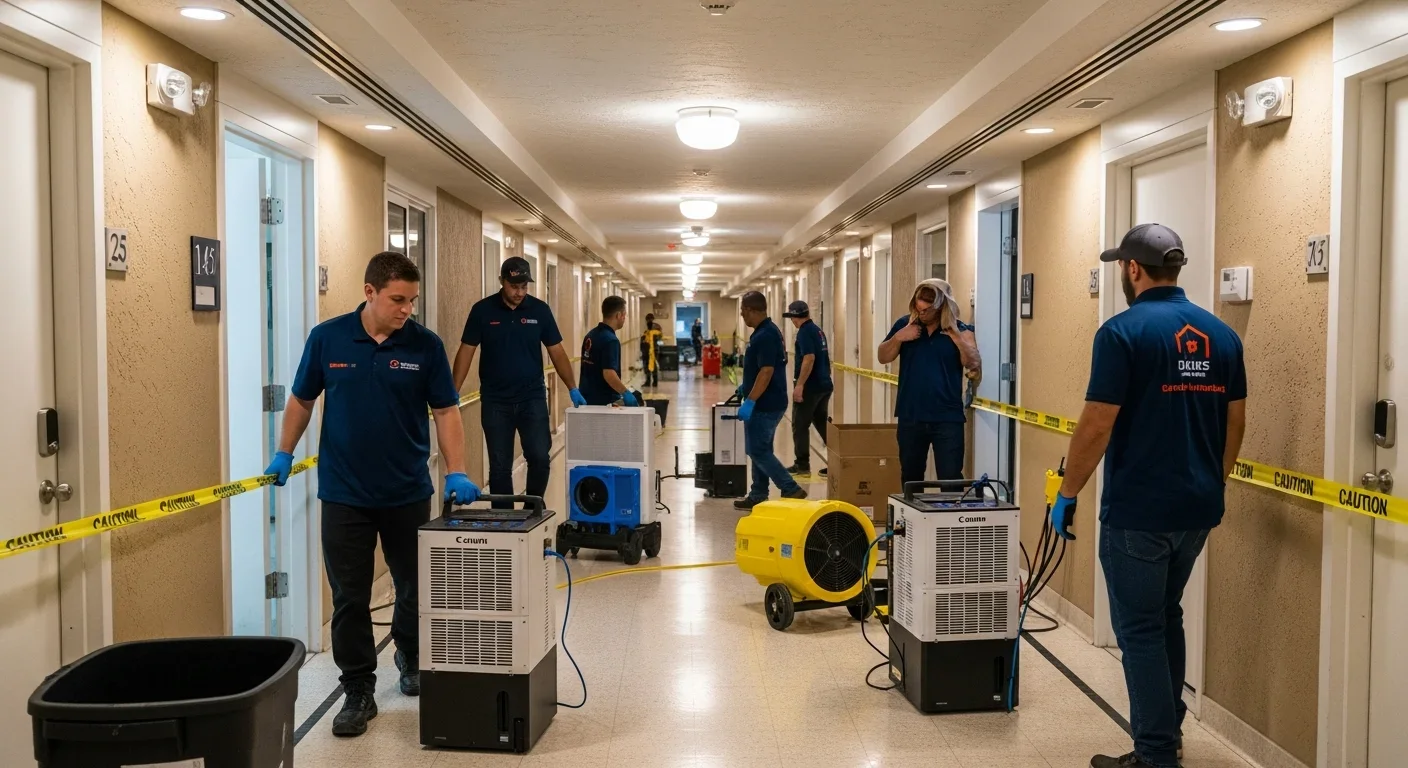
Multi-unit restoration equipment in a Margate condo hallway — containment and HEPA filtration protect adjacent units during remediation in shared-wall buildings
Palm Build holds a Florida DBPR mold remediation license and complies fully with Chapter 468, Part XVI requirements. Every crew lead carries current IICRC Applied Microbial Remediation Technician (AMRT) certification. We follow IICRC S520 standards on every Margate project — no shortcuts, no spray-and-seal shortcuts.
5 Miles from Margate (10-15 Minute Response)
Our South Florida Operations Hub in Deerfield Beach is approximately 5 miles from Margate — putting us 10-15 minutes from Paradise Gardens, Oriole Gardens, Holiday Springs Village, Coral Bay, and every Margate neighborhood. Same-day mold inspections for urgent situations. No waiting days for a company to drive across the county.
55+ Condo Community Protocols
Palm Build has developed specific protocols for mold remediation in Margate's 55+ communities — same-day board documentation packages, shared-plumbing isolation procedures, quiet-hours scheduling, and multi-unit air quality monitoring. We understand HOA governance, master policy vs HO-6 insurance allocation, and the specific needs of senior residents.
CBS Construction Specialists
Margate is built on 1970s CBS concrete block — and we specialize in it. We understand stucco crack moisture intrusion patterns, CBS wall cavity mold, degraded vapor barriers, thermal bridge condensation, and the specific remediation techniques required for block construction. Infrared thermal imaging identifies hidden contamination without destructive investigation.
Insurance Documentation Experts
We understand Florida's post-AOB reform claim requirements, the 1-year filing deadline, and mold coverage sublimits. Our documentation connects mold to the original water event with moisture maps, infrared thermal images, air quality reports, and scope details formatted for your Broward County adjuster. For condos, we provide separate scopes for master policy and HO-6 claims.
Independent Clearance Testing Coordination
Florida law requires post-remediation clearance from a separately licensed mold assessor. Palm Build coordinates with independent DBPR-licensed assessors to schedule clearance testing immediately after remediation is complete — no delays waiting for a third party. Clearance documentation is provided for your records, insurance carrier, and HOA board.
Source Correction, Not Just Mold Removal
Removing visible mold without fixing the moisture source guarantees recontamination within weeks in Margate's climate. Palm Build identifies and corrects the root cause — whether it's a clogged AC condensate line, deteriorated stucco allowing rain intrusion, failing shared plumbing, or inadequate bathroom ventilation. We remediate the mold and eliminate the conditions that created it.
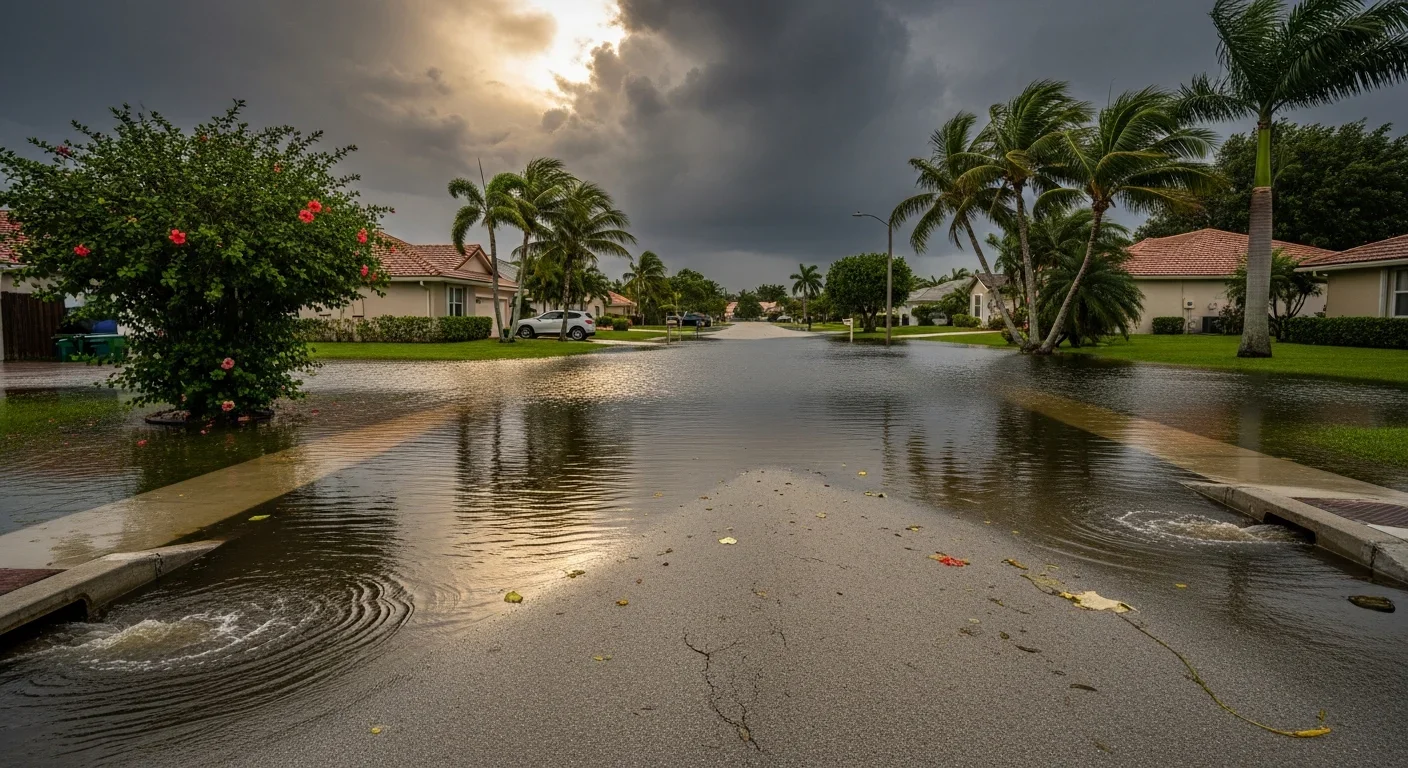
Storm flooding in a Margate neighborhood — standing water drives moisture into CBS block
walls and under slab-on-grade construction, producing mold within 24-48 hours without
professional drying.
Common Questions
Margate Mold Remediation FAQ
How quickly does mold grow after water damage in Margate?
In Margate's subtropical climate with 75-80% average humidity, mold can begin colonizing surfaces within 24 to 48 hours of water intrusion. The Florida Department of Health recommends that porous materials wet and not dried within this window be removed. This is why rapid water damage response and professional drying are critical to preventing mold.
Does Palm Build hold a Florida mold remediation license?
Yes. Palm Build holds current Florida DBPR mold remediation licenses as required by Chapter 468, Part XVI. We also hold IICRC certifications in mold remediation (S520) and water damage restoration (WRT). You can verify our licensing on MyFloridaLicense.com.
Can the same company test for mold and remediate it?
No. Florida law requires that the mold assessment (testing) and mold remediation (removal) be performed by separately licensed entities. Palm Build coordinates with independent licensed mold assessors for both pre-remediation testing and post-remediation clearance verification.
How does mold remediation work in Margate's condo communities?
In communities like Oriole Gardens, Holiday Springs, and Paradise Gardens, we implement multi-unit protocols: containment with negative air pressure to prevent spore migration, shared-plumbing isolation, adjacent-unit air quality monitoring, same-day board documentation, and quiet-hours scheduling for 55+ residents.
Is mold covered by homeowners insurance in Margate?
Coverage varies by policy. Many Florida homeowners policies cover mold that results from a sudden and accidental covered peril (like a burst pipe) but exclude mold from long-term maintenance issues or flooding. We document the cause and timeline of mold growth to support your claim and work directly with your carrier's adjuster.
Why does CBS construction make mold remediation more complex?
CBS (concrete block structure) — Margate's dominant building type — holds moisture in block cavities that standard drying can't reach easily. Mold can grow inside the block core and behind stucco without visible surface evidence. Our remediation protocols include deep-wall moisture verification and extended drying cycles calibrated for CBS block.
How much does mold remediation cost in Margate?
Small, contained mold remediation (single bathroom or closet) typically ranges from $1,500-$4,000. Larger projects involving multiple rooms or wall cavities run $4,000-$12,000. Multi-unit condo events can exceed $20,000 depending on the number of affected units. We provide detailed scope estimates before work begins.
What should I do if I smell mold but can't see it?
A musty or earthy smell in Margate homes almost always indicates hidden mold — often behind drywall, inside CBS block cavities, in HVAC ductwork, or under flooring. Don't attempt to locate it yourself, as disturbing hidden mold releases spores into your living space. Call for a professional assessment using thermal imaging and air sampling to pinpoint the source.
Trusted Vendors
Trusted local pros in Margate
Outside our restoration scope, these are the vetted, licensed contractors we trust
alongside our work. Personally evaluated, reference-checked, and recommended by Palm
Build.
Mold in Your Margate Home? Licensed Remediators — 5 Miles Away.
Palm Build's Florida-licensed mold remediation team responds to Margate in 10-15 minutes. HEPA containment, negative air systems, and the 55+ community protocols your property needs — available 24/7.