Lancaster's crawl space foundations, humid subtropical climate, and aging housing stock create ideal conditions for hidden mold — under floors, inside wall cavities, and throughout crawl space structural framing. Palm Build's IICRC-certified team uses containment, HEPA filtration, and post-remediation clearance testing to eliminate mold at its source.
~35 miles — Charlotte, NC 35-45 min Response IICRC Certified
Lancaster's combination of humid subtropical rainfall, Piedmont clay soil that traps
moisture around foundations, aging plumbing in pre-1980 homes prone to hidden leaks, and
grading issues in new construction creates some of the highest residential mold risk in
Lancaster County. Understanding these four factors is the first step toward permanent
remediation — not just cosmetic cleanup.
Humid Subtropical Climate (45.76 in Rain)
45.76 in
Annual rainfall
Lancaster receives 45.76 inches of annual rainfall — well above the national average — spread across a humid subtropical climate that keeps relative humidity above 65% from April through October. This persistent moisture load saturates Piedmont clay soil around foundations, wicks into crawl spaces through dirt floors and block walls, and creates the sustained humidity that mold colonies require to establish on wood framing, subfloor sheathing, and insulation.
Crawl Space Foundation Moisture
70-90%
Crawl space RH (vented)
The majority of Lancaster homes — particularly ranch-style brick homes built from the 1960s through 1990s — sit on vented crawl spaces over Piedmont red clay. This clay retains moisture for weeks after rain, continuously evaporating water vapor into the crawl space. Warm humid outdoor air enters through foundation vents, contacts cooler surfaces, and condenses on floor joists, ductwork, and insulation — creating a persistent mold factory under the living space.
Aging Plumbing in Pre-1980 Homes
40-60+ yrs
Plumbing age in older homes
Lancaster's established neighborhoods — including areas near downtown, along Pageland Highway, and the historic district — contain homes with original galvanized steel and copper plumbing that has been in service for 40-60+ years. Corroded fittings, pinhole leaks in copper supply lines, and deteriorating drain connections create slow, hidden moisture intrusion inside wall cavities and under floors that feeds mold growth for months before visible damage appears.
New Construction Grading Issues
1-3 yrs
Mold risk window (new builds)
Lancaster's rapid growth — new subdivisions off SC-9, Pleasant Road, and the US-521 corridor — has introduced grading and drainage problems on newly developed lots. Builders clearing Piedmont clay hillsides and compacting fill soil around foundations create negative drainage slopes that direct stormwater toward the home. New construction doesn't mean mold-free: improper grading, uncured concrete moisture, and construction debris in crawl spaces create mold conditions within the first 1-3 years.
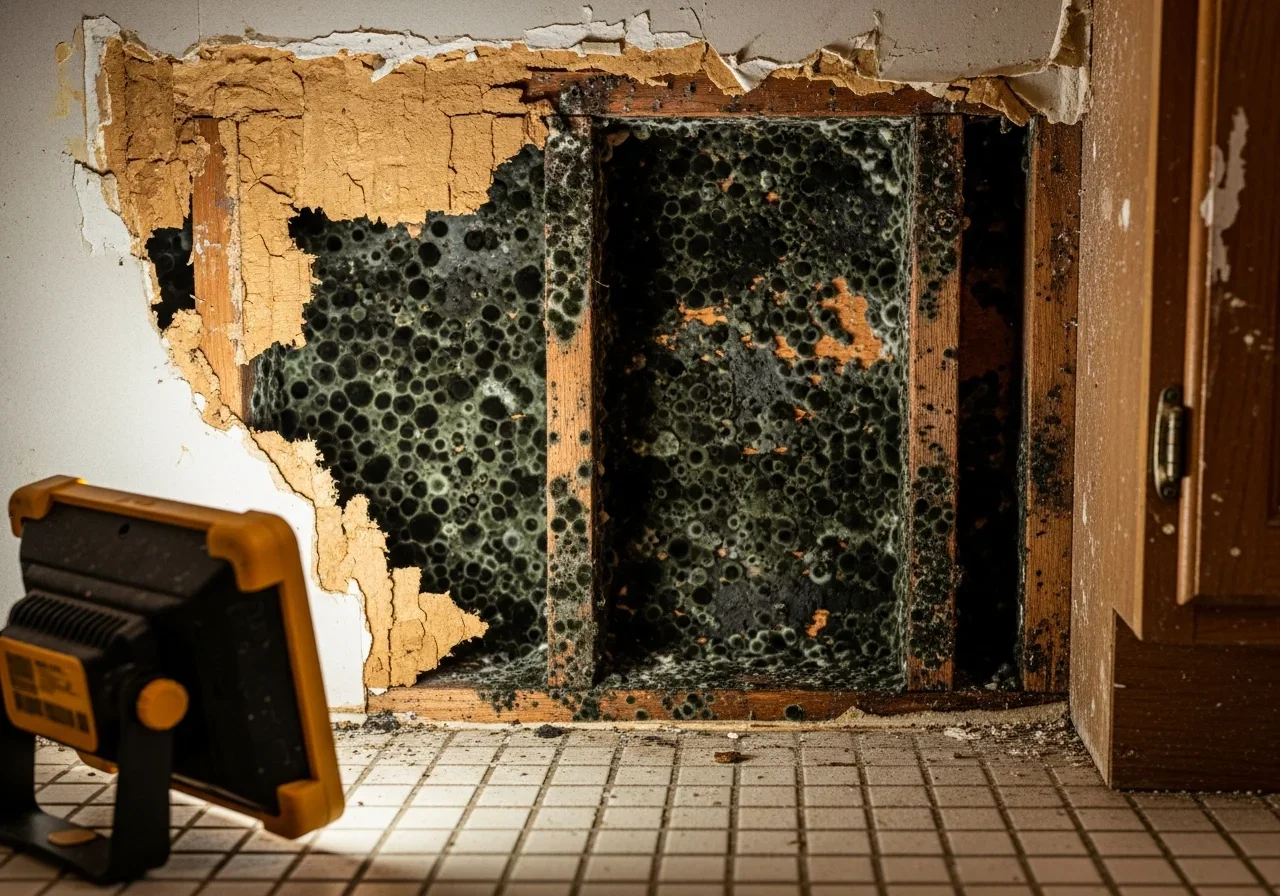
Hidden mold behind drywall from a slow plumbing leak in a Lancaster home — aging
galvanized and copper plumbing in pre-1980 homes is one of the most common hidden
moisture sources in the area.
Know The Signs
Warning Signs of Mold in Lancaster Homes
Mold contamination in Lancaster rarely announces itself with obvious damage. In brick
ranch homes with vented crawl spaces over Piedmont clay, mold grows silently on floor
joists, inside wall cavities, and beneath insulation for months — until health symptoms
or visible damage force a professional inspection.
Musty Crawl Space Odors Rising Into Living Space
Most Reported
The most reported first sign in Lancaster homes with vented crawl spaces. When mold colonizes floor joists, subfloor sheathing, or fiberglass insulation in the crawl space, a musty or earthy smell rises through gaps in the subfloor — especially around plumbing penetrations, HVAC registers, and along exterior walls. Many Lancaster homeowners grow accustomed to the odor and only notice it after returning from vacation.
Dark Spots on Wood Joists & Subfloor
Structural
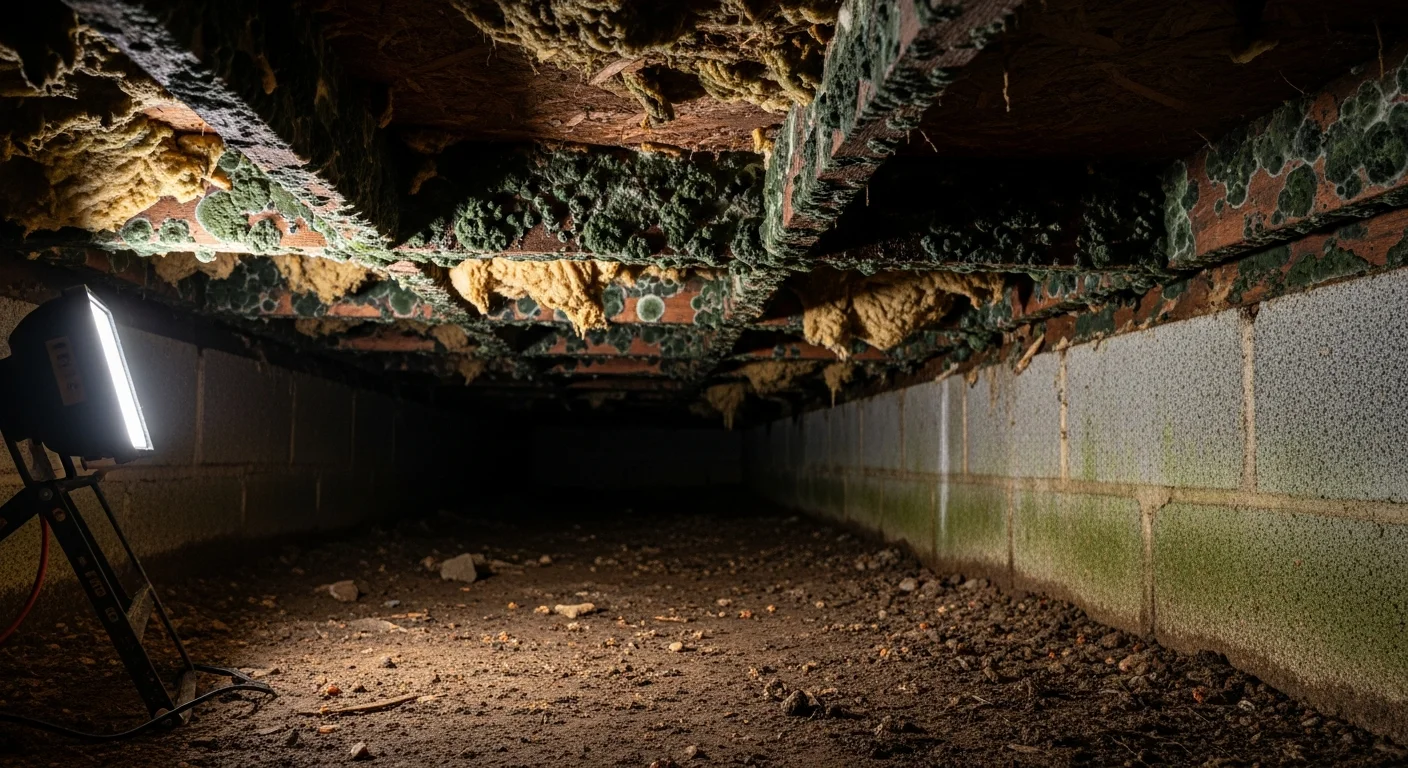
Dark green, black, or gray fuzzy growth on exposed wood joists, band boards, and subfloor sheathing visible from the crawl space is active mold colonization. In Lancaster's brick ranch homes, the crawl space is often the first area affected — Piedmont clay moisture wicking through dirt floors creates the persistent humidity that feeds wood-destroying mold species on structural framing.
Peeling Paint & Wallpaper Bubbling
Early Warning
Paint that bubbles, peels, or blisters on interior walls — particularly along exterior-facing walls and below windows — signals trapped moisture migrating through the wall assembly. In Lancaster's older brick homes, moisture can wick through mortar joints and brick into the wall cavity, creating conditions for hidden mold growth behind intact drywall or plaster finishes.
Respiratory Symptoms That Worsen Indoors
Health Risk
Persistent sinus congestion, throat irritation, watery eyes, or worsening allergies — particularly when spending time indoors — can signal elevated airborne mold spore levels. Symptoms that improve when you leave the home and return when you come back are a strong indicator of indoor air quality contamination requiring professional assessment.
Standing Water or Wet Soil in Crawl Space
Structural
Standing water, consistently wet soil, or visible moisture on the vapor barrier (if one exists) in your crawl space after rain means the foundation drainage is inadequate. Lancaster's Piedmont clay holds water against foundation walls for days, and many older homes lack proper French drains or have deteriorated vapor barriers that no longer prevent ground moisture from reaching wood framing.
Visible Moisture & Condensation on Windows
Early Warning
Persistent condensation on interior window surfaces, especially during shoulder seasons (spring and fall), indicates elevated indoor humidity levels. In Lancaster homes with crawl space moisture problems, excess humidity from the crawl space migrates upward through the building envelope — condensing on cooler glass surfaces and creating the moisture that feeds mold growth around window frames and sills.
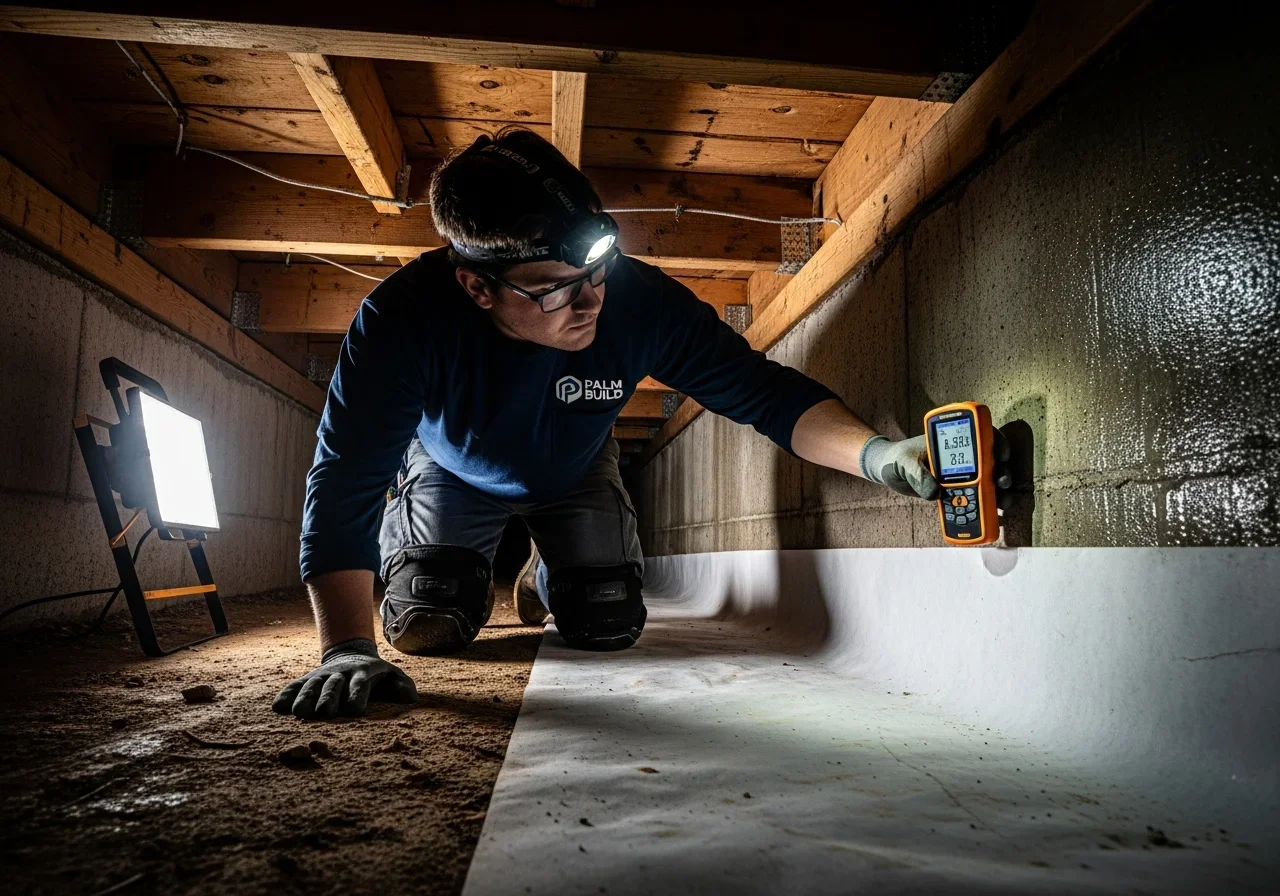
Crawl space moisture inspection in a Lancaster home — vented crawl spaces over
Piedmont clay are the primary mold driver in the area.
When to Call Immediately
If you see mold covering more than 10 square feet, mold on floor joists or subfloor
sheathing, black or dark green growth on wood framing in the crawl space, or a
persistent musty odor throughout the home — do not attempt DIY cleanup. Contact an
IICRC-certified mold remediation professional and document everything for your insurance claim.
Lancaster's #1 Mold Problem
Crawl Space Mold: Why Piedmont SC Crawl Spaces Are Mold Factories
The majority of Lancaster homes sit on vented crawl spaces over Piedmont red clay — and
the combination is a mold factory. Dirt floors without proper vapor barriers allow
continuous ground moisture evaporation. Foundation vents that were supposed to
"ventilate" the space actually introduce warm humid outdoor air that condenses on cooler
surfaces. Seasonal moisture cycling between Lancaster's wet springs and humid summers
keeps wood framing perpetually damp.
South Carolina's building codes now allow closed (encapsulated) crawl spaces as an
alternative to vented designs. A proper encapsulation includes a heavy-duty vapor
barrier covering the entire crawl space floor and walls, sealed foundation vents,
mechanical dehumidification, and proper drainage. For Lancaster homes with active crawl
space mold, remediation must come first — encapsulation over active mold growth traps
contamination and makes the problem worse.
Before: Active mold on floor joists and sagging insulation in a vented Lancaster crawl
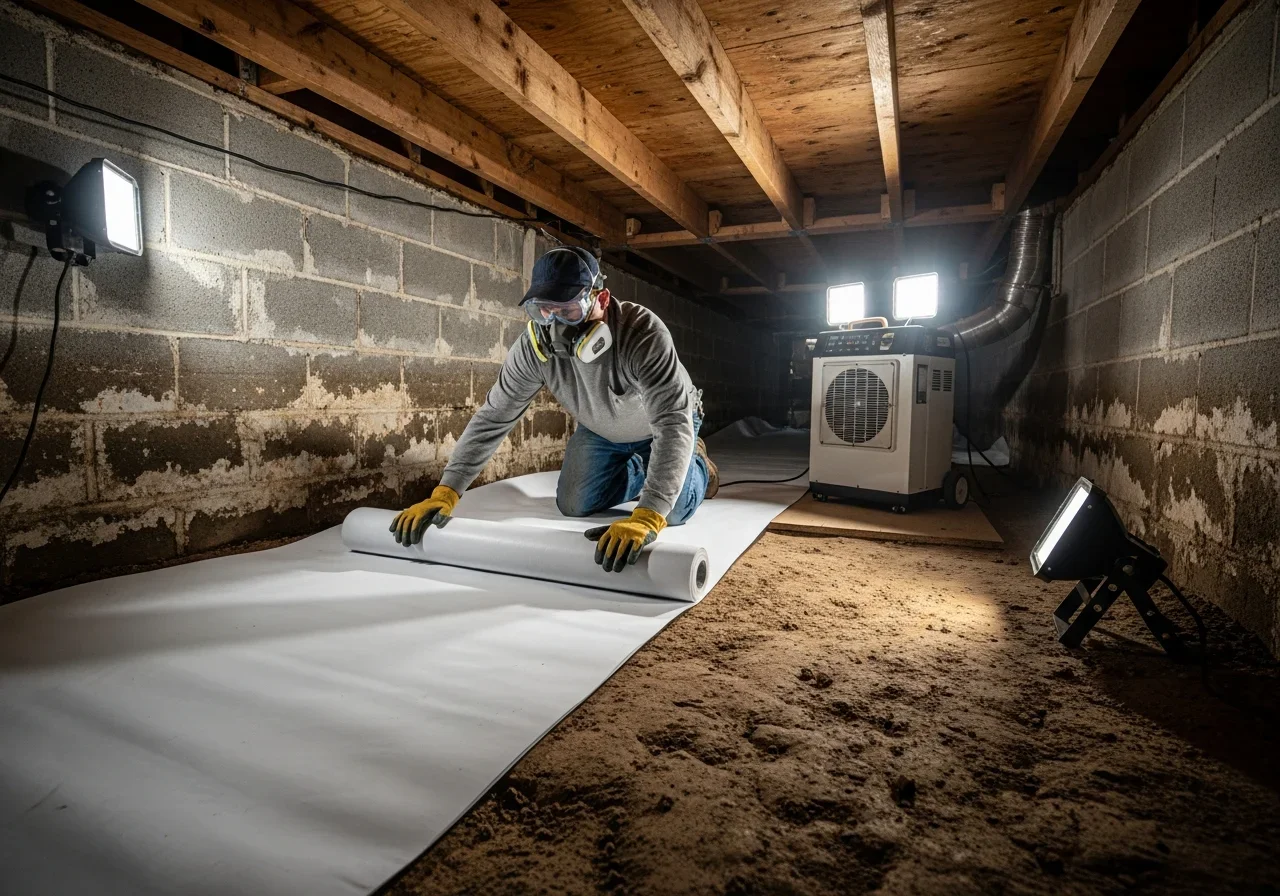
space over Piedmont clayAfter: Encapsulated crawl space with vapor barrier and mechanical dehumidification —
humidity reduced from 85% to under 50%
Why Encapsulation Without Remediation Fails
Some Lancaster contractors offer crawl space encapsulation as a standalone "mold
solution." This is a critical mistake. Sealing a vapor barrier over mold-contaminated
wood framing traps the contamination — mold continues to grow under the barrier and
spores remain in the wood. Palm Build always remediates active mold growth first,
verifies with clearance testing, and then encapsulates to prevent recurrence.
IICRC S520 Protocol
Our Lancaster Mold Remediation Process
Professional mold remediation follows a strict 6-step sequence defined by IICRC S520
standards. While South Carolina has no mold licensing requirement, Palm Build
voluntarily adheres to the same rigorous protocols required in licensed states — because
proper remediation demands it regardless of regulation.
01
Inspection & Moisture Mapping
Day 1
02
Moisture Source Identification
Day 1
03
Containment Construction
Days 1-2
04
Mold Removal & Material Demolition
Days 2-4
05
Antimicrobial Treatment & Drying
Days 3-5
06
Post-Remediation Clearance Testing
Days 5-7
01
Inspection & Moisture Mapping
Day 1
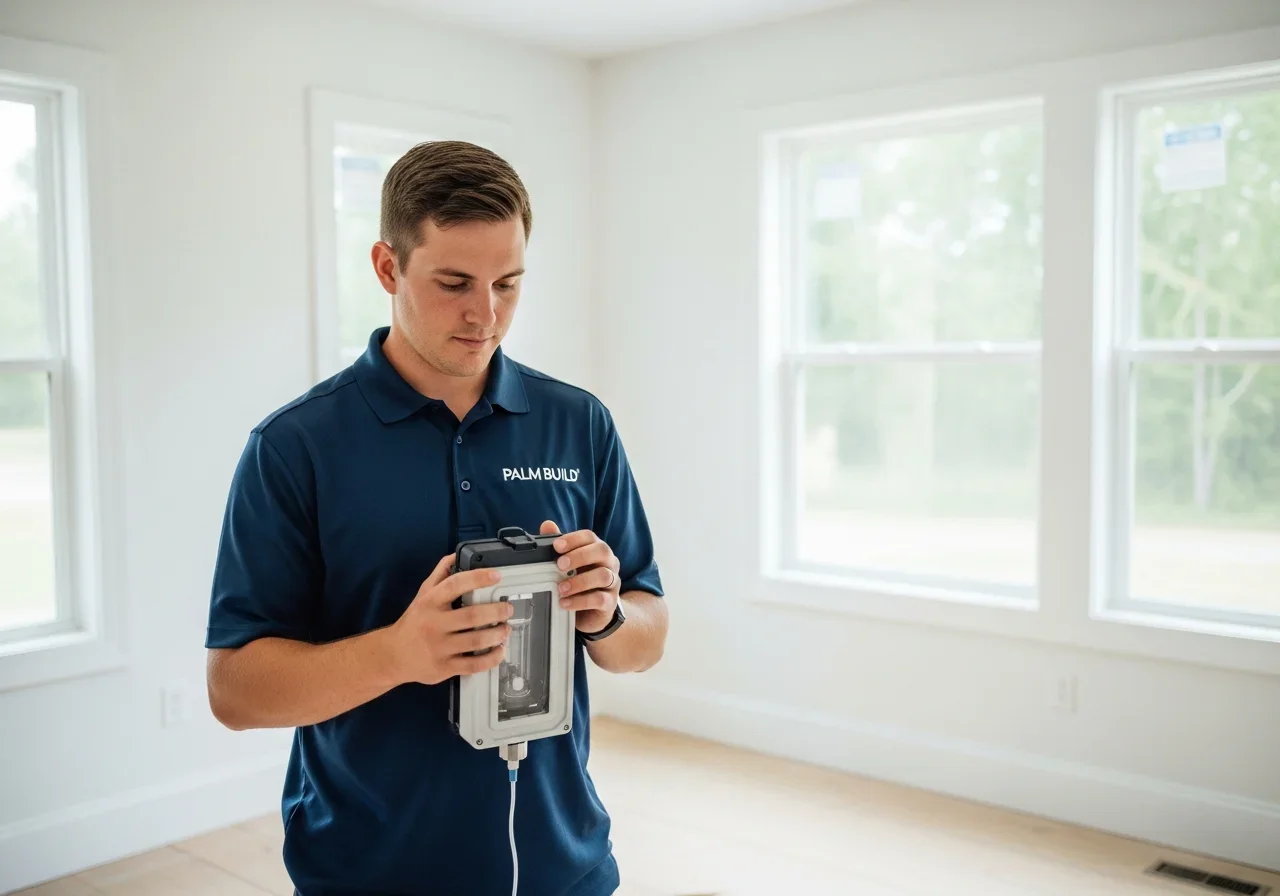
We use infrared thermal imaging and professional-grade moisture meters to map every affected area — including crawl spaces, wall cavities behind brick veneer, and above ceiling lines in single-story ranch homes. Lancaster homes with crawl spaces require below-floor inspection as the primary assessment area. This comprehensive mapping determines the full scope of contamination before any containment is built.
02
Moisture Source Identification
Day 1
Mold always has a water source. We identify it — whether it's inadequate crawl space ventilation, aging plumbing leaks, poor foundation drainage, or roof leak intrusion — and coordinate repair before remediation begins. In Lancaster homes, the most common sources are crawl space ground moisture from Piedmont clay and slow plumbing leaks in walls of pre-1980 brick ranch homes.
03
Containment Construction
Days 1-2
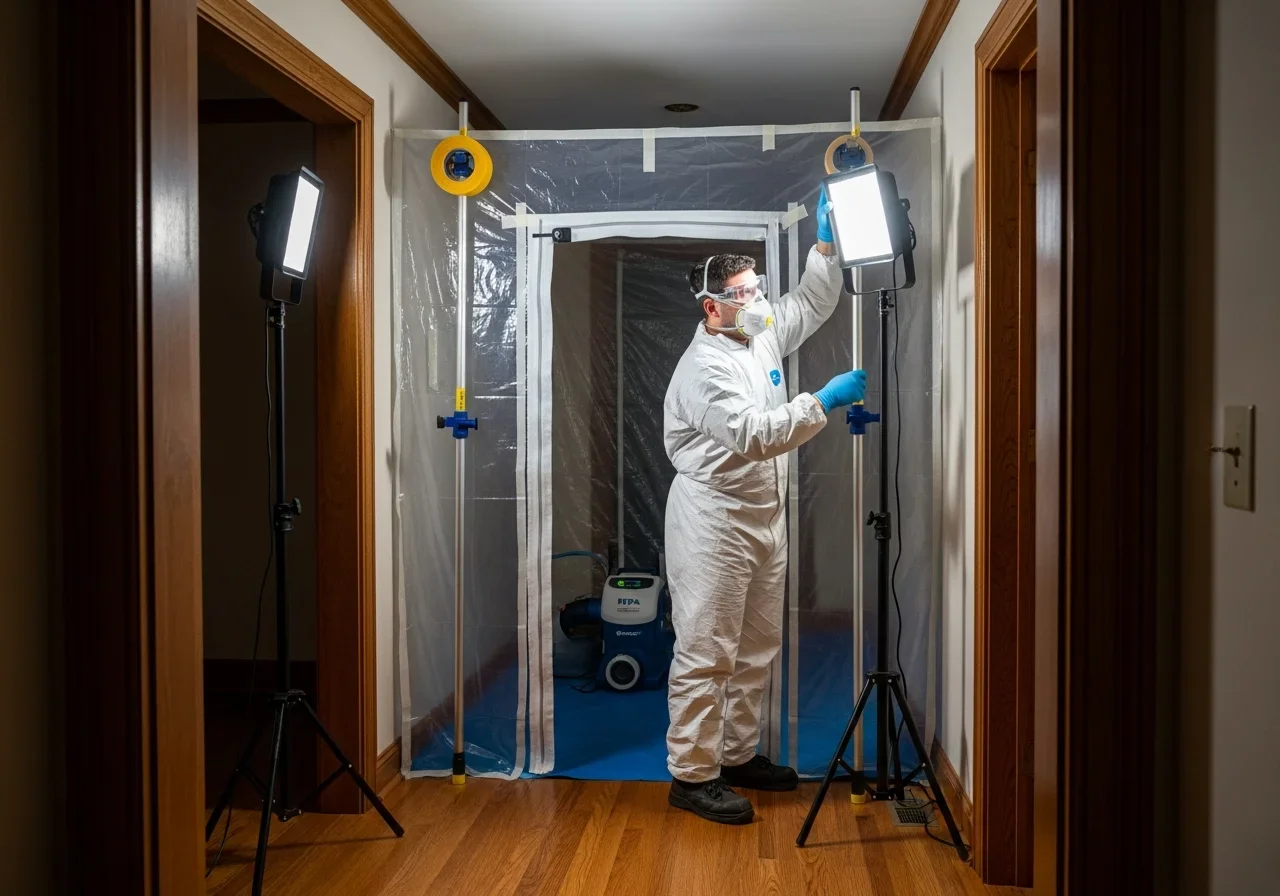
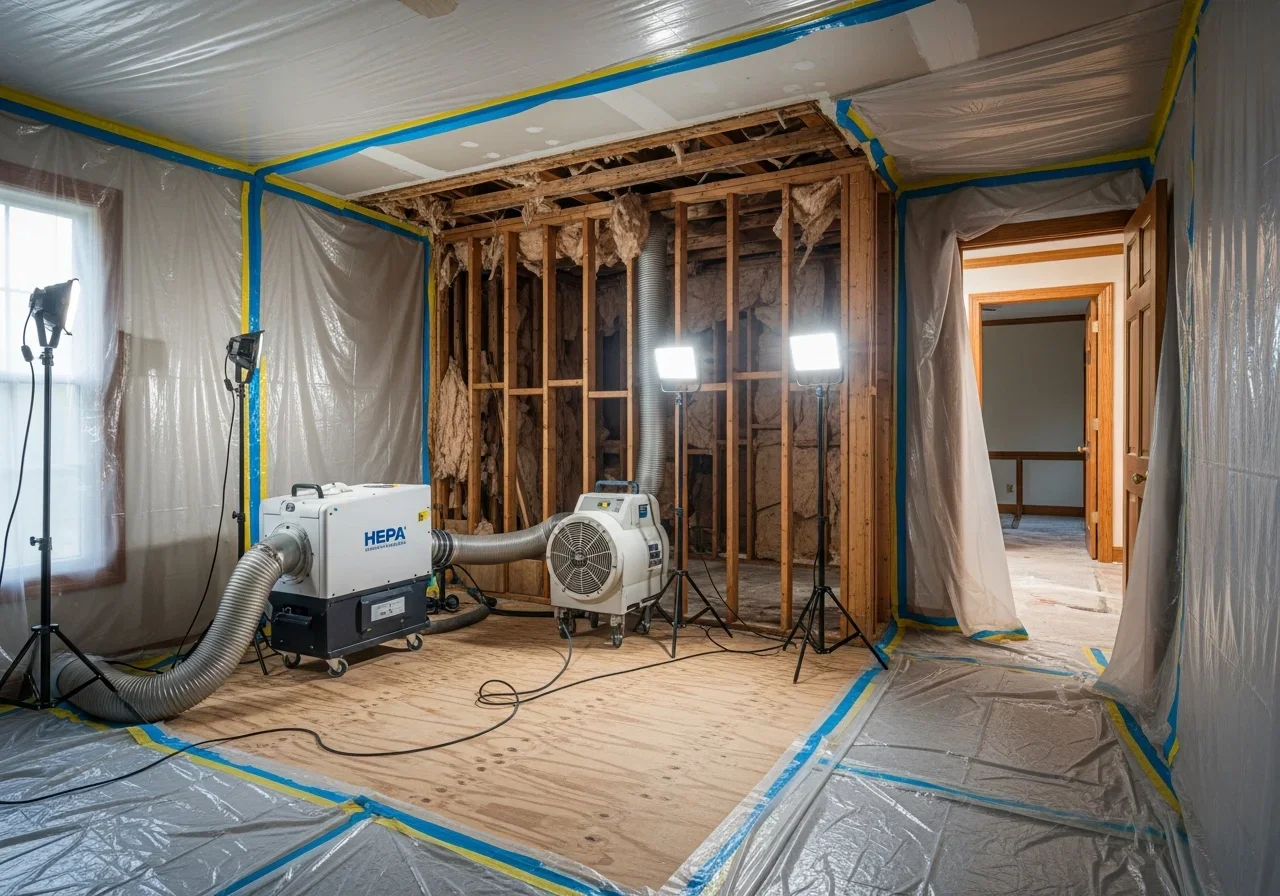
We build physical containment barriers using 6-mil polyethylene sheeting and establish negative air pressure with HEPA-filtered air scrubbers. This prevents mold spores from spreading to unaffected areas during demolition. In Lancaster homes, crawl space containment requires special consideration — sealing the crawl space access point and creating isolated work zones within the below-floor environment.
04
Mold Removal & Material Demolition
Days 2-4
Contaminated porous materials — drywall, insulation, carpet, baseboards — are removed and double-bagged inside containment per IICRC S520 protocol. In Lancaster crawl spaces, this includes removing mold-damaged fiberglass insulation, treating wood joists and subfloor sheathing, and HEPA vacuuming all accessible surfaces. Brick ranch wall cavity work requires careful drywall removal to access mold behind the interior finish.
05
Antimicrobial Treatment & Drying
Days 3-5
HEPA air scrubbers run continuously during and after remediation to capture airborne spores. Commercial dehumidifiers bring moisture levels below the thresholds required for clearance testing. Antimicrobial treatments are applied to all remediated wood surfaces. In Lancaster's humid climate, this drying phase typically runs 48-72 hours — rushing it leads to failed clearance tests and mold recurrence.
06
Post-Remediation Clearance Testing
Days 5-7
An independent environmental consultant conducts post-remediation verification including visual inspection and air quality sampling. Since South Carolina has no mold licensing requirement, we voluntarily follow the same separation-of-assessment-and-remediation standard used in licensed states. We don't consider the job complete until clearance is achieved and documented.
Why Crawl Space Remediation Requires Specialized Expertise
Lancaster's crawl space homes present unique remediation challenges that above-grade
work doesn't. Limited access heights (often 18-30 inches), confined space safety
requirements, structural wood treatment while maintaining load-bearing integrity, and
coordinating encapsulation after clearance all require experience that standard
residential mold companies may lack.
1
Confined Space Access
Specialized equipment and PPE for low-clearance crawl spaces common in Lancaster ranch homes
2
Structural Wood Treatment
Antimicrobial treatment of joists and subfloor without compromising structural integrity
3
Moisture Source Resolution
Foundation drainage, vapor barrier replacement, and vent sealing before encapsulation
4
Encapsulation After Clearance
Heavy-duty vapor barrier and mechanical dehumidification installed only after clearance testing passes
Costs depend on contamination scope, materials affected, accessibility, and whether the
moisture source requires separate repair. Lancaster's lower cost of living compared to
Charlotte translates to somewhat lower labor rates, but crawl space work adds complexity
— confined space access, structural wood treatment, and encapsulation coordination
affect the final scope. Every Palm Build proposal includes detailed line-item pricing
with no hidden fees.
Small / Single Area
Bathroom, closet, single window sill, or small wall section
$1,500 - $4,000
Bathroom mold behind vanity
Small closet wall section
Single window sill area
Minor surface contamination
Standard containment setup
Standard Room
Kitchen, bathroom walls, single room with drywall removal
Air handler, ductwork, coils, and register cleaning
$2,500 - $6,000
Air handler mold removal
Ductwork HEPA cleaning
Evaporator coil treatment
Condensate drain line repair
Supply & return register cleaning
Lancaster Cost Factors: Crawl Space Complexity & Older Home Construction
Lancaster's brick ranch homes with crawl space foundations present unique cost variables.
Crawl space remediation requires confined-space-rated equipment, specialized PPE, and
additional labor time due to limited access heights. Older homes may need plumbing repair
coordination, and many require vapor barrier replacement or full encapsulation after
remediation to prevent recurrence. New construction homes with grading issues may need
exterior drainage corrections. Independent clearance testing by a qualified environmental
consultant is billed separately (typically $250-$500 for residential).
Our Work
Lancaster Mold Remediation Gallery
Full containment and PPE during active mold remediation in a Lancaster brick ranch home — IICRC S520 protocols followed on every project
HEPA air scrubbers in containment — continuous filtration captures airborne spores during active remediation in Lancaster
Crawl space encapsulation after mold remediation — vapor barrier and dehumidification prevent recurrence in Lancaster homes
SC Regulatory Landscape
Mold Licensing in South Carolina: What Lancaster Residents Must Know
South Carolina has no state-specific mold remediation license requirement. Unlike Florida, which requires separate DBPR licenses for mold assessment and
remediation, South Carolina does not regulate mold professionals at the state level.
This means anyone can legally advertise mold remediation services in Lancaster — from
IICRC-certified specialists to handymen with a spray bottle of bleach.
Without state licensing, the burden falls on homeowners to verify credentials. The
accepted industry gold standard is IICRC certification — specifically
the BSR-IICRC S520 standard for professional mold remediation procedures and the Mold Remediation Specialist (MRS) certification, which requires verifiable field experience and a proctored examination. Structural
repair work does require a separate South Carolina contractor's license from LLR (Department
of Labor, Licensing and Regulation).
Verify IICRC S520 certification — the only credible industry standard in SC
Ask for MRS (Mold Remediation Specialist) credentials by name
Demand proof of general liability insurance and workers' comp
Insist on independent third-party clearance testing after remediation
Structural repairs require a separate SC contractor license (LLR)
Verify any company at iicrc.org — certification is publicly searchable
Full liability insurance and workers' comp coverage
Voluntary separation of assessment and remediation
Red Flags to Watch For
No IICRC certification or won't provide proof
Claims "no credentials needed" because SC has no license
Offers to "spray and seal" without removing contamination
Won't set up containment barriers or HEPA filtration
Same person does testing AND remediation (conflict of interest)
No proof of liability insurance or workers' comp
Insurance Navigation
Mold Insurance Claims in Lancaster
Mold coverage in South Carolina is limited, capped, and varies significantly between
carriers. Understanding your policy's mold sublimits, the connection between water
damage claims and mold coverage, and proper documentation requirements can save
Lancaster homeowners thousands — especially when crawl space mold complicates the claim
timeline.
Mold resulting from a covered sudden water event (burst pipe, appliance failure, storm damage) is typically covered up to your policy mold sublimit
South Carolina policies typically cap mold coverage at $5,000-$25,000 — crawl space remediation combined with encapsulation frequently exceeds these limits
Mold from gradual moisture, chronic crawl space humidity, long-term plumbing deterioration, or deferred maintenance is almost always excluded from coverage
State Farm, Auto-Owners, and Allstate — common carriers in Lancaster County — have some of the most restrictive mold sublimits and exclusion language in SC
South Carolina law requires prompt reporting of claims — delayed discovery of crawl space mold (common since homeowners rarely inspect below the home) complicates the timeline adjusters use to determine coverage
Prompt mitigation (starting cleanup within 24-48 hours of discovery) is required to maintain coverage — carriers can deny claims for delayed response
Connecting mold to a specific covered water event with documentation (moisture readings, photos, plumber reports) is the single most important factor in claim approval
Moisture mapping and documentation — critical evidence for mold insurance claims in
Lancaster
Crawl Space Mold: The Timeline Problem
Crawl space mold in Lancaster presents a unique insurance challenge: most homeowners
discover it months or years after it began — making it difficult to connect to a
specific covered water event. Adjusters may classify it as "long-term moisture" and
deny coverage. However, if a plumbing leak, failed sump pump, or storm-driven water
intrusion can be documented as the triggering event, the mold claim has a much
stronger foundation. Early documentation is critical.
Palm Build's Insurance Documentation
We document mold origin, moisture source, timeline, and scope with the detail
adjusters require. Our team works directly with State Farm, Auto-Owners, Allstate, and
other common Lancaster County carriers — providing timestamped photos, moisture
readings, detailed scope documents, and clearance reports formatted for carrier
review. We help build the connection between water damage and mold contamination.
Why Lancaster Property Owners Choose Palm Build for Mold
IICRC Certified in an Unlicensed State
South Carolina has no mold licensing requirement — which makes IICRC certification the only credible credential. Palm Build holds IICRC S520 certification, and every crew lead carries current Mold Remediation Specialist (MRS) credentials. In a state where anyone can claim to do mold work, we maintain the same standards required in licensed states like Florida.
Containment & Clearance Protocols
Every Lancaster project follows IICRC S520 containment standards: sealed polyethylene barriers, HEPA negative air pressure, HVAC isolation, and controlled material removal. We voluntarily use independent third-party clearance testing on every project — the same separation-of-assessment-and-remediation standard that licensed states mandate.
Crawl Space Expertise
Lancaster's crawl space homes are our specialty. We understand the unique challenges of confined-space mold remediation — low clearance access, structural wood treatment while maintaining load-bearing integrity, vapor barrier systems, and encapsulation coordination. Our team has remediated crawl spaces throughout the Charlotte Metro area's Piedmont region.
Insurance Documentation Excellence
We understand mold coverage sublimits, the critical connection between water damage claims and mold coverage, and the documentation required to satisfy State Farm, Auto-Owners, Allstate, and other common Lancaster County carriers. Our documentation packages include timestamped photos, moisture readings, scope details, and clearance reports formatted for adjuster review.
Moisture Source Resolution
We don't just remove mold — we identify and coordinate repair of the moisture source that caused it. Whether it's crawl space ground moisture, aging plumbing leaks, poor foundation drainage, or grading issues in new construction, the water problem gets solved before we close containment. This is how you prevent mold from returning to your Lancaster home.
Charlotte Metro Coverage — Lancaster Response
Our Charlotte operations center serves the entire Charlotte Metro area, including Lancaster and Lancaster County. We provide same-day assessments for mold concerns throughout Lancaster, Indian Land, and the surrounding area — with containment and remediation crews available to mobilize quickly for urgent situations requiring immediate response.
Common Questions
Lancaster Mold Remediation FAQ
How do I know if I have mold in my Lancaster home?
The most common early signs are a persistent musty or earthy odor (especially over crawl space areas or when the HVAC cycles on), visible discoloration on baseboards or lower walls, soft spots in flooring, and unexplained respiratory symptoms that improve when you leave the home. In Lancaster's crawl space homes, mold frequently grows on floor joists and subfloor sheathing where it is invisible from the living space — professional moisture mapping and crawl space inspection are often the only way to confirm hidden contamination.
Does South Carolina require a license for mold remediation?
No. South Carolina does not license, certify, or regulate mold remediation companies at the state level. Anyone can legally advertise mold removal services regardless of training or qualifications. This makes IICRC certification the most important credential to verify — it confirms formal training in the S520 Standard for Professional Mold Remediation, competency testing, and continuing education requirements.
How much does mold remediation cost in Lancaster, SC?
Lancaster mold remediation typically ranges from $1,500 to $10,000 for single-area to moderate residential projects. Crawl space remediation ranges from $5,000 to $15,000 depending on crawl space size and contamination extent. Large projects involving multiple rooms plus crawl space can reach $10,000 to $25,000. Extensive whole-home remediation can exceed $25,000 to $50,000+. Crawl space encapsulation to prevent recurrence adds $5,000 to $12,000.
Does homeowners insurance cover mold remediation in South Carolina?
South Carolina homeowners policies typically include limited mold coverage, usually capped at $5,000 to $25,000. Coverage generally applies only when mold results from a covered sudden and accidental water event such as a burst pipe. Mold from gradual moisture, crawl space humidity, or deferred maintenance is usually excluded. Prompt mitigation after a covered water loss is critical — failure to dry promptly can result in denial of the mold portion of your claim.
Why is crawl space mold so common in Lancaster?
Lancaster's established neighborhoods are built predominantly on crawl space foundations. The humid subtropical climate keeps crawl space humidity elevated for months, especially May through August when outdoor humidity exceeds 80%. Without intact vapor barriers and adequate ventilation or dehumidification, crawl spaces trap moisture from groundwater, humid air, and plumbing leaks — creating a persistently damp environment where mold colonizes floor joists, subfloor sheathing, and insulation.
Can new construction homes in Lancaster get mold?
Yes. New construction in Lancaster's growing communities faces mold risk from construction moisture (fresh concrete and lumber releasing moisture for months), grading and drainage issues around new foundations, and tight building envelopes that trap indoor humidity. Some new homeowners discover mold within 1-2 years of purchase. Builder warranty claims for mold-related issues require the same documentation standards as insurance claims.
Should I get mold testing before remediation in Lancaster?
A professional mold assessment by a qualified environmental professional is valuable for documenting contamination scope, creating a written remediation protocol, and establishing baseline conditions for post-remediation clearance comparison. For insurance claims, pre-remediation assessment documentation is often essential for claim approval. Since South Carolina has no state licensing for mold assessors, look for professionals with environmental science credentials and ACAC or similar certifications.
How long does mold remediation take in a Lancaster home?
Most Lancaster residential mold remediation projects take 3 to 7 business days from containment setup through clearance testing. Small single-area projects may complete in 2-3 days. Crawl space projects typically take 5-10 days due to access challenges and extended drying requirements. Post-remediation air scrubbing in Lancaster's humid climate typically runs 48-72 hours before conditions are suitable for clearance testing.
Suspect mold in your Lancaster home? Get a professional assessment.
Palm Build's IICRC-certified mold remediation team serves Lancaster with containment protocols, HEPA filtration, and post-remediation clearance testing. We address the moisture source first — because mold always comes back if the water problem isn't solved.