Contents Restoration Program

Contents Cleaning After Fire: Save What Can Be Saved

With fast professional pack-out, up to 90% of your belongings can be saved — a fraction of the replacement cost and, for personal items, the only real way to get them back. Palm Build's contents restoration program handles everything: insurance-coordinated pack-out, facility-based cleaning, climate-controlled storage, and careful return placement.

Salvage

Up to 90%

Cost

$2.5K-$25K

Process

Barcoded

Coverage

FL · NC · SC

Pack-Out Logistics

The 7-Step Pack-Out Workflow

Professional pack-out isn't just moving boxes. It's a documented chain-of-custody workflow that protects your contents, your insurance claim, and the timeline of your restoration project.

1

Room-by-room triage

Walk-through with homeowner and insurance adjuster. Each room is assessed for contents volume, contamination level, and high-value items requiring conservator involvement. Items are tagged: restorable, document-and-discard, or specialty conservation.

2

Pre-movement photography

Every item photographed in place before movement. Wide shots of each room, close-ups of damaged items, and detail shots of high-value items. This documentation becomes the baseline for the insurance claim and the as-found condition reference.

3

Itemized inventory with barcode

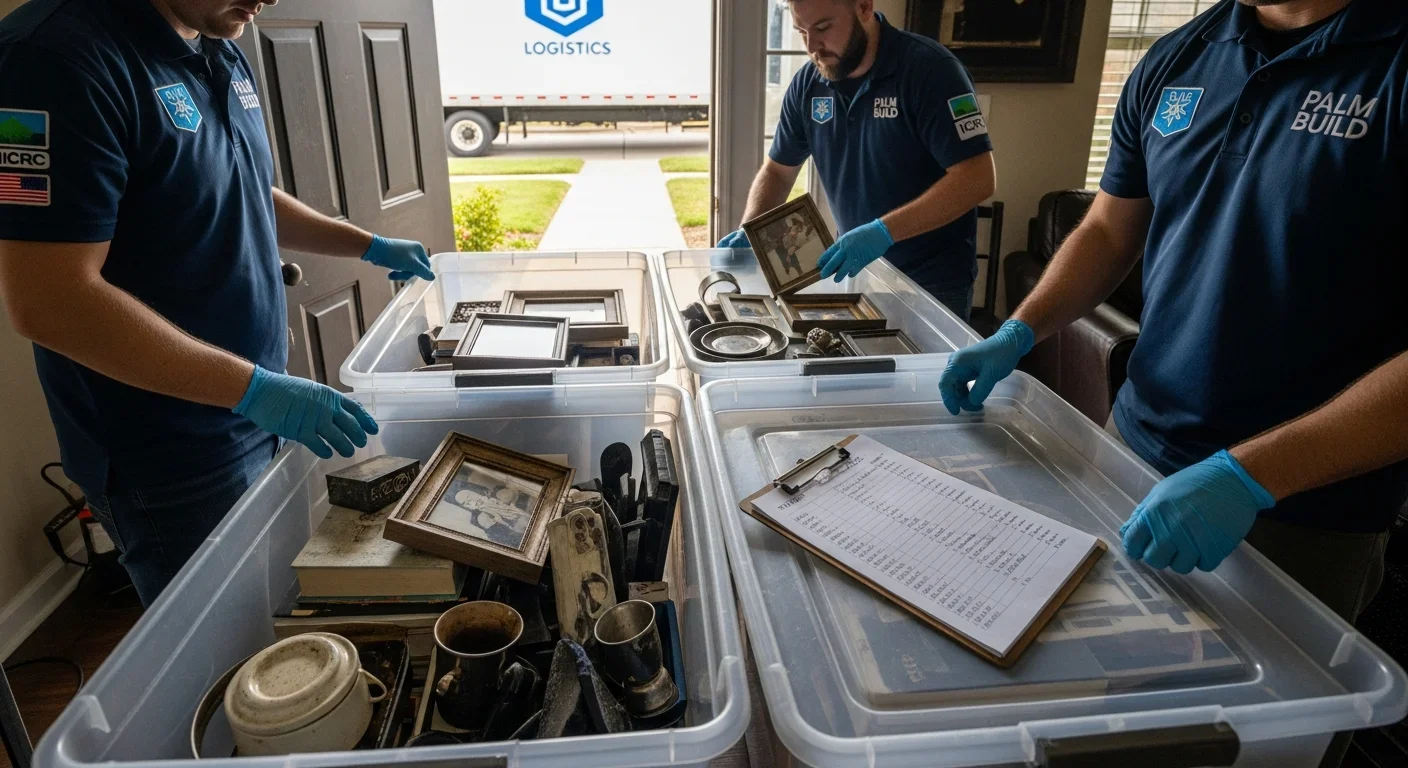
Each item is assigned a barcode and logged into a database with room location, condition notes, and initial value estimate. Barcoded containers are loaded carefully to prevent additional damage during transport.

4

Transport to facility

Climate-controlled trucks transport packed containers to the contents restoration facility. Chain-of-custody documentation accompanies every load. Items are checked in at the facility and cross-referenced against the pack-out inventory.

5

Facility-based cleaning

Each item is routed to the appropriate cleaning method based on material class. Electronics → ultrasonic. Textiles → ozone chamber and dry cleaning. Hard goods → chemical cleaning and polish. Documents → HEPA and freeze-drying if wet.

6

Climate-controlled storage

Cleaned items are stored in a temperature and humidity-controlled facility while the home undergoes structural restoration. Standard storage is 30-90 days. Major rebuilds may require 6+ months of storage.

7

Return and placement

Once the home is restored and deodorized, contents are returned and placed in their original rooms according to the pre-pack-out photography. A final walkthrough with the homeowner documents successful return to pre-loss condition.

Material-Specific Cleaning

Cleaning Method By Material Class

Different materials respond to different cleaning methods. Electronics require ultrasonic. Textiles require ozone. Documents may need freeze-drying. Fine art requires conservators. Matching the method to the material is what produces professional results.

Electronics

Salvage rate: 80-95%

Examples

Laptops, TVs, gaming consoles, audio equipment, printers, phones, cameras

Method

Ultrasonic cleaning at 40 kHz in pH-neutral solution → anti-corrosion treatment → functional testing

⏱ 5-7 days critical response window

Textiles & clothing

Salvage rate: 75-90%

Examples

Wardrobes, bed linens, drapery, upholstery fabric, soft toys

Method

Ozone chamber pre-treatment → specialty dry cleaning → final ozone pass → pressing and hanging

⏱ 10-14 days for best results

Books & documents

Salvage rate: 70-95%

Examples

Personal libraries, photo albums, vital records, artwork on paper

Method

Dry items: HEPA vacuum → gentle page cleaning → ozone deodorization. Wet items: immediate freeze-drying

⏱ Wet items: 24-48 hours critical

Fine art & antiques

Salvage rate: 60-95% item-specific

Examples

Paintings, sculptures, rare furniture, musical instruments, collectibles

Method

Museum-grade conservator involvement → controlled environment cleaning → varnish restoration

⏱ Project-specific; conservator schedule

Hard goods

Salvage rate: 90-98%

Examples

Cookware, dishware, small appliances, decorative items, hardware

Method

Ultrasonic cleaning → chemical rinse → polish → re-packaging

⏱ Less time-sensitive, can wait 1-2 weeks

Food, meds, cosmetics

Salvage rate: 0%

Examples

Pantry, refrigerator, medication, personal care

Method

NOT SALVAGED — all documented and discarded per safety protocols

⏱ Immediate documentation for insurance

Ultrasonic Technology

How Ultrasonic Cleaning Saves Electronics

Ultrasonic cleaning is the best technology currently available for saving smoke-damaged electronics. Here's what it actually does and why it works.

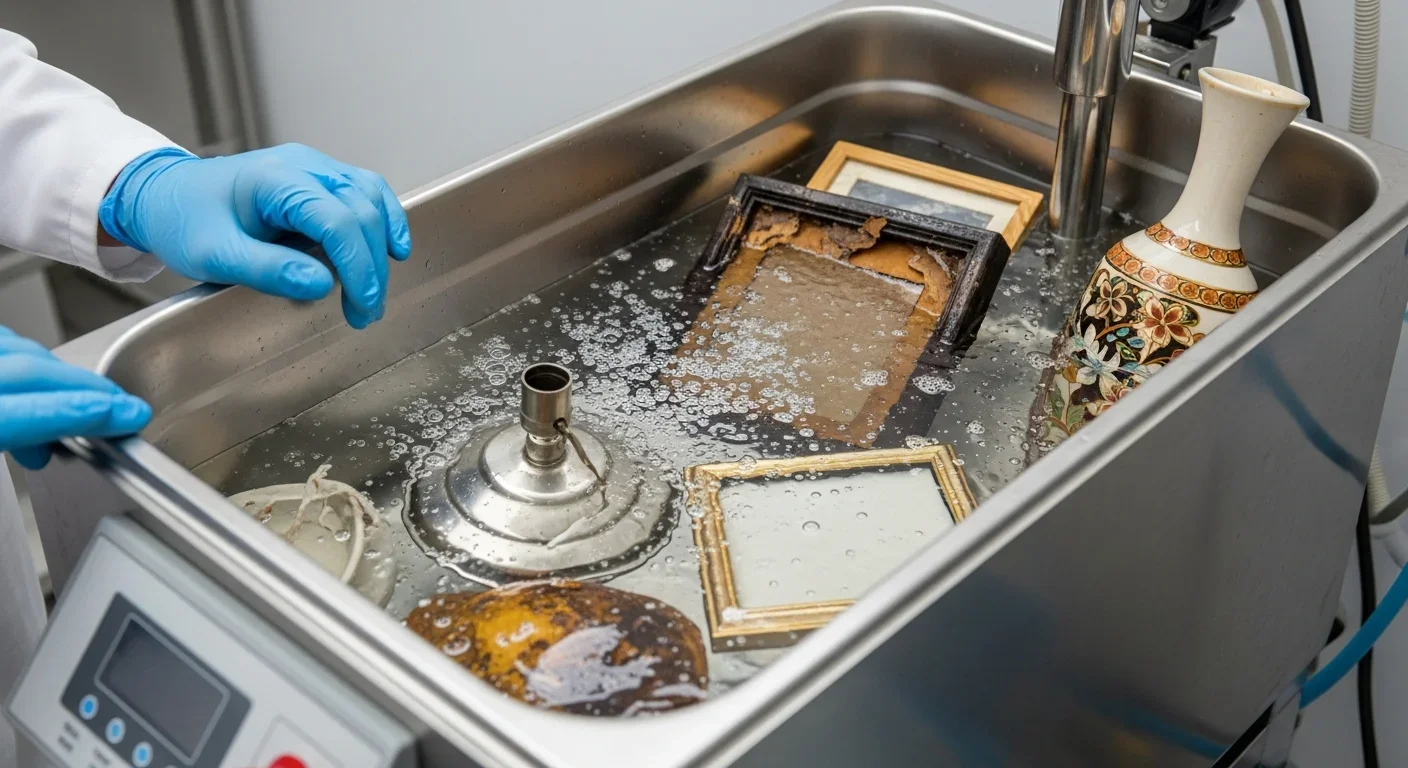
Ultrasonic cleaning bath in action with smoke-damaged contents being cleaned in pH-neutral solution
40 kHz cavitation bubbles implode on every surface inside the tank, mechanically cleaning areas hand-cleaning can't reach.

How ultrasonic cleaning works

High-frequency sound waves (typically 40 kHz) are pulsed through a liquid cleaning solution. This creates microscopic cavitation bubbles that implode on the surface of items in the tank. The implosion mechanically removes soot, smoke residue, and particulate from every surface — including interior crevices, circuit boards, and complex geometries that hand-cleaning cannot reach.

Why it works on electronics

Electronics have countless tiny surfaces inside — circuit boards, connectors, heat sinks, fan blades — that collect smoke residue and begin corroding within 72 hours. Ultrasonic cleaning reaches every one of these surfaces simultaneously. pH-neutral solution means no chemical damage to semiconductors or solder joints. Anti-corrosion treatment follows to neutralize any remaining residue.

What ultrasonic cleaning does NOT do

Ultrasonic cleaning is not magic. It cannot restore items with heat-melted plastic, warped circuit boards, or broken solder joints. It cannot repair items beyond the cleaning stage. Its job is to remove soot and contamination so that functional items can be returned to service — items already damaged beyond cleaning are documented and replaced under insurance.

Electronics Restoration

Fire-Damaged Electronics: The 7-Day Window

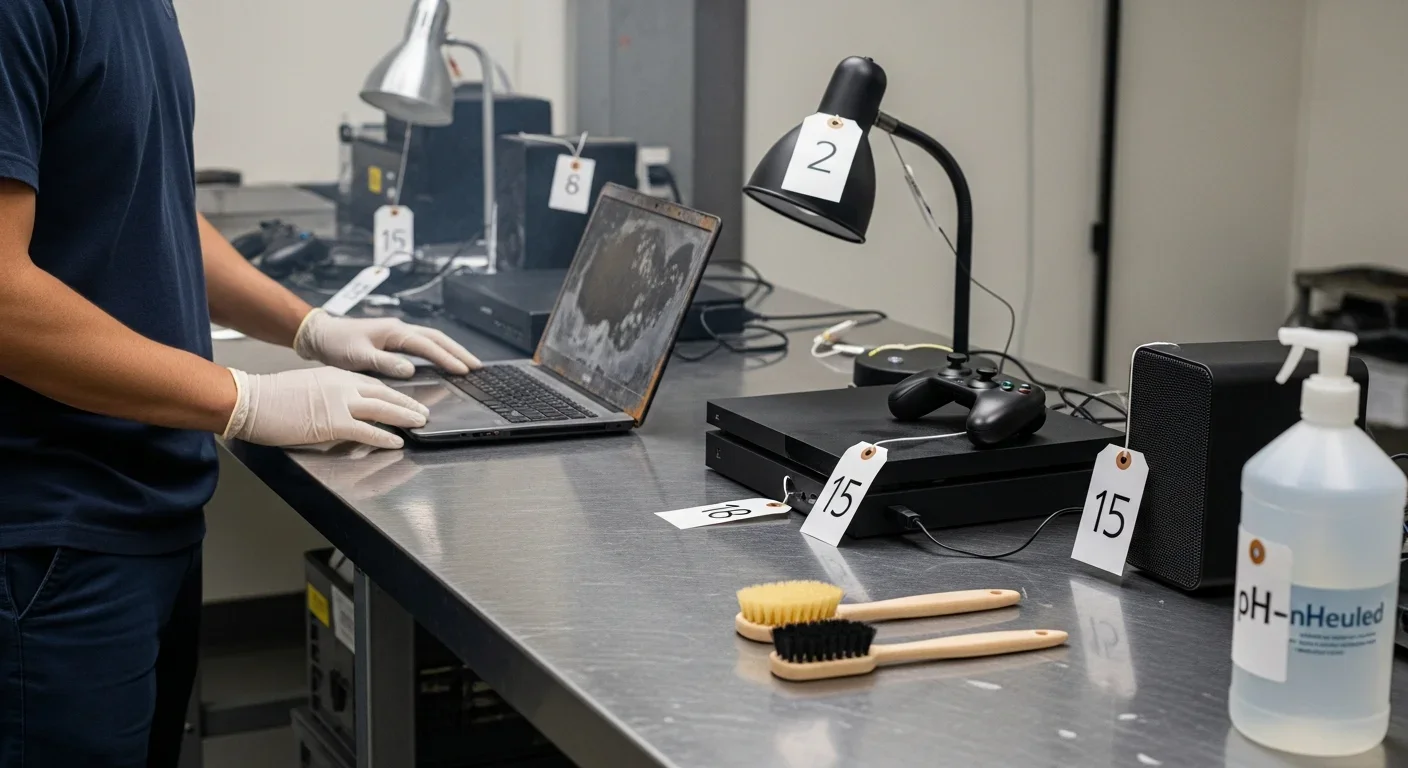
Fire-damaged electronics being professionally cleaned on restoration facility workbench

Acidic soot begins corroding circuit boards, connectors, and internal components within 72 hours of fire exposure. Within a week, many electronics that could have been restored become unrepairable due to progressive corrosion. The response window for electronics pack-out is the tightest of any contents category.

Fast response is everything. Do not power on fire-exposed electronics — moisture from suppression water combined with acidic soot can short circuits and cause permanent damage the moment power is applied. Disconnect at the wall, photograph items in place, and wait for the restoration company to pack them out. Your insurance covers both successful restoration and replacement of items beyond repair, so there's no downside to professional pack-out.

At the facility, electronics are opened, visually inspected for pre-existing damage, ultrasonically cleaned in pH-neutral solution, treated with anti-corrosion coating, dried, reassembled, and functionally tested. Items that pass functional testing are returned to your home. Items that fail are documented with failure reports for your insurance claim.
Specialty Conservation

Documents, Photos, And Fine Art

The items that matter most often can't be replaced at any price. Personal photos, family documents, artwork, and heirlooms require specialized conservation approaches that Palm Build coordinates through partnerships with museum-grade restoration specialists.

Documents & photos

Dry documents are HEPA-vacuumed to remove loose soot, then treated with ozone to neutralize embedded smoke odor. Pages may be separated, cleaned, and dried individually.

Wet items are critical. If documents or photos got wet from firefighting suppression, they must be frozen within 24-48 hours to prevent further degradation. Freeze-drying in a vacuum chamber sublimates the moisture out without damaging the paper or image. This is a specialty service coordinated with archival restoration partners.

Fine art & antiques

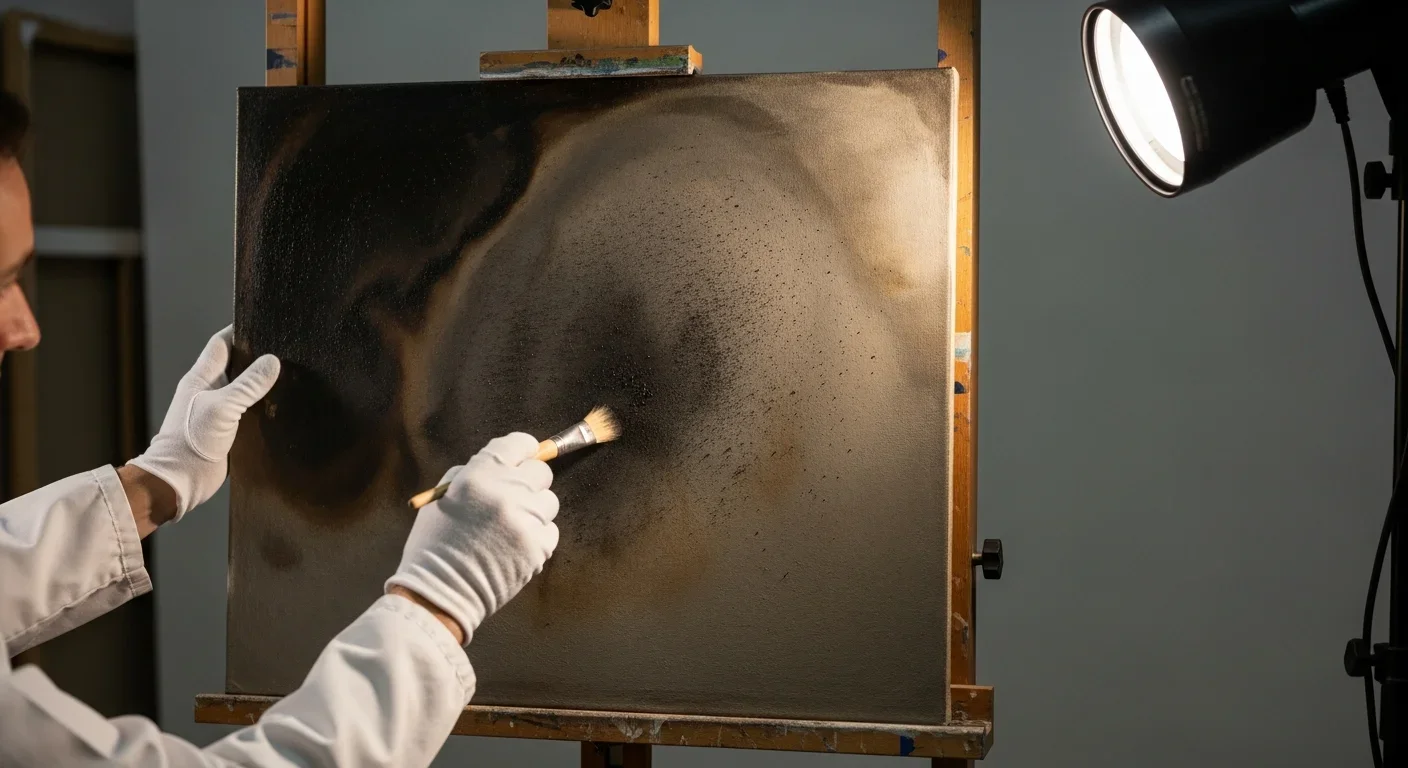
Oil paintings, watercolors, sculptures, antique furniture, and musical instruments require museum-grade conservation, not standard contents cleaning. Palm Build partners with licensed conservators for these items.

Art conservator cleaning smoke residue from oil painting in controlled restoration studio
Insurance Inventory

Building The Insurance Contents Inventory

Your personal property coverage pays for items that were in the home at the time of the fire. The claim amount depends entirely on documentation. Here's what Palm Build's contents inventory process includes to maximize your recovery.

Room-by-room itemized lists with quantities, descriptions, and conditions

Pre-movement photography of every item and every room

Barcode tracking tied to each container and each item within

Value estimates based on pre-loss condition (separate from cleaning decision)

Damage descriptions: smoke level, soot penetration, water exposure

Restoration vs. replacement recommendations with rationale

Final photo documentation of cleaned items before return

Complete chain-of-custody log from pack-out through return

Your Belongings Can Be Saved — But Time Matters

Every hour your contents stay in a smoke-damaged home, the salvage window narrows. Electronics have 5-7 days. Wet documents have 24-48 hours. Palm Build responds 24/7 across Florida, North Carolina, and South Carolina.

Contents Cleaning After Fire — Frequently Asked Questions

Expert answers about pack-out, ultrasonic cleaning, ozone chambers, and what can be saved after a fire.

FAQ Topics

Contents Restoration Basics

With professional pack-out within 48-72 hours, up to 90% of contents are typically salvageable. Hard goods (metal, ceramic, glass) have the highest salvage rate at 90-98%. Electronics cleaned within a week have 80-95% salvage rates. Textiles and clothing are 75-90% salvageable. Documents and photos depend on water involvement — dry items are 70-95% salvageable, wet items require immediate freeze-drying. The biggest variable is how fast pack-out begins.

Still have questions about contents restoration basics?

Up to 90% of your belongings can be saved. The key is fast professional pack-out.

Every hour your contents sit in a smoke-damaged home, the salvage probability drops. Palm Build's contents restoration program uses facility-based cleaning, climate-controlled storage, and full insurance inventory documentation.

Facility Pack-Out

Barcoded inventory tracking

Ultrasonic Cleaning

For electronics & hard goods

Ozone Chamber

Textiles & upholstery

Insurance Coordinated

Full itemized documentation

Request Emergency Service

Need help right now? Call us.

24/7 live dispatch — average answer time under 30 seconds

(888) 245-5155