Step 1
Take down drapes carefully using proper support
Smoke-weakened fabrics tear easily. Support the full weight of the panel while removing it from the rod — do not yank or pull. Have a second person help with heavy or floor-length treatments.
Drapery Restoration Guide
How professional cleaning, smoke removal, and shape restoration return damaged window treatments — including blackout curtains, sheers, valances, and custom drapes — to their original condition.
First-Hour Priorities
Step 1
Smoke-weakened fabrics tear easily. Support the full weight of the panel while removing it from the rod — do not yank or pull. Have a second person help with heavy or floor-length treatments.
Step 2
Most drapery fabrics are dry-clean only. Machine washing causes shrinkage, lining separation, and permanent wrinkling. Even washable curtains should be professionally handled after smoke or water damage.
Step 3
Soot and smoke residue transfer between fabrics in contact. Lay each panel flat on clean sheets or hang individually. Never stack or fold smoke-damaged drapes together.
Step 4
Record the rod width, panel drop length, and hardware positions for each window. This ensures accurate re-hanging after restoration and helps identify any shrinkage during cleaning.
Field Visuals
These examples show the conditions and techniques our textile restoration teams use during active projects.
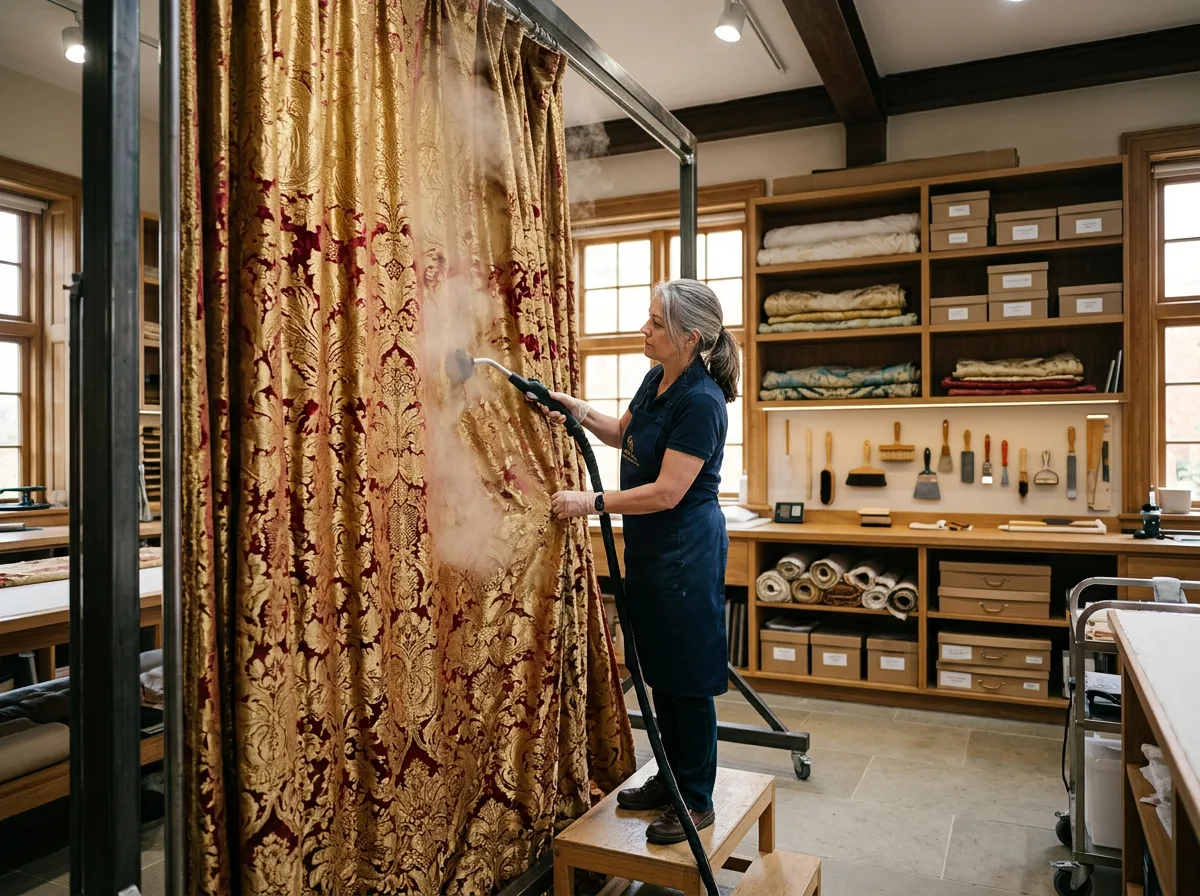
Restored drapery panels after dry cleaning and deodorization, professionally pressed to restore original pleat structure and drape.
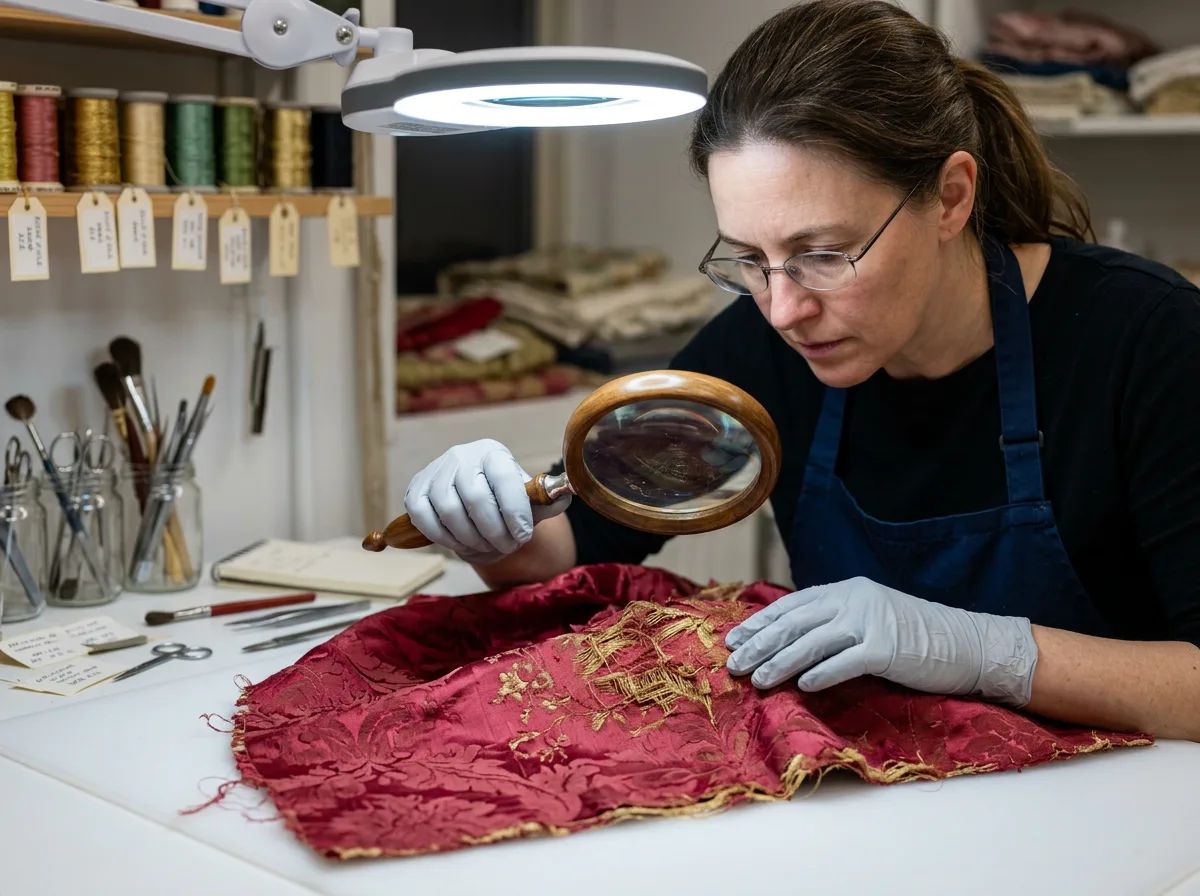
Each drapery panel is assessed for fabric composition, lining integrity, and structural condition before cleaning methods are selected.
Restoration Process
Each step is documented, tracked, and aligned with insurance requirements to ensure your textiles receive proper care.
Each panel is evaluated for fabric type, lining condition, pleat style, and hardware attachment. We identify dry-clean-only fabrics, interlinings, and structural elements that require special handling.
Dry-cleanable panels are solvent-cleaned to remove soot and smoke residue without shrinkage. Washable sheers and lightweight curtains receive gentle wet cleaning with fabric-safe solutions.
Ozone and hydroxyl treatment eliminates smoke odor from all fabric layers including linings. Panels are then professionally pressed or steamed to restore original drape, pleat shape, and hem lines.
Restored panels are delivered on hangers with protective covering. Our team re-hangs treatments using documented measurements, ensuring proper drape and hardware alignment at each window.
Florida
Intense UV exposure degrades drapery fabrics over time, making sun-facing panels more fragile before a loss event. Weakened fibers require gentler cleaning methods and may need lining replacement after restoration.
North Carolina
Heating season fires from furnaces, wood stoves, and space heaters produce protein-based smoke that bonds aggressively to drapery fabrics. Extended deodorization cycles are standard for NC winter fire losses.
General
Drapes act as large-surface-area filters for HVAC-distributed smoke. Even rooms that did not experience direct fire exposure often have drapes that absorbed significant smoke through the air handling system.
Continue Your Research
Every hour matters when it comes to textile restoration. Call now for immediate assessment and professional care for your fabrics and garments.