Step 1
Handle damaged textiles with clean cotton gloves
Oils from bare hands react with smoke residue and can cause permanent staining on delicate fabrics like silk, lace, and aged cotton. Use clean white cotton gloves for any handling.
Specialty Textile Guide
How museum-grade preservation techniques, conservation cleaning, and archival packaging restore and protect wedding dresses, heirloom quilts, tapestries, vintage fabrics, and irreplaceable textiles.
First-Hour Priorities
Step 1
Oils from bare hands react with smoke residue and can cause permanent staining on delicate fabrics like silk, lace, and aged cotton. Use clean white cotton gloves for any handling.
Step 2
Acid-free tissue prevents chemical reactions that yellow and degrade delicate fibers. Lay textiles flat with tissue between folds. Never use newspaper, regular tissue paper, or colored paper.
Step 3
UV and visible light accelerate fading and fiber degradation in already-weakened textiles. Store damaged items in dark, climate-stable rooms until they can be professionally assessed.
Step 4
Heirloom and specialty textiles often contain dyes, beadwork, metallic threads, or construction methods that react unpredictably to cleaning agents. Even water can cause irreversible damage to certain vintage fabrics.
Field Visuals
These examples show the conditions and techniques our textile restoration teams use during active projects.
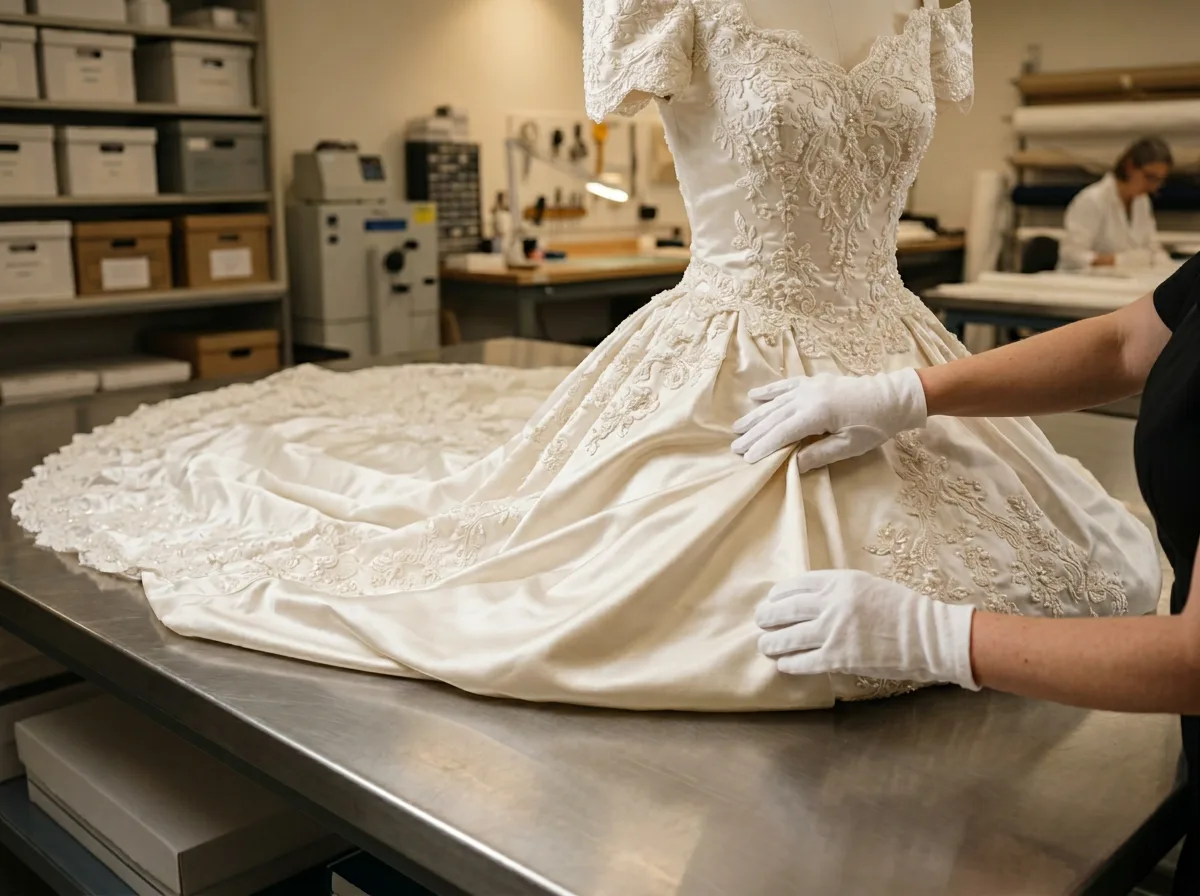
A smoke-damaged wedding gown after conservation cleaning, ready for archival boxing. Lace, beadwork, and satin are individually treated.
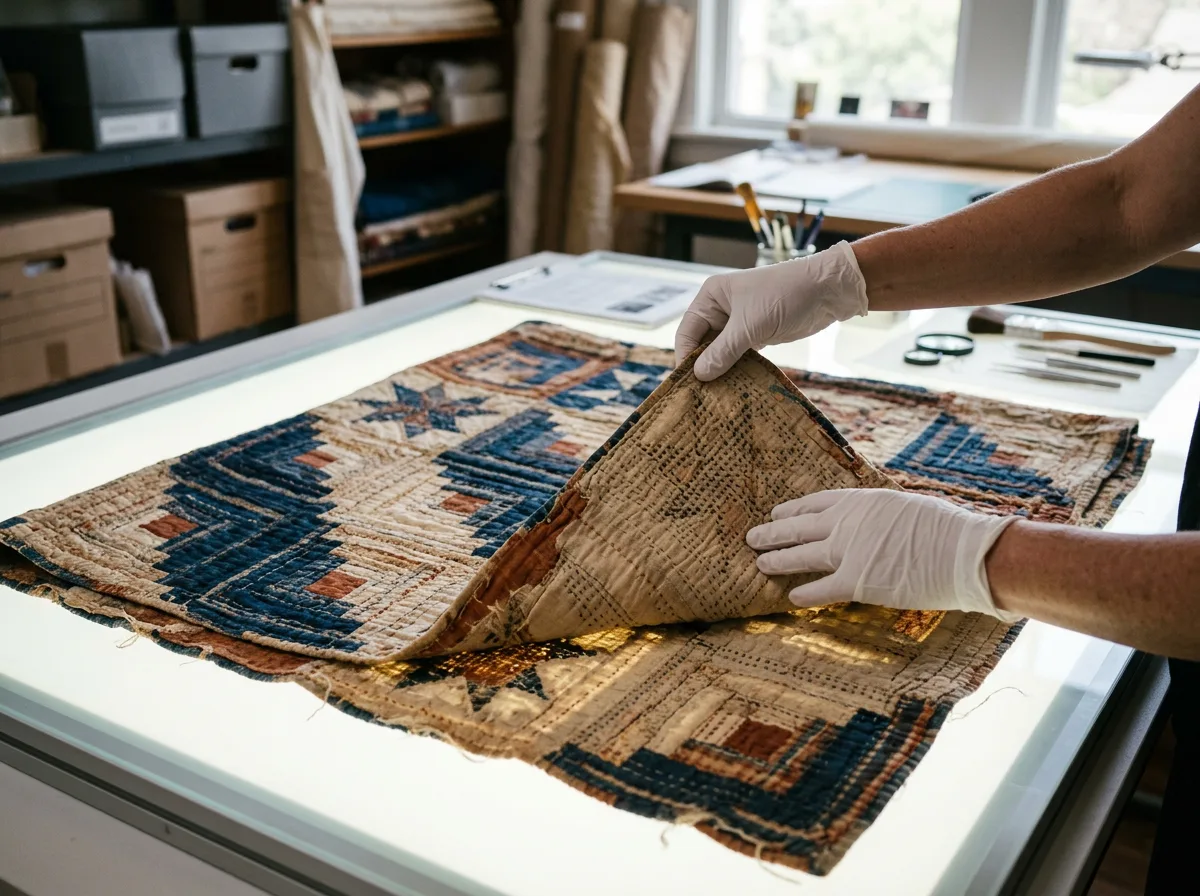
An antique hand-stitched quilt undergoing conservation-grade cleaning after water damage. Each fabric section is tested before treatment.
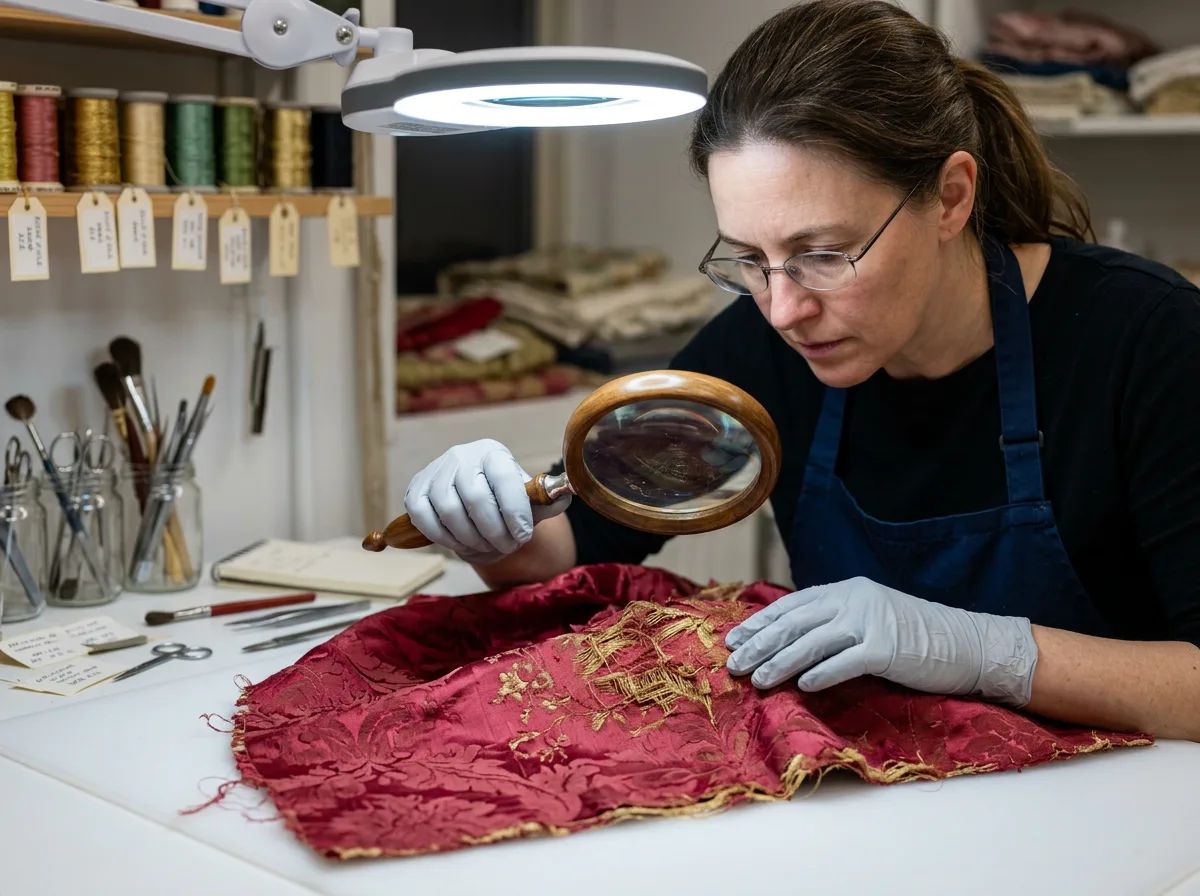
Magnified inspection of an heirloom textile to identify fiber composition, dye stability, and structural integrity before any cleaning begins.
Restoration Process
Each step is documented, tracked, and aligned with insurance requirements to ensure your textiles receive proper care.
Every textile is examined fiber by fiber under magnification. We document fabric composition, construction method, embellishments, existing damage, and any previous repairs. This guides the entire restoration plan.
Cleaning methods are matched to each textile's specific needs. Options include aqueous cleaning with museum-grade detergents, solvent cleaning for oil-based residues, and localized spot treatment for targeted stains.
Textiles are dried flat on padded screens with controlled airflow. Pressing uses padded surfaces and indirect heat or steam at calibrated temperatures appropriate for each fabric type.
Restored textiles are wrapped in acid-free tissue and placed in archival boxes or garment bags. Wedding dresses receive preservation-grade boxing with a viewing window and handling instructions.
Florida
Florida's persistent humidity is the primary enemy of stored specialty textiles. After restoration, heirloom items require dehumidified storage environments to prevent mold recurrence and fiber degradation.
North Carolina
Attic and basement storage — common in NC homes — exposes specialty textiles to extreme temperature swings, moisture, and pest damage. We assess storage-related pre-existing damage alongside the primary loss.
General
Long-term preservation of restored textiles requires stable temperature (65-70°F), low humidity (45-55%), UV-filtered lighting, and acid-free storage materials. We provide detailed care instructions with every restored item.
Continue Your Research
Every hour matters when it comes to textile restoration. Call now for immediate assessment and professional care for your fabrics and garments.