Step 1
Do not hang a wet rug to dry
Waterlogged rugs can weigh hundreds of pounds. Hanging stretches and permanently distorts the foundation fibers, warp, and weft structure. Leave wet rugs flat until professionals arrive.

Rug Restoration Guide
How professional hand-washing, dye stabilization, and controlled drying techniques restore oriental, Persian, and specialty area rugs damaged by water, fire, smoke, and mold.
First-Hour Priorities
Step 1
Waterlogged rugs can weigh hundreds of pounds. Hanging stretches and permanently distorts the foundation fibers, warp, and weft structure. Leave wet rugs flat until professionals arrive.
Step 2
Vacuum suction drives soot particles deeper into rug fibers and the foundation backing, making professional removal far more difficult. Soot should only be dry-cleaned off by trained technicians.
Step 3
If your rug is sitting in standing water, carefully blot the surface to absorb excess moisture. Do not wring, twist, or agitate the rug — this can damage fringe, cause dye bleeding, and tear fibers.
Step 4
Heat causes wool and silk fibers to shrink unevenly and can set stains permanently. Do not place space heaters near a wet rug or attempt to use a hairdryer. Air circulation at room temperature is safest.
Field Visuals
These examples show the conditions and techniques our textile restoration teams use during active projects.
An oriental rug submerged in our wash bay for gentle hand cleaning. Temperature and pH are monitored throughout the process.
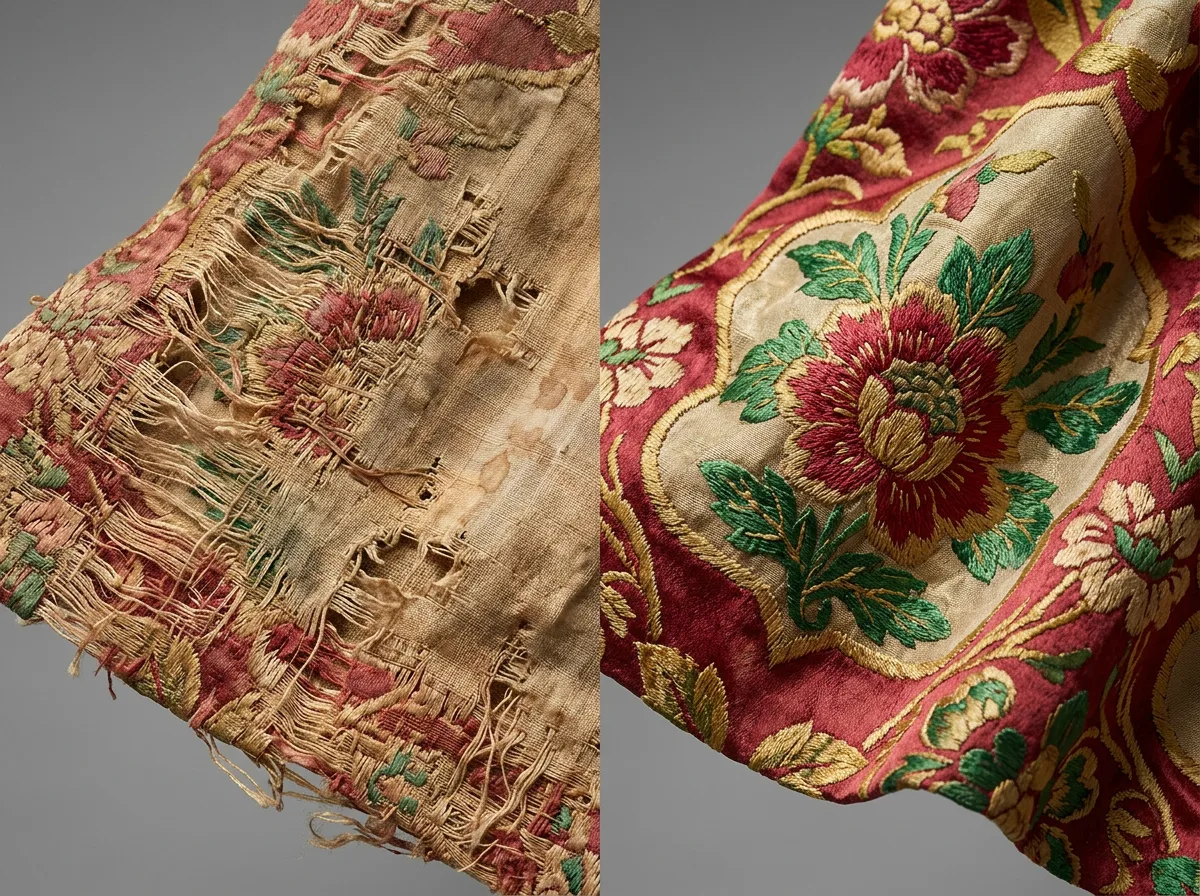
Side-by-side comparison showing a smoke-damaged area rug before and after professional cleaning and deodorization.
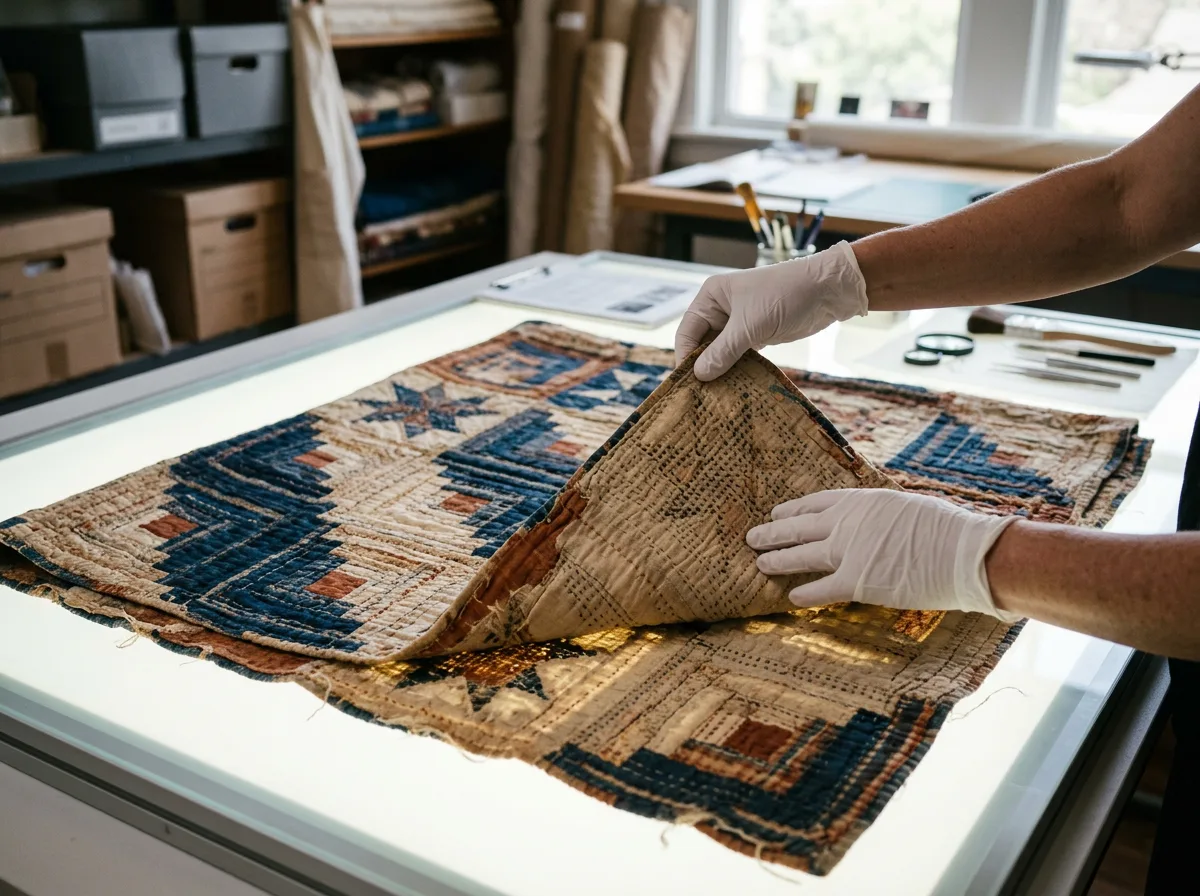
A hand-knotted vintage rug restored after water damage. Dye stabilization prevented color bleeding during the cleaning process.
Restoration Process
Each step is documented, tracked, and aligned with insurance requirements to ensure your textiles receive proper care.
Each color zone tested for colorfastness before any wet cleaning begins. Unstable dyes are pre-treated with fixatives to prevent bleeding during the wash process.
Rugs are submerged in temperature-controlled wash bays and gently hand-scrubbed using pH-balanced solutions designed for natural fibers. This removes smoke, soot, and biological contaminants without harming the weave.
Washed rugs are laid flat on elevated drying racks with climate-controlled airflow. This prevents stretching, shrinking, and dye migration that occurs with other drying methods.
Damaged fringe is hand-repaired or replaced. Loose binding and serging are re-secured. Repairs use matching materials to preserve the rug's structural integrity and appearance.
Florida
High ambient humidity means waterlogged rugs develop mold within 24 hours. Rugs must be transported to our climate-controlled facility immediately to prevent permanent biological damage to natural fibers.
North Carolina
Basement flooding from heavy rains is a leading cause of rug damage in NC. Rugs stored in below-grade spaces often absorb contaminated groundwater that requires antimicrobial treatment alongside cleaning.
Coastal Areas
Storm surge introduces salt water and sand into rug fibers. Salt crystals continue to damage wool and silk long after the rug appears dry, requiring thorough salt extraction during the wash process.
Continue Your Research
Every hour matters when it comes to textile restoration. Call now for immediate assessment and professional care for your fabrics and garments.