Step 1
Do not attempt to clean artwork yourself
Art requires conservation-grade materials and techniques. Household cleaners, water, or even gentle wiping can cause irreversible damage to paint layers, varnish, and canvas. Touch only the frame.
Contents Restoration Guide
Your art collection, family heirlooms, and irreplaceable collectibles deserve museum-grade care. We partner with specialized conservators to give every piece the expert attention it needs.
First-Hour Priorities
Step 1
Art requires conservation-grade materials and techniques. Household cleaners, water, or even gentle wiping can cause irreversible damage to paint layers, varnish, and canvas. Touch only the frame.
Step 2
If structurally safe, carefully remove framed artwork from walls. Lay paintings flat with the painted surface facing up. Do not stack artworks on top of each other.
Step 3
Do not introduce additional heat, cold, or humidity changes. Dramatic environmental shifts cause more damage to art and antiques than gradual controlled treatment.
Step 4
Photograph each item from multiple angles, noting existing damage. If you have pre-loss photos or appraisals, gather these for the restoration and insurance teams.
Field Visuals
These examples show the conditions and techniques our contents restoration teams use during active projects.
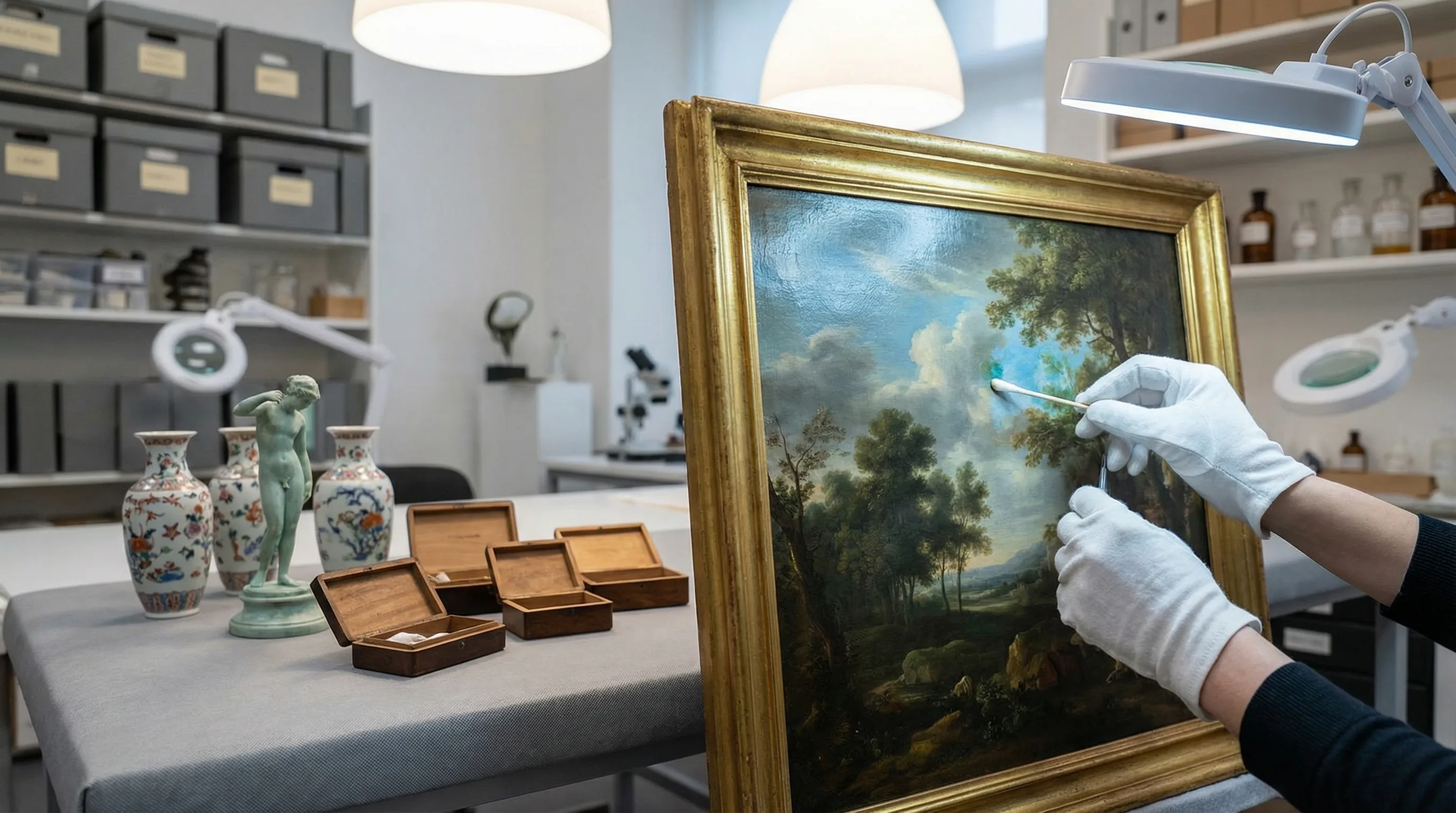
Conservation-grade techniques protect paint layers and varnish during cleaning. Every brushstroke is treated with museum-level care.
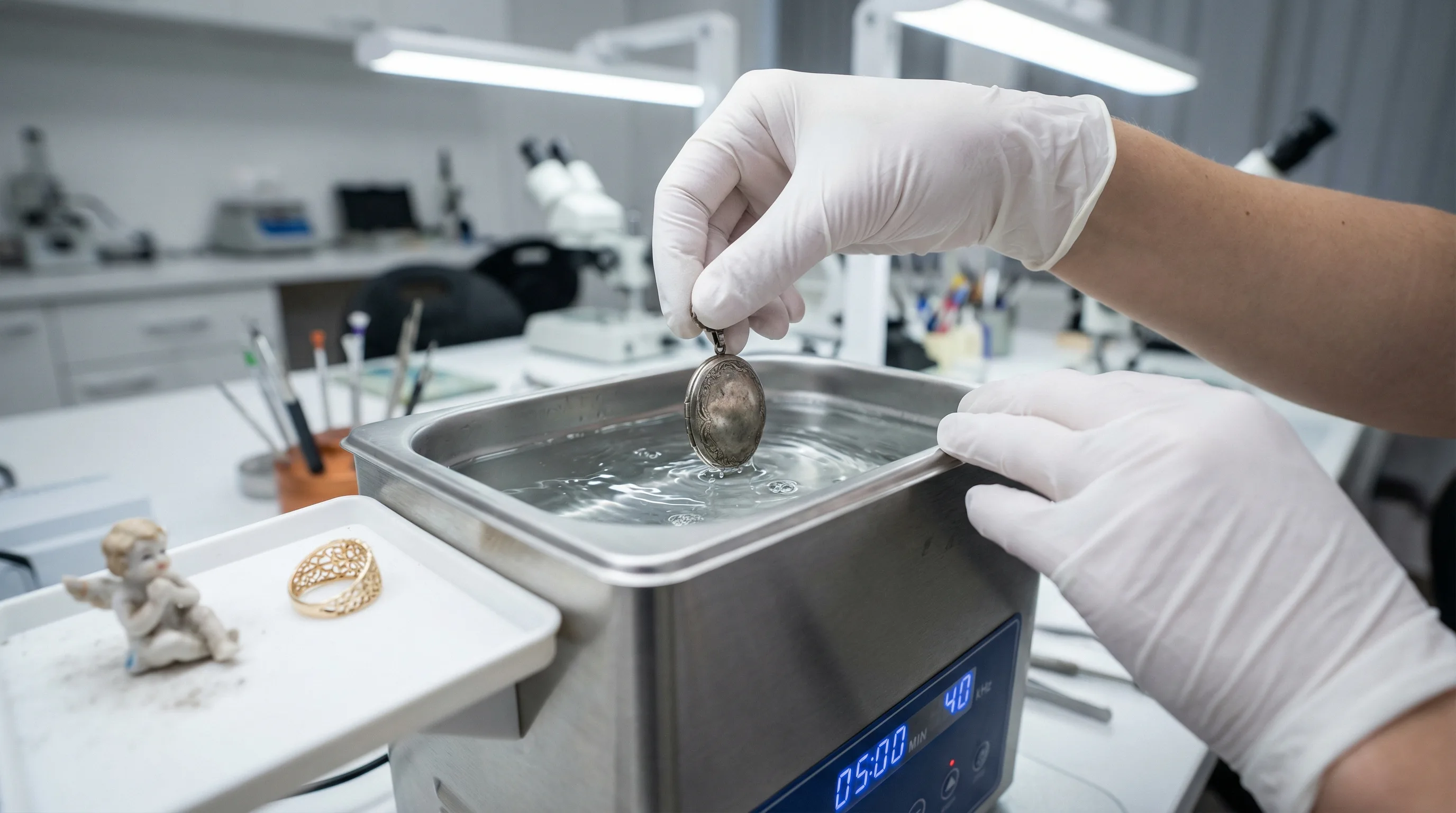
Ultrasonic cleaning restores fine jewelry, including items recovered from fire debris. Gold, silver, and gemstones are remarkably resilient.
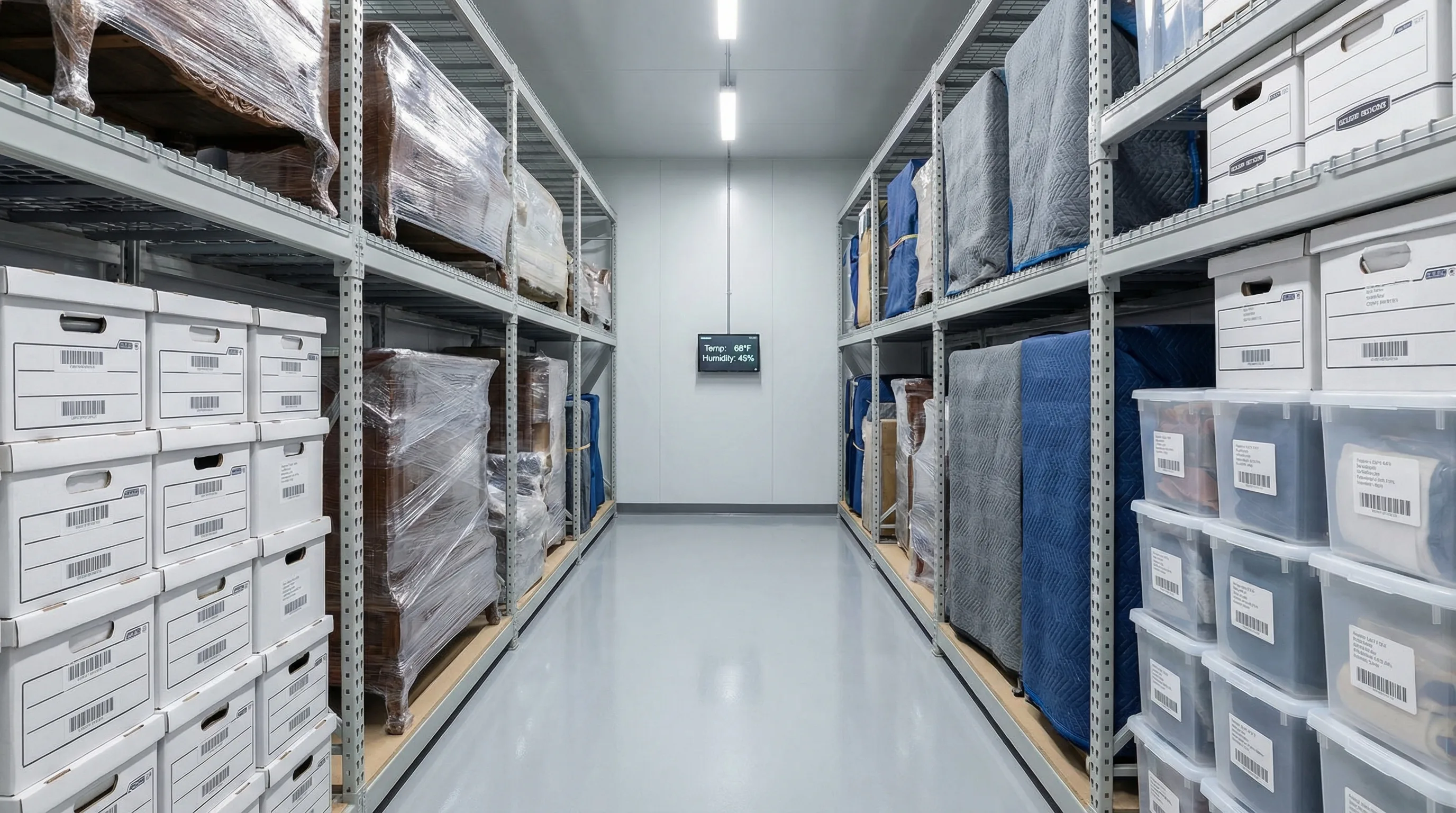
Art and collectibles are stored in controlled environments that maintain precise temperature and humidity levels during restoration.
Restoration Process
Each step is documented, tracked, and aligned with insurance requirements to ensure your belongings receive proper care.
Every piece is evaluated by our team and, for high-value items, by specialist conservators. We document condition with detailed photography, note pre-existing damage vs. new damage, and create a treatment plan specific to each item's material, construction, and value.
Immediate protective measures prevent further deterioration: paintings are removed from damaged frames, canvases are stabilized, fragile ceramics are supported, and all items are placed in climate-controlled environments appropriate for their materials.
Oil paintings go to art conservators for surface cleaning, varnish restoration, and canvas repair. Jewelry goes to master jewelers for cleaning, stone assessment, and re-setting. Antique furniture receives period-appropriate restoration. Each specialist follows their discipline's conservation standards.
Completed restorations are photographed and documented alongside pre-treatment condition records. For insurance purposes, we provide professional assessments of restoration outcomes. Items are returned with protective packaging and handling instructions.
South Florida
Florida's humidity poses unique challenges for art conservation. Canvas, paper, and wood absorb moisture rapidly, so climate-controlled handling from the moment of damage is essential for coastal and South Florida collections.
Charlotte, NC
The Carolinas have a rich tradition of antique furniture and folk art. Our restoration teams are experienced with regional antique styles and period-appropriate conservation techniques.
Coastal Areas
Salt spray and salt water cause accelerated corrosion on metal artwork, jewelry, and sculpture. Coastal pieces exposed to storm surge require immediate freshwater rinsing and professional conservation.
Continue Your Research
Every hour matters when it comes to contents restoration. Call now for immediate assessment and professional care for your personal property.