Step 1
Freeze water-damaged documents immediately
Place wet documents in plastic bags and put them in the freezer. Freezing halts deterioration and mold growth, buying time for professional treatment. Do not try to separate stuck pages.
Contents Restoration Guide
Water-damaged documents and photographs are among the most successfully restored items — but timing is everything. Within 48 hours, freeze-drying can save papers that would otherwise be permanently lost.
First-Hour Priorities
Step 1
Place wet documents in plastic bags and put them in the freezer. Freezing halts deterioration and mold growth, buying time for professional treatment. Do not try to separate stuck pages.
Step 2
Counterintuitively, wet photographs should stay wet in clean water until they can be professionally processed. Letting them dry while stuck together causes permanent bonding of emulsion layers.
Step 3
Fire-damaged paper is extremely fragile. Handle only by edges, never stack or shuffle charred pages, and place in rigid containers for transport. Charred edges crumble at the slightest touch.
Step 4
Before touching any documents, take photos of their location and condition. This documentation helps with insurance claims and provides context for restoration priority decisions.
Field Visuals
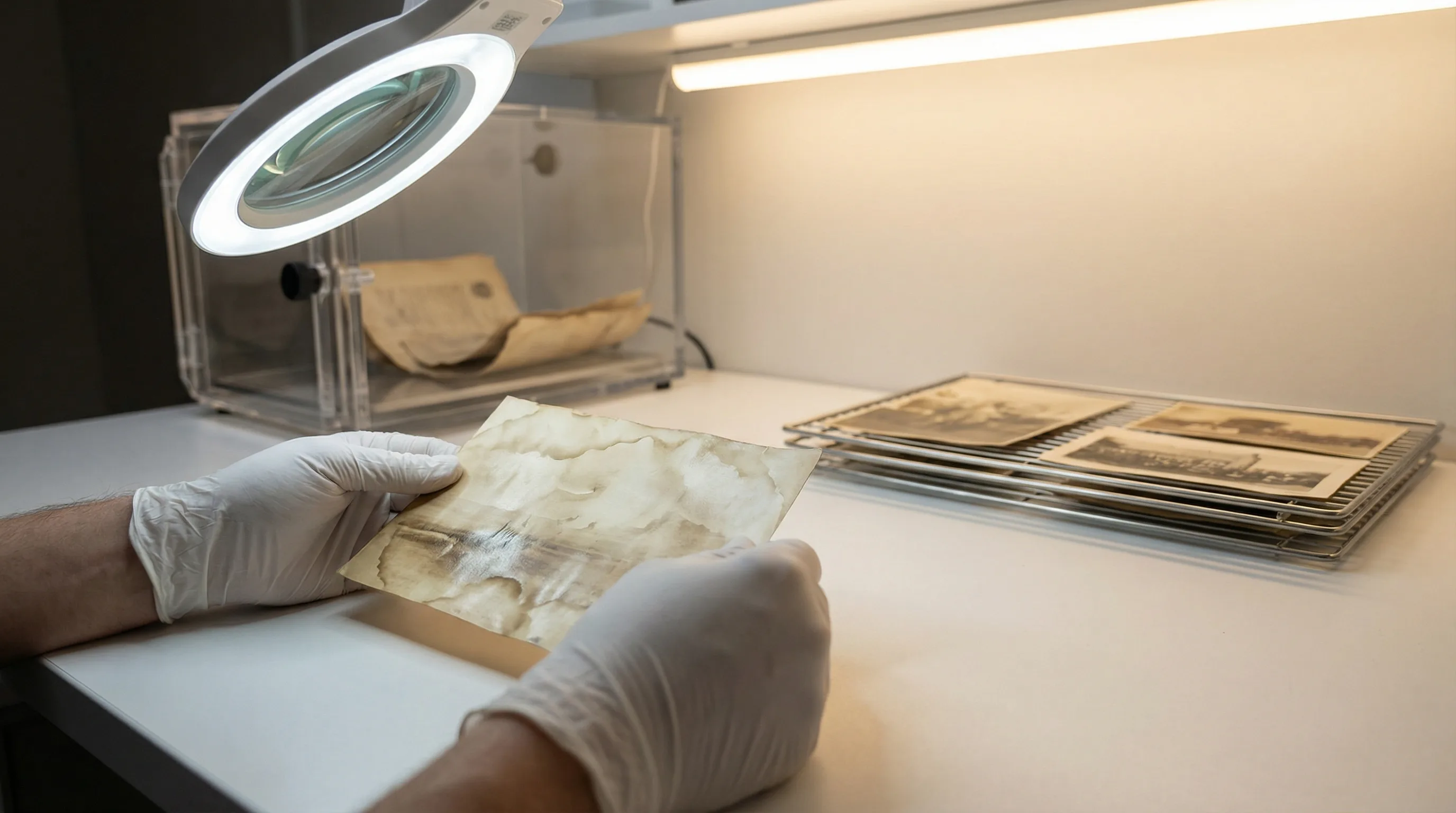
These examples show the conditions and techniques our contents restoration teams use during active projects.
Vacuum freeze-drying extracts moisture from paper without warping, sticking, or mold — preserving legibility and structural integrity.
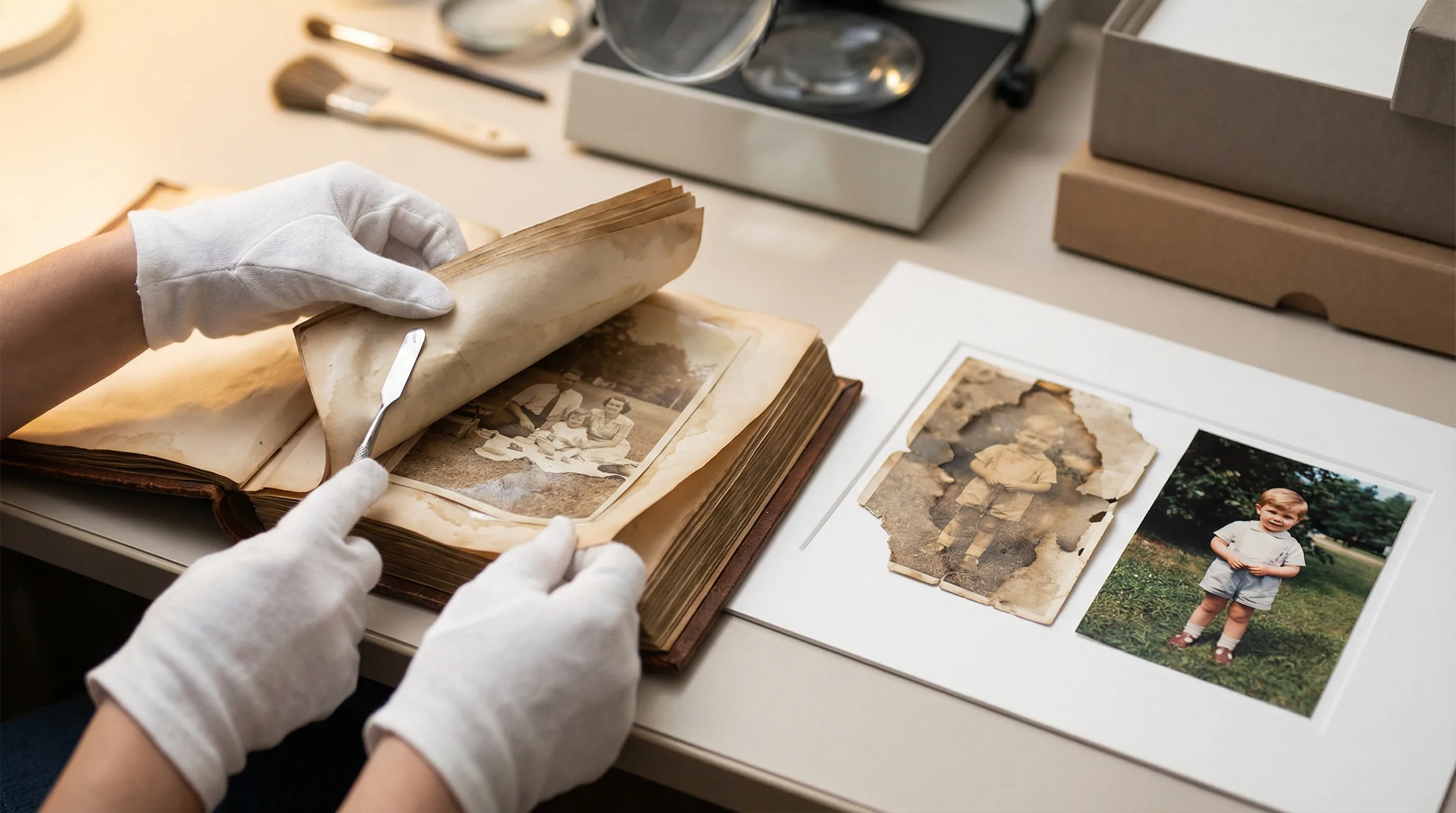
Wet photographs are separated in controlled water baths and dried under precise conditions to preserve emulsion layers and image quality.
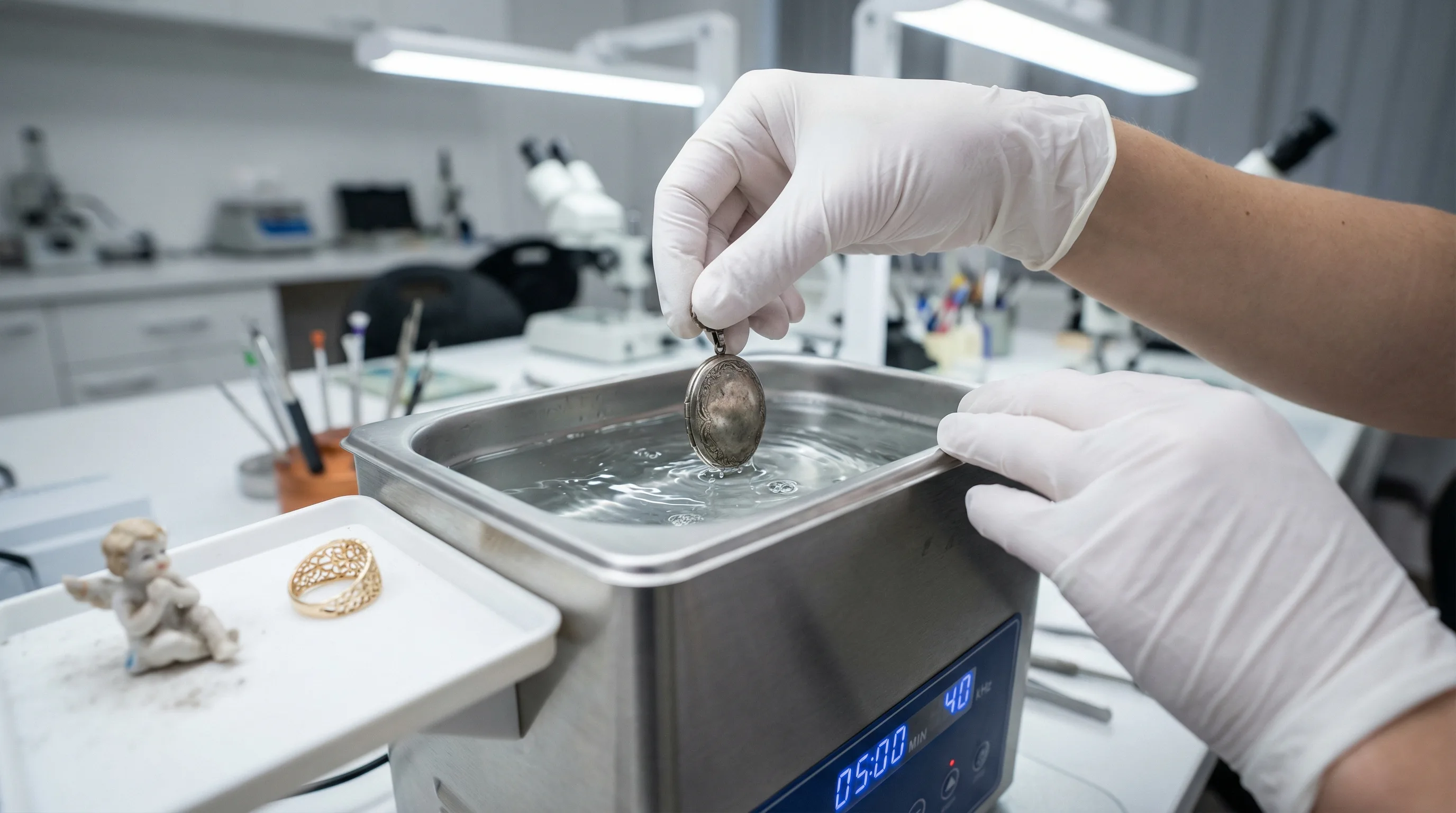
Delicate items receive ultrasonic or hand cleaning with conservation-grade solutions appropriate for each material type.
Restoration Process
Each step is documented, tracked, and aligned with insurance requirements to ensure your belongings receive proper care.
Every document is evaluated for paper type, ink type, damage severity, and restoration priority. Legal documents, financial records, and irreplaceable personal items receive priority classification.
Water-damaged documents are immediately frozen to halt deterioration. Vacuum freeze-drying then removes moisture through sublimation — evaporating ice directly to vapor without passing through a liquid phase that could further damage paper fibers.
Soot is removed with HEPA vacuums and chemical sponges. Stains are treated with appropriate solvents. Pages are carefully separated, flattened, and stabilized. Each document is handled individually.
Every restored document and photograph is scanned at high resolution. Digital color correction restores faded images. You receive both the physical original and a digital copy — double protection for irreplaceable items.
South Florida
Florida's high humidity creates ideal conditions for mold growth on wet paper. Documents must be frozen or dried within 24-48 hours to prevent permanent mold colonization of paper fibers.
Charlotte, NC
North Carolina's seasonal temperature swings can cause condensation in storage areas. Climate-controlled storage is essential for long-term document preservation during restoration.
Coastal Areas
Salt water is particularly corrosive to paper and photographic emulsions. Documents exposed to storm surge or ocean flooding require immediate freshwater rinsing before freeze treatment.
Continue Your Research
Every hour matters when it comes to contents restoration. Call now for immediate assessment and professional care for your personal property.