Free observation-based planner

Crawl-Space Repair Planner

Build an ordered inspection and repair checklist from what you can observe safely — no signup required.

Free · No signup · ~60 seconds

Observation-based planning

Build your crawl-space repair checklist

Answer from what you can already observe safely. Do not enter a crawl space to use this planner. “Unsure” stays visible in your results so an inspector knows what to verify.

Have you observed standing water?
Have you observed recurring dampness?
Have you observed visible growth or musty odor?
Have you observed damaged or fallen insulation?
Have you observed sagging or bouncy floors?
Have you observed an existing vapor barrier or encapsulation system?

Your checklist will appear here

No signup is required. Your answers stay on this page unless you explicitly open and submit the assessment form.

Pricing context: This planner does not invent a repair price. See the crawl-space encapsulation cost guide for broad planning ranges, then use an on-site scope for property-specific decisions.

HTML explanations

Three ideas behind the checklist

Each illustration is paired with a plain-language explanation, so the concepts do not depend on visual interpretation alone.

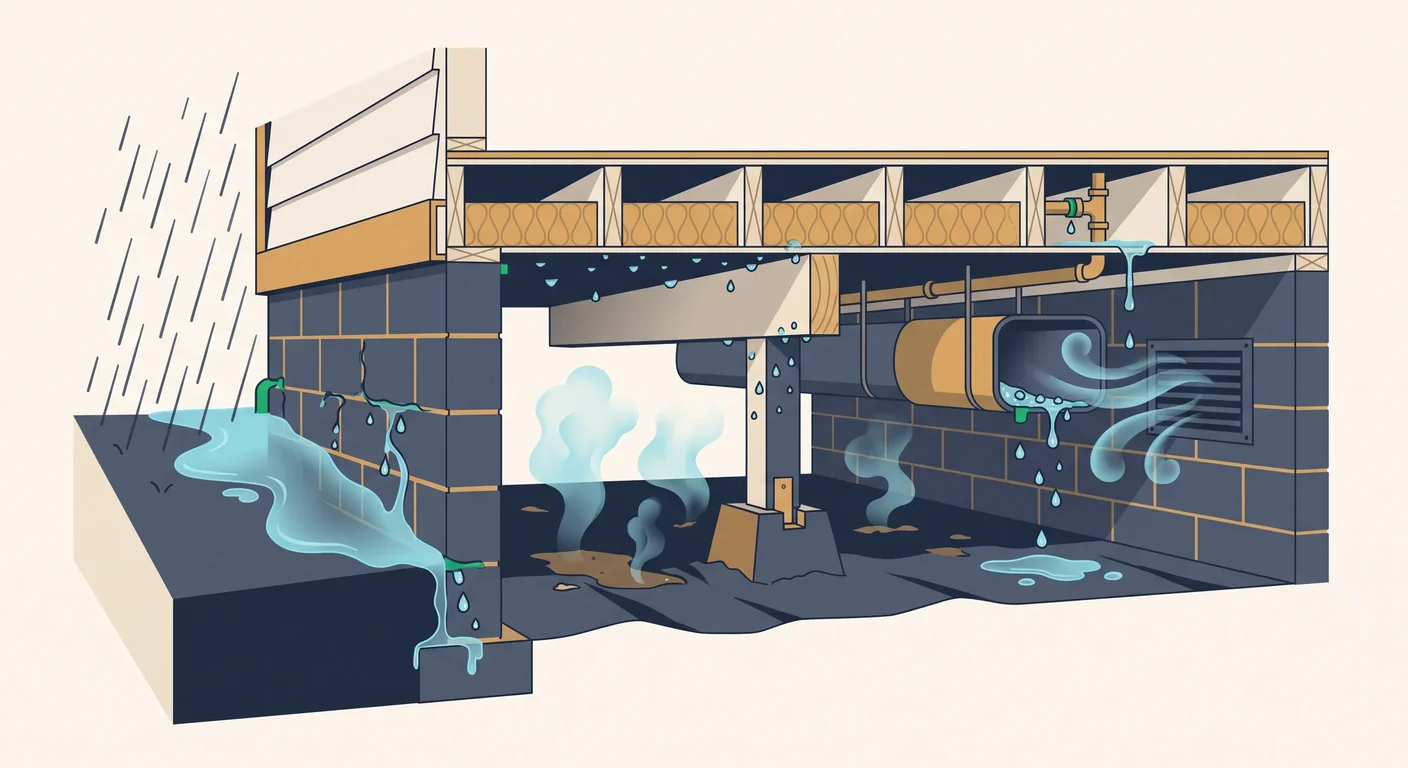
Illustration of a crawl-space cutaway showing rainwater, a plumbing leak, humid air at a vent, and vapor rising from soil
Illustration

Moisture entry paths

Bulk water, plumbing leaks, humid-air condensation, and ground vapor are different pathways. The inspection has to identify which pathways are active before choosing a repair.

  1. 1. Exterior or plumbing water
  2. 2. Ground vapor or humid air
  3. 3. Wood, insulation, and ducts
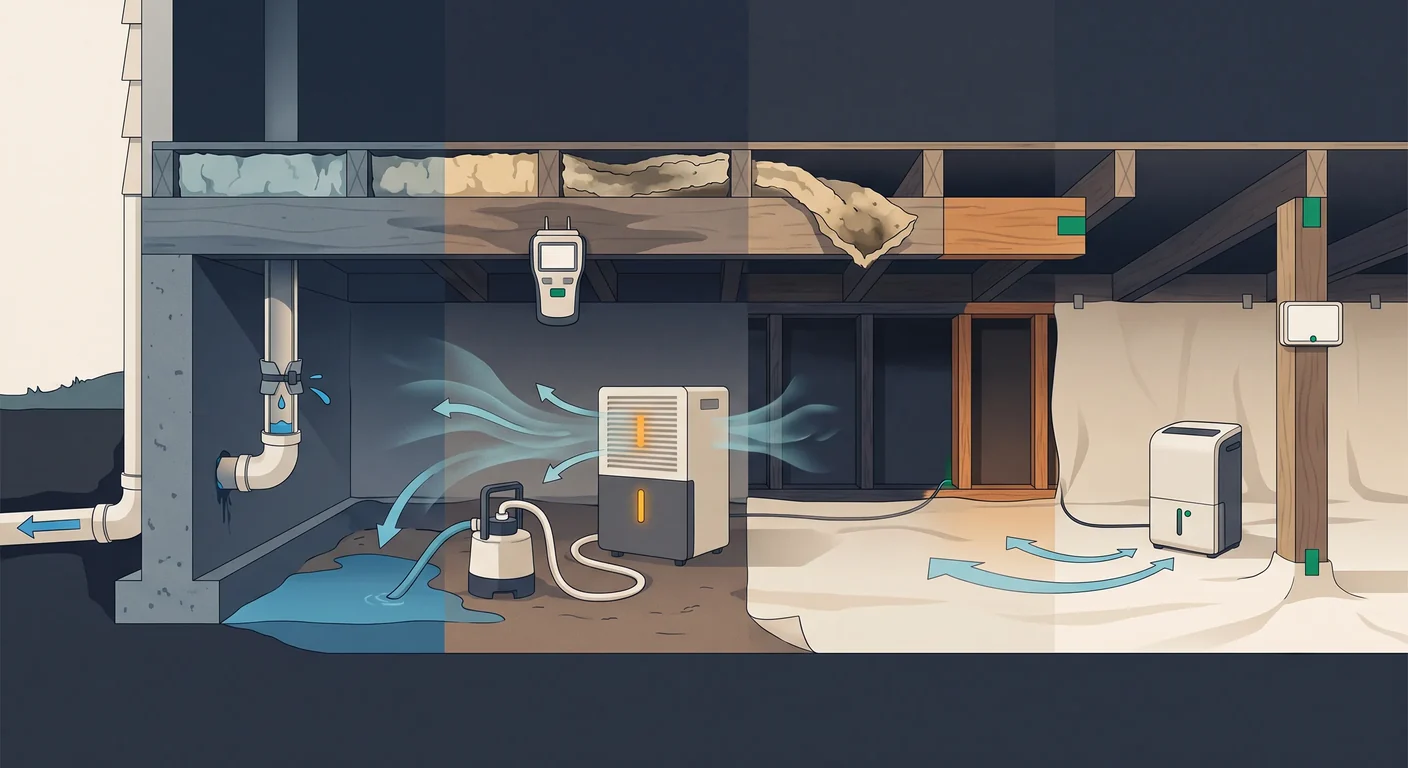
Illustration of crawl-space repair progressing from source control and drying to damaged-material removal, framing repair, and a sealed dry space
Illustration

Repair sequencing

Source control comes first, then water removal and measured drying. Remediation and material or structural repair follow before the final moisture-control system is installed.

  1. 1. Control source
  2. 2. Extract and dry
  3. 3. Remediate or repair
  4. 4. Prevent recurrence
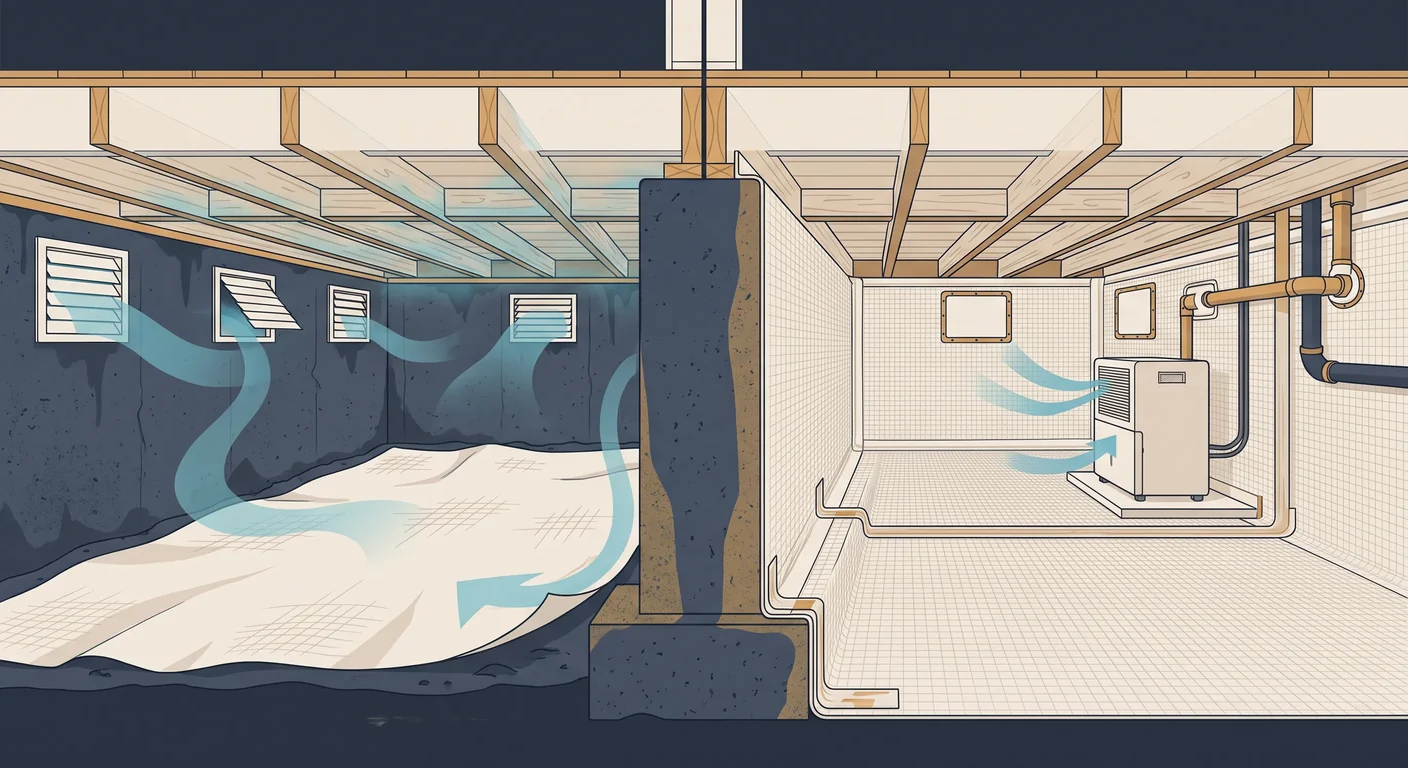
Illustration comparing a ground-only vapor barrier in a vented crawl space with full wall-to-floor encapsulation and dehumidification
Illustration

Vapor barrier vs. encapsulation

A ground vapor barrier blocks soil moisture. Full encapsulation also seals walls, vents, seams, and penetrations and adds a verified humidity-control strategy. The right scope depends on measured conditions.

  1. 1. Ground cover
  2. 2. Sealed walls and vents
  3. 3. Humidity control and monitoring

Method and boundaries

Why the plan follows this order

Moisture control comes first

The EPA recommends fixing the water or moisture problem and drying wet materials. That is why the planner puts source control and measured drying before remediation, insulation replacement, structural work, or encapsulation.

Read the EPA mold and moisture guide

Unknown means “verify,” not “no”

A homeowner should not enter an unsafe or inaccessible crawl space to complete an online tool. Unknown answers stay in the result and carry into the optional assessment summary as questions for an on-site inspector.

What this planner will never claim

  • No mold, structural, electrical, environmental, or medical diagnosis.
  • No property-specific price formula or repair guarantee.
  • No insurance coverage or claim determination.
  • No guaranteed dispatch, appointment, or arrival time.