A Third Party Administrator (TPA) is a claims-handling firm hired by insurance carriers to manage large commercial and catastrophe claims on the carrier's behalf. Major TPAs include Sedgwick, Crawford & Company, and Gallagher Bassett. When you work with a TPA, you are effectively inside the carrier's preferred workflow.
TPA Coordination
Working Inside TPA Programs Without Missing a Beat
Third Party Administrators run major commercial and catastrophe claims with strict SLAs, standardized documentation, and program-specific portals. Our internal processes mirror TPA requirements, and we hold pre-approved vendor status in the major programs so your claim runs at program-level speed.
- Sedgwick
- Crawford
- Gallagher Bassett
- SLA Compliance
What you need to know
Pre-approved vendor status with the major TPAs means our scope and pricing are recognized inside their program rate schedules. We do not negotiate base rates on every claim — they are pre-set. This eliminates the most common source of large loss approval delays.
TPA SLAs are non-negotiable and tracked in real time. The standard expectation is 4-hour initial contact, 24-hour first arrival, 48-hour scope submission. Missing an SLA risks vendor program standing — we treat them as hard deadlines on every claim, not just program work.
Direct portal integrations with XactAnalysis, Sedgwick viaOne, Crawford ClaimsCenter, and GB Luminos eliminate manual data entry on both sides. Daily reports, photos, scopes, and supplements upload directly into the carrier's system without re-keying.
Pre-negotiated program pricing on TPA programs means rate disputes are off the table. The conversation moves directly to scope, supplements, and timeline — the things that actually affect outcomes.
Even on non-program claims, we run TPA-grade processes universally. The same documentation discipline, the same SLA tracking, the same portal-ready packages. Consistency is the multiplier — every claim benefits from the muscle memory built on program work.
From the Field
What this work actually looks like
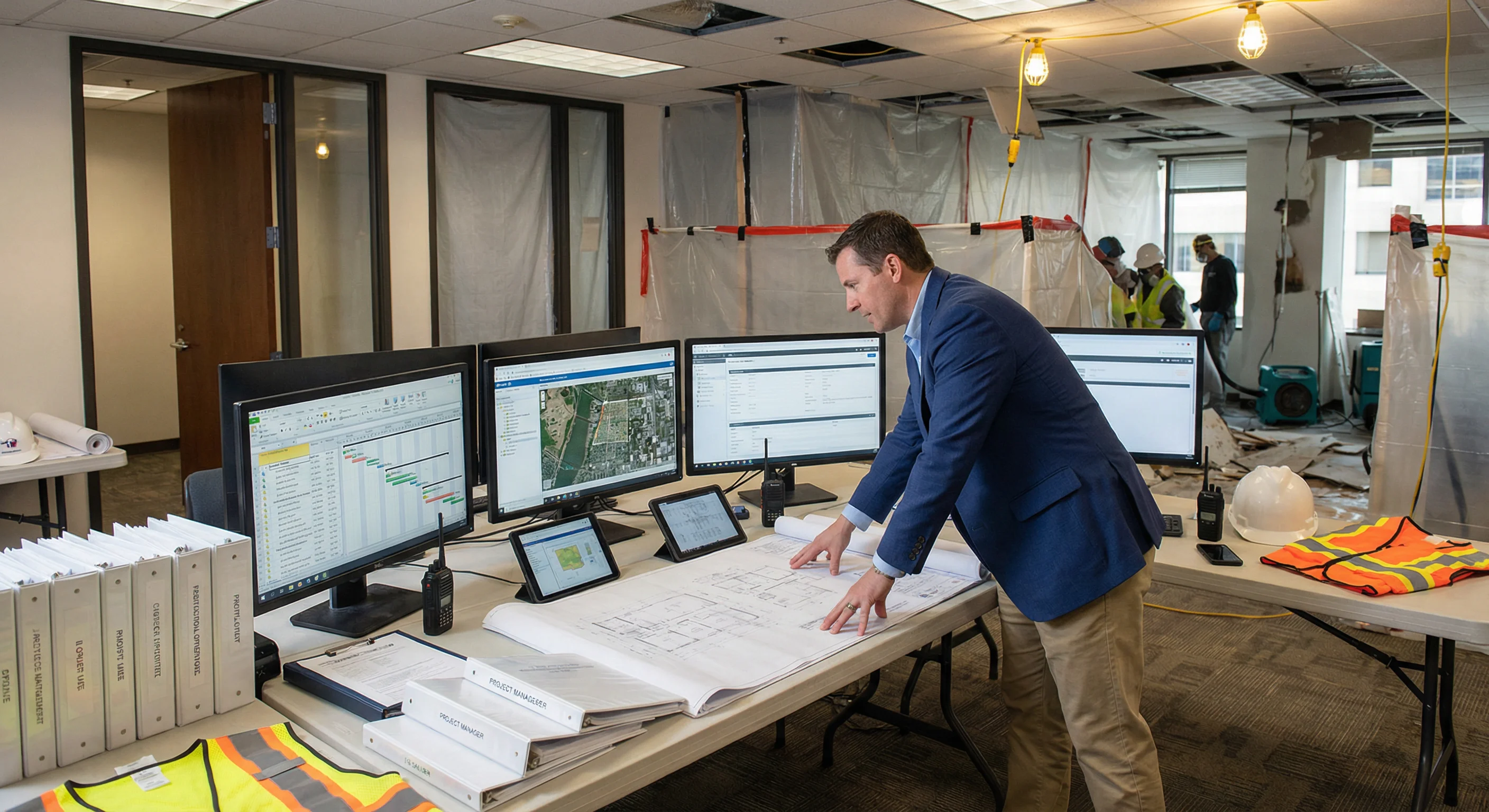
TPA portal dashboards and SLA tracking
Live dashboards show every active claim against its SLA window. Yellow/red markers prompt action before any deadline slips.
PM managing TPA communication cadence
Single PM manages portal updates, daily reporting, and program-specific reporting requirements across multiple TPA programs in parallel.

Program-level documentation binder set
Each TPA program has its own documentation format. We maintain template packages for each so reports go out portal-ready.
Professional Process
How this work is done right
Each step ensures quality, compliance, and minimal disruption at scale.
TPA Intake & SLA Activation
Claim intake from the TPA portal triggers automatic SLA tracking. 4-hour contact, 24-hour arrival, 48-hour scope clocks start immediately and are visible to the entire team.
Portal Documentation & Scope Submission
Initial scope submitted directly into the TPA portal in the program's required format. Photos, moisture data, and field notes uploaded with portal-compatible metadata.
SLA-Compliant Reporting Cadence
Daily field reports, weekly scope updates, and milestone notifications flow into the TPA system on the program's schedule. Distribution log retained for compliance verification.
Program Close-Out & Performance Review
Final invoicing matches approved scope. Post-project performance review with the TPA captures lessons learned and reinforces vendor scoring for future program work.
Cost Guidance
What to expect on pricing
Large loss restoration costs vary significantly by damage extent, facility type, and number of structures. These ranges reflect typical projects in our service areas.
Program-pricing mitigation
$250K – $1M
Pre-negotiated program rates eliminate scope-rate disputes. Cycle time runs 20 – 40% faster than non-program work because rate negotiation is off the table.
Multi-site TPA deployment
$1M – $5M
Centralized PM, portal-driven reporting, and consolidated invoicing across multiple sites under one program umbrella.
Emergency Response Plan (ERP) enrollment
$1,500 – $7,500/yr
Annual ERP enrollment provides priority dispatch, pre-staged resources, and dedicated account management. Pays for itself the first time a CAT event hits a portfolio property.
Regional considerations
Florida
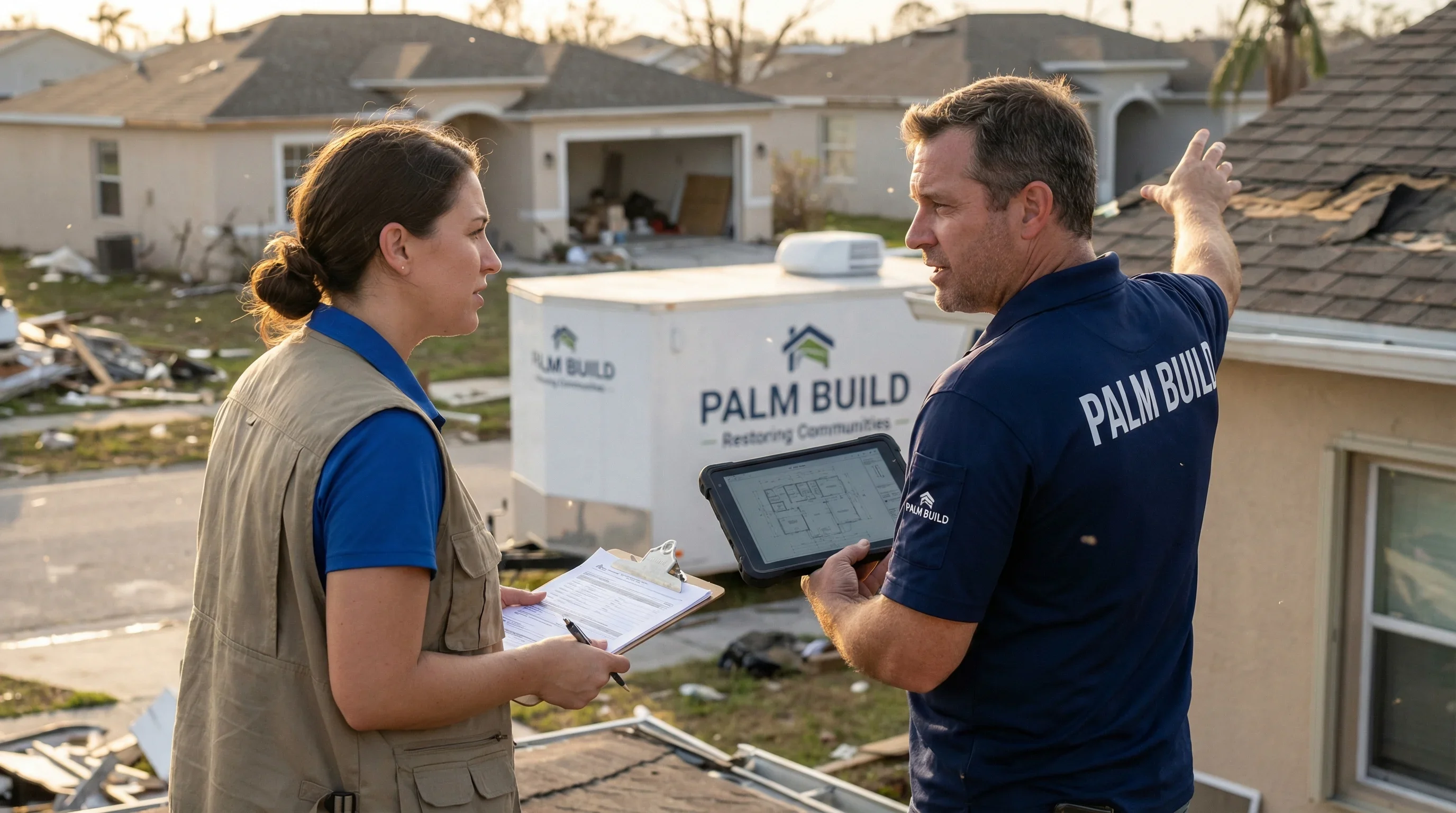
Florida sees the highest CAT claim volume in our service area, particularly during hurricane season. TPAs run parallel deployment models in FL — multiple field teams covering different territories simultaneously. Coordination across TPA field teams is part of every CAT response.
North Carolina
Sedgwick and Crawford have strong commercial presences in NC, particularly in Charlotte and Raleigh metros. Most large commercial claims in these markets flow through one of these two TPAs.
South Carolina
Gallagher Bassett dominates large-deductible commercial programs in SC, particularly in the Charleston Lowcountry hospitality sector. Pre-approved status with GB streamlines coastal commercial claims.
Related Guides
Connect this work with the bigger picture
Need large loss restoration?
Discuss your situation with our large loss team. We assess scope, coordinate with insurance, and deploy the resources your project demands.