Special assessments are the single most disruptive financial event a board can trigger. Owners hit with a $5,000-$40,000 surprise bill rarely forget — and the board that approved it rarely gets re-elected. The political cost compounds the financial cost for years.

Assessment Minimization Playbook
Avoid the Special Assessment That Hurts Owners — and the Board
Special assessments strain owner relationships, drive turnover, depress property values, and erode trust in the board for years. Yet they are usually avoidable. Four strategies — often combined — let HOAs absorb major losses without the per-unit hit that creates 80% of HOA legal disputes.
- Reserve Strategy
- Claim Stacking
- Deductible Splitting
- Phased Work
What you need to know
In every state we serve, three or four assessment-avoidance strategies usually exist as alternatives to the default "split the deductible across owners" reaction. Most boards do not know they exist because they only confront the question once — during the worst week of the year.
The single most powerful avoidance tool is a healthy reserve fund. Florida SIRS-compliant associations are now required to fund structural reserves; using those reserves intelligently for emergency mitigation is legal, fast, and the cheapest source of capital for unbudgeted spend.
Insurance claim optimization — coordinating master policy structural recovery with each affected owner's HO-6 interior recovery — routinely shifts 30-50% of total cost off the association entirely. Most boards file a single bulk master claim and leave the HO-6 recovery on the table.
Where state statute and the declaration permit, the deductible can be assessed to the source unit owner rather than to all owners. Florida 718.111(11) and properly drafted declaration language make this the cleanest avoidance strategy for in-unit losses.
Phased work across two or three fiscal years lets the board avoid the assessment threshold entirely while still completing critical restoration. Phase 1 mitigation, Phase 2 reconstruction, Phase 3 finishing — none triggering the single-year threshold that requires owner approval.
From the Field
What this work actually looks like
Pre-meeting strategy session
We walk every board through the four avoidance strategies before they vote on a special assessment.

Reserve fund review
Identifying earmarked emergency funds before the meeting saves owners from a surprise hit.
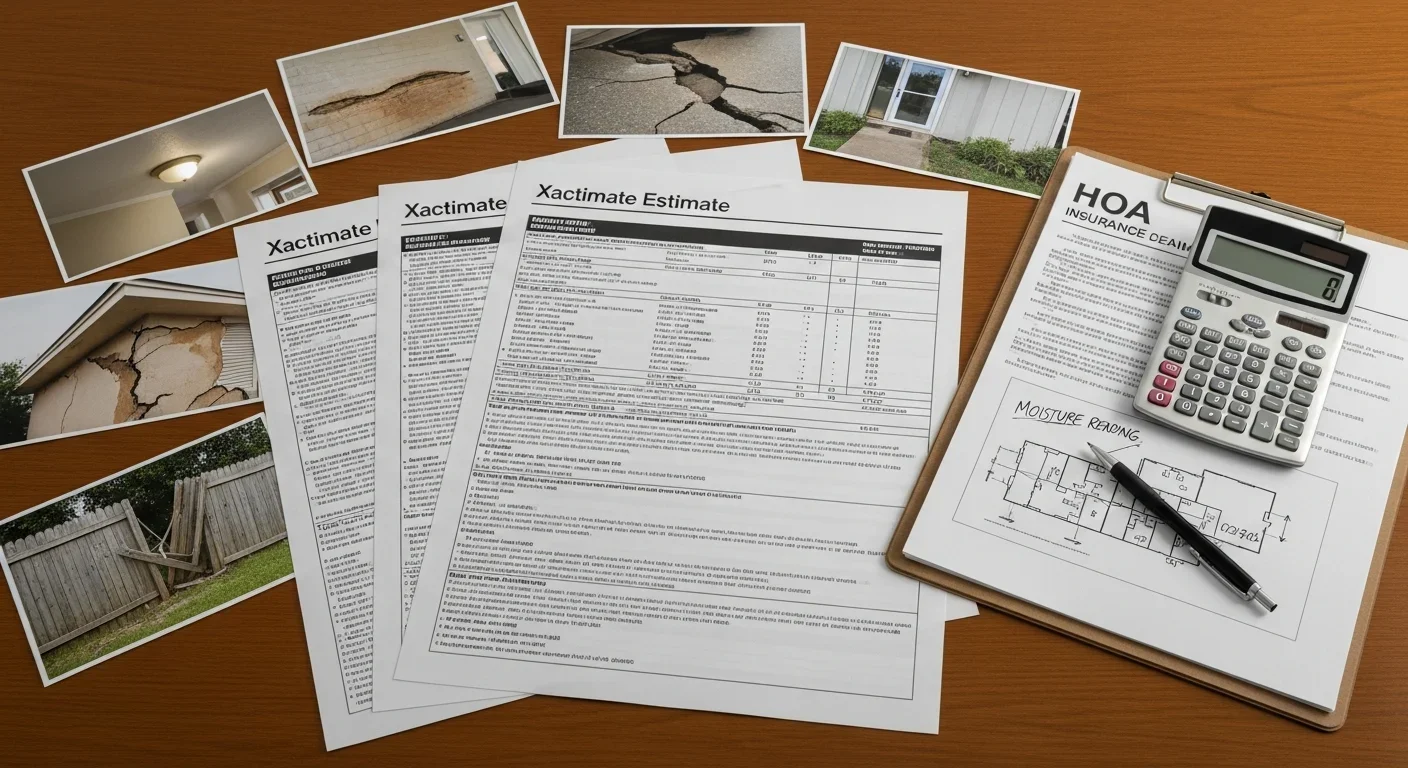
Segmented claim documentation
Per-unit packets unlock 30-50% more recovery than bulk master policy claims.
Professional Process
How this work is done right
Each step ensures quality, coordination across units, and clear communication with all stakeholders.
Loss Assessment
Within 24 hours of the incident: total scope, master policy deductible, available reserves, HO-6 coverage status of affected owners, and source-unit identification.
Strategy Decision Tree
Run the four-question decision tree: above/below deductible? Single source unit? Phasable? HO-6 with loss assessment in place? Each answer narrows the strategy options.
Stack the Strategies
Most major losses combine 2-3 strategies. Reserve draw + claim stacking on a $50K loss. Deductible split + phased work on a $200K loss. Stacking is the multiplier.
Board Action & Documentation
Board records the strategy decision in minutes, authorizes the spend, and Palm Build executes the restoration with full per-unit documentation supporting every recovery channel.
Cost Guidance
What to expect on pricing
HOA restoration costs vary by damage extent, building size, number of units affected, and location. These ranges reflect typical projects in our service areas.
Reserve Draw Strategy
$0 per-unit hit
Loss absorbed entirely from existing reserves; replenishment plan adopted at next budget cycle.
Claim Stacking Strategy
30-50% off association
HO-6 recovery for interior finishes shifts cost from the master policy to individual owners with full reimbursement.
Deductible Split + Phased Work
Per-unit hit ~$0 or $0
Source-unit chargeback combined with multi-year phasing eliminates the per-unit assessment in most in-unit incidents.
Regional considerations
Florida
FL Statute 718.111(11) and 718.1265 give boards explicit emergency authority and clear deductible chargeback options. Post-Surfside SIRS reforms make reserves more powerful — and more accessible — for assessment avoidance.
North Carolina
NC Chapter 47C provides middle-ground statutory direction and strong business judgment rule protection. Most NC declarations need to be read carefully for chargeback language; we help boards interpret theirs.
South Carolina
SC Horizontal Property Act §27-31 leans heavily on the master deed for assessment authority. Boards in SC should review their declaration before any major loss to know their chargeback options.
Related Guides
Connect this work with the bigger picture
Need HOA restoration help?
We coordinate with boards, property managers, and multiple insurance carriers. Get a community assessment and restore your property with minimal disruption to residents.