From Brickell high-rises where a single cooking fire sends smoke through 40 floors of HVAC to Kendall's 1970s CBS ranch homes with aging electrical panels, Palm Build's IICRC-certified team handles structural fire damage, soot removal from stucco and tile, smoke odor elimination in concrete block cavities, and HVHZ-compliant reconstruction — with condo association coordination and insurance documentation from the first call.
Deerfield Beach — Rapid Response to Miami-Dade Under 60 min Response IICRC Certified
After a Fire in Miami, Every Hour of Delay Costs You
The fire department puts out the flames — but that's when the real damage clock starts.
In Miami's humid subtropical climate, soot corrosion accelerates on every surface, smoke
compounds penetrate deeper into CBS wall cavities, and fire-suppression water feeds mold
growth on slab-on-grade construction. The difference between a $15,000 cleanup and a
$75,000 rebuild often comes down to how fast professional mitigation begins.
CRITICAL FACTOR 1
Soot Etches Surfaces Within Hours in 73% Humidity
Miami's year-round average humidity of 73% — spiking to 84% during wet-season mornings — accelerates every form of soot corrosion. Acidic soot begins permanently etching stainless steel, marble, chrome, and glass within hours of a fire. In drier climates this process takes days. Every hour of delay in Miami's subtropical air compounds the damage exponentially, turning a surface-cleaning project into a full replacement.
CRITICAL FACTOR 2
Smoke Fills Condo HVAC in Minutes
In Brickell and Edgewater high-rises, a single kitchen grease fire sends soot particles through shared HVAC plenums to every floor within minutes. The 62% of Miami housing in multifamily buildings means smoke from one unit contaminates dozens — through elevator shafts, stairwell pressurization, and corridor air handlers. By the time fire crews arrive, smoke has already infiltrated units the fire never reached.
CRITICAL FACTOR 3
CBS Block Traps Smoke in Wall Cavities
Miami's predominant CBS (concrete block and stucco) construction contains hollow block cores that trap smoke like a sponge. Smoke infiltrates through mortar joints and hairline cracks, becoming invisible from the surface while actively releasing odor compounds for months. Once smoke saturates these cavities in Miami's humidity, remediation requires thermal fogging through weep holes or partial demolition — standard surface cleaning cannot reach it.
CRITICAL FACTOR 4
Fire-Suppression Water Feeds Mold in 24 Hours
Fire hoses deliver 150-250 gallons per minute, and high-rise sprinkler systems can discharge thousands of gallons before shutoff. On Miami's slab-on-grade CBS construction, water pools with no natural drainage. In condo buildings, water migrates vertically through floor penetrations. Combined with Miami's heat and humidity, mold colonization begins on fire-weakened materials within 24 hours — adding a third damage layer on top of fire and smoke.
Emergency Fire Restoration
Palm Build dispatches from our Deerfield Beach office to any Miami-Dade address in
under 60 minutes. We begin emergency board-up, soot stabilization, and water
extraction simultaneously — stopping all three damage clocks at once. For Brickell and
Downtown high-rises, we carry the insurance certificates and building access
credentials for immediate entry.
Emergency board-up and soot stabilization secures your Miami home within hours of the
fire
Local Risk Factors
Fire Risks Unique to Miami Homes and Condos
Miami's dense multifamily housing, aging pre-1980 CBS construction, and 62% condo
concentration create distinct fire risk profiles unlike anywhere else in Florida. From
cooking fires in Brickell high-rises to electrical failures in Kendall tract homes,
understanding which risks apply to your property ensures faster, more effective
restoration.
Cooking Fires — 51% of Residential Structure Fires
Critical
Cooking fires are the #1 cause of residential structure fires nationally, and Miami's dense condo housing amplifies the consequences. A grease fire in a Brickell high-rise kitchen sends smoke through shared HVAC plenums to every floor within minutes. In Little Havana's older apartment buildings, cooking fires in tight kitchens with outdated range hoods spread rapidly to adjacent units through shared walls and ceiling cavities. The open-concept layouts common in renovated Miami condos allow kitchen fires to engulf living spaces before suppression activates.
Peak season: Year-round (holiday spike Nov-Jan)
Areas: Brickell, Edgewater, Little Havana, Coconut Grove
Aging Electrical in Pre-1980 CBS Homes
Critical
Miami's pre-1980 housing stock — concentrated in Kendall, Little Havana, Miami Shores, and Coconut Grove — carries compounding electrical fire risks. Many homes contain original aluminum wiring that creates arcing at connection points over time. Electrical panels sized for window AC units now support central air, pool pumps, modern kitchen appliances, and EV chargers. The resulting overload generates heat that degrades wire insulation inside CBS wall cavities for years before igniting. The concrete block construction delays detection — by the time smoke is visible, damage has spread through the wall system.
Peak season: Peak in summer (AC load)
Areas: Kendall, Little Havana, Miami Shores, Coconut Grove
Dense Multifamily Housing — 62% of Units
High
Miami has one of the highest concentrations of multifamily housing in the Southeast — 62% of units are in buildings with five or more units. A fire in one condo unit spreads smoke through shared HVAC plenums, elevator shafts, and stairwell pressurization systems to dozens of units in minutes. Aging electrical risers in older buildings serve units now drawing modern loads. Salt air corrosion in Miami Beach and Key Biscayne oceanfront towers accelerates electrical component degradation, and condo fire restoration involves unit-owner vs. master policy insurance coordination.
Peak season: Year-round
Areas: Brickell, Miami Beach, Edgewater, Key Biscayne
Overloaded Panels in Modernized Older Homes
High
Across Miami, thousands of homes built before 1980 with 100-amp or 150-amp panels now serve central AC systems, pool and spa equipment, modern kitchen appliances, home offices, and increasingly EV chargers — loads that routinely exceed panel capacity. Decades of added circuits, DIY modifications, and unlicensed upgrades have left many homes with mismatched breakers, double-tapped circuits, and Federal Pacific or Zinsco panels known for failure to trip during overload. CBS construction contains the smoldering, delaying detection.
Peak season: Peak in summer (AC load)
Areas: City-wide — all pre-1980 construction
Art Deco and Historic Structure Fire Vulnerability
High
Miami Beach's Art Deco district and Coconut Grove's historic homes present unique fire risks. Original 1920s-1940s construction used materials and methods predating modern fire codes — narrow stairwells, combustible interior finishes, limited fire stops between floors. Renovations have added modern electrical loads to buildings with original wiring chases and wooden lath. When fire occurs in these structures, the combination of historic materials and modern electrical loads creates rapid fire progression. Reconstruction must balance historic preservation requirements with current HVHZ building standards.
Peak season: Year-round
Areas: Miami Beach Art Deco, Coconut Grove, Coral Gables
Understanding the Damage
The Science of Soot: How Fire Type Affects Miami Homes
Not all fire damage is the same. The type of materials that burned determines what kind
of soot your Miami home or condo is coated with — and that determines the cleaning
chemistry, equipment, and timeline required. Using the wrong approach on stucco, tile,
or CBS surfaces doesn't just fail to clean — it can permanently set stains and drive
odors deeper into porous materials.
Protein Residue (Cooking Fires — 51% of Residential Fires)
Cooking fires are the #1 cause of residential structure fires and the most common fire type in Miami homes. Protein fires produce an almost invisible, yellowish residue with an extremely pungent odor. In Miami's open-concept condos with tile floors and stucco walls, the residue spreads far beyond the kitchen and bonds chemically to porous surfaces. Protein soot is nearly invisible on light-colored stucco and tile but permanently discolors over time. Standard cleaning products spread the residue and set the stain permanently into CBS surfaces.
Professional Cleaning Approach
Requires enzymatic cleaners and specialized degreasing agents. Thermal fogging with protein-specific solutions is needed for odor elimination in CBS wall cavities. Miami humidity demands multiple treatment cycles — a single pass rarely achieves full neutralization.
Natural Material Soot (Wood, Paper, Fabric)
When Miami homes with wood-framed roof trusses above CBS walls, wood cabinetry, or attic insulation burn, they produce dry, powdery, gray-black soot. This soot type is lighter and easily disturbed by air movement — it spreads throughout the entire home via year-round AC systems within hours. In older neighborhoods like Coconut Grove and Little Havana, where mid-century homes have been updated with modern HVAC but retain original construction, soot from a fire in one room can contaminate ductwork and distribute residue to every room rapidly.
Professional Cleaning Approach
HEPA vacuuming first — never wipe dry soot, as it smears into porous stucco and grout. Follow with chemical sponge treatment, then wet cleaning with appropriate detergents. Tile grout common in Miami homes requires specialized extraction.
Synthetic Soot (Plastics, Polymers, Modern Materials)
Modern Miami condos — especially renovated units in Brickell, Edgewater, and Wynwood — contain significant synthetic materials: engineered flooring, foam insulation, PVC trim, synthetic furnishings, and plastic fixtures. When these materials burn, they produce thick, black, sticky soot that is extremely difficult to remove. In CBS construction, synthetic soot penetrates the porous stucco finish and becomes trapped in concrete block cavities. This is the most hazardous soot type, containing toxic compounds including hydrogen cyanide and dioxins.
Professional Cleaning Approach
Requires solvent-based cleaners specifically formulated for petroleum-based residues. Multiple cleaning passes on stucco surfaces are standard. Full PPE is critical due to toxic compounds. In high-rise condo fires, synthetic soot from modern finishes is the dominant type.
Our Fire Restoration Process
How We Restore Miami Homes and Condos After Fire Damage
Fire restoration is more complex than water or mold because it involves multiple damage
types simultaneously — structural fire damage, soot contamination, smoke odor, and water
from fire suppression. Our six-step process addresses all four in a coordinated sequence
tailored to Miami's CBS construction, HVHZ requirements, and condo association
coordination.
01
Emergency Board-Up & Assessment
Hours 1-4
We secure your Miami home or condo against weather, theft, and further damage. This includes boarding windows, tarping damaged roof sections, and securing doors. In Miami — where afternoon thunderstorms develop daily from May through October — an unsecured fire-damaged property can sustain thousands in additional water damage within hours. For Brickell and Edgewater high-rises, we carry the insurance certificates and building access credentials that property management requires for immediate entry. Condo association coordination begins simultaneously.
02
Soot & Smoke Testing
Day 1-2
Our IICRC-certified team performs a comprehensive walk-through documenting every affected area with photos, video, and moisture readings. We classify the fire and soot type (protein, natural, synthetic), assess structural integrity of CBS block walls, and create a detailed scope of work. For condo fires, we document unit-owner scope and master-policy scope separately. This documentation is formatted exactly how Miami-Dade County adjusters and Florida insurance carriers expect to receive it.
03
Structural Cleaning & Soot Removal
Days 2-8
Professional soot removal uses chemistry matched to the specific soot type. HEPA vacuuming removes loose particulate, chemical sponges lift embedded residue, and wet cleaning with specialized detergents addresses remaining contamination on stucco walls, tile, cabinetry, and structural members. Miami's CBS construction requires specialized techniques to clean porous stucco without damaging the finish. For high-rise condos, we coordinate elevator reservations for equipment staging and adhere to building construction-hour restrictions.
04
Odor Removal & Treatment
Days 5-14
Smoke odor elimination uses thermal fogging for CBS wall cavities where smoke becomes trapped in hollow block cores, ozone treatment for sealed and evacuated spaces, and hydroxyl generation for occupied areas. Miami's 73% average humidity requires more treatment cycles than dry climates — moisture traps odor molecules and binds them to porous surfaces. Complete HVAC duct cleaning is mandatory since systems run year-round, continuously circulating residual smoke particles through every room.
05
Content Cleaning & Pack-Out
Days 3-14
Salvageable contents are inventoried, photographed, packed, and transported to our climate-controlled facility for professional cleaning. Furniture, electronics, clothing, documents, and personal items each require specific cleaning protocols. Miami's humidity makes prompt content removal critical — items left in a smoke-damaged, humid environment deteriorate rapidly. Our detailed inventory becomes part of your insurance documentation for both restoration and replacement claims, with separate inventories for unit-owner and master-policy items in condo fires.
06
Full HVHZ-Compliant Reconstruction
Weeks 2-8+
Once cleaning and odor treatment are verified complete, we handle full reconstruction: drywall, stucco repair, tile, cabinetry, painting, electrical, plumbing, and finish work. Miami-Dade County sits within Florida's HVHZ (High-Velocity Hurricane Zone), requiring all reconstruction to meet the state's strictest building standards — Miami-Dade-approved impact windows, reinforced roof-to-wall connections, upgraded electrical to NEC, and current insulation requirements. Any fire restoration triggers a complete rewiring to current standards. We manage the full Miami-Dade County permitting and inspection process.
Odor Elimination
How We Permanently Eliminate Smoke Odor in Miami Homes
Smoke odor is the most persistent aspect of fire damage — and Miami's 73% average
humidity makes it significantly harder to eliminate than in drier climates. Masking
products do not eliminate smoke odor. They temporarily cover it. Professional odor
elimination requires treating the source at the molecular level using methods matched to
CBS construction, year-round HVAC operation, condo building HVAC configurations, and the
specific materials in your home.
Thermal Fogging
Heated deodorizing agents are converted into a fog that penetrates materials the same way smoke did — through microscopic pores, cracks, and cavities. This is the most effective method for Miami's CBS construction, where smoke becomes trapped in hollow concrete block wall cavities and porous stucco finishes. The fogging agent chemically neutralizes odor molecules rather than masking them. We inject fog through weep holes to reach deep CBS cavities. Multiple applications are standard in Miami's humid environment where moisture traps and re-releases odor compounds.
Best for: CBS wall cavities, porous stucco, deep penetration in block construction
Ozone Treatment
Ozone generators create O3 — a highly reactive oxygen molecule that breaks down odor compounds at the molecular level. Ozone treatment is extremely effective but requires the space to be completely unoccupied (including plants and pets) during treatment. We use ozone for sealed, evacuated spaces like closets, interior rooms, and enclosed areas where concentrated treatment reaches maximum effectiveness. In Miami's dense condo buildings, ozone is particularly effective for treating individual units with sealed boundaries between floors and adjacent units.
Best for: Sealed spaces, individual condo units, heavy odor concentration
Hydroxyl Generation
Hydroxyl generators produce hydroxyl radicals — the same molecules that naturally purify outdoor air via sunlight — to break down odor compounds. Unlike ozone, hydroxyl treatment is safe for occupied spaces. We deploy these in areas where occupants or workers need to be present, and as continuous treatment during the multi-day cleaning process. Essential for Miami high-rise projects where adjacent condo units remain occupied, or where the homeowner is coordinating insurance on-site during restoration.
Best for: Occupied spaces, adjacent condo units, ongoing treatment during restoration
HVAC Duct Cleaning & Sanitization
Miami homes and condos run air conditioning year-round — meaning smoke and soot particles are drawn into the HVAC system and distributed to every room within hours of a fire. In high-rise buildings, shared HVAC plenums spread contamination to units the fire never reached. The ductwork becomes a smoke distribution network that continues circulating contamination with every cooling cycle. Complete duct cleaning, coil sanitization, and filter replacement are mandatory steps. Skipping this step means odor returns within days of surface cleaning.
Best for: All Miami fire restorations — year-round AC operation makes this mandatory
The Hidden Secondary Damage
Water Damage From Firefighting: Often Worse Than the Fire Itself
Fire suppression water on Miami slab-on-grade CBS homes pools with nowhere to drain
Many Miami homeowners are shocked to discover that fire suppression causes more damage
to their property than the fire itself. A single fire hose delivers 150 to 250 gallons
of water per minute. High-rise sprinkler systems can discharge thousands of gallons
before being shut off. In condo buildings, water migrates vertically through floor
penetrations — damaging units below the fire origin, sometimes several floors down.
On Miami's slab-on-grade CBS construction, fire suppression water pools across tile
and terrazzo floors with no natural drainage path, seeping into hollow concrete block
cavities, under baseboards, and saturating any remaining drywall. The water becomes
trapped inside these walls — invisible from the surface but creating a perfect
environment for mold growth in Miami's 73% average humidity. Within 24 hours, this
hidden moisture begins feeding mold on the same surfaces already weakened by heat and
soot.
Palm Build's fire restoration team handles water extraction and structural drying as
an integrated part of the fire cleanup process — not as a separate project that adds
weeks and thousands to your timeline. Our technicians are cross-trained in both fire
and water damage restoration, so one team manages the entire scope.
Fire restoration costs in Miami run higher than national averages due to HVHZ building
code requirements, CBS construction complexity, elevated material and labor costs in
Miami-Dade County, and condo association coordination. The HVHZ premium adds 15-25% to
reconstruction costs compared to non-HVHZ areas of Florida. The good news: fire is one
of the most comprehensively covered perils under FL homeowners and condo insurance
policies.
Small Fire (Kitchen, Contained)
Soot cleanup, odor elimination, minor repairs, HVAC cleaning
$15,000 - $45,000
Includes protein soot removal from CBS surfaces, thermal fogging for odor, duct cleaning, and cosmetic repairs. Miami-Dade's HVHZ code adds 15-25% for any permit-required work. Condo fires in this range typically involve unit-owner policy only.
Moderate Fire (Multi-Room)
Structural cleaning, CBS wall remediation, full odor treatment, partial rebuild
$45,000 - $120,000
Includes structural assessment, multi-room soot and smoke remediation, water extraction from fire suppression, content pack-out, and partial reconstruction to HVHZ standards including Miami-Dade-approved impact-rated components. In condo fires, both unit-owner and master policies typically activate at this level.
Major Structural Fire
Extensive damage, full HVHZ reconstruction, complete electrical rewiring
$120,000 - $350,000+
Full structural rebuild to current HVHZ code: Miami-Dade-approved impact windows, reinforced roof-to-wall connections, upgraded electrical to NEC, and current insulation requirements. Miami-Dade County's HVHZ premium adds 15-25% to reconstruction costs compared to non-HVHZ jurisdictions. Full permitting and inspection process through Miami-Dade Building Department.
Smoke-Only Damage (No Structural Fire)
Smoke infiltration from adjacent unit, nearby fire, or shared HVAC
$5,000 - $30,000
Extremely common in Miami's dense condo buildings where smoke travels through shared HVAC plenums, elevator shafts, and corridor systems to units the fire never reached. Includes surface cleaning, odor treatment, duct cleaning, and content restoration. No structural work required. Often covered under the unit-owner's HO-6 policy.
Our Work
Miami Fire Restoration: The Process in Action
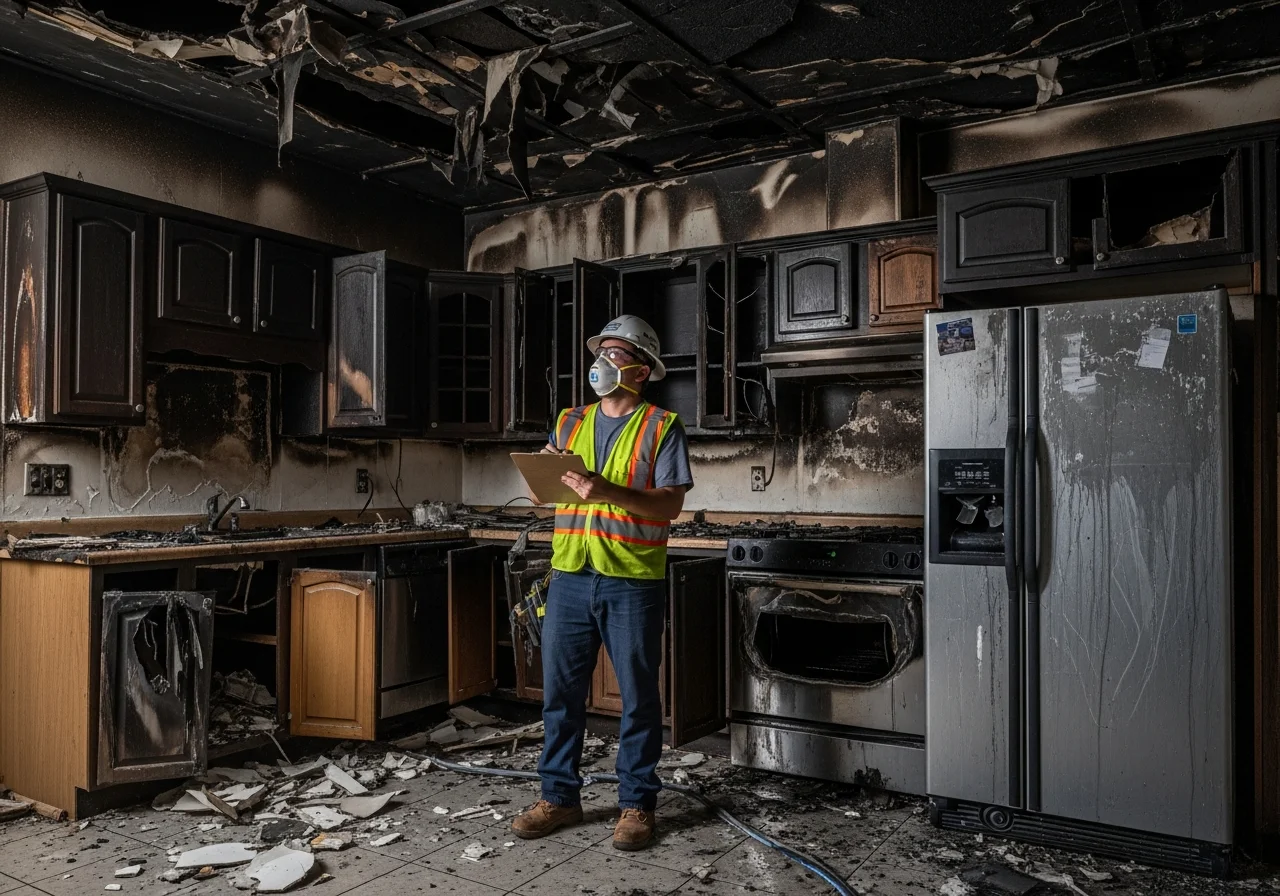
Kitchen fire damage with charred cabinets and soot coating on CBS stucco surfaces
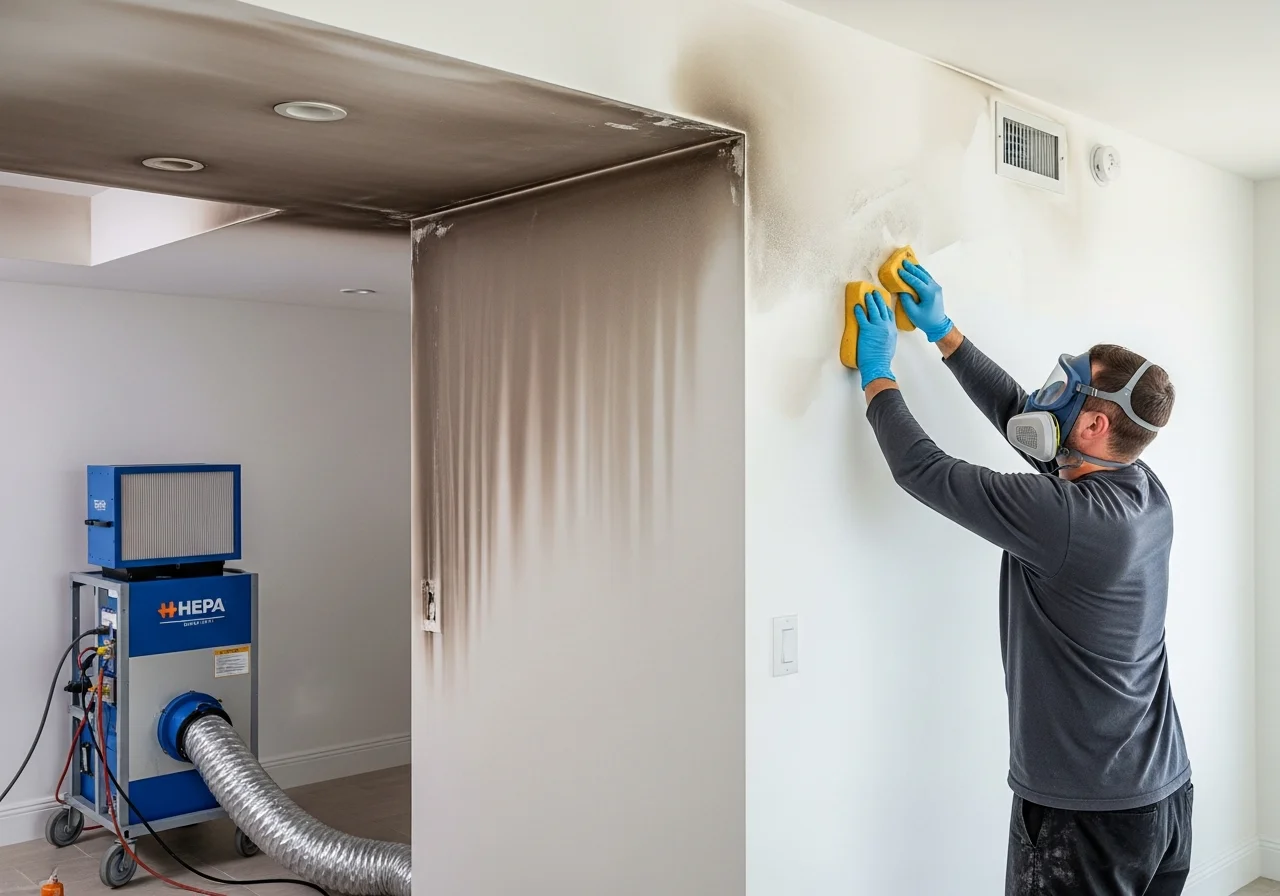
Smoke damage in a Miami condo — soot traveled through shared HVAC to multiple floors
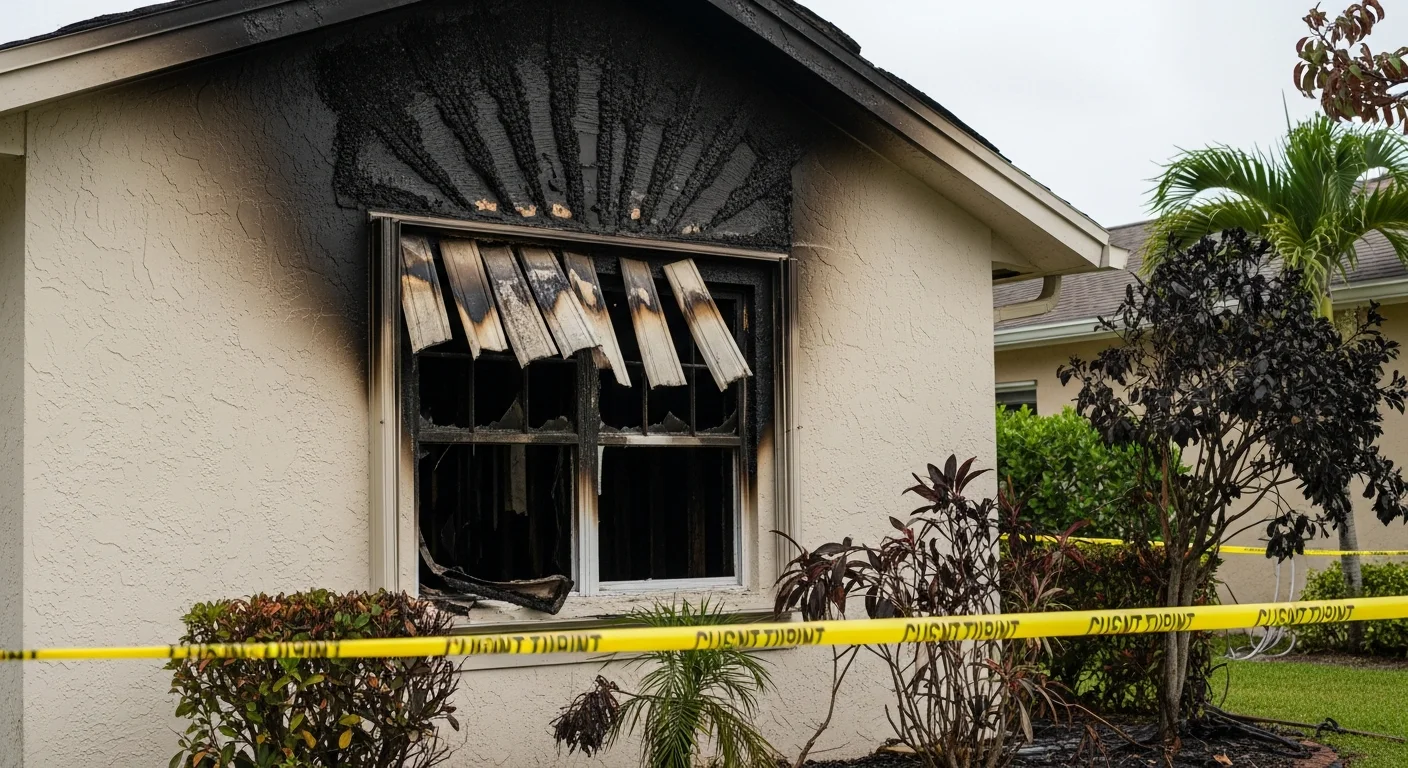
CBS construction limits external fire spread but smoke permeates block cavities
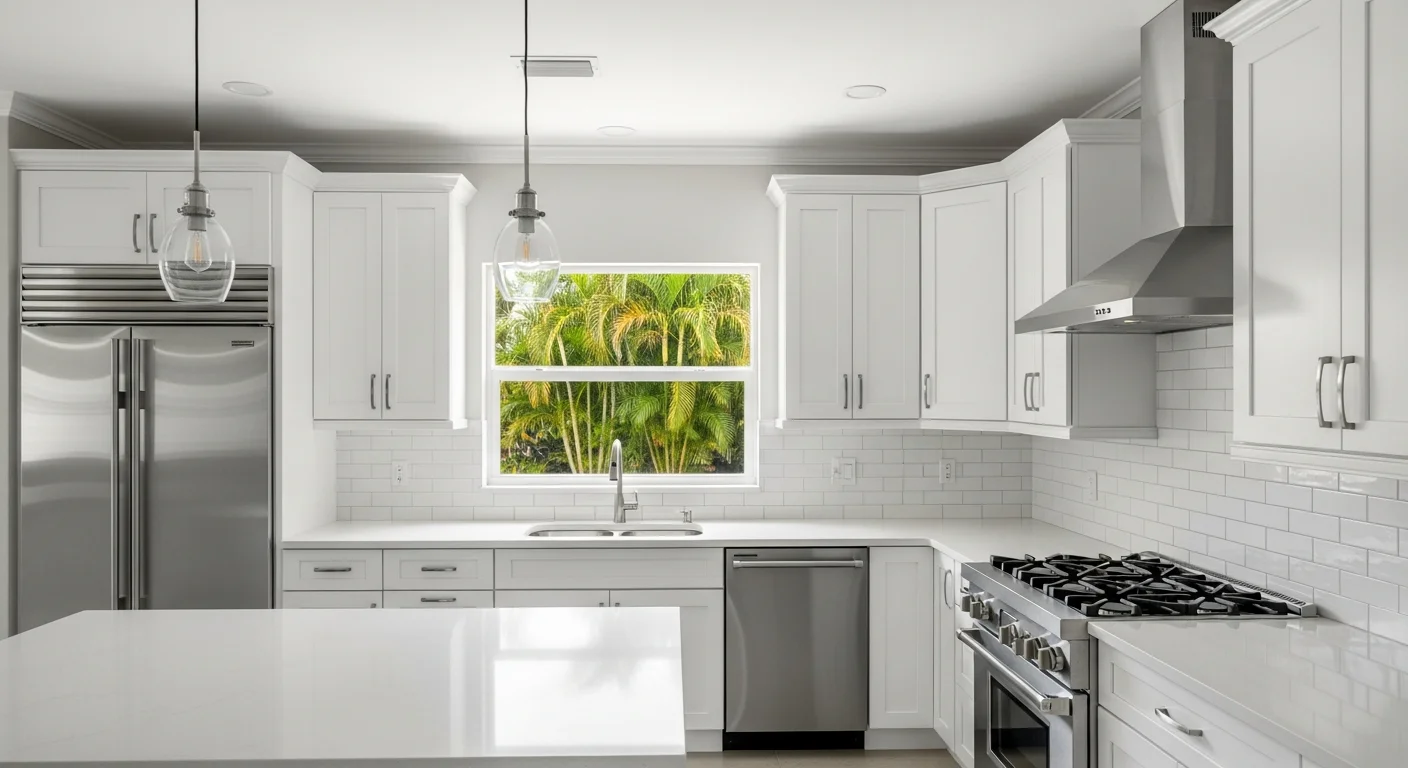
After: Fully restored with new finishes, HVHZ-compliant upgrades, and modernized electrical
Insurance Coverage
Fire Insurance Claims in Miami: What's Covered
Fire is one of the most comprehensively covered perils under Florida insurance policies.
Unlike water or mold damage — which face significant coverage restrictions in Florida —
fire claims under a standard HO-3 policy rarely face coverage disputes. Miami-Dade
homeowners pay among the highest insurance premiums in the state due to hurricane and
flood risk, but fire coverage is fully included. For condo owners, your HO-6 policy
covers everything from the drywall in, while the association's master policy covers the
building structure. Florida law gives you one year from the date of loss to file.
Structural repair and reconstruction to pre-loss condition
Professional soot and smoke cleaning of all affected surfaces
Water damage from fire suppression (extraction and drying)
Contents restoration or replacement (furniture, electronics, clothing)
Additional Living Expenses (ALE) for temporary housing during restoration
Debris removal and hazardous material disposal
HVHZ code upgrades required during reconstruction (with ordinance-and-law endorsement)
Palm Build Manages Your Fire Claim — Including Condo Dual-Policy Coordination
We work directly with your insurance adjuster from the first inspection. For condo
fires, we coordinate with both your unit-owner carrier and the association's master
policy carrier, providing separate scopes and documentation for each. Our fire damage
documentation — structural assessments, soot type classification, moisture readings,
photo evidence, and detailed scopes — is formatted exactly how Miami-Dade County
adjusters and Florida insurance carriers expect to receive it. With Florida's complex
insurance landscape and frequent carrier changes, having a restoration company that
understands FL-specific documentation requirements gets your claim approved faster and
for the full amount you're entitled to.
Why Miami Homeowners and Condo Owners Choose Palm Build After a Fire
Deerfield Beach Office — Under 60 Minutes to Miami-Dade
Our South Florida operations hub at 786 S Military Trail in Deerfield Beach puts us under 60 minutes from any Miami-Dade address — from Brickell high-rises to Kendall tract homes. Board-up, tarping, and soot stabilization begin the same night. For high-rise emergencies, we carry the insurance certificates and building access credentials for immediate entry.
IICRC Fire & Smoke Certified
Every crew lead holds current IICRC Fire and Smoke Restoration Technician (FSRT) certification. We follow the S540 standard for professional fire and smoke damage restoration procedures — critical for both proper remediation and insurance claim documentation that Florida carriers require.
CBS & HVHZ Construction Specialists
Miami-Dade County sits within Florida's HVHZ zone with the strictest building codes in the country. Our team understands how smoke travels through CBS block cavities, how soot bonds to stucco, and how to rebuild to HVHZ standards — including Miami-Dade-approved impact products, reinforced roof-to-wall connections, and current NEC electrical requirements.
Condo Association & Multi-Policy Coordination
Miami condo fires involve unit-owner HO-6 policies, association master policies, and building management coordination. We provide separate scopes and documentation for each insurance carrier, work directly with property management on access and construction scheduling, and coordinate elevator reservations for equipment staging. This dual-policy expertise prevents coverage gaps and delays.
Florida Insurance Documentation Experts
Florida's insurance landscape is uniquely complex — frequent carrier changes, assignment-of-benefits regulations, and strict documentation requirements. Our fire damage documentation is formatted exactly how Miami-Dade County adjusters and FL carriers expect to see it, reducing back-and-forth and getting your claim approved faster and for the full amount.
Full Reconstruction to HVHZ Code
From emergency board-up through final punch list, Palm Build handles the entire project. Any fire reconstruction in Miami-Dade — even replacing a single window — must meet current HVHZ standards. This adds 15-25% to costs but significantly improves resilience. We manage the full Miami-Dade County permitting and inspection process including inspection scheduling at each construction phase.
Common Questions
Miami Fire & Smoke Damage FAQ
What happens when a fire damages my Miami condo — who is responsible for restoration?
Condo fire damage in Miami involves two separate insurance policies. Your unit-owner HO-6 policy covers everything from the drywall in — fixtures, cabinets, flooring, personal property, and improvements you have made to the unit. The condo association's master policy covers the building structure, common areas, hallways, and shared mechanical systems. When fire or smoke crosses unit boundaries — which happens in virtually every condo fire through shared HVAC plenums — both policies activate simultaneously. Palm Build coordinates with both your personal carrier and the association's carrier, providing separate scopes and documentation for each. We also work directly with building management on access, construction hours, and elevator reservations for equipment staging.
How quickly should fire and smoke damage restoration begin in Miami?
Immediately. Miami's year-round humidity averaging 73% — reaching 84% during morning hours in wet season — accelerates every form of secondary fire damage. Acidic soot begins permanently etching stainless steel, marble, chrome, and glass within hours. Smoke compounds penetrate deeper into CBS wall cavities and porous stucco with each passing hour as humidity drives moisture absorption. Fire-suppression water on slab-on-grade construction begins feeding mold growth within 24 hours. Palm Build responds from our Deerfield Beach office in under 60 minutes to begin emergency board-up, soot stabilization, and water extraction simultaneously.
Why are Miami's older homes at higher risk for electrical fires?
Miami's pre-1980 housing stock — concentrated in Kendall, Little Havana, Miami Shores, and Coconut Grove — carries several compounding electrical fire risks. Many homes contain original aluminum wiring that expands and contracts at connection points, creating arcing over time. Electrical panels in these homes were sized for window AC units and basic appliance loads, but now support central air conditioning, pool and spa equipment, modern kitchen appliances, and EV chargers. The resulting overload generates heat that degrades wire insulation inside wall cavities for years before igniting. Florida's HVHZ building codes require full electrical upgrades during reconstruction — meaning any fire restoration in Miami triggers a complete rewiring to current NEC standards.
How does HVHZ affect fire damage reconstruction in Miami?
Miami-Dade County sits within Florida's High-Velocity Hurricane Zone (HVHZ), which imposes the strictest building codes in the country. Any fire reconstruction — even replacing a single window — must meet current HVHZ standards: Miami-Dade-approved impact-rated windows and doors, reinforced roof-to-wall connections with specific strap and clip requirements, upgraded electrical to current NEC standards, and TAS-tested roofing materials. This adds 15-25% to reconstruction costs compared to non-HVHZ jurisdictions, but significantly improves the home's resilience. Palm Build manages the full HVHZ permitting process through Miami-Dade County's building department, including inspection scheduling at each construction phase.
Can smoke odor be fully eliminated from Miami's CBS stucco homes?
Yes, but Miami's subtropical humidity makes it significantly more difficult than in drier climates. Moisture in the air traps smoke odor molecules and bonds them more aggressively into porous CBS block, stucco, grout, and concrete. Year-round HVAC operation distributes smoke particles through every supply and return duct, contaminating rooms the fire never reached. Professional elimination requires a multi-phase approach: thermal fogging injected into CBS wall cavities through weep holes, ozone treatment of sealed spaces, hydroxyl generation for occupied areas, and complete HVAC duct cleaning with coil decontamination. Multiple treatment cycles are standard in Miami's humid environment — a single pass rarely achieves full neutralization.
Does homeowners insurance cover fire damage in Miami?
Yes — fire is one of the most comprehensively covered perils under standard Florida HO-3 homeowners policies. Coverage typically includes structural repair, soot and smoke cleanup, contents restoration, smoke odor elimination, water damage from fire suppression, temporary living expenses (ALE), and debris removal. Miami-Dade homeowners pay among the highest insurance premiums in the state — driven by hurricane and flood risk — but fire coverage is fully included. Florida law (Fla. Stat. 627.70132) requires you to file your claim within 1 year of the date of loss, with supplemental claims within 18 months. Your standard deductible applies to fire losses, not the hurricane deductible.
What about water damage from firefighting in Miami homes?
Fire-suppression water damage often rivals or exceeds the fire damage itself. A single fire hose delivers 150-250 gallons per minute, and high-rise sprinkler systems can discharge thousands of gallons before being shut off. On Miami's slab-on-grade CBS construction, water pools across tile and terrazzo floors with no natural drainage path, seeping into hollow concrete block cavities, under baseboards, and saturating any remaining drywall. In condo buildings, water migrates vertically through floor penetrations — damaging units below the fire origin. In Miami's humidity, mold colonization begins within 24 hours on fire-weakened materials. Palm Build treats fire and water damage as one coordinated project — extracting water, deploying commercial LGR dehumidifiers, and monitoring moisture levels in block walls throughout the drying process.
What areas of Miami does Palm Build serve for fire and smoke restoration?
We serve all of Miami and Miami-Dade County including Brickell, Coconut Grove, Coral Gables, Little Havana, Miami Shores, Miami Beach, Kendall, Key Biscayne, Edgewater, Wynwood, and all neighborhoods throughout the county. Our Deerfield Beach operations hub at 786 S Military Trail provides under-60-minute response to most Miami-Dade addresses. For high-rise emergencies in Brickell and Downtown, we carry the insurance certificates and building access credentials that property management companies require for immediate entry.
Trusted Vendors
Trusted local pros in Miami
Outside our restoration scope, these are the vetted, licensed contractors we trust
alongside our work. Personally evaluated, reference-checked, and recommended by Palm
Build.
Miami's humidity accelerates soot corrosion and drives smoke deeper into CBS walls by the hour. Palm Build's Deerfield Beach team responds in under 60 minutes with emergency board-up, soot stabilization, and water extraction — plus condo association coordination and insurance documentation from the first call.