Miami sits inside the High Velocity Hurricane Zone — the most demanding construction code jurisdiction in the United States. Every reconstruction project must meet HVHZ standards using NOA-approved materials, navigate Miami-Dade County's rigorous permit process, and match the CBS concrete block construction that defines the city's housing stock. Whether you're rebuilding a Kendall ranch home after a kitchen fire or reconstructing a Brickell high-rise unit after a supply line failure, Palm Build manages the entire project from our Deerfield Beach hub — demolition through final Miami-Dade inspection — with one team, one project manager, and full insurance coordination.
Deerfield Beach — Rapid Response to Miami-Dade Under 60 min Response IICRC Certified
Three Architectural Traditions, Three Reconstruction Approaches
Miami's architectural diversity — from Coral Gables Mediterranean Revival to Miami Beach
Art Deco to Kendall CBS ranch homes — demands reconstruction expertise across radically
different styles, materials, and preservation requirements. Generic contractors treat
every home the same. We don't.
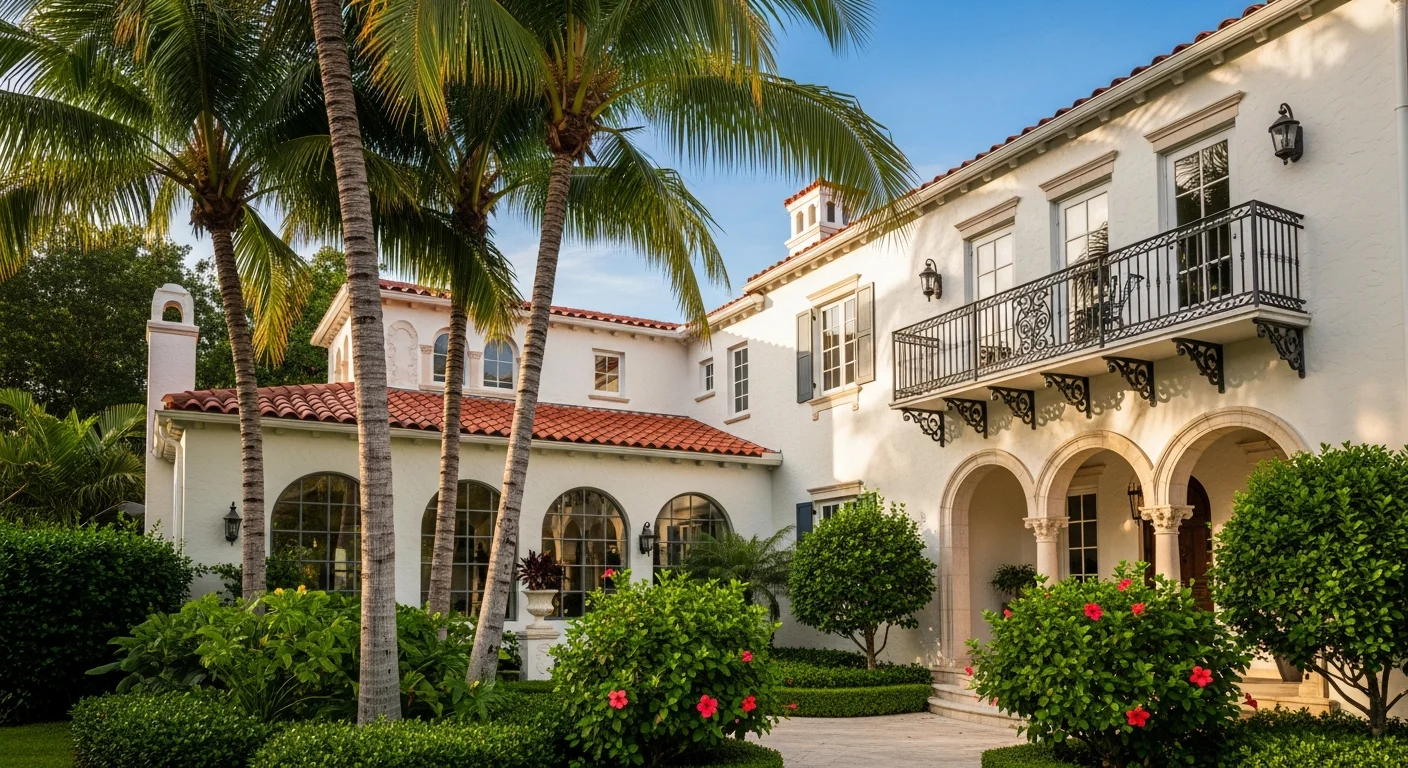
Mediterranean Revival
1920s-present
Coral Gables Coconut Grove Key Biscayne Pinecrest
Barrel tile roofing, multi-coat textured stucco in earth tones, arched openings with keystone accents, cast stone columns and balustrades, wrought iron railings, decorative tile work, and interior courtyards. Coral Gables — the "City Beautiful" — enforces its own architectural review board that requires Mediterranean Revival reconstruction to match original details precisely. Reconstruction demands sourcing period-appropriate barrel tile profiles, matching stucco textures by hand, replicating cast stone details, and restoring wrought iron elements — all while meeting HVHZ wind-resistance standards with NOA-approved products.
Reconstruction Note
Barrel tile must be mechanically fastened to HVHZ standards per TAS 103/104. Coral Gables Board of Architects review may be required for exterior reconstruction. Cast stone replacement pieces must match original profiles and coral rock finishes.
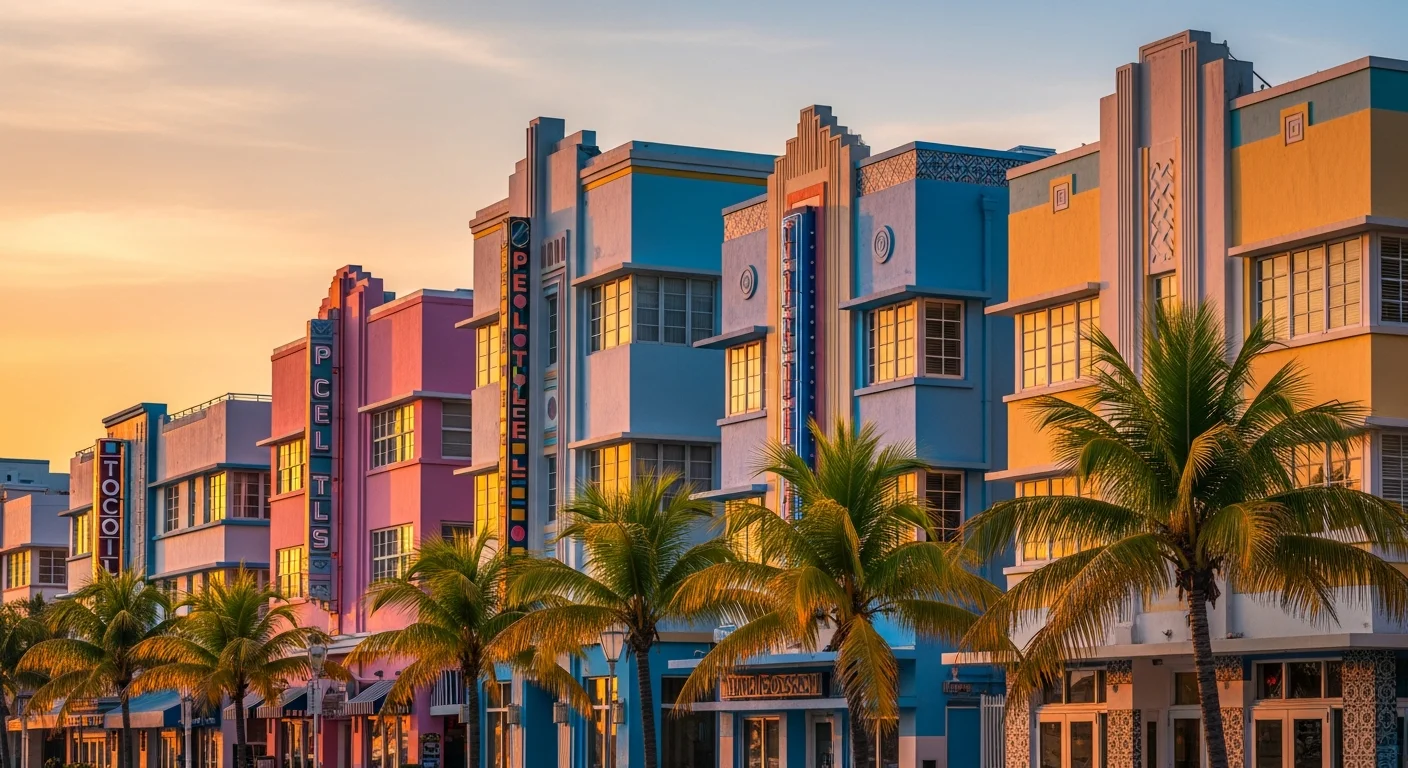
Art Deco / Miami Modern (MiMo)
1920s-1950s
Miami Beach South Beach North Beach Surfside
Miami Beach's Art Deco Historic District — the largest collection of Art Deco architecture in the world — presents unique reconstruction challenges. Decorative friezes, eyebrow window shades, porthole windows, stepped rooflines, terrazzo floors with geometric patterns, neon signage, and pastel stucco finishes all require period-accurate restoration. MiMo (Miami Modern) buildings from the 1950s add distinctive features: cheese-hole walls, angled columns, folded-plate rooflines, and tropical motifs. Historic preservation requirements in the Miami Beach Historic Preservation Board's jurisdiction add another compliance layer.
Reconstruction Note
Historic preservation board approval required for exterior changes in the Art Deco Historic District. Decorative elements must be restored with period-accurate materials and techniques. Impact windows must be approved for use in historic structures — custom profiles may be required.
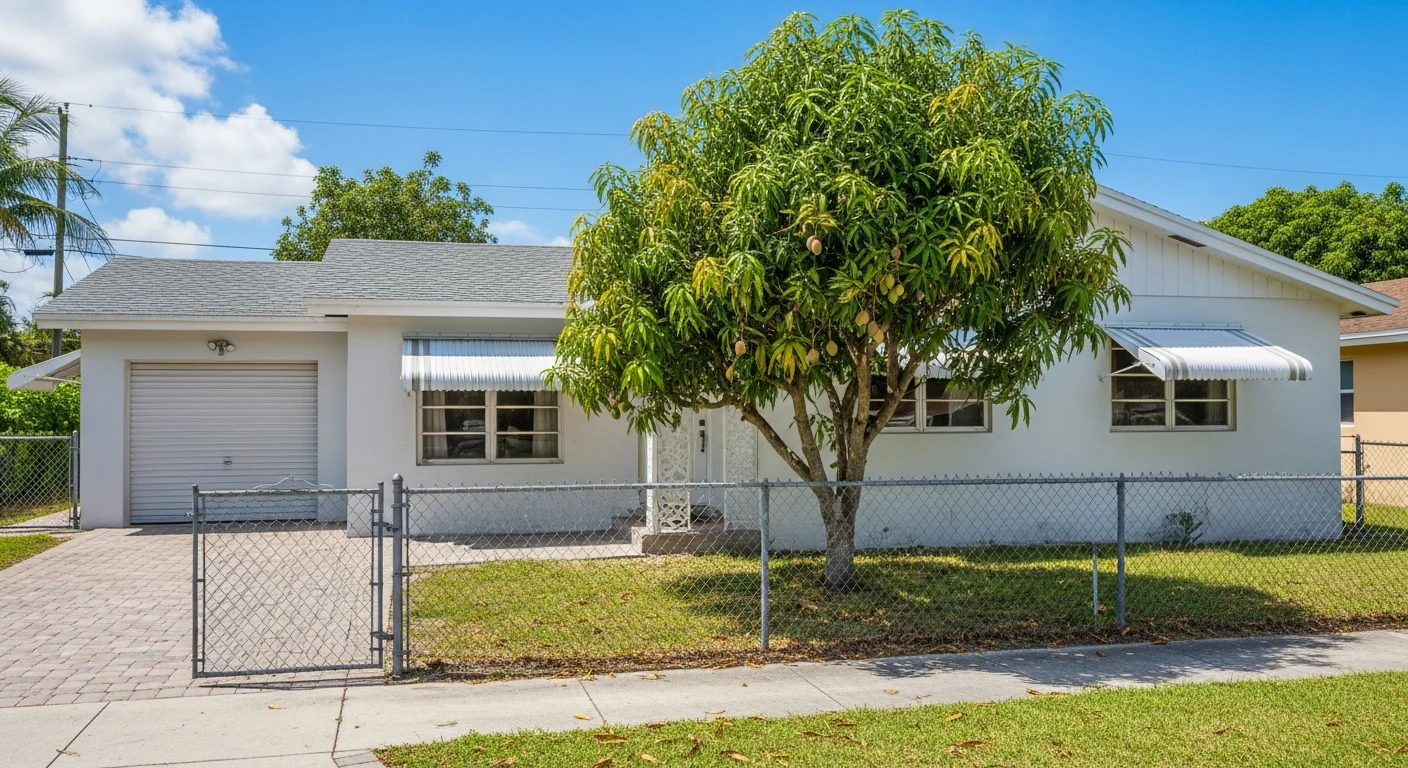
Concrete block stucco (CBS) ranch homes are the backbone of Miami's housing stock — hundreds of thousands of single-family homes built in the post-war suburban expansion. These homes feature CBS construction with flat or low-slope roofs, original terrazzo flooring, jalousie windows, carport conversions, and distinctive post-war layouts. Homes built before Hurricane Andrew (1992) were constructed under dramatically weaker building codes. During reconstruction, these pre-Andrew homes often require comprehensive HVHZ upgrades — representing the largest gap between original construction and current code requirements.
Reconstruction Note
Pre-1992 homes require the most extensive HVHZ upgrades during reconstruction. Jalousie windows must be replaced with NOA-approved impact alternatives. Terrazzo restoration requires diamond-grinding specialists. Polybutylene plumbing (1978-1995) frequently needs full replacement.
What We Rebuild
Full-Scope Reconstruction for Miami Homes & Condos
Palm Build's reconstruction covers every trade and material needed to return your Miami
property to pre-loss condition — rebuilt to current HVHZ standards with NOA-approved
products. From CBS stucco systems to Art Deco detail restoration, here's what we handle
with Miami-specific expertise.
CBS Wall & Stucco Systems
Miami's concrete block stucco (CBS) construction dominates the housing stock from Kendall to Coral Gables to Little Havana — and it behaves fundamentally differently than wood-frame construction during and after damage. Water intrusion behind CBS walls migrates through porous concrete block via capillary action, often saturating areas far from the visible damage point. In Miami's year-round humidity (averaging 74%), moisture trapped in CBS walls creates ideal mold conditions. Reconstruction demands removal of damaged stucco to clean substrate, assessment of underlying block integrity, installation of proper moisture barriers, and reapplication of multi-coat stucco systems — all to current HVHZ specifications.
Flooring & Finish Work
Miami homes span the full spectrum: terrazzo floors in Mid-Century Kendall ranches, marble and coral stone in Coral Gables estates, porcelain tile in contemporary builds, and engineered hardwood throughout Coconut Grove. After water damage, natural stone and terrazzo require professional grinding, honing, and re-sealing — not just replacement. Terrazzo restoration is a specialized trade; improper techniques destroy the original aggregate pattern permanently. For Art Deco properties in Miami Beach, period-appropriate finishes and decorative elements must be sourced and matched with historic accuracy.
Electrical & Plumbing
HVHZ electrical requirements exceed the rest of Florida: whole-house surge protection, GFCI outlets throughout all habitable areas, arc-fault breakers, and hurricane-rated electrical panels are mandatory during reconstruction. Plumbing reconstruction in Miami frequently involves replacing polybutylene piping — widespread in homes built between 1978 and 1995 — with modern CPVC or PEX systems. All electrical products must carry Miami-Dade NOA approval. Salt air corrosion in coastal neighborhoods (Miami Beach, Key Biscayne, Coconut Grove waterfront) accelerates deterioration of metal components.
Kitchen & Bathroom Rebuilds
Miami kitchen and bathroom reconstruction demands coordination across all trades — plumbing, electrical, cabinetry, stone fabrication, tile, painting, and fixture installation. In waterfront homes along Biscayne Bay, Key Biscayne, and Miami Beach, salt air corrosion affects fixtures and hardware that must be specified in marine-grade materials during the rebuild. Complete gut-outs require HVHZ-compliant moisture barriers, properly rated exhaust systems, and updated plumbing that meets current Miami-Dade County code. High-rise condo kitchens and bathrooms involve additional coordination with building management for water shutoffs, elevator access, and noise restrictions.
Roofing & Exterior
HVHZ roofing standards are the most demanding in the nation — and Miami-Dade is where they were born. Barrel tile on Coral Gables Mediterranean Revival homes must be installed with mortar-set or mechanical attachment systems rated for HVHZ wind speeds — up to 185 mph design pressure. Flat roofs on contemporary builds require HVHZ-rated membrane systems with enhanced edge securement. All impact windows and doors must carry Miami-Dade NOA approval and pass TAS 201/202/203 missile impact testing. Stucco exterior reconstruction requires proper lath, three-coat application, and texture matching — with HVHZ-rated wall assemblies behind the finish.
Architectural Detail Matching
Miami's extraordinary architectural diversity demands reconstruction expertise across multiple styles. Mediterranean Revival in Coral Gables features barrel tile, cast stone, arched openings, and courtyard layouts. Art Deco in Miami Beach features decorative friezes, eyebrow windows, porthole windows, and pastel stucco. CBS ranch homes in Kendall and Westchester feature terrazzo, jalousie windows, and distinctive post-war layouts. Contemporary builds in Brickell and the Design District feature impact glass curtain walls and minimalist detailing. We match materials, proportions, and architectural vocabulary specific to each style.
Reconstruction Timeline
The Miami Reconstruction Process
From scope development through final Miami-Dade County inspection, here's how Palm Build
manages the reconstruction phase of your Miami restoration project — including HVHZ code
compliance, NOA product verification, and specialty material coordination.
01
Scope Assessment & Estimating
Days 1-5
We walk through the property with you and your insurance adjuster to develop a comprehensive reconstruction scope. Every damaged item is documented, measured, and priced using Xactimate — the industry-standard estimating software insurance carriers use. For Miami's CBS homes, we include line items for HVHZ-required upgrades (NOA-approved impact windows, hurricane straps, TAS-tested roofing systems), and architectural detail matching for Mediterranean Revival, Art Deco, or Contemporary styles. For condo units in Brickell and Miami Beach high-rises, we coordinate scope with building management and the HOA.
02
Permit Acquisition & NOA Verification
Days 5-15
Miami-Dade Building Department permits are submitted for all structural, electrical, mechanical, and plumbing work. HVHZ compliance is verified for every element — all products must carry a valid Miami-Dade NOA (Notice of Acceptance). Impact windows must pass TAS 201/202/203 testing. Roofing must pass TAS 103/104. Florida's 50% substantial improvement rule is evaluated: if reconstruction costs exceed 50% of the home's pre-damage market value, the entire structure must meet current code including flood elevation in FEMA zones. With Miami's $570K median home value, this threshold is frequently triggered.
03
Demolition & Material Procurement
Days 10-20
Damaged materials are removed to clean substrate. During demolition, we identify hidden conditions: mold behind CBS walls (common in Miami humidity), corroded electrical wiring, polybutylene plumbing in homes built between 1978 and 1995, and outdated structural connections. NOA-approved impact windows are ordered immediately — lead times run 6-10 weeks for custom sizes. Specialty materials (barrel tile for Coral Gables estates, Art Deco decorative elements for Miami Beach) are sourced from manufacturers with proper Miami-Dade product approvals. Insurance supplements are filed for hidden damage discovered during demolition.
04
Structural & Rough-In Work
Weeks 3-8
Framing, electrical rough-in, plumbing rough-in, HVAC modifications, and structural repairs are completed and inspected before finishes are installed. This is where HVHZ upgrades happen: hurricane straps at every roof-to-wall and wall-to-foundation connection, NOA-approved impact window and door installation, upgraded electrical panels with whole-house surge protection, GFCI protection throughout, arc-fault breakers, and enhanced wind-resistance detailing. Each trade is inspected separately by Miami-Dade County inspectors. For condo units, fire-rated assemblies between units are verified.
05
Finish Work & Specialty Installation
Weeks 6-14
Stucco application and texturing to match existing architectural style. Flooring installation — including terrazzo restoration for Mid-Century homes and marble work for Coral Gables estates. Cabinet and countertop installation. Barrel tile roofing with HVHZ-rated attachment per TAS 103/104. Custom millwork and trim. Painting including specialty finishes. For Miami's diverse architectural stock — Mediterranean Revival in Coral Gables, Art Deco in Miami Beach, CBS ranch homes in Kendall — this phase involves coordinating style-specific subcontractors to achieve the finish quality each home's architecture demands.
06
Final Inspections & Walkthrough
Project Completion
Final electrical, plumbing, mechanical, and building inspections by Miami-Dade Building Department. HVHZ compliance is verified for all hurricane-hardening elements — every NOA is confirmed, every structural connection is inspected, every impact-rated product is documented. We schedule inspections proactively and address any corrections immediately. The final walkthrough with the homeowner confirms every item in the scope has been completed to satisfaction. A completion certificate and all HVHZ compliance documentation are provided to your insurance carrier for final payment release.
HVHZ Code Compliance
Code Compliance During Miami Reconstruction
Miami-Dade County is the epicenter of the High Velocity Hurricane Zone — the most
demanding construction code jurisdiction in the United States. Born from the devastation
of Hurricane Andrew in 1992, HVHZ standards exceed the rest of Florida's already-strict
Building Code. During reconstruction, every structural, electrical, and mechanical
element must meet current HVHZ requirements — not the code the home was originally built
under. Products must carry a Notice of Acceptance (NOA) from Miami-Dade County, and
post-Surfside milestone inspections now apply to condos and co-ops over 3 stories.
HVHZ Upgrade Requirements
Impact-rated windows and doors with Miami-Dade NOA approval (TAS 201/202/203 tested)
Typically required for: Pre-2002 homes
Hurricane straps at every roof-to-wall and wall-to-foundation connection
Typically required for: Pre-2002 homes
Wind-resistant roof covering tested to HVHZ wind speeds (TAS 103/104, up to 185 mph)
Typically required for: Pre-2007 homes
Whole-house surge protection and upgraded electrical panel
Typically required for: Pre-2008 homes
GFCI outlets in all habitable areas (HVHZ exceeds NEC minimums)
Typically required for: Pre-2014 homes
Arc-fault circuit interrupter (AFCI) breakers for all living spaces
Typically required for: Pre-2008 homes
Insulation upgrades to current Florida Energy Code R-values
Typically required for: Pre-2012 homes
Flood elevation compliance in FEMA SFHA zones (if 50% substantial improvement threshold exceeded)
Typically required for: All ages in flood zones
What Requires Permits vs. What Doesn't
Work ItemPermit Required
Structural wall removal or modificationYes
Electrical panel upgrade or rewiringYes
Plumbing rerouting or pipe replacementYes
Impact window and door installation (NOA required)Yes
Roof replacement or repairYes
HVAC system replacementYes
Interior painting (no structural changes)No
Cabinet replacement (same footprint)No
Flooring replacement (no subfloor work)No
Fixture replacement (same location)No
Post-Andrew Code Legacy
Hurricane Andrew (1992) destroyed over 25,000 homes in Miami-Dade County and
damaged 100,000+ more. The resulting code overhaul created the HVHZ — the
strictest building code in the nation. Homes built before 1992 were constructed
under dramatically weaker standards. During reconstruction after water or fire
damage, these pre-Andrew homes must be brought up to current HVHZ code,
potentially adding 15-30% to reconstruction costs. Ordinance or law coverage on
your insurance policy is essential to cover these mandatory upgrades.
Post-Surfside Milestone Inspections
Following the Champlain Towers South collapse in nearby Surfside (2021), Florida
enacted SB 4-D requiring milestone inspections for condos and co-ops over 3
stories at 25 years (within 3 miles of the coast) and 30 years for all others.
Miami-Dade's massive condo stock — Brickell, Downtown, Miami Beach, Aventura — is
heavily affected. During reconstruction of condo units, structural integrity of
the building envelope, balconies, and common elements may need to be verified as
part of the milestone inspection timeline.
Miami Condo Expertise
High-Rise Condo Reconstruction in Miami
Miami's skyline is defined by high-rise condos — from Brickell and Downtown to Miami
Beach, Aventura, and Sunny Isles. Reconstructing a condo unit after water damage, fire,
or hurricane impact involves layers of coordination that single-family home projects
don't require: HOA approvals, building management logistics, common element scope
separation, post-Surfside milestone compliance, and fire-code rated assemblies between
units.
Condo-Specific Reconstruction Challenges
HOA board approval required before reconstruction work can begin on individual units
Building management must coordinate elevator reservations, loading dock access, and material staging
Noise restrictions typically limit work hours to 9 AM - 5 PM weekdays in most Miami high-rises
Fire-rated wall and ceiling assemblies between units must be maintained or restored during reconstruction
Common element damage (plumbing risers, structural columns, balconies) involves the building master policy
Post-Surfside milestone inspections may overlap with or be triggered by reconstruction work
How Palm Build Handles Condo Reconstruction
HOA & Management Coordination
We interface directly with your HOA board and building management from day one. Required documentation — insurance certificates, contractor licenses, Miami-Dade Building Department permits — is submitted before work begins. We attend board meetings when needed to present reconstruction scope and timeline. For Brickell and Downtown high-rises with strict rules, we ensure every requirement is met before our first day on-site.
Scope Separation: Unit vs. Common Elements
Condo reconstruction requires clear separation between unit owner responsibility (interior finishes, appliances, personal property) and HOA/building responsibility (structural elements, plumbing risers, electrical mains, balcony structural components). When damage crosses this line — as it frequently does with water damage from above-unit leaks or fire spreading through common walls — Palm Build coordinates claims between your HO-6 policy and the building's master policy.
Building-Specific Code Requirements
High-rise condos in Miami must meet fire code requirements beyond standard residential construction: fire-rated assemblies between units, sprinkler system maintenance, emergency egress compliance, and elevator access requirements. During reconstruction, these systems must be maintained or restored. Post-Surfside SB 4-D milestone inspections add another compliance layer for buildings over 3 stories at 25 years (coastal) or 30 years.
Logistics & Material Handling
Reconstructing a 30th-floor condo in Brickell is fundamentally different from reconstructing a single-family home in Kendall. Every material — drywall, tile, cabinetry, impact glass — must be transported via service elevator on a reserved schedule. Debris removal follows the same constrained path. Work hours, noise levels, and dust control are governed by building rules. Palm Build manages these logistics daily, coordinating with building engineering to keep your project on schedule within the building's operational constraints.
Post-Surfside Compliance
Following the Champlain Towers South collapse in nearby Surfside (2021), Florida enacted
milestone inspection requirements for condos and co-ops over 3 stories. During condo
reconstruction, our team verifies that all work aligns with the building's milestone
inspection timeline and structural integrity requirements. When reconstruction involves
common elements — balcony repairs, structural column work, building envelope restoration
— we coordinate with the building's structural engineer to ensure compliance with both
HVHZ code and post-Surfside SB 4-D requirements.
Understanding the Process
Mitigation vs. Reconstruction: Why One Company Should Handle Both
Property restoration has two distinct phases — and the gap between them is where Miami
projects go sideways. In Miami-Dade's year-round heat and humidity (averaging 74%
relative humidity annually), mold colonizes exposed CBS walls and framing within 24-48
hours. Every day of delay between mitigation completion and reconstruction start expands
the scope — and the cost.
Phase 1: Mitigation
Mitigation stops the active damage. For water damage, this means extraction and
structural drying — critical in Miami where ambient humidity regularly exceeds 85%
during the May-October wet season and tropical systems can deliver 10+ inches of rain in
hours. For fire, it's board-up, soot stabilization, and water removal from fire
suppression. For hurricanes, it's emergency tarping, debris clearing, and securing the
building envelope against further moisture intrusion. Mitigation begins within hours and
typically takes 3-7 days.
Many restoration companies — especially national franchises — only handle this phase.
When mitigation is complete, they hand your project to a separate general contractor. In
Miami's market, this handoff creates a gap of weeks where nothing happens while the new
contractor navigates HVHZ requirements, CBS construction, NOA product approvals, and
Miami-Dade Building Department permitting from scratch.
Phase 2: Reconstruction
Reconstruction rebuilds what was damaged. This is the general contracting phase: CBS
wall repair, stucco restoration, drywall replacement, flooring installation, cabinetry,
countertops, painting, trim, electrical, plumbing, roofing, and finish work. In Miami,
reconstruction requires permits from the Miami-Dade Building Department, HVHZ code
compliance with NOA-approved products (impact windows, hurricane straps, TAS-tested
roofing), inspections at multiple stages, and coordination with your insurance adjuster.
For condo units, add HOA board approval and building management coordination.
When the same company handles both mitigation and reconstruction, the transition is
seamless. Our reconstruction team reviews the scope during mitigation — not after it's
complete. Permits are submitted while drying is still underway. NOA-approved impact
windows are ordered before the last dehumidifier leaves. For Miami homes requiring
custom-sized impact products (6-10 week lead times), this early ordering can save
months.
Palm Build: One Team, Both Phases
Palm Build handles mitigation and reconstruction as a single coordinated project. No
handoffs to separate contractors, no gaps in your timeline, no duplicated documentation,
no conflicting estimates. One project manager, one insurance contact, one team from
emergency response through final Miami-Dade County inspection — critical for Miami
properties where HVHZ code compliance, NOA product requirements, and CBS construction
complexity demand continuity.
Miami reconstruction costs reflect the city's HVHZ requirements, CBS construction
complexity, and extraordinary architectural diversity. Current residential
reconstruction costs in Miami average $225-$400 per square foot — driven by NOA-approved
materials, specialty CBS labor, post-Andrew code compliance requirements, and high-rise
condo logistics. These ranges reflect actual Miami project costs for insurance-funded
restoration work.
Minor Reconstruction
Stucco repair, flooring, paint in 1-2 rooms
$18,000 - $45,000
Includes NOA-approved HVHZ-rated materials where applicable
Moderate Reconstruction
Kitchen/bath rebuild, multiple rooms, CBS wall repair
$45,000 - $120,000
Impact windows, hurricane straps, post-Andrew code upgrades included
Major Reconstruction
Structural rebuild, full HVHZ hardening, multi-system
$120,000 - $350,000+
Full HVHZ compliance, NOA verification, architectural detail matching
Full Reconstruction
Complete rebuild, condo gut renovation, total restoration
$350,000+
Full code upgrade, high-rise condo coordination, premium finishes
Miami Cost Premiums
HVHZ code compliance premium+15-30% vs non-HVHZ areas
NOA-approved impact windows (per opening)$900-$1,800 vs $300-$600 standard
CBS specialist labor+10-20% vs wood-frame markets
Coral Gables Mediterranean detail matching+20-35% for barrel tile, cast stone
Art Deco decorative element restoration+25-40% for period-accurate work
High-rise condo reconstruction coordination+10-15% for logistics & HOA
Insurance Coverage
What Insurance Covers for Miami Reconstruction
When reconstruction follows a covered loss (fire, sudden water damage, wind, etc.), your
homeowners or condo policy covers the cost of returning your property to pre-loss
condition. In Miami's HVHZ, the ordinance-and-law endorsement is the single most
important add-on to your policy — it covers the mandatory code upgrades that bring
pre-Andrew homes up to current HVHZ standards during reconstruction. Florida law (Fla.
Stat. 627.70132) requires claims within 1 year of loss.
Structural repair and rebuild to pre-loss condition (CBS walls, stucco, framing)
Flooring, cabinetry, countertops, and finish materials matching pre-loss quality
Electrical, plumbing, and HVAC repair or replacement
Impact window/door and exterior stucco restoration to HVHZ standards (NOA-approved products)
Miami-Dade Building Department permits and inspection fees
HVHZ code upgrades required during reconstruction (with ordinance-and-law endorsement)
Temporary living expenses during reconstruction (ALE)
Hidden damage discovered during demolition (mold behind CBS walls, polybutylene, outdated wiring)
Debris removal and disposal of damaged materials
Critical Policy Endorsements for Miami
Ordinance & Law Coverage
Covers the cost of HVHZ-required upgrades that exceed pre-loss construction standards. In Miami, the gap between pre-Andrew (pre-1992) construction and current HVHZ code is enormous — NOA-approved impact windows, hurricane straps, enhanced electrical systems, TAS-tested roofing. Post-Andrew code upgrades can add 15-30% to reconstruction costs. Without this endorsement, every mandatory code upgrade comes out of pocket.
Replacement Cost Value (RCV)
Pays to replace damaged items with new items of like kind and quality — critical for Miami homes with specialty materials like coral stone, terrazzo, and custom CBS stucco work. ACV (Actual Cash Value) depreciates materials, leaving you with a fraction of replacement cost for pre-Andrew CBS construction. With Miami's $570K median home value, the difference between RCV and ACV can be six figures.
Additional Living Expense (ALE)
Covers temporary housing during reconstruction. Miami's rental market averages $2,800-$5,000/month for comparable housing depending on neighborhood. Major reconstruction can take 12-24 weeks — longer for condo units requiring HOA board approval and building management coordination. Ensure your ALE limit covers your expected timeline.
Palm Build Manages the Entire Florida Claims Process
Florida's insurance market is in crisis — carrier exits, skyrocketing premiums, and AOB
reform have created a complex claims landscape. Our reconstruction estimates are written
in Xactimate — the same software your carrier uses. We coordinate directly with your
adjuster throughout reconstruction, handling supplements for hidden damage discovered
during demolition (mold behind CBS walls, polybutylene piping, outdated electrical) and
HVHZ-required code upgrades. For condo units, we also coordinate with the building's
master policy carrier when common elements are involved.
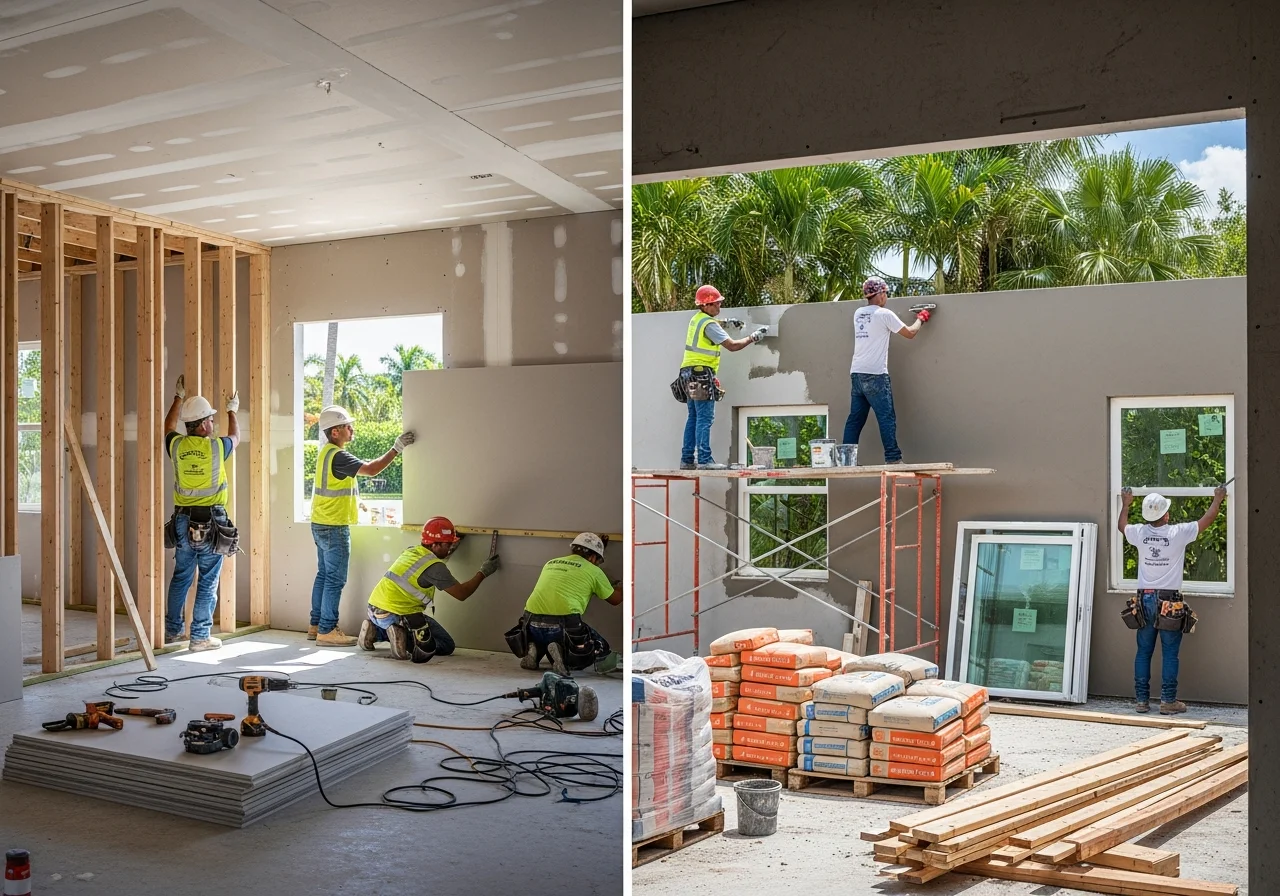
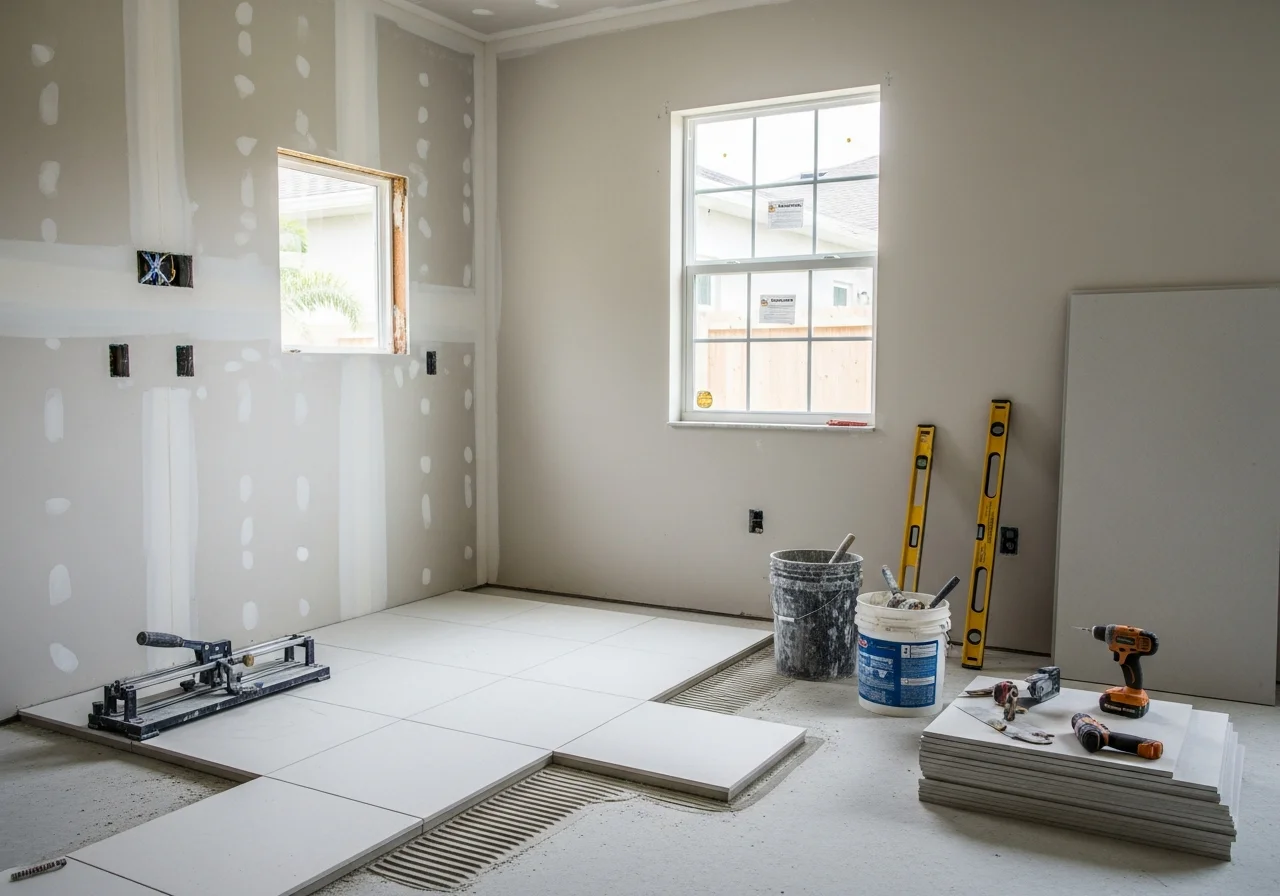
CBS home reconstruction in progress with HVHZ structural upgrades and moisture barriers
New drywall installation following water damage mitigation — ready for finish work
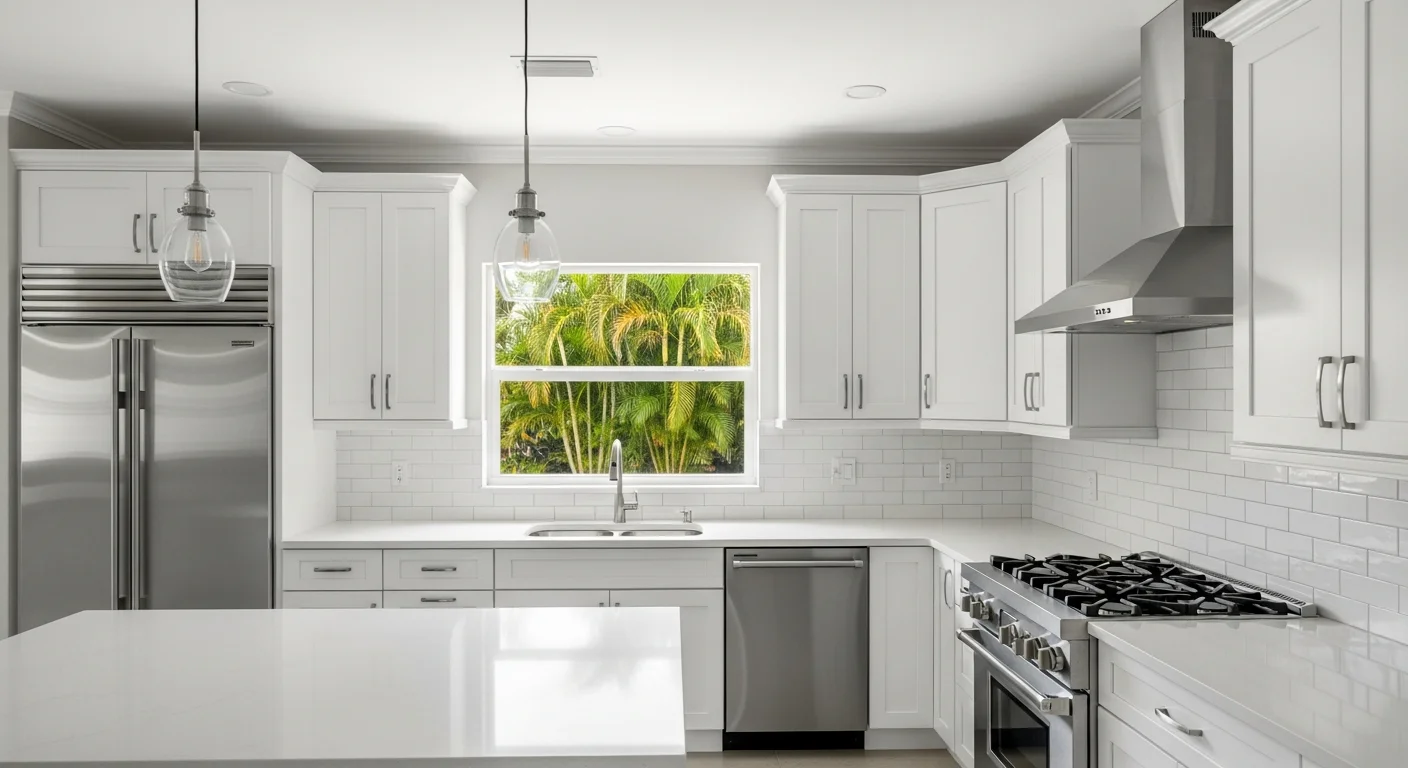
Completed kitchen reconstruction after fire damage: premium finishes matching pre-loss quality
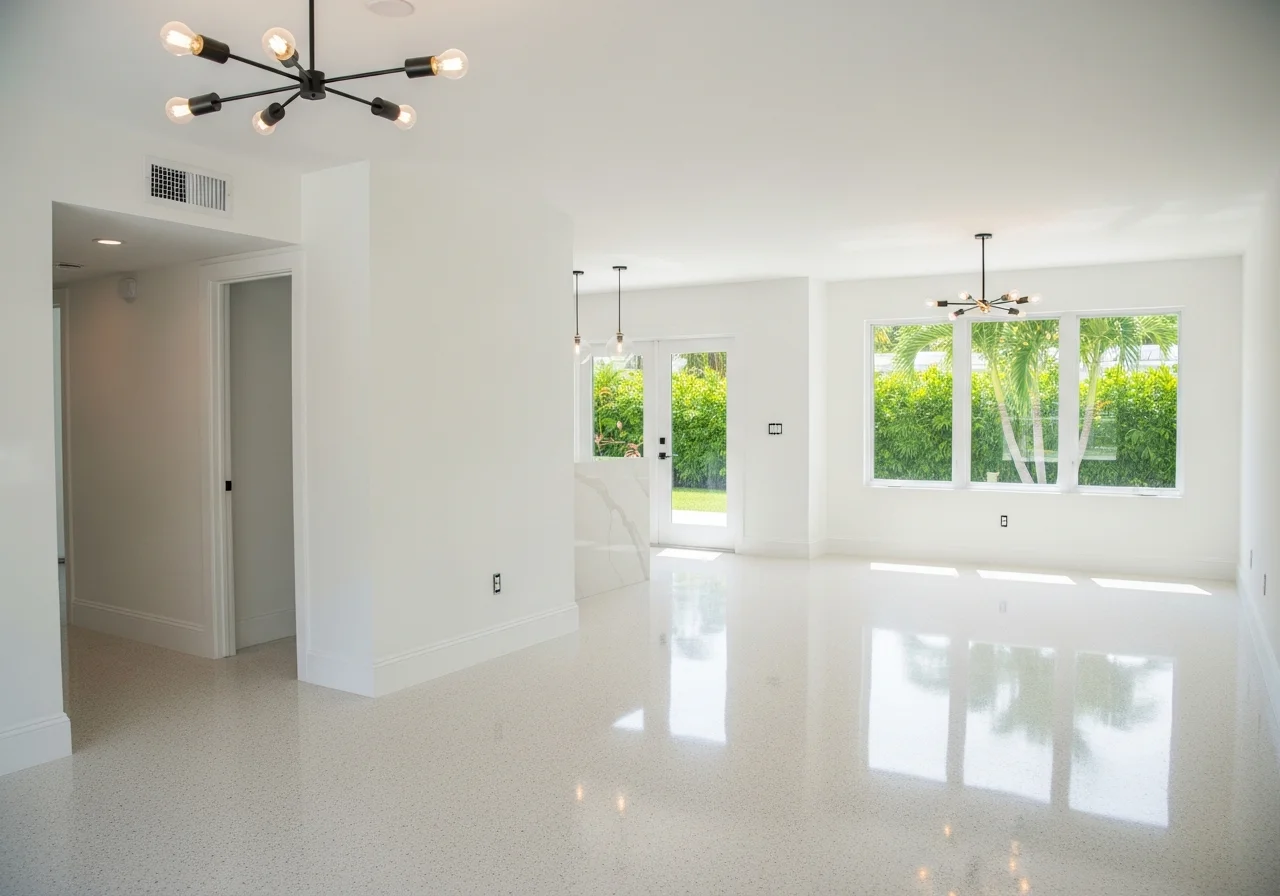
Fully restored interior: every element meets HVHZ standards while exceeding pre-loss quality
The Palm Build Difference
Why Miami Homeowners Choose Palm Build for Reconstruction
Single-Source: Mitigation Through Rebuild
No handoffs between companies. Our mitigation and reconstruction teams work as one unit. Reconstruction planning begins during the drying phase — not after it ends. In Miami's subtropical climate where year-round humidity rarely dips below 70% and mold colonizes exposed CBS walls within 24-48 hours, this overlap isn't just convenient — it prevents secondary damage that expands the scope and the cost.
HVHZ Code Experts — The Strictest in the Nation
Miami-Dade County is ground zero for the High Velocity Hurricane Zone — the most demanding construction code jurisdiction in the United States. Our team understands HVHZ requirements that out-of-area contractors routinely miss: NOA-approved impact windows and doors tested to TAS 201/202/203, hurricane straps at every structural connection, roofing systems tested to TAS 103/104, and the Miami-Dade Building Department inspection protocol that enforces compliance at every stage.
CBS & High-Rise Condo Expertise
Miami's housing stock is dominated by two construction types: CBS (concrete block stucco) single-family homes and high-rise concrete condos. We handle both. For CBS homes in Kendall, Coral Gables, and Little Havana, we match existing block construction and multi-coat stucco systems. For condo reconstruction in Brickell, Downtown, and Miami Beach, we coordinate with building management, HOA boards, and meet fire-rated assembly requirements for multi-unit buildings.
Miami-Dade Building Department Experience
We navigate the Miami-Dade Building Department daily. Permit applications, plan reviews, NOA product approvals, HVHZ code reviews, milestone inspections — we handle every aspect of the regulatory process. Miami-Dade's permitting requirements are more stringent than any other Florida county. Our established relationships with inspectors mean fewer delays, fewer correction notices, and faster project completion.
Deerfield Beach Operations Hub
Our South Florida Operations Hub at 786 S Military Trail in Deerfield Beach serves all of Miami-Dade County. When you need emergency mitigation, we respond rapidly. During reconstruction, our project managers visit your site daily — not weekly. For a $570K median home value market where quality and attention to detail matter, proximity means tighter oversight and immediate problem-solving.
Insurance Coordination & Ordinance or Law Claims
Our Xactimate-based estimates match the format insurance carriers use — eliminating format disputes and reducing approval timelines. We coordinate directly with your adjuster on initial scope, file supplements for hidden damage discovered during demolition, and document all HVHZ code upgrades for ordinance-and-law coverage claims. In Miami, where post-Andrew code upgrades (1992+) can add 15-30% to reconstruction costs, ordinance or law coverage is critical — and we ensure every qualifying upgrade is properly documented and claimed.
Common Questions
Miami Reconstruction FAQ
What HVHZ permits are required for reconstruction in Miami?
Miami-Dade County Building Department requires permits for all structural, electrical, mechanical, and plumbing work during reconstruction. HVHZ projects require additional documentation: product NOAs (Notices of Acceptance) for every exterior component — windows, doors, roofing, and impact-protection systems — plus engineering calculations for wind-load resistance. The permit process includes plan review, multiple inspections during construction, and a final inspection before certificate of completion. Palm Build handles all permit applications, NOA documentation, required inspections, and code compliance coordination with Miami-Dade.
What code upgrades are triggered when reconstructing a Miami home?
Florida law requires that reconstruction meet current building code standards, not the code the home was originally built under. In Miami's HVHZ, this means impact-rated windows and doors tested to TAS 201/202/203 standards, roofing systems validated under TAS 103/104, hurricane straps at every roof-to-wall connection, reinforced CBS wall systems with continuous tie-beam construction, and whole-house surge protection. For homes built before 2002 — which is most of Miami's housing stock — these upgrades can add 15-25% to project costs. The gap between pre-Andrew construction standards and current HVHZ code is substantial.
How long does reconstruction take in Miami?
Minor reconstruction (stucco repair, flooring in 1-2 rooms): 2-4 weeks. Moderate reconstruction (kitchen/bath rebuild, multiple rooms, CBS wall repair): 6-12 weeks. Major reconstruction (structural rebuild, full HVHZ hardening, impact window installation): 12-24 weeks. Miami timelines are affected by HVHZ material requirements — NOA-approved impact windows typically have 6-10 week lead times — plus Miami-Dade permit processing, CBS-specialized trade availability, and the coordination required for high-rise condo projects involving building management and HOA approvals.
How does CBS concrete block construction affect reconstruction in Miami?
CBS (concrete block structure) is the dominant construction type in Miami, and reconstruction must match the existing structural system. CBS reconstruction involves cutting and removing damaged block sections, rebuilding with matching CMU (concrete masonry unit) block, installing continuous bond beams and vertical rebar per current HVHZ code, applying new stucco over repaired sections to match the existing facade texture and color, and ensuring proper moisture barriers behind the stucco system. CBS work requires specialized masons — general framing carpenters cannot perform this work. Palm Build maintains CBS-experienced crews for Miami-Dade reconstruction projects.
Does insurance cover HVHZ code upgrades during reconstruction?
Standard homeowners policies cover reconstruction to pre-loss condition only. The mandatory HVHZ code upgrades — impact windows at $800-$1,500 per opening, hurricane straps, enhanced roofing systems, reinforced connections — that exceed pre-loss specifications are covered by an ordinance-and-law endorsement on your policy. This endorsement is critical in Miami where the gap between pre-loss construction (often 1960s-1980s standards) and current HVHZ code is enormous. Without it, mandatory code upgrades come out of pocket. Palm Build's Xactimate-based estimates separate covered reconstruction from code-upgrade line items, maximizing your ordinance-and-law claim.
How does high-rise condo reconstruction work in Miami?
High-rise condo reconstruction in Brickell, Edgewater, Downtown, and Miami Beach involves layers of coordination beyond a single-family rebuild. Building management controls construction access hours, freight elevator scheduling, and contractor insurance requirements. The HOA or condo association must approve exterior modifications, and unit-owner versus master-policy insurance delineation determines claim responsibility. Vertical water migration from upper-floor failures often damages multiple units. Palm Build coordinates with building management, handles both unit-owner and master-policy claims, and complies with building-specific construction rules while maintaining HVHZ code compliance throughout.
What are NOAs and why do they matter for Miami reconstruction?
Notices of Acceptance (NOAs) are Miami-Dade County's product approval system for HVHZ construction. Every exterior building product — impact windows, entry doors, sliding glass doors, roofing materials, shutters, and exterior wall cladding — must carry a valid NOA proving it has been tested and approved for use in the High Velocity Hurricane Zone. NOAs verify products meet TAS (Testing Application Standards) protocols for impact resistance, wind pressure, and water infiltration. Using non-NOA products in Miami-Dade is a code violation that will fail inspection. Palm Build sources exclusively NOA-approved materials for all Miami reconstruction projects.
What is the 50% substantial improvement rule in Miami?
Under Florida law, if reconstruction costs exceed 50% of the home's pre-damage market value, the entire structure must be brought into full compliance with current Florida Building Code — including HVHZ requirements and flood elevation standards in FEMA Special Flood Hazard Areas. For a $570K median-value Miami home, that threshold is approximately $285K. Properties in flood zones may need to be elevated to current base flood elevation. This rule applies regardless of damage cause and can significantly increase reconstruction scope and cost. Ordinance-and-law insurance endorsements typically cover these additional requirements.
Trusted Vendors
Trusted local pros in Miami
Outside our restoration scope, these are the vetted, licensed contractors we trust
alongside our work. Personally evaluated, reference-checked, and recommended by Palm
Build.
Palm Build handles the full rebuild — from demolition through final Miami-Dade inspection — with one team, HVHZ code expertise, and insurance coordination throughout. CBS construction, NOA-approved impact products, permit management, and condo reconstruction coordination.