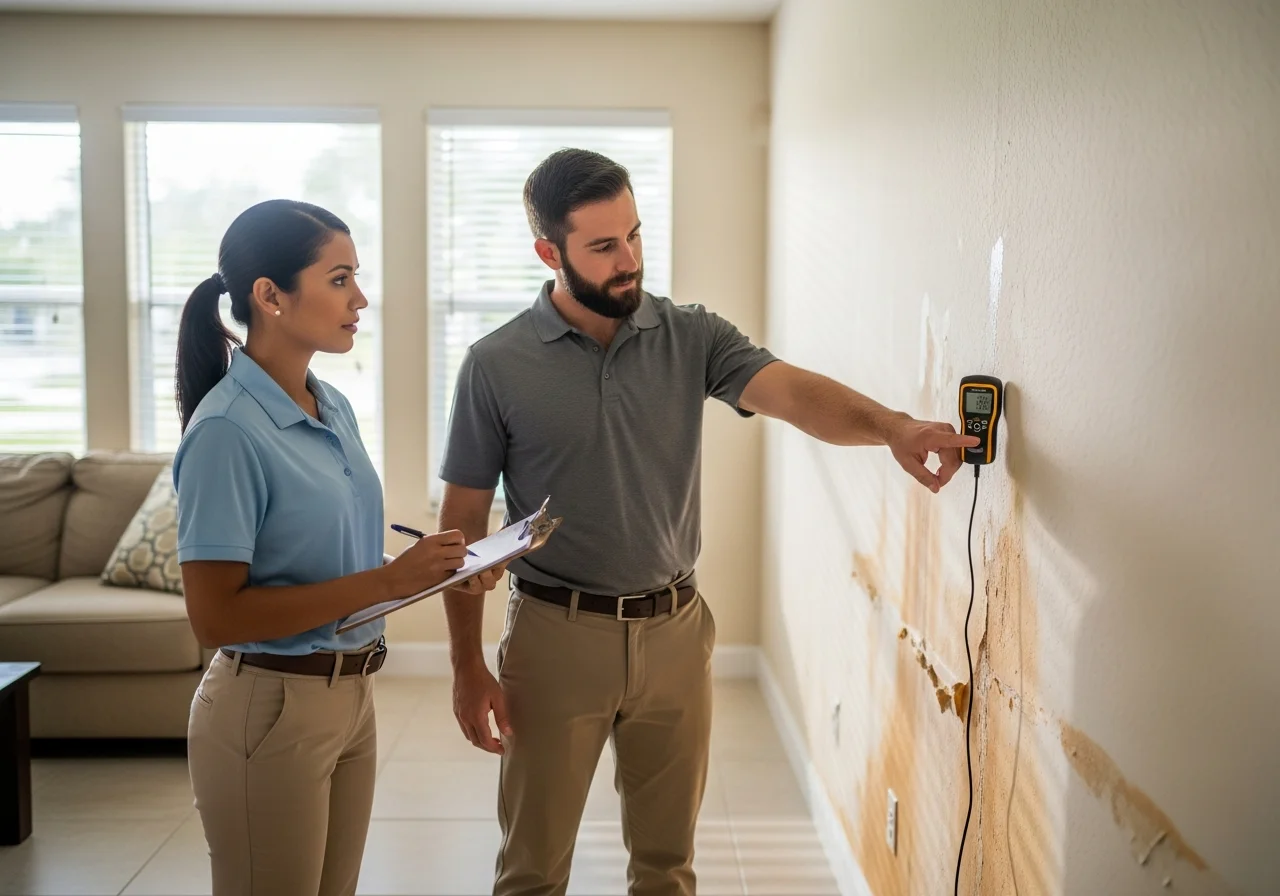
Miami-Dade homeowners pay an average of $3,572 per year for property insurance — 56% above the Florida average and more than double the national average — yet navigating a restoration claim remains one of the most frustrating experiences in homeownership. Palm Build manages the entire insurance restoration process from first notice of loss through final payment: damage documentation, adjuster coordination, supplement negotiation, and strict compliance with Florida's statutory deadlines under Fla. Stat. 627.70132. With Citizens holding 687,500+ policies statewide, AOB reform reshaping how claims work, and hurricane deductibles running $12,000-$28,000 on a typical Miami home, you need a restoration partner who knows this market cold.
Deerfield Beach — Rapid Response to Miami-Dade Under 60 min Response IICRC Certified
The Miami Insurance Landscape: High Stakes, Higher Premiums
Miami sits at the epicenter of Florida's insurance crisis. With premiums averaging
$3,572 per year — 56% above the state average — and Citizens Property Insurance now the
largest carrier in Florida with approximately 687,500 active policies, the market is
under extraordinary pressure. Hurricane deductibles of 2-5% on a median $570,000 home
mean $11,400 to $28,500 out of pocket before coverage kicks in. Standard HO-3 policies
exclude flood entirely, mold coverage is typically sublimited at $10,000, and sewer
backup requires a separate endorsement. Under Florida's AOB reform (HB 7065 / Section
627.7152), transparent billing and policyholder control are now the law — but navigating
these complexities still requires expertise. Palm Build helps Miami homeowners maximize
the coverage they've been paying for.
$3,572
Average annual premium
Miami homeowners pay 56% above the Florida state average — driven by hurricane exposure, carrier instability, and rising reinsurance costs across Miami-Dade County
687K+
Citizens active policies
Citizens Property Insurance — Florida's insurer of last resort — is the largest carrier in the state, with massive Miami-Dade exposure as private carriers exit or restrict coastal writing
2-5%
Hurricane deductible
$11,400-$28,500 out of pocket on the median $570K Miami home before wind coverage activates — a surprise for many first-time claimants
1 Year
Filing deadline
Fla. Stat. 627.70132 requires new claims within 12 months of the date of loss — supplemental claims within 18 months
AOB Reformed
HB 7065 / §627.7152
Assignment of Benefits reform requires transparent billing, eliminates one-way attorney fees, and keeps you in control of your claim as the policyholder
5,356
Condo associations
Miami-Dade has the highest condo density in Florida — HO-6 vs. master policy coordination is critical for proper claims coverage and avoiding gaps
The Claims Process
Insurance Restoration Timeline for Miami Claims
From the moment you discover damage through final claim closure — here's exactly what
happens during a Miami insurance restoration claim, including Florida-specific deadlines
that are strictly enforced.
01
Damage Discovery & Emergency Call
Hour 0
You discover property damage — a burst pipe flooding your Miami home, hurricane wind tearing through your roof, or fire destroying a room. Call Palm Build at (754) 600-3369 and your insurance carrier simultaneously. Under Florida Statute 627.70132, you must report property damage within 1 year of the date of loss. Your policy also requires immediate mitigation to prevent further damage. In Miami's subtropical climate, 24 hours of standing water creates mold conditions.
Policy requires immediate mitigation
02
Pre-Mitigation Documentation
Hours 1-4
Before any cleanup begins, Palm Build's IICRC-certified technicians document every affected area with comprehensive photography, thermal imaging, and moisture mapping. We classify damage by cause — critical in Miami where wind damage (homeowners policy), flood damage (separate NFIP or private flood policy), and water intrusion from failed building envelope must be documented separately for proper coverage determination.
03
Carrier Notification & Claim Filing
Within 24 Hours
Your insurance carrier is notified and a claim is opened. We provide initial damage documentation to establish the scope. Under Florida's AOB reform (HB 7065 / Section 627.7152), you remain the policyholder directing the claim — Palm Build works for you with transparent billing, not through an AOB assignment. We prepare the initial documentation package that accompanies your claim filing.
Fla. Stat. 627.70132 — 1 year to file new claims
04
Emergency Mitigation Begins
Days 1-3
Emergency mitigation runs parallel to documentation: water extraction with truck-mounted equipment, structural drying with dehumidifiers calibrated for Miami's 70%+ ambient humidity, board-up and tarping for wind damage, or fire debris clearing. Daily drying logs begin immediately — these data-logged moisture readings justify equipment placement and timeline to adjusters.
05
Adjuster Inspection
Days 3-14
Your carrier assigns a field adjuster. Under Florida Statute 627.70131, the insurer must begin investigation within 14 days and provide a coverage determination within 60 days. We coordinate the inspection, walk the property with the adjuster, and provide our complete documentation package including thermal imaging, moisture maps, and our Xactimate estimate using localized Miami pricing.
14-day investigation start required by FL law
06
Scope Agreement & Authorization
Days 14-30
The adjuster reviews our documentation against their own inspection and develops a scope of work. Any discrepancies are addressed through direct adjuster communication — we present our Xactimate line items alongside theirs and resolve differences with photographic and scientific evidence. For Miami homes with CBS construction, tile roofing, and impact-rated windows, proper material pricing is critical to accurate scoping.
07
Restoration Work Begins
Weeks 2-12
Once the scope is approved, full restoration begins. Throughout reconstruction, we document progress at every milestone — demolition, rough-in, Miami-Dade County inspections, specialty material installation, and finish work. This ongoing documentation supports supplement requests for hidden damage discovered during demolition and provides your carrier evidence that the approved scope is being executed correctly.
08
Supplement Filing (If Needed)
As Discovered
Approximately 65-75% of Miami restoration projects require at least one supplement for hidden damage discovered during demolition — moisture behind CBS stucco walls, mold in concealed cavities, structural damage under finished surfaces. Palm Build documents supplemental damage within 48 hours of discovery and submits with photos, moisture data, and updated Xactimate line items. Florida's 18-month supplemental claim deadline applies (Fla. Stat. 627.70132).
Final walkthrough confirms every scope item has been completed. A completion certificate is provided to your carrier along with final photos, Miami-Dade County inspection records, and a summary of all work performed. Your carrier releases final payment including recoverable depreciation holdback upon verified completion. NFIP flood claims require a separate 60-day proof of loss, which we prepare on your behalf.
60-day carrier coverage determination required
Know Your Coverage
What's Covered by Peril Type in Miami
Miami homeowners face unique coverage gaps: flood damage excluded from standard
policies, hurricane deductibles running 2-5% of dwelling value, mold capped at $10,000,
and sewer backup requiring a separate endorsement. Understanding these distinctions
before filing is the difference between full coverage and a costly surprise.
Water Damage (Sudden)
Covered
Covered
Burst pipe, appliance failure, sudden discharge — full coverage
Emergency extraction and structural drying
Resulting damage to flooring, walls, cabinets, contents
Standard HO-3 explicitly excludes all flood damage
NFIP coverage available — $250K dwelling / $100K contents max
Private flood (Wright, Neptune, Palomar) may offer higher limits
Miami's low elevation and coastal exposure make separate flood coverage essential
Mold
Limited
Limited ($10K Typical)
FL policies typically cap mold at $10,000 — remediation often costs $20K-$75K+
Mold resulting from covered sudden water event may bypass sublimit
Mold from humidity, gradual moisture, or maintenance failure — excluded
Enhanced mold endorsements available from some carriers for additional premium
Sewer Backup
Limited
Endorsement Required
Standard HO-3 does NOT cover water/sewer backup damage
Must purchase water backup endorsement separately — often $5K-$25K limits
Miami's aging infrastructure and heavy rainfall increase sewer backup risk
Citizens and some FL carriers offer endorsement; verify your policy includes it
We Work With Every Carrier
Miami Insurance Carriers We Work With
Palm Build works with every carrier writing homeowners policies in the Miami and
Miami-Dade County market. From national carriers like State Farm to Florida-domestic
insurers like Universal P&C, Slide, and Tower Hill — to Citizens Property Insurance with
its 687,500+ active policies statewide — our Xactimate-based documentation works with
any carrier's claims workflow.
Carrier
Avg Premium
Type
Notes
State Farm Florida
$3,100/yr
National
Largest national carrier still writing in FL. Competitive rates but selective underwriting in coastal Miami-Dade.
USAA
$3,400/yr
National
Military/veteran exclusive. Strong claims infrastructure. Generally faster processing than FL-domestic carriers.
Progressive/ASI
$3,600/yr
National
Growing FL presence through ASI subsidiary. Competitive pricing. Standard Xactimate documentation accepted.
Long-standing FL carrier. Familiar with CBS construction and South FL building codes. Thorough adjuster inspections.
Frontline Insurance
$4,300/yr
FL-Domestic
Active in Miami-Dade coastal zones. Xactimate-native documentation preferred. Known for detailed scope review.
Tips by Carrier Type
National Carriers
State Farm, USAA, Progressive/ASI
National carriers have established claims processes but often use out-of-state adjusters during CAT events who may not understand CBS construction, impact window requirements, or Miami-Dade County building code compliance. Xactimate documentation with localized Miami pricing prevents under-scoping.
FL-Domestic Carriers
Slide, Tower Hill, Frontline, American Integrity, Universal P&C
Florida-domestic carriers understand local construction but often have tighter claims budgets and more aggressive supplement review. Under AOB reform (HB 7065), transparent billing with detailed cause-of-loss documentation and line-item Xactimate estimates are critical for full approval on the first cycle.
Citizens Property Insurance
State insurer of last resort — 687K+ policies
Citizens has specific documentation requirements, a $700K dwelling cap, cosmetic damage exclusions for hail, and unique claim processing timelines. During depopulation events — when Citizens moves policies to private carriers like Slide or Universal P&C — active claims can transfer mid-process, requiring careful coordination with both carriers.
Common Pitfalls
Why Miami Insurance Claims Get Denied
These are the six most common reasons Miami-Dade County restoration claims are partially
or fully denied — and how Palm Build's documentation and process expertise helps prevent
each one.
Maintenance vs. Sudden Damage
Florida carriers aggressively distinguish between "sudden and accidental" damage (covered) and "gradual deterioration" or "maintenance failure" (excluded). In Miami's subtropical climate, wear on building components accelerates — AC drain lines clog faster, pipe joints corrode sooner, roof membranes degrade under UV exposure. Carriers argue the damage was pre-existing or developed gradually. Without documentation tying the loss to a specific sudden event, the claim is denied.
How Palm Build prevents this: Document the specific event that caused the damage — the date, time, and circumstances. Palm Build establishes clear causation timelines that distinguish covered sudden events from excluded maintenance issues.
Pre-Existing Conditions
Carriers in the Miami market frequently deny claims by arguing the damage existed before the loss event — especially for CBS stucco homes where moisture can hide behind walls for extended periods. If your home had a prior claim, a previous inspection noting wear, or any documented condition that predates the current loss, the carrier may attribute new damage to the old condition.
How Palm Build prevents this: Palm Build documents current damage conditions with dated thermal imaging and moisture mapping that establishes a clear baseline at the time of loss, differentiating new damage from any prior conditions.
Late Filing Past 1-Year Deadline
Florida Statute 627.70132 requires policyholders to report property damage within 1 year of the date of loss. For Miami homes with slow water intrusion where damage develops gradually behind impermeable finishes, delayed discovery is common. By the time mold appears on an interior wall, the carrier argues the loss date has passed. Supplemental claims have an 18-month deadline.
How Palm Build prevents this: Report any suspected damage immediately, even if minor. Document the date you first noticed signs. Palm Build establishes discovery timelines that support legitimate delayed-discovery claims.
Insufficient Documentation
Carriers deny or reduce claims when documentation doesn't meet their standards. A few phone photos and a handwritten estimate won't support a $50,000+ Miami claim. Adjusters need thermal imaging, moisture maps, daily drying logs, Xactimate line-item estimates, cause-of-loss classification, and progress photography. Under Florida's AOB reform, where you coordinate directly with your carrier, the quality of your contractor's documentation is even more critical.
How Palm Build prevents this: Palm Build produces six types of documentation on every project: pre-mitigation photography, thermal imaging, moisture mapping, daily drying logs, Xactimate estimates, and progress/completion photos — all formatted to carrier standards.
Wind vs. Flood Dispute During Hurricanes
During hurricane events, Miami homes frequently experience both wind damage (homeowners policy) and flood/storm surge damage (requires separate flood policy). Without cause-specific documentation, carriers attribute water intrusion to storm surge (excluded from HO-3) rather than wind-driven rain entering through damaged roofing (covered). For homes without flood insurance, this single classification decision determines whether the claim is paid or denied entirely.
How Palm Build prevents this: Palm Build documents every item of damage by its specific cause and entry point — wind, flood, or water discharge — with photographic and scientific evidence that supports proper coverage classification.
Condo HO-6 vs. Master Policy Gaps
With 5,356 condo associations in Miami-Dade County, condo owners face a unique denial risk: damage that falls between the unit owner's HO-6 policy and the association's master policy. The master policy typically covers common elements and the building structure, while the HO-6 covers interior improvements. When water damage migrates between units, both carriers may deny responsibility, leaving the unit owner with uncovered loss.
How Palm Build prevents this: Palm Build documents damage origin, migration path, and responsible structural elements to establish which policy — HO-6 or master — covers each item. We coordinate with both carriers simultaneously to prevent coverage gaps.
Documentation That Wins Claims
What Palm Build Documents for Your Miami Adjuster
Insurance claims are won or lost on documentation — especially in Florida's contentious
market where carriers scrutinize every line item. Under AOB reform (HB 7065), you
coordinate directly with your carrier, making the quality of your contractor's
documentation more critical than ever. Here are the six documentation types Palm Build
produces on every Miami restoration project.
Pre-Mitigation Photography
Complete photo and video documentation of all damage before any cleanup begins. This establishes the baseline condition your adjuster references for the entire claim. In Miami's CBS homes where water damage hides behind stucco and impermeable finishes, initial photography is supplemented with moisture mapping that proves the full extent of damage before cleanup alters the scene.
Thermal Imaging & Moisture Mapping
Infrared thermal cameras reveal moisture trapped behind CBS stucco walls, under tile and marble floors, and in ceiling cavities — damage invisible until catastrophic. Pin-type and non-invasive moisture meters quantify moisture content of every affected material. For Miami waterfront homes and high-rise condos where saltwater intrusion complicates damage patterns, thermal imaging distinguishes between fresh and saltwater-affected materials.
Daily Drying Logs
Data-logged moisture readings taken every 24 hours during drying. In Miami's subtropical environment where ambient humidity regularly exceeds 70%, proving that professional drying equipment was necessary — not natural evaporation — requires scientific documentation. Daily logs show progressive moisture reduction against IICRC dry standards, justifying equipment placement and timeline to adjusters.
Xactimate Scope & Estimate
Line-item estimates written in the same software and pricing database your insurance carrier uses. Every damaged item is measured, described, and priced per Xactimate's localized cost database for the Miami FL market — including impact-rated windows, CBS construction repairs, high-rise condo finishes, and coastal building materials that are standard in this market but often under-priced in generic estimates.
Cause-of-Loss Classification
Each item of damage is classified by its specific cause — wind, flood, fire, sudden water discharge, mold — because different causes are covered by different policies or have different sublimits. For Miami hurricane claims, this wind vs. flood classification is the most consequential decision in the entire claim. Water entering through a wind-damaged roof is wind (HO-3). Water rising from storm surge is flood (NFIP). We document entry point and causation for every item.
Progress & Completion Photography
Documentation at every major milestone — demolition revealing hidden damage, rough-in completion, Miami-Dade County inspection passage, specialty material installation, and final completion. Ongoing documentation supports supplement requests for concealed damage discovered during demolition and provides your carrier evidence that the approved scope — including Florida Building Code wind mitigation upgrades — was executed correctly.
Industry-Standard Estimating
What Is Xactimate & Why Does Your Miami Carrier Require It?
Xactimate is the estimating software used by virtually every insurance carrier in
Florida to price restoration work. When a contractor submits an estimate in a
different format — a handwritten bid, a generic spreadsheet, or competing software —
the adjuster must manually translate every line item into Xactimate for comparison. In
Miami's post-AOB reform environment where HB 7065 requires transparent billing, this
translation adds days to weeks of delay and introduces errors that reduce your payout.
Industry-standard estimating software used by virtually every insurance carrier in Florida
Contains a localized pricing database with labor and material costs specific to the Miami FL market
Uses standardized line-item codes that adjusters, carriers, and contractors all reference
Produces detailed scope-of-work documents with measurements, descriptions, and pricing per item
Updated regularly to reflect current Miami-Dade County material and labor costs
How Xactimate Gets Your Claim Approved Faster
Eliminates format-based disputes — your estimate speaks the adjuster's language from day one
Uses localized Miami FL pricing database reflecting actual South Florida labor and material costs
Includes line items for impact windows, CBS construction, high-rise condo finishes, and coastal materials at market-accurate pricing
Supplements are submitted in the same format — no conversion, no re-entry, no weeks of back-and-forth
Creates line-item transparency required under AOB reform (HB 7065 / Section 627.7152) — you see exactly what your carrier is paying for
Reduces approval timeline from weeks to days for straightforward claims in the post-AOB environment
Line-item transparency: Every item in your Miami restoration
is individually measured, described, coded, and priced. Under AOB reform (Section 627.7152),
transparent billing is not just best practice — it's the law. You can see exactly what
your carrier is paying for, and so can your adjuster. This protects both you and the carrier
and ensures fair reimbursement for every scope item.
The Palm Build Advantage
Why Miami Homeowners Choose Palm Build for Insurance Claims
Six advantages that ensure Miami homeowners get the full coverage they've been paying
for — in a market where premiums average $3,572 annually and hurricane deductibles can
exceed $28,000.
Xactimate-Native Estimating
Every estimate, supplement, and change order is written in the same software and pricing database your carrier uses. No format translation, no re-entry errors, no weeks of back-and-forth. In Miami's post-AOB reform environment where HB 7065 requires transparent billing, Xactimate-native estimating ensures line-item clarity and accelerates claim approval.
Wind vs. Flood Cause Documentation
Miami's coastal exposure means hurricane claims routinely involve both wind damage (homeowners policy) and flood/storm surge (separate NFIP policy). We classify every item of damage by its specific cause and entry point — the single most consequential classification decision in a hurricane claim. With no flood coverage on standard HO-3 policies, this determination can be worth tens of thousands of dollars.
No Out-of-Pocket Insurance Coordination
Our insurance coordination, documentation, adjuster meetings, and supplement negotiation are included in the restoration scope and paid by your carrier — not out of your pocket. Under Florida's AOB reform (Section 627.7152), we work directly for you as the policyholder with full billing transparency. Your only direct cost is your policy deductible.
Direct Adjuster Communication
We meet with your adjuster on-site, walk the property together, and provide our complete documentation package directly. In Miami's stressed insurance market — where adjusters manage heavy claim loads, especially post-hurricane — a well-organized contractor who speaks their language gets priority attention and faster approvals.
Supplement Resolution in One Cycle
Approximately 65-75% of Miami restoration projects require at least one supplement for hidden damage discovered during demolition. Our supplemental documentation includes photos, moisture data, and updated Xactimate line items submitted within 48 hours of discovery. Most Palm Build supplements resolve in one revision cycle — saving weeks compared to multi-cycle negotiations.
Every Carrier in Miami-Dade
From State Farm to Citizens ($687K+ policies) — we know each carrier's claims process, documentation preferences, supplement requirements, and typical response timelines. Whether you have a national carrier, a FL-domestic insurer like Universal P&C or American Integrity, or Citizens as your insurer of last resort, Palm Build has the carrier-specific expertise to navigate your claim efficiently.
Common Questions
Miami Insurance Claims FAQ
Answers to the most common insurance restoration questions from Miami and Miami-Dade
County homeowners — including Florida-specific deadlines, AOB reform, hurricane
deductibles, condo claims, and carrier coordination.
Does Palm Build work with my insurance company in Miami?
Yes — we work with every carrier writing policies in Miami-Dade County including Citizens Property Insurance (~687,500 policies statewide, largest FL carrier), State Farm Florida, Universal Property & Casualty, Slide Insurance, Tower Hill, Frontline Insurance, American Integrity, Progressive/ASI, USAA, and Florida Peninsula. We also coordinate with NFIP and private flood carriers like Wright Flood, Neptune, and Palomar for flood-related damage. Our Xactimate-based documentation works with any carrier's claims workflow.
What are the Florida filing deadlines for my Miami insurance claim?
Under Florida Statute 627.70132 (as amended by SB 2A), you must report property damage to your insurer within 1 year of the date of loss. Supplemental claims — for additional damage discovered after the initial filing — must be filed within 18 months. Your insurer must begin investigation within 14 days of receiving your claim and provide a coverage determination within 60 days. For NFIP flood claims, a sworn proof of loss must be submitted within 60 days. These deadlines are strictly enforced — missing them results in claim denial regardless of the damage's legitimacy.
How does Florida's AOB reform affect my Miami restoration claim?
Senate Bill 2A (effective January 2023, codified at section 627.7152) eliminated Assignment of Benefits (AOB) for property insurance policies issued or renewed after January 1, 2023. You can no longer assign your insurance benefits to a restoration company — you remain the policyholder and direct the claim throughout. Palm Build operates exclusively under this post-reform framework: we work for you, you authorize the work, and your carrier pays you directly. We use transparent billing with itemized Xactimate scopes — never abusive AOB practices. Never sign documents that attempt to assign your insurance benefits to any contractor.
What is my hurricane deductible on a Miami home?
Florida homeowners policies have a separate hurricane deductible calculated as a percentage of your dwelling coverage — typically 2% to 5%. For the median Miami home valued at $570,000, a 2% hurricane deductible is $11,400 and a 5% deductible is $28,500. This percentage-based deductible applies only to wind and hurricane claims — other perils like burst pipes or fire use your standard flat deductible (typically $1,000-$2,500). Know your hurricane deductible before storm season and factor it into your emergency fund.
Do I need separate flood insurance in Miami?
Yes — standard HO-3 homeowners policies do NOT cover flood damage from rising water, storm surge, or tidal flooding. With 490,000 Miami residents living across FEMA AE and VE flood zones, king tides flooding Shorecrest on clear days, and a water table measured in inches rather than feet, flood insurance is essential. You need either an NFIP policy or private flood coverage. During hurricanes, storm surge (flood policy) and wind-driven rain through damaged roofing (homeowners policy) often coexist — making cause-specific documentation critical. Palm Build classifies every item of damage by cause to ensure the right policy pays.
What coverage gaps catch Miami homeowners off guard?
The most common gaps in Miami-Dade: (1) No flood coverage on standard HO-3 policies — requires separate NFIP or private flood insurance. (2) Mold sublimits capped at $10,000 on most policies — Miami's humidity means mold colonizes within 24-48 hours of any water event. (3) Sewer backup requires a separate endorsement — not included by default. (4) Roof wear-and-tear exclusions — carriers deny wind claims when roof age or maintenance is disputed. (5) Ordinance-and-law coverage gaps — if your older Miami home needs code upgrades during restoration, the standard policy may not cover the difference. Palm Build documents every item to maximize coverage under your specific policy.
What is Citizens Property Insurance and how does it affect my Miami claim?
Citizens is Florida's state-created insurer of last resort, currently holding approximately 687,500 active policies — making it the largest property insurance carrier in Florida. Citizens has specific limitations: a $700,000 dwelling coverage cap, cosmetic damage exclusions for hail, and particular documentation requirements. If you're on Citizens because private carriers have exited or non-renewed your policy, Palm Build understands their claims process, coverage limitations, and documentation standards. We also help policyholders navigate depopulation events when Citizens transfers policies to private carriers mid-claim.
How does condo insurance work for restoration claims in Miami?
Miami condo owners need to understand two policies: your unit-owner HO-6 policy (covers interior finishes, personal property, and improvements) and the association's master policy (covers building structure, common elements, and shared systems). When water migrates through multiple floors — common in Brickell and Edgewater high-rises — both policies may be triggered, requiring coordinated claims. Your HO-6 deductible, the master policy's deductible, and loss-assessment coverage all interact. Palm Build coordinates between unit-owner and association carriers to ensure every dollar of damage is assigned to the correct policy.
Trusted Vendors
Trusted local pros in Miami
Outside our restoration scope, these are the vetted, licensed contractors we trust
alongside our work. Personally evaluated, reference-checked, and recommended by Palm
Build.
Need Help With an Insurance Restoration Claim in Miami?
Palm Build handles the entire insurance process — damage documentation, adjuster coordination, supplement negotiation, and Florida-specific deadline compliance — so you can focus on getting your property restored. We work with every carrier in the Miami-Dade market including Citizens, State Farm, Universal, and all NFIP flood carriers.