Miami's tropical monsoon climate sustains 73% average relative humidity — reaching 84% on summer mornings — while 5,356 condo associations, CBS stucco construction, and sealed HVAC systems running year-round create the highest mold pressure of any major U.S. city. Palm Build's DBPR-licensed South Florida team provides professional containment, remediation, and prevention with documentation your insurance carrier accepts.
Deerfield Beach — Rapid Response to Miami-Dade Under 60 min Response IICRC Certified
Miami's tropical monsoon climate, sealed high-rise condos, aging CBS stucco
construction, and slab-on-grade foundations without vapor barriers combine to produce
some of the highest baseline mold risk in the entire United States. Understanding these
drivers is essential for permanent remediation — not just surface-level cleanup.
73% Average Humidity, 84% Morning Peaks
84%
Morning peak humidity
Miami's tropical monsoon climate (Koppen Am) delivers 73% average relative humidity year-round — with morning readings regularly hitting 84% before the sun burns off overnight moisture. Unlike northern Florida cities that get seasonal relief, Miami's humidity never drops below mold-friendly thresholds. This relentless moisture pressure saturates building materials from the outside in, creating permanent colonization conditions inside walls, ceilings, and mechanical systems that no amount of air conditioning fully eliminates.
Condo HVAC: 5,356 Associations at Risk
5,356
Condo associations in Miami-Dade
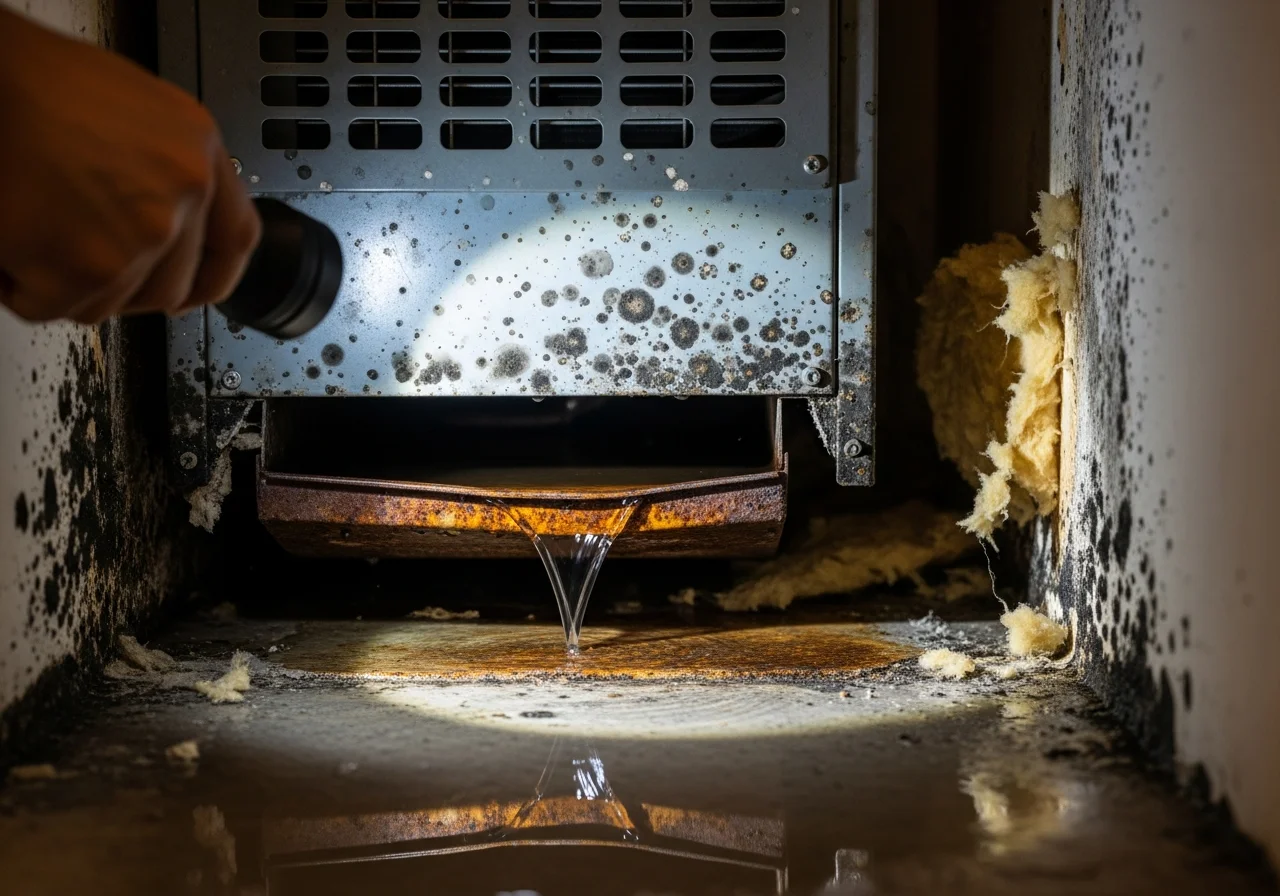
Miami-Dade County contains 5,356 condo associations — 19.4% of all condo associations in Florida. In sealed high-rise units from Brickell to Edgewater, HVAC condensation is the dominant mold vector. Central air handlers running year-round generate constant condensation on evaporator coils and drip pans. When condensate drains clog — accelerated by Miami's mineral-heavy water — moisture backs up into air handlers and feeds mold that the blower distributes to every room through the duct system.
CBS Stucco Traps Moisture in Furring Cavities
Hidden
Behind intact walls
Much of Miami's residential housing uses CBS (concrete block and stucco) construction with interior furring strips creating a cavity between the block wall and drywall. Decades of hurricane-driven rain, thermal cycling, and stucco micro-cracking push water into these cavities where it cannot dry — trapped between impermeable block and painted drywall. Mold colonizes behind intact walls for months, invisible until colonies cover entire wall sections. This hidden-cavity mold is Miami's most expensive remediation scenario.
Slab-on-Grade Without Vapor Barriers
Chronic
Slab moisture wicking
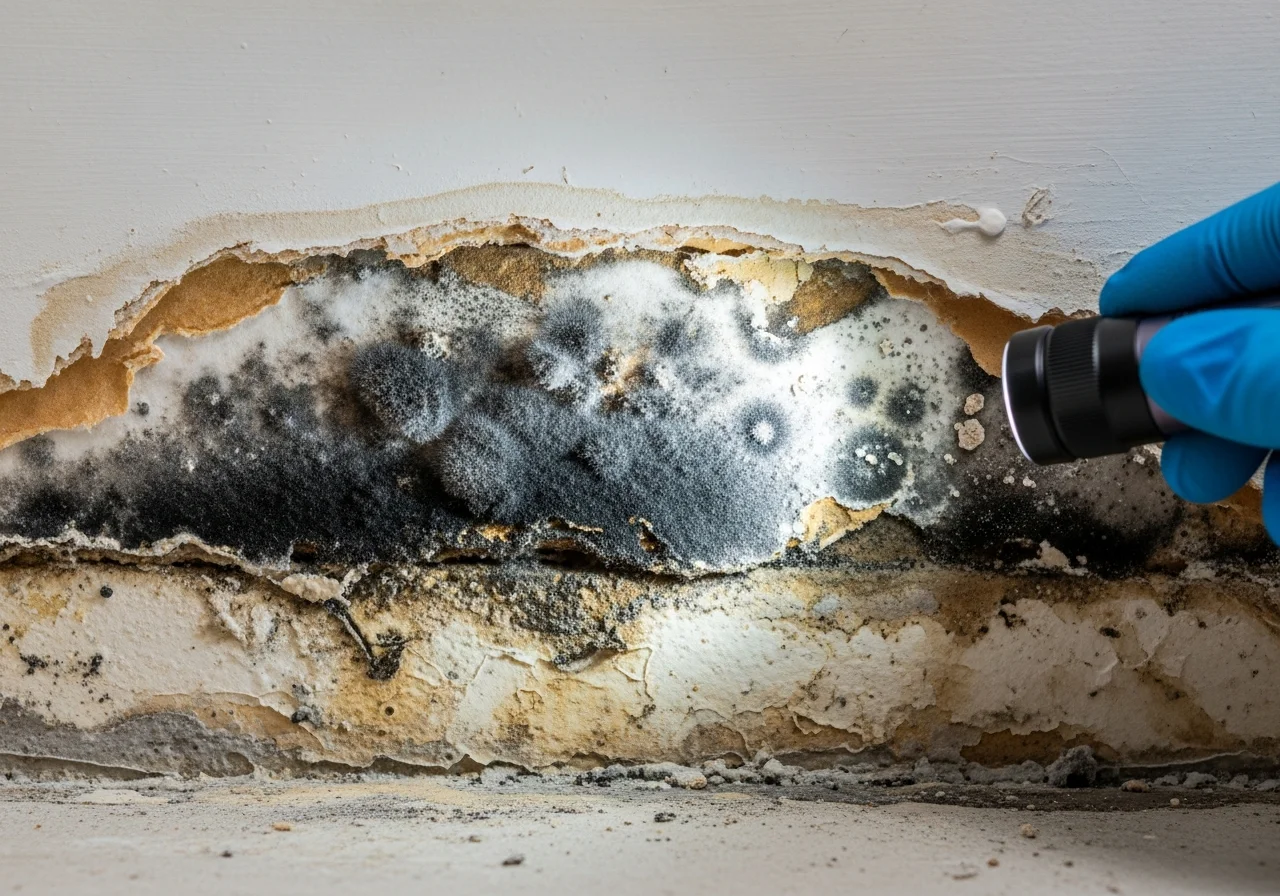
Miami sits on porous oolitic limestone with a water table often just 4-6 feet below grade. Most slab-on-grade foundations were poured without modern vapor barriers, allowing ground moisture to wick upward through the concrete via capillary action. This chronic moisture at the slab-floor junction feeds mold along baseboards, under tile and LVP flooring, and inside the bottom plates of partition walls — a persistent driver that homeowners rarely identify until a professional moisture survey reveals elevated slab readings.
Miami's 5,356 condo associations face unique mold challenges — sealed units with
year-round HVAC condensation create the highest condo mold density in Florida.
Know The Signs
Warning Signs of Mold in Miami Homes & Condos
Miami mold problems rarely announce themselves with a dramatic event. In sealed
high-rise condos and CBS stucco homes running AC year-round, mold grows silently inside
walls, HVAC systems, and beneath flooring for months — until health symptoms or visible
damage force a professional inspection.
Musty Odor From Every Vent in Your Condo
Most Reported
The most reported first sign in Miami condos. When mold colonizes inside a sealed unit's air handler, evaporator coil housing, or ductwork, every room carries a persistent musty, earthy odor whenever the AC cycles. In Brickell and Edgewater high-rises where AC runs 12 months per year, many residents become nose-blind and stop noticing — visitors or returning travelers notice immediately.
Dark Staining Behind Furniture on Exterior Walls
Advanced
In CBS stucco homes across Coral Gables, Coconut Grove, and Little Havana, exterior walls trap moisture in furring cavities between the concrete block and drywall. Furniture placed against these walls reduces airflow and creates a microclimate where mold thrives. Dark spots, discoloration, or fuzzy growth behind bookshelves, dressers, or headboards is a hallmark of Miami's CBS construction mold pattern.
Bubbling Paint at Wall Bases and Tile Edges
Structural
Paint bubbling, peeling, or efflorescence (white mineral deposits) at the base of interior walls — especially at slab-to-wall junctions — signals moisture wicking upward from Miami's high water table through slab-on-grade foundations. This is chronic in Kendall tract housing and Shorecrest homes near Biscayne Bay where king tides push the water table even higher, feeding mold behind the visible surface.
Mold Spots Around AC Supply Registers
HVAC Issue
Black, dark green, or gray spotting on ceilings or walls around AC supply registers and return grilles indicates mold inside the ductwork and air handler. In Miami high-rise condos, this is especially concerning because shared HVAC risers can allow contamination to migrate between units. If mold is visible on vent exteriors, contamination inside the system is typically far more extensive.
Allergies That Improve When You Leave Home
Health Risk
Persistent sinus congestion, throat irritation, eye watering, or allergy symptoms that improve when you leave your Miami home and worsen when you return — especially after the AC has been running — indicate airborne mold spore contamination. Children, elderly residents, and those with asthma or compromised immune systems in Miami's dense condo buildings often show symptoms first.
Persistent Window Condensation Inside the Unit
Early Warning
Interior condensation on windows — even impact-rated hurricane glass — indicates indoor humidity levels your AC system is failing to control. In Miami Beach Art Deco buildings with original single-pane windows, this is especially common. It may signal an oversized AC unit that short-cycles, a failing condensate drain, or inadequate dehumidification. Where there's chronic condensation, mold colonies are typically already established nearby.
When to Call Immediately
If you see mold covering more than 10 square feet, mold on AC registers or inside
air handlers, recurring musty odor from every vent, water staining on multiple walls
or ceilings, a neighbor reporting mold in an adjacent condo unit, or family members
with worsening respiratory symptoms — do not attempt DIY cleanup. Contact a
DBPR-licensed mold remediation professional and document everything for your insurance claim.
IICRC S520 Protocol
Our Miami Mold Remediation Process
Professional mold remediation follows a strict sequence defined by the IICRC S520
standard and Florida DBPR regulations. Here is exactly what happens when Palm Build's
licensed team arrives at your Miami home or condo.
01
Assessment & Testing
Day 1
02
Containment Setup
Day 1-2
03
HEPA Air Filtration
Continuous
04
Removal & Cleaning
Days 2-4
05
Antimicrobial Treatment
Days 4-5
06
Clearance Verification
Day 5-6
01
Assessment & Testing
Day 1
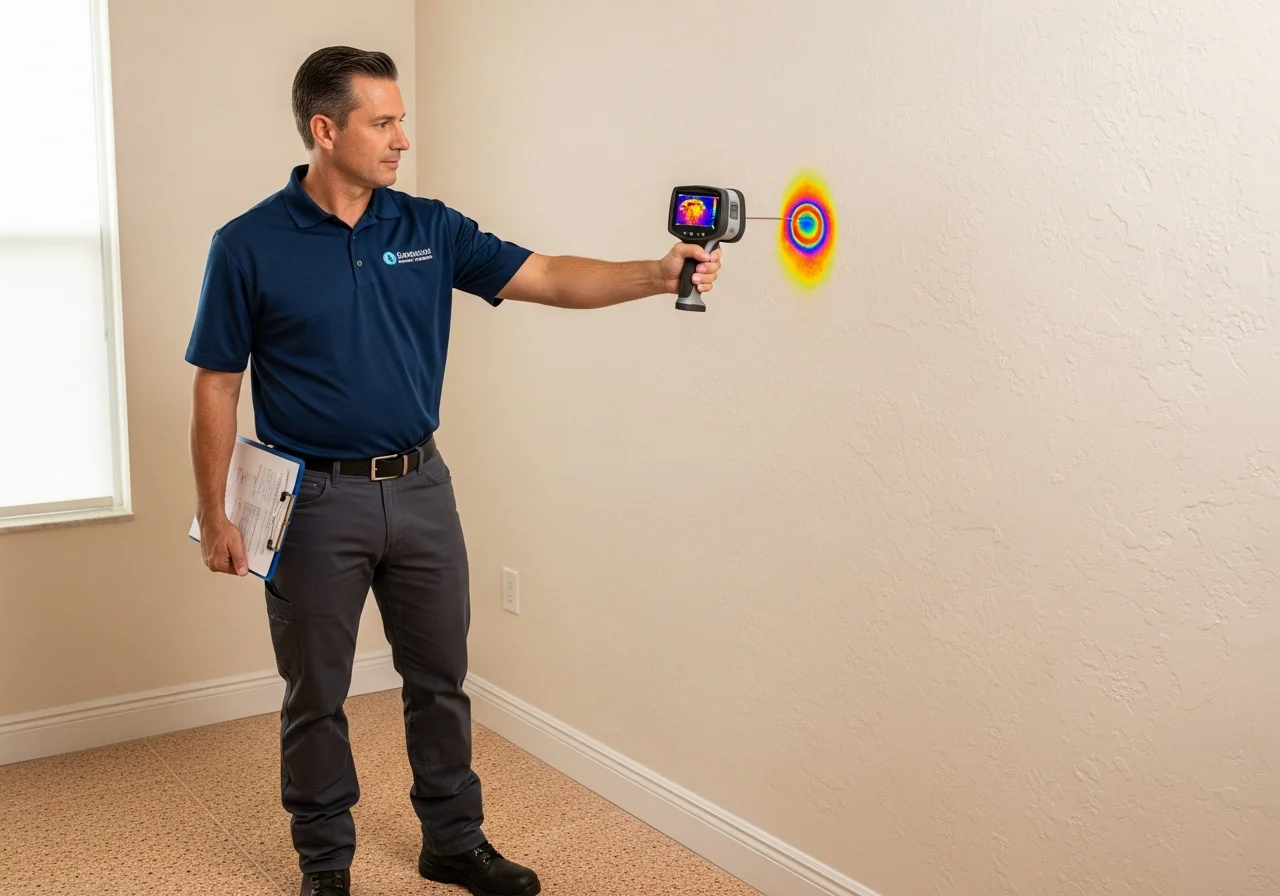
Comprehensive visual inspection, infrared thermal imaging, and air quality sampling. We identify the moisture source — HVAC condensation, slab vapor transmission, CBS furring cavity intrusion, or plumbing failure — and classify contamination per IICRC S520. In Miami condos, we also assess shared HVAC riser exposure. Florida law requires a separate DBPR-licensed mold assessor for the initial report.
02
Containment Setup
Day 1-2
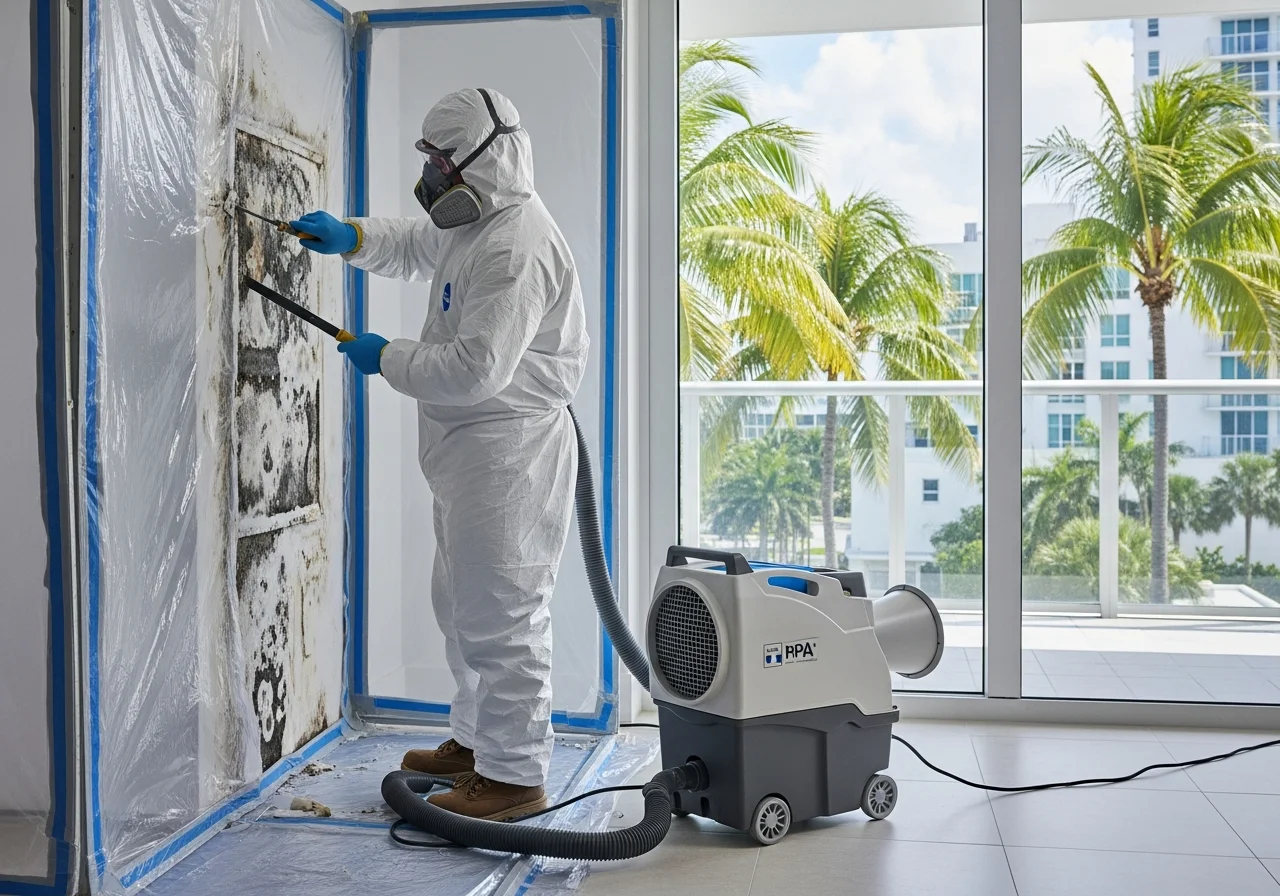
Sealed polyethylene containment barriers isolate affected areas, including CBS furring cavities and HVAC system components. In Miami high-rise condos, containment must prevent spore migration through shared corridors, elevator lobbies, and common HVAC systems — we coordinate with building management for elevator access and neighbor notification per association bylaws. HEPA air scrubbers create negative air pressure inside the containment zone.
03
HEPA Air Filtration
Continuous
HEPA filtration runs throughout the project, capturing spores down to 0.3 microns. In Miami's sealed condo environments, the entire unit duct system is isolated and filtered separately to prevent recontamination. For homes with identified HVAC mold — Miami's #1 source — the air handler is sealed before any demolition begins to prevent the blower from distributing disturbed spores.
04
Removal & Cleaning
Days 2-4
Contaminated materials are removed using controlled demolition. Affected drywall in CBS furring cavities, contaminated HVAC components (evaporator coils, drip pans, ductwork sections), impacted insulation, and mold-damaged flooring from slab moisture issues are removed. In Miami condos, we coordinate disposal logistics through building freight elevators and loading docks. Salvageable surfaces are HEPA-vacuumed and media blasted.
05
Antimicrobial Treatment
Days 4-5
EPA-registered antimicrobial agents are applied to all treated surfaces. For CBS construction, this includes interior block wall faces behind furring strips, window bucks, slab edges, and any areas where moisture intrusion was identified. HVAC components receive specialized coil and duct treatment. In Miami condos, we also treat wall cavities shared with adjacent units to prevent cross-contamination.
06
Clearance Verification
Day 5-6
Post-remediation air quality testing by an independent DBPR-licensed mold assessor confirms spore counts have returned to acceptable levels. Florida's conflict-of-interest rule requires this clearance come from a different licensed assessor than the remediator. For Miami condo projects, clearance documentation is also provided to the building's property management company for association records.
Why Containment Matters in Miami's Tropical Climate
Disturbing mold without proper containment sends billions of spores airborne. In
Miami's 84% morning humidity, those spores find viable growth surfaces within hours.
In sealed condo buildings, the HVAC system can distribute them not just to every room
in your unit — but potentially to neighboring units through shared risers and
corridors. Our containment protocol ensures mold stays isolated during removal.
1
Sealed Barriers
Polyethylene sheeting floor-to-ceiling, sealed at CBS walls and condo demising walls
2
Negative Pressure
HEPA scrubbers pull air through containment — prevents spore escape to corridors
3
HVAC Isolation
Air handler sealed and isolated before any demolition begins
4
Building Coordination
Elevator booking, neighbor notification, and management communication for condos
HVAC Condensation Mold: The Silent Crisis Inside Miami's Sealed Condos
In Miami, the air conditioning system is the primary mold delivery mechanism. AC units
running 12 months per year in sealed Brickell towers and Edgewater high-rises generate
constant condensation on evaporator coils, drip pans, and ductwork interiors. Miami's
mineral-laden municipal water accelerates condensate drain clogging, backing moisture
into air handlers where mold colonizes and the blower fan distributes spores to every
room before occupants see or smell anything.
The four dominant HVAC mold drivers in Miami: clogged condensate drain lines that back up water into drip pans (accelerated by Miami's hard water mineral deposits), sealed condo units with no fresh air exchange that trap humidity at 65-75% RH even with AC running, oversized units that short-cycle in older Coconut
Grove and Coral Gables homes where replacement units don't match the original load
calculation, and shared HVAC risers in high-rises that allow mold from
one unit's air handler to migrate through common ductwork to adjacent units.
HVAC condensate damage in a Miami condo — mineral-laden water clogs drain lines faster
than in any other Florida marketHidden mold behind baseboards — a combination of slab moisture wicking and HVAC
condensation overflow common in Miami homes
Condo Association Liability in Miami-Dade
With 5,356 condo associations in Miami-Dade County, mold disputes between unit owners
and HOAs are among the most litigated property issues in South Florida. Florida
Statute 718 (Condominium Act) assigns responsibility for mold based on whether the
source originates in a common element (shared HVAC riser, building envelope) or
limited common element (unit air handler, interior plumbing). Professional mold
documentation identifying the source is critical for determining liability and
insurance responsibility.
FL Regulatory Landscape
Florida Mold Licensing: What Miami Homeowners Must Know
Florida enforces one of the strictest mold regulatory frameworks in the country. Under DBPR Chapter 468, Part XVI, the state requires separate licenses for mold
assessment and mold remediation — and explicitly prohibits the same company from
performing both on the same project within 12 months.
This conflict-of-interest separation prevents the company that finds the mold from
profiting by removing it. Florida mold assessors must carry $1 million in general
liability insurance, and mold remediators must demonstrate proof of financial
responsibility. Both licenses require continuing education and are enforced by the
Department of Business and Professional Regulation (DBPR). In Miami-Dade County —
where tropical humidity and 5,356 condo associations make mold among the most common
property issues — unlicensed operators advertising on social media and community apps
are unfortunately widespread. Always verify credentials before hiring anyone.
Verify DBPR mold remediator license before hiring any company
Assessor and remediator MUST be separate licensed entities
Same company cannot assess and remediate within 12 months
Post-remediation clearance must come from a different licensed assessor
Check license status at myfloridalicense.com — free and instant
CBS stucco, condo HVAC, and high-rise mold expertise
Full liability insurance and workers' comp coverage
Coordinates with independent FL-licensed assessors for clearance
Deerfield Beach hub — under 60 minutes to all Miami neighborhoods
Red Flags to Watch For
No DBPR mold license or refuses to provide license number
Same company offers to assess AND remediate your mold
Offers to "spray and seal" without removing contamination
No containment barriers or HEPA filtration during work
Claims "no license needed" in Florida (false)
Miami Pricing
Mold Remediation Costs in Miami
Costs depend on contamination extent, materials affected, and whether condo HVAC or CBS
wall cavity work is involved. Florida insurance policies typically cap mold coverage at
$10,000 — full condo HVAC remediation and CBS wall restoration in Miami frequently
exceed these limits.
Small / Contained Area
Bathroom, closet, single wall section, window frame
$2,500 - $8,000
Moderate / Multi-Room
Multiple rooms, CBS wall cavities, attic, common areas
Air handler, ductwork, evaporator coil, plus unit interior
$6,000 - $18,000
Why Miami Mold Costs Exceed National Averages
Miami mold remediation costs consistently run above national averages due to several
market-specific factors: CBS (concrete block and stucco) construction with furring
cavities requires specialized demolition and moisture mapping that wood-frame contractors
miss entirely. High-rise condo work involves elevator logistics, building management
coordination, neighbor notification requirements under condo association bylaws, and
sometimes shared HVAC riser remediation that spans multiple units. Florida's mandatory
separate-assessor requirement adds independent testing costs at pre- and post-remediation.
Miami's tropical climate means aggressive drying timelines — ambient 84% morning humidity
fights every dehumidifier on site. However, proper remediation prevents far more expensive
structural damage, health consequences, HOA special assessments, and the property value
losses that follow a documented mold history.
Insurance Navigation
Mold Insurance Claims in Miami
Mold coverage in Florida is limited and has become more restrictive following recent
insurance reforms. For Miami condo owners, the interplay between unit owner policies and
HOA master policies adds another layer of complexity. Understanding your coverage —
including the $10,000 typical cap, condo liability allocation, and strict filing
deadlines — can save Miami homeowners thousands.
Mold resulting from a covered sudden water event (burst pipe, appliance failure, fire suppression) is typically covered up to your policy's mold sublimit
Most Florida policies cap mold coverage at $10,000 — condo HVAC mold and CBS wall remediation in Miami frequently exceed this limit by 2-3x
Mold from gradual humidity, HVAC condensation, slab vapor transmission, or chronic stucco intrusion is almost always excluded as a maintenance issue
Condo association master policies may cover common-element mold (shared risers, building envelope) but unit owner policies typically exclude neighboring-unit migration
Florida's 1-year claim filing deadline (Fla. Stat. 627.70132) is strictly enforced — delayed reporting can void otherwise valid mold claims
Some Florida carriers offer mold endorsements for additional premium — ask your agent about expanded coverage before you need it
Post-AOB reform (2023 SB 2-A) changed claim assignment rules — but professional documentation connecting mold to a covered water event remains the single most important factor for successful claims
Palm Build's Approach to Miami Mold Claims
When mold results from a covered water event, our documentation connects the mold to the
original loss — moisture maps, timeline photos, air quality reports, and remediation
scope all formatted for the adjuster. For Miami condo owners, we also document whether
the mold source originates in a common element or limited common element, which
determines whether the HOA master policy or unit owner policy is responsible. We
understand post-AOB reform requirements, Florida's strict 1-year claim deadline, and
Miami-Dade-specific claim patterns. For mold not covered by insurance (HVAC
condensation, humidity, gradual moisture), we provide transparent pricing and financing
options.
These are the most common mold presentations we encounter across Miami-Dade — from
Brickell condo HVAC contamination and Coconut Grove CBS wall cavity mold to Kendall slab
moisture issues and Miami Beach Art Deco building intrusion.
Mold behind baseboards from slab moisture wicking — a chronic issue in Miami homes built on oolitic limestone without modern vapor barriers
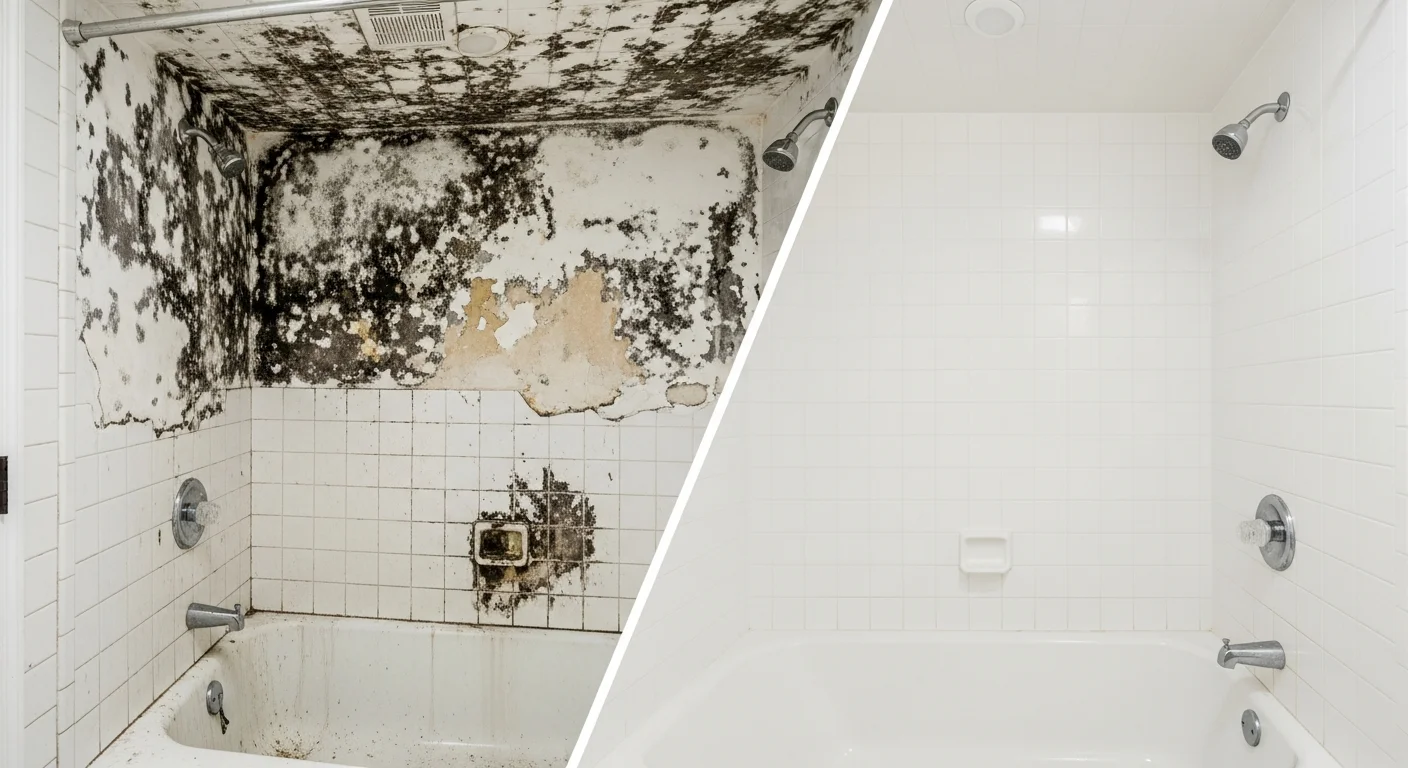
Bathroom mold remediation before and after — Miami bathrooms with inadequate ventilation are among the most common small-area mold sites
Thermal imaging reveals moisture trapped in CBS furring cavities — invisible to the eye but clearly mapped by infrared technology
HVAC condensate damage in a Miami condo — mineral-rich water clogs drain lines faster here than anywhere else in Florida
Our South Florida Operations Hub at 786 S Military Trail, Deerfield Beach puts us under 60 minutes from every Miami neighborhood — Brickell, Coconut Grove, Coral Gables, Little Havana, Kendall, Miami Beach, Key Biscayne, Edgewater, Shorecrest, and everywhere in between. Same-day mold inspections for urgent situations. Call (754) 600-3369.
IICRC AMRT Certified
Every Palm Build crew lead carries current IICRC Applied Microbial Remediation Technician (AMRT) certification — the industry gold standard for mold remediation. Our protocols follow IICRC S520 standards for professional mold remediation, adapted for the specific challenges of Miami construction and climate.
FL DBPR Licensed
Palm Build holds a Florida DBPR mold remediation license and complies fully with Chapter 468, Part XVI requirements. We coordinate with independent DBPR-licensed assessors for the conflict-of-interest separation Florida law mandates — the same company cannot assess and remediate on the same project.
Miami Condo & High-Rise Specialists
Miami-Dade's 5,356 condo associations present unique remediation challenges: sealed units, shared HVAC risers, freight elevator logistics, building management coordination, neighbor notification requirements, and the interplay between unit owner and HOA master insurance policies. We handle all of this — not just the mold removal.
CBS Furring Cavity Expertise
Miami's CBS (concrete block and stucco) homes trap moisture in furring strip cavities between the block wall and interior drywall — creating hidden mold that standard remediation companies miss entirely. We use infrared thermal imaging and invasive moisture probing to map every affected cavity before writing the scope, ensuring complete remediation on the first project.
Insurance & HOA Documentation
We understand Florida's post-AOB reform claim requirements, the 1-year filing deadline, mold sublimits, and the condo-specific question of common element vs. unit owner responsibility. Our documentation connects mold to the original water event with moisture maps, air quality reports, timeline photos, and scope details formatted for your Miami-Dade adjuster or condo association.
Common Questions
Miami Mold Remediation FAQ
How do I verify a mold remediation company is DBPR licensed in Florida?
Florida requires separate DBPR licenses for mold assessors and mold remediators under Chapter 468, Part XVI. A conflict-of-interest rule prohibits the same licensee from performing both assessment and remediation on the same property within 12 months. Post-remediation clearance must come from a different licensed assessor than the remediator. You can verify any contractor's active DBPR mold license at myfloridalicense.com before hiring. Palm Build holds active DBPR mold remediation credentials and works exclusively with independently licensed assessors for clearance testing.
Why does CBS stucco construction in Miami hide mold so effectively?
Miami's dominant construction method — CBS (concrete block and stucco) — creates a moisture trap by design. Stucco cracks from thermal cycling and settling allow wind-driven rain to penetrate block cores, where moisture migrates inward through furring strips and collects behind interior drywall. Because the drywall surface appears intact, mold colonies can grow for months in furring cavities before musty odors, elevated spore counts, or visible staining reveal the problem. Infrared thermal imaging and invasive moisture testing behind walls are the only reliable detection methods for CBS-hidden mold in Miami homes.
Who is responsible for mold remediation in a Miami condo — the owner or the HOA?
In Miami-Dade's 5,356 condo associations, mold responsibility depends on the Declaration of Condominium and Florida Statute 718.111(11). Generally, the association maintains the building envelope, common elements, and shared HVAC systems — so mold originating from a roof leak, exterior wall failure, or common-area plumbing is the HOA's responsibility. Unit owners are typically responsible for everything from the interior drywall surface inward, including their AC air handler. Disputes are common. Document the mold source with professional assessment before filing claims with either party.
How does HVAC condensation cause mold in Miami condos?
Miami's sealed high-rise and mid-rise condos run air conditioning 11-12 months per year, generating constant condensation on evaporator coils, drip pans, and supply ductwork. The four most common HVAC mold triggers in Miami condos are: clogged condensate drain lines that back up water into ceiling cavities, cracked or corroded drip pans from salt air exposure, oversized AC units that short-cycle and never properly dehumidify, and dirty evaporator coils that trap organic material where mold feeds. Once established in the air handler, the blower fan distributes spores to every room through the duct system — often contaminating an entire unit before visible signs appear.
Does homeowners insurance cover mold remediation in Miami?
Most Florida homeowners policies cap mold coverage at $10,000 — often insufficient for full remediation in Miami homes, especially condo units with HVAC system contamination. Mold resulting from a covered sudden water event (burst pipe, appliance failure) has better coverage prospects. Mold from gradual moisture, humidity, HVAC condensation, or long-term maintenance issues is almost always excluded. Florida's 1-year claim filing deadline (Fla. Stat. 627.70132) is strictly enforced. Post-AOB reform (2023 SB 2-A) changed claim assignment rules. Some carriers offer mold endorsements for additional premium — worth investigating given Miami's extreme mold pressure.
What health risks does mold pose in Miami's climate?
Miami's sustained warmth and humidity support year-round mold activity — unlike northern climates where freezing temperatures suppress growth seasonally. Common Miami mold species include Aspergillus, Penicillium, Cladosporium, and Stachybotrys (black mold). Health effects range from allergic reactions (sneezing, congestion, eye irritation) and asthma exacerbation to more serious respiratory infections in immunocompromised individuals. Miami's climate means indoor mold colonies never go dormant — they grow continuously, increasing spore concentrations and mycotoxin exposure until professionally remediated.
How much does mold remediation cost in Miami?
Miami mold remediation typically ranges from $3,000 to $10,000 for small contained areas such as a bathroom, closet, or single wall section. Moderate projects involving multiple rooms or CBS wall cavities run $10,000 to $25,000. Extensive condo remediation with HVAC system contamination can reach $25,000 to $50,000+. Miami costs run higher than national averages due to CBS construction complexity requiring invasive wall access, HVAC scope in sealed condos, mandatory independent DBPR-licensed clearance testing, and HVHZ-compliant reconstruction if structural materials are replaced.
What neighborhoods in Miami does Palm Build serve for mold remediation?
We serve all of Miami and Miami-Dade County from our Deerfield Beach operations hub, including Brickell, Coconut Grove, Coral Gables, Little Havana, Miami Shores, Miami Beach, Kendall, Key Biscayne, Edgewater, Wynwood, Doral, Hialeah, South Beach, Design District, Midtown, Overtown, Allapattah, and the wider Miami-Dade corridor. Our typical response time to Miami-Dade neighborhoods is under 60 minutes.
Trusted Vendors
Trusted local pros in Miami
Outside our restoration scope, these are the vetted, licensed contractors we trust
alongside our work. Personally evaluated, reference-checked, and recommended by Palm
Build.
Mold Problem in Miami? Get a Professional Assessment.
Palm Build's DBPR-licensed mold remediation team provides same-day inspections, professional containment, HEPA filtration, and complete remediation with documentation your insurance carrier accepts. From our Deerfield Beach hub, we respond to Miami-Dade in under 60 minutes.