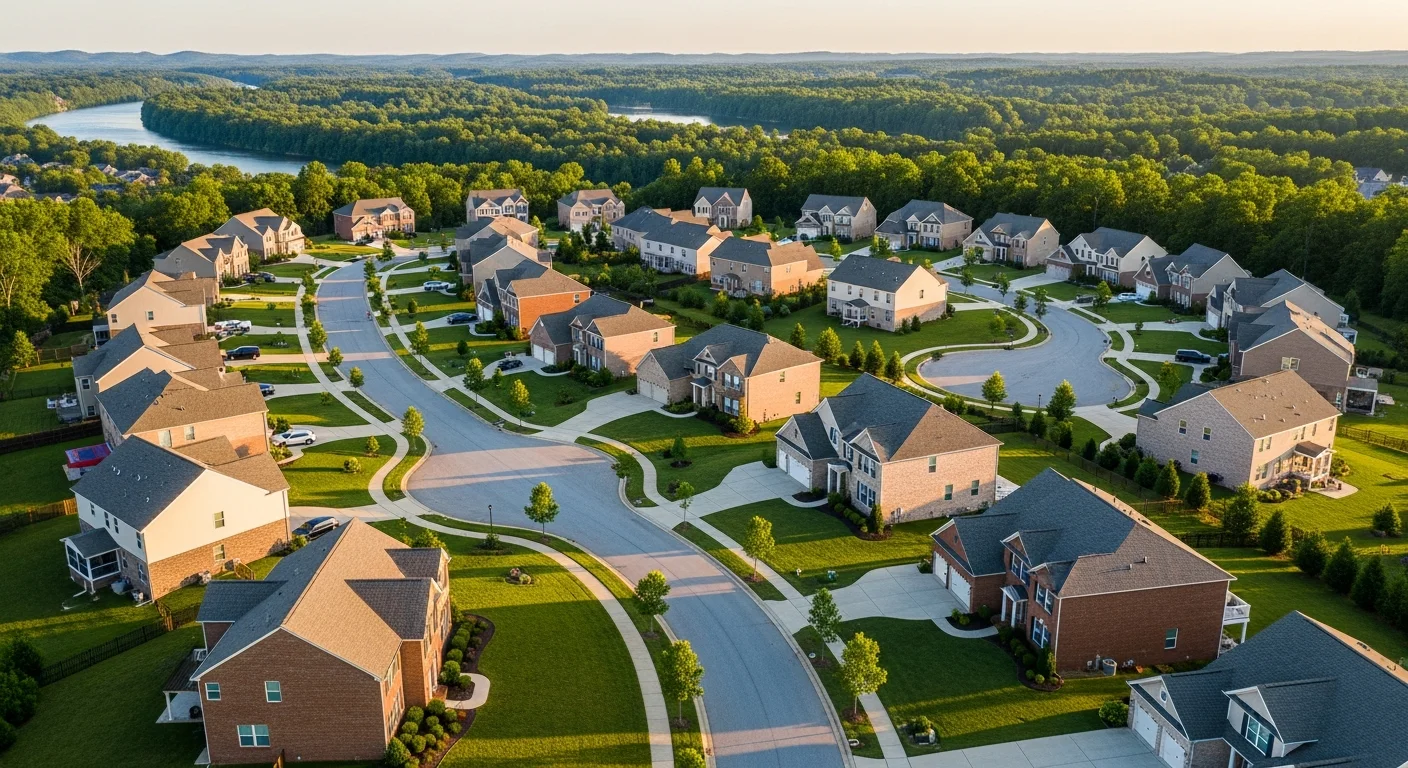
Reconstruction Services in Fort Mill, South Carolina
Fort Mill's housing stock spans 130-plus years — from late-1800s brick ranches in Whiteville Park to 2020-era luxury builds in Massey and Masons Bend. Reconstructing a home after damage here isn't a single process: it requires matching period materials, navigating SC contractor licensing, securing Town of Fort Mill or York County permits, and coordinating HOA approval letters before a single tool touches the structure. Palm Build handles every phase, from demolition through final walkthrough, with one licensed SC team and full insurance coordination.
Approx. 20 miles — Charlotte, NC Same day Response IICRC Certified
Palm Build's reconstruction capability covers every trade and material needed to return
your Fort Mill home to pre-loss condition — or better. Fort Mill's 130-plus years of
construction styles demand era-specific expertise in each category, from 1890s brick
cottages to 2020s luxury estates.
Drywall & Framing
Fort Mill's housing stock spans 130-plus years, from 1890s brick cottages in the historic downtown core and Whiteville Park to 2020s stick-frame luxury builds in Massey and Masons Bend. Water-damaged, fire-damaged, or mold-contaminated drywall and framing are removed to clean substrate and replaced with new materials matched to the era and original construction method. Older homes with original lath-and-plaster walls receive specialty treatment — we coordinate with plaster craftsmen when period accuracy is required. Modern moisture-resistant drywall is used in wet areas throughout.
Flooring & Finish Work
Fort Mill's pre-1980 homes — particularly the Springs Industries-era ranches and craftsman cottages near historic downtown — commonly feature original hardwood floors that cup, buckle, or delaminate after water damage. When salvageable, we sand, refinish, and seal. When replacement is needed, we source matching species and weave new boards into existing flooring for seamless transitions. Fort Mill's newer communities (Baxter Village, Massey, Sun City Carolina Lakes) more often have engineered hardwood, large-format tile, and luxury vinyl plank — all replaced to pre-loss condition.
Electrical & Plumbing
Water, fire, and storm damage frequently affect electrical and plumbing systems in Fort Mill homes. We handle panel replacements, rewiring of damaged circuits, new fixture installation, pipe repair and replacement, and fixture upgrades required by current SC building code. Fort Mill's older housing stock commonly triggers code-required upgrades to electrical panel capacity, GFCI protection, arc-fault breakers, and smoke and CO detector placement during reconstruction — all documented for insurance ordinance-and-law coverage.
Kitchen & Bathroom Rebuilds
These are the most complex reconstruction scopes because they involve all trades — plumbing, electrical, cabinetry, countertops, tile, flooring, painting, and fixtures. Fort Mill's high-value communities (Massey, Masons Bend, Waterside at Catawba) were built with premium kitchen and bath finishes: stone countertops, custom cabinetry, large-format tile, and high-end fixtures. We source matching or equivalent materials and coordinate your insurance adjuster to ensure replacement cost reflects what was actually damaged.
Roofing & Exterior
Storm and fire damage often require partial or full roof replacement, siding repair, window installation, soffit and fascia repair, gutter replacement, and exterior painting. Fort Mill's diverse housing stock — 1890s brick, 1950s-70s ranch, 1990s traditional, and 2010s-era luxury with stone and brick fronts — each requires specific roofing and siding materials. HOA communities in Fort Mill (Baxter Village, Massey, Sun City) require HOA approval letters before exterior reconstruction begins.
Period Millwork & Trim Matching
Fort Mill's historic core includes homes with original trim profiles, crown molding patterns, baseboards, window casings, and architectural details that cannot be matched with standard big-box lumber. We replicate original trim profiles using custom milling, source specialty moldings from architectural millwork suppliers, and install finish carpentry that matches the home's original character. For the area's Springs Industries-era homes and historic downtown properties, this material fidelity matters for resale value and community character.
Understanding the Process
Mitigation vs. Reconstruction: Why One Company Should Handle Both
Most Fort Mill homeowners don't realize that property restoration has two distinct
phases — and that the gap between them is where projects go sideways. Understanding this
distinction helps you avoid the most common source of delays, cost overruns, and
communication breakdowns in the restoration process.
Phase 1: Mitigation
Mitigation stops the active damage. For water damage, this means extraction and
structural drying. For fire, it's board-up, soot stabilization, and water removal from
fire suppression. For mold, it's containment and remediation. For storms, it's emergency
tarping and debris clearing. Mitigation is urgent — it begins within hours of the event
and typically takes 3–7 days. The goal is to stabilize the property and prevent further
loss.
Many restoration companies — especially national franchises — only handle this phase.
When mitigation is complete, they hand your project off to a separate general contractor
for reconstruction. This handoff creates a gap of days to weeks where nothing happens to
your Fort Mill home while the new contractor reviews the scope, submits their own
estimate, and schedules their crews.
Phase 2: Reconstruction
Reconstruction rebuilds what was damaged. This is the general contracting phase: drywall
replacement, flooring installation, cabinetry, countertops, painting, trim, electrical,
plumbing, roofing, and finish work. Reconstruction in Fort Mill requires permits from
the Town of Fort Mill Building Department or York County Building Services, HOA approval
letters before exterior work begins, and SC LLR contractor licensing. It typically takes
2–12 weeks depending on project complexity.
When the same company handles both mitigation and reconstruction, the transition is
seamless. Our reconstruction team reviews the scope during mitigation — not after it's
complete. Permits are submitted while drying is still underway. HOA approval
documentation is prepared in parallel. Materials are ordered before the last
dehumidifier leaves. This overlap saves Fort Mill homeowners 2–4 weeks of displacement.
Palm Build: One Team, Both Phases
Palm Build handles mitigation and reconstruction as a single coordinated project in Fort
Mill. No handoffs to separate contractors, no gaps in your timeline, no duplicated
documentation, no conflicting estimates. One SC-licensed project manager, one insurance
contact, one team from emergency response through final walkthrough.
From scope development through final inspection, here's how Palm Build manages the
reconstruction phase of your Fort Mill restoration project — including SC LLR licensing,
Town of Fort Mill and York County permits, and HOA approval coordination.
01
Damage Assessment & Scope Development
Days 1–5
We walk through the property with you and your insurance adjuster to develop a comprehensive reconstruction scope. Every damaged item is documented, measured, and priced using Xactimate — the industry-standard estimating software insurance carriers use. For Fort Mill's older homes, we include line items for material matching, period millwork, and code-required upgrades that generic estimates miss. For newer communities (Massey, Masons Bend, Baxter Village), premium finish documentation ensures replacement cost reflects actual materials.
02
Permitting, HOA Approval & Planning
Days 5–20
Fort Mill reconstruction requires permits from either the Town of Fort Mill Building Department (within town limits) or York County Building Services (unincorporated areas). We identify the correct jurisdiction immediately and handle all permit applications. Simultaneously, we prepare HOA approval documentation packages for communities like Baxter Village, Massey, Sun City Carolina Lakes, Masons Bend, and Waterside at Catawba — including photos, material specifications, and scope summaries — so HOA review runs in parallel with permitting rather than sequentially. Flood Elevation Certificates are coordinated for FEMA-zone properties.
03
Demolition & Material Ordering
Days 10–25
Damaged materials are removed to clean substrate. For Fort Mill's historic-core homes with original hardwood, plaster, or custom trim, we carefully document salvageable materials for reuse or replication. Reconstruction materials are ordered based on the approved scope — for specialty items like matching hardwood species, custom trim profiles, or period-appropriate fixtures, we order early to account for lead times. Premium finishes for Fort Mill's luxury communities (stone countertops, custom cabinetry) are sourced with verification against insurance documentation.
04
Framing & Structural Work
Weeks 3–6
Framing, electrical rough-in, plumbing rough-in, HVAC modifications, and structural repairs are completed and inspected by the Town of Fort Mill or York County before drywall is installed. This is where code-required upgrades happen: updated electrical panels, GFCI protection, arc-fault breakers, insulation upgrades, and structural connection improvements. Each trade is inspected separately before the next phase begins. SC LLR licensing covers all trades on a single permit package.
05
Finish Work & Interior
Weeks 6–12
Drywall hanging, taping, and finishing. Flooring installation. Cabinet and countertop installation. Painting and trim. Fixture installation. For Fort Mill's older homes, period-appropriate millwork and trim profiles are installed to match the original character. For luxury communities, premium materials are installed and photographed for insurance documentation. Final electrical, plumbing, and mechanical inspections are scheduled proactively.
06
Final Inspection & Walkthrough
Weeks 12–16
Final inspections with Town of Fort Mill or York County Building Services close out all permits. HOA communities receive a completion report with photos for design review board records. The homeowner walkthrough confirms every item in the scope has been completed to satisfaction. We remain available for any warranty items identified after move-in — one team, one point of contact, from day one through final sign-off.
Permits, Codes & HOA Requirements
Building Code Compliance for Fort Mill Reconstruction
Fort Mill reconstruction involves multiple overlapping authorities: SC building codes,
either Town of Fort Mill or York County permits depending on property location, HOA
approval letters for most communities, and FEMA floodplain requirements for
Catawba-adjacent properties. Code-required upgrades during reconstruction can add 10–20%
to project costs — but are typically covered by an ordinance-and-law endorsement on your
homeowners policy.
Town of Fort Mill Building Department
Handles permits for properties within Fort Mill municipal limits. Required for all structural, electrical, mechanical, and plumbing work. Inspections at rough-in and final for each trade.
York County Building Services
Handles permits for unincorporated York County areas, including many newer master-planned communities on the county perimeter. Same inspection stages, separate jurisdiction and inspection staff.
HOA Design Review Boards
Communities like Baxter Village, Massey, Sun City Carolina Lakes, Masons Bend, and Waterside at Catawba each require written HOA approval on official letterhead before exterior reconstruction begins. Design review timelines vary — many boards meet monthly.
FEMA Floodplain Compliance
Properties in FEMA Special Flood Hazard Areas (SFHA) along Catawba River corridors may require a Flood Elevation Certificate and Substantial Improvement determination before reconstruction proceeds.
Common Code-Required Upgrades During Fort Mill Reconstruction
Electrical panel upgrade to current NEC capacity requirements
Typically required for: Pre-1980 Fort Mill homes (historic core, Whiteville Park)
GFCI outlets in kitchens, bathrooms, garages, and exterior locations
Typically required for: Pre-1990 homes
Arc-fault circuit interrupter (AFCI) breakers for bedrooms
Typically required for: Pre-2002 homes
Smoke detector placement per current SC code (interconnected, in every bedroom)
Typically required for: Pre-2000 homes
Carbon monoxide detectors on every level with sleeping areas
Typically required for: Pre-2010 homes
Insulation upgrades to current SC energy code R-values
Typically required for: Pre-2000 homes
Hurricane straps or structural connectors at roof-to-wall connections
Typically required for: Pre-2005 homes — SC wind load requirements
Tempered glass in bathrooms, stairways, and near doors
Typically required for: Pre-1980 homes
Check Your Ordinance-and-Law Coverage Before You Need It
Without an ordinance-and-law endorsement, code-required upgrades during
reconstruction come out of pocket. For a 1960s Fort Mill brick ranch with original
electrical, this can mean $5,000–$15,000 in mandatory upgrades not covered by a base
policy. Palm Build identifies applicable code upgrades at scoping and documents them
for your adjuster — but the endorsement must exist on your policy before the loss
occurs. Ask your insurance agent about this coverage now.
Fort Mill-Specific Expertise
130+ Years of Construction Styles: Fort Mill's Unique Reconstruction Challenge
Fort Mill's housing stock spans more than 130 years — from 1890s brick cottages near
historic downtown to 2020s luxury builds in Massey and Masons Bend. Each era used
different materials, different construction methods, and left a different set of
challenges when reconstruction is required.
A contractor experienced only in modern construction will struggle with period plaster,
matching old-growth hardwood species, or replicating Springs-era millwork profiles. One
experienced only in historic properties won't navigate Massey's HOA design review board
efficiently. Palm Build handles the full spectrum — from 1890s brick cottages through
$900K Masons Bend estates — with era-appropriate materials and the correct permitting
authority for each property.
For Fort Mill's historically significant properties, material choices affect more than
aesthetics — they affect resale value, appraisal comparables, and community character.
We ensure reconstruction reflects the home's original construction character rather than
defaulting to modern stock alternatives.
Fort Mill Historic Areas
Historic Downtown Fort Mill
Whiteville Park
Springs Industries-era neighborhoods
Old Nation Road corridor
Tom Hall Street district
North White Street historic corridor
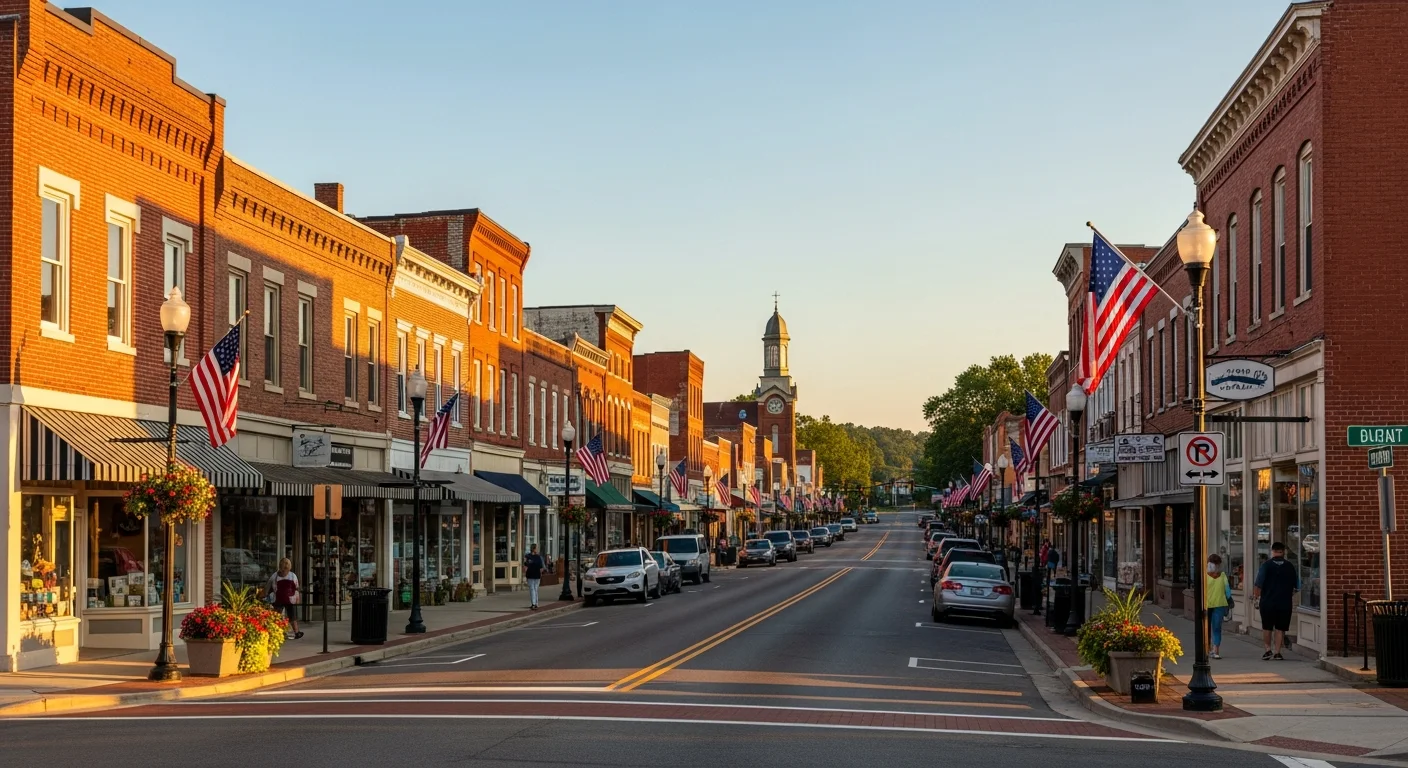
Historic downtown Fort Mill's 1890s brick buildings require period-appropriate
materials and careful structural assessment before reconstruction begins
1890s – 1920s
Late Victorian & Early Craftsman
Brick cottages and craftsman bungalows near historic downtown Fort Mill. Original features include plaster walls, old-growth hardwood floors, custom millwork, and solid brick or stone foundations. These homes require specialty materials and tradespeople — plaster craftsmen, architectural millwork suppliers, and matching brick sourcing.
1930s – 1960s
Springs Industries Era
The Springs family and textile industry built much of Fort Mill's residential core during this era — brick ranches, colonial revivals, and traditional cottages in Whiteville Park and surrounding neighborhoods. Characteristic original hardwood floors, coved ceilings, single-panel doors, and period hardware that require careful sourcing to match.
1970s – 1990s
Transitional & Early Suburban
Frame construction with brick veneer, shifting toward subdivision-era materials — vinyl windows, aluminum siding on some structures, updated electrical but often still knob-and-tube remnants. Less specialty material matching required, but code upgrade scope is typically heavier for electrical and insulation.
2000s – 2020s
Master-Planned & Luxury
Baxter Village, Massey, Masons Bend, Sun City Carolina Lakes, and Waterside at Catawba. Modern stick-frame construction with premium finishes — engineered hardwood, large-format tile, stone countertops, coffered ceilings, custom cabinetry. HOA design review adds a layer of compliance before exterior reconstruction begins.
Fort Mill Pricing
Reconstruction Costs in Fort Mill
Fort Mill reconstruction costs are driven by scope, era of construction, materials, and
HOA compliance requirements. The area's $519K median home value and high-end communities
(Massey at $800K+, Masons Bend at $850K–$935K+) push premium-finish projects toward the
top of each range. These ranges reflect actual Fort Mill project costs for
insurance-funded restoration work.
Minor Reconstruction
Drywall, paint, flooring in 1–2 rooms
$3,000 – $10,000
Single-room drywall replacement
Flooring replacement in one bathroom
Paint and trim in affected area
Minor ceiling repair
Moderate Reconstruction
Kitchen or bath rebuild, multiple rooms
$15,000 – $50,000
Full kitchen gut and rebuild
Master bath complete rebuild
Multi-room drywall and flooring
Partial roofing replacement
Major Structural Rebuild
Structural work, full floor or whole house
$25,000 – $100,000+
Structural framing replacement
Full-floor fire or water loss
Complete roof system replacement
Foundation and load-bearing work
Full Rebuild
Total loss or near-total loss reconstruction
$100,000 – $300,000+
Total fire or catastrophic water loss
Massey / Masons Bend premium rebuild
Historic home full reconstruction
Multi-story complete gut rebuild
Fort Mill Premium Homes: Why Material Matching Matters for Cost
Replacing premium finishes in Massey, Masons Bend, or Waterside at Catawba homes
with builder-grade alternatives reduces appraisal value and creates visible material
mismatches. Palm Build sources matching or equivalent premium materials —
large-format tile, stone countertops, coffered ceiling lumber, custom cabinetry —
and coordinates with your insurance adjuster to document replacement cost
accurately. Your settlement should reflect what was actually damaged, not a generic
price list.
Insurance Coverage
What Insurance Covers for Fort Mill Reconstruction
When reconstruction follows a covered loss — fire, sudden water damage, wind, hail —
your homeowners policy covers the cost of returning your Fort Mill home to pre-loss
condition. With a $519K median home value and premium communities reaching $800K–
$935K+, ensuring adequate dwelling coverage and replacement-cost settlement is critical.
Palm Build's Xactimate-based estimates match the format insurance carriers use, reducing
negotiation delays.
What's Typically Covered
Structural repair and rebuild to pre-loss condition
Drywall, flooring, cabinetry, countertops, and finish materials
Electrical, plumbing, and HVAC repair or replacement
Painting, trim, and finish carpentry
Permit fees and inspection costs
Building code upgrades required during reconstruction (with ordinance-and-law endorsement)
Additional living expenses (ALE) while displaced during reconstruction
Debris removal and disposal of damaged materials
Palm Build works directly with your adjuster throughout the reconstruction process,
handling supplements for hidden damage and code upgrades
Dwelling Coverage Adequacy in Fort Mill
Fort Mill's $519K median home value and rapidly rising rebuild costs mean many
homeowners are underinsured. Replacement cost (the actual cost to rebuild) is
typically higher than market value — especially for older homes with custom
materials, and premium homes with high-end finishes. Confirm your dwelling
coverage limit reflects current replacement cost — not purchase price — before
you file a major reconstruction claim.
Palm Build Manages the Entire Claims Process
Our reconstruction estimates are written in Xactimate — the same software your
insurance carrier uses. We coordinate directly with your adjuster throughout the
reconstruction, handling supplements for hidden damage discovered during demolition
and code-required upgrades. Fort Mill's HOA compliance and permit costs are
documented as line items, ensuring your settlement covers the full scope.
From historic downtown cottages to Massey luxury estates — Palm Build's Fort Mill
reconstruction work spans every era of the area's housing stock.
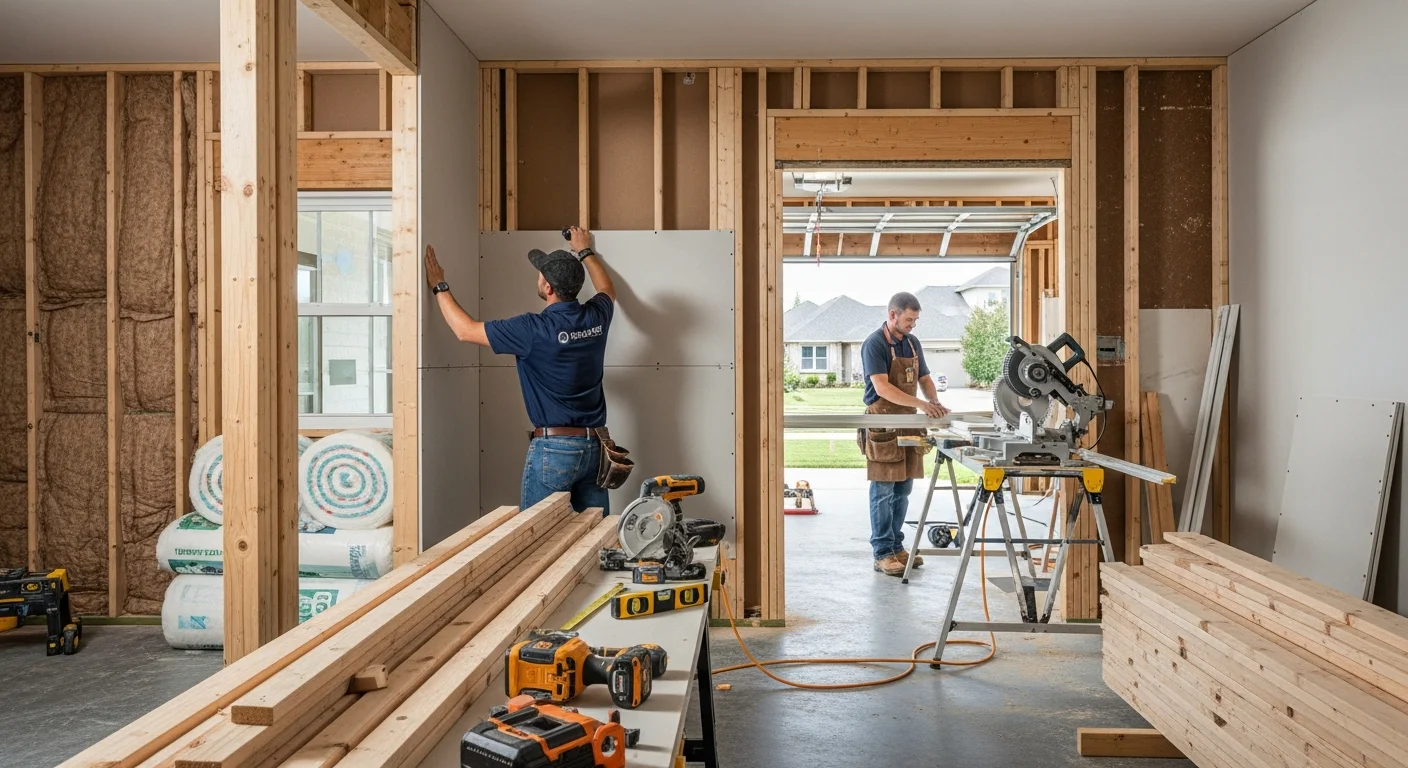
Full reconstruction: from demolition through final finish work in Fort Mill
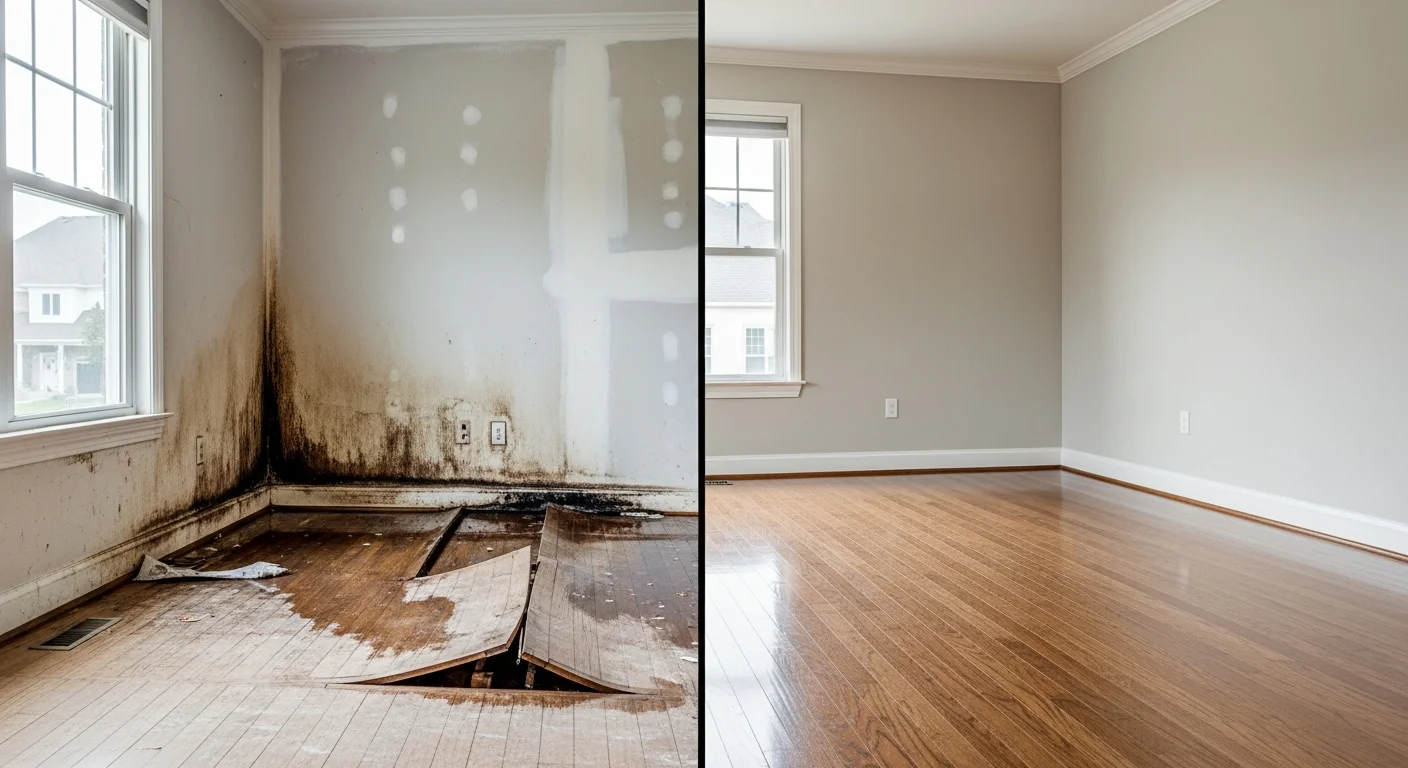
Before and after: water damage reconstruction returning a Fort Mill home to pre-loss condition
Historic downtown Fort Mill — period materials and era-appropriate construction methods
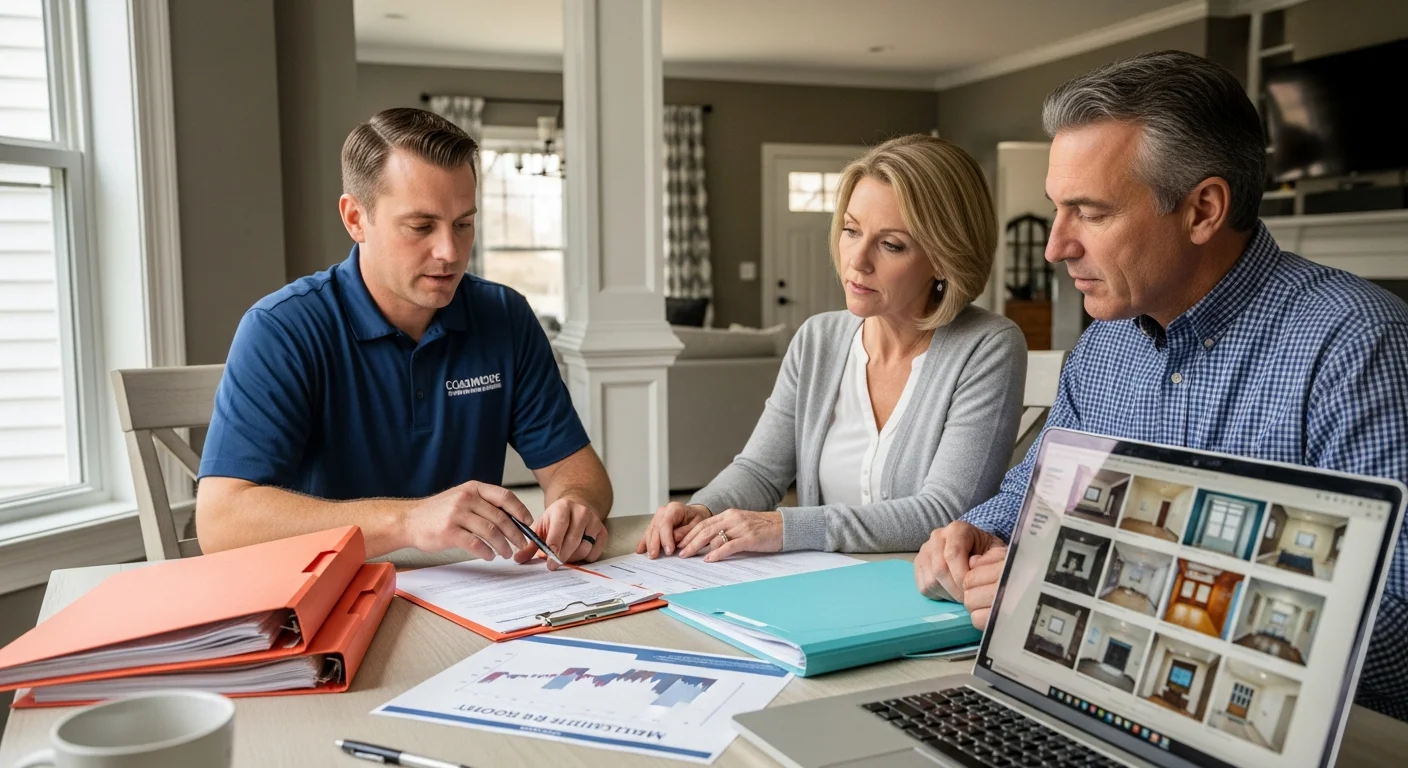
Fort Mill's diverse housing stock spans 130+ years — every rebuild is scoped to its era
The Palm Build Difference
Why Fort Mill Homeowners Choose Palm Build for Reconstruction
SC licensure, HOA coordination, dual-jurisdiction permit experience, and era-appropriate
material matching — these aren't optional for Fort Mill reconstruction. They're the
baseline required to complete a project correctly.
SC LLR Licensed Contractor
South Carolina requires its own contractor license — a North Carolina license does not transfer. Palm Build holds the required SC Contractor's Licensing Board (CLB) license under SC LLR, carries all state-mandated liability and workers' compensation coverage, and pulls permits directly with the Town of Fort Mill Building Department and York County Building Services. Before signing any reconstruction contract in Fort Mill, verify active SC CLB licensure.
Mitigation + Reconstruction: One Team
No handoffs between companies. Our mitigation and reconstruction teams work as one coordinated unit. Reconstruction planning begins during the drying phase — not after it ends. HOA approval documentation is prepared while permits are in review. This overlap saves Fort Mill homeowners 2–4 weeks of displacement compared to the traditional handoff model used by national franchise restoration companies.
HOA Approval Coordination
Most Fort Mill communities — Baxter Village, Massey, Sun City Carolina Lakes, Masons Bend, Waterside at Catawba — require written HOA approval before exterior reconstruction begins. Palm Build prepares the documentation package for design review board submission: photos, material specifications, scope summaries, and compliance statements. We submit HOA documentation and permit applications simultaneously to compress the pre-construction timeline.
York County & Town of Fort Mill Permit Experience
Fort Mill properties fall into two permitting jurisdictions — Town of Fort Mill Building Department (within municipal limits) or York County Building Services (unincorporated areas). Identifying the correct jurisdiction immediately, submitting complete applications, and scheduling inspections proactively prevents the delays that arise when contractors unfamiliar with this dual jurisdiction submit to the wrong office.
Xactimate-Based Insurance Estimates
Our reconstruction estimates use Xactimate — the same software and pricing database your insurance carrier uses. This eliminates format-based disputes, reduces supplemental negotiation cycles, and ensures your claim documentation reflects the actual materials and scope required. For Fort Mill premium homes, we document replacement cost accurately so your settlement covers what was damaged — not a generic price list.
Era-Appropriate Material Matching
Fort Mill's 130-plus years of housing stock demands era-specific material sourcing. We source matching hardwood species for 1890s–1960s floors, replicate Springs-era millwork profiles, source period brick or masonry for historic-core properties, and match premium finishes for Fort Mill's $800K+ luxury communities. Your reconstructed home reflects the original construction character — which matters for appraisal value and resale.
Common Questions
Fort Mill Reconstruction FAQ
Answers to the most common questions Fort Mill homeowners ask about reconstruction after
fire, water, storm, or mold damage — including SC licensing, HOA requirements, York
County permits, and insurance coverage.
Do contractors need a South Carolina license to do reconstruction work in Fort Mill?
Yes. South Carolina requires its own contractor license issued by the SC Contractor's Licensing Board (CLB) under SC LLR. A North Carolina license does not transfer — out-of-state contractors cannot legally perform reconstruction work in Fort Mill without SC licensure. Palm Build holds the required SC contractor license and carries all state-mandated liability and workers' compensation coverage. Before signing any reconstruction contract in Fort Mill, verify the contractor holds an active SC CLB license — unverified contractors can leave you without recourse if work fails inspection or causes further damage.
Which building department handles permits for Fort Mill reconstruction projects?
It depends on where your property sits. Properties within the Town of Fort Mill municipal limits go through the Town of Fort Mill Building Department. Properties in unincorporated York County — including many newer master-planned communities on the county's edges — are permitted through York County Building Services. Palm Build identifies the correct jurisdiction at project start, handles all permit applications, schedules inspections, and ensures every phase of reconstruction is properly documented and closed out before final payment.
My Fort Mill home is in an HOA community. Do I need HOA approval before reconstruction starts?
Yes — most Fort Mill HOA communities require written approval before exterior reconstruction, structural work, or significant material changes begin. This approval must come on official HOA letterhead and be signed by a board member with authority to approve the scope. Communities like Baxter Village, Massey, Sun City Carolina Lakes, Masons Bend, and Waterside at Catawba each have their own design review boards with specific timelines and submission requirements. Palm Build prepares the documentation package you need to submit for HOA approval — including photos, material specifications, and scope summaries — so the approval process runs in parallel with permitting rather than delaying your start date.
What's the difference between mitigation and reconstruction?
Mitigation stops the damage from spreading — water extraction, structural drying, mold containment, soot stabilization, tarping. Reconstruction rebuilds what was damaged — drywall, framing, flooring, roofing, cabinetry, countertops, electrical, plumbing, and finish work. Many restoration companies handle only mitigation and pass reconstruction to a separate general contractor, which adds weeks of scheduling gaps and creates accountability problems when the two scopes don't meet cleanly. Palm Build handles both phases as one coordinated project, with the same team and the same point of contact from day one through final walkthrough.
Can Palm Build match materials in older Fort Mill homes — original hardwood, plaster, period trim?
Yes. Fort Mill's historic core includes homes built from the late 1800s through the Springs Industries era, many featuring original hardwood floors, plaster walls, traditional millwork, and architectural details that don't have modern stock equivalents. We source period-appropriate hardwood species, replicate trim profiles, and source matching brick or masonry where needed. For homes in or near Fort Mill's historically significant corridors, we ensure material choices reflect the original construction character — which matters for resale, appraisal value, and community character.
What about luxury homes in Massey, Masons Bend, or Waterside at Catawba — can you match premium finishes?
Yes. Fort Mill's high-value communities — Massey at $800K and above, Masons Bend at $850K–$935K and up, Waterside at Catawba with stone and brick fronts — were built with premium materials: hardwood floors, large-format tile, stone countertops, coffered ceilings, and custom cabinetry. Replacing damaged finishes with builder-grade alternatives reduces appraisal value and creates visible mismatches. Palm Build sources matching or equivalent premium materials and coordinates with your insurance adjuster to document the replacement cost accurately, so your settlement reflects what was actually damaged.
Will my home need to meet current building code during reconstruction, even if it's older?
Yes. Both the Town of Fort Mill and York County Building Services require reconstruction to meet current South Carolina building codes — not the code in effect when the home was originally built. For older Fort Mill homes, this typically means upgrades to electrical panels, GFCI outlets, smoke detector placement, insulation R-values, and structural connections. These code-required upgrades are generally covered by an ordinance-and-law endorsement on your homeowners insurance policy. Palm Build identifies applicable code upgrades at project scoping and documents them for your adjuster so you're not paying for mandatory improvements out of pocket.
Does my property need a Flood Elevation Certificate for reconstruction in Fort Mill?
If your property sits within a FEMA-designated Special Flood Hazard Area (SFHA), a Flood Elevation Certificate may be required before reconstruction can proceed — particularly for substantial improvement determinations, which trigger full floodplain compliance requirements when reconstruction costs exceed 50% of the structure's pre-damage market value. York County has flood zones along the Catawba River and its tributaries. Palm Build coordinates with licensed surveyors to obtain Flood Elevation Certificates where required and ensures your reconstruction scope is structured to satisfy FEMA and local floodplain ordinance requirements.
How long does reconstruction take after water or fire damage in Fort Mill?
Minor reconstruction — drywall replacement, flooring in one or two rooms — typically takes 1–2 weeks once permits are in hand. Moderate reconstruction involving multiple rooms, a kitchen, or a bathroom runs 4–8 weeks. Major structural rebuilds or whole-floor losses run 8–16 weeks. HOA approval timing adds a variable: Fort Mill design review boards typically meet monthly, and submission deadlines vary by community. Palm Build submits HOA documentation packages and permit applications simultaneously to compress the pre-construction timeline as much as possible.
Does insurance cover reconstruction costs in Fort Mill?
Yes — if the original damage was caused by a covered peril (fire, sudden water damage, wind, hail, etc.), your homeowners policy covers reconstruction to pre-loss condition. Coverage for mandatory code upgrades requires an ordinance-and-law endorsement. Fort Mill homeowners should confirm this endorsement exists, especially for homes more than 10–15 years old where code-required upgrades during reconstruction can add 10–20% to total project cost. Palm Build works directly with your insurance adjuster throughout the project, providing documentation, line-item scope breakdowns, and supplement requests when covered damage is identified that wasn't included in the initial estimate.
Need Reconstruction After Damage in Fort Mill?
Palm Build is SC-licensed, Charlotte-based, and handles the full rebuild — permits, HOA coordination, insurance documentation, demolition through final walkthrough. One team, one point of contact, no handoffs.