Fort Mill homeowners face a unique insurance challenge: many work in Charlotte with NC-based agents who don't fully understand South Carolina restoration regulations — and most live in HOA communities where the line between master policy and individual HO-6 coverage is routinely misunderstood. Palm Build bridges both gaps, delivering thorough documentation and coordinated adjuster communication so Fort Mill and York County homeowners recover the full coverage they've paid for.
Approx. 25 miles north — Fort Mill, SC Same day Response IICRC Certified
The Fort Mill Insurance Landscape: What Your Policy Actually Covers
Fort Mill homeowners enjoy one of South Carolina's lowest average homeowners insurance
premiums — $2,430 per year, 24% below the statewide average of $3,205 — thanks to the
area's inland Piedmont location away from coastal hurricane exposure. But lower premiums
come with a distinct set of coverage complexities. A significant share of Fort Mill's
rapidly growing population works in Charlotte and purchased their homeowners policy
through North Carolina-based agents who may not be fully versed in South Carolina
restoration regulations, SC Department of Insurance claim timelines, or how Fort Mill's
heavily HOA-dominated housing stock affects coverage layering. Palm Build operates on
both sides of the state line and brings that cross-border expertise to every Fort Mill
claim.
$2,430/yr
Fort Mill avg annual premium
$203/month — well below the South Carolina statewide average of $3,205/year
24% below
SC statewide average
Inland Piedmont location gives Fort Mill homeowners a structural rate advantage over coastal SC markets
$10–15K
Mold coverage sublimit
Most Fort Mill policies cap mold remediation — and Fort Mill summers accelerate growth within 48–72 hours
Dual-state
NC/SC cross-border complexity
Many Fort Mill homeowners carry policies written by NC agents unfamiliar with SC restoration regulations
The Cross-Border Challenge
Fort Mill sits in York County, SC — minutes from the NC state line. Many residents
commute to Charlotte and hold policies written by NC agents. When a claim arises, that
policy must be handled under South Carolina regulations: SC Department of Insurance
timelines, SC-specific coverage interpretations around flood vs. surface water, and SC
contractor licensing requirements.
Palm Build is SC LLR licensed and works with adjusters regardless of where the policy
was originally written. We ensure your documentation meets SC requirements so no
technicality delays your claim.
Every Carrier, One Contractor
Fort Mill Insurance Carriers We Work With
Palm Build works with every major carrier writing homeowners policies in the Fort Mill
and York County market. Our Xactimate-based estimates and documentation packages are
designed to integrate directly with any carrier's claims workflow — no format
translation, no re-entry, no delays caused by mismatched paperwork.
Carrier
Avg Premium
Fort Mill Notes
We Work With
State Farm
$1,961/yr
Most common carrier in Fort Mill — lowest average premium in the market
Allstate
Varies
Flood endorsements available — important for York County Zone A properties
USAA
Varies
Military families and veterans — strong coverage, responsive claims teams
Travelers
Varies
Flood endorsements available — verify flood coverage at time of purchase
Nationwide
Varies
Does not offer flood coverage — separate NFIP policy required
SC Farm Bureau
Varies
Local South Carolina carrier — strong rural and suburban market presence
Chubb
Premium
Preferred for homes valued $800K+ — extended replacement cost and cash settlement options
NFIP
Separate
National Flood Insurance Program — required for Zone A properties, covers what HO policies exclude
Cross-border note: If your Fort Mill policy was written
by a North Carolina agent, your claim is still governed by South Carolina regulations. Palm
Build communicates directly with your carrier regardless of where the policy originated —
ensuring SC documentation standards are met.
Know Your Coverage
What's Covered by Peril in Fort Mill, SC
Different damage types have different coverage rules under South Carolina homeowners
policies. Understanding these distinctions before filing — especially the critical flood
vs. water damage distinction — prevents surprises and ensures your claim is filed
correctly from the start.
Fire & Smoke
Comprehensive
Structural damage from fire — full dwelling coverage
Soot cleaning, smoke odor elimination, air scrubbing
Water damage from fire suppression activities
Contents restoration or ACV/replacement cost settlement
Additional Living Expenses (ALE) during restoration
Sudden Water Damage
Covered — with key exclusions
Burst pipe, appliance failure, sudden discharge
Emergency extraction and structural drying
Mold — sublimited to $10,000–$15,000 on most SC policies
Flood from rising water — requires separate NFIP policy
Flood Damage
Excluded — separate NFIP required
Water entering from overflowing creeks or storm drains
Surface water from heavy rain events
All major Fort Mill carriers exclude standard flood
Allstate and Travelers offer flood endorsements — verify
NFIP policies available through any licensed agent
Wind & Hail
Covered — separate deductible may apply
Roof, siding, window damage from wind
Rain entering through wind-created openings
Hail damage to roofing and exterior
Flood from rising water, creek overflow, storm surge
SC policies may carry a separate wind/hail deductible
Mold
Sublimited — $10K–$15K typical
Mold from a covered sudden water event may bypass sublimit
$10,000–$15,000 mold sublimit on most Fort Mill policies
Pre-existing mold — excluded entirely
Mold from gradual leaks or owner neglect — excluded
Timeline documentation is critical for coverage determination
Fort Mill-specific note: The Catawba River corridor and
portions of Baxter Village and Sun City Carolina Lakes carry FEMA flood zone designations.
If your property is in Zone A or Zone AE, flood insurance is likely required by your mortgage
lender — and a separate NFIP or private flood policy is essential. Palm Build documents water
intrusion source and path to support the correct coverage determination.
Common Pitfalls
Common Insurance Denials Fort Mill Homeowners Face
These are the four most common reasons Fort Mill and York County restoration claims are
partially or fully denied — and how thorough documentation prevents each one.
Flood vs. Water Damage Source Disputes
This is the most common and costly denial scenario in Fort Mill. After heavy rain events, water may enter a home from both a burst internal pipe (covered as sudden water damage) and an overwhelmed storm drain or overflowing branch of the Catawba watershed (excluded as flood damage). Without precise cause-of-loss documentation, insurance adjusters may attribute all water intrusion to the flood source — denying the entire claim. The entry point, path of travel, and timing of each water source must be documented separately. Palm Build captures this on day one, before any cleanup begins.
Prevention: Document water source and entry point immediately. Do not allow cleanup to begin before cause-of-loss photography is complete.
Mold From Gradual Leaks — Denied as Neglect
South Carolina homeowners policies follow the same gradual damage exclusion as most states: mold resulting from a slow, undetected leak — a dripping supply line behind a wall, a condensate line seeping under a cabinet — is excluded as owner neglect rather than covered as a sudden loss. In Fort Mill's humid summers, mold can establish in 48–72 hours and spread significantly within a week. If a water event goes undetected or undocumented, the carrier may claim the mold predates the loss. Palm Build's thermal imaging and moisture documentation establishes the timeline of moisture intrusion and mold development, connecting it to the covered originating event when applicable.
Prevention: Call Palm Build immediately when any water damage is discovered. Early thermal imaging identifies hidden moisture before mold takes hold — and before your carrier can argue it was pre-existing.
Inadequate Documentation at Time of Loss
Fort Mill's insurance claims are frequently reduced or partially denied because the homeowner — attempting to minimize damage or move quickly — cleaned up or discarded evidence before the adjuster arrived. Your carrier needs pre-mitigation photos, moisture readings, and cause-of-loss documentation taken before any cleanup begins. Once materials are removed or dried, the adjuster has no physical evidence to verify the claimed scope. This gap in documentation consistently results in reduced approvals, particularly for water damage that spread behind walls or under flooring.
Prevention: Never begin cleanup before documentation is complete. Palm Build documents everything on arrival — before a single drop of water is extracted.
HOA Master Policy vs. HO-6 Confusion
Fort Mill's housing market is dominated by HOA communities — Baxter Village, Sun City Carolina Lakes, Waterside at the Catawba, and dozens of smaller planned communities. Each HOA carries a master policy covering the building shell and common elements, while individual homeowners carry HO-6 policies covering their unit's interior. The split between 'bare walls in' and 'all in' master policies determines which carrier pays for what — and adjusters from each carrier may dispute coverage attribution. Without separate documentation packages clearly attributing scope items to the correct policy layer, claim items fall through the gap between policies and become the homeowner's responsibility.
Prevention: Know your HOA master policy type before a claim occurs. Palm Build prepares dual documentation packages and coordinates with both adjusters simultaneously to prevent scope gaps.
The Claims Process
How the Insurance Restoration Process Works in Fort Mill
From the first call through final claim closeout, here's exactly what happens during a
Fort Mill insurance restoration claim — and how Palm Build manages every step so you
don't have to.
01
Report the Loss & Call Palm Build
Day 1
Call your insurance company to open a claim and call Palm Build simultaneously — or call us first. Your policy requires you to mitigate further damage immediately, and in Fort Mill's summer heat and humidity, waiting even 24 hours before beginning mitigation can result in secondary mold growth that complicates your claim. Palm Build begins emergency response and complete documentation while you file your claim. Pre-mitigation photos, video, and moisture readings taken on Day 1 form the foundation of your entire case.
02
Emergency Documentation & Mitigation
Days 1–3
Palm Build's IICRC-certified technicians document every affected area using thermal imaging cameras, calibrated moisture meters, and comprehensive photography before any material is touched. Damage is classified by cause — critical for distinguishing flood from water damage in Fort Mill's storm-prone summers — and by IICRC category and class. Simultaneously, emergency mitigation begins: water extraction, structural drying, containment, board-up, or soot stabilization depending on the loss. Daily drying logs with data-logged readings create the evidence trail your adjuster references.
03
Adjuster Inspection & Scope Development
Days 3–14
Your carrier assigns a field adjuster — staff or independent. We coordinate the inspection timing, walk the property together, and present our documentation package. For HOA community claims, we coordinate with adjusters from both the HOA master policy carrier and your individual HO-6 carrier simultaneously. Our Xactimate estimate is submitted alongside the adjuster's assessment, already formatted to match their database. We communicate directly with your carrier whether the policy was written by an SC or NC agent.
04
Supplements When Scope Is Incomplete
Days 14–30
Initial adjuster estimates frequently miss damage concealed behind walls, under flooring, or in ceiling cavities — only visible once mitigation demolition begins. Palm Build documents supplemental damage as it's discovered and submits supplement requests with photographic evidence, updated moisture data, and revised Xactimate line items. For HOA community projects, supplements may need to be filed with two separate carriers. Our documentation approach resolves most supplements in one revision cycle.
05
Reconstruction With Progress Documentation
Weeks 2–12
Once mitigation is complete and the reconstruction scope is approved, rebuilding begins. We document every major milestone — rough-in completion, York County building inspection passage, material installation, and finish work. For HOA community properties, we ensure reconstruction meets the community architectural standards and building specifications as required by the master policy. Progress documentation supports any remaining supplements and gives your carrier evidence the approved scope is being executed.
06
Final Walkthrough & Claim Closeout
Project Completion
A final walkthrough confirms every scope item has been completed satisfactorily. A completion certificate, final photos, and a summary of all work performed are provided to your carrier — triggering release of any held recoverable depreciation. For HOA claims, final documentation is provided to both carriers simultaneously. The claim closes when both you and your carrier agree the work meets the approved scope.
Documentation That Wins Claims
How Palm Build Documents Every Fort Mill Claim
Insurance claims are won or lost on documentation. Your adjuster makes coverage
decisions based on the evidence provided — and the format matters as much as the
content. These are the six documentation types Palm Build produces on every Fort Mill
restoration project, and why each one matters for your specific claim.
Pre-Mitigation Photography & Video
Complete photo and video documentation of all damage before any cleanup begins. This establishes the baseline condition your adjuster will reference for the entire claim. For Fort Mill HOA claims, we photograph scope items attributable to each policy layer separately — ensuring the master policy carrier and your HO-6 carrier each receive documentation specific to their coverage obligation.
Thermal Imaging & Moisture Mapping
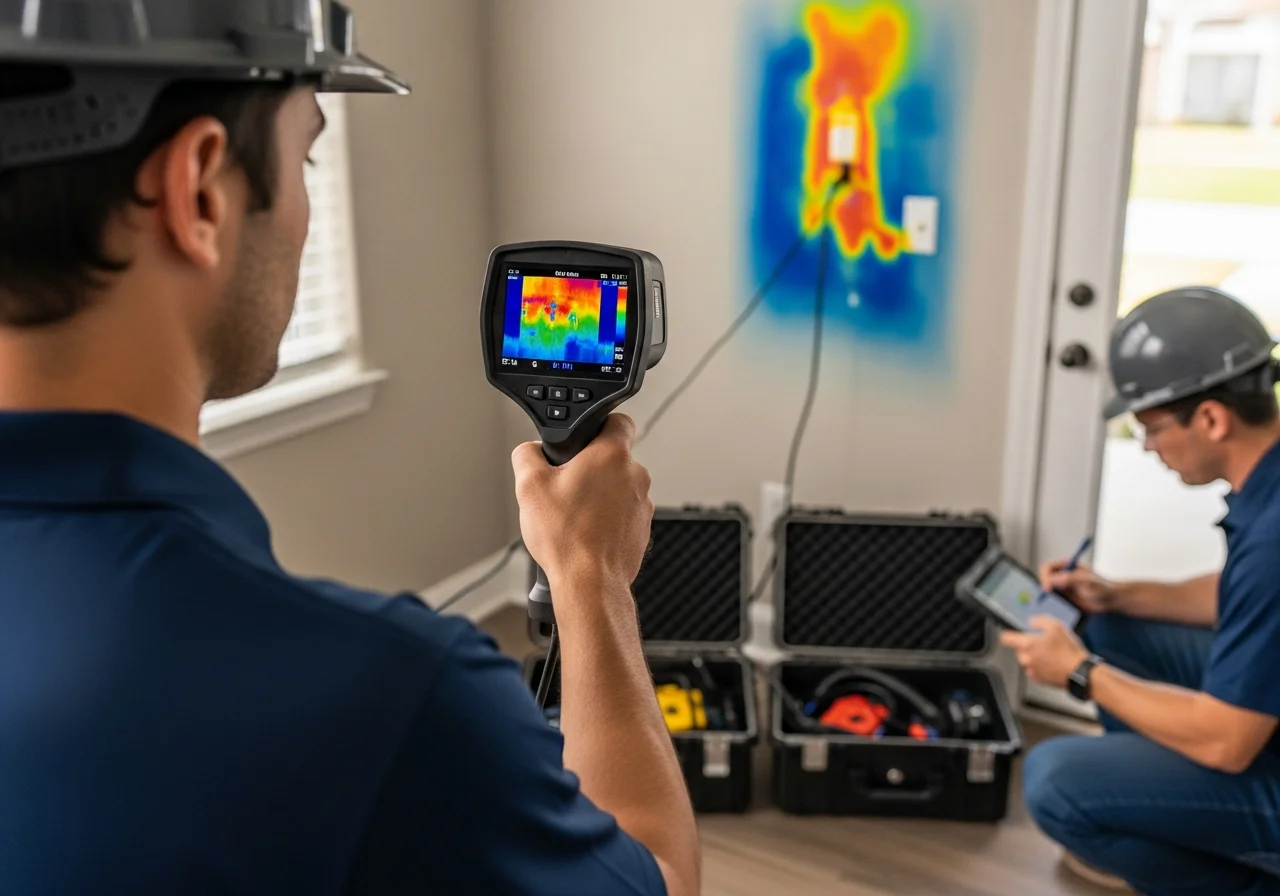
Infrared thermal cameras reveal moisture behind walls, under floors, and in ceilings that isn't visible to the naked eye — essential in Fort Mill's construction style where engineered hardwood and luxury vinyl plank can trap moisture in the subfloor for weeks before visible damage appears. Calibrated pin-type and non-invasive meters quantify moisture content of every affected material, proving scope to your adjuster and preventing under-scoping that leaves hidden damage unclaimed.
Daily Drying Logs
Data-logged moisture readings taken every 24 hours throughout the drying process. These logs prove that professional drying was necessary, document the progressive moisture reduction toward dry standard, and verify the timeline — critical for Fort Mill mold claims where establishing that growth occurred within the covered loss window (rather than before it) is often the difference between covered and denied.
Xactimate Scope & Line-Item Estimate
Line-item estimates written in the same software and SC regional pricing database your insurance carrier uses. Every damaged item is measured, described, and priced per Xactimate current Fort Mill/York County market rates. This format eliminates the format-translation delays that occur when contractors submit estimates in spreadsheets or competing software — and gives adjusters nothing to dispute on pricing.
Cause-of-Loss Attribution
Each item of damage is classified by its specific cause — burst pipe, flood, fire, wind, mold — because different causes are covered by different policies at different sublimit levels. For Fort Mill storm claims, the distinction between wind-driven rain entry (homeowners policy) and surface water intrusion (excluded as flood) can represent the entire claim value. We document cause by entry point, not by room.
HOA Policy-Layer Attribution
For Fort Mill HOA community properties, we prepare separate documentation packages for each policy: the HOA master policy carrier receives scope items attributable to the building shell and common elements; your HO-6 carrier receives scope items attributable to interior finishes and personal property. This dual-package approach prevents scope items from falling between policies — a gap that routinely costs Fort Mill HOA homeowners thousands of dollars.
Fort Mill Thermal Imaging
Seeing What Your Adjuster Can't Without Technology
Fort Mill's climate — hot, humid summers and wet springs — means hidden moisture
behind walls and under floors is a constant threat. Our thermal cameras identify
moisture pockets invisible to the naked eye, ensuring your adjuster sees the full
scope of damage on the first inspection. Hidden moisture that's missed becomes a
supplement — or a future mold claim.
Industry-Standard Estimating
Why Xactimate Estimates Get Fort Mill Claims Approved Faster
Xactimate is the industry-standard estimating software used by virtually every
insurance carrier writing policies in South Carolina to price restoration work. When a
restoration contractor submits an estimate in a different format — a handwritten bid,
a generic spreadsheet, or a competing software package — the adjuster must manually
translate every line item into Xactimate for comparison. This translation process adds
days to weeks of processing time and creates opportunities for scope items to be
missed, mispriced, or disputed.
Palm Build writes every estimate in Xactimate using the same pricing database,
line-item codes, and measurement standards that your Fort Mill-area adjuster uses.
When our estimate arrives, the adjuster can compare and approve it line-by-line
without conversion — dramatically reducing the time between scope submission and claim
approval.
For Fort Mill HOA community claims — where both the master policy carrier and your
individual HO-6 carrier must each approve their respective portions — having separate
Xactimate estimates for each policy layer cuts the dual-adjuster coordination time in
half. Both adjusters receive estimates in the exact format their systems require, with
scope items clearly attributed to the correct coverage layer.
Benefits of Xactimate-Based Estimates for Fort Mill Claims
Eliminates format-based disputes — your estimate speaks the same language as the adjuster
Uses the SC regional pricing database reflecting actual Fort Mill labor and material costs
Line-item detail matches the granularity adjusters use for approval decisions
Supplements are submitted in the same format — no conversion or manual re-entry by the adjuster
Reduces approval timeline from weeks to days for straightforward claims
HOA master policy and HO-6 items are separated into distinct estimate sections for dual-carrier coordination
Creates an auditable record that protects both you and your carrier from future disputes
The Palm Build Difference
Why Fort Mill Homeowners Choose Palm Build for Insurance Claims
Fort Mill's insurance landscape is more complex than most homeowners realize —
cross-border carrier issues, HOA master policy coordination, flood vs. water damage
distinctions, and a humid climate that accelerates secondary damage. Palm Build is built
for exactly this complexity.
Xactimate-Native Estimating for SC Carriers
Every estimate, supplement, and change order is written in the same software and South Carolina regional pricing database your carrier uses. No format translation, no re-entry errors, no weeks of back-and-forth over estimate structure. This single capability accelerates Fort Mill claim approvals more than any other factor — especially for HOA community claims requiring dual estimates.
HOA Master Policy Coordination
Fort Mill's heavily HOA-dominated housing market creates a documentation challenge that most restoration contractors aren't equipped to handle: two carriers, two adjusters, two separate estimates, and a clear attribution of scope items to each policy layer. Palm Build prepares dual documentation packages for every Fort Mill HOA claim and attends adjuster walkthroughs with both carriers when needed to prevent scope gaps.
SC LLR Licensed — Both Sides of the State Line
Palm Build is licensed by the South Carolina Labor, Licensing and Regulation (LLR) board and operates regularly throughout York County. We understand SC claim timelines, SC documentation requirements, and SC coverage interpretations — and we communicate directly with your carrier whether your policy was written by an SC or NC agent. Many Fort Mill homeowners don't realize their NC-issued policy must be handled under SC regulations until a dispute arises.
No Out-of-Pocket Insurance Coordination
Our insurance coordination, documentation, adjuster meetings, supplement filing, and HOA carrier coordination are all included in the restoration scope — paid by your carrier as part of the approved claim. Your only direct cost is your policy deductible. Fort Mill's average premium of $2,430/year already delivers strong coverage value; making sure claims are fully paid is how you capture that value.
Direct Adjuster Communication From Day One
We meet with your adjuster on-site, walk the property together, and present our documentation package directly. This face-to-face coordination resolves questions faster than email chains. For Fort Mill HOA community claims, we coordinate with multiple adjusters simultaneously — keeping both carriers aligned on scope attribution and preventing approval delays caused by inter-carrier disputes.
Documentation From First Arrival
Palm Build begins documenting the moment we arrive — before a single drop of water is extracted or a single charred board is removed. Pre-mitigation documentation is the foundation of your entire claim. In Fort Mill's HOA communities, where damage may affect both common elements and individual unit interiors, this immediate cause-of-loss documentation is essential for establishing which policy carrier is responsible for which scope items.
Common Questions
Fort Mill Insurance Restoration FAQ
Answers to the questions Fort Mill and York County homeowners ask most often about the
insurance claims and restoration process.
Does Palm Build work with South Carolina insurance carriers in Fort Mill?
Yes — we work with every major carrier active in the Fort Mill and York County market, including State Farm (the area's most common carrier, averaging $1,961/year), Allstate, USAA, Travelers, Nationwide, SC Farm Bureau, and Chubb for premium homes valued above $800,000. Our estimates use the same Xactimate software and pricing database that South Carolina adjusters use, which minimizes disputes and accelerates approval.
My insurance agent is in Charlotte — does that create any complications for a South Carolina claim?
It can. A significant share of Fort Mill homeowners work in Charlotte and purchased their homeowners policy through NC-based agents who may not be fully versed in South Carolina restoration regulations, SC Department of Insurance claim timelines, or SC-specific coverage interpretations around flood vs. surface water. Palm Build is licensed and experienced on both sides of the state line. We communicate directly with your carrier regardless of where the policy was written, and we ensure your documentation meets SC requirements so nothing delays your claim on a technicality.
I live in Baxter Village (or Sun City, or Waterside). How does the HOA master policy affect my claim?
HOA master policies are one of the most misunderstood coverage areas in Fort Mill's heavily HOA-dominated housing market. The master policy typically covers the building shell and common elements — but the trigger point varies: 'bare walls in' leaves interior finishes to your HO-6, while 'all in' covers more. After damage, both policies may respond simultaneously, and adjusters from each carrier must coordinate. Palm Build prepares separate documentation packages for each policy, clearly attributing scope items to the correct coverage layer. We also attend adjuster walkthroughs with both carriers when needed to prevent scope gaps between policies.
Should I call my insurance company or Palm Build first?
Call Palm Build first — or at least simultaneously. Your insurance policy requires you to mitigate further damage immediately, and documenting the initial damage condition before cleanup begins is critical for your claim. We can begin emergency mitigation and documentation while you open your claim with your carrier. Waiting for an adjuster before starting mitigation can result in secondary damage — especially mold in Fort Mill's humid summers — that complicates your claim or triggers the mold sublimit.
Does my Fort Mill homeowners policy cover flood damage?
Almost certainly not. Standard homeowners policies — including all major carriers writing in Fort Mill — exclude flood damage. Separate flood coverage through the National Flood Insurance Program (NFIP) or a private flood policy is required for any water that enters your home from an external source. This distinction matters enormously after heavy rain events: water that enters through a burst pipe is typically covered; water that enters through an overwhelmed storm drain or overflowing creek is flood damage and requires a separate flood policy. Palm Build documents the precise source and path of water intrusion to support the correct coverage determination.
What about mold coverage — Fort Mill summers are humid?
Most standard homeowners policies in Fort Mill include a mold sublimit of $10,000 to $15,000, and some carriers exclude mold coverage entirely or require a separate endorsement. If water damage goes undetected for 48–72 hours — common in Fort Mill's summer heat and humidity — secondary mold growth can quickly escalate beyond the sublimit. Palm Build deploys thermal imaging and moisture meters at the first inspection to identify hidden moisture before mold takes hold, and we document the timeline meticulously to establish that mold growth was a direct, covered consequence of the original loss — not pre-existing or caused by neglect.
What if my insurance company denies part of my claim?
Partial denials are common in Fort Mill, particularly for mold remediation (sublimited coverage), code upgrades (requires ordinance-and-law endorsement), and disputes over flood vs. water damage origin. Palm Build helps you understand which items are covered vs. excluded, documents all covered items thoroughly to prevent incorrect denials, and files supplements with supporting evidence when legitimate claim items are initially denied. We do not pursue public adjuster activity — our role is as your licensed restoration contractor providing complete, defensible documentation.
How much does Palm Build charge for insurance coordination?
Nothing additional. Insurance coordination, documentation, adjuster meetings, and supplement filing are included as part of our restoration scope. Our fees are paid by your insurance carrier as part of the approved claim — not out of pocket. You are responsible for your policy deductible, which is the only out-of-pocket cost for a covered loss. Fort Mill's average homeowners premium of $2,430 per year ($203/month) — already 24% below the statewide SC average of $3,205 — means you're getting strong coverage value. Making sure claims are fully paid is how you capture that value.
What is Xactimate and why does it matter for my Fort Mill claim?
Xactimate is the industry-standard estimating software used by virtually every insurance carrier to price restoration work. When your restoration contractor submits estimates in a different format, the adjuster must manually re-enter and cross-reference every line item — adding days to weeks of delay and creating opportunities for scope items to be missed or disputed. Palm Build writes every estimate in Xactimate at current South Carolina regional pricing, matching the exact format and database your carrier's adjuster uses.
How long does the insurance claims process take in Fort Mill?
For a straightforward covered loss — a burst supply line, a kitchen appliance leak — the process typically takes 1–3 weeks from initial filing to scope approval. Complex claims involving HOA master policy coordination, disputed coverage between flood and water damage, or larger losses can take 4–10 weeks. Palm Build's organized, complete documentation packages minimize back-and-forth with adjusters and help keep timelines on the shorter end.
What documentation does my insurance company need?
Your carrier needs: initial damage photos and video (before any cleanup), cause-of-loss determination, moisture mapping and meter readings (we use calibrated meters and thermal imaging), a detailed scope of work with Xactimate line-item pricing, daily drying logs showing progress toward drying goals, photos at each stage of mitigation and reconstruction, and final completion documentation. For HOA claims, we also provide policy-layer attribution showing which scope items belong to the master policy vs. your HO-6. Palm Build produces all of this as standard on every Fort Mill project.
Need Help With a Restoration Insurance Claim in Fort Mill?
Palm Build handles the entire insurance process — documentation, adjuster coordination, HOA master policy navigation, supplement filing — so you can focus on getting your home back. We work with every major carrier in the Fort Mill and York County market, on both sides of the NC/SC state line.