South Carolina has zero state-level mold licensing requirements — anyone can call themselves a mold remediation contractor with no training, no certification, and no accountability. In Fort Mill, where humidity never drops below the mold-growth threshold of 60% and aging crawl spaces line entire neighborhoods, that regulatory gap is dangerous. Palm Build holds IICRC S520 certification — the only independently verified credential that means anything in this market.
Charlotte, NC — approximately 20 miles north of Fort Mill Same day Response IICRC Certified
Fort Mill's Severe Mold Risk — Four Compounding Factors
Fort Mill's mold problem is not seasonal. It is a permanent, year-round condition driven
by climate, soil chemistry, aging housing stock, and a complete absence of state
regulatory oversight. Understanding why is the foundation of permanent remediation — not
just temporary cleanup.
Persistent Humidity — Never Below 60%
69-75%
Year-round RH average
Fort Mill's relative humidity averages 69-75% year-round and never consistently drops below the 60% threshold at which mold actively grows. This is not a summer problem — it is a 365-day condition that makes Fort Mill one of the most challenging mold environments in the Carolinas.
York County Clay Soil Moisture Cycling
55%+
Clay moisture capacity
York County's clay-heavy soils expand dramatically when saturated, pushing moisture into foundations and crawl spaces. When dry conditions return, the clay contracts — opening new gaps and cracks that allow the next rain cycle to penetrate deeper. This constant cycling feeds chronic crawl space moisture.
1990s–2000s Boom Homes Aging Into Failure
20-30 yrs
Typical boom-era home age
Fort Mill's explosive growth during the 1990s and 2000s left a large housing stock of 20-30 year old homes. Vapor barriers, drainage systems, and crawl space moisture controls from that era are now reaching their service life limits — and failing quietly, often without obvious signs until mold is established.
SC Has NO State Mold Licensing
0
SC mold licensing laws
South Carolina imposes zero state-level licensing, certification, or oversight requirements for mold remediation contractors. In a market where anyone can claim to be a mold professional, Fort Mill homeowners face significant risk of hiring unqualified operators who treat symptoms without addressing root moisture causes.
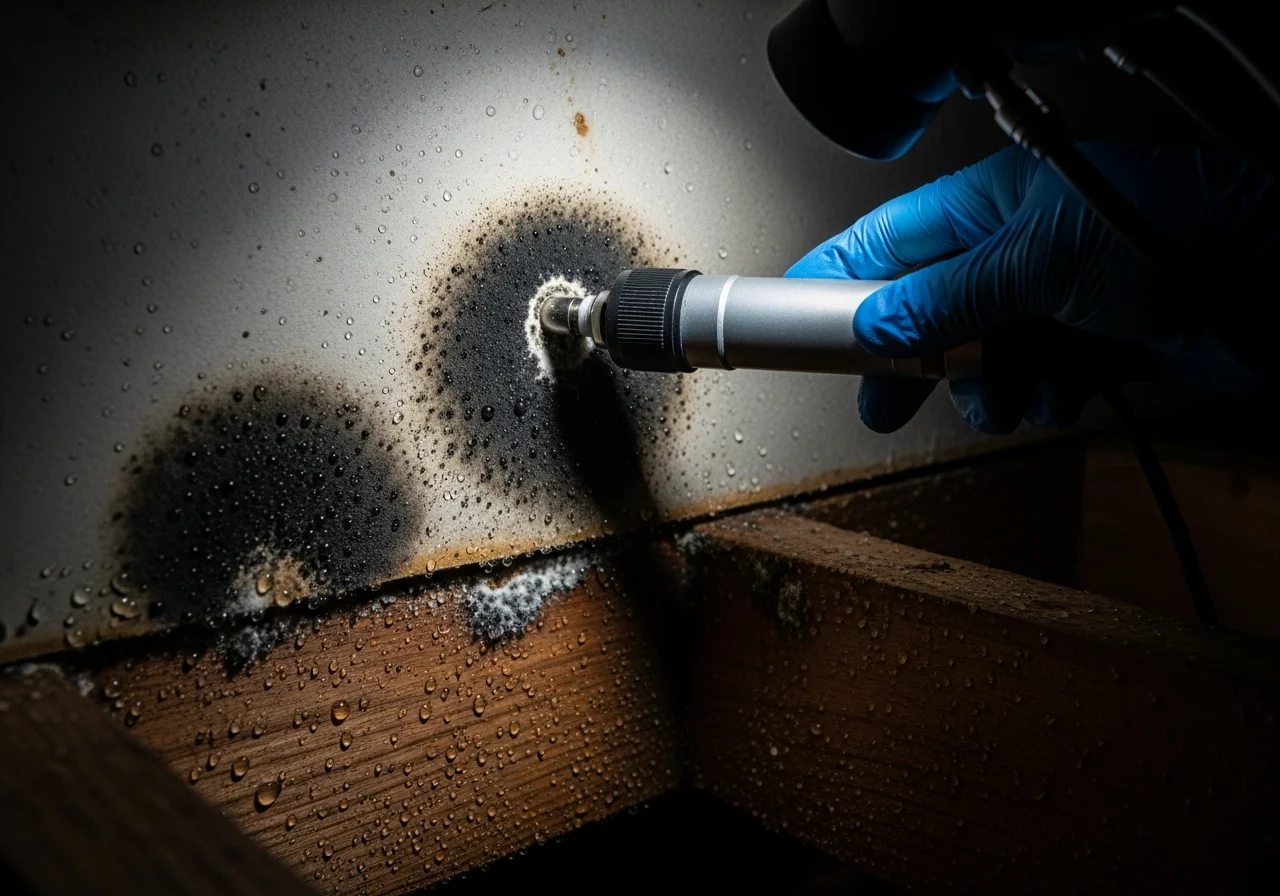
Active mold colony on structural framing — typical in pre-2005 Fort Mill homes without
crawl space encapsulation. Fort Mill's 69-75% year-round humidity sustains growth
year-round.
CONSUMER ALERT: South Carolina Has No Mold Licensing Law
In South Carolina, any person or company can legally advertise, sell, and perform
mold remediation services with zero training, zero credentials, and zero accountability to any state authority. There is no license to check, no state database to verify, and no regulatory
agency with jurisdiction over mold contractors in Fort Mill or anywhere else in SC.
SC Regulatory Landscape
Mold Licensing in South Carolina: The Dangerous Gap
South Carolina has no state-specific mold remediation license requirement. Unlike North Carolina (which also lacks mold-specific licensing but has stronger
contractor oversight generally), South Carolina's regulatory framework offers
essentially no consumer protection in the mold remediation space.
House Bill 3203 (2022-2023 legislative session) proposed a voluntary certification
framework for mold inspectors and remediators in South Carolina. As of 2026, that bill remains
under legislative consideration with no enacted requirement. "Voluntary" means nothing is
checked, nothing is enforced, and nothing is verified.
The only independently verifiable credential that means anything in
Fort Mill's mold market is IICRC S520 certification — the industry standard for professional
mold remediation procedures published by the Institute of Inspection, Cleaning and
Restoration Certification. You can verify any contractor's IICRC certification at iicrc.org before paying a single dollar.
Always ask for the IICRC S520 certificate number — then verify it at iicrc.org
Ask specifically for Mold Remediation Specialist (MRS) credentials
Any structural repairs require SC contractor licensing — verify separately
York County does not have additional local mold ordinances
Never hire a company that does both testing AND remediation — it is a conflict of interest
Full liability insurance and workers' compensation coverage
Charlotte operations hub — approximately 20 miles from Fort Mill
SC Red Flags — Watch For These
No IICRC certification or refuses to provide the certificate number
Offers to "spray and seal" without full removal — this is cosmetic, not remediation
Won't set up polyethylene containment barriers or HEPA filtration
Claims "SC licensed" without specifying what license — SC has no mold license to hold
Same company performs both the mold test and the remediation
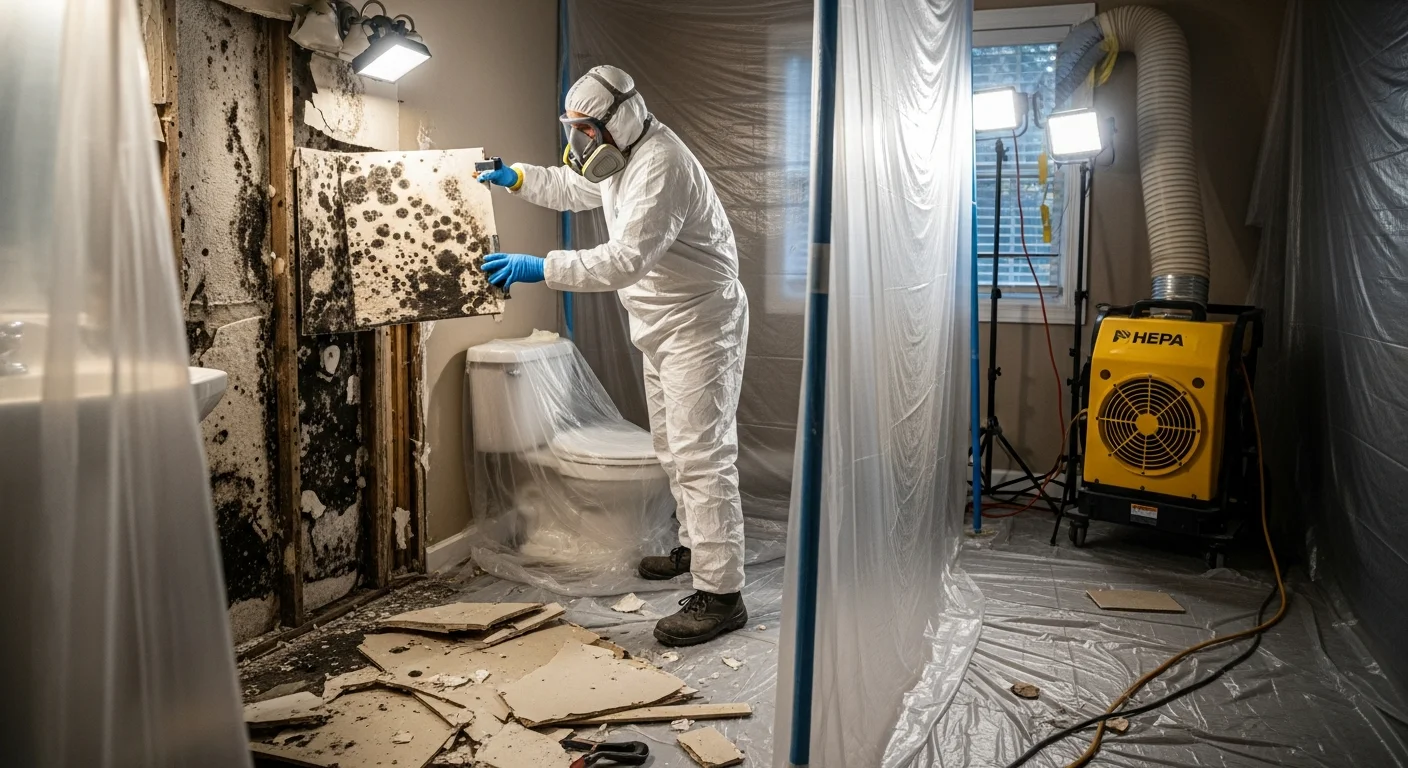
Palm Build's IICRC-certified crew — the credential SC law doesn't require but Fort
Mill homeowners deserve
Fort Mill's #1 Mold Problem
Crawl Space Mold: The Hidden Crisis Under Fort Mill Homes
Homes built before 2003-2005 in Fort Mill frequently have vented crawl spaces with no
encapsulation and no meaningful vapor barriers. York County's clay soil feeds these
crawl spaces with a continuous moisture supply that never fully dries between rain
events — creating ideal, persistent mold growth conditions below living areas.
When humid outdoor air enters through foundation vents and contacts cooler crawl space
surfaces, it hits the dew point — condensing directly onto floor joists, subfloor
panels, insulation batts, and HVAC ductwork. In Fort Mill's 69-75% ambient humidity,
this happens continuously. Average crawl space encapsulation in this market runs
$12,000-$25,000; complete moisture remediation with drainage corrections can reach
$50,000+ for larger homes.
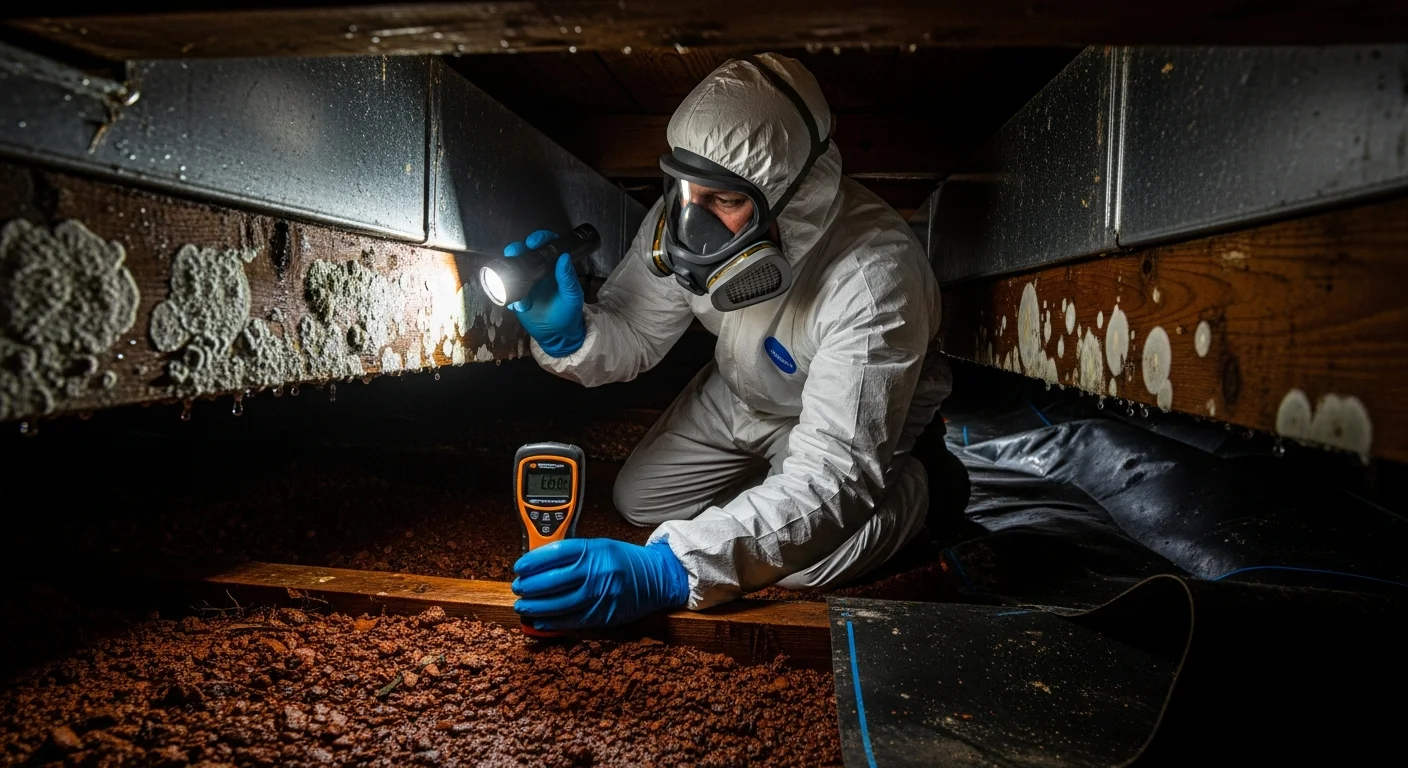
Active crawl space inspection in Fort Mill — identifying moisture intrusion sources
and mold colony extent before remediation planning
Highest-Risk Fort Mill Neighborhoods
Historic Downtown / Whiteville Park
Highest Risk
Oldest homes in Fort Mill — many with original cast-iron plumbing and no vapor barriers installed during construction. Crawl spaces here predate modern moisture control standards by decades.
Baxter Village
High Risk
20-25+ years old and entering the window when original crawl space vapor barriers and drainage systems begin to fail. Wooded lots trap ground-level humidity year-round.
Bridgemill & Habersham
High Risk
Heavily wooded lots that retain ground humidity between rain events. Tree canopy prevents solar drying of soil moisture, maintaining near-constant elevated dampness at foundation level.
Waterside at Catawba
Elevated Risk
River-adjacent dampness creates persistent baseline moisture, particularly in below-grade and basement units. Catawba River proximity elevates soil saturation throughout the development.
IICRC S520 Protocol
Our Fort Mill Mold Remediation Process
Professional mold remediation follows a strict sequence defined by the IICRC S520
standard. In South Carolina — where no state oversight exists — this protocol is the
only meaningful benchmark. Here's exactly what happens when Palm Build's certified team
arrives in Fort Mill.
01
Assessment & Testing
Day 1
02
Containment Setup
Day 1-2
03
HEPA Air Filtration
Continuous
04
Removal & Cleaning
Days 2-4
05
Antimicrobial Treatment
Days 4-5
06
Clearance Verification
Day 5-6
01
Assessment & Testing
Day 1
Comprehensive visual inspection, moisture mapping with infrared cameras, and air quality sampling. We identify the moisture source — not just visible mold — and classify contamination per IICRC S520. In Fort Mill, crawl space access and full thermal scanning is standard on every assessment.
02
Containment Setup
Day 1-2
Sealed polyethylene containment barriers isolate affected areas. HEPA air scrubbers create negative air pressure, preventing cross-contamination into clean living areas. In SC where no oversight exists, this step separates legitimate operators from spray-and-walk contractors.
03
HEPA Air Filtration
Continuous
HEPA filtration runs throughout the entire project, capturing mold spores down to 0.3 microns. This protects both your family and our technicians. Continuous air changes are maintained from containment setup through clearance verification.
04
Removal & Cleaning
Days 2-4
Contaminated materials removed with controlled demolition techniques. Salvageable surfaces cleaned with HEPA vacuuming, wire brushing, and dry ice or soda blasting as appropriate. Non-salvageable materials double-bagged and disposed per EPA guidelines. No "seal over it" shortcuts.
05
Antimicrobial Treatment
Days 4-5
EPA-registered antimicrobial agents applied to all treated surfaces. For Fort Mill crawl spaces, this includes joist faces, subfloor panels, and foundation walls. Treatment prevents regrowth during the reconstruction or encapsulation phase.
06
Clearance Verification
Day 5-6
Post-remediation air quality testing confirms spore counts have returned to acceptable levels. Visual inspection verifies all contamination addressed. Clearance documentation provided for insurance records. In SC where no state oversight exists, this independent verification is your only objective proof.
Why Containment Matters in Fort Mill
Disturbing mold without proper containment sends billions of spores airborne —
potentially contaminating clean areas of your home. With SC's unregulated market, many
contractors skip this step entirely. Palm Build's containment protocol keeps mold
isolated during every phase of removal.
1
Sealed Barriers
Polyethylene sheeting floor-to-ceiling
2
Negative Pressure
HEPA scrubbers pull air through containment zone
3
Full PPE Protocol
Tyvek suits, N95/P100 respirators, goggles on all crew
Fort Mill mold problems rarely announce themselves dramatically. Instead, they build
quietly in crawl spaces and wall cavities for months — by which time remediation costs
have multiplied. These are the signs to act on immediately.
Persistent Musty or "Earthy" Odor
Most Reported
The most-reported early warning in Fort Mill homes. Roughly 40% of indoor air in homes with vented crawl spaces entered from below. If that crawl space carries mold spores and damp soil odors — from York County clay saturated by rain — your living area smells it continuously.
Allergy and Respiratory Flare-Ups Indoors
Health Risk
When crawl space or wall cavity mold feeds elevated airborne spore counts, respiratory symptoms increase. The CDC documents mold exposure causes nasal congestion, throat irritation, coughing, and eye irritation. Fort Mill's year-round humidity means these exposures don't resolve seasonally.
Soft, Springy, or Sagging Floor Areas
Structural
When wood moisture content exceeds 19%, structural softening and decay organisms become active. Bouncy or soft spots in your floor — especially over crawl space areas — mean damage is already underway beneath the surface. This is structural, not cosmetic.
Visible Dark Growth or Staining
Advanced
Black, green, or gray patches on walls, ceilings, around windows, or in closet corners. In crawl spaces: dark colonies on floor joists, subfloor sheathing, and HVAC ductwork insulation. Visible mold typically represents the surface of a larger hidden colony — not the full extent.
Condensation on Windows, Ducts, or Pipes
Early Warning
Surface condensation forms when ambient humidity exceeds the dew point of cooler surfaces. In Fort Mill's 69-75% year-round humidity, this occurs frequently. Visible condensation on crawl space ducts means moisture levels actively support mold growth right now.
Crawl Space Standing Water or Wet Soil
Structural
Any standing water or visibly saturated soil in your crawl space is a mold emergency — not a monitoring situation. York County clay drainage is extremely slow. Pooled water in a crawl space with Fort Mill's ambient humidity will produce active mold colonies within 24-72 hours.
When to Call Immediately
Mold covering more than 10 square feet, rotted floor joists or structural members,
or any standing water in your crawl space requires immediate professional response —
not DIY cleanup. In SC where any contractor can call themselves a mold professional,
make sure you verify IICRC S520 certification before signing anything. Call Palm
Build at (704) 464-0121 for same-day Fort Mill assessment.
Fort Mill Pricing
Mold Remediation Costs in Fort Mill, SC
Costs depend on contamination extent, materials affected, and whether crawl space
encapsulation is needed. SC standard insurance policies typically cap mold coverage at
$5,000-$10,000 — Fort Mill crawl space projects routinely exceed this sublimit.
Single-room containment, standard removal and antimicrobial treatment
Moderate Area (50-200 sq ft)
Bedroom wall, partial crawl space, HVAC ductwork
$5,000 – $15,000
Multi-zone containment, source moisture correction typically required
Crawl Space + Encapsulation
Full crawl space remediation with vapor barrier and drainage
$12,000 – $50,000+
Most common large-scale Fort Mill project given the area's housing stock
SC's Unregulated Market Drives Hidden Cost Risk
Because South Carolina has no mold licensing requirement, Fort Mill homeowners
frequently receive bids from unqualified contractors who quote low upfront — then
deliver incomplete remediation. Mold that isn't fully removed and its moisture source
corrected will return within months, requiring a full second remediation at full cost.
The cheapest bid in an unregulated market is almost always the most expensive outcome.
Verify IICRC S520 certification at iicrc.org before signing any contract.
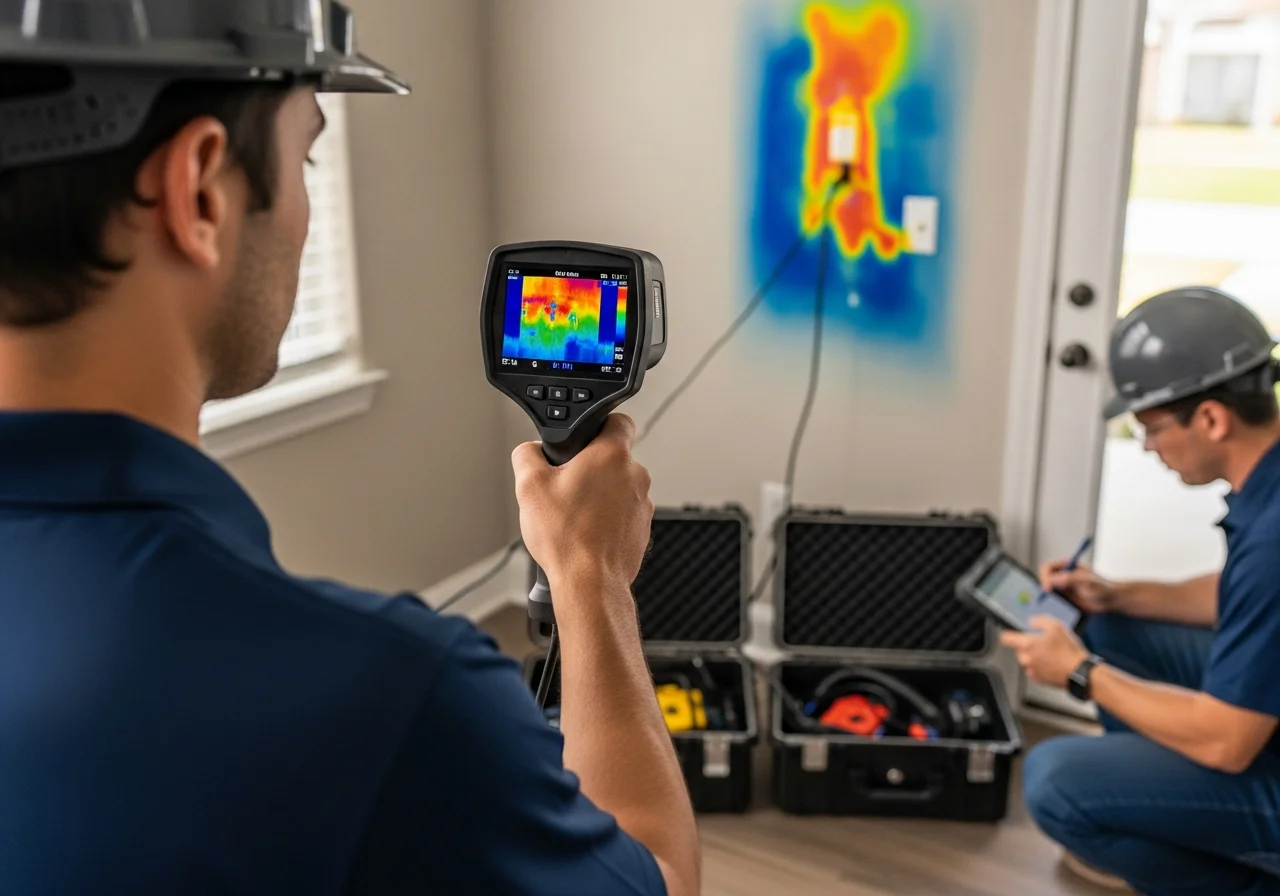
Thermal imaging locates hidden moisture behind walls before visible mold appears —
accurate scoping prevents underestimating project cost and scope
Insurance Navigation
Mold Insurance Claims in Fort Mill, SC
South Carolina homeowners insurance mold coverage is limited and varies significantly by
carrier. Understanding your policy's sublimits before you need them can save thousands —
especially when Fort Mill's crawl space projects routinely exceed standard coverage
caps.
Mold resulting from a sudden, covered water event (burst pipe, appliance failure, roof storm damage) is typically covered — up to policy sublimits
SC standard policies typically cap mold at $10,000-$15,000 — Fort Mill crawl space projects with encapsulation routinely exceed $25,000-$50,000+
Gradual moisture buildup, long-term humidity accumulation, and deferred maintenance are almost universally excluded from mold coverage
Pre-existing mold discovered during a renovation, inspection, or sale is not covered — regardless of when it started
When mold traces to a covered sudden event, proper documentation connecting the mold to the original loss dramatically improves claim outcomes
Some SC carriers offer mold endorsements for additional premium — ask your agent specifically about expanded mold sublimits before you have a claim
Insurance documentation meeting — Palm Build provides moisture maps, timeline photos,
and remediation scope formatted for SC adjusters
Palm Build's Approach to SC Mold Claims
When Fort Mill mold results from a covered water event, our documentation connects the
mold directly to the original loss — moisture maps with timestamps, thermal imaging
showing moisture migration paths, and remediation scope formatted for the SC adjuster.
For non-covered mold, we provide transparent pricing and work with you on phased
remediation approaches where appropriate.
Every phase of remediation — from initial inspection through final encapsulation —
documented with professional photography for your insurance records and peace of mind.
Active mold colony on structural framing — typical in pre-2005 Fort Mill homes
IICRC-certified crawl space inspection — identifying moisture sources before remediation
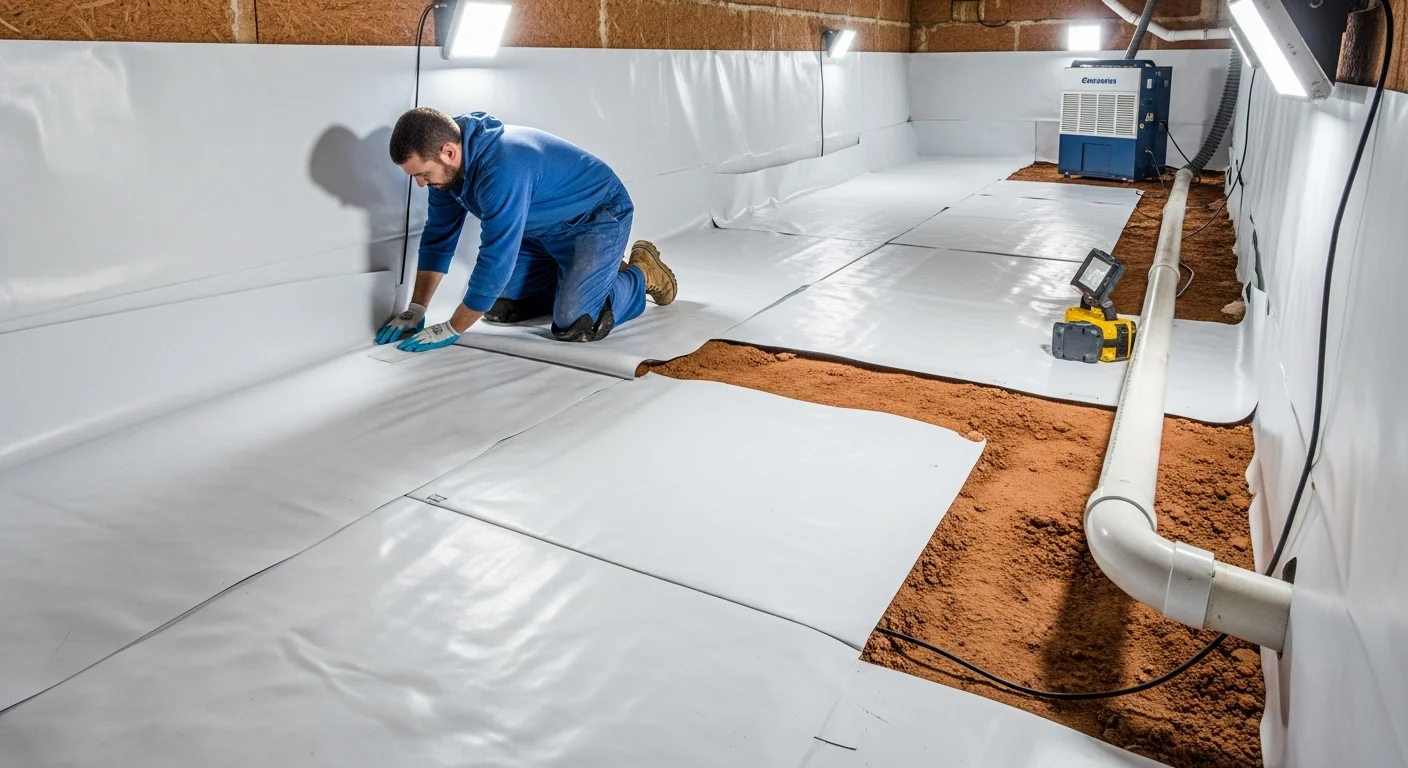
After: Full encapsulation with vapor barrier — the permanent solution to Fort Mill's 69-75% humidity
Thermal imaging reveals hidden moisture before visible mold appears — critical for accurate scoping
The Palm Build Difference
Why Fort Mill Homeowners Choose Palm Build for Mold
In South Carolina's unregulated mold market, your contractor choice is the only
protection you have. Here is what separates Palm Build from the hundreds of unlicensed
operators who legally service Fort Mill.
IICRC S520 Certified — In a State That Requires Nothing
Every Palm Build crew lead holds current IICRC Mold Remediation Specialist (MRS) certification and follows the S520 standard for containment, removal, and clearance verification. In South Carolina, where no state licensing exists and any unlicensed contractor can legally offer mold services, this independently verifiable credential is the only meaningful benchmark.
SC LLR Licensed Contractor
Mold remediation frequently requires structural repairs — replacing rotted joists, subfloor sheathing, or framing damaged by moisture and decay. Palm Build holds SC LLR (Labor, Licensing and Regulation) contractor licensing for these repairs. Verify our license on the SC LLR portal before work begins.
Charlotte Operations Hub — 20 Miles North
Fort Mill sits 20 miles south of our Charlotte operations hub. We deploy same-day across all of Fort Mill, York County, Baxter Village, Waterside at Catawba, Sun City Carolina Lakes, Historic Downtown, and surrounding communities. There's no dispatch delay waiting for a contractor from outside the region.
Root Cause Correction — Not Cosmetic Cleanup
Removing visible mold without correcting its moisture source guarantees it returns within months. Palm Build identifies and addresses the underlying cause — whether that is clay soil drainage, failed vapor barrier, HVAC condensation, or plumbing leak — before remediation begins. This is where unqualified SC contractors routinely fail.
Full Insurance Documentation
When Fort Mill mold traces to a covered water event, our documentation connects it to the original loss — moisture maps, thermal imaging, timeline photos, and remediation scope all formatted for your SC adjuster. We don't hand you a folder of photos; we give you a claim package.
Complete Remediation + Encapsulation
We don't remediate and leave you with an unencapsulated crawl space that will re-grow mold within a season. Palm Build performs complete crawl space encapsulation with vapor barrier installation, drainage correction, and mechanical dehumidification — the permanent solution to Fort Mill's year-round humidity problem.
Verify Before You Hire
Confirm any mold contractor's IICRC certification at iicrc.org before signing a contract. SC's unregulated market means your verification is the only
protection you have. Palm Build's credentials are always available to verify independently.
Common Questions
Fort Mill Mold Remediation FAQ
Honest answers to the questions Fort Mill homeowners ask most — including the ones about
South Carolina's lack of mold licensing that other contractors won't address.
Does South Carolina require a mold remediation license?
No — and that is a serious consumer protection problem. South Carolina has no state-level licensing, certification, or regulatory requirement for mold inspectors or mold remediation contractors. House Bill 3203 (2022-2023 legislative session) proposed a voluntary certification framework but remains under legislative consideration with no enacted requirement. This means any person or company in Fort Mill can advertise mold services with zero training, zero credentials, and zero accountability. The only independently verifiable credential you can check is IICRC S520 certification — the industry standard for mold remediation published by the Institute of Inspection, Cleaning and Restoration Certification. Always ask any contractor for their IICRC certificate number and verify it at iicrc.org before hiring.
Why is mold such a persistent problem in Fort Mill homes?
Fort Mill's humidity averages 69-75% year-round and never consistently drops below the 60% threshold at which mold can grow. This is not a seasonal problem — it is a year-round condition. York County's clay-heavy soils compound the issue: clay expands when wet, pushing moisture into foundations and crawl spaces, then contracts when dry, opening new gaps for the next rain cycle. Homes built during the 1990s and 2000s growth boom — which make up a large portion of Fort Mill's housing stock — frequently have vented crawl spaces without proper moisture barriers or encapsulation. Neighborhoods like Baxter Village and Bridgemill sit on wooded lots where tree canopy further traps humidity at ground level.
Which Fort Mill neighborhoods have the highest mold risk?
Historic Downtown Fort Mill and the Whiteville Park area carry the highest mold risk — these are the oldest homes in the city, many with aging crawl spaces, original cast-iron plumbing susceptible to slow leaks, and no moisture barriers installed during original construction. Waterside at Catawba sees elevated risk from river-adjacent dampness, particularly in below-grade and basement units. Baxter Village homes are now 20-25+ years old and entering the window when crawl space moisture systems and vapor barriers begin failing. Sun City Carolina Lakes slab-on-grade homes face a different risk profile — slab leaks spread moisture silently across the entire living area before detection. Bridgemill and Habersham's heavily wooded lots retain ground-level humidity that never fully dissipates between rain events.
How quickly does mold grow after water damage in Fort Mill?
Visible mold growth can appear within 24 to 72 hours of a water damage event in Fort Mill conditions. The combination of pre-existing high ambient humidity (69-75%) and a fresh moisture source — burst pipe, roof leak, HVAC condensate overflow, or storm intrusion — creates near-ideal growth conditions immediately. Fort Mill's warm temperatures for most of the year further accelerate spore germination. If you have experienced any water event, professional assessment within 24 hours is strongly recommended.
How much does mold remediation cost in Fort Mill SC?
Residential mold remediation in Fort Mill typically ranges from $3,000 to $15,000 for contained single-area projects. Crawl space mold remediation with full encapsulation — the most common large-scale project in Fort Mill given the housing stock — ranges from $12,000 to $50,000+ depending on square footage, structural damage extent, drainage corrections needed, and whether a dehumidification system is installed. York County DHEC can provide indoor air quality guidance for questions about post-remediation clearance standards.
Does homeowners insurance cover mold remediation in Fort Mill?
South Carolina standard homeowners policies typically include mold coverage sublimits of $5,000 to $10,000 — often insufficient for Fort Mill crawl space projects. Coverage is strongest when mold results directly from a sudden, covered water event such as a burst pipe or appliance failure. Gradual moisture buildup, long-term humidity, and deferred maintenance are generally excluded. Palm Build documents all findings with photos, moisture readings, and written reports formatted to support insurance claims where coverage applies.
Can I stay in my home during mold remediation?
For small, fully contained areas, occupancy during remediation is sometimes possible. For larger projects — multiple rooms, HVAC system contamination, or any crawl space work — temporary relocation is strongly recommended. Palm Build installs containment barriers and maintains negative air pressure throughout remediation to prevent cross-contamination of unaffected living areas. Our technicians will assess your specific situation and give you a clear recommendation before work begins.
What areas around Fort Mill does Palm Build serve?
Palm Build serves all of Fort Mill and York County including Baxter Village, Waterside at Catawba, Sun City Carolina Lakes, Historic Downtown Fort Mill, Bridgemill, Habersham, Regent Park, Tega Cay, Indian Land, Lake Wylie, Rock Hill, and surrounding communities. Our Charlotte operations hub is approximately 20 miles north, enabling same-day response across the entire Fort Mill service area.
Mold Problem in Fort Mill? Verify Your Contractor's Credentials First.
South Carolina's unregulated mold industry makes credential verification critical. Palm Build holds IICRC S520 certification — the only independently verified standard that matters. Same-day assessment, professional containment, and documentation your insurance carrier accepts.