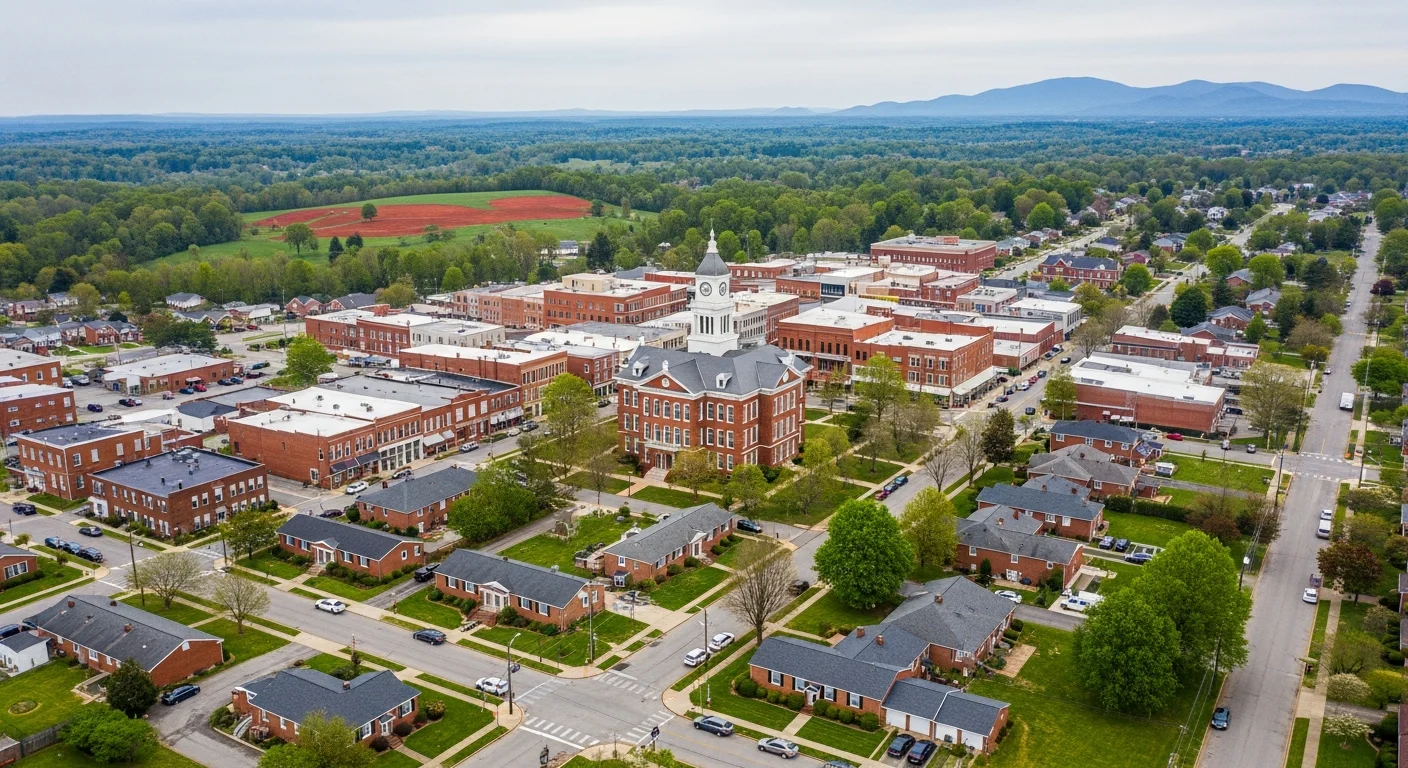
Shelby's Piedmont red clay soil, widespread vented crawl spaces, and summer humidity that regularly exceeds 70-90% make Cleveland County one of the most mold-prone areas in the NC Foothills. Palm Build's IICRC-certified team provides professional containment, remediation, and prevention — with documentation your insurance carrier accepts.
55 minutes from Charlotte office Same-day assessment Response IICRC Certified
Four factors converge in Cleveland County to create some of the highest baseline mold
risk in the NC Foothills. Shelby's combination of Piedmont red clay, vented crawl space
construction, aging housing stock, and sustained summer humidity turns the space beneath
your home into a mold incubator — mold can begin growing in 24 to 48 hours of sustained moisture.
70-90% Summer Humidity
70-90%
Summer RH levels
Shelby's humid subtropical climate pushes overnight and morning humidity to 70-90% from May through September. Warm, moisture-laden air enters vented crawl spaces, contacts cooler foundation walls and floor joists, and condenses — saturating structural wood and creating ideal conditions for mold colonization throughout the First Broad River valley.
Piedmont Red Clay Soil
<0.2 in/hr
Clay drainage rate
Cleveland County sits on Cecil and Pacolet series clay soils that drain at less than 0.2 inches per hour and hold up to 55% moisture by volume. After any significant rain, Shelby's red clay holds water against foundations for 3-5 days — continuously feeding crawl space humidity even weeks after the last storm. The same soil that gives the Foothills its distinctive color is the root cause of persistent foundation moisture.
Vented Crawl Space Design
70-90%
Crawl spaces with issues
Most pre-1980 Shelby homes sit on vented crawl spaces — a design now known to introduce humid outdoor air directly beneath your home. When 70-90% humidity air enters a cooler crawl space, condensation forms on every surface: floor joists, subflooring, ductwork, and insulation. An estimated 70-90% of older Southeast crawl spaces show moisture damage or active mold at first professional inspection.
Aging Housing Stock
Pre-1980
Highest-risk homes
A large share of Shelby's housing was built before 1980 — brick ranch construction on vented crawl space foundations with minimal vapor barriers and original galvanized plumbing. These homes have endured decades of moisture cycling through clay soil, deteriorating foundation vents, and aging pipe joints. Combined with Cleveland County's foothills topography that traps humid air in valleys, mold risk is compounded across generations of construction.
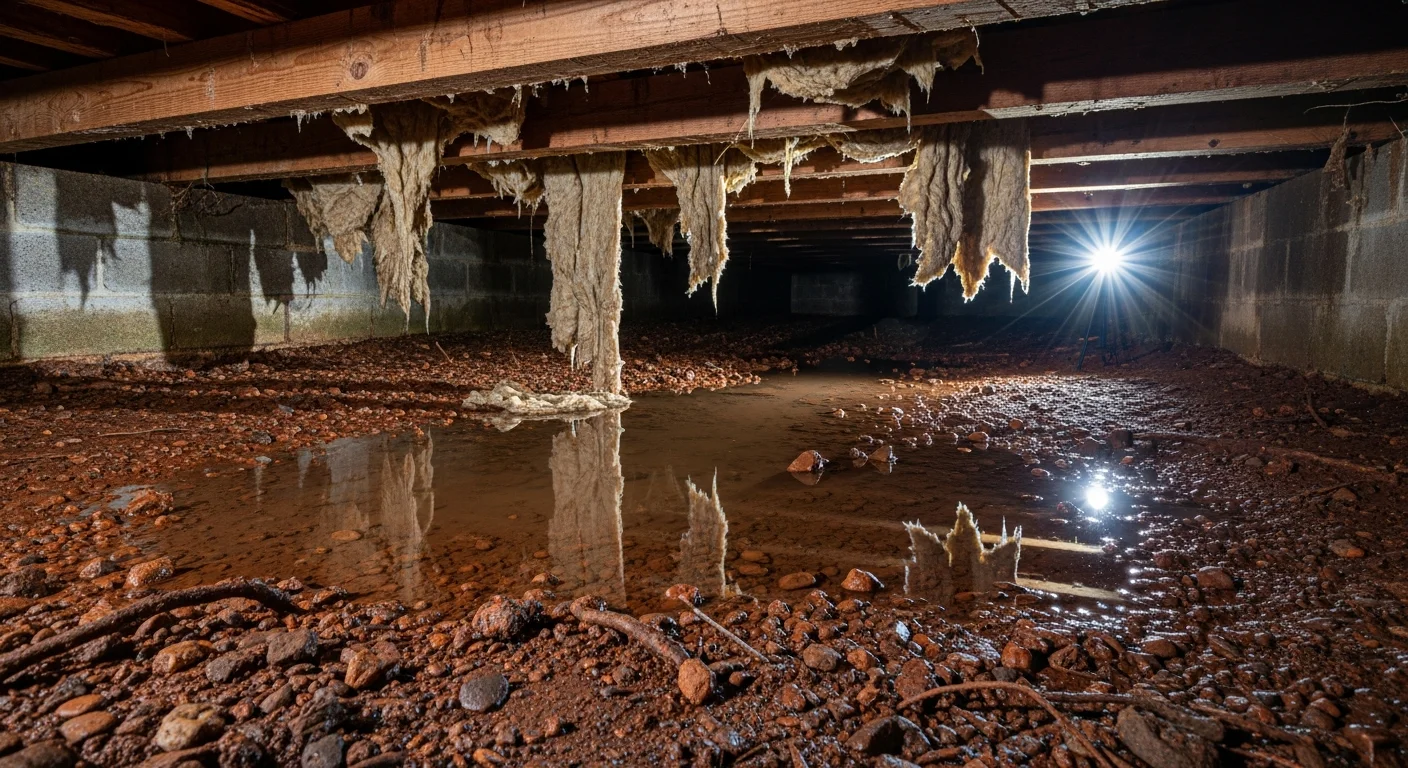
Shelby's vented crawl spaces over red clay soil create persistent moisture conditions
that drive mold colonization on floor joists, subflooring, and insulation throughout
Cleveland County.
Cleveland County's Piedmont red clay acts like a sponge against your foundation — holding
water for days after rain and releasing moisture vapor directly into your crawl space.
Combined with vented crawl space design, this creates a closed moisture loop that no
amount of surface cleaning can solve.
How Piedmont Clay Feeds Crawl Space Mold
Shelby sits on Cecil and Pacolet series clay soils that drain at less than 0.2 inches
per hour and hold up to 55% moisture by volume. After a 2-inch rain, this clay holds
water against your foundation for 3-5 days. That moisture migrates upward through the
soil as water vapor — and in a vented crawl space, it has nowhere to go but into your
home's structural members.
Now add the vented crawl space design used in nearly every pre-1980 Shelby home.
Foundation vents were intended to let moisture escape — but in a humid subtropical
climate, they do the opposite. When 70-90% humidity outdoor air enters the crawl space
in summer, it contacts cooler foundation walls and floor joists. The temperature
difference causes condensation — liquid water forming directly on your home's structural
members.
The result is a closed moisture loop: clay pushes moisture up from below, vents pull
humid air in from outside, and condensation forms on every cool surface. Floor joists,
subflooring, HVAC ductwork, and insulation stay perpetually damp — and mold colonizes
within days.
Shelby crawl spaces over red clay develop persistent moisture that saturates floor
joists, subflooring, and HVAC ductwork — the root cause of Cleveland County's chronic
mold problem.
Radon Consideration
Before encapsulating any Shelby crawl space, test for radon. Cleveland County has
variable radon levels due to its Piedmont geology. Sealing a crawl space without radon
mitigation can trap this cancer-causing gas inside your home. We always recommend
radon testing before encapsulation and can coordinate mitigation if needed.
Symptoms We See Across Shelby Neighborhoods
1960s Ranches Near City Park
Musty smell rising through hardwood floors, especially in summer
Vented crawl space over saturated clay — moisture wicking up through subfloor into hardwood
NC Mold Licensing: What Shelby Homeowners Must Know
North Carolina has no state-specific mold remediation license requirement. The NC State University Extension Healthy Homes program confirms: "No federal or
state certification programs exist for companies or individuals providing mold
remediation services."
This means anyone can legally offer mold remediation in Shelby — regardless of
training, equipment, or experience. The accepted industry benchmark is IICRC
certification, specifically the BSR-IICRC S520 standard for professional mold remediation procedures and the Mold Remediation Specialist (MRS) certification, which
requires verifiable field experience and a proctored examination.
NC DHHS guidance recommends hiring contractors with recognized industry credentials.
The NC State University Healthy Homes program specifically advises homeowners to
verify IICRC certifications before contracting mold work.
For Shelby homeowners, this regulatory gap means you must verify credentials yourself.
Cleveland County's smaller market makes it especially vulnerable to unqualified
contractors offering low-cost "mold removal" that fails to address the root moisture
problem — and may actually spread contamination. Any project exceeding $30,000
requires a separate NC general contractor license.
Verify IICRC S520 certification for any mold company you hire
Ask for MRS (Mold Remediation Specialist) credentials by name
Confirm containment and HEPA filtration are part of the scope
Insist on third-party clearance testing — not by the same company
NC general contractor license required for structural repairs over $30K
No IICRC certification or refuses to provide proof
Offers to "spray and seal" without removing contaminated material
No containment barriers or HEPA filtration in scope of work
Same company does mold testing AND remediation (conflict of interest)
Quotes a flat price without inspecting the property first
Neighborhood-Level Intelligence
Shelby Neighborhood Mold Risk Profiles
Mold risk in Shelby follows predictable patterns based on housing age, crawl space
design, proximity to the First Broad River, and Cleveland County's clay soil conditions.
Here is what we see across the neighborhoods where we work most frequently.
Uptown / Historic District
High Risk
Built: 1900s-1950s
Primary risk: Pre-war construction, no vapor barriers, damp basements, original plumbing
Common damage: Basement and crawl space mold, wall cavity contamination, HVAC cross-contamination
Mid-Century Ranch Belt
High Risk
Built: 1950s-1970s
Primary risk: Vented crawl spaces over red clay, aging floor joists, galvanized pipe failures
Primary risk: Newer slab-on-grade construction, but HVAC condensate line failures and improper grading
Common damage: HVAC condensation mold, bathroom ventilation issues, window condensation in winter
Lake / Creek Corridors
High Risk
Built: Mixed
Primary risk: Elevated moisture from proximity to First Broad River, creeks, and low-lying areas
Common damage: Chronic crawl space flooding, foundation moisture wicking, post-storm mold events
Rural Cleveland County
Moderate
Built: Mixed
Primary risk: Well water systems, older mobile homes, unencapsulated crawl spaces, agricultural runoff
Common damage: Mobile home subfloor mold, crawl space colonization, well house moisture intrusion
Shelby's mix of historic Uptown homes and mid-century ranch belt neighborhoods spans the
full spectrum of mold risk — from pre-war basements to 1960s vented crawl spaces over
Cleveland County red clay.
IICRC S520 Protocol
Our Shelby Mold Remediation Process
Professional mold remediation follows a strict sequence defined by the IICRC S520
standard. Here is exactly what happens when Palm Build's certified team arrives at your
Shelby home.
01
Assessment & Testing
Day 1
02
Containment Setup
Day 1-2
03
HEPA Air Filtration
Continuous
04
Mold Removal
Days 2-4
05
Antimicrobial Treatment
Days 4-5
06
Clearance & Verification
Day 5-7
01
Assessment & Testing
Day 1
Comprehensive visual inspection, infrared moisture mapping, and air quality sampling throughout your Shelby home. We identify the moisture source driving the mold — not just the visible growth — and classify contamination level per IICRC S520. For Cleveland County crawl spaces, we check clay soil moisture, foundation drainage, and vent conditions.
02
Containment Setup
Day 1-2
Sealed polyethylene containment barriers isolate affected areas. HEPA air scrubbers create negative air pressure to prevent cross-contamination into clean areas of your home. Critical contents are protected or relocated before remediation begins.
03
HEPA Air Filtration
Continuous
HEPA filtration runs throughout the entire project, capturing airborne spores down to 0.3 microns. This protects both your home and our technicians while maintaining clean air in unaffected living spaces during the remediation process.
04
Mold Removal
Days 2-4
Contaminated materials are removed using controlled demolition techniques. Salvageable surfaces — common in Shelby crawl spaces where floor joists are structurally sound — are cleaned with HEPA vacuuming, wire brushing, and media blasting. Non-salvageable materials are double-bagged for disposal.
05
Antimicrobial Treatment
Days 4-5
EPA-registered antimicrobial agents are applied to all treated surfaces. For Shelby crawl spaces, this includes joist faces, subfloor panels, sill plates, and foundation walls. The treatment prevents regrowth during the moisture control and reconstruction phases that follow.
06
Clearance & Verification
Day 5-7
Post-remediation air quality testing by an independent third party confirms spore counts have returned to acceptable levels. Visual inspection verifies all contamination has been addressed. Clearance documentation is provided for your records and insurance claim.
Why Containment Matters
Disturbing mold without proper containment sends billions of spores airborne —
potentially contaminating previously clean areas of your home. Our containment
protocol ensures mold stays isolated during removal.
1
Sealed Barriers
Polyethylene sheeting floor-to-ceiling around work area
2
Negative Pressure
HEPA scrubbers pull contaminated air through containment
3
PPE Protocol
Full Tyvek suits, respirators, and goggles for all crew
4
Air Lock Entry
Decontamination chamber at containment entry/exit point
Mold risk in Shelby follows seasonal patterns driven by the Foothills' rainfall cycle,
humidity levels, and Cleveland County's aging housing stock. Understanding the cycle
helps you catch problems early — before they become expensive remediation projects.
January - March
Winter Moisture in Crawl Spaces
Shelby's winter lows drop below freezing, but crawl spaces remain damp from fall rains trapped in clay soil. Condensation forms on cold pipes and foundation walls. Frozen pipe bursts — especially in homes with original galvanized plumbing — create sudden water intrusion events that feed mold if not dried within 48 hours.
April - June
Spring Warmth Drives Early Growth
Spring rain saturates Cleveland County's red clay and crawl space humidity climbs sharply. As temperatures rise, dormant mold reactivates. Homeowners in Shelby's ranch belt first notice musty smells through hardwood floors during this window. HVAC systems switching to cooling mode can spread crawl space spores into living spaces.
July - September
PEAK SEASON — Worst Conditions
Summer humidity reaches 70-90% overnight and morning. Unencapsulated crawl spaces sustain 80%+ relative humidity continuously. This is when crawl space mold growth is most aggressive — Aspergillus and Penicillium can double colony size in 24-48 hours. July through September generates the most mold complaints in Cleveland County.
October - December
Storm Remnants and Discovery Season
Fall tropical remnants (Hurricane Helene in 2024 caused significant damage across the NC Foothills) bring flooding risk. Any storm-driven water intrusion not dried within 48 hours becomes a mold event. As temperatures drop and windows close, the stack effect pulls crawl space air into heated living spaces — making indoor air quality problems from below impossible to ignore.
Year-Round Protection: Encapsulation
The only way to break Shelby's seasonal mold cycle permanently is to eliminate the
moisture source. Crawl space encapsulation with a Class I vapor barrier and mechanical
dehumidification drops crawl space humidity from 70-90% to 45-55% year-round — below the
threshold where mold can grow. For Shelby homes on clay soil, this is a permanent fix
rather than an annual remediation cycle.
Common Mold Locations
Where Mold Grows in Shelby Homes
Each mold location in a Shelby home has distinct causes, warning signs, and remediation
requirements. Crawl space mold is by far the most common — but wall cavities, HVAC
systems, and bathrooms are also frequent trouble spots in Cleveland County homes.
Crawl Space Joist & Subfloor Mold
Most Common
The number one mold location in Shelby homes. Vented crawl spaces over red clay soil sustain 70-90% humidity in summer — floor joists, subflooring, and sill plates develop heavy mold colonization that can go undetected for years. You may notice musty smells through hardwood floors or sagging/soft spots in subflooring.
Warning Signs
Musty smell rising through floors
Soft spots in hardwood or subfloor
Visible white or dark patches on joists
Insulation falling from between joists
Wall Cavity Mold
Common
Slow plumbing leaks behind drywall — especially from aging galvanized pipes in pre-1970 Shelby homes — create hidden moisture pockets where mold thrives unseen. Wall cavity mold is often discovered during renovation or when water stains appear on visible surfaces.
Warning Signs
Water stains on drywall or baseboards
Paint bubbling or peeling in patches
Musty smell isolated to one wall
Dark spotting on baseboards
HVAC & Ductwork Mold
Common
When cold AC air passes through ductwork running through a warm, humid crawl space, condensation forms inside the ducts and on duct insulation. This is especially prevalent in Shelby's mid-century ranch homes where flex duct runs directly through unencapsulated crawl spaces. Contaminated ducts spread spores to every room every time the system cycles.
Warning Signs
Visible mold around supply registers
Musty smell when HVAC runs
Respiratory symptoms improve away from home
Dark debris around vent edges
Bathroom & Kitchen Mold
Moderate
Poor ventilation in bathrooms and kitchens — common in older Shelby homes with undersized or non-existent exhaust fans — allows moisture to accumulate on walls, ceilings, and grout. While often surface-level, bathroom mold can penetrate drywall if left untreated.
Warning Signs
Dark grout between tiles
Ceiling discoloration near shower
Peeling caulk around tub/shower
Persistent musty smell in bathroom
Attic Mold
Moderate
Roof leaks and inadequate attic ventilation create moisture conditions that support mold growth on roof sheathing and rafters. In Shelby's older homes, improperly vented bathroom exhaust fans that terminate in the attic rather than through the roof are a common cause.
Warning Signs
Dark staining on roof sheathing
Musty smell in upstairs rooms
Water stains on ceiling below attic
Frost on attic surfaces in winter
Post-Flood & Storm Mold
Episodic
Tropical remnants and heavy storms can push water into Shelby homes — Hurricane Helene in 2024 caused significant flooding across the NC Foothills. Any water intrusion not dried within 24-48 hours creates aggressive mold growth. Post-flood mold often affects wall cavities, flooring, and HVAC systems simultaneously.
Warning Signs
Visible water line marks on walls
Warped or buckled flooring
Rapid mold growth on damp surfaces
Widespread musty odor after drying
Our Work
Shelby Mold Remediation: Our Process in Action
From initial crawl space inspection to insurance-ready documentation, here is what
professional mold remediation looks like in Cleveland County homes.
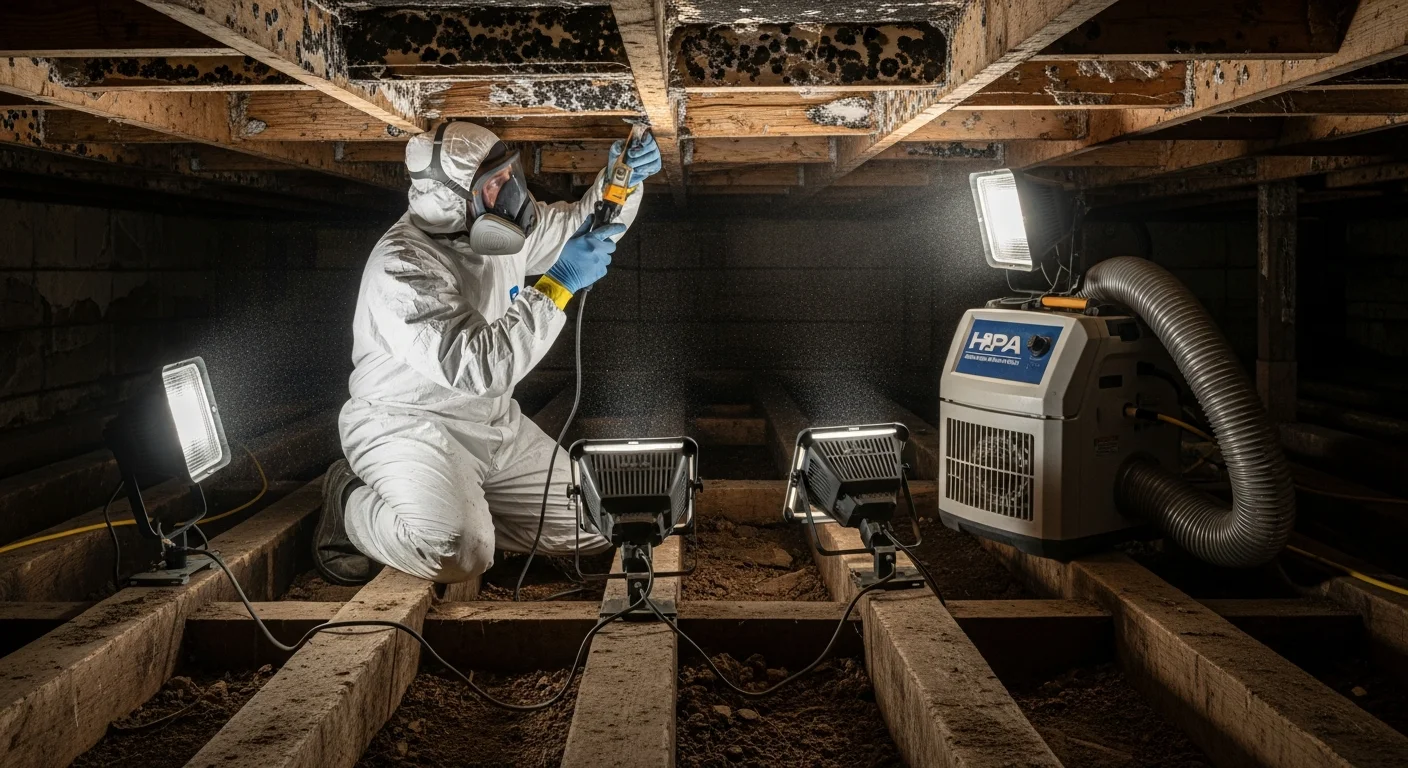
Crawl space mold on floor joists — the most common mold location in Shelby homes over clay soil
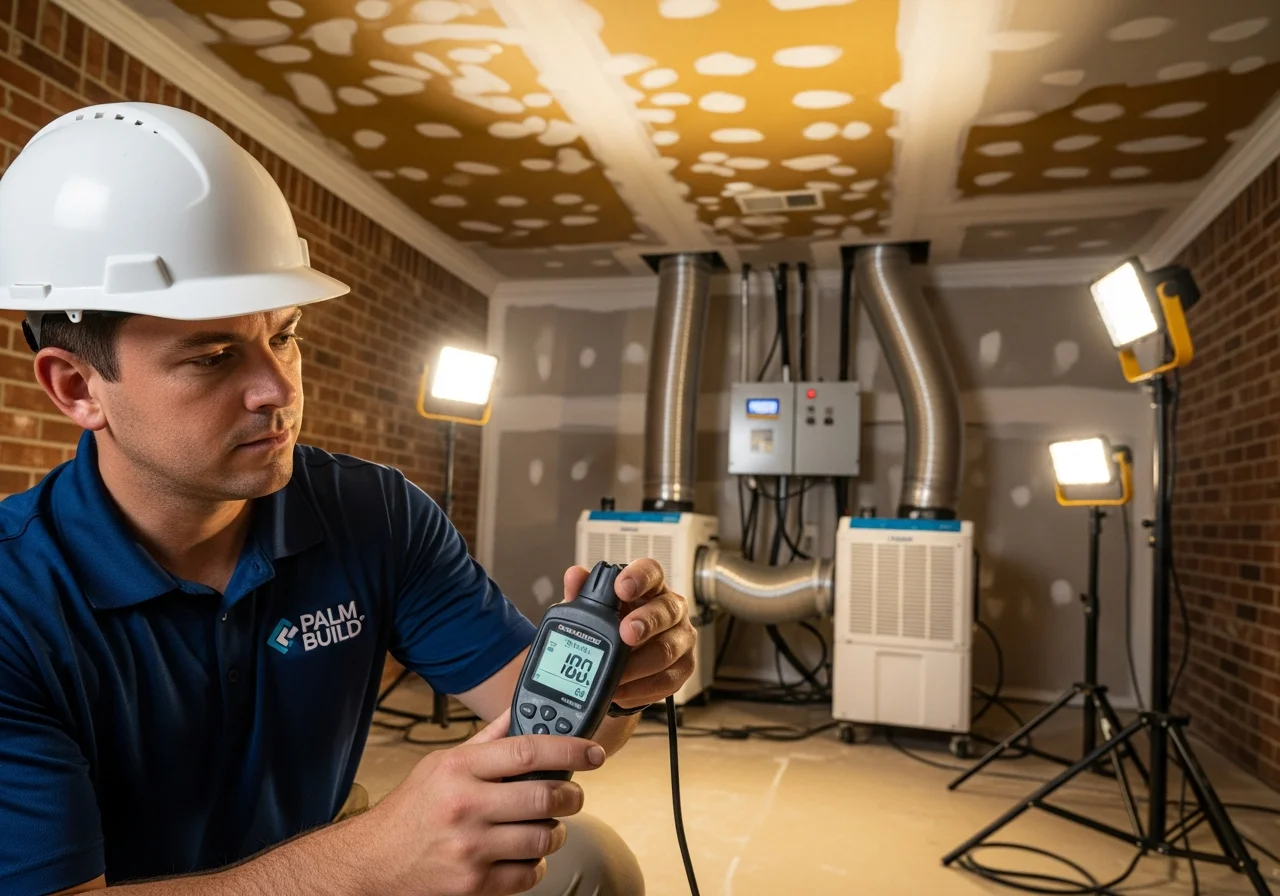
Sealed containment with HEPA air scrubbers prevents cross-contamination during remediation
Insurance documentation formatted for the adjuster — connecting mold to the original water event
Shelby Pricing
Mold Remediation Costs in Shelby
Shelby mold remediation costs run approximately 10-15% below Charlotte metro rates, but
Cleveland County's prevalence of vented crawl spaces and clay soil moisture mean most
projects involve crawl space work. NC standard insurance policies often cap mold
coverage at $5,000-$10,000 — many Shelby crawl space projects approach or exceed this.
Small Area (Under 10 sq ft)
Bathroom, closet, window frame, single wall section
HVAC ductwork contaminated by crawl space or water event mold
$300 - $700
Full duct system cleaning
HEPA vacuuming of supply and return
Antimicrobial duct treatment
Typically same-day service
Factors That Affect Your Shelby Mold Project Cost
Contamination size and location
Whether crawl space is involved
Structural damage requiring repair
HVAC system contamination
Need for encapsulation after remediation
Insurance coverage and sublimits
Foundation drainage corrections
Third-party clearance testing
Insurance Navigation
Mold Insurance Claims in Shelby
Mold coverage in North Carolina is limited and varies significantly by carrier and
policy. Most Cleveland County homeowners discover their coverage gaps only after filing
a claim. NC has a 3-year statute of limitations for property damage claims —
understanding your mold provisions before you need them can save thousands.
Mold resulting from a covered sudden water event (burst pipe, appliance failure) is typically covered up to policy sublimits
Gradual moisture damage — long-term crawl space humidity, slow leaks, chronic condensation — is almost always excluded from coverage
NC standard policies often cap mold coverage at $5,000-$10,000 sublimits — Shelby crawl space remediation can approach or exceed this
Carriers may deny claims if you failed to report water damage within 24-48 hours or did not mitigate promptly
Pre-existing mold discovered during renovation, inspection, or real estate transaction is not covered
Some carriers offer mold endorsements for additional premium — ask your agent about expanded mold coverage before you need it
Common Carriers in Cleveland County
State FarmTypically $5,000-$10,000 mold sublimit
NC Farm BureauCommon in Cleveland County, varies by policy
Auto-OwnersGrowing presence in Foothills, check sublimits
Palm Build's Approach to Mold Claims
When mold results from a covered water event, our documentation connects the mold to the
original loss — moisture maps, timeline photos, air quality testing, and remediation
scope all formatted for the adjuster. For non-covered mold from chronic crawl space
moisture (the most common scenario in Shelby), we provide transparent pricing and can
discuss financing options for remediation and encapsulation.
Shelby sits on Piedmont red clay soil that holds moisture against foundations for days after rain. Most homes built before 1980 have vented crawl spaces that pull in humid outdoor air — when that 70-90% humidity contacts cooler crawl space surfaces, condensation forms on floor joists and subflooring, creating ideal conditions for mold colonization. Cleveland County's humid subtropical climate sustains this cycle from April through October.
Does North Carolina require a mold remediation license?
No. North Carolina has no state-specific mold remediation license requirement. NC State University Extension confirms no federal or state certification programs exist for mold remediation companies. The IICRC S520 standard and Mold Remediation Specialist (MRS) certification are the accepted industry benchmarks. Always verify your contractor holds current IICRC credentials — the lack of state licensing means anyone can legally offer mold services in Shelby.
How much does mold remediation cost in Shelby?
Shelby mold remediation typically costs 10-15% less than Charlotte metro rates. Small areas (under 10 sq ft) run $500-$1,500. Crawl space remediation ranges from $2,000-$6,000. Whole-home remediation with structural involvement can reach $5,000-$15,000. Crawl space encapsulation adds $5,000-$12,000. NC standard insurance policies often cap mold coverage at $5,000-$10,000.
Does homeowners insurance cover mold remediation in Shelby?
Mold is only covered when it results from a covered sudden water event — a burst pipe or appliance failure, for example. Mold from chronic crawl space humidity, gradual leaks, or long-term moisture is almost always excluded. NC standard policies typically have mold sublimits of $5,000-$10,000. Cleveland County homeowners with State Farm, NC Farm Bureau, or Nationwide should check their specific mold provisions before a claim arises.
How long does mold remediation take in a Shelby crawl space?
A typical Shelby crawl space mold remediation takes 3-5 days for the remediation itself. Assessment and testing take 1 day. Containment setup, HEPA filtration, mold removal, and antimicrobial treatment take 2-4 days. Post-remediation clearance testing adds another day. If crawl space encapsulation is included, add 2-3 additional days.
Can I stay in my home during mold remediation?
For contained crawl space work or small interior areas, yes — Palm Build sets up sealed containment barriers and negative air pressure to prevent cross-contamination into living spaces. For large-scale remediation involving multiple rooms or HVAC system contamination, temporary relocation is recommended, especially for households with respiratory sensitivities.
What areas of Shelby and Cleveland County does Palm Build serve?
We serve all of Shelby and Cleveland County including Uptown Shelby, the mid-century ranch belt neighborhoods, Country Club area, southern subdivisions, Boiling Springs, Kings Mountain, Lawndale, Fallston, Lattimore, and all rural Cleveland County communities. Our Charlotte team reaches Shelby in approximately 55 minutes.
Is black mold in my Shelby crawl space dangerous?
All mold in living spaces warrants professional assessment. What homeowners call 'black mold' can be several species — Stachybotrys, Aspergillus, or Cladosporium are all common in Shelby crawl spaces. Health effects depend on species, concentration, exposure duration, and individual sensitivity. Rather than guessing species visually, professional air quality testing identifies exactly what you are dealing with and determines the appropriate remediation protocol.
Mold Problem in Shelby? Get a Free Assessment.
Palm Build's IICRC-certified mold remediation team provides same-day assessments in Cleveland County, professional containment, and complete remediation with documentation your insurance carrier accepts.