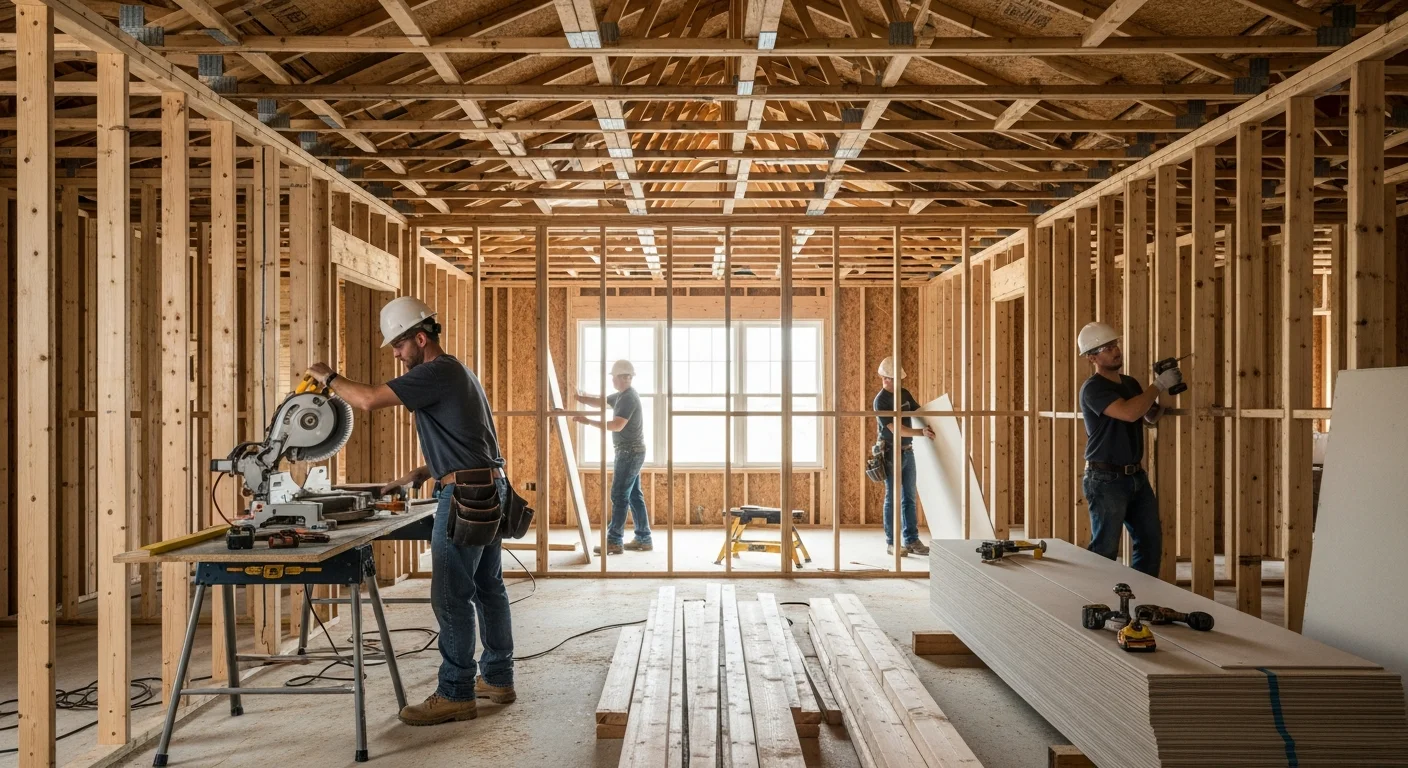
From drywall replacement after a burst pipe to full structural rebuilds after a fire, Palm Build handles every phase of reconstruction in Shelby's aging housing stock — including Cleveland County permitting, code-required upgrades for mill village homes and brick ranches, and insurance coordination — so one team manages your project from demolition through final walkthrough.
55 minutes from Charlotte office 24-48 hours for assessment Response IICRC Certified
Shelby's housing inventory tells the story of a textile mill town that grew through the
mid-20th century. That legacy means most homes requiring reconstruction after damage
were built to standards that are decades behind current Cleveland County building code —
creating reconstruction projects that are more complex than they initially appear.
Aging Mill Village Homes
Shelby's textile heritage left behind hundreds of 1940s-60s mill village homes — small wood-frame structures with original wiring, plaster walls, and crawl space foundations. After water or fire damage, these homes require full reconstruction to modern code, including electrical panel upgrades, insulation, GFCI protection, and structural reinforcement. The gap between original construction standards and current Cleveland County code requirements makes reconstruction more complex than in newer housing stock.
1950s-70s Brick Ranch Stock
The majority of Shelby's residential inventory consists of single-story brick ranch homes built between the 1950s and 1970s. These homes feature slab-on-grade or crawl space foundations, original hardwood floors, and aging mechanical systems. After storm or water damage, reconstruction often reveals outdated electrical (60-100 amp panels), galvanized plumbing, and inadequate insulation — all of which must be upgraded to current code during the rebuild.
Foothills Storm Exposure
Shelby sits at the base of the Blue Ridge foothills where severe thunderstorms, high winds, and heavy rainfall events are common. The First Broad River floodplain affects properties throughout Cleveland County. Storm damage to Shelby's older roofing systems — many with original or single-replacement shingles — frequently leads to water intrusion, structural damage, and the need for partial or full roof replacement plus interior reconstruction.
Fire Damage in Older Homes
Older electrical systems in Shelby homes — aluminum wiring in 1960s-70s construction, undersized panels, deteriorating insulation — create elevated fire risk. When fire damage occurs, reconstruction goes beyond replacing burned materials: the entire electrical system typically requires upgrading, fire-rated assemblies must meet current code, and smoke/soot contamination in wall cavities and ductwork requires thorough remediation before rebuilding begins.
Neighborhood Guide
Reconstruction Needs by Shelby Neighborhood
Different areas of Shelby and Cleveland County have different housing stock, different
common damage types, and different reconstruction requirements. Here's what we see in
each area.
Uptown Shelby Historic District
Era: 1900s-1940s
Original wood-frame homes with plaster walls, hardwood floors, and knob-and-tube wiring. Reconstruction requires material matching for period-appropriate finishes, full electrical rewiring, and plumbing upgrades from galvanized to modern systems.
Common damage: Fire damage, water damage from aging plumbing
West Shelby Mill Villages
Era: 1940s-1960s
Former textile worker housing — compact wood-frame homes with crawl space foundations, original single-pane windows, and minimal insulation. Post-damage reconstruction typically triggers substantial code upgrades including insulation, ventilation, and electrical capacity.
Common damage: Crawl space moisture, storm damage
East Shelby Brick Ranch Belt
Era: 1950s-1970s
Single-story brick veneer ranches with hardwood floors, original HVAC systems, and 100-amp electrical panels. Water damage reconstruction often reveals deteriorated subfloor conditions and inadequate crawl space ventilation requiring comprehensive remediation.
Common damage: Water damage, HVAC failures
South Shelby / Boiling Springs Road
Era: 1960s-1980s
Mix of brick ranches and vinyl-sided split-levels with slab-on-grade or crawl space foundations. Storm damage to aging roofing systems leads to interior water intrusion requiring drywall, insulation, and flooring replacement.
Common damage: Storm and wind damage
Kings Mountain Highway Corridor
Era: 1990s-2010s
Newer subdivisions with vinyl siding, engineered wood products, and modern mechanical systems. Reconstruction is more straightforward but still requires Cleveland County permits and code compliance verification. Materials are generally easier to match.
Common damage: Storm damage, fire incidents
Rural Cleveland County
Era: Mixed eras
Farmhouses, manufactured homes, and rural residential properties spread across the county. Limited access to contractors and longer response times make having a single-source restoration company critical. Well water and septic systems add complexity to water damage reconstruction.
Common damage: Storm damage, flooding, fire
Reconstruction Timeline
The Shelby Reconstruction Process
From damage assessment through final inspection, here's how Palm Build manages the
reconstruction phase of your Shelby restoration project.
01
Damage Assessment & Scope Development
Days 1-5
We walk through the property with you and your insurance adjuster to develop a comprehensive reconstruction scope. Every damaged item is documented, measured, and priced using Xactimate. For Shelby's older homes, we include line items for code-required upgrades — electrical panel replacement, insulation, GFCI protection, and structural improvements — that generic estimates often miss. These upgrades are typically covered by your ordinance-and-law endorsement.
02
Demolition & Removal
Days 5-10
Damaged materials are removed to clean substrate. For Shelby brick ranches with water-damaged hardwood floors, we carefully evaluate which sections are salvageable versus requiring replacement. Fire-damaged framing, mold-contaminated drywall, and deteriorated insulation are removed and properly disposed of. Asbestos testing is performed on pre-1980 homes before demolition of suspect materials — common in mill village construction.
03
Structural Rebuilding
Weeks 2-4
Framing repairs, structural reinforcement, and load-bearing wall reconstruction. For Shelby homes with crawl space foundations, we address any structural issues discovered during demolition — deteriorated floor joists, inadequate pier spacing, and moisture-damaged sill plates are common in the older housing stock. Cleveland County inspections verify structural work before we proceed to mechanical systems.
04
Mechanical Systems
Weeks 3-6
Electrical rough-in, plumbing rough-in, and HVAC modifications are completed and inspected before drywall installation. This is where code upgrades happen: panel replacements from 100 to 200 amp service, GFCI and AFCI protection, updated plumbing from galvanized to PEX or copper, and HVAC duct sealing or replacement. Each trade is inspected separately by Cleveland County before the next phase.
05
Finishes — Drywall, Paint, Flooring
Weeks 5-10
Drywall hanging, taping, and finishing. Flooring installation — whether matching existing hardwood in brick ranches or installing new materials. Cabinet and countertop installation for kitchen and bathroom rebuilds. Painting, trim, and fixture installation. For Shelby homes with original hardwood, we source matching species and weave new boards into existing flooring for seamless transitions.
06
Final Inspection & Walkthrough
Project Completion
Final electrical, plumbing, and mechanical inspections by Cleveland County. We schedule inspections proactively and address any corrections immediately. The final walkthrough with the homeowner confirms every item in the scope has been completed to satisfaction. A completion certificate is provided to your insurance carrier for final payment release.
Reconstruction by Damage Type
Types of Reconstruction We Handle in Shelby
Different damage types require different reconstruction approaches. Here's what each
involves for Shelby's housing stock — and why having one company handle the entire
process matters.
Post-Water Reconstruction
The most common reconstruction scope in Shelby. Burst pipes during winter freezes, supply line failures, and crawl space flooding all require drywall removal and replacement, flooring restoration or replacement, cabinet and countertop rebuilds in kitchens and bathrooms, and structural drying verification before new materials are installed. Shelby's brick ranch homes with hardwood floors are particularly vulnerable — water cupping and buckling requires careful evaluation of salvageability before committing to refinishing versus replacement.
Post-Fire Reconstruction
Fire reconstruction in Shelby extends well beyond replacing burned materials. Smoke and soot contamination penetrates wall cavities, HVAC ductwork, insulation, and porous materials throughout the home — even in rooms not directly damaged by flames. Our reconstruction scope includes soot abatement, thermal cleaning, ozone treatment, and complete rebuild of fire-damaged areas. For Shelby's older homes with original wiring, the electrical system typically requires full replacement.
Storm Damage Reconstruction
Shelby's foothills location exposes homes to severe thunderstorms, high winds, and heavy rainfall. Storm reconstruction typically includes partial or full roof replacement, soffit and fascia repair, window replacement, interior water damage repair from wind-driven rain intrusion, and structural repairs to damaged framing. The First Broad River floodplain adds flood-related reconstruction for properties in SFHA zones.
Structural Upgrades
Some Shelby homes — particularly 1940s-60s mill village construction — have structural deficiencies that become apparent during damage reconstruction: inadequate foundation support, deteriorated floor joists, missing hurricane straps, and substandard framing connections. When reconstruction triggers code compliance review, these structural issues must be corrected. We coordinate with licensed structural engineers when needed.
Code Compliance Upgrades
Even when the primary reconstruction scope is limited — replacing drywall and flooring in one room, for example — Cleveland County may require code upgrades to affected systems. A bathroom reconstruction triggers GFCI outlet requirements. A bedroom rebuild requires AFCI breakers and interconnected smoke detectors. These cascading code requirements are normal for older Shelby homes and are typically covered by ordinance-and-law insurance endorsements.
Cleveland County Requirements
Shelby Building Codes & Permit Process
Reconstruction in Shelby must meet current NC State Building Code — not the code the
home was originally built under. For Shelby's older housing stock, this means mandatory
upgrades during reconstruction. Palm Build handles all permitting, inspections, and code
compliance as part of our reconstruction scope.
The Permit Process
1
Permit Application
Palm Build submits permit applications to the City of Shelby Inspections Department (within city limits) or Cleveland County Building Inspections (unincorporated areas). Applications include scope of work, construction documents, and licensed contractor information.
2
Plan Review
Structural, electrical, mechanical, and plumbing plans are reviewed for code compliance. For standard reconstruction scopes, plan review typically takes 3-7 business days. Complex structural work may require additional review time.
3
Rough-In Inspections
Each trade is inspected separately before concealment — framing inspection, electrical rough-in, plumbing rough-in, and mechanical rough-in. All inspections must pass before drywall installation begins.
4
Final Inspections
Final electrical, plumbing, mechanical, and building inspections verify all work meets current NC State Building Code. Certificate of Compliance is issued upon passing all final inspections.
Common Code Upgrades for Shelby Homes
Electrical panel upgrade to 200-amp service
Typically required for: Pre-1980 homes
GFCI outlets in kitchens, bathrooms, garages, and exterior
Typically required for: Pre-1990 homes
Arc-fault circuit interrupter (AFCI) breakers for bedrooms
Typically required for: Pre-2002 homes
Interconnected smoke detectors in every bedroom and hallway
Typically required for: Pre-2000 homes
Carbon monoxide detectors on levels with sleeping areas
Typically required for: Pre-2010 homes
Insulation upgrades to current energy code R-values
Typically required for: Pre-2000 homes
Hurricane clips at roof-to-wall connections
Typically required for: Pre-2005 homes
Tempered safety glass in bathrooms and near doors
Typically required for: Pre-1980 homes
Check Your Ordinance-and-Law Coverage
Without an ordinance-and-law endorsement, code-required upgrades during
reconstruction come out of your pocket. For a 1960s Shelby brick ranch with
original electrical, this can mean $5,000-$12,000 in upgrades not covered by your
base policy. Ask your insurance agent about this endorsement now — adding it
before a loss is inexpensive.
Shelby Pricing
Reconstruction Costs in Shelby
Shelby reconstruction costs are lower than Charlotte metro averages due to reduced labor
rates and property values, but code-required upgrades on older homes can add 10-20% to
project costs. Building material costs in the Cleveland County market average $140-$200
per square foot for residential reconstruction. These ranges reflect actual
insurance-funded restoration work in the Shelby area.
Minor Reconstruction
Drywall, flooring, paint in 1-2 rooms
$4,000 – $18,000
Moderate Reconstruction
Kitchen/bath rebuild, multiple rooms
$18,000 – $65,000
Major Reconstruction
Structural rebuild, full floor or whole house
$65,000 – $250,000+
Code Upgrades Add to Costs on Older Shelby Homes
A 1960s Shelby brick ranch requiring reconstruction after water damage may need
$5,000-$12,000 in mandatory code upgrades — electrical panel replacement, GFCI/AFCI
protection, insulation upgrades, and smoke/CO detector installation. Confirm your
policy includes an ordinance-and-law endorsement to cover these costs before you
need it.
Insurance Coverage
What Insurance Covers for Shelby Reconstruction
When reconstruction follows a covered loss (fire, sudden water damage, wind, etc.), your
homeowners policy covers the cost of returning your home to pre-loss condition. Palm
Build's Xactimate-based estimates match the format insurance carriers use, reducing
supplemental negotiations and approval delays for Cleveland County homeowners.
Structural repair and rebuild to pre-loss condition
Drywall, flooring, cabinetry, countertops, and finish materials
Electrical, plumbing, and HVAC repair or replacement
Painting, trim, and finish carpentry
Permits and inspection fees
Building code upgrades required during reconstruction (with ordinance-and-law endorsement)
Temporary living expenses during reconstruction (ALE)
Debris removal and disposal of damaged materials
Palm Build Manages the Entire Claims Process
Our reconstruction estimates are written in Xactimate — the same software your insurance
carrier uses. We coordinate directly with your adjuster throughout the reconstruction,
handling supplements for hidden damage discovered during demolition and code-required
upgrades. Shelby homeowners pay only their policy deductible.
Why Shelby Homeowners Choose Palm Build for Reconstruction
Mitigation + Reconstruction = One Team
No handoffs between companies. Our mitigation and reconstruction teams work as one unit. Reconstruction planning begins during the drying phase — not after it ends. This overlap saves Shelby homeowners 2-4 weeks of displacement compared to the traditional handoff model where a separate general contractor must be found, scoped, and scheduled.
Licensed NC General Contractor
Palm Build holds North Carolina general contractor licensing for structural, electrical, mechanical, and plumbing work. We pull our own Cleveland County permits, manage all inspections, and ensure code compliance throughout the reconstruction — no subcontractor coordination gaps.
Older Housing Stock Experience
Shelby's 1940s-70s housing stock — mill village homes, brick ranches, split-levels — each has specific reconstruction challenges that contractors unfamiliar with the area miss. We understand crawl space conditions in Cleveland County, know the common code upgrade triggers for each era, and source appropriate materials without the learning curve.
Xactimate-Based Insurance Estimates
Our reconstruction estimates use the same Xactimate software and pricing database that your insurance carrier uses. This eliminates format-based disputes, reduces supplemental negotiation cycles, and gets your claim approved faster — critical when you are displaced from your Shelby home.
55-Minute Response From Charlotte Hub
Our Charlotte operations hub at 378 Crompton Street is approximately 55 minutes from Shelby. For emergency mitigation, we dispatch teams quickly. For reconstruction, our project managers are on-site regularly throughout the build — not managing your project remotely from hours away. Cleveland County is within our core service territory.
Common Questions
Shelby Reconstruction FAQ
How long does reconstruction take after water or fire damage in Shelby?
Minor reconstruction (drywall replacement, flooring in one room): 1-2 weeks. Moderate reconstruction (multiple rooms, kitchen or bathroom): 4-8 weeks. Major reconstruction (structural rebuild, full-floor or whole-house): 8-16 weeks. Shelby's older housing stock — particularly 1940s-60s mill village homes and 1950s-70s brick ranches — often requires additional time for code-required upgrades to electrical, plumbing, and insulation systems that must meet current standards during reconstruction.
Does Palm Build handle the full rebuild or just cosmetic repairs?
Full structural reconstruction. We handle drywall, framing, flooring, roofing, cabinetry, countertops, painting, trim, electrical, plumbing, HVAC, and finish work. For Shelby homes requiring structural engineering after fire or storm damage, we coordinate with licensed structural engineers and ensure all work passes Cleveland County inspections.
Do I need permits for reconstruction after damage in Shelby?
Yes — Cleveland County requires permits for all structural, electrical, mechanical, and plumbing work during reconstruction. Within Shelby city limits, permits are issued by the City of Shelby Inspections Department. Palm Build handles all permit applications, inspections, and code compliance coordination as part of our reconstruction scope.
Will my home have to meet current building code during reconstruction?
Yes — Shelby and Cleveland County require that reconstruction meet current building codes, not the original code the home was built under. For Shelby's older homes — many built in the 1940s through 1970s — this often means upgrades to electrical panels, insulation, GFCI outlets, smoke detector placement, and structural connections. These upgrades are typically covered by an ordinance-and-law endorsement on your insurance policy.
What's the difference between mitigation and reconstruction?
Mitigation stops the damage — water extraction, structural drying, mold containment, soot stabilization. Reconstruction rebuilds what was damaged — drywall, flooring, cabinetry, roofing, painting, electrical, and plumbing. Many restoration companies only handle mitigation and hand off reconstruction to a separate general contractor. Palm Build handles both phases as one coordinated project, eliminating the gap between mitigation completion and rebuild start that often adds weeks to your displacement.
Does insurance cover reconstruction costs in Shelby?
Yes — if the original damage was caused by a covered peril (fire, sudden water damage, wind, etc.), your homeowners policy covers reconstruction to pre-loss condition. Additional coverage for building code upgrades requires an ordinance-and-law endorsement. Shelby homeowners should confirm this endorsement exists on their policy, especially for older homes where code-required upgrades during reconstruction can add 10-20% to project costs.
Need Reconstruction After Damage in Shelby?
Palm Build handles the full rebuild — from demolition through final walkthrough — with one team, one point of contact, and insurance coordination throughout. No handoffs to separate contractors, no gaps in your timeline.