Types of Storm Damage
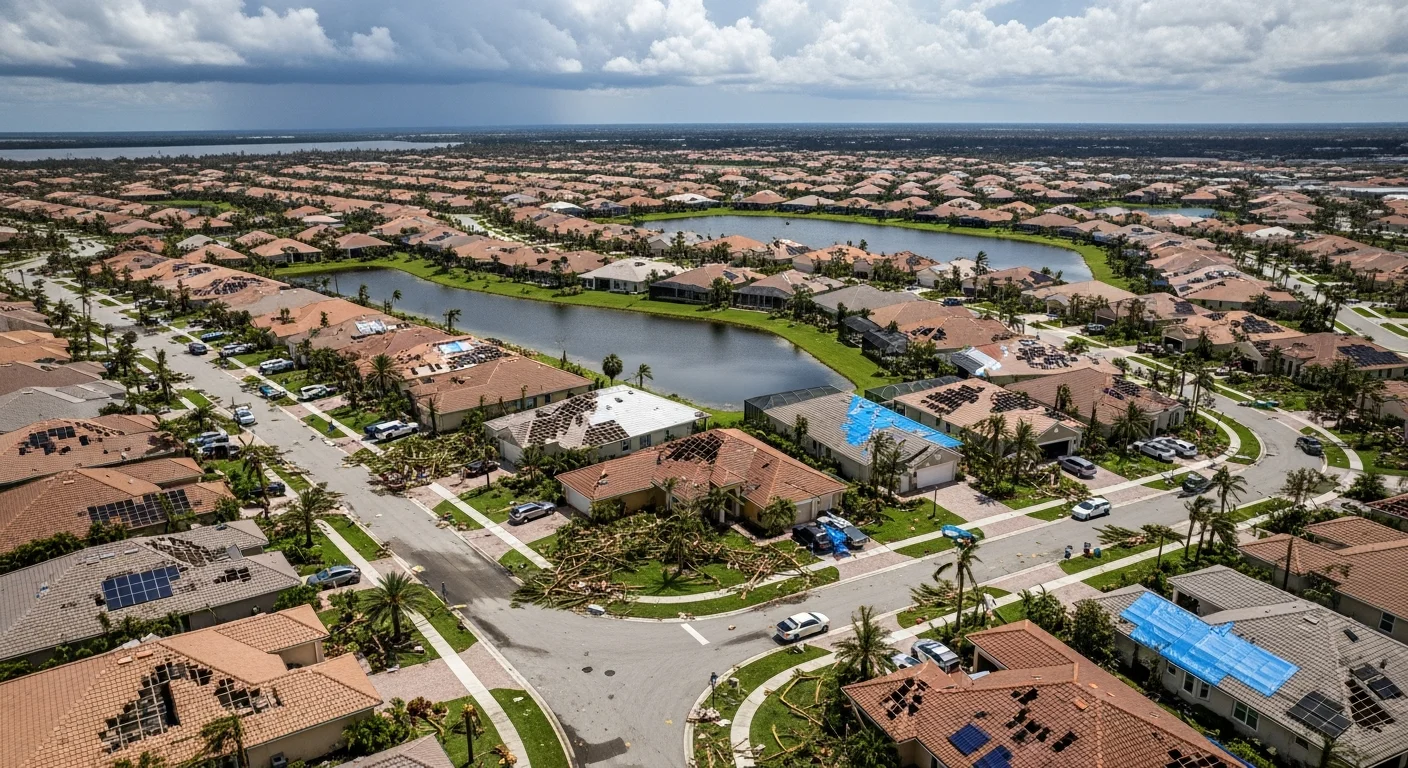
How Hurricanes Damage Coconut Creek Homes
Hurricane and storm damage in Coconut Creek manifests in six distinct patterns — and
major storms trigger multiple damage types simultaneously. Understanding the full scope
is critical for emergency response, insurance claims, and long-term restoration because
different damage types are covered by different policies.
Roof Tile Wind Uplift & Breakage
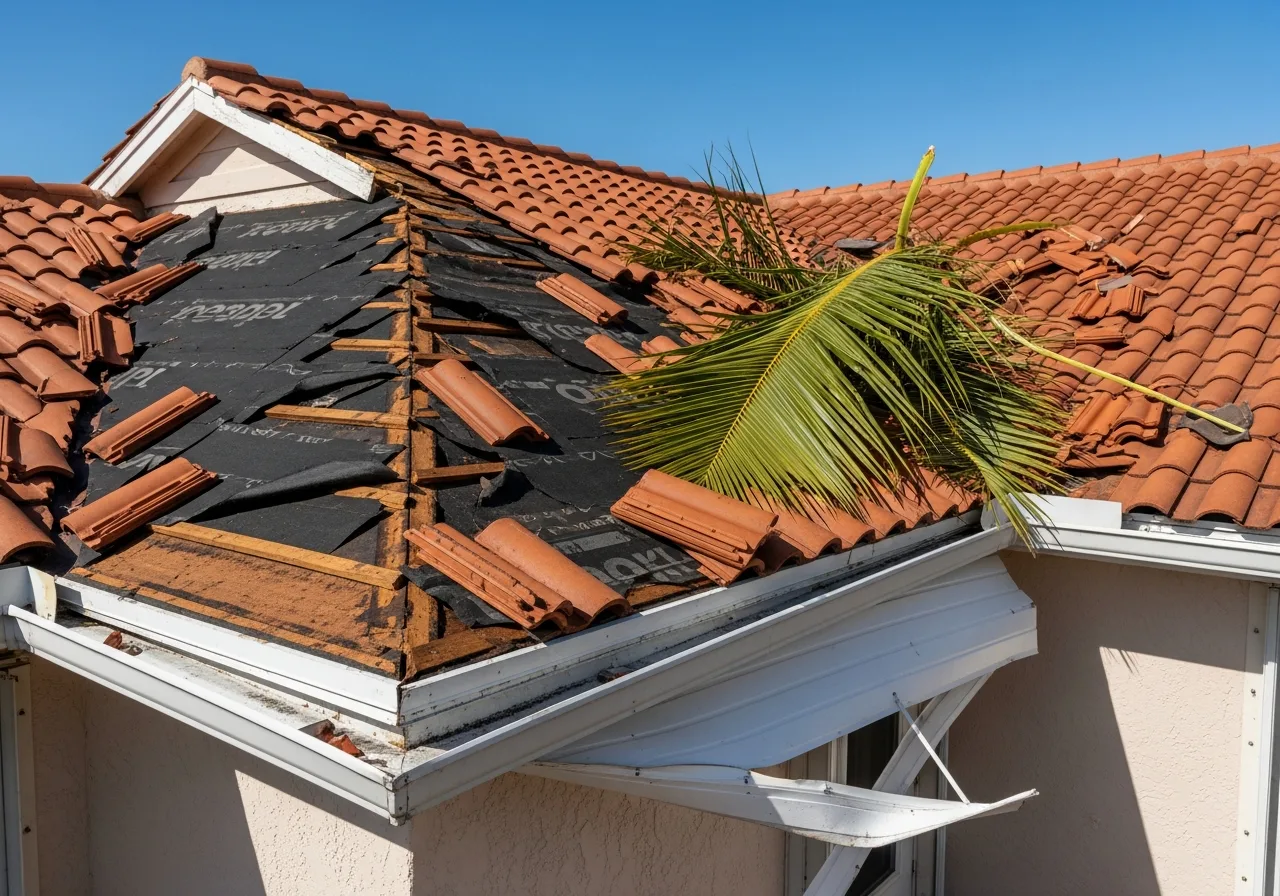
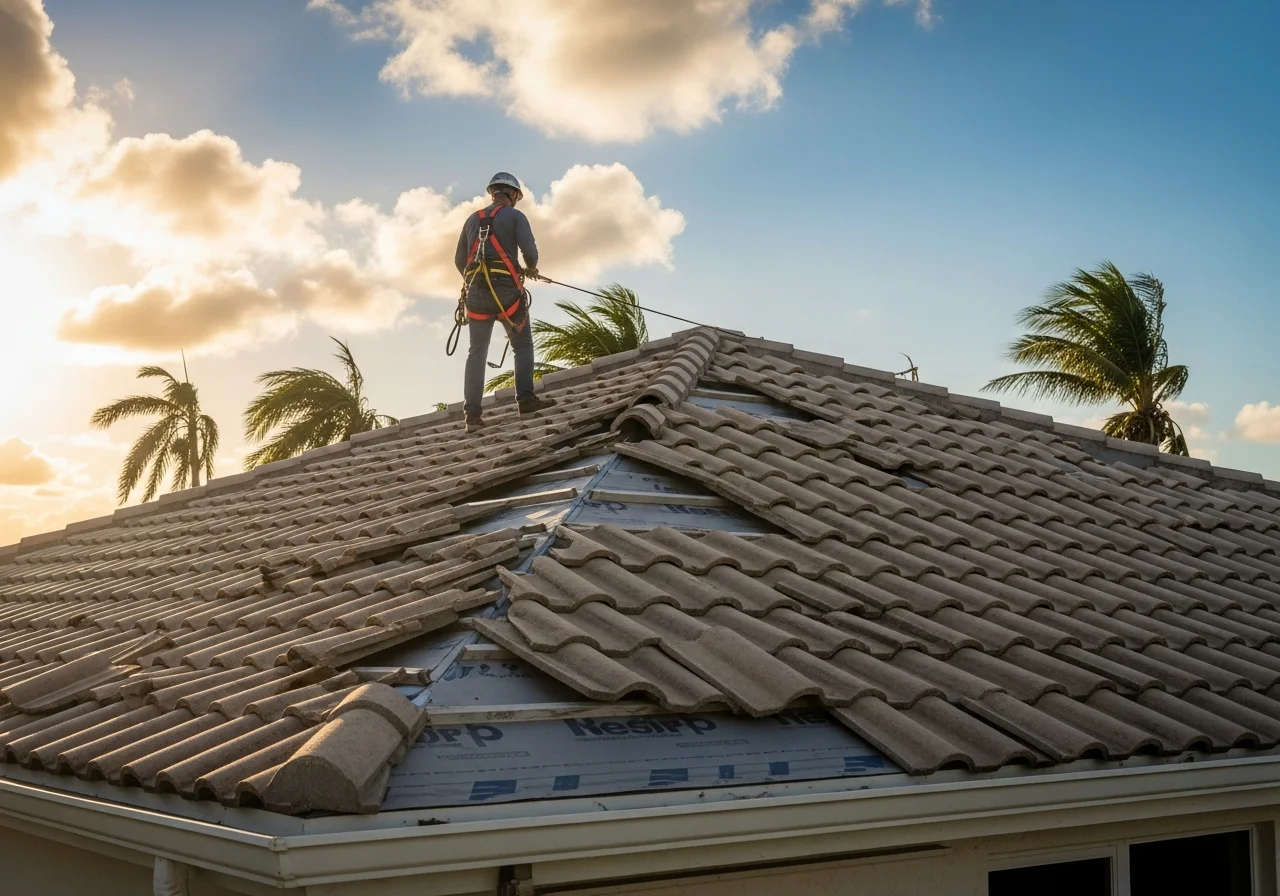
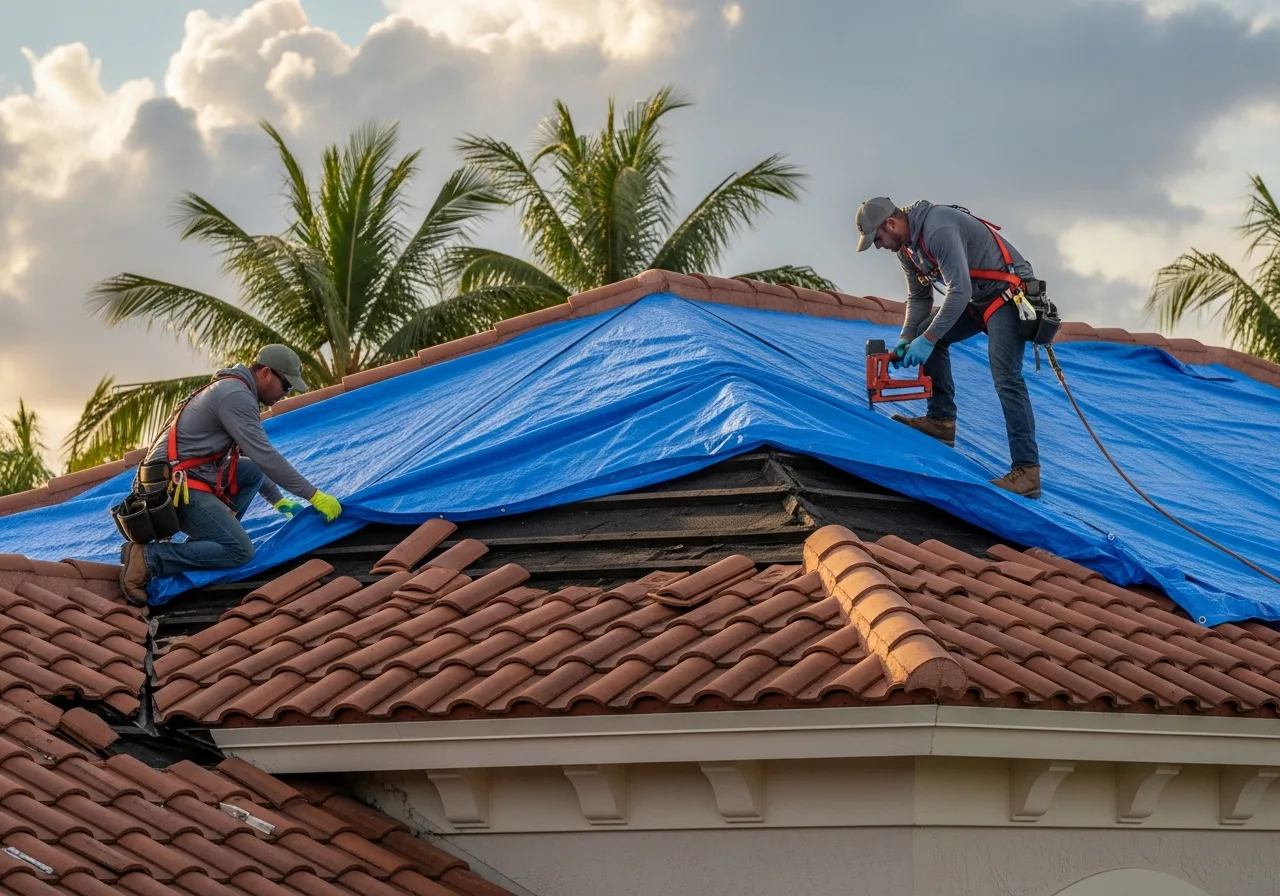
Coconut Creek's barrel tile roofs are the first point of failure in any hurricane. Wind uplift dislodges individual tiles, breaking the mortar adhesive bond that has been degrading for 30+ years under South Florida's UV exposure. Once a single tile lifts, wind channels beneath adjacent tiles and creates cascading failure — 10 to 50 tiles can strip from a roof section in minutes. The exposed felt underlayment is not rated for prolonged water exposure, allowing wind-driven rain to penetrate the roof deck and saturate attic insulation, drywall ceilings, and wall cavities below.
Screen Enclosure Destruction
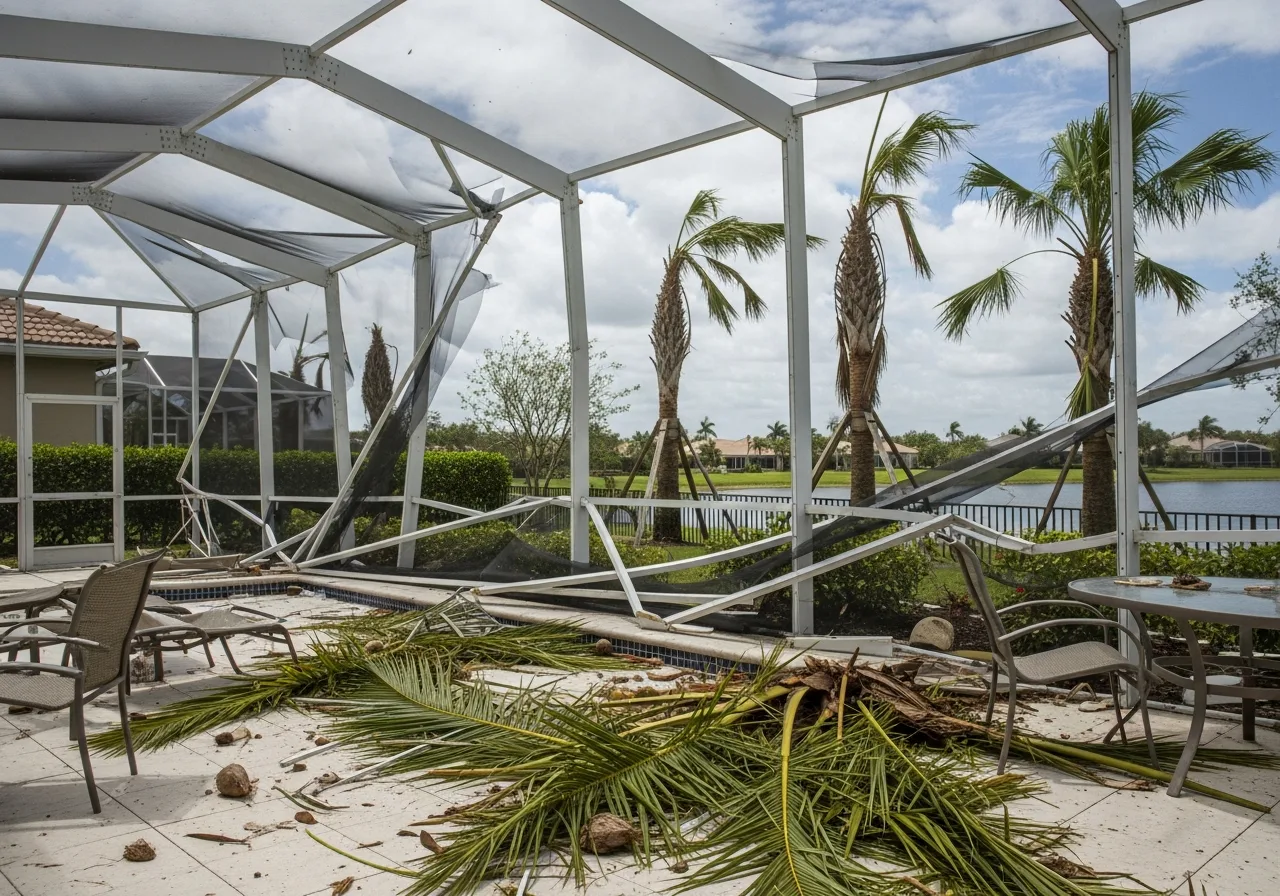
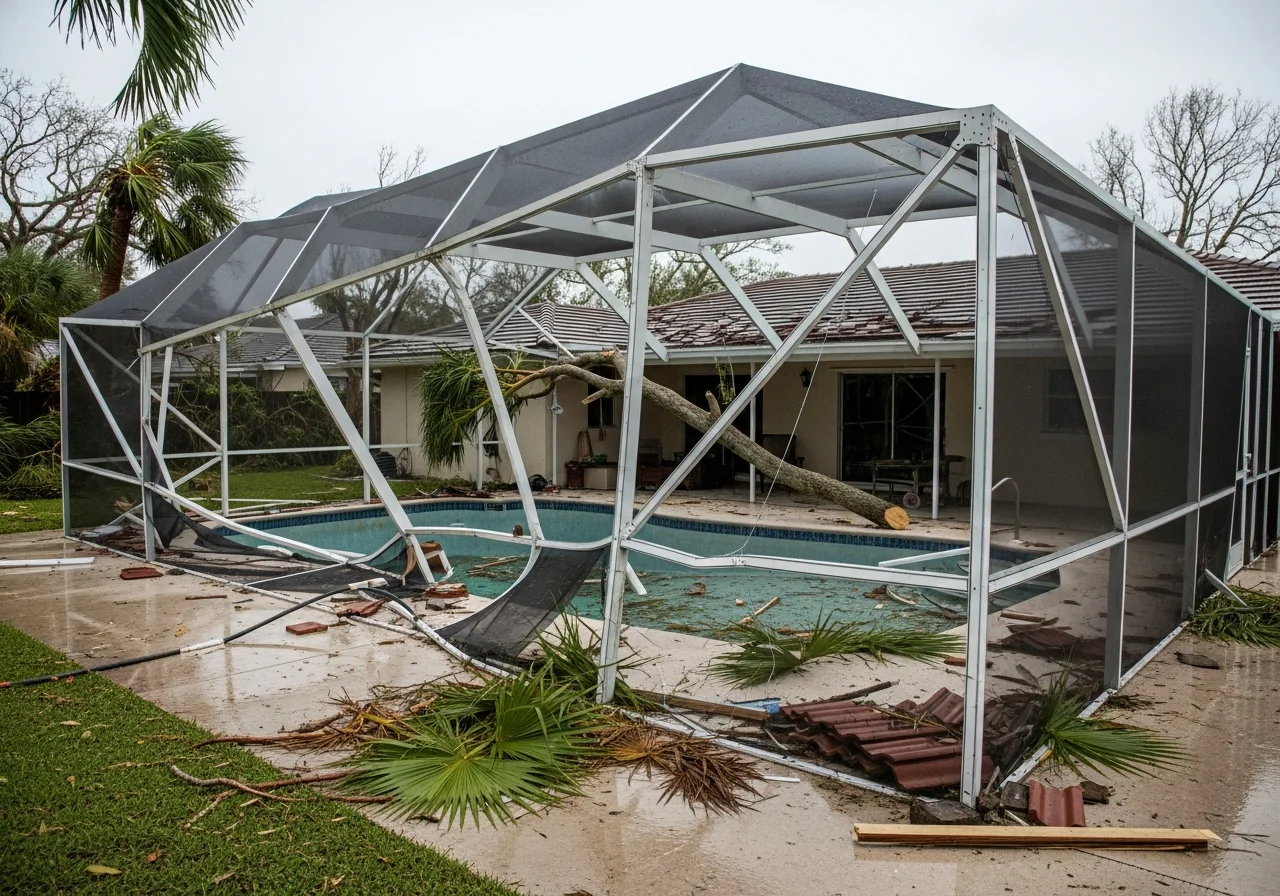
Screen-enclosed patios and pool lanais across Regency Lakes, Wynmoor, and The Township are engineered for approximately 110 mph — well below Category 3+ hurricane wind speeds. Wind pressure, airborne debris, and differential pressure between enclosed and open areas collapse screen framing, shatter glass sliding doors behind them, and create secondary projectiles that damage the main structure. Screen enclosure replacement costs $5,000-$20,000+ depending on size, and demand after major storms creates 3-6 month backlogs across Broward County.
Wind-Driven Rain Through Stucco
CBS stucco walls are Coconut Creek's dominant exterior finish — and hurricane-force wind-driven rain penetrates through hairline stucco cracks, deteriorated window caulk, and worn expansion joints that develop over decades. Unlike visible roof damage, stucco water intrusion is hidden: moisture wicks into the concrete block core and trapped between the exterior stucco and interior drywall. Without thermal imaging and moisture meters, this damage goes undetected until mold colonizes weeks later.
Tree & Debris Impact Damage
Coconut Creek's mature landscaping — including large oaks, ficus, and royal palms planted during the 1980s-1990s development — becomes dangerous projectile sources during hurricanes. Falling limbs puncture tile roofs, shatter impact windows, destroy screen enclosures, and block access for emergency crews. Even palm fronds traveling at 100+ mph can penetrate stucco walls and break glass. Post-storm, fallen trees often trap moisture against structures, accelerating water intrusion and mold growth.
Canal & Drainage Flooding
Coconut Creek's planned communities were built around a network of retention lakes and drainage canals managed by the South Florida Water Management District. During extreme rainfall events — like the April 2023 Fort Lauderdale deluge that produced 25+ inches in 24 hours — these systems overwhelm, causing canal overflow and street-level flooding. Properties adjacent to Emerald Lake Park, Regency Lakes, and the C-14 canal corridor face the highest flood risk. This flooding requires separate NFIP or private flood insurance.
Soffit, Fascia & Gutter Damage
Aluminum soffits and fascia boards are torn away by hurricane winds, exposing the attic space to direct rain intrusion. Once soffits separate from the roofline, wind enters the attic and pressurizes the interior, dramatically increasing the risk of roof deck failure and total roof loss. Gutters and downspouts are stripped from the structure, eliminating the drainage path for rainfall and concentrating water flow against the foundation. For Coconut Creek's slab-on-grade homes, this creates immediate interior flooding through door thresholds.