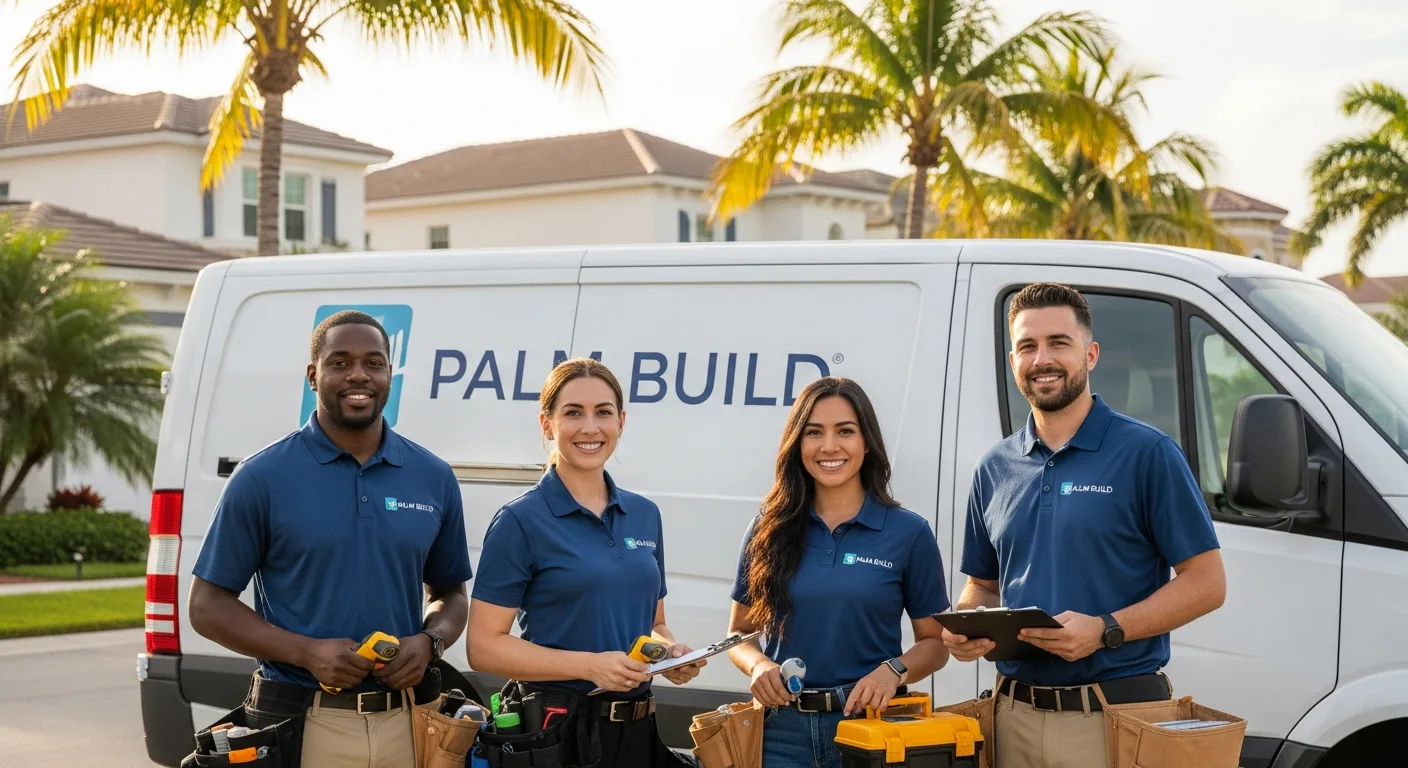
Coconut Creek's CBS concrete block housing stock — built overwhelmingly during the 1978-1995 construction boom and governed by some of the nation's strictest HOA architectural standards — demands reconstruction contractors who understand HVHZ code compliance, Broward County permitting, and the condo/HOA approval process that controls exterior modifications across 72% of the city's housing. Whether you're rebuilding after a multi-unit water event at Wynmoor, fire damage in a Regency Lakes townhome, or storm damage to a Centura Parc villa, Palm Build handles the full scope from our Deerfield Beach hub — CBS expertise, impact-rated openings, barrel tile roofing, 1980s-era finish matching, and insurance coordination from demolition through final inspection.
5 miles — Coconut Creek, FL 15-25 min Response IICRC Certified
Why Coconut Creek Reconstruction Requires Specialized Expertise
Coconut Creek's CBS concrete block housing stock — built overwhelmingly during the
1978-1995 construction boom and governed by strict HOA architectural standards — demands
reconstruction contractors who understand HVHZ code compliance, Broward County
permitting, and the condo/HOA approval process that controls modifications across the
city's housing.
CBS Construction Expertise
CBS
Dominant construction type
Virtually every home in Coconut Creek is CBS (concrete block and stucco) construction — 8-inch CMU block walls with three-coat stucco exterior. CBS reconstruction differs fundamentally from wood-frame work: water migrates through porous concrete block via capillary action, stucco requires multi-coat application with proper moisture barriers, and structural evaluation of the block itself is necessary after fire or severe water damage. General contractors from outside South Florida routinely underestimate these differences.
HVHZ Code Compliance
HVHZ
Strictest code in the U.S.
Coconut Creek sits inside Broward County's High Velocity Hurricane Zone — the strictest building code jurisdiction in the nation. When reconstruction replaces building components, those components must meet current HVHZ standards: impact-rated windows, hurricane straps at every truss, self-adhered roof underlayment, and enhanced electrical panels. For homes built during the 1978-1995 boom, the gap between original and current code is enormous — and every dollar of that gap must be documented for your insurance carrier.
Condo & HOA Coordination
72%
Multi-unit housing
With 72% of Coconut Creek housing classified as multi-unit — condos, townhomes, and villa communities — most reconstruction projects require HOA architectural review committee approval. This affects materials, colors, barrel tile profiles, window styles, and construction access schedules. Multi-unit losses involve shared-wall considerations and coordination between unit-owner HO-6 policies and the HOA master insurance policy.
Broward County Permitting
1989
Median year built
Coconut Creek uses the Broward County permit system for all reconstruction work. A master permit covers structural, plumbing, electrical, roofing, and mechanical scopes. A Notice of Commencement must be filed before work begins. Impact-rated window installations require separate HVHZ product approval verification — every product must carry a current Notice of Acceptance (NOA) from Miami-Dade County's product approval database. Palm Build handles the entire permit and inspection process.
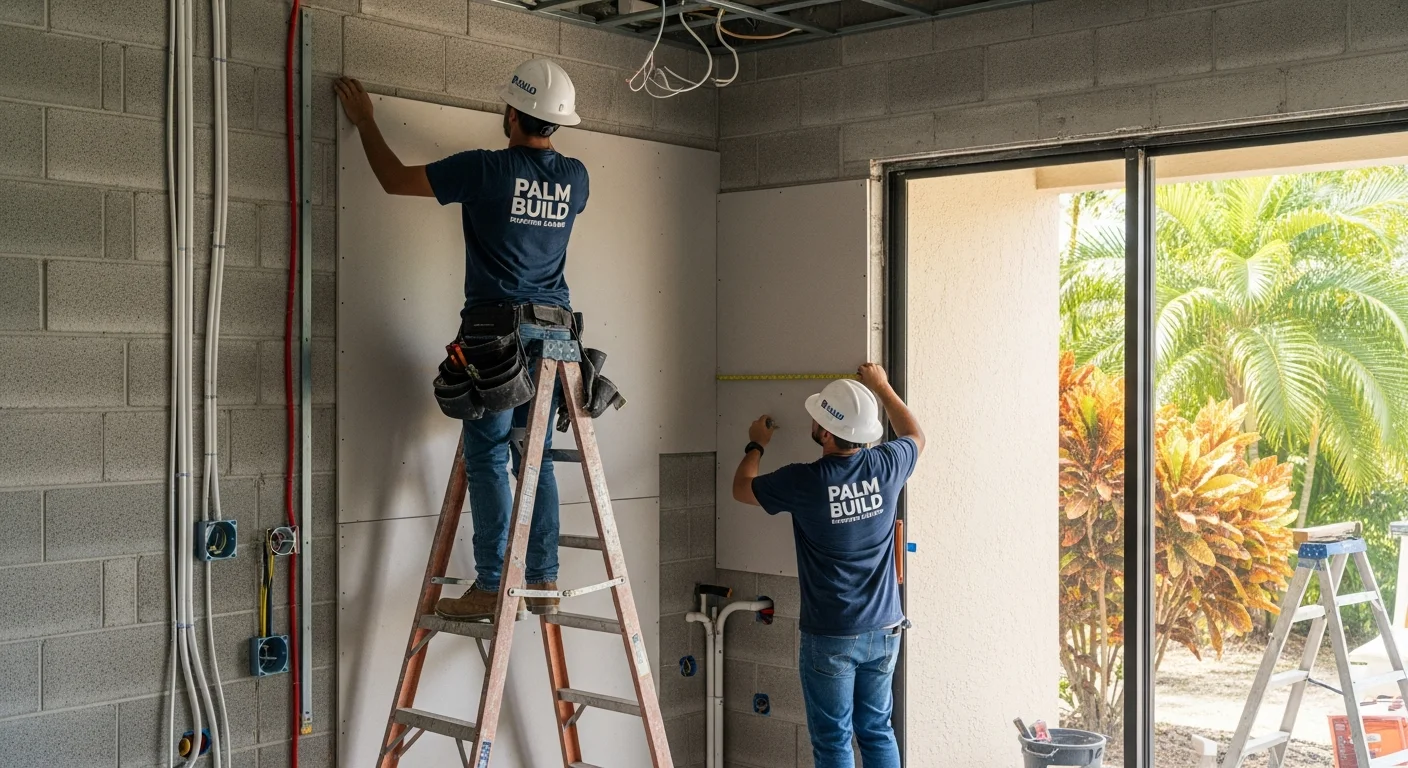
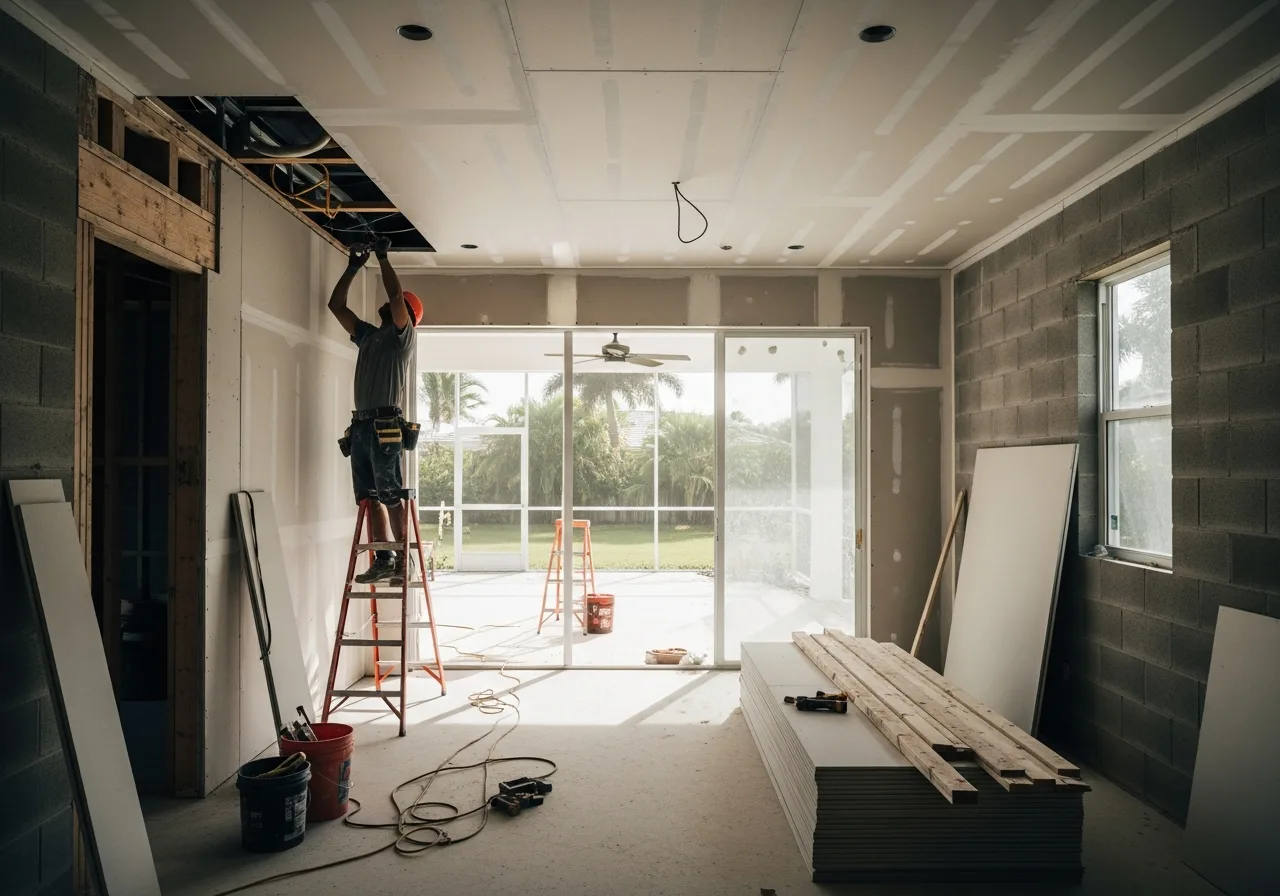
Mid-reconstruction at a Coconut Creek home — new drywall over CBS block with modern
electrical, plumbing rough-ins, and hurricane straps installed before walls are closed.
Neighborhood Profiles
Coconut Creek Neighborhood Reconstruction Guide
Every Coconut Creek community has a distinct construction profile shaped by the era it
was built, the HOA governing it, and the materials used. During reconstruction, these
differences determine the scope, cost, code compliance requirements, and HOA approval
timeline. Find your neighborhood below.
Wynmoor
Built: 1982|55+ CBS Condo Community
Coconut Creek's largest community with 3,300+ units. Aging cast-iron risers and polybutylene plumbing, original flat and low-slope roofs with degraded membrane, no hurricane straps, single-pane jalousie windows, original electrical panels (Federal Pacific, Zinsco). Unit-level reconstruction requires association board approval and coordination with master insurance policy. Multi-unit water events are frequent due to shared plumbing risers.
FEMA Zone: X
Regency Lakes
Built: 1997|Multi-HOA Gated CBS Community
Eight sub-communities (Brittany Park, Cambridge Park, Essex Park, Fairmont Park, Mallard Landing, Osprey Point, Sandpiper Landing, Swans Landing) each with their own architectural guidelines. Reconstruction approvals may require both sub-HOA and master association sign-off. Barrel tile roofing approaching underlayment replacement age. Newer CBS construction but still pre-2002 code for earliest builds.
FEMA Zone: X
The Township
Built: 1980s-1990s|Master-Planned CBS Villages
Master association with multiple village sub-HOAs including Applewood Village I-IV, Bayport Village, Bayview Village. Each village may have different management companies and architectural standards. Older villages (1980s) need careful material matching for terrazzo and original stucco textures. No moisture barriers behind original stucco in earliest phases.
FEMA Zone: X
Centura Parc
Built: 1982|Gated CBS Villas & Condos
Gated community requiring contractor access coordination — vehicle passes, parking permits for equipment trucks, after-hours access procedures. Architectural committee reviews all exterior modifications including window replacements, roof repairs, and stucco color matching. Original 1980s electrical panels and polybutylene plumbing common.
FEMA Zone: X
Hammocks at Coconut Creek
Built: 1980|CBS Townhome Community
Built in 1980 with original terrazzo floors, popcorn ceilings (potential asbestos concern), barrel tile roofing requiring matching during reconstruction, and shared-wall construction creating multi-unit water damage exposure. Stucco profiles from this era require skilled application to avoid visible patchwork.
FEMA Zone: X
Coco Palms
Built: 1970s-1980s|CBS Multi-Unit Community
Among the oldest Coconut Creek developments. Original aluminum windows must be replaced with impact-rated alternatives during reconstruction — a significant HVHZ code upgrade. Cast iron drain lines reaching end-of-life. Repeated unit types mean reconstruction on one unit often reveals similar issues in neighboring units. Board may coordinate multi-unit upgrades.
FEMA Zone: X
Estates of Coconut Creek
Built: 1996|Single-Family CBS Homes
Single-family homes with simpler reconstruction logistics than condos. Built 1996, finishes are easier to match with current materials. HOA still requires color and material approvals for exterior work. Roof reconstructions must meet current HVHZ wind ratings. Some homes may have polybutylene plumbing depending on exact build date.
FEMA Zone: X
Emerald Lake Park
Built: 1969|Oldest CBS Residential Area
Coconut Creek's oldest neighborhood. Reconstruction often uncovers outdated electrical, cast iron drain lines, and non-code-compliant structural elements that must be brought up to current HVHZ standards. Terrazzo restoration is specialty work. Asbestos testing required before demolition of original materials. Homes frequently trigger substantial improvement threshold due to age.
FEMA Zone: AE (partial)
CBS Expertise
CBS Concrete Block Reconstruction in Coconut Creek
Coconut Creek is not a wood-frame market. Virtually every home and condo in the city was
built with CBS construction. Understanding how CBS reconstruction differs from
wood-frame work is critical for homeowners evaluating contractors.
What Is CBS Construction?
CBS stands for Concrete Block and Stucco — 8-inch CMU (concrete masonry unit) block walls with a three-coat stucco exterior. This is the dominant construction method across all Coconut Creek neighborhoods, from 1970s-era Coco Palms units through 1990s Centura Parc villas and Estates of Coconut Creek single-family homes. CBS walls are structural, load-bearing, and substantially different from wood-frame construction in how they interact with water, fire, and age.
How Water Damage Affects CBS
Water migrates through porous concrete block via capillary action — moisture does not just sit on the surface, it wicks into the block core and can travel laterally for feet before becoming visible. Original 1980s construction in Coconut Creek applied stucco directly to block with no moisture barrier, allowing exterior water intrusion to saturate the entire wall system. Standard drying equipment cannot reach moisture trapped inside CBS block cores — specialized injection drying is required during mitigation, and proper moisture barriers must be installed during reconstruction.
CBS Wall Repair Techniques
Block replacement is required when fire heat has cracked CMU units or when sustained water exposure has compromised mortar joints. Individual block units are cut out and replaced with matching CMU, then regrouted to structural specifications. Tie beam repair addresses the reinforced concrete beams atop block walls — corrosion of the rebar inside these beams is common in Broward County and requires chipping out damaged concrete, treating rebar, and re-pouring to current specifications.
Stucco Re-Application & Matching
Stucco on reconstructed CBS walls follows a three-coat system: scratch coat bonded to the block with proper moisture barrier behind it, brown coat for leveling, and finish coat textured to match existing surfaces. Common Coconut Creek textures include skip trowel, knockdown, and orange peel. Color matching aged stucco requires custom mixing — factory colors never match sun-faded originals. The critical upgrade from original construction is installing a drainage-plane moisture barrier between block and stucco.
Code Upgrades During Reconstruction
Reconstruction of CBS homes triggers mandatory code upgrades under current HVHZ standards: impact-rated windows replacing single-pane glass ($800-$1,500 per opening), 200-amp electrical panels replacing original 60-100 amp service with Federal Pacific or Zinsco panels, CPVC or PEX plumbing replacing polybutylene supply lines, hurricane straps at every roof-to-wall connection, and self-adhered underlayment beneath barrel tile roofing. These upgrades are funded through your ordinance-and-law insurance endorsement.
Coconut Creek's 1980s CBS stucco homes look solid from the outside — but behind the
stucco, missing moisture barriers, polybutylene plumbing, and pre-HVHZ framing
connections tell a different story.
CBS vs. Wood-Frame: Key Differences
Water migrationCapillary action through block cores — travels laterallyGravity-driven, follows framing cavities
Reconstruction after damage is not a renovation — it is a code-compliance rebuild that
must satisfy your insurance carrier, Broward County's building department, your HOA's
architectural review committee, and your own expectations for your home.
01
Post-Mitigation Assessment
Days 1-3
02
Permitting & Design
Weeks 1-3
03
Demolition & Preparation
Weeks 2-4
04
Structural Rebuild
Weeks 4-10
05
Interior Finishing
Weeks 8-14
06
Final Inspection & Walkthrough
Week 14-16
01
Post-Mitigation Assessment
Days 1-3
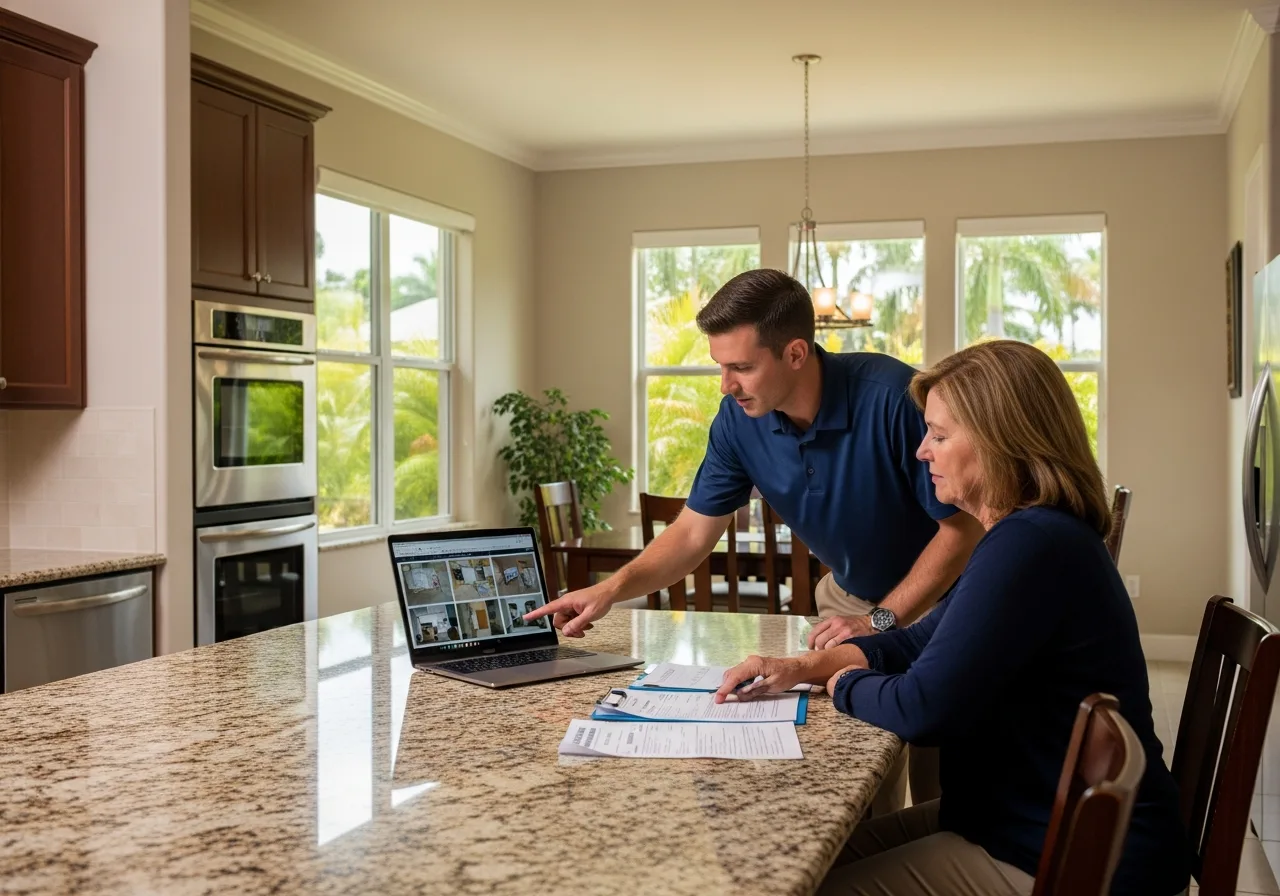
After mitigation is complete, our project manager documents the full extent of damage using moisture meters, thermal imaging, and visual inspection. For CBS stucco homes, this includes probing block walls for moisture migration, checking stucco adhesion, and assessing structural elements — tie beams, lintels, and roof-to-wall connections. The resulting scope becomes the basis for both the insurance claim and the Broward County permit application.
02
Permitting & Design
Weeks 1-3
We file the master permit application with the City of Coconut Creek Building Division, including structural plans, HVHZ product approvals for impact-rated openings, roofing specifications, and electrical/plumbing upgrade plans. For HOA-governed communities — 72% of Coconut Creek housing — we simultaneously submit architectural review applications covering stucco colors, barrel tile profiles, and window styles.
03
Demolition & Preparation
Weeks 2-4
Controlled demolition of damaged CBS walls routinely reveals hidden conditions: missing moisture barriers behind original stucco, polybutylene plumbing, aluminum wiring, corroded tie beams, and mold behind block walls. In condos and townhomes, we protect adjacent units with containment barriers and coordinate access with neighboring owners. Each hidden condition is documented and filed as an insurance supplement immediately.
04
Structural Rebuild
Weeks 4-10
The core of the project: CBS block repair or replacement, hurricane strap installation, tie beam repair, impact-rated window and door installation, HVHZ-compliant roofing, electrical panel upgrades to 200 amp with arc-fault protection, modern plumbing replacing polybutylene where discovered, and stucco application with proper drainage-plane moisture barriers. Every element meets current Florida Building Code.
05
Interior Finishing
Weeks 8-14
Drywall installation with texture matching, tile flooring, cabinetry, countertops, painting, trim, and finish electrical/plumbing. For 1980s-era Coconut Creek homes, we source materials that match existing undamaged areas or provide cohesive upgrades. HOA-required exterior finishes — stucco texture, paint color, barrel tile profile — are verified against the approved architectural application.
06
Final Inspection & Walkthrough
Week 14-16
Broward County conducts final trade inspections for structural, electrical, plumbing, mechanical, and roofing. Upon passing, the city issues a Certificate of Completion. We conduct a detailed walkthrough with you, address any punch list items, and provide complete documentation for your insurance carrier — including final photos, inspection records, and product warranties.
Why Our Coconut Creek Process Works
1
One Team, Start to Finish
Mitigation and reconstruction handled as one continuous project — no weeks-long gap between companies
2
CBS Expertise
Block replacement, stucco matching, tie beam repair — CBS is our daily reality, not an occasional project type
3
HVHZ Code Mastery
Every product carries a current NOA, every connection meets HVHZ wind load requirements, every inspection passes first time
4
Insurance-Ready
Xactimate line items separating covered reconstruction from ordinance-and-law code upgrades — maximizing your funding
With 72% of Coconut Creek housing classified as multi-unit — condos, townhomes, and
villa communities — most reconstruction projects involve HOA coordination, shared-wall
considerations, and multi-carrier insurance navigation. This is not a minor
administrative step. It affects every phase of the project.
HOA Approval Workflow
Before any exterior reconstruction work begins in Coconut Creek, the HOA architectural review committee (ARC) must approve materials, colors, and design. Palm Build submits ARC applications covering stucco color matching, barrel tile profiles, window styles, exterior paint specifications, and any modifications visible from common areas. We maintain familiarity with the specific architectural guidelines for Wynmoor, Regency Lakes, The Township, Centura Parc, and other major communities to accelerate the approval process.
Shared Wall Reconstruction Protocols
Multi-unit reconstruction in Coconut Creek condos and townhomes requires careful management of shared walls. Containment barriers protect adjacent units during demolition. Sound transmission ratings must be maintained or improved. Structural modifications to party walls require engineering review. Our crews coordinate access schedules with neighboring unit owners and manage noise restrictions that most Coconut Creek communities enforce during business hours only.
Access Coordination with Adjacent Units
Reconstruction in a condo environment means coordinating with neighbors, property managers, and building maintenance staff. Water damage that originates in one unit often affects units below and adjacent through shared plumbing risers and CBS wall systems. We schedule work to minimize disruption, provide advance notice to affected residents, and coordinate elevator use and loading dock access for material delivery in larger communities like Wynmoor.
Common Area vs. Unit-Owner Scope
Florida condominium statutes define the boundary between association and unit-owner responsibility — generally, the association covers common elements (exterior walls, roof, shared plumbing risers) while the unit owner covers everything from the drywall inward. But specific declarations of condominium may modify these boundaries. Palm Build identifies which scope belongs to which party early in the process, preventing disputes and ensuring each carrier funds its proper share.
Insurance Coordination (Master + HO-6)
When a water event damages multiple units, the HOA's master insurance policy covers common element reconstruction while individual unit-owner HO-6 policies cover interior damage. Palm Build coordinates between all carriers, documents the origin point and damage path, and prepares separate Xactimate scopes for each policy. For major communities like Wynmoor, Regency Lakes, and Centura Parc, we handle multi-unit losses requiring coordination between three or more carriers simultaneously.
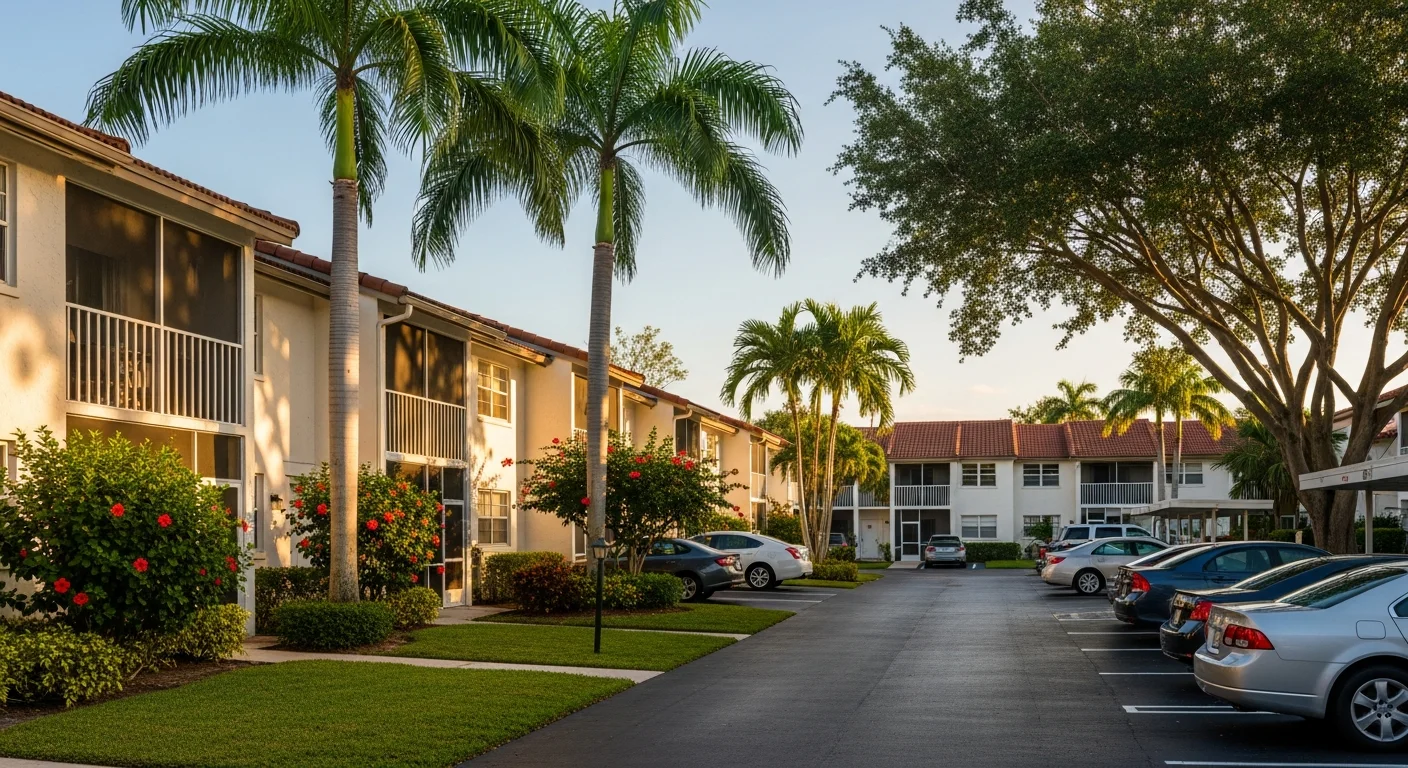
Coconut Creek's HOA communities enforce strict architectural standards — stucco
colors, barrel tile profiles, and exterior finishes must match community guidelines
during reconstruction.
Coconut Creek Communities We Serve
Wynmoor — 55+ community, 3,300+ units
Regency Lakes — gated CBS townhomes & villas
The Township — planned CBS community
Centura Parc — 1990s villas & condos
Hammocks — CBS townhome community
Coco Palms — 1970s-era condo units
Estates of Coconut Creek — single-family CBS
Emerald Lake Park — CBS homes near lakes
Live in a Coconut Creek condo? Call us — we understand HOA reconstruction processes
and coordinate with your management company, architectural committee, and insurance
carrier from day one.
Coconut Creek reconstruction costs reflect Broward County's HVHZ code requirements, CBS
construction complexity, barrel tile roofing, and the condo HOA coordination that most
projects require. With median home values at $309,600, the substantial improvement
threshold of approximately $154,800 is a factor in moderate-to-major reconstructions.
These ranges reflect actual Coconut Creek project costs for insurance-funded restoration
work.
Minor Reconstruction
Stucco repair, flooring, paint in 1-2 rooms
$15,000 - $40,000
Includes Florida Building Code-rated materials where applicable
Moderate Reconstruction
Kitchen/bath rebuild, multiple rooms, CBS wall repair
$40,000 - $100,000
Impact windows, hurricane straps, code upgrades included
Major Reconstruction
Structural rebuild, barrel tile roof, full HVHZ hardening
$100,000 - $250,000+
Full FBC compliance, flood-zone compliance if triggered
Condo Unit Reconstruction
Full unit gut renovation with HOA coordination
$50,000 - $150,000+
Shared-wall work, architectural review, association compliance
Coconut Creek Cost Premiums
HVHZ code compliance premium+15-25% vs non-code areas
Impact windows (per opening)$800-$1,500 vs $300-$600 standard
CBS specialist labor+10-20% vs wood-frame markets
Barrel tile roofing (per square)$450-$750 vs $250-$400 asphalt
Stucco texture matching (3-coat system)$8-$15/sq ft vs $4-$8 basic
Condo HOA coordination & compliance+5-10% project management
Substantial improvement threshold (50%)May trigger full code compliance
Insurance for Reconstruction
Navigating Insurance for Coconut Creek Reconstruction
Reconstruction claims are more complex than standard mitigation claims — they involve
replacement cost calculations, ordinance-and-law code upgrade coverage, and supplemental
claims for hidden damage discovered during CBS wall demolition. The most critical
coverage for Coconut Creek homeowners facing reconstruction is the ordinance-and-law
endorsement that funds mandatory HVHZ code upgrades.
Florida Claim Filing Deadlines (Critical for Reconstruction Supplements)
1 Year
Initial claim must be filed within 1 year of date of loss
Fla. Stat. §627.70132
18 Months
Supplemental claims for hidden damage found during Coconut Creek CBS demolition
Fla. Stat. §627.70132
The 18-month supplemental deadline is critical for reconstruction. Hidden damage behind Coconut Creek CBS walls — corroded tie beams, polybutylene plumbing, mold
behind block — must be documented and filed as supplements within this window. Palm Build files
supplements immediately upon discovery with photographic evidence and Xactimate line items.
Reconstruction Coverage
Replacement Cost Value (RCV) — pays to rebuild to equivalent quality without depreciation deduction
Ordinance or Law coverage — pays for HVHZ code upgrades required during reconstruction (impact windows, hurricane straps, electrical upgrades)
Debris removal — covers demolition and hauling of damaged CBS block, stucco, and barrel tile
Additional Living Expenses (ALE) — covers temporary housing during Coconut Creek reconstruction
Common Coverage Gaps
Actual Cash Value (ACV) policies — deduct depreciation, leaving significant out-of-pocket for 1980s-era Coconut Creek homes
Cosmetic damage exclusions — some policies exclude matching undamaged areas to repaired sections
Flood damage — standard policies exclude flood; separate NFIP or private flood policy required
Mold from long-term neglect discovered during reconstruction demolition
Contractor upgrade choices beyond "like kind and quality" CBS stucco replacement
Ordinance & Law: The Most Critical Coverage for Coconut Creek Reconstruction
Standard dwelling coverage pays to restore your home to its pre-loss condition. But
when current HVHZ code requires impact windows where single-pane glass existed,
hurricane straps where toenails sufficed, and self-adhered underlayment where felt
paper was used, the cost to bring the home to current code exceeds simple replacement.
Without an ordinance-and-law endorsement, a Coconut Creek homeowner facing major
reconstruction could be responsible for $30,000 to $80,000 in mandatory code upgrades out of pocket. Palm Build's Xactimate estimates separate covered reconstruction from code-upgrade
line items, ensuring your carrier funds both scopes where coverage exists.
Insurance coordination is built into every Coconut Creek reconstruction project —
Xactimate estimates, supplement documentation, and ordinance-and-law coverage
maximization.
Our Work
Before & After: Coconut Creek Reconstruction Results
Every reconstruction project ends with a home that meets or exceeds its pre-loss
condition — often with HVHZ code-required upgrades that genuinely improve the structure.
These representative results show the transformation from damage through completed
reconstruction in Coconut Creek.
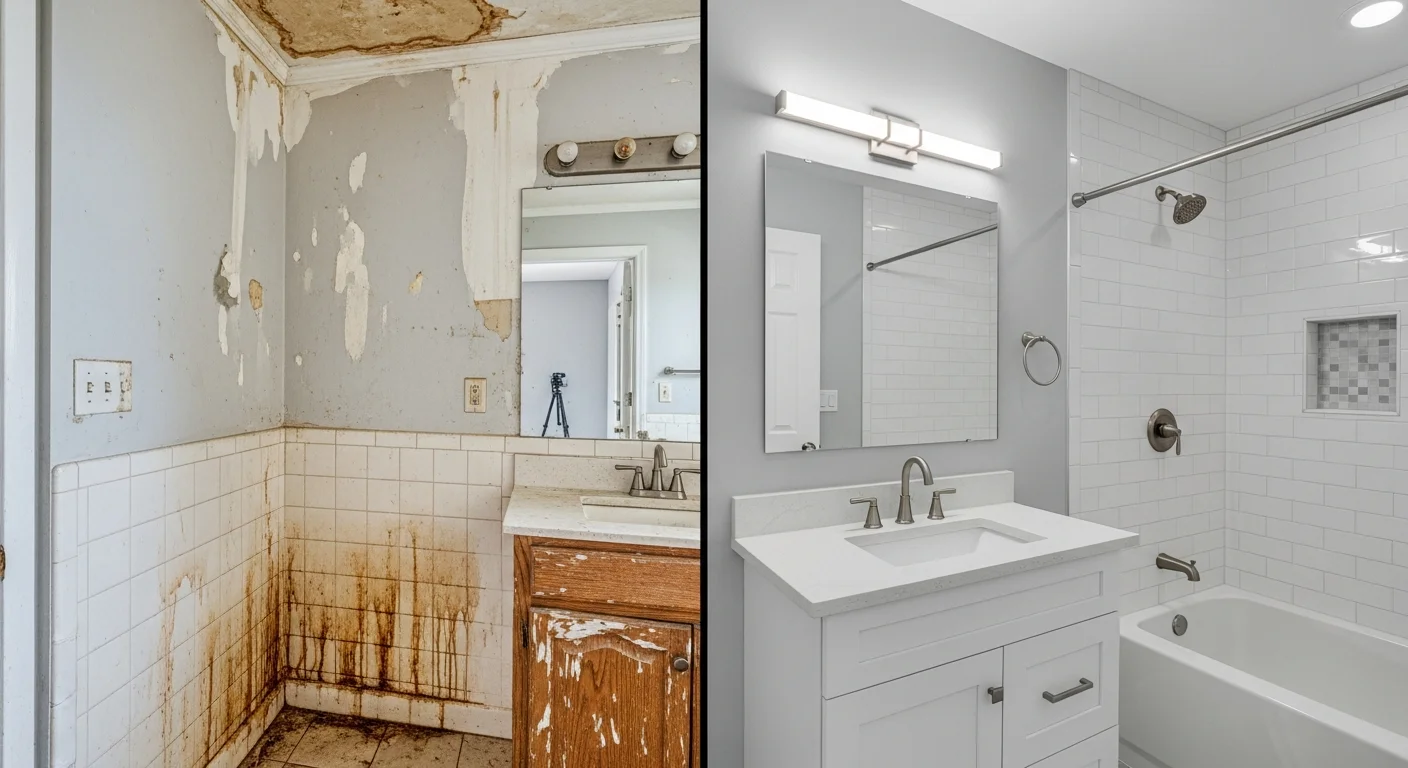
Bathroom reconstruction after water damage — CBS walls stripped to block, re-waterproofed, and finished with modern tile, fixtures, and GFCI-protected electrical.
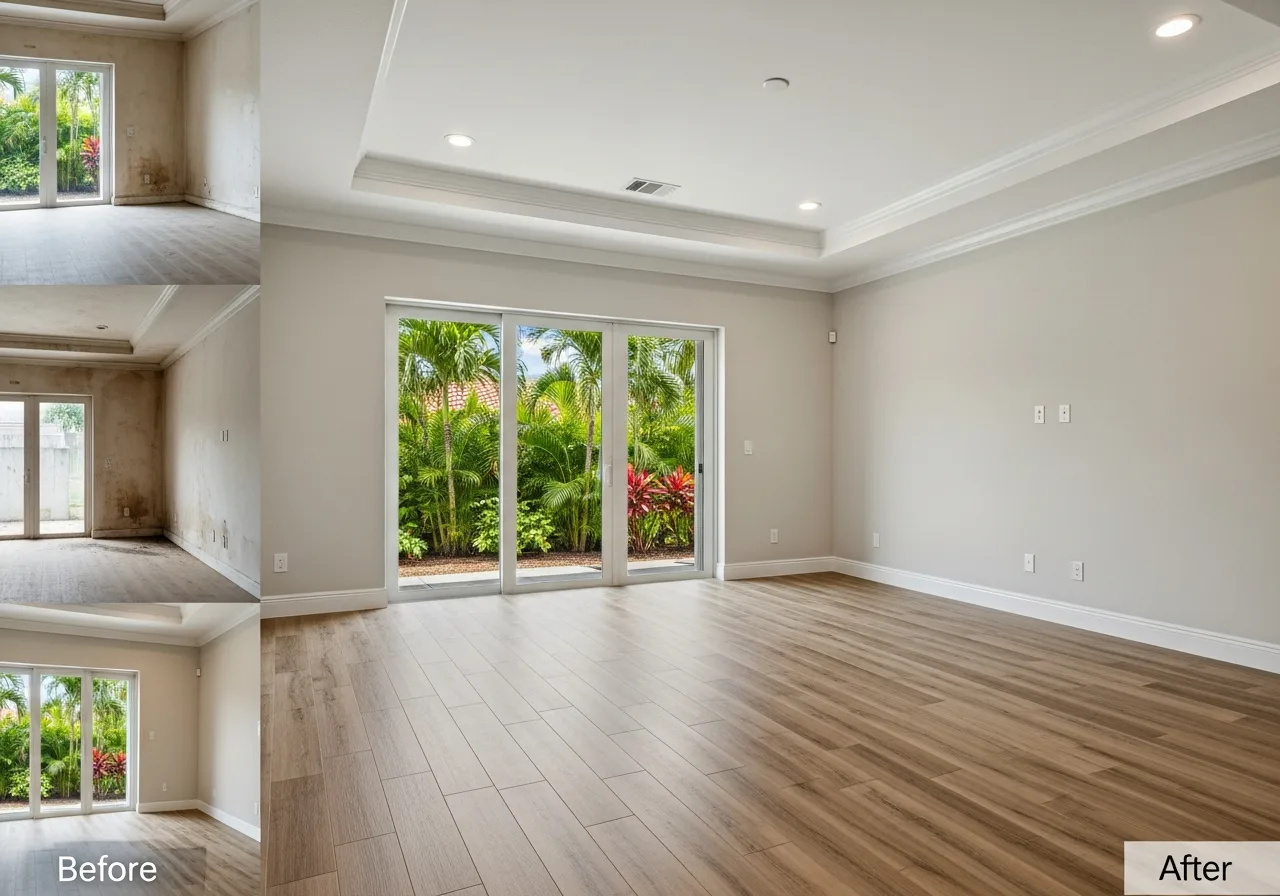
Living room reconstruction complete — new tile flooring, fresh drywall and paint over properly insulated CBS walls, and impact-rated sliding glass doors replacing original non-rated units.
Full kitchen reconstruction — modern cabinetry, quartz countertops, tile backsplash, and a 200-amp electrical panel upgrade replacing the original 1980s 100-amp service.
The Local Advantage
Why Coconut Creek Homeowners Choose Palm Build for Reconstruction
Reconstruction after damage is the most consequential construction project most
homeowners will ever face. It happens under stress, under insurance scrutiny, and under
building code requirements that most contractors in the market do not fully understand.
Palm Build is headquartered in nearby Deerfield Beach with a team built specifically for
South Florida CBS reconstruction.
Licensed General Contractor
Palm Build holds a Florida Certified General Contractor license — required for any reconstruction project exceeding $15,000 or involving structural work. Unlike mitigation-only companies that subcontract rebuilds, we self-perform reconstruction from demolition through final inspection under a single license and a single point of accountability.
CBS Construction Specialists
We understand CBS construction at a molecular level. Block replacement, stucco matching, tie beam repair, moisture barrier installation — CBS is our daily reality across hundreds of Broward County projects each year. Coconut Creek's 1980s CBS homes are not a learning curve for our crews — they are the standard.
HVHZ Code Mastery
Every product we install carries a current Miami-Dade NOA, every roof-to-wall connection meets HVHZ wind load requirements, every inspection passes. We do not take shortcuts on code compliance because unpermitted or non-compliant work voids future insurance coverage and creates title issues at sale.
Condo & HOA Process Experts
With Wynmoor, Regency Lakes, The Township, Centura Parc, and dozens of HOA-governed communities, we work with property managers and boards daily. We carry the insurance certificates your HOA requires, navigate architectural committee approvals, and coordinate multi-unit insurance claims between master policies and HO-6 carriers.
5 Miles from Your Door
Our headquarters is at 786 S Military Trail in Deerfield Beach — 5 miles from Coconut Creek via Sample Road. Our entire South Florida operation runs from here, meaning faster response, daily site supervision, and a team that knows your community's specific construction characteristics.
One Team: Mitigation to Reconstruction
We handle both mitigation and reconstruction as one continuous project — eliminating the weeks-long gap between mitigation completion and rebuild start that occurs when homeowners use separate companies. One project manager, one insurance file, one continuous timeline from the day damage occurs through final Broward County inspection.
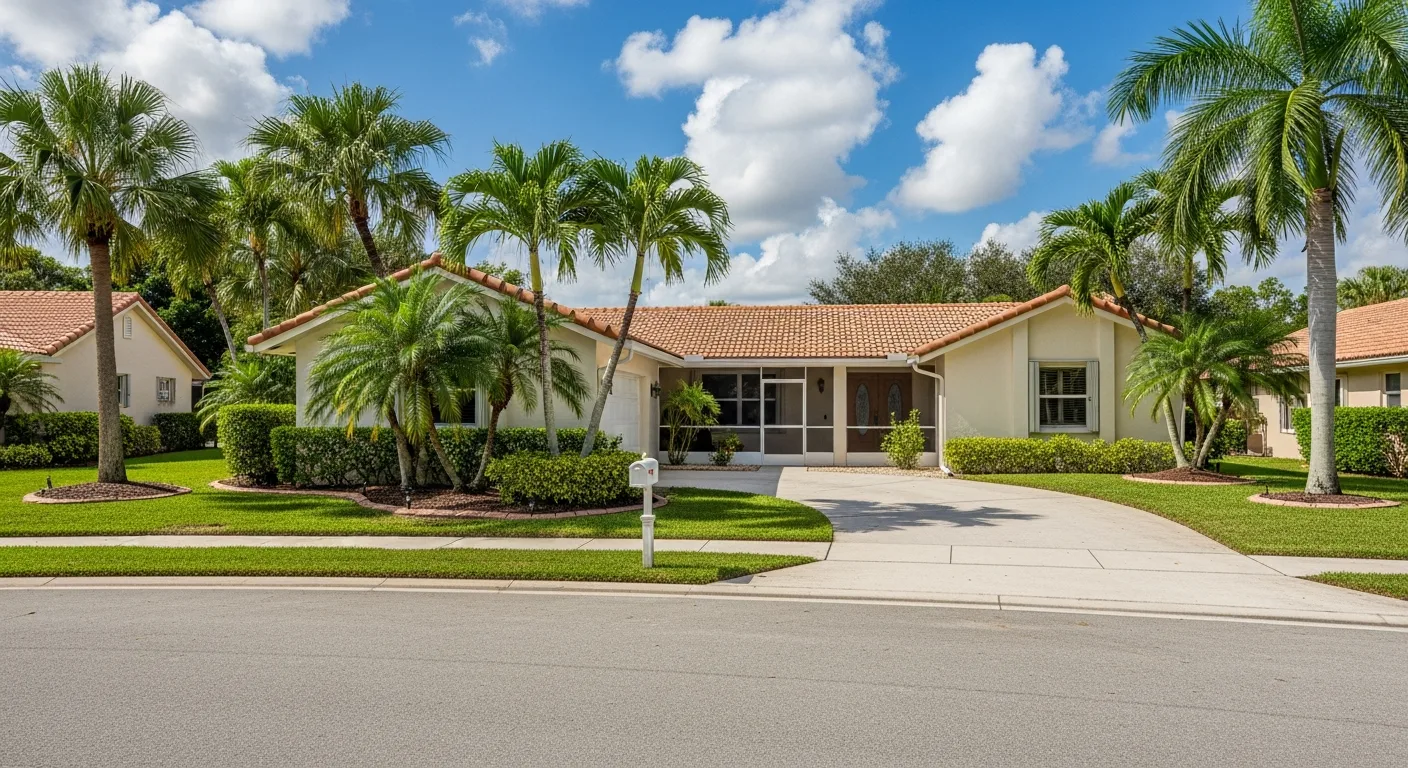
Palm Build's South Florida reconstruction crew — licensed, insured, and 5 miles from
your Coconut Creek door.
Common Questions
Coconut Creek Reconstruction FAQ
How long does reconstruction take in Coconut Creek?
Minor reconstruction (stucco repair, flooring in 1-2 rooms): 2-4 weeks. Moderate reconstruction (kitchen/bath rebuild, multiple rooms, CBS wall repair): 6-12 weeks. Major reconstruction (structural CBS rebuild, barrel tile roof replacement, multi-unit condo projects): 12-24 weeks. Coconut Creek timelines are affected by impact-rated window lead times (6-10 weeks for custom sizes common in 1980s-era openings), Broward County permit processing, barrel tile sourcing for matching existing roofs, HOA architectural review committee approval cycles, and the availability of CBS-specialized tradespeople in the South Florida market.
What does reconstruction cost in Coconut Creek?
Minor reconstruction ranges from $15,000-$40,000. Moderate reconstruction (kitchen/bath, multiple rooms) ranges from $40,000-$100,000. Major reconstruction with full HVHZ code upgrades ranges from $100,000-$250,000+. Coconut Creek costs reflect Broward County's HVHZ code requirements, CBS construction complexity, and specialty materials. Impact-rated windows cost $800-$1,500 per opening versus $300-$600 for standard replacements. Barrel tile roofing with proper underlayment runs $450-$750 per square (100 sq ft). With median home values at $309,600, substantial improvement triggers are common in moderate-to-major reconstructions.
What permits are needed for reconstruction in Coconut Creek?
Coconut Creek uses the Broward County permit system — a master permit covers structural, plumbing, electrical, roofing, and mechanical work. A Notice of Commencement must be filed with Broward County Records before any work begins. Individual trade inspections (electrical rough-in, plumbing rough-in, framing, roofing, final) are scheduled through the city. Impact-rated window installations require separate product approval verification under HVHZ requirements. In HOA communities — which covers the majority of Coconut Creek housing — you may also need architectural review committee approval before exterior reconstruction begins. Palm Build handles the entire permit and HOA approval process from application through final inspection.
Does insurance cover Florida Building Code upgrades during Coconut Creek reconstruction?
Standard homeowners policies cover reconstruction to pre-loss condition only. Code-required upgrades — impact-rated windows, hurricane straps, enhanced electrical systems, HVHZ-compliant roofing — that exceed pre-loss specifications are covered by an ordinance-and-law endorsement. This endorsement is critical in Coconut Creek where the gap between 1980s construction standards and current HVHZ code is significant. Without it, mandatory code upgrades come out of pocket — potentially $30,000 to $80,000 for a major reconstruction. Palm Build's Xactimate-based estimates separate covered reconstruction from code-upgrade line items, maximizing your ordinance-and-law claim and ensuring your carrier funds the full scope.
Does Palm Build handle CBS concrete block stucco reconstruction in Coconut Creek?
CBS concrete block stucco is our primary construction expertise in South Florida. Coconut Creek's housing stock is overwhelmingly CBS — from 1970s-era Coco Palms units to 1990s Centura Parc villas. CBS reconstruction differs fundamentally from wood-frame work: water migrates through porous concrete block via capillary action, stucco systems require multi-coat application with proper moisture barriers, and structural evaluation of the block itself is necessary after fire or severe water damage. We handle all CBS-specific reconstruction including block replacement, stucco matching, tie beam repair, and moisture barrier installation to current Florida Building Code and HVHZ specifications.
How does condo reconstruction work with HOA approvals in Coconut Creek?
Coconut Creek's 72% multi-unit housing means most reconstruction projects require HOA involvement. Our process starts by submitting architectural review applications to your community's ARC before exterior work begins — covering stucco color matching, barrel tile profiles, window styles, and exterior finishes. We coordinate simultaneously with the HOA's master policy carrier (for common element damage) and your HO-6 carrier (for interior unit damage). For communities like Wynmoor, Regency Lakes, The Township, and Centura Parc, we maintain familiarity with their specific architectural guidelines, approved color palettes, and preferred materials to accelerate the approval process.
How does Palm Build match existing finishes in 1980s-era Coconut Creek homes?
Matching finishes in homes built during the 1978-1995 construction boom requires sourcing discontinued materials or finding modern equivalents. Common challenges include matching textured stucco finishes (skip trowel, knockdown, orange peel), sourcing barrel tile profiles that align with existing roof patterns, matching terrazzo or original ceramic tile flooring, replicating cabinet styles and hardware from the era, and color-matching aged stucco exterior coatings. Palm Build maintains relationships with specialty suppliers and custom fabricators who can replicate period-appropriate finishes. Where exact matches are impossible, we provide samples and options that blend seamlessly with undamaged adjacent areas.
What is the substantial improvement rule and does it affect my Coconut Creek reconstruction?
Florida's substantial improvement rule states that if reconstruction costs exceed 50% of the structure's pre-damage market value, the entire building must be brought into compliance with current Florida Building Code — including HVHZ requirements and flood-zone elevation standards where applicable. With Coconut Creek's median home value at $309,600, the 50% threshold is approximately $154,800. Major reconstructions — especially after fire or multi-room water events — can approach or exceed this threshold, triggering full code compliance for the entire structure. Palm Build evaluates the 50% threshold early in the reconstruction planning process and coordinates with your insurance carrier on ordinance-and-law coverage for code-mandated upgrades.
Trusted Vendors
Trusted local pros in Coconut Creek
Outside our restoration scope, these are the vetted, licensed contractors we trust
alongside our work. Personally evaluated, reference-checked, and recommended by Palm
Build.
Need Reconstruction in Coconut Creek? Licensed, Code-Compliant, Insured.
Palm Build handles the full rebuild — from demolition through final Broward County inspection — with one team, CBS concrete block expertise, HOA architectural approval coordination, and insurance documentation throughout. HVHZ-compliant roofing, impact-rated windows, 1980s-era finish matching, and condo reconstruction specialists — all from our Deerfield Beach hub, 5 miles away.