(888) 245-5155
Call Now 24/7
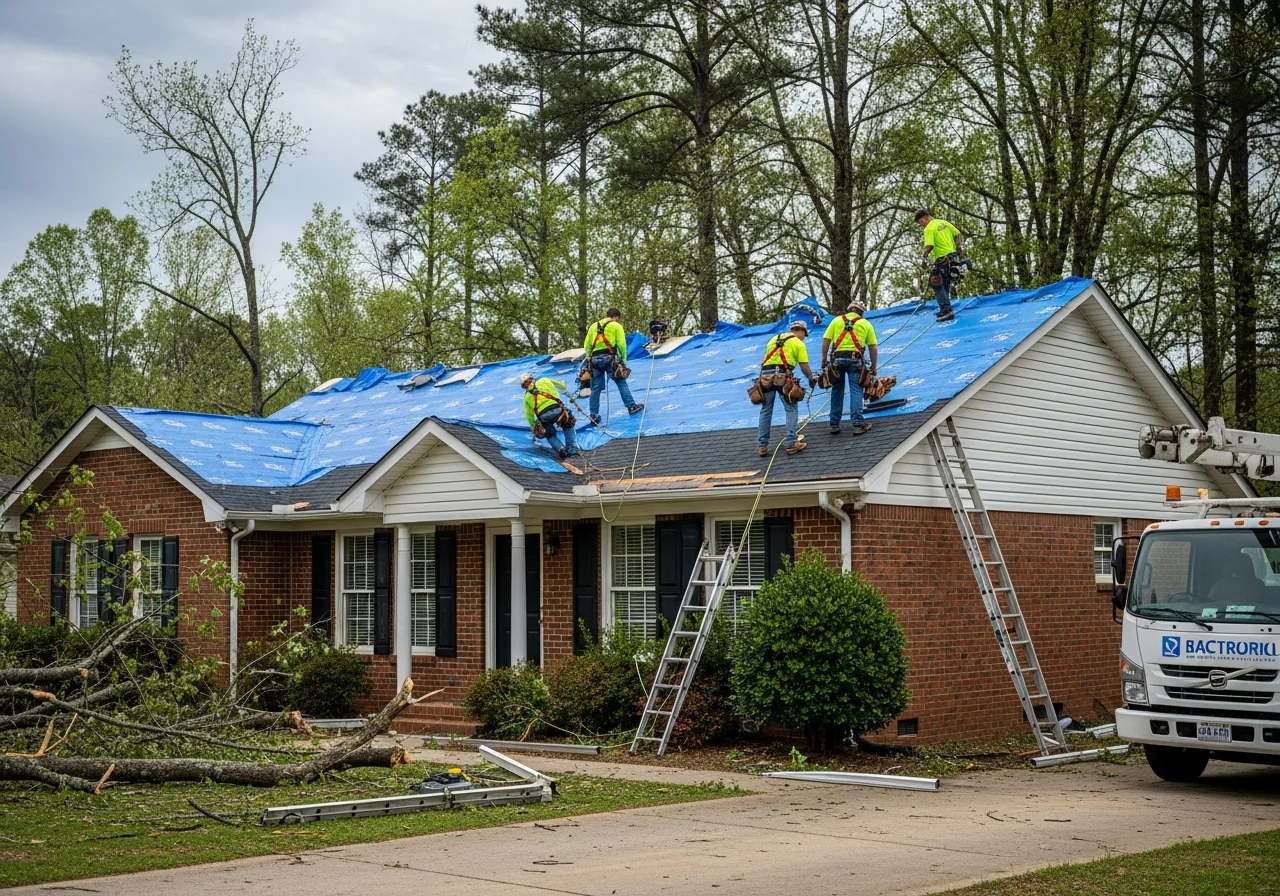
Palm Build storm damage restoration team responding to a Mount Holly, North Carolina residential neighborhood after severe weather with emergency tarping equipment visible
MOUNT HOLLY NC — 24/7 STORM & WIND DAMAGE RESPONSE

Storm & Wind Damage Restoration in Mount Holly, North Carolina

From tropical remnant rain bands flooding the Catawba River corridor to severe thunderstorms snapping mature hardwoods across Dutchmans Ridge rooflines, Mount Holly's 18,723 residents face escalating storm damage risk every season. Palm Build's Charlotte team responds in 30-45 minutes with emergency tarping, water extraction, structural stabilization, and insurance-ready documentation — backed by deep knowledge of Gaston County's storm damage patterns.

Approximately 20 minutes from Mount Holly 30-45 min Response IICRC Certified

30-45 min

Emergency Response

24/7

Dispatch Available

IICRC

Certified Technicians

The Damage Clock Is Running

Why Fast Storm Response Matters in Mount Holly

Storm damage in Mount Holly is never a single event — it is a cascade. Every hour between the initial damage and professional stabilization allows water to migrate deeper into your home's structure, turning a manageable repair into a major restoration project. Mount Holly's Catawba River corridor humidity accelerates this timeline faster than anywhere else in the Charlotte metro.

0-4 Hours

Exposed Roof Deck Absorbs Moisture

Once wind strips shingles or a tree punches through your Mount Holly roofline, the exposed decking begins absorbing water with every passing rain band. Plywood decking can absorb up to 50% of its weight in water within hours — weakening the structural bond between sheathing and trusses and making the next gust more likely to peel additional sections.

4-24 Hours

Water Migrates Into Wall Cavities

Wind-driven rain entering through roof breaches follows gravity and capillary action into attic insulation, ceiling assemblies, and interior wall cavities. In Mount Holly homes — especially the older stock in Adrian Park and Cottonwood Acres — water follows electrical runs, plumbing stacks, and HVAC chases into spaces you cannot see or access without demolition.

24-48 Hours

Catawba River Humidity Accelerates Saturation

Mount Holly's Catawba River corridor maintains ambient humidity levels 10-15% higher than inland Charlotte neighborhoods. This means wet building materials dry slower and absorb more moisture from the surrounding air. What would dry in 3 days in Huntersville takes 5-7 days in Mount Holly without professional dehumidification.

48-72 Hours

Mold Colonization Begins

At 48 hours with sustained moisture and Mount Holly's river corridor humidity, mold spores begin colonizing on wet drywall, insulation, and wood framing. What started as a $3,000 emergency tarp job becomes a $15,000+ mold remediation project. Every hour of delay between damage and professional response increases your total restoration cost.

Every hour of delay between storm damage and professional response increases your total restoration cost by an estimated 20-35%.

Call (704) 464-0121 Now

Local Risk Factors

Why Mount Holly Faces Escalating Storm Damage Risk

Mount Holly's position along the Catawba River corridor, mature tree canopy, and rapidly diversifying housing stock create a storm damage profile unlike any other Gaston County community. Here are the four factors that drive Mount Holly's unique risk.

Catawba River Corridor — Compound Flood Risk

3-6 in

Rain per tropical event

Mount Holly sits where the Catawba River meets Dutchman's Creek, creating a natural flood funnel during major rain events. When tropical remnants deposit 3-6 inches of rain upstream, the river crests hours after the storm passes — flooding low-lying properties in Riverfront and River Park that survived the initial wind event. During Tropical Storm Helene, apartments along the Mount Holly river corridor required voluntary evacuations.

Severe Thunderstorms — Spring and Fall Peak

59

Severe warnings (12 mo)

The Charlotte metro averages 50+ severe thunderstorm events per year, and Mount Holly catches the full brunt of systems tracking northeast along the I-85 corridor. Gaston County recorded 59 severe weather warnings in the past 12 months. Supercell thunderstorms produce large hail, straight-line winds exceeding 60 mph, and occasional tornadoes — delivering year-round punishment to Mount Holly rooftops.

Mature Tree Canopy — Projectile Hazard

$40K+

Potential tree-strike claim

Mount Holly's established neighborhoods — Adrian Park, Cottonwood Acres, and Dutchmans Ridge — feature mature oak, pine, and sweetgum canopy that becomes a minefield of projectiles during high-wind events. A single large limb strike on a Stockbridge Estates home can generate a claim exceeding $40,000 when you factor in roof damage, water intrusion to multiple rooms, and interior finish restoration.

Mixed Housing Stock — Every Era Fails Differently

1913-2024

Housing stock range

Mount Holly's explosive 37% growth since 2010 produced a housing stock that spans over a century — from 1913 Adrian Park cottages with original framing to 2024 Arbordale homes with engineered roof connections. The pre-1970s homes fail at the roof-to-wall connection under wind load. The 1980s-2000s homes lose vinyl siding and have aging shingle systems. Even newer homes in Ashlyn Place are vulnerable to hail damage on composition shingles.

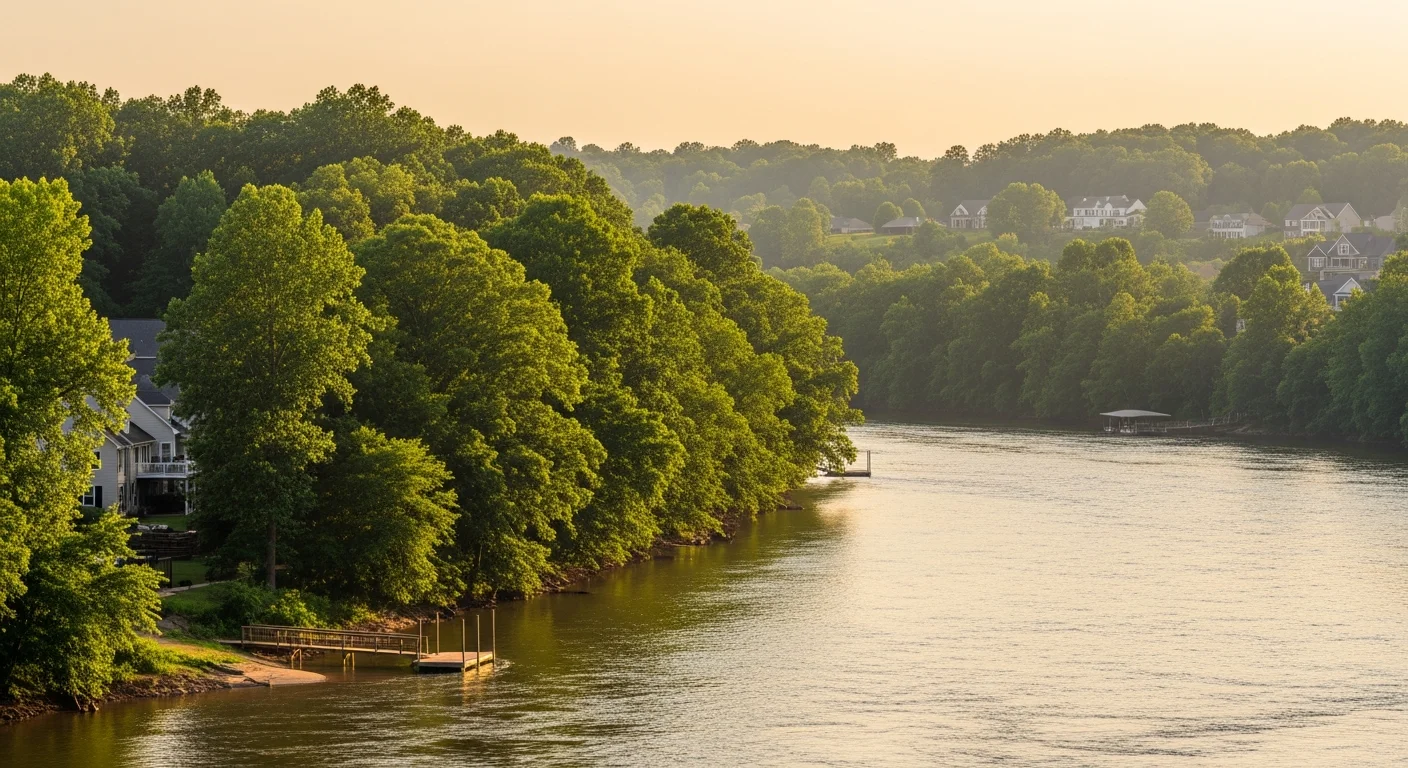
Aerial view of the Catawba River corridor through Mount Holly, North Carolina showing the river's proximity to residential neighborhoods and the flood risk geography
The Catawba River corridor through Mount Holly creates compound storm risk — wind damage from the initial event followed by rising water hours later as upstream rainfall drains through the valley.

Neighborhood-Level Intelligence

Mount Holly Neighborhood Storm Risk Profiles

Storm damage patterns in Mount Holly vary dramatically by neighborhood based on proximity to the Catawba River, housing age, tree canopy density, and elevation. Understanding your neighborhood's specific risk profile helps you prepare — and helps our team prioritize the right response when we arrive.

Riverfront

Critical

Built: 1990s-2010s

Claim range: $12,000-$65,000

Primary risk: Catawba River flooding, wind-driven rain, compound damage events

Lowest elevation in Mount Holly, directly along the Catawba River. During Tropical Storm Helene, this area required voluntary evacuations. Homes face the dual threat of wind damage to rooflines followed by rising river water entering crawl spaces and first floors hours later. FEMA flood zone designation covers much of this corridor.

Adrian Park

Critical

Built: 1913-1960s

Claim range: $8,000-$45,000

Primary risk: Aging structure wind failure, tree strikes, roof blow-off

Mount Holly's oldest residential neighborhood. Original and twice-replaced roofing systems, mature hardwood canopy planted 60-100 years ago, and construction-era framing that predates modern wind resistance standards. These homes fail at the roof-to-wall connection during sustained gusts above 55 mph.

Dutchmans Ridge

High Risk

Built: 2000s-2010s

Claim range: $6,000-$40,000

Primary risk: Elevated wind exposure, hail damage, tree strikes

Higher elevation increases direct wind exposure on rooflines and siding. The neighborhood's mature but younger tree canopy creates moderate projectile risk during high-wind events. Composition shingle roofs are now 15-25 years old — approaching the age where hail impact and wind uplift resistance degrade significantly.

Cottonwood Acres

High Risk

Built: 1960s-1980s

Claim range: $5,000-$30,000

Primary risk: Aging shingles, crawl space flooding, mature tree canopy

Mid-century ranch homes with vented crawl spaces that allow wind-driven rain to pool against foundations on impermeable Piedmont clay soil. Dense pine and hardwood canopy creates significant tree-fall risk during straight-line wind events. Many roofs are well past their rated 20-25 year service life.

Stockbridge Estates

Moderate

Built: 2005-2015

Claim range: $4,000-$25,000

Primary risk: Wind damage to vinyl siding, hail on newer shingles

Newer suburban construction with better wind resistance ratings but still vulnerable to hail impact on composition shingles and wind uplift on vinyl siding panels. Growing tree canopy creates increasing projectile risk as the neighborhood matures.

Kellys Landing / River Park

High Risk

Built: 1990s-2000s

Claim range: $8,000-$50,000

Primary risk: River proximity flooding, wind-funneled through valley

Located near the Catawba River corridor, these neighborhoods experience accelerated winds channeled through the river valley and face secondary flooding risk when the river crests after upstream rainfall events. Homes with crawl spaces are especially vulnerable to moisture intrusion.

Ashlyn Place / Arbordale

Moderate

Built: 2015-2024

Claim range: $3,000-$20,000

Primary risk: Hail damage, construction-period defects under wind stress

Mount Holly's newest construction with engineered roof-to-wall connections and architectural shingles rated for 110-130 mph winds. Lowest overall storm damage risk, but still vulnerable to large hail fracturing shingle granules and wind-driven rain exploiting any construction-period flashing defects.

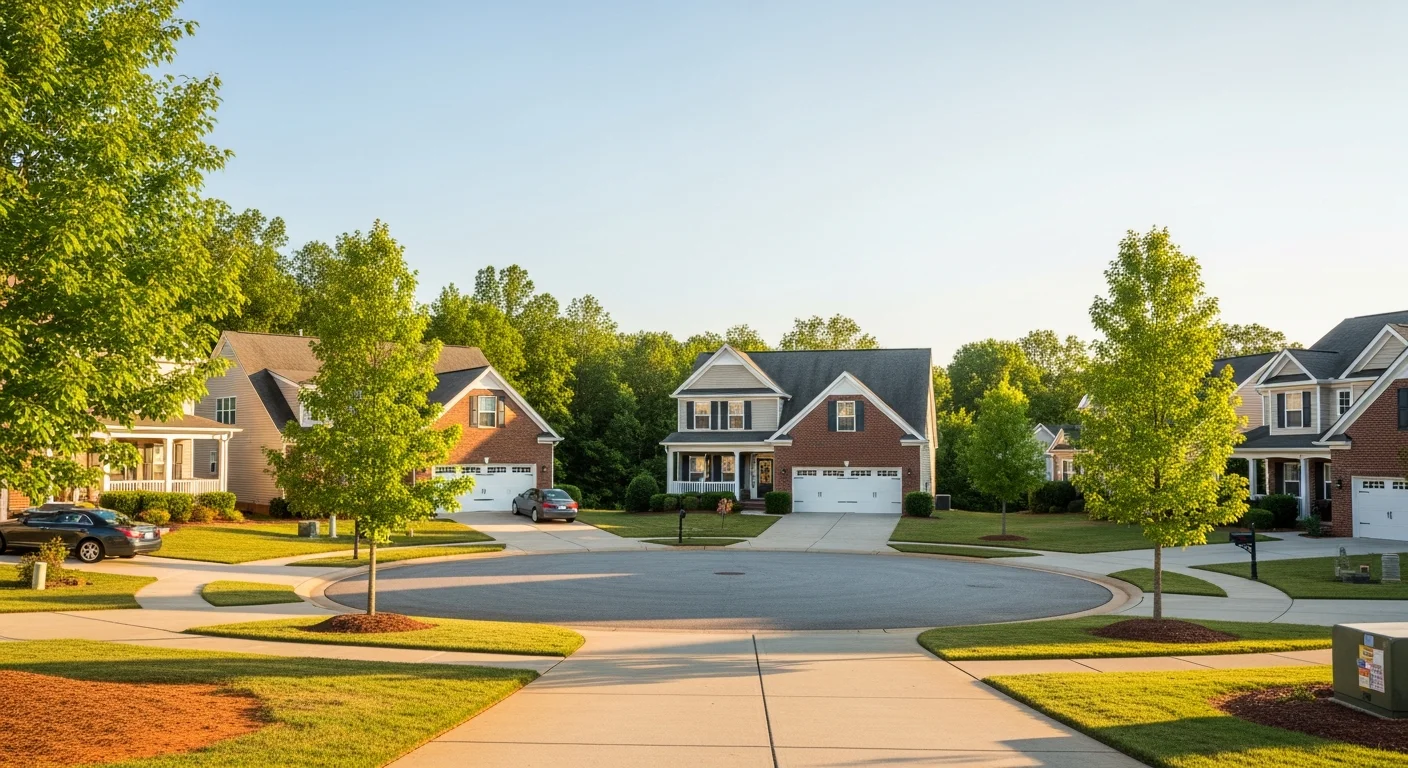
Aerial view of Mount Holly NC residential subdivision showing the mix of established and newer construction typical of the city's 37% growth since 2010
Mount Holly's 37% population growth since 2010 created a housing stock ranging from 1913 Adrian Park cottages to 2024 Arbordale construction — each era with distinct storm damage vulnerabilities.
Storm Restoration Process

How We Restore Mount Holly Homes After Storm Damage

When severe weather strikes Mount Holly, the damage clock starts immediately. Exposed roof decking absorbs water within hours, and the Catawba River corridor's elevated humidity compounds every delay. Here is exactly what happens when you call Palm Build.

01

Emergency Tarping & Board-Up

Hours 1-4

Exposed rooflines get heavy-gauge UV-resistant tarps mechanically secured to roof decking with battens and screws — not loose poly sheeting that blows off in the next rain band. Broken windows and wall breaches receive structural board-up. This stops the damage cascade immediately and satisfies your insurance policy's duty to mitigate. All emergency work is documented with timestamped photos for your claim.

02

Damage Assessment & Documentation

Days 1-3

Our IICRC-certified team leader conducts comprehensive damage assessment — checking for compromised roof trusses, hanging limbs, energized electrical hazards, and gas leaks. Simultaneously, we create insurance-grade photo and video documentation, classifying every damage element by cause (wind vs. flood vs. tree strike) to ensure correct claim filing with your carrier.

03

Water Extraction (Storm Water)

Days 1-3

Wind-driven rain entering through roof breaches introduces water into wall cavities, attic insulation, ceiling assemblies, and flooring systems. Truck-mounted extractors remove standing water at 25+ gallons per minute. For Mount Holly homes with crawl spaces where storm water has migrated below the living space, we deploy submersible pumps and crawl space extraction systems simultaneously.

04

Structural Drying

Days 3-7

Commercial dehumidifiers and air movers target every moisture pocket identified during assessment. Daily moisture readings track drying progress in wall cavities, subfloor assemblies, and attic spaces. Mount Holly's Catawba River corridor humidity means drying takes longer than inland communities — we account for this in our drying plan to prevent mold growth in the critical 24-48 hour window.

05

Roof & Exterior Repair

Weeks 1-4

From partial shingle replacement to full roof tear-off, we restore your roof to pre-loss condition or better. Damaged siding, gutters, fascia, and soffits are replaced. Fallen trees are removed from structures with careful rigging to avoid compounding damage. All work is fully permitted through Gaston County.

06

Interior Restoration & Reconstruction

Weeks 2-12

Drywall replacement, flooring restoration, painting, and finish work bring your Mount Holly home back to pre-loss condition. For newer Stockbridge Estates and Arbordale homes with upgraded finishes, we match existing materials and specifications. For historic Adrian Park properties, we balance period-appropriate restoration with modern building code requirements.

Types of Storm Damage

Common Storm Damage in Mount Holly Homes

Mount Holly homes face four primary types of storm damage — each requiring a different response strategy and creating distinct insurance documentation requirements. Here is what we see most often across Mount Holly neighborhoods.

Wind Damage — Shingle Blow-Off & Structural Failure

Most Common

Straight-line winds exceeding 60 mph and sustained tropical storm gusts strip shingles from Mount Holly rooftops, tear vinyl siding from wall framing, and collapse weakened outbuildings. Adrian Park's pre-1960s homes with original roof-to-wall connections are most vulnerable — these connections were not engineered to resist modern wind loads. Even newer homes in Stockbridge Estates lose siding panels and ridge cap shingles during peak gusts.

Typical cost range $2,500-$35,000

Fallen Tree Strikes — Canopy Collapse

High Severity

Mount Holly's mature hardwood canopy — especially the 60-100 year old oaks and pines in Adrian Park and Cottonwood Acres — becomes a field of projectiles during high-wind events. A single large limb can punch through roof decking into the living space, cascading water damage through multiple floors. Complete tree failures onto structures during saturated soil conditions create the highest-value claims we see in Mount Holly.

Typical cost range $5,000-$65,000+

Hail Damage — Invisible Granule Fractures

Most Frequent Hazard

Gaston County recorded 67 Doppler-detected hail events in the past 12 months — the most frequent severe weather hazard in the area. Hail as small as one inch fractures shingle granules without creating visible holes. This damage is invisible from the ground but degrades waterproofing integrity over subsequent rain and UV exposure cycles. Within 6-18 months, micro-fractures develop into active leaks. Professional inspection after any hail event is essential.

Typical cost range $3,000-$25,000

Wind-Driven Rain Intrusion — Secondary Water Damage

Compound Damage

When wind creates any opening in your Mount Holly home's building envelope — a missing shingle section, a lifted soffit panel, a cracked window seal — rain enters under pressure and follows gravity into wall cavities, attic insulation, and floor systems. In homes with crawl spaces, water migrates downward into subfloor assemblies and the Piedmont clay soil below. Within 48 hours, mold begins colonizing in Mount Holly's river corridor humidity.

Typical cost range $4,000-$40,000
Seasonal Risk

Mount Holly Seasonal Storm Damage Calendar

Mount Holly's storm exposure is year-round — amplified by the Catawba River corridor's microclimate effects. Severe thunderstorms peak April through September, but tropical remnants in fall and ice events in winter mean there is no safe month for Mount Holly homeowners.

Jan - Mar

Winter Storms & Ice Loading

Ice storms load Mount Holly's mature hardwood limbs beyond structural limits — especially in Adrian Park and Cottonwood Acres where 60-100 year old trees overhang rooflines. Freezing rain events can collapse weakened outbuildings and damage siding. Freeze-thaw cycles deteriorate flashing and caulk joints on aging roofs, creating entry points for wind-driven rain in subsequent spring storms.

Apr - May

Peak Severe Weather — Hail & Tornadoes

The most dangerous window for Mount Holly. Warm Gulf air collides with Piedmont cold fronts, producing supercell thunderstorms with large hail, 60+ mph straight-line winds, and tornadoes. Gaston County's May 2024 twin EF-1 tornadoes struck during this exact pattern. Hail events peak in frequency during this window, degrading aging composition shingle roofs across Mount Holly's established neighborhoods.

Jun - Aug

Afternoon Thunderstorms & Microbursts

Daily convective thunderstorms produce localized but intense wind and hail events with minimal warning. Microbursts — concentrated downdrafts at 60-80 mph — are particularly dangerous for Mount Holly's tree-heavy neighborhoods. The Catawba River's heated surface can amplify convective activity over Riverfront and River Park neighborhoods. Mount Holly averages its highest monthly rainfall during this period.

Sep - Oct

Hurricane Remnants & River Flooding

The peak window for tropical storm remnants tracking through western NC. These systems deposit 3-6+ inches of rain while maintaining sustained winds of 40-70 mph. Tropical Storm Helene struck Gaston County in September 2024, knocking out power to 60-70% of the county and forcing voluntary evacuations along Mount Holly's river corridor. The Catawba River crests hours after the storm, creating secondary flood damage.

Nov - Dec

Late-Season Severe Storms

Gaston County remains vulnerable to strong thunderstorms well into December — the December 2024 storm near Lowell with tornado-capable rotation and 60 mph gusts proved there is no true off-season. Late-fall storms catch homeowners off guard. Saturated fall soil conditions make Mount Holly's mature trees more susceptible to wind-throw, increasing the risk of catastrophic tree-on-structure failures.

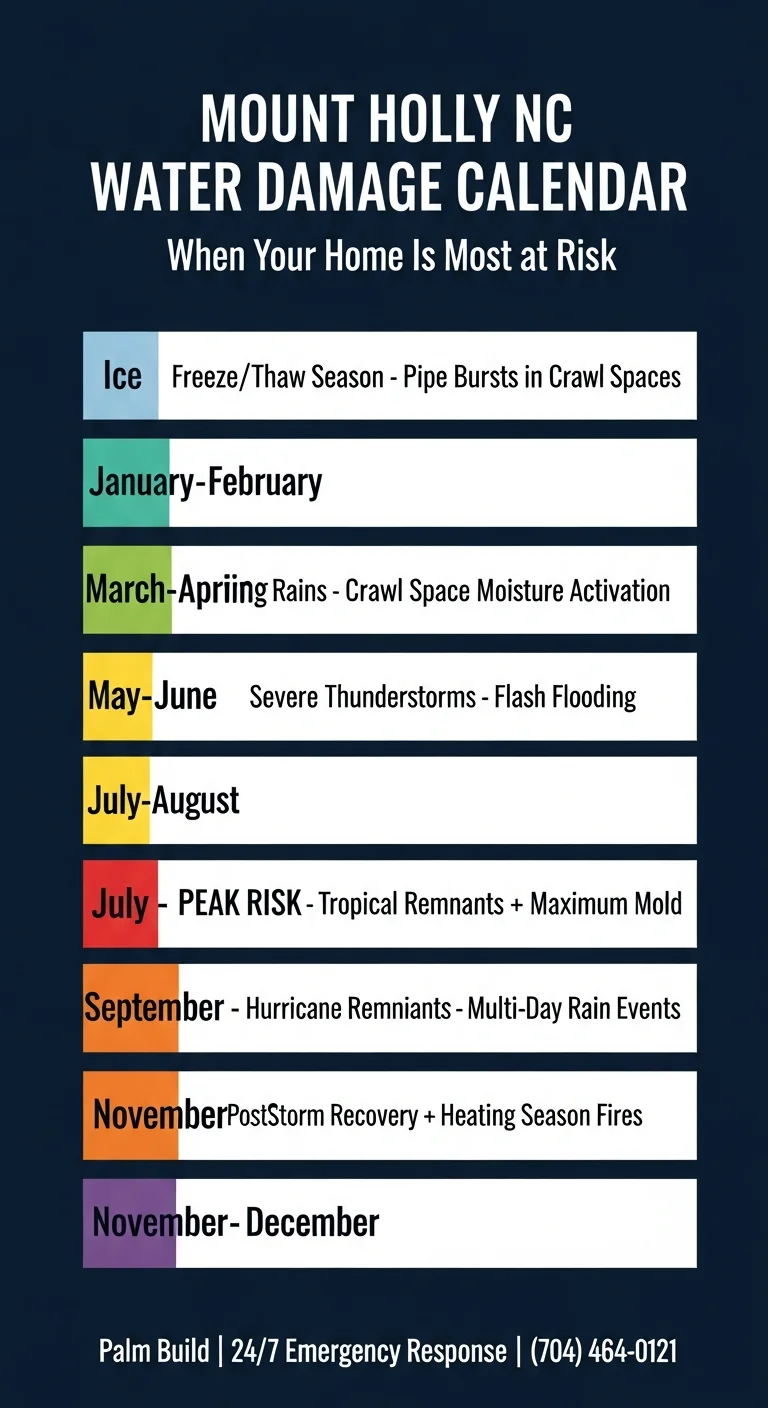
Seasonal storm damage calendar infographic for Mount Holly, North Carolina showing tornado, hail, hurricane remnant, and winter storm risk by month throughout the year
Mount Holly's storm damage peaks in April-May (spring severe weather) and September-October (hurricane remnants) — but December storms prove there is no true off-season in Gaston County.

Mount Holly Pricing

Storm Damage Restoration Costs in Mount Holly

Storm damage costs in Mount Holly vary based on the type of damage, housing age, and whether secondary water damage has developed. Emergency mitigation performed within the first 24 hours consistently reduces total claim costs — especially in the Catawba River corridor where humidity accelerates secondary damage.

Standard Wind/Hail Damage

Shingle blow-off, siding damage, minor tree limb

Emergency tarping (single slope) $500-$1,500
Window board-up (per opening) $150-$400
Shingle roof repair (partial) $2,500-$8,000
Siding replacement (per wall) $2,500-$6,500
Fence/outbuilding repair $1,200-$4,500
Tree removal (no structure contact) $800-$3,000
Typical wind/hail project $3,000-$18,000

Major Storm/Flood Damage

Full roof replacement, tree strike, flooding

Full roof replacement $10,000-$30,000
Tree-on-structure removal + repair $12,000-$65,000
Multi-room water damage (roof breach) $8,000-$35,000
Structural framing repair $6,000-$20,000
Catawba River corridor flood damage $15,000-$80,000+
Compound wind + flood project $20,000-$80,000+

Mount Holly median home value: $331,220. Storm damage that goes unmitigated for 48+ hours can reduce property value by 10-20% due to documented water intrusion and mold history — a potential loss of $33,000-$66,000 beyond the immediate repair cost. Rapid response protects both your home and your equity.

Storm Restoration Gallery

Storm Damage Restoration in Mount Holly

From emergency response through final reconstruction — here is what our storm damage restoration work looks like across Mount Holly neighborhoods.

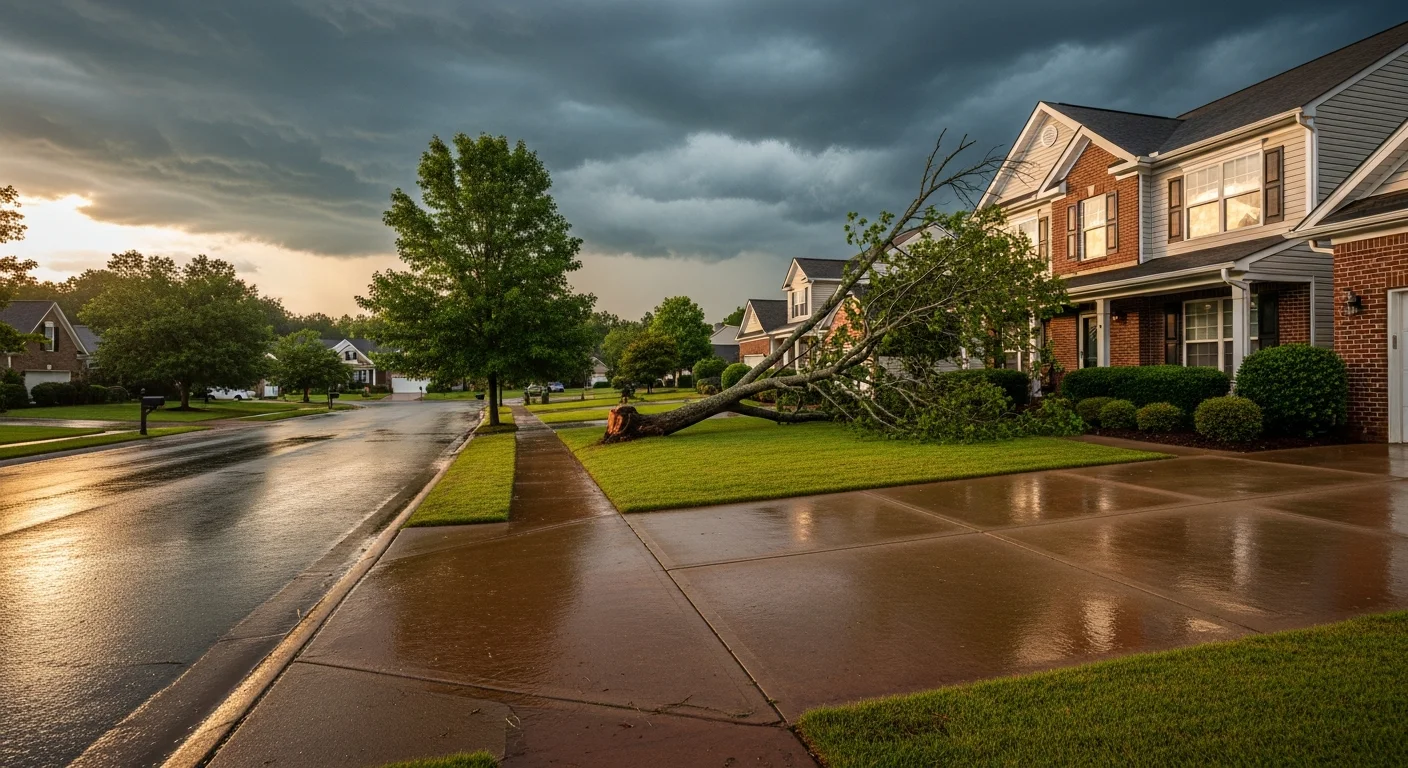
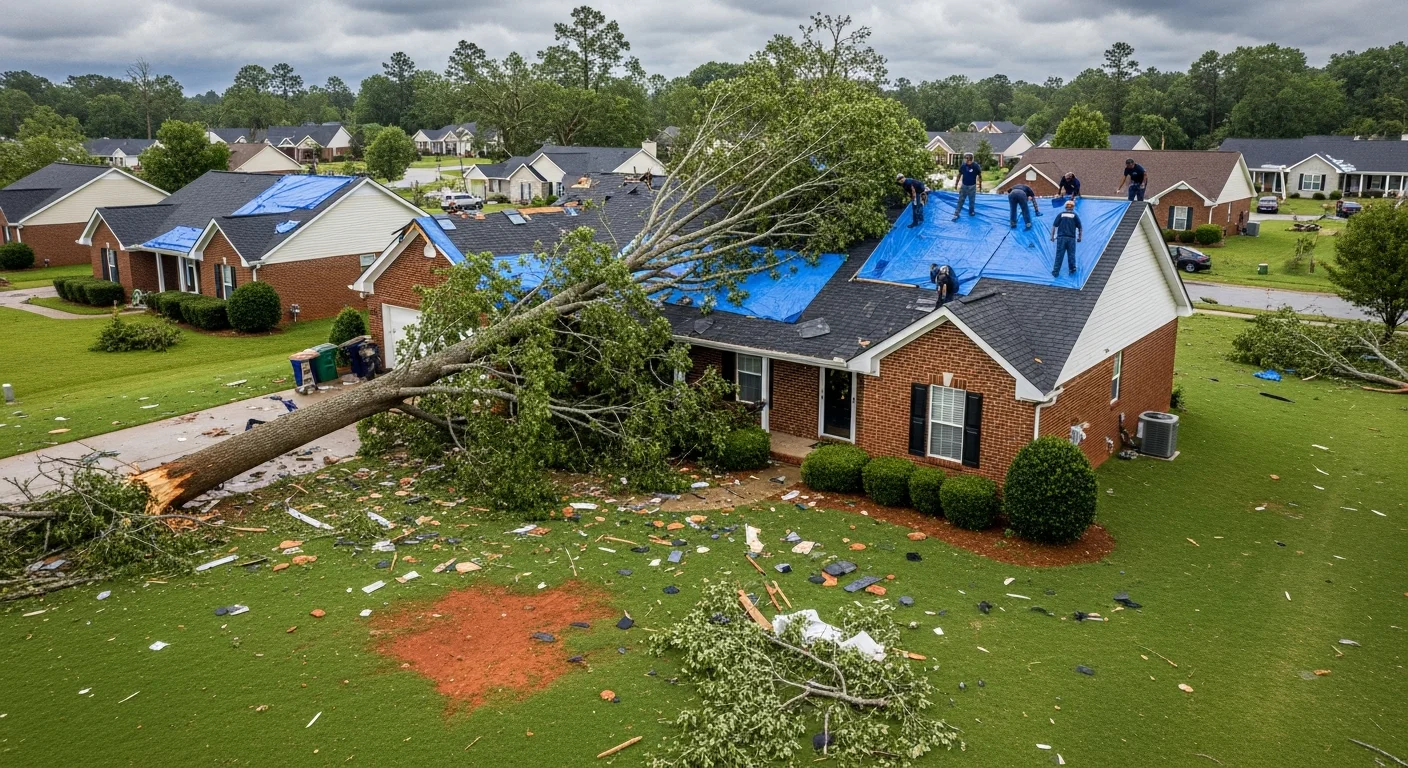
Storm aftermath in a Mount Holly, North Carolina neighborhood showing wind damage, fallen tree limbs, and debris across residential properties along the Catawba River corridor
Storm damage assessment across a Mount Holly neighborhood — documenting wind damage to multiple properties for coordinated restoration response
Palm Build crew performing emergency roof tarping on a storm-damaged Mount Holly NC home with heavy-duty UV-resistant tarp being mechanically secured to exposed roof decking
Emergency roof tarping in Mount Holly — heavy-gauge UV-resistant tarps mechanically secured to stop the damage cascade before the next rain band arrives
Palm Build restoration technician operating truck-mounted water extraction equipment inside a storm-damaged Mount Holly NC home with commercial dehumidifiers visible
Water extraction after storm-driven rain intrusion — truck-mounted equipment removes standing water at 25+ gallons per minute to prevent secondary mold damage
Palm Build reconstruction crew installing new hardwood flooring in a Mount Holly NC home after storm damage restoration with finished walls and trim visible
Full interior reconstruction after storm damage — matching existing finishes and specifications to restore your Mount Holly home to pre-loss condition

Critical Insurance Distinction

Storm Insurance Claims in Mount Holly

Wind and storm damage are covered perils under standard NC homeowners policies (HO-3). However, the distinction between wind damage and flood damage is critical in Mount Holly — the Catawba River corridor means many homes experience both during the same storm event. Palm Build documents each damage cause separately to ensure your claims are filed correctly.

Wind Damage (Homeowners Policy)

Roof damage from wind, fallen trees, flying debris
Siding, window, and door damage from wind pressure
Rain entering through wind-created openings
Structural damage from wind load or tree strikes
Emergency tarping and board-up costs (mitigation)
Temporary living expenses if home is uninhabitable

Flood Damage (Separate Flood Policy)

Rising water from Catawba River or Dutchman's Creek
Groundwater entering through foundation or crawl space
Stormwater overflow from overwhelmed drainage systems
Sewer backup during flash flooding events
NOT covered by standard homeowners policy
Requires separate NFIP or private flood insurance

Documentation & Claims Timeline

Day 1

Call Palm Build for emergency response and initial documentation

Days 1-3

Report claim to carrier; our documentation package supports your filing

Days 3-10

Adjuster inspection; we meet adjuster on-site with cause-specific damage records

Days 10-30

Scope agreement and supplement filing if initial estimate is insufficient

Weeks 4-12

Restoration work proceeds with documented progress reports for carrier

The Catawba River Overlap Problem

During tropical storm remnants, Mount Holly homes near the Catawba River experience both wind damage (covered by homeowners) and rising water damage (not covered without separate flood insurance) from the same event. Without cause-specific documentation, insurers may attribute all water damage to flooding — denying wind damage coverage that should have been approved. Palm Build's assessment specifically documents which water entered through wind-created openings (covered) versus which entered as rising water (flood policy). Gaston County's CRS Rating of 8 provides a 10% NFIP premium discount.

Read our wind vs. flood insurance guide

The Palm Build Difference

Why Mount Holly Homeowners Choose Palm Build After Storms

When a 60 mph gust peels shingles off your Dutchmans Ridge roof or a pine topples onto your Cottonwood Acres carport at 2 a.m., every hour of exposure compounds the water damage that follows. Here is why Mount Holly homeowners trust Palm Build to respond first and restore right.

30-45 Minute Response to Mount Holly

Mount Holly is one of the closest Gaston County communities to our Charlotte operations hub — faster response than most metro-area cities. We dispatch 24/7/365, including during active storm events. During major weather events affecting multiple properties, we activate catastrophe response protocol with additional crews from our Florida operations center.

Commercial-Grade Roof Tarping — Secured to Decking

We secure exposed rooflines with heavy-gauge UV-resistant tarps fastened with battens and screws — not the blue poly sheeting that blows off in the next rain band. Our tarping crews have secured hundreds of Charlotte-metro roofs during the 2024 tropical season and understand the specific roof geometries found across Mount Holly neighborhoods from Adrian Park ranches to Arbordale two-stories.

Catawba River Corridor Expertise

We respond to storm damage calls across Gaston County's flood corridors regularly. We know which Mount Holly neighborhoods flood first, how the Catawba River crests hours after upstream rain events, and how to route crews for fastest response during active weather. This local knowledge means we arrive prepared for the compound damage Mount Holly storms produce.

Gaston County Permits — Licensed Reconstruction

All structural work is fully permitted through Gaston County and meets current NC building code regardless of your home's original construction date. We hold NC general contractor licensing required for projects exceeding $30,000, eliminating subcontractor delays. From roof replacement through interior reconstruction, we handle permitting, inspections, and code compliance.

Cause-Specific Insurance Documentation

We photograph, moisture-map, and classify every damage element by cause (wind vs. flood vs. tree strike) using the same standards your adjuster applies. In Mount Holly, where wind and flood damage frequently overlap during the same event, this distinction is the difference between a fully paid claim and thousands of dollars denied. We coordinate directly with State Farm, NC Farm Bureau, SageSure, Nationwide, Erie, and all major NC carriers.

Common Questions

Mount Holly Storm Damage FAQ

How quickly can Palm Build respond after a storm in Mount Holly?
Our emergency team dispatches from our Charlotte operations hub at 378 Crompton Street and reaches Mount Holly properties within 30 to 45 minutes — 24 hours a day, 7 days a week, including during active weather events. Mount Holly is one of the closest Gaston County communities to our hub, giving us faster response times than most metro-area cities. Call (704) 464-0121 for immediate dispatch.
Does homeowners insurance cover storm damage in Mount Holly?
Yes — wind damage, hail damage, fallen tree strikes, and storm-driven rain intrusion are all covered perils under standard North Carolina homeowners policies (HO-3). However, flood damage from the Catawba River, Dutchman's Creek, or rising water requires a separate NFIP or private flood insurance policy. This distinction is critical in Mount Holly where wind and flood damage frequently occur during the same storm event. Palm Build documents each damage cause separately to ensure correct claim filing.
Is my Mount Holly home in a flood zone?
Homes near the Catawba River, Mountain Island Lake, and Dutchman's Creek may be in FEMA-designated Special Flood Hazard Areas. Properties in the Riverfront area and along the river corridor are at highest risk. Gaston County's CRS Rating of 8 provides a 10% flood insurance premium discount for NFIP policyholders. Check the FEMA Flood Map Service Center or contact Mount Holly's planning department to verify your flood zone status.
Should I get emergency tarping the same night as the storm?
Yes — and your insurance policy requires it. Your HO-3 policy includes a duty to mitigate further damage after a covered loss. Leaving a damaged roof exposed to subsequent rain allows secondary water damage that your carrier can deny as failure to mitigate. Emergency tarping and board-up costs are covered as part of your standard claim. Palm Build provides 24/7 emergency tarping with heavy-duty UV-resistant tarps mechanically secured to roof decking. Call (704) 464-0121 immediately after damage occurs.
How does Mount Holly's location near the Catawba River affect storm damage?
The Catawba River corridor creates three compound risks during major storms. First, the river basin funnels and accelerates wind through the valley. Second, heavy rainfall upstream causes river levels to rise hours after the storm passes, flooding low-lying properties that survived the initial wind event. Third, the river corridor maintains elevated humidity that slows structural drying and accelerates mold growth in damaged homes. Properties in Riverfront and River Park face the highest compound risk.
What types of storm damage are most common in Mount Holly?
The four most common storm damage types we see in Mount Holly are: wind-driven shingle blow-off and soffit damage on older homes in Adrian Park and Cottonwood Acres; fallen tree strikes from the mature hardwood canopy in established neighborhoods; hail damage to roofing materials that creates invisible granule fractures leading to delayed leaks; and wind-driven rain intrusion through compromised building envelopes into attic spaces and wall cavities.
How long does storm damage restoration take in Mount Holly?
Emergency tarping and stabilization typically takes 2-6 hours. Water extraction from storm-driven rain entry takes 1-3 days. Structural drying requires 3-5 days of monitored dehumidification, though Mount Holly's river corridor humidity can extend this. Full reconstruction including roof repair, siding, interior drywall, and finish work takes 2-12 weeks depending on scope. We provide documented progress updates throughout.
What makes Mount Holly storm damage different from other Charlotte metro cities?
Three factors make Mount Holly unique: the Catawba River corridor creates compound wind and flood risk during the same event; the city's 37% population growth has produced a housing stock ranging from 1913 Adrian Park homes to brand-new Arbordale construction — each era with distinct failure patterns; and Gaston County's Piedmont red clay soil holds moisture against foundations for weeks after storms, creating persistent crawl space water intrusion even in homes that avoided direct wind damage.

Storm Damage in Mount Holly? We're 30 Minutes Away.

Palm Build's Charlotte-based team responds to Mount Holly storm emergencies 24/7 with emergency tarping, water extraction, structural stabilization, and full reconstruction — all backed by insurance-ready documentation from the first call.

30-45 min Response IICRC Certified