Storm & Hurricane Damage Restoration in Pembroke Pines, Florida
Hurricane Andrew leveled Homestead in 1992 and rewrote Florida's building code — but Pembroke Pines straddles the line between two eras of construction. West of I-75, neighborhoods built after Andrew comply with the High Velocity Hurricane Zone code. East of I-75, older pre-Andrew homes remain more vulnerable to wind uplift, roof failure, and water intrusion. When a storm breaks through your roof or a lightning strike ignites your attic, Palm Build's Deerfield Beach team responds in 30-45 minutes with emergency board-up, tarping, and the carrier-ready documentation Florida insurers demand.
Deerfield Beach — 30-45 Minutes from Pembroke Pines 30-45 min Response IICRC Certified
Pembroke Pines straddles the line between two construction eras. West of I-75,
post-Andrew homes comply with the strictest residential wind code in the United States.
East of I-75, pre-Andrew homes remain more vulnerable to wind uplift, roof failure, and
water intrusion. When a named storm, a May microburst, or a July lightning strike
damages your home, mold begins growing in 24 to 48 hours.
HVHZ Zone — Strictest Wind Code in the U.S.
HVHZ
Wind code zone
All of Pembroke Pines falls within the High Velocity Hurricane Zone, the most stringent residential wind code district in the country. Every storm repair must meet current HVHZ provisions — impact-rated windows, enhanced roof-to-wall straps, wind-rated garage doors — even if the original construction predates the code. Contractors unfamiliar with HVHZ requirements fail City of Pembroke Pines building inspections, delaying your restoration and insurance settlement.
Pre-Andrew vs. Post-Andrew Construction Divide
1992
Andrew divide
Hurricane Andrew in 1992 permanently split Pembroke Pines' housing stock. West of I-75, communities like SilverLakes, Chapel Trail, and Pembroke Falls were built under progressively stronger HVHZ standards with impact windows, reinforced roof-to-wall straps, and wind-rated garage doors. East of I-75, older neighborhoods — Century Village, Towngate, Pembroke Lakes — predate Andrew with weaker roof connections, standard glass, and non-rated garage doors.
Canal-and-Lake Drainage Under Extreme Stress
20%
Land as water bodies
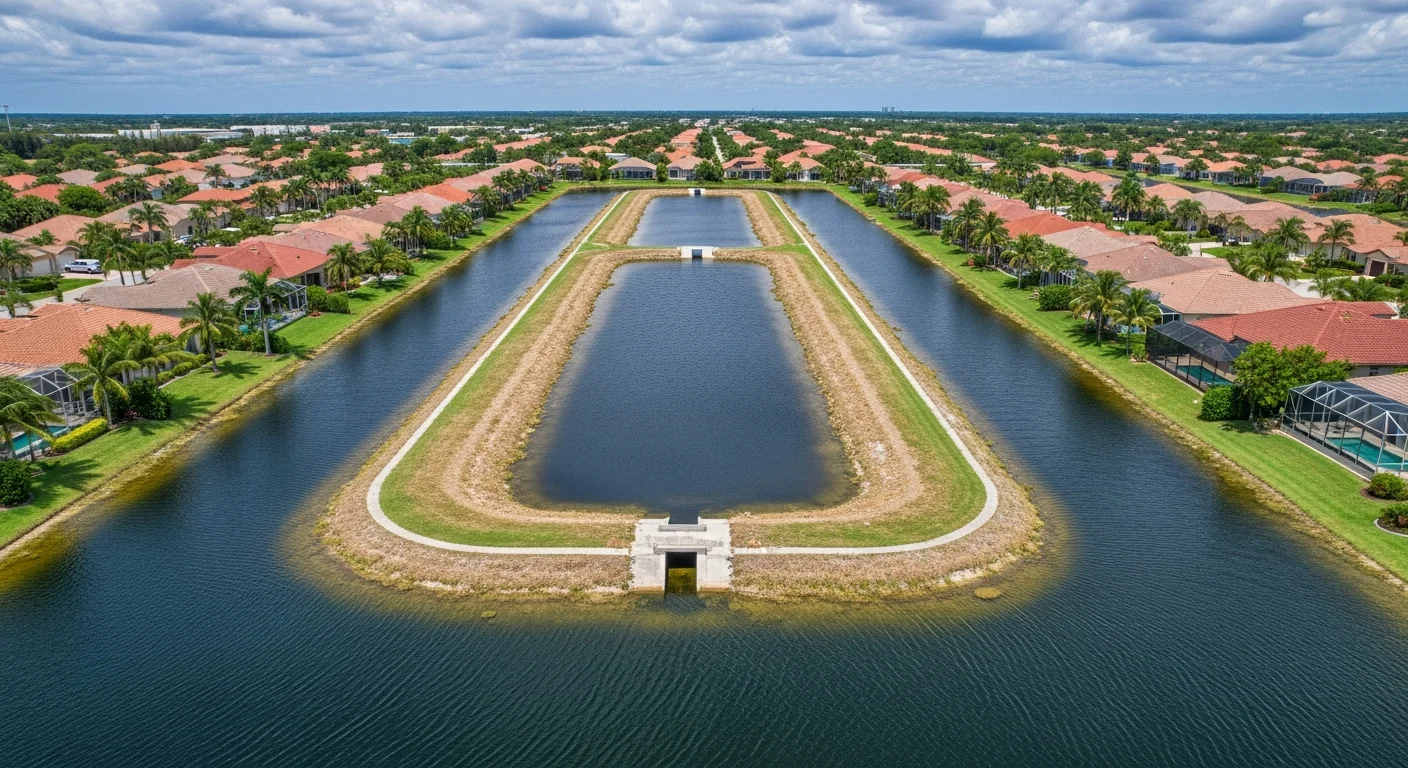
Approximately 20% of Pembroke Pines' land area is dedicated water management — retention lakes and canals including the Snake Creek Canal (C-9) and laterals along University Drive, Palm Avenue, and Flamingo Road. The April 2023 flooding exceeded 1-in-1,000-year intensity, overwhelming pump stations and causing reverse flow through culverts. Canal water that backs into homes is Category 3 contaminated — requiring full antimicrobial remediation.
Lightning Capital of the United States
#1
U.S. lightning density
South Florida leads the nation in lightning density, and Pembroke Pines experienced a damaging strike in July 2024. Lightning ignites attic insulation, destroys electrical panels, cracks CBS block walls through thermal shock, and blows out appliances. Fire suppression then introduces water damage — creating a dual fire-and-water restoration scope from a single event. May 2025's apparent tornado near North Perry Airport confirms year-round severe weather risk.
Storm damage assessment in Pembroke Pines requires understanding both pre-Andrew and
post-Andrew construction vulnerabilities — each era fails differently under wind loads.
Storm damage patterns in Pembroke Pines vary dramatically based on construction era,
proximity to retention lakes and canals, and whether homes predate or postdate Hurricane
Andrew's code reforms.
Elevated — older canal-adjacent lots, aging community drainage.
Pembroke Pines' canal-and-lake system manages normal rainfall — but extreme events like
April 2023 overwhelm the infrastructure, flooding neighborhoods that never expected
standing water.
HVHZ Building Code
The HVHZ Factor: What Broward's Building Code Means for Your Storm Repairs
Pembroke Pines is within the High Velocity Hurricane Zone — the most stringent
residential wind code district in the United States. This is not just a building detail
— it directly affects your storm damage restoration timeline, cost, and contractor
requirements. HVHZ-rated products cost 15-30% more than standard building materials, and
HVHZ-experienced labor commands a premium.
HVHZ Requirements That Affect Your Storm Damage Repair
All window and door replacements must be HVHZ-rated impact products or have approved shutter systems installed
Roof repairs require HVHZ-approved underlayment with enhanced fastening patterns and sealed roof deck
Garage doors must meet HVHZ wind-pressure ratings — a non-rated door voids your wind mitigation discount
Structural connections (roof-to-wall straps, wall-to-foundation ties) must meet current HVHZ load tables
Permits required through the City of Pembroke Pines Building Division for all structural storm repairs
Product approvals must carry the FL or Miami-Dade NOA (Notice of Acceptance) designation — generic building products are rejected
Wind mitigation inspection report (OIR-B1-1802) directly affects your insurance premium — correct repairs can reduce your rate
What Triggers a Code-Upgrade During Reconstruction
Roof Replacement Triggers Full HVHZ Compliance
When storm damage requires replacing more than 25% of the roof covering on any slope, the entire roof system must be brought to current HVHZ standards — including secondary water barrier, enhanced fastening patterns, and approved tile specifications. This is not optional; it is the Florida Building Code trigger for code-upgrade reconstruction.
Opening Replacement Requires Impact Rating
A single broken window after a storm cannot be replaced with standard glass. Every opening replacement in the HVHZ must be an approved impact product or be fitted with an approved shutter system. This means every window, every sliding glass door, and every entry door replaced after storm damage must carry a Miami-Dade NOA or Florida Product Approval for the HVHZ.
Structural Repairs Require Current Load Tables
When storm damage exposes roof-to-wall connections or structural framing, the repair must meet current HVHZ load tables — not the weaker standards the home was originally built to. For pre-Andrew homes in Century Village, Towngate, and Pembroke Lakes, this often means adding hurricane straps, reinforcing truss connections, and upgrading fastener specifications during reconstruction.
Contractors Without HVHZ Expertise Will Fail Inspection
General contractors from outside Broward and Miami-Dade counties frequently
underestimate HVHZ requirements. Standard building products are rejected during
inspection. Non-approved fastening patterns fail. The City of Pembroke Pines Building
Division enforces HVHZ provisions strictly — a failed inspection means tearing out
completed work and starting over, delaying your restoration by weeks and inflating
costs. Palm Build handles HVHZ-compliant repairs daily and maintains current product
approval documentation for every material we install.
How We Restore Pembroke Pines Homes After Storm Damage
Storm restoration in Pembroke Pines requires coordinating emergency board-up, water
extraction, structural drying, mold prevention, and HVHZ-compliant reconstruction across
a compressed timeline. Here's our proven six-step process from first call through final
inspection.
01
Emergency Board-Up & Tarping
Hours 1-4
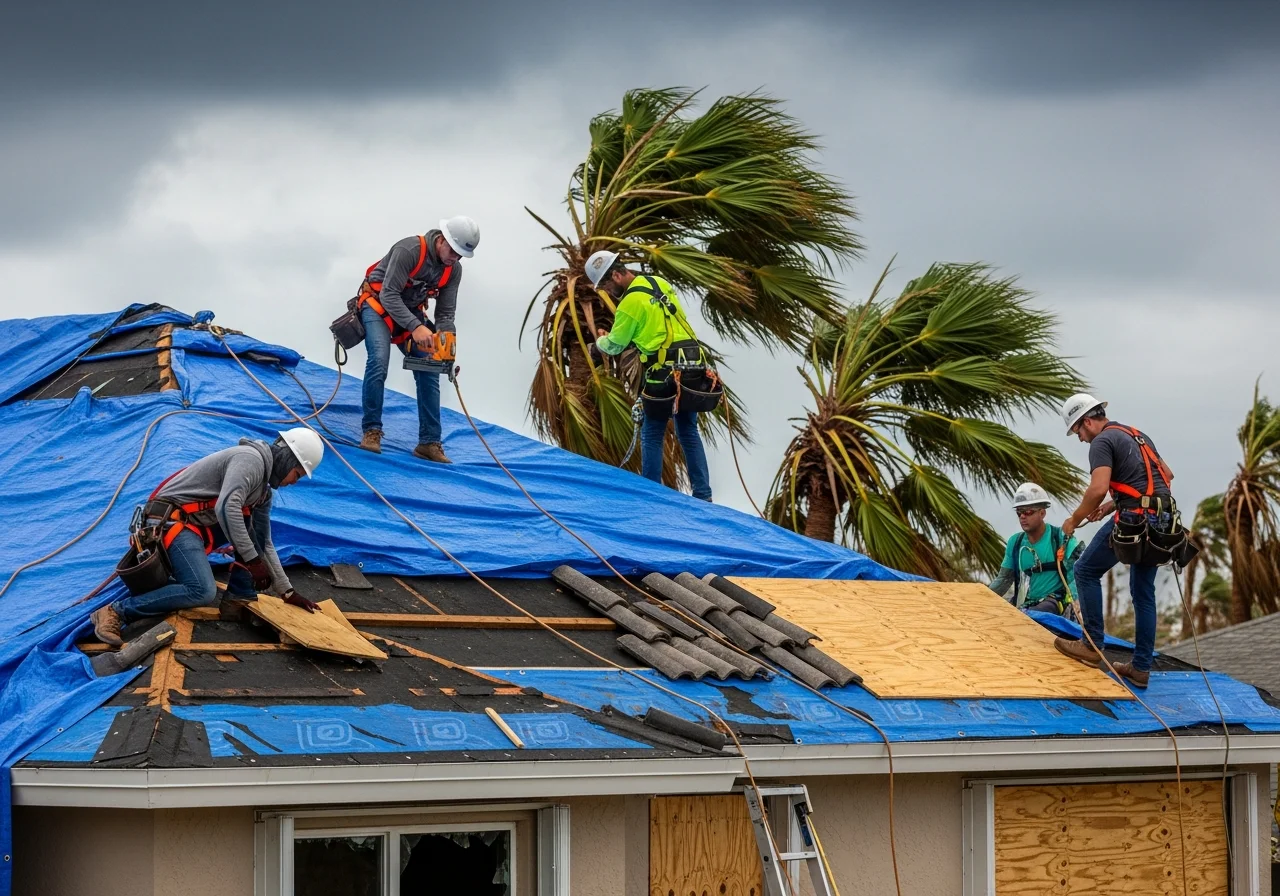
We seal every breach point before Pembroke Pines' subtropical humidity turns structural damage into mold contamination. Broken windows and doors are boarded with plywood cut to fit. Roof breaches receive heavy-duty tarping anchored with furring strips and masonry screws — not weighted with sandbags that shift in subsequent winds. For barrel tile roofs, we work around existing tile to avoid creating additional damage. Emergency board-up is covered by your insurance as part of your duty to mitigate further loss.
02
Damage Assessment & Documentation
Hours 4-12
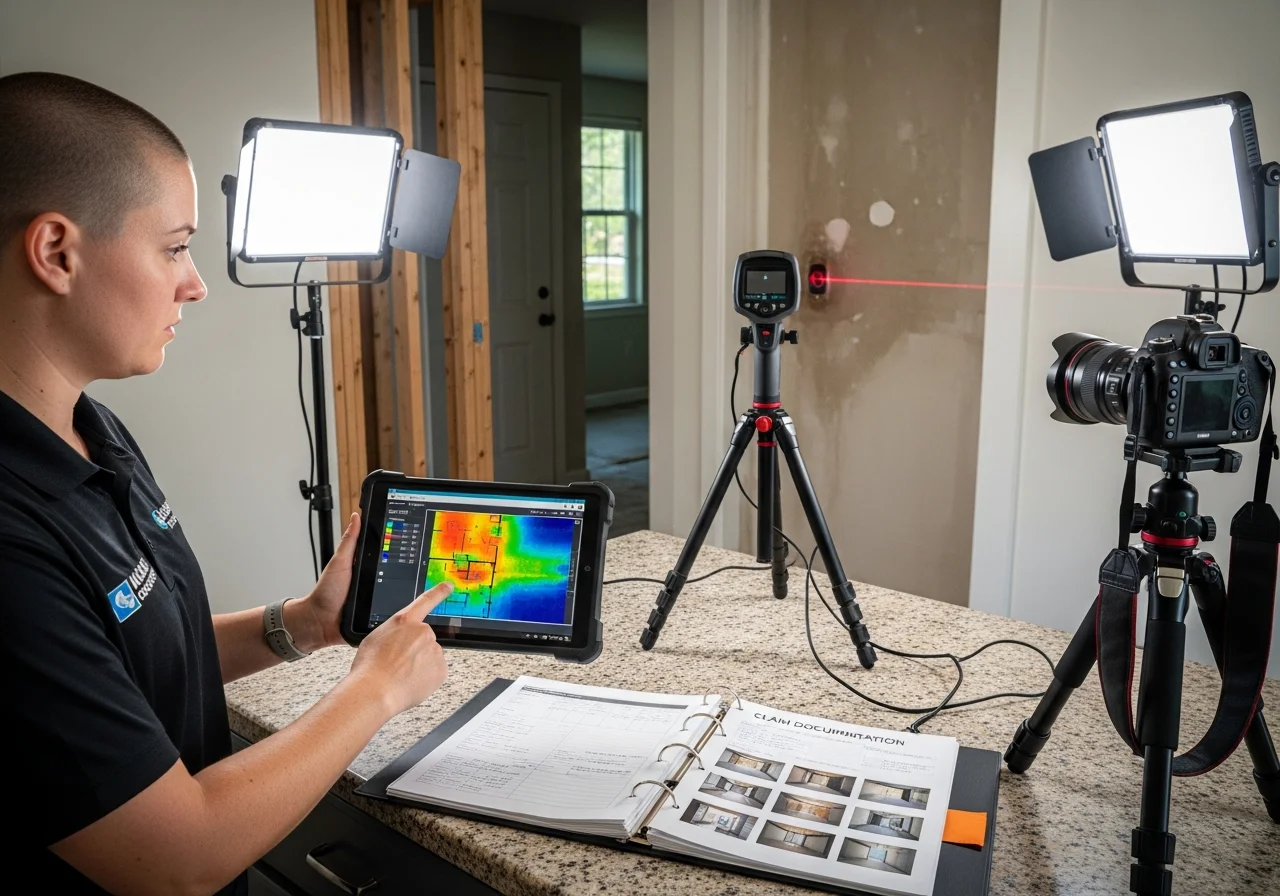
IICRC-certified technicians conduct a full damage assessment using thermal imaging, moisture meters, and visual inspection. We document every breach point, every area of water intrusion, and every affected material — classifying damage by cause: wind vs. flood vs. lightning vs. debris impact. In Pembroke Pines, where wind damage goes through homeowners insurance and flood damage requires separate coverage, this dual-documentation approach is critical for maximizing your recovery.
03
Water Extraction
Hours 12-48
Wind-driven rain that entered through roof breaches, broken windows, or compromised sliding glass doors is extracted with truck-mounted equipment. For canal overflow flooding — classified as Category 3 (grossly contaminated) — extraction is followed by antimicrobial treatment and demolition of all affected porous materials. Pembroke Pines homes can experience both wind-driven rain and canal flooding simultaneously during major events, requiring different protocols in different areas of the same home.
04
Structural Drying
Days 3-10
Commercial LGR dehumidifiers and high-velocity air movers bring relative humidity below 60% throughout the affected structure. For CBS block wall construction — standard in Pembroke Pines — we use wall cavity drying systems that inject dry air directly into the block cells. Daily moisture readings document the drying curve for insurance and ensure target moisture content is achieved before reconstruction begins. In Pembroke Pines' ambient humidity of 60-80%, drying requires significantly more equipment than drier climates.
05
Mold Prevention
Concurrent
Antimicrobial treatment is applied to all exposed structural surfaces during the drying phase. In South Florida, mold colonization begins within 24-48 hours of water intrusion. Our crews apply EPA-registered antimicrobials to wall cavities, subfloor surfaces, and ceiling assemblies as part of the standard storm restoration protocol. Post-storm mold discovery typically lags 2-8 weeks behind the intrusion event — hidden moisture behind CBS walls drives colonization before you see symptoms.
06
HVHZ-Compliant Reconstruction
Weeks 2-16
Once drying is verified, we handle the full rebuild: roof repair or replacement, window and door replacement, drywall, flooring, electrical, and painting. All repairs must meet Florida Building Code HVHZ provisions — impact-rated openings, enhanced roof attachment, and structural connections meeting current load tables. We pull permits through the City of Pembroke Pines Building Division and coordinate inspections. Post-hurricane demand across Broward County creates 4-8 week material lead times — our supplier relationships prioritize our projects.
Emergency board-up and tarping stops the bleeding — every minute of exposure after a
breach allows wind-driven rain to saturate your home's interior.
Types of Storm Damage
How Storms Damage Pembroke Pines Homes
Storm damage in Pembroke Pines manifests in four distinct ways — and major events
typically trigger multiple damage types simultaneously. Understanding the full scope is
critical for emergency response, insurance claims, and restoration because different
damage types are covered by different policies and require different remediation
protocols.
Wind Damage
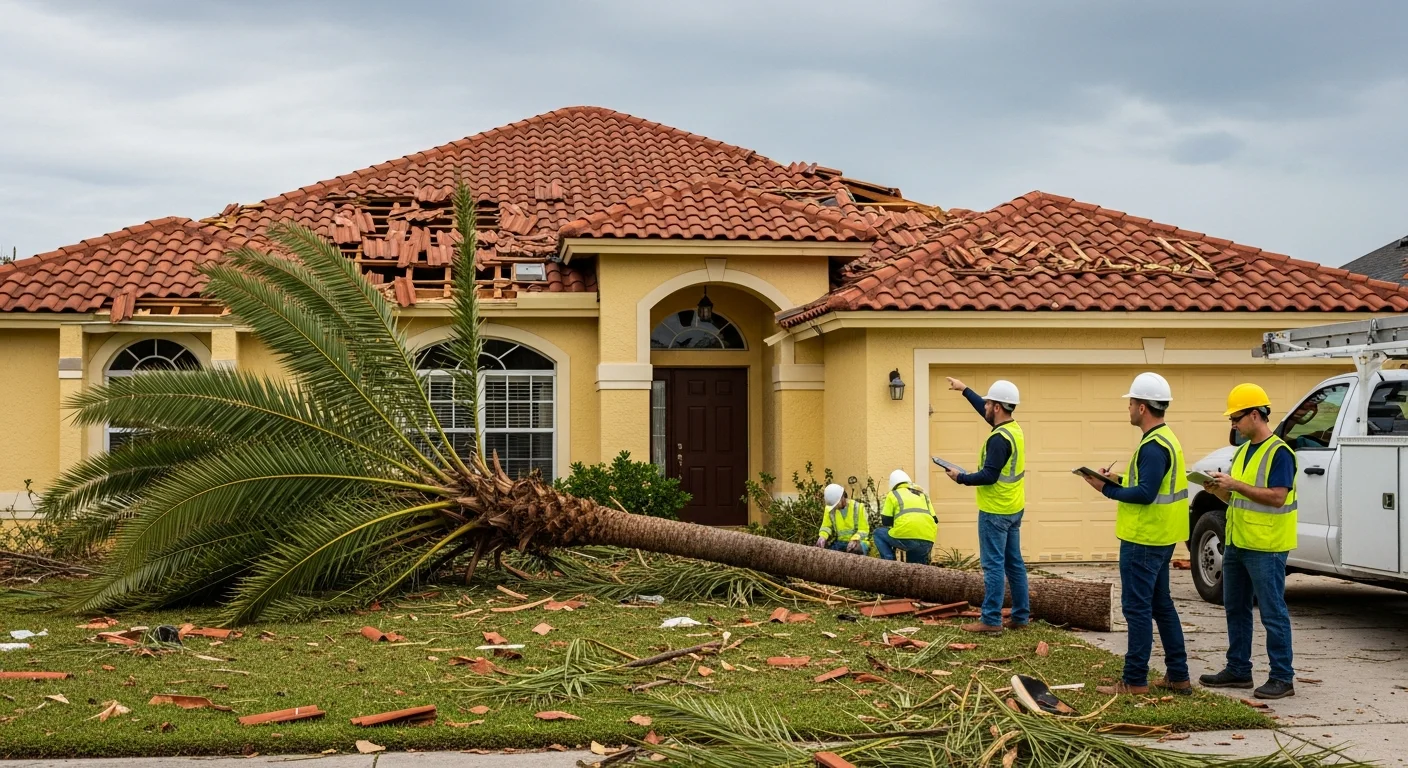
Barrel tile roofs are the primary wind vulnerability across Pembroke Pines. Hurricane-force gusts lift tiles from their adhesive bond, displacing them and exposing the underlayment beneath. Screen enclosures — ubiquitous across Pembroke Pines' lanai-heavy housing stock — collapse under sustained wind loads. Pre-Andrew homes east of I-75 with toe-nailed or stapled roof-to-wall connections face significantly higher risk of partial roof loss. Even post-Andrew HVHZ construction experiences tile displacement in storms exceeding 110 mph sustained winds.
Wind-Driven Rain Intrusion
Wind-driven rain at hurricane velocities penetrates stucco walls through hairline cracks, window frame gaps, and deteriorated caulking joints that are invisible under normal conditions. Pembroke Pines' CBS (concrete block and stucco) construction traps this moisture between the exterior finish and interior drywall, creating hidden water damage that may not become visible for days or weeks. Sliding glass door tracks — present on nearly every Pembroke Pines home — overflow during horizontal rain, sending water across interior flooring.
Canal Overflow & Pluvial Flooding
Pembroke Pines sits on an engineered drainage network including the Snake Creek Canal (C-9), South New River Canal, and retention lakes comprising 20% of the city's land area. The April 2023 historic flooding exceeded 1-in-1,000-year intensity, overwhelming pump stations and causing reverse flow through culverts. Canal water that backs into homes is Category 3 (grossly contaminated) under IICRC standards — requiring full antimicrobial remediation, not simply extraction and drying. The June 2024 flooding repeated this pattern.
Lightning Strike Damage
South Florida leads the nation in lightning density. The July 2024 Pembroke Pines lightning strike caused structural and fire damage. Lightning ignites attic insulation and roof framing, destroys electrical panels and wiring, blows out appliances and electronics, and can crack CBS block walls through thermal shock. Fire suppression response then introduces water damage — creating a dual fire-and-water restoration scope. Lightning damage triggers both your homeowners policy (fire/structural) and may require parallel restoration tracks.
Barrel tile roof failures are the most common structural storm damage in Pembroke Pines
— displaced tiles expose underlayment to wind-driven rain within minutes.
Pembroke Pines Pricing
Storm Damage Restoration Costs in Pembroke Pines
Storm damage costs in Pembroke Pines reflect the HVHZ product requirements, South
Florida's labor market, and the complexity of restoring CBS/stucco construction.
HVHZ-rated products cost 15-30% more than standard building materials, and
HVHZ-experienced labor commands a premium. These ranges represent real project costs —
not national averages.
Localized Storm Damage
Emergency board-up and tarping: $1,500 - $5,000
Roof tile repair (partial): $3,000 - $12,000
Window replacement (HVHZ-rated impact): $800 - $2,500 per opening
Water extraction and structural drying: $2,500 - $8,000
HVHZ-rated products cost 15-30% more than standard building materials used outside
Miami-Dade and Broward counties. Post-hurricane demand across all of Broward County
creates 4-8 week material backlogs for impact windows, tile roofing, and rated garage
doors. Canal overflow flooding requires Category 3 demolition protocols that
significantly increase scope. Pre-Andrew homes that sustain major damage often trigger
code-upgrade requirements — the entire repaired system must meet current HVHZ
standards, not the weaker code the home was originally built to.
Hurricane Season Calendar
Pembroke Pines Storm Risk Calendar
Hurricane season runs June 1 through November 30, with peak Atlantic activity from
mid-August through late October. But Pembroke Pines' storm damage is not limited to
named hurricanes — lightning strikes, microbursts, severe thunderstorms, and extreme
rainfall events cause significant losses year-round.
January - May
Pre-season preparation, lightning, microbursts
moderate
Inspect roof, test shutters and impact windows, clear gutters, verify insurance coverage. Have wind mitigation inspection (OIR-B1-1802) updated. May 2025's apparent small tornado near North Perry Airport proves severe weather doesn't wait for June 1.
June
Peak rainfall, lightning density, season opens
critical
Hurricane season officially opens June 1. June averages 9.55 inches of rainfall — the wettest month. Lightning density peaks June through August. June 2024 major flooding demonstrated that non-tropical rainfall events can be devastating in Pembroke Pines.
July - August
Lightning strikes, severe thunderstorms, early storms
critical
Peak lightning season with South Florida leading the nation in strike density. July 2024's damaging lightning strike caused structural and fire damage. Continuous HVAC strain, 19+ wet days in August, and early tropical development add compounding risk.
September - October
Peak hurricane activity, flooding, wind damage
critical
Atlantic basin's most active months. September averages 8.02 inches of rainfall independent of tropical activity. Historic events: Hurricane Andrew (Aug 1992), Hurricane Wilma (Oct 2005). Post-storm mold discovery lags 2-8 weeks behind intrusion — hidden moisture behind CBS walls colonizes silently.
Season closes November 30, but late storms like Hurricane Nicole (November 2022) still impact Broward County. Post-storm mold discovery peaks as homes with hidden water intrusion begin showing visible growth. FL Statute 627.70132 requires filing within 1 year of date of loss.
December
Off-season recovery, storm hardening window
moderate
Optimal window for non-emergency storm hardening: impact window installation, roof replacement, shutter upgrades, structural retrofits. Contractor availability improves and material lead times shorten after hurricane season demand subsides.
Critical Insurance Distinction
Storm Insurance Claims in Pembroke Pines: Wind vs. Flood
Broward County homeowners pay an average of $6,165 per year for homeowners insurance
including wind coverage (FL OIR July 2025). Wind damage and flood damage from the same
hurricane are covered by different policies, carry different deductibles, and are filed
as separate claims. Florida's hurricane deductible — 2% of dwelling coverage — means
approximately $8,780 out of pocket on wind claims based on the $439,000 median Pembroke
Pines home value.
Wind Damage (HO-3 Homeowners Policy)
Barrel tile roof displacement from wind uplift
Screen enclosure collapse from sustained wind loads
Window and door failure from debris impact or pressure
Rain entering through wind-created openings
Emergency tarping and board-up costs (duty to mitigate)
ALE (Additional Living Expenses) if home is uninhabitable
Hurricane Deductible: 2% of dwelling coverage. On a $439,000 Pembroke Pines
home = ~$8,780 out of pocket before coverage begins.
Flood Damage (Separate NFIP or Private Flood Policy)
Pluvial flooding from extreme rainfall overwhelming drainage
Groundwater intrusion through slab foundation
Sewer backup from overwhelmed municipal systems
NFIP max dwelling coverage: $250,000
NOT covered by standard homeowners — requires separate flood policy
1-Year Claim Deadline: FL Statute 627.70132 requires property insurance
claims to be filed within 1 year of the date of loss. Missing this deadline bars your claim.
The Coverage Gap After Hurricanes
After hurricanes, carriers routinely dispute whether damage was caused by wind
(covered by homeowners) or flooding (excluded without separate flood policy). The
April 2023 historic flooding and June 2024 event devastated Pembroke Pines homes
regardless of FEMA zone designation. Palm Build documents every damage point with
thermal imaging, moisture mapping, and photographic evidence to establish cause and
timeline — classifying each item by wind vs. flood to ensure claims are filed with the
correct policy. Many Pembroke Pines homeowners carry wind coverage but no flood
coverage at all.
Insurance documentation begins during emergency response — thermal imaging, moisture
mapping, and photographic evidence build your claim file from hour one.
Storm Damage in Pembroke Pines
Pembroke Pines Storm Restoration Gallery
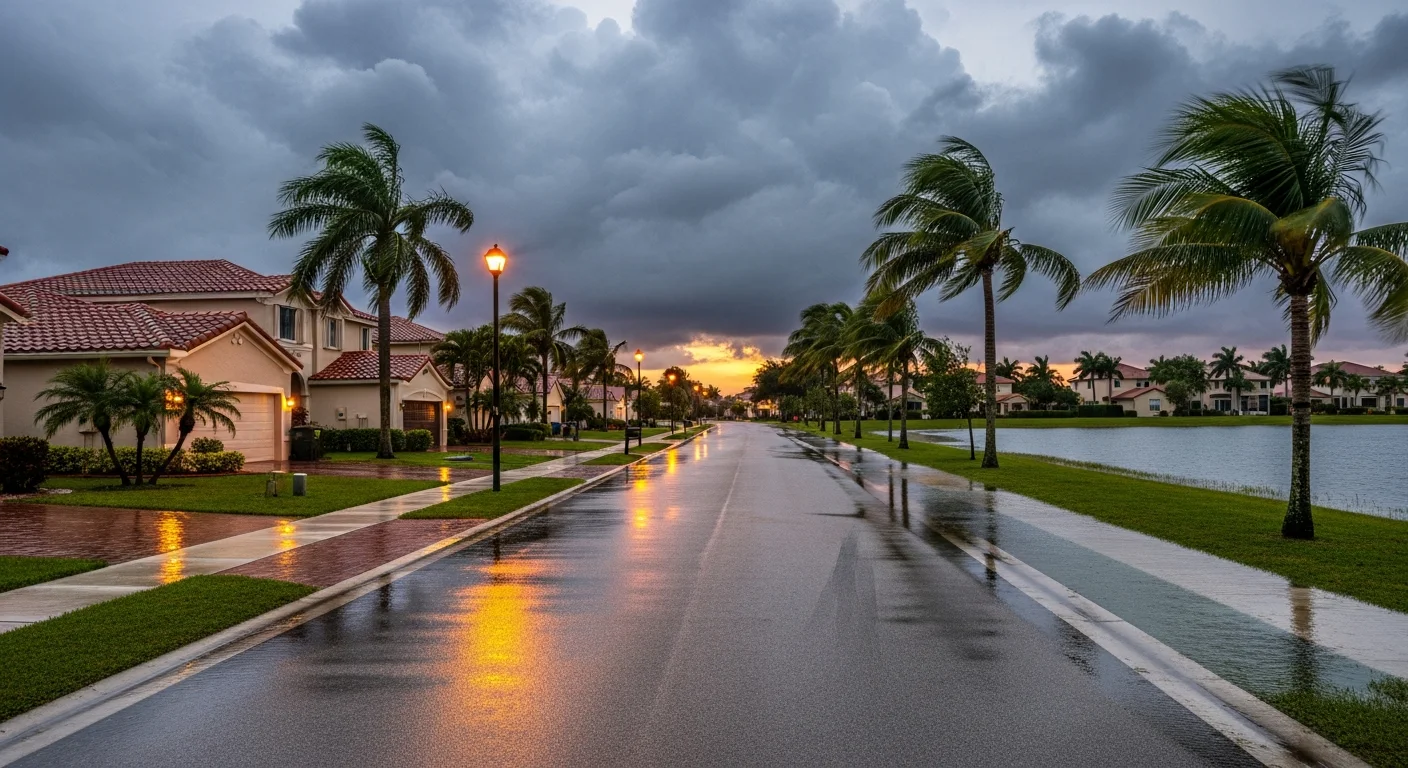
Pluvial flooding overwhelms Pembroke Pines' drainage during extreme rainfall events — April 2023 and June 2024 both demonstrated that no neighborhood is immune
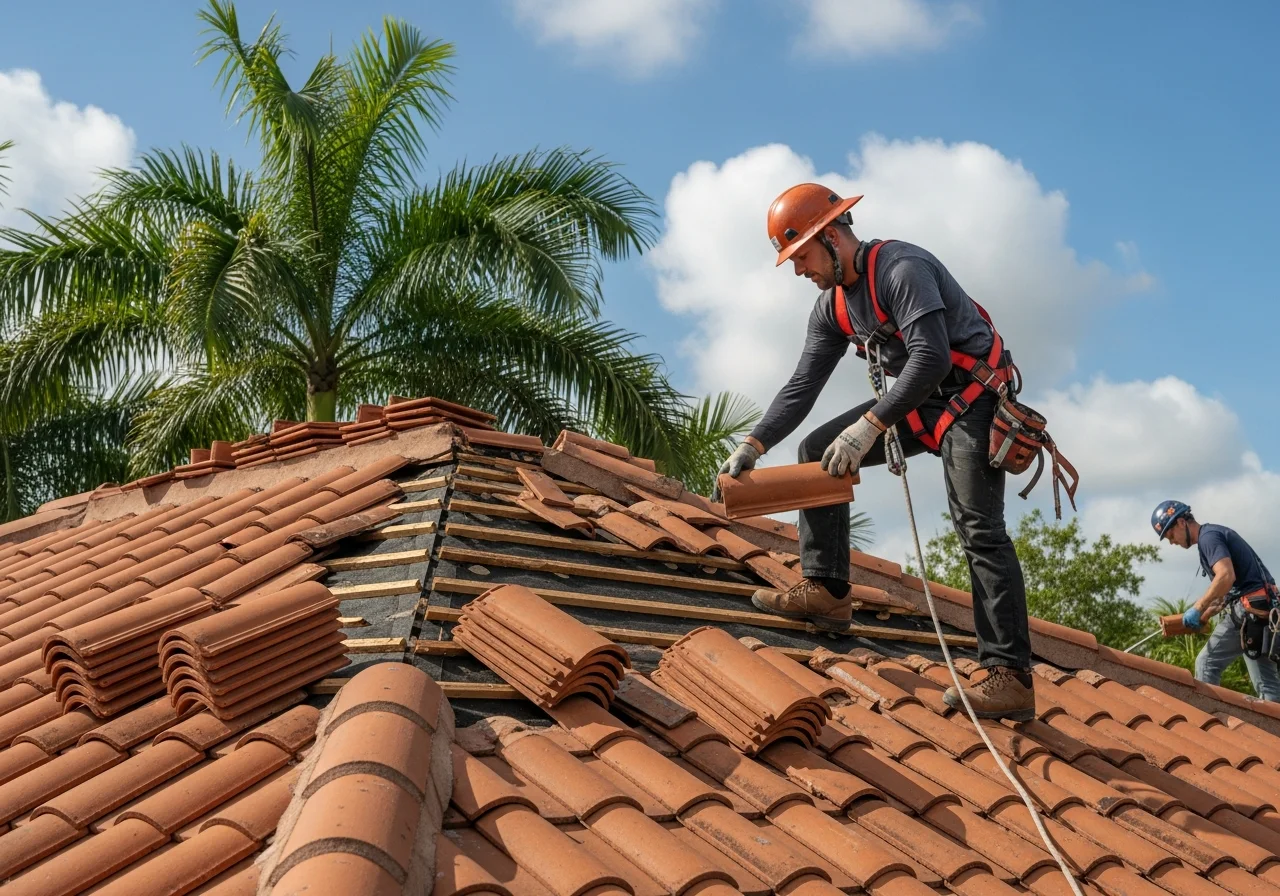
Barrel tile roof repair requires HVHZ-compliant materials and fastening patterns — generic products fail City of Pembroke Pines building inspections
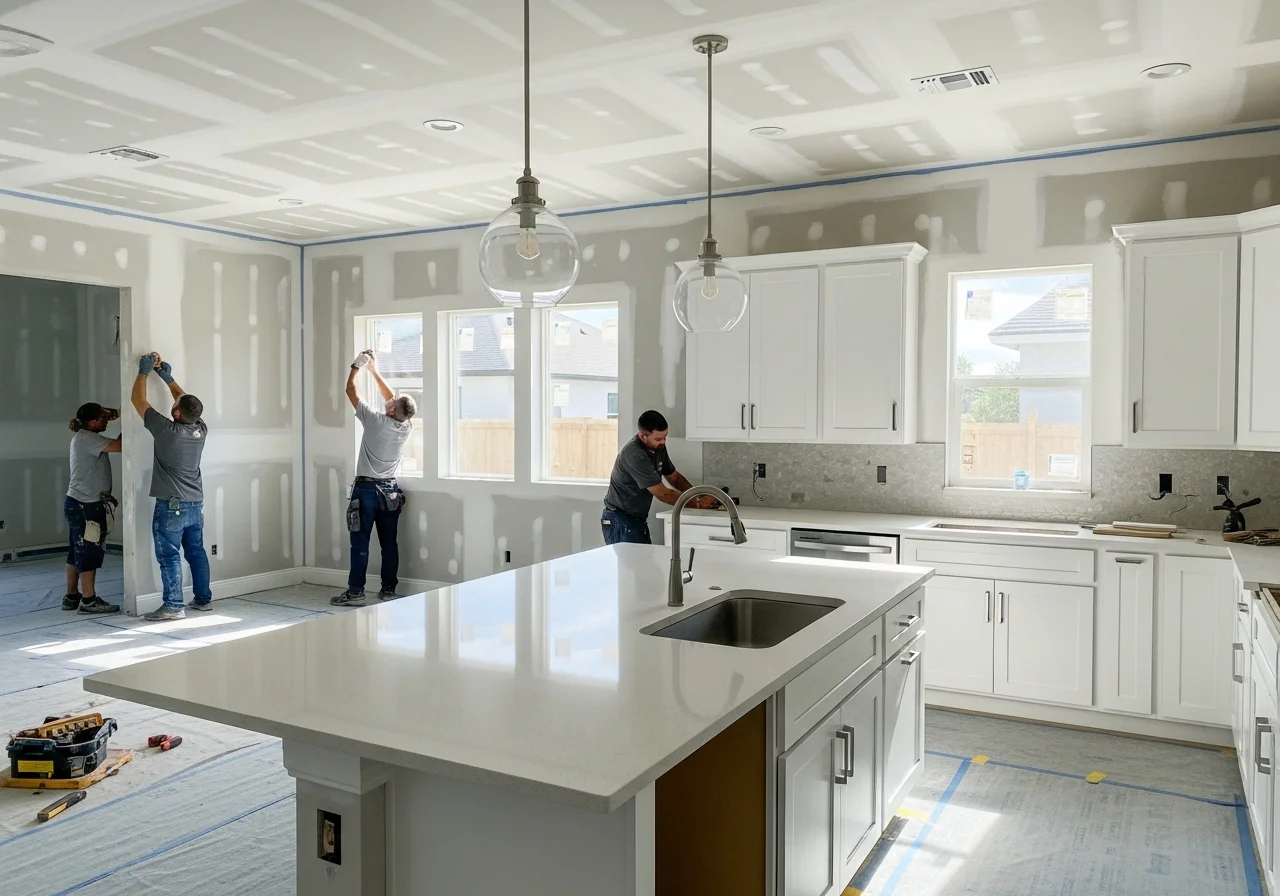
Full interior reconstruction after storm damage — from emergency stabilization through HVHZ-compliant final finish work
Emergency board-up seals every breach point before subtropical humidity turns structural damage into mold contamination
The Palm Build Difference
Why Pembroke Pines Homeowners Choose Palm Build After Storms
HVHZ Code Expertise
All repairs meet Florida Building Code High Velocity Hurricane Zone provisions for openings, roof attachment, and structural connections. We carry current product approval documentation for every material we install and coordinate permits through the City of Pembroke Pines Building Division. Contractors from outside Broward and Miami-Dade counties routinely fail HVHZ inspections — we pass them daily.
30-45 Minute Emergency Response
Our Deerfield Beach operations hub is 30-45 minutes from any Pembroke Pines neighborhood. Emergency crews deploy with plywood, tarps, fasteners, truck-mounted extraction equipment, and commercial drying units. For gated communities like SilverLakes, Grand Palms, and Pembroke Falls, we coordinate gate access and after-hours entry. Pre-storm contract clients receive priority dispatch.
Pre-Andrew and Post-Andrew Construction Specialists
We understand the different vulnerability profiles each construction era presents. Pre-Andrew homes in Century Village and Pembroke Lakes require different assessment protocols than post-Andrew HVHZ construction in SilverLakes and Chapel Trail. Each era fails differently under wind loads, and each era's restoration triggers different code-upgrade requirements.
Insurance Documentation from Hour One
Our damage assessment classifies every item by cause — wind vs. flood vs. lightning — ensuring each claim is filed with the correct policy. Thermal imaging, moisture mapping, daily drying logs, and photographic evidence are built to the standard Florida carriers demand. In Pembroke Pines, where wind and flood claims require separate filings, this dual-documentation approach recovers significantly more than generic damage reports.
IICRC WRT & ASD Certified Crews
Every crew lead holds current IICRC Water Restoration Technician (WRT) and Applied Structural Drying (ASD) certifications. Our South Florida teams are additionally trained in Category 3 contaminated water protocols — the IICRC classification for canal overflow that requires fundamentally different remediation than wind-driven rain intrusion.
HOA and Condo Community Experienced
Western Pembroke Pines is dominated by HOA-governed gated communities that require vendor pre-approval, certificates of insurance, and detailed scope documentation. Palm Build maintains the COI documentation these communities require and understands the distinction between homeowner responsibility (interior, personal property) and association responsibility (shared roofs, common walls, screen enclosures). After major storms, we coordinate directly with HOA management companies.
From emergency tarping to HVHZ-compliant reconstruction — Palm Build handles every phase
of storm damage restoration under one roof.
Common Questions
Pembroke Pines Storm & Hurricane Damage FAQ
How quickly can Palm Build respond to storm damage in Pembroke Pines?
Our Deerfield Beach operations hub is 30-45 minutes from any Pembroke Pines neighborhood, 24/7/365. Our trucks carry emergency tarping and board-up materials, truck-mounted extraction equipment, commercial dehumidifiers, and air movers — we begin stabilization immediately upon arrival. For gated communities like SilverLakes, Grand Palms, and Pembroke Falls, we coordinate gate access and after-hours entry. During active hurricane season, we pre-stage equipment and crews for rapid post-storm deployment.
What should I do immediately after storm damage to my Pembroke Pines home?
First, ensure personal safety — do not enter rooms with sagging ceilings or standing water near electrical outlets. Call Palm Build at (754) 600-3369 for emergency board-up and tarping. Document all visible damage from a safe distance with photographs and video. Do not attempt to tarp your own roof — displaced barrel tiles create unstable surfaces. Turn off your HVAC system if water has entered the home to prevent moisture distribution through ductwork. Contact your insurance carrier to report the loss — Florida Statute § 627.70132 gives you 1 year from the date of loss to file.
Is my Pembroke Pines home built to HVHZ standards?
If your home was built after 1994 in western Pembroke Pines (west of I-75) — communities like SilverLakes, Chapel Trail, Pembroke Falls, and Grand Palms — it was likely built under progressively stronger HVHZ standards. Homes east of I-75, particularly in older sections like Century Village, Towngate, and Pembroke Lakes, may predate the HVHZ code. Your property's building permit date, available through the City of Pembroke Pines Building Division, confirms which code edition governed construction. Regardless of original construction, all storm damage repairs must now meet current HVHZ provisions.
What is the difference between my hurricane deductible and my standard deductible?
Most Florida homeowners policies carry a separate hurricane deductible of 2% of dwelling coverage — approximately $8,780 on the median $439,000 Pembroke Pines home. This deductible applies only when the National Weather Service officially declares a hurricane. Damage from tropical storms, severe thunderstorms, tornadoes, and non-tropical events like the April 2023 flooding typically falls under your standard deductible, which is usually $1,000-$2,500. The distinction matters significantly for your out-of-pocket costs.
Does my homeowners insurance cover storm flooding in Pembroke Pines?
No. Standard homeowners insurance covers wind damage — torn roofs, broken windows, structural impacts from debris — but explicitly excludes flood damage, which is water entering your home from outside the structure. Flood coverage requires a separate policy, typically through FEMA's National Flood Insurance Program or a private flood carrier. After a hurricane, insurers often dispute whether damage was caused by wind (covered) or flood (excluded). Palm Build documents every damage point to help establish cause and timeline for your claim.
How does Palm Build handle storm damage in Pembroke Pines HOA communities?
Western Pembroke Pines is dominated by HOA-governed gated communities that require vendor pre-approval, certificates of insurance, and detailed scope documentation. Palm Build maintains the COI documentation these communities require and understands the distinction between homeowner responsibility (interior, personal property) and association responsibility (shared roofs, common walls, screen enclosures over common areas). After a major storm, we coordinate directly with HOA management companies and community adjusters to prevent delays.
Can a lightning strike really cause significant home damage?
Yes. South Florida leads the nation in lightning density, and Pembroke Pines experienced a damaging lightning strike in July 2024. Lightning can ignite attic insulation and roof framing, destroy electrical panels and wiring, blow out appliances and electronics, and crack CBS block walls through thermal shock. The fire suppression response then introduces water damage. Lightning strikes typically trigger both your homeowners policy (for fire and structural damage) and may require both fire/smoke cleanup and water damage restoration.
What storm preparation should I do before hurricane season?
Before June 1: inspect your barrel tile roof for cracked, shifted, or missing tiles; test all accordion shutters and impact window mechanisms (track corrosion is the leading deployment failure cause); clear gutters, downspouts, and yard drains; verify screen enclosure frame bolts are secure; photograph every room and exterior wall for a pre-storm baseline; confirm your homeowners and flood policy limits, deductibles, and the 1-year claim filing deadline. Have your wind mitigation inspection (OIR-B1-1802) updated — roof and opening upgrades can reduce your premium. Save Palm Build's number: (754) 600-3369.
Trusted Vendors
Trusted local pros in Pembroke Pines
Outside our restoration scope, these are the vetted, licensed contractors we trust
alongside our work. Personally evaluated, reference-checked, and recommended by Palm
Build.
Every hour of exposure worsens the damage. Palm Build's certified team arrives in 30-45 minutes with emergency board-up, tarping, and extraction — before Pembroke Pines' subtropical humidity turns structural damage into mold contamination.