Insurance Restoration Process in Pembroke Pines, Florida
Pembroke Pines homeowners pay an average of $6,165 per year for property insurance — wind coverage included — and still face 2% hurricane deductibles, mold sublimits that rarely cover a full remediation, and a hard 1-year filing deadline under Florida Statute § 627.70132. With premiums this high and claim windows this narrow, the restoration company you choose determines whether your carrier pays what the repair actually costs. Palm Build has managed hundreds of insurance-funded restorations across Broward County and produces the Xactimate-grade documentation, supplement filings, and adjuster coordination that get Pembroke Pines claims paid on time and in full.
Deerfield Beach — 30-45 Minutes from Pembroke Pines 30-45 min Response IICRC Certified
Florida's property insurance market is in crisis — carrier exits, premium spikes, AOB
reform, and shortened filing deadlines have created an environment where proper
documentation and process compliance determine whether your claim gets paid. Palm Build
navigates this landscape daily for Pembroke Pines homeowners.
$6,165 Average Annual Premium
$6,165
Avg. annual premium
Florida OIR's July 2025 report shows Broward County homeowners pay $6,165/year for property insurance including wind coverage. That's roughly 3x the national average — and it means every dollar of your claim matters. Pembroke Pines homeowners pay among the highest premiums in the country, yet claim denials and underpayments remain rampant.
Citizens Property Insurance Dominance
Citizens
Insurer of last resort
After years of private carrier exits from Broward County, a significant portion of Pembroke Pines homeowners now carry Citizens Property Insurance — Florida's insurer of last resort. Citizens has its own claims process, documentation requirements, and timeline expectations. Navigating Citizens claims requires specific experience that most restoration companies lack.
AOB Reform Changed the Rules
2023
AOB reform enacted
Florida's 2023 AOB (Assignment of Benefits) reform eliminated one-way attorney fees and shortened filing deadlines. Homeowners can no longer rely on contractors to fight insurance battles through assignment. This means your initial documentation, scope accuracy, and filing compliance are more critical than ever — there's less room to fix mistakes after the fact.
Hurricane Season Compounds Claims
6 months
Peak claims season
June through November brings compounding risk: hurricane damage, flooding from overwhelmed canal systems, and wind-driven rain intrusion through stucco cracks. Post-hurricane claims in Pembroke Pines involve multiple coverage types (wind, flood, mold) with different policies and different adjusters — coordination is everything.
Thorough documentation is the difference between a paid claim and a denied one — we
prepare every report with Broward County adjusters in mind.
Florida Claims Timeline
Step-by-Step Florida Insurance Claims Timeline
Florida statutes impose strict deadlines on both insurers and policyholders. Missing any
deadline can reduce or eliminate your claim. Here's the timeline every Pembroke Pines
homeowner should follow.
Day 0
Damage Occurs — Document Immediately
Take photos and video before any cleanup. Call your insurance company to report the loss. Call Palm Build at (754) 600-3369 for emergency mitigation. Do not discard damaged materials until your adjuster has inspected or we've documented them.
Day 1-3
Policy duty to mitigate
Emergency Mitigation Begins
Your policy requires you to mitigate further damage — this is not optional. Water extraction, structural drying, board-up, and tarp services are covered as emergency mitigation under virtually all Florida policies. Palm Build begins work immediately and documents everything for your claim.
Day 3-14
Adjuster Inspection
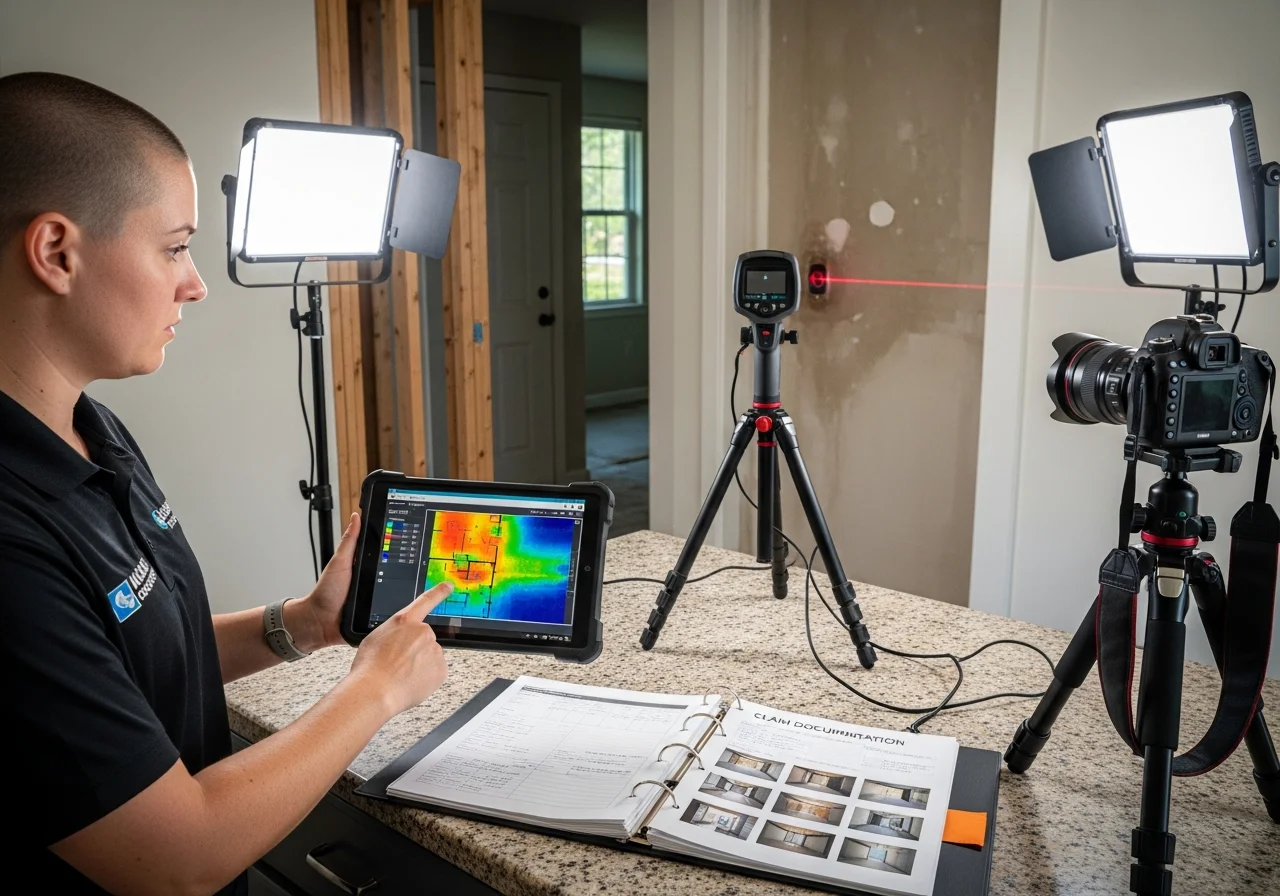
Your carrier sends a field adjuster or desk adjuster. We provide our moisture mapping data, thermal imaging reports, and scope of damage assessment to support their inspection. Having professional documentation ready at this stage significantly reduces back-and-forth.
Day 14-60
FL § 627.70131
Estimate Agreement and Restoration
We submit Xactimate-based estimates matching industry-standard line items. If the adjuster's estimate differs, we negotiate scope and pricing with supporting documentation. Under FL Statute § 627.70131, insurers must acknowledge claims within 14 days and begin investigation within 45 days.
Day 60-90
FL § 627.70132
Supplements for Concealed Damage
Damage discovered during restoration (hidden mold behind walls, structural deterioration under flooring) requires supplement claims. We document concealed damage immediately upon discovery with photos, moisture readings, and detailed scope additions. Supplements must be filed within 18 months of loss.
1 Year Max
FL § 627.70132
Filing Deadline — No Exceptions
Florida Statute § 627.70132 requires all initial property insurance claims to be filed within 1 year of the date of loss. Supplemental claims have an 18-month window. After these deadlines, your claim is barred — regardless of how valid the damage is. Do not wait.
Critical Deadline Warning
Florida's 2023 insurance reforms shortened filing deadlines and eliminated one-way
attorney fees. The margin for error is smaller than ever. If you suspect property
damage, file your claim and begin professional documentation immediately — waiting
costs you coverage.
Coverage Gaps
Common Insurance Coverage Gaps in Pembroke Pines
These are the coverage gaps that surprise Pembroke Pines homeowners most often. Review
your policy now — not after damage occurs.
Flood Damage Exclusion
Standard Florida homeowners policies explicitly exclude flood damage. Pembroke Pines sits on an engineered canal-and-lake drainage system — when it overwhelms during extreme rain events, water enters homes from outside. That's flood damage, not water damage, and your homeowners policy won't cover it. You need a separate NFIP or private flood policy.
Get a flood policy before hurricane season — even if you're not in a high-risk zone
Mold Coverage Limits
Most Florida policies cap mold coverage at $10,000 or $25,000 — sometimes less. In Pembroke Pines' year-round humidity, mold remediation after water damage can easily exceed $15,000 for a single-unit project and $30,000+ for multi-unit condo situations. Without a mold endorsement increasing your limits, you're responsible for the overage.
Review your mold sublimit and consider a mold endorsement
Hurricane Deductible Surprise
Florida policies carry separate hurricane deductibles — typically 2-5% of your dwelling coverage amount. On a home insured for $400,000, a 2% hurricane deductible means you pay the first $8,000 out of pocket. Many Pembroke Pines homeowners don't realize this until they file a claim after a named storm.
Know your hurricane deductible amount before storm season
Maintenance vs. Sudden Damage
Insurers routinely deny claims by classifying damage as "maintenance" rather than "sudden and accidental." A slow HVAC condensate leak that caused mold over months? Maintenance. A pipe burst that flooded three rooms overnight? Covered. The distinction often comes down to documentation — which is why our inspection reports establish the timeline of damage.
What Palm Build Documents for Your Insurance Claim
The difference between a fully paid claim and a denied one is documentation. Every step
of our process generates the evidence your adjuster needs to approve your claim at full
scope.
Photo and Video Documentation
Timestamped photos and HD video of all affected areas before any mitigation begins. We capture damage from multiple angles, document affected materials, and create a visual record that establishes the scope of loss for your adjuster.
Thermal Imaging Reports
FLIR infrared camera scans reveal moisture hidden behind CBS block walls, under tile, and in ceiling cavities. These thermal images are critical evidence — they show adjusters exactly where water migrated beyond what's visible to the naked eye.
Moisture Mapping and Daily Logs
Pin-type and non-invasive moisture meter readings mapped across every affected room and wall cavity. Daily drying logs show moisture reduction progress. This data proves the scope of drying required and validates equipment placement days.
Xactimate Line-Item Estimates
Industry-standard Xactimate software generates line-item estimates using the same pricing database adjusters use. This eliminates the "your estimate vs. our estimate" back-and-forth and accelerates scope agreement.
IICRC Classification Documentation
Water damage classified using IICRC S500 standards — Category (contamination level 1-3) and Class (evaporation load 1-4). These classifications drive the scope of work, equipment requirements, and safety protocols. Adjusters rely on proper classification to approve scope.
Complete Claims Package
All documentation compiled into a single, organized package: damage assessment, mitigation records, drying logs, scope of work, estimates, supplement documentation, and completion certificates. Ready for your adjuster, your mortgage company, and your records.
Citizens Property Insurance
Navigating Citizens Property Insurance in Pembroke Pines
A significant number of Pembroke Pines homeowners carry Citizens policies after years of
private carrier withdrawals from Broward County. Here's what you need to know about the
Citizens claims process.
Citizens Is Different from Private Carriers
Citizens Property Insurance Corporation is Florida's state-backed insurer of last resort. Their claims process, documentation standards, and approval timelines differ from private carriers. Many restoration contractors treat all insurance the same — we understand the specific requirements Citizens imposes on Broward County claims.
Managed Repair Program
Citizens may assign your claim to their Managed Repair Program, which uses pre-approved contractors. You have the right to choose your own contractor, but you must notify Citizens. Palm Build works within Citizens' framework while advocating for your full scope of restoration.
Strict Documentation Requirements
Citizens requires detailed, photo-documented scopes of work before approving restoration. Incomplete documentation triggers delays and requests for additional information. Our documentation packages are built to meet Citizens' standards from day one — reducing back-and-forth and accelerating approvals.
Depopulation and Policy Changes
Citizens actively works to move policyholders to private carriers through depopulation programs. If your policy was recently transferred from Citizens to a private carrier, your coverage terms may have changed. Review your new policy carefully — deductibles, coverage limits, and exclusions often differ.
Wind-Only vs. Multi-Peril Policies
Some Pembroke Pines homeowners carry Citizens wind-only policies with a separate private carrier for non-wind coverage. This split creates coordination challenges during claims — is the damage wind-driven rain (Citizens) or a plumbing failure (private carrier)? We help establish causation and coordinate with both carriers.
Condo Insurance Guide
Condo Insurance: Master Policy vs. Unit-Owner Policy
Pembroke Pines has a large condo population — Century Village alone has thousands of
units. Condo insurance claims involve two separate policies with different carriers,
different coverages, and different deductibles. Understanding which policy covers what
is the first step.
Master Policy (Association Coverage)
Covers common areas: hallways, roofs, exterior walls, shared plumbing, elevators
Typically "bare walls" or "all-in" coverage — the policy type determines where HOA coverage stops and yours begins
Bare walls: association covers structure through drywall; you cover everything from paint inward (fixtures, flooring, cabinets)
All-in: association covers improvements including flooring and fixtures as originally installed; your unit policy covers upgrades and personal property
Unit-Owner Policy (HO-6)
Covers your personal property, improvements, and the gap between master policy and full restoration
Loss assessment coverage: if the master policy is insufficient for a building-wide event, condo associations can levy special assessments against unit owners
Many Century Village and Pembroke Pines condo owners carry insufficient loss assessment coverage — a $50,000+ special assessment after a hurricane is not uncommon
Personal liability and additional living expenses if your unit is uninhabitable during restoration
How Palm Build Coordinates Both
We identify whether damage falls under master policy, unit-owner policy, or both — this is often the single biggest dispute in condo claims
Direct communication with association management companies and their insurance carriers
Separate documentation packages for each policy: one for the HOA's carrier, one for yours
Experience with the specific condo associations in Pembroke Pines: Century Village, Grand Palms townhomes, and others
Century Village and similar communities require careful coordination between master
policy and unit-owner policy carriers during restoration claims.
Cost vs. Coverage
Restoration Costs vs. Insurance Coverage in Pembroke Pines
Understanding where restoration costs exceed insurance coverage helps you plan for
potential gaps. Proper documentation maximizes what your policy pays.
Full reconstruction (structural): $20,000 - $80,000+
Total range: $8,000 - $80,000+
What Insurance Commonly Covers
Emergency mitigation: Usually fully covered (duty to mitigate)
Structural drying: Covered if properly documented with daily logs
Mold: Limited to sublimit ($10K-$25K typical without endorsement)
Interior restoration: Covered, but ACV policies deduct depreciation
Code upgrades: Only with Ordinance/Law endorsement
Gap risk: $5,000 - $30,000+ depending on policy type
Why Palm Build
Why Choose Palm Build for Insurance Claim Navigation
We don't just restore your property — we build the documentation package that gets your
claim paid. Every step of our process is designed with your insurance claim in mind.
Xactimate-Certified Estimators
We write estimates in the same software and pricing database your adjuster uses — eliminating the pricing dispute that delays most claims
All Carrier Experience
Citizens, Universal, Heritage, Security First, Tower Hill, and private carriers — we know each carrier's documentation requirements and approval workflows
Condo and HOA Specialists
Master policy vs. unit-owner policy coordination, management company communication, and dual documentation packages
Same-Day Documentation Start
We begin creating your insurance documentation package during emergency mitigation — not after the work is done
Direct Adjuster Communication
We communicate directly with your adjuster using their terminology and documentation standards, reducing claim processing time
24/7 Emergency Response
Immediate mitigation protects your property and your claim — delays give insurers grounds to reduce scope
Common Questions
Pembroke Pines Insurance Restoration FAQ
How long do I have to file a property insurance claim in Pembroke Pines, Florida?
Under Florida Statute § 627.70132, you must file your initial property damage claim within 1 year of the date of loss. Supplemental claims — for additional damage or costs discovered after the initial claim — must be filed within 18 months. These are hard statutory deadlines. Missing them allows your carrier to deny the claim entirely, regardless of the severity of damage. Palm Build documents damage immediately upon arrival and tracks every deadline for active claims we manage in Pembroke Pines.
Does my Pembroke Pines homeowners insurance cover flood damage?
No. FEMA states that most standard homeowners insurance policies explicitly exclude flood damage — water entering your home from outside the structure. You need a separate National Flood Insurance Program (NFIP) or private flood policy. FEMA updated Broward County flood maps effective July 31, 2024, and a meaningful share of flood claims nationally occur outside high-risk zones. If your Pembroke Pines home floods without a flood policy, the entire restoration cost is out of pocket. NFIP policies have a 30-day waiting period, so purchase before hurricane season.
What is a hurricane deductible and how much would I owe on my Pembroke Pines home?
A hurricane deductible is a separate, higher deductible that applies only to damage from a named storm declared by the National Weather Service. In Florida, hurricane deductibles are typically 2% of dwelling coverage. On a Pembroke Pines home insured at the median value of $439,000, the hurricane deductible is approximately $8,780 — paid out of pocket before insurance coverage activates. This is separate from your standard all-perils deductible ($1,000-$2,500) that applies to non-hurricane claims like burst pipes or kitchen fires.
How does the 2023 AOB reform affect my insurance claim in Pembroke Pines?
Senate Bill 2-A, effective January 1, 2023, eliminated one-way attorney fees (carriers no longer automatically pay the policyholder's legal costs when the policyholder wins a lawsuit), restricted Assignment of Benefits, and shortened the filing deadline from 2 years to 1 year. For Pembroke Pines homeowners, this means getting the claim right at the adjuster level is more critical than ever — litigation is now more expensive and less predictable. Palm Build's detailed Xactimate documentation and proactive supplement filings are designed to resolve underpayments before they require legal action.
What is Citizens Property Insurance and does it affect my claim process?
Citizens Property Insurance Corporation is Florida's state-created insurer of last resort for homeowners who cannot find coverage in the private market. A growing number of Pembroke Pines homeowners carry Citizens policies as private carriers have exited Broward County. Citizens has specific documentation requirements and operates under a depopulation mandate — meaning your policy may be transferred to a private carrier. Palm Build has extensive experience with Citizens claims, including their inspection standards, supplement processes, and the complications that arise during depopulation transfers.
My condo had water damage — does the HOA master policy or my HO-6 policy cover it?
It depends on the source and location of the damage. In most Florida condos with bare walls-in master policies, the association's policy covers the building structure, common elements, and original interior finishes as built by the developer. Your HO-6 (unit-owner) policy covers interior improvements, personal property, and upgrades you've made. When water migrates between units in CBS construction — common in Century Village and similar Pembroke Pines communities — both policies are typically involved. Palm Build reviews both the master policy and your HO-6 at the start of every condo restoration to correctly split the scope.
What documentation does Palm Build provide for my insurance claim?
Palm Build delivers a comprehensive insurance documentation package: timestamp-embedded pre-mitigation photographs, thermal imaging scans of hidden moisture, room-by-room moisture mapping on a grid pattern, daily drying logs with data-logged readings, IICRC damage classifications (Categories 1-3, Classes 1-4), Xactimate line-item estimates using current Broward County pricing, equipment placement logs, and final completion photographs with dry-standard verification. This documentation is formatted to match what Florida carriers — including Citizens Property Insurance — require for claim processing.
What happens if my insurance company underpays my Pembroke Pines restoration claim?
If the carrier's estimate does not cover the full scope of documented damage, Palm Build files a supplement — a formal request for additional payment supported by Xactimate line items, photographs, and technical justification for each additional cost. Under FL Stat. § 627.70132, supplements must be filed within 18 months of the date of loss. If the supplement is denied or underpaid, homeowners can request appraisal (a neutral third-party valuation process written into most Florida policies) or pursue mediation through the Florida Department of Financial Services.
Trusted Vendors
Trusted local pros in Pembroke Pines
Outside our restoration scope, these are the vetted, licensed contractors we trust
alongside our work. Personally evaluated, reference-checked, and recommended by Palm
Build.
Insurance Claim in Pembroke Pines? Get It Documented Right.
Deadlines are strict, deductibles are high, and carriers are looking for reasons to underpay. Palm Build documents your Pembroke Pines loss to the standard Florida carriers demand — Xactimate estimates, thermal imaging, moisture mapping, and daily drying logs that get your claim funded, not delayed.