With 35% of housing in large apartment and condo complexes, Coral Springs demands commercial-scale restoration expertise that residential contractors cannot deliver. From Ramblewood East's 1,120 units to University Drive strip centers, mid-rise office buildings, schools, and HOA common areas, Palm Build responds in 30 minutes from our Deerfield Beach hub with flat roofing specialists, commercial HVAC damage teams, and master policy insurance coordination.
Deerfield Beach — 15 Minutes from Coral Springs 30 min Response IICRC Certified
Coral Springs' unusually high concentration of multi-unit housing, flat-roofed
commercial buildings, and HOA-managed common areas creates a restoration environment
where residential approaches consistently fall short. Understanding these risk factors
is essential to protecting your property and your investment.
35% Large Apartment & Condo Complexes
35%
Multi-unit housing
Coral Springs is not a typical South Florida suburb. Roughly 35% of the city's housing stock consists of large apartment and condo complexes — from Ramblewood East's 1,120 units to Heron Bay's mid-rise buildings and Wyndham Lakes' garden-style condos. These multi-unit properties create commercial-scale restoration demands: shared plumbing risers that carry water damage across dozens of units, common area lobbies and hallways requiring commercial drying equipment, and master policy insurance coordination involving HOA boards, property managers, and individual unit owners simultaneously. Residential restoration contractors lack the equipment, staffing, and insurance expertise these properties demand.
Flat Roof Risk on Commercial & Condo Buildings
61"
Annual rainfall
Coral Springs' commercial buildings — strip centers along University Drive and Sample Road, mid-rise office buildings, and condo complexes — predominantly feature flat or low-slope roof systems. These roofs are inherently prone to ponding water, and in a city receiving 61 inches of annual rainfall, membrane degradation is accelerated by constant UV exposure and thermal cycling. When a flat roof membrane fails, water enters the ceiling cavity and migrates laterally through insulation — potentially affecting 5,000+ square feet in a commercial building or cascading through multiple condo units before the leak becomes visible below. Rigorous drainage maintenance is required, but many aging Coral Springs buildings have deferred this maintenance.
Commercial HVAC Scale Creates Mold Risk
10-11 mo
HVAC runtime per year
Commercial and condo HVAC systems in Coral Springs operate 10-11 months per year, producing enormous volumes of condensate. Rooftop package units on strip centers and centralized systems in condo buildings have condensate drain lines that clog with algae and debris in Florida's subtropical climate. When drains back up, water overflows into the building — flooding ceiling plenums in commercial spaces or cascading through wall cavities in multi-story condos. A single HVAC failure in a condo building can introduce moisture into multiple units simultaneously. The scale of commercial HVAC systems means the mold risk is proportionally larger than residential — and the remediation more complex.
HOA Common Areas: Shared Responsibility, Complex Claims
100s
HOA communities
Coral Springs' hundreds of HOA-managed communities have common areas that require commercial-grade restoration: lobbies, hallways, fitness centers, clubhouses, pool enclosures, parking structures, and elevator shafts. When water damage hits these spaces, the restoration involves HOA board approval, reserve fund verification, master policy claims, coordination with individual unit owners whose property may be affected, and compliance with Florida condo association regulations (Fla. Stat. 718 and 720). The insurance structure alone — master policy vs. HO-6 unit-owner policies — creates a layer of complexity that residential restoration companies are not equipped to navigate.
Coral Springs' commercial and multi-unit residential properties each have distinct
building types, infrastructure ages, and restoration challenges. Our team knows the
specific requirements of each property category — from Ramblewood East's chronic issues
to University Drive's dense strip centers and the HOA-managed common areas that define
this master-planned city.
Ramblewood East
Critical
Types: 1,120-unit condo complex, garden-style and mid-rise buildings
Coral Springs' largest single condo complex with documented chronic issues. Original 1970s-80s flat and low-slope roofs require constant maintenance. Shared plumbing risers carry water damage between floors. HVAC systems of this era are reaching end-of-life, creating condensate overflow events that affect multiple units simultaneously. Master policy claims here frequently require multi-unit coordination across dozens of affected owners.
University Drive Corridor Strip Centers
Critical
Types: Retail strip malls, restaurants, professional offices
Flat roof ponding, multi-tenant water migration
University Drive is Coral Springs' primary commercial artery with dense strip center development. Flat-roofed CBS buildings from the 1980s-90s with 3-8 tenants each face chronic ponding water on built-up roofs. Multi-tenant water migration creates complex insurance claim scenarios involving landlord master policies, individual tenant carriers, and contentious liability disputes about damage origin.
Sample Road features larger commercial footprints including shopping centers and national chains. Expansive flat roofs create significant ponding risk. Parking lot drainage overwhelmed during heavy tropical rain events forces water into ground-floor commercial spaces through door thresholds and loading docks. Restaurant tenants face additional health department compliance requirements during restoration.
Newer mid-rise condo communities along the Coral Springs-Parkland border feature 3-5 story buildings with elevators, shared plumbing chases, and extensive common areas. Water events in upper-floor units cascade through shared walls and floor assemblies into units below. Common area restoration — lobbies, fitness centers, clubhouses — requires HOA board coordination and master policy activation.
Coral Springs Public Schools
High
Types: Elementary, middle, and high schools, portables
Flat roof failures, HVAC system scale, occupancy disruption
Broward County Public Schools in Coral Springs feature flat-roofed CBS construction with large-scale commercial HVAC systems. Portable classrooms are particularly vulnerable to moisture intrusion. School restoration adds scheduling complexity — work must be phased around academic calendars, and temporary relocation of hundreds of students requires coordination with district administration. Health and safety clearances are required before re-occupancy.
Eagle Trace / Cypress Run HOA Communities
Moderate
Types: Single-family HOA, community clubhouses, pool facilities
Common area damage, reserve fund limitations
While primarily single-family, these large HOA communities maintain commercial-grade common facilities — clubhouses, pool enclosures, fitness centers, and community buildings with flat commercial roofs and commercial HVAC systems. Storm damage or water events at these facilities require HOA board approval, reserve fund verification, and commercial-scale restoration approaches. Many associations carry inadequate insurance for full restoration of common areas.
Riverside Drive / Wiles Road Office Parks
High
Types: Professional offices, medical practices, dental offices
HVAC condensate, after-hours water events
Mid-rise office buildings along Riverside Drive and Wiles Road feature centralized HVAC systems that distribute condensate problems — and mold — across entire floors through shared ductwork. Plumbing failures during weekends and holidays can flood multiple suites before discovery. Medical and dental offices add HIPAA compliance, patient record protection, and specialized equipment decontamination requirements.
Wyndham Lakes / The Isles Condo Communities
High
Types: Garden-style condos, townhome clusters, common areas
Canal-adjacent condo communities face dual risk: aging building infrastructure reaching end-of-life and proximity to Coral Springs' 184-acre canal network that can back up during heavy storms. When canal water tables rise, ground-floor units and common areas face water intrusion through slab cracks and compromised waterproofing. Restoration requires both immediate mitigation and long-term waterproofing assessment to prevent recurrence.
Condo & HOA Specialists
Condo vs. HOA Restoration Responsibility Guide
With 35% of Coral Springs housing in multi-unit complexes, understanding who pays for
what is critical. The boundary between the HOA master policy and unit-owner HO-6 policy
determines insurance coverage, cost responsibility, and restoration scope. Palm Build
documents damage by responsibility zone from day one.
Master Policy (HOA/Association)
Roof structure and membrane — the #1 damage source in Coral Springs condos
Exterior walls, stucco, and building envelope
Common area hallways, lobbies, elevators, and stairwells
Shared plumbing risers, main sewer lines, and fire suppression systems
Clubhouses, fitness centers, pool enclosures, and community buildings
Parking structures and covered parking areas
Central HVAC systems and shared mechanical rooms
Landscaping and exterior drainage infrastructure
Important: The master policy covers the building structure and common elements. When a roof leak damages a unit below, the master policy typically covers the source repair and structural damage — but the boundary between master policy and unit-owner responsibility varies by association declaration.
HO-6 Policy (Unit Owner)
Interior finishes — drywall, paint, flooring, trim from the studs inward
Kitchen and bathroom cabinets, countertops, and fixtures
Personal property — furniture, electronics, clothing, valuables
Appliances owned by the unit owner (not association-provided)
Individual unit HVAC components (mini-splits, thermostats, air handlers)
Upgrades and improvements beyond the original builder spec
Loss of use / additional living expenses during restoration
Personal liability if your unit caused damage to common areas or other units
Important: HO-6 policies cover "studs in" in most Coral Springs associations. Critical: if your water heater, dishwasher, or washing machine causes damage to common areas or other units, your HO-6 liability coverage responds — making adequate limits essential in multi-unit buildings.
The Assessment & Claims Coordination Process
How Palm Build manages multi-stakeholder restoration in Coral Springs condo and HOA
communities.
Damage Discovery & Emergency Response
When water damage is discovered in a Coral Springs condo or common area, the property manager and Palm Build are contacted simultaneously. We begin emergency mitigation immediately — extraction, containment, and drying cannot wait for insurance authorization in Florida humidity. The HOA board is notified per association bylaws, and both the master policy carrier and affected unit owners' HO-6 carriers are contacted.
Responsibility Zone Documentation
Palm Build creates separate documentation packages from day one: master policy documentation covering common element damage, structural damage, and source repair, plus individual HO-6 documentation for each affected unit. Moisture mapping, thermal imaging, and photo documentation are organized by responsibility zone — this prevents the coverage gap that occurs when neither carrier accepts responsibility for damage in the boundary area.
Cost Allocation & Assessment Planning
When restoration costs exceed HOA reserve funds — common after major events in large Coral Springs complexes — the board may need to levy a special assessment. Palm Build provides detailed cost breakdowns by responsibility zone, phased restoration options to spread costs, and insurance recovery documentation designed to maximize master policy payout before any assessment is levied. We work with HOA attorneys and boards to align scope, cost, and insurance recovery before major financial decisions are made.
Coordinated Claims Resolution
The most complex part of condo restoration is coordinating multiple insurance claims — the master policy, multiple HO-6 policies, and potentially a liability claim if a specific unit caused the damage. Palm Build manages the documentation interface between all carriers, ensures consistent damage narratives across all claims, and provides unified scope-of-work documents that prevent the contradictions that cause claim denials. In a 20-unit water event at Ramblewood East, this coordination is the difference between a resolved claim and a years-long dispute.
Damage Categories
Types of Commercial Damage in Coral Springs
Coral Springs commercial and multi-unit properties face four primary damage categories —
each with scenarios specific to the city's condo-heavy housing stock, flat-roofed
commercial buildings, and canal-adjacent geography. Palm Build handles all four with
IICRC-certified protocols and commercial-scale equipment.
Commercial & Condo Water Damage
Flat Roof Ponding & Membrane Failure
The most common commercial water damage source in Coral Springs. Water ponds on flat built-up roofs at strip centers, office buildings, and condo complexes. Membrane degradation from UV exposure and 61 inches of annual rainfall leads to ceiling cavity saturation affecting thousands of square feet before leaks become visible.
Commercial HVAC Condensate Overflow
Rooftop and centralized HVAC systems running 10-11 months per year produce massive condensation. Clogged drain lines cause overflow into ceiling plenums and wall cavities. In condo buildings, a single HVAC failure can introduce moisture into multiple units through shared mechanical chases.
Multi-Unit Water Migration
The defining water damage pattern in Coral Springs condo complexes. A burst pipe, appliance failure, or roof leak in one unit migrates through shared walls, floor assemblies, and plumbing chases into adjacent and lower units. A single event at Ramblewood East can affect 5-20 units, requiring coordinated multi-carrier claims processing.
Common Area Plumbing Failures
Shared plumbing risers in condo buildings and main supply lines in commercial buildings reach end-of-life in Coral Springs properties built in the 1970s-90s. Riser failures flood multiple floors. Main line breaks flood common areas. Both scenarios trigger master policy claims with complex coordination requirements.
Commercial Fire & Smoke Damage
Common Area Fire Events
Electrical fires in common area mechanical rooms, laundry facilities, and parking structures at condo complexes produce smoke that migrates through HVAC systems and hallways into individual units. Fire suppression system activation creates secondary water damage across multiple floors and units.
Strip Center Kitchen & Electrical Fires
Restaurant grease fires and electrical panel overloads in aging strip centers along University Drive and Sample Road. Smoke migration through shared ceiling plenums affects adjacent tenant bays. Fire suppression chemicals and water create secondary contamination requiring specialized cleaning.
Smoke Damage in Multi-Unit Buildings
Smoke from a fire in one condo unit or commercial bay migrates through shared HVAC returns, wall penetrations, elevator shafts, and stairwells. Adjacent units and common areas may sustain smoke damage exceeding the fire-origin space, creating complex multi-party insurance claims.
Commercial Mold Damage
Ceiling Plenum & HVAC Mold Colonies
The space above drop ceilings in commercial buildings and the ductwork in condo central HVAC systems are ideal mold growth environments — dark, warm, and chronically damp. Colonies grow for months before visible signs appear, distributing spores through ductwork to every connected space.
Post-Water-Event Hidden Mold
Any water event in Coral Springs not dried within 24-48 hours produces mold in the year-round 70%+ humidity. Incomplete drying — especially behind CBS block walls, above ceiling tiles, and within shared wall cavities between condo units — creates hidden colonies that manifest weeks later.
Common Area Chronic Moisture
Pool enclosures, parking structures, and ground-floor common areas at Coral Springs condo complexes face persistent moisture from poor ventilation, pool chemical humidity, and ground-level water intrusion. Chronic mold in these areas requires remediation plus long-term moisture management solutions.
Storm & Hurricane Damage
Flat Roof Wind Damage at Commercial & Condo Properties
Hurricane winds lift flat roof membranes, peel back flashing, and dislodge rooftop HVAC units. Large-format flat roofs on strip centers and condo buildings are particularly vulnerable at edges and corners. Exposed roof decking allows immediate water intrusion during ongoing storms.
Canal-Adjacent Flooding
Coral Springs' 184-acre canal network can reach capacity during heavy tropical storms, preventing stormwater drainage. Canal-adjacent condo complexes and commercial properties face flooding when water tables rise and overwhelm ground-level waterproofing. Category 3 contaminated water requires aggressive remediation protocols.
Multi-Unit Wind-Driven Rain Intrusion
Hurricane-force rain penetrates around windows, sliding doors, and balcony assemblies in mid-rise condo buildings. Wind-driven rain events affect exterior-facing units on multiple floors simultaneously, creating a building-wide restoration scope that requires coordinated master policy and multi-unit HO-6 claims.
Commercial Process
Our Coral Springs Commercial Restoration Process
Commercial and multi-unit condo restoration requires larger equipment, faster timelines,
and multi-stakeholder coordination that residential contractors cannot provide. Here is
how we manage the process from emergency call through full re-occupancy.
01
Emergency Response & Stabilization
Hours 1-4
Immediate deployment of commercial-scale equipment from our Deerfield Beach hub — 15 minutes from any Coral Springs commercial or condo property via the Sawgrass Expressway. Truck-mounted extractors, industrial dehumidifiers, and large-format air scrubbers deployed within the first hour. For condo complexes, we establish containment barriers to prevent water migration between units and common areas. For strip centers, we isolate affected tenant bays while keeping adjacent businesses operational. Initial damage documentation begins immediately — critical for both master policy and HO-6 claims in Coral Springs' multi-unit properties.
02
Stakeholder Coordination & Continuity Planning
Hours 4-12
Before full-scale restoration begins, we establish the multi-stakeholder communication protocol that Coral Springs commercial and condo properties require. For condo complexes, this means identifying HOA board contacts, property management, master policy carriers, and affected unit owners. For strip centers, it means coordinating with landlords, tenants, and their respective carriers. We develop a continuity plan: which units or bays can remain occupied, which common areas need restricted access, and what phased approach minimizes disruption to residents and businesses while maximizing restoration efficiency.
03
Comprehensive Damage Assessment
Days 1-3
Full documentation using thermal imaging, moisture mapping, and unit-by-unit or bay-by-bay photography. For condo complexes, we create separate damage assessments per responsibility zone — master policy common elements documented separately from individual unit HO-6 damage. For commercial properties, we map damage by tenant for separate insurance claims. This responsibility-zone documentation is the foundation of clean claims processing in Coral Springs' multi-policy environment and prevents the coverage gaps that create disputes between carriers.
04
Restoration Execution
Days 1-21
Industrial-scale water extraction, structural drying, mold containment, or debris clearing depending on loss type. For Coral Springs condo complexes, we work in phases — completing highest-priority units first while maintaining containment in ongoing restoration zones. For commercial properties, we deploy during off-hours when possible. Flat roof repairs are coordinated with roofing contractors to stop the source before interior restoration is complete. Daily progress reports go to property managers, HOA boards, owners, and insurance adjusters. Florida's subtropical humidity demands aggressive dehumidification protocols exceeding standard residential approaches.
05
Code Compliance & Reconstruction
Weeks 2-12
Full commercial reconstruction including ADA compliance, Florida Building Code requirements, fire code compliance, and Broward County building department permitting. For condo complexes, we restore common areas to association standards and coordinate individual unit reconstruction with owners. If restoration costs trigger the substantial improvement threshold (50% of building value), we coordinate full code upgrade requirements. For commercial properties, tenant improvement reconstruction is documented separately from structural work for insurance allocation.
06
Project Closeout & Re-occupancy
Project Completion
All regulatory inspections completed. For condo complexes, this means unit-by-unit clearance documentation, common area re-occupancy certification, and final documentation packages for both master policy and HO-6 claims. For commercial properties, certificate of occupancy confirmed, health department clearance obtained for food service, and business reopening coordination completed. Post-restoration moisture monitoring confirms drying standards are maintained in Coral Springs' year-round high humidity. We do not consider any project complete until every stakeholder has the documentation they need for claims resolution.
Seasonal Risk Patterns
Coral Springs Commercial Damage Calendar
Commercial and condo property damage in Coral Springs follows predictable seasonal
patterns driven by rainfall, hurricane activity, HVAC loads, and canal water levels.
Understanding these patterns allows proactive maintenance and faster response when
damage does occur.
Dry Season (November - April)
Moderate Risk
HVAC Condensate Issues Persist
Even during the dry season, Coral Springs commercial HVAC systems run daily. Lower outdoor humidity reduces but does not eliminate condensate production. Clogged drain lines discovered during this period often indicate larger maintenance failures. This is the ideal window for preventive HVAC maintenance on commercial and condo building systems.
Plumbing Failures & Pipe Breaks
Occasional cold fronts bring overnight temperatures into the 40s-50s, causing thermal stress on aging plumbing in 1970s-80s Coral Springs buildings. While not a freeze risk, thermal cycling accelerates existing pipe weaknesses. Holiday periods increase plumbing load in condo complexes and commercial kitchens.
Roof Maintenance Window
The dry season is the optimal window for flat roof inspection and maintenance on Coral Springs commercial and condo buildings. Roofing contractors can identify ponding areas, repair membrane failures, clear clogged scuppers and drains, and address HVAC penetration sealing before the wet season exponentially increases damage risk.
Wet Season Onset (May - June)
High Risk
First Heavy Rains Expose Roof Failures
The transition from dry to wet season produces sudden heavy downpours that overwhelm any flat roof drainage deficiencies that developed or worsened during the dry months. May and June produce the highest spike in commercial roof leak calls across Coral Springs as deferred maintenance is exposed by the first sustained rainfall events.
HVAC Condensation Surge
As outdoor humidity climbs to 80%+, commercial HVAC systems shift to maximum cooling output. Condensate production increases dramatically. Drain lines that marginally functioned during the dry season overflow under the increased load. Condo building central systems are particularly vulnerable as they serve dozens of units from shared condensate infrastructure.
Canal Water Levels Rising
The South Florida Water Management District begins managing Coral Springs' canal network for wet-season capacity. Groundwater levels rise, reducing the drainage margin for canal-adjacent condo complexes and commercial properties. This is when previously adequate waterproofing begins to show signs of stress.
Peak Hurricane Season (July - October)
Critical Risk
Hurricane & Tropical Storm Damage
The peak risk period for Coral Springs commercial properties. Flat roofs on strip centers, offices, and condo buildings are vulnerable to wind uplift that peels membranes and dislodges rooftop equipment. Wind-driven rain penetrates building envelopes at window, door, and wall penetration points. Multi-story condo buildings face rain intrusion on exterior-facing units across multiple floors simultaneously.
Canal Flooding & Drainage Overload
Tropical storms can dump 10-20 inches of rain in hours — as Tropical Storm Eta demonstrated in 2020 with 16-20 inches. Coral Springs' 184-acre canal network reaches capacity, preventing stormwater drainage. Canal-adjacent condo complexes and commercial properties face ground-level flooding. Parking structures and ground-floor common areas are first to flood.
Multi-Unit Storm Damage Coordination
A single hurricane event can damage an entire condo building — roof, multiple exterior-facing units, common area lobbies and hallways, elevator systems, and parking structures. The master policy claim, dozens of HO-6 claims, and business interruption documentation must all be initiated simultaneously. This is the scenario where Palm Build's multi-stakeholder coordination expertise is most critical.
Post-Season Transition (October - November)
High Risk
Latent Storm Damage Discovery
Water intrusion from hurricane season events that went undetected — especially in ceiling plenums, wall cavities, and above drop ceilings — manifests as mold growth 4-8 weeks after the initial event. October and November see a spike in mold remediation calls from Coral Springs commercial and condo properties that sustained undetected moisture intrusion during peak storm season.
Insurance Claims Filing Deadlines
Florida law requires storm damage claims to be filed within specific timeframes. Property managers and HOA boards must ensure all damage from the hurricane season is documented and claims filed before deadlines expire. Palm Build provides post-storm assessment services specifically for this transition period, ensuring no damage is missed before the claims window closes.
Pre-Dry-Season Remediation Window
The period between the last tropical weather and the true dry season is the ideal window for remediation of any storm-related moisture issues. Lower rainfall allows effective structural drying, and addressing hidden moisture now prevents the mold colonies that would otherwise grow unchecked through the mild winter months.
Cost Analysis
Commercial Restoration Costs in Coral Springs
Understanding the true cost of commercial and condo restoration in Coral Springs means
accounting for direct restoration expenses, multi-unit cascade effects, special
assessments, and the compounding cost of displacement. Cutting corners on multi-unit
restoration is the most expensive decision an HOA board or property owner can make.
$15K-$60K
Condo common area restoration
$3K-$8K
Per-unit condo restoration avg.
$50-$150/sq ft
Commercial restoration range
60-70%
Claims needing supplements
Restoration Costs by Property Type
Commercial restoration costs in Coral Springs vary dramatically by property type and damage scope. Condo common area restoration — hallways, lobbies, fitness centers — typically runs $15,000-$60,000 depending on affected area and finish quality. Individual condo unit restoration averages $3,000-$8,000 for water damage, but multi-unit events affecting 10+ units can total $80,000-$250,000+. Strip center retail bays run $15,000-$50,000 per bay. Office building restoration costs $20-$80 per square foot depending on tenant improvement complexity. School restoration involves the largest footprints, with projects commonly exceeding $100,000. These costs exclude special assessments that HOA boards may need to levy when reserve funds are insufficient.
Multi-Unit Events: The Compounding Cost
In Coral Springs' condo-heavy environment, the compounding cost of multi-unit water events is the hidden financial risk. A single roof leak or plumbing failure that migrates through 10 units requires 10 separate HO-6 claims, one master policy claim, and coordinated restoration across all affected spaces. Residents displaced during restoration face loss-of-use expenses. HOA common areas closed during restoration reduce property values and resident satisfaction. If insurance recovery falls short, the board must levy special assessments — creating financial hardship for unit owners already dealing with personal property damage. Early, aggressive mitigation is the only way to limit the cascade.
The Cost of Inadequate Restoration
Choosing the cheapest restoration bid or attempting to handle multi-unit water damage with residential contractors virtually guarantees higher total costs. Incomplete drying in Coral Springs' year-round 70%+ humidity produces mold growth within 48 hours, turning a $30,000 water damage project into a $100,000+ mold remediation across multiple units. Inadequate documentation results in underpaid insurance claims — 60-70% of commercial and condo claims require supplements, and without proper per-unit documentation, those supplements are denied. Every dollar saved on inadequate restoration generates $3-$5 in secondary damage, extended displacement, and underpaid claims.
Insurance Coverage for Coral Springs Commercial & Condo Properties
Coral Springs' high concentration of multi-unit housing creates the most complex
insurance landscape in Broward County. Master policies, HO-6 unit-owner policies,
commercial property policies, and liability claims all intersect when damage crosses
responsibility boundaries. Palm Build's commercial claims team ensures every applicable
coverage is activated and documented — especially the master policy vs. HO-6 boundary
items that are most frequently left unresolved.
Master policy building coverage -- structural damage repair for common elements, roofs, exterior walls, shared plumbing, and common area finishes to Florida Building Code standards
HO-6 unit-owner coverage -- interior improvements, personal property, fixtures, and appliances from the drywall inward for each affected unit
Master policy vs. HO-6 boundary documentation -- separate damage packages per responsibility zone, preventing the coverage gap that creates carrier disputes
Business interruption / loss of use -- documented displacement timeline for both commercial tenants and condo residents during restoration, from day one through re-occupancy
Extra expense coverage -- temporary relocation, expedited materials, overtime labor, and temporary equipment rental documented per policy requirements
Common element assessment documentation -- cost breakdowns supporting HOA board decisions on reserve fund allocation vs. special assessment levies
Equipment breakdown coverage -- commercial HVAC, elevator systems, fire suppression, and shared mechanical equipment repair or replacement
Ordinance and law coverage -- Florida Building Code upgrades triggered by substantial improvement threshold (50% of building value) on older commercial buildings
Multi-carrier coordination -- unified damage narrative and consistent documentation across master policy, multiple HO-6 carriers, and any liability claims between unit owners
Wind vs. water delineation -- proper allocation between windstorm and flood coverage after hurricane or storm events affecting commercial and condo properties
Liability subrogation support -- documentation establishing damage origin when one unit causes damage to common areas or adjacent units, supporting liability recovery
Our Work in Coral Springs
Coral Springs Commercial Restoration Gallery
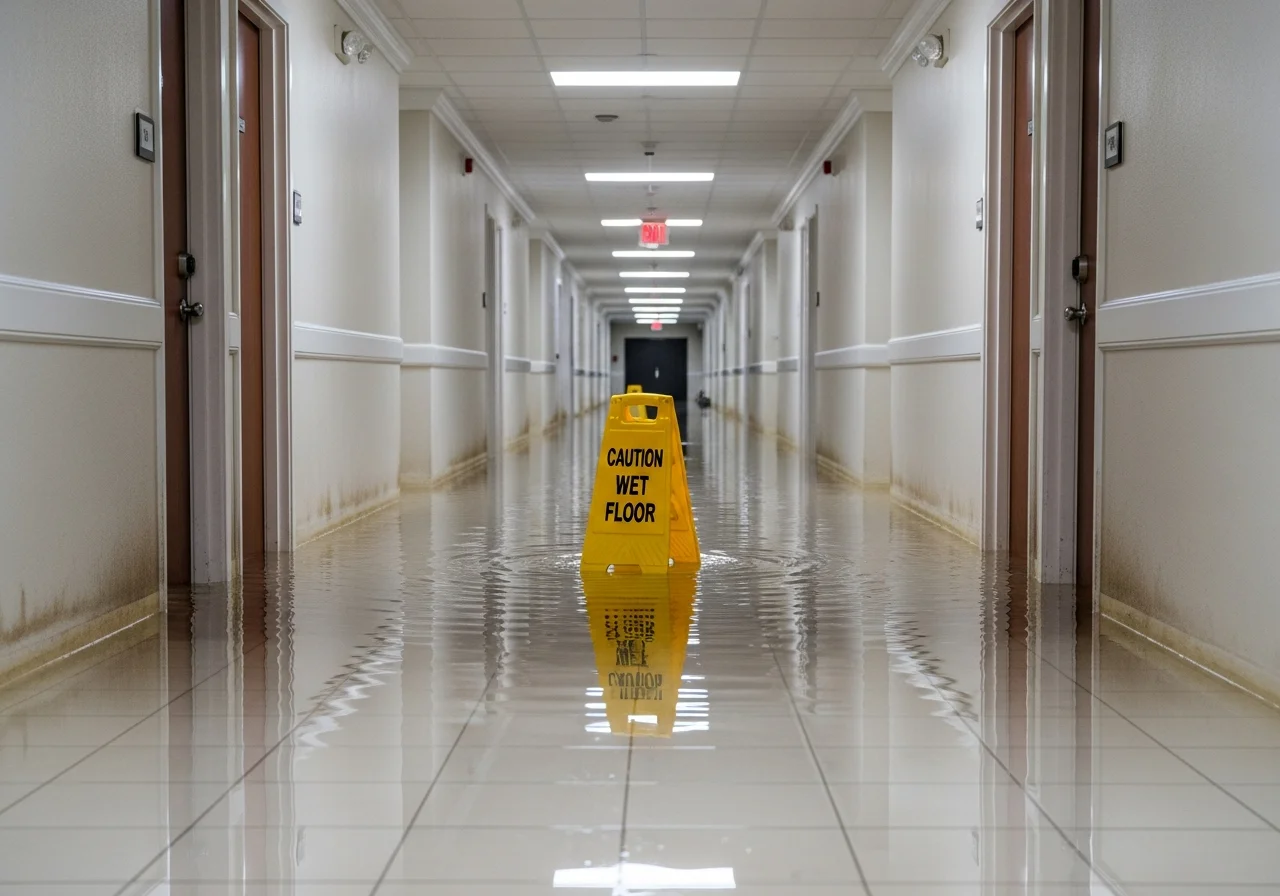
Emergency response to condo common area flooding in Coral Springs — standing water in a shared hallway requiring commercial-scale extraction before it migrates into individual units through doorways and floor assemblies.
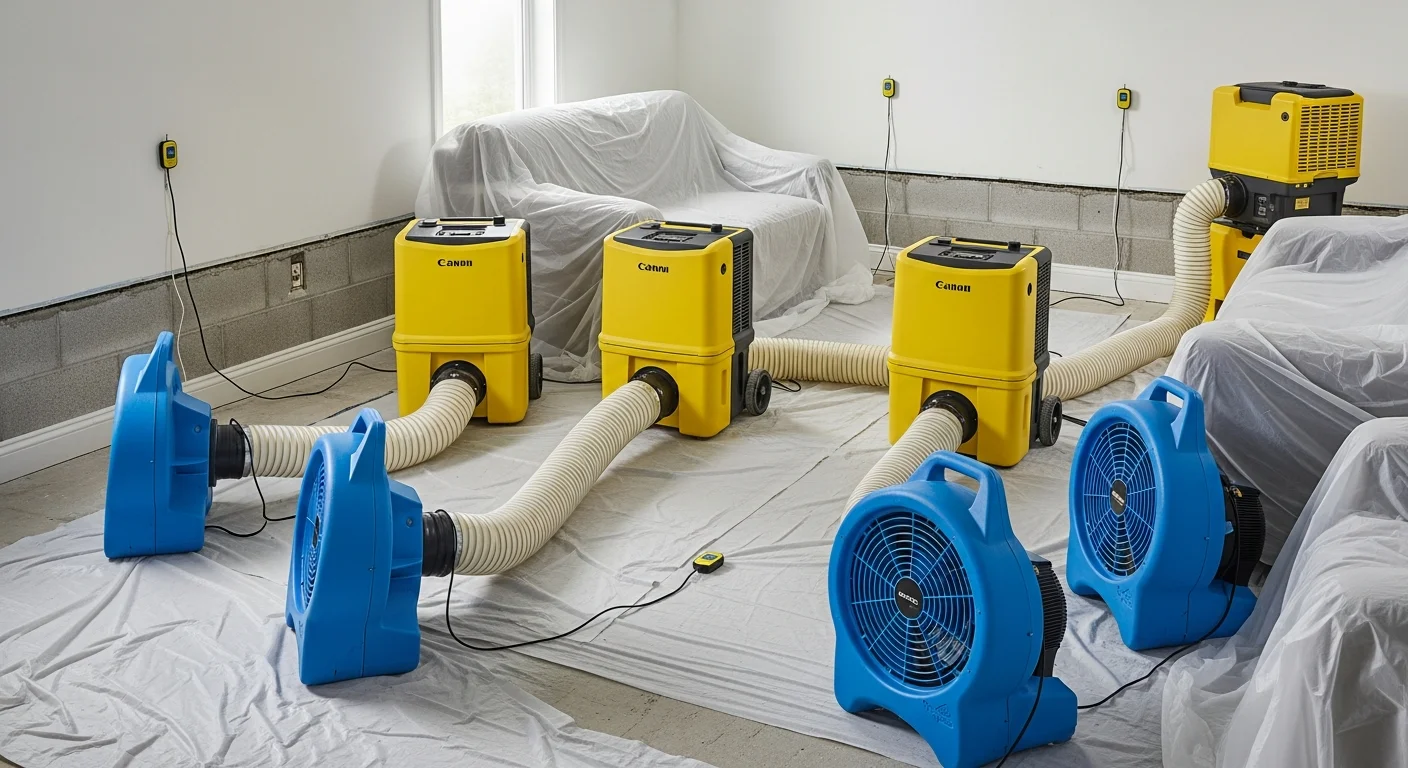
Industrial drying equipment deployment in a Coral Springs commercial space — LGR dehumidifiers and high-velocity air movers positioned for maximum airflow across water-damaged flooring and wall cavities.
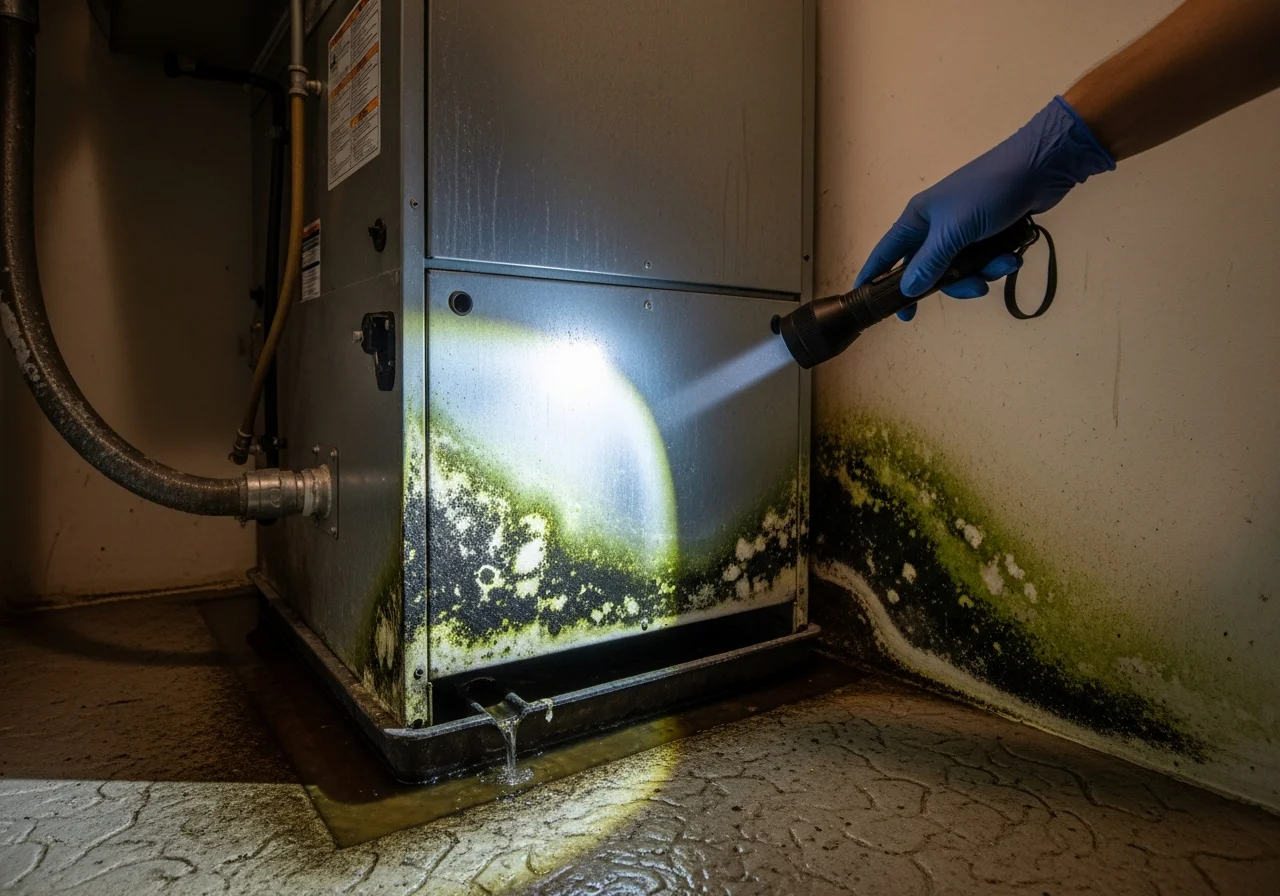
HVAC condensate overflow damage in a Coral Springs commercial building — mold growth in the ceiling cavity above, traced to a clogged rooftop unit drain line that allowed months of undetected moisture intrusion.
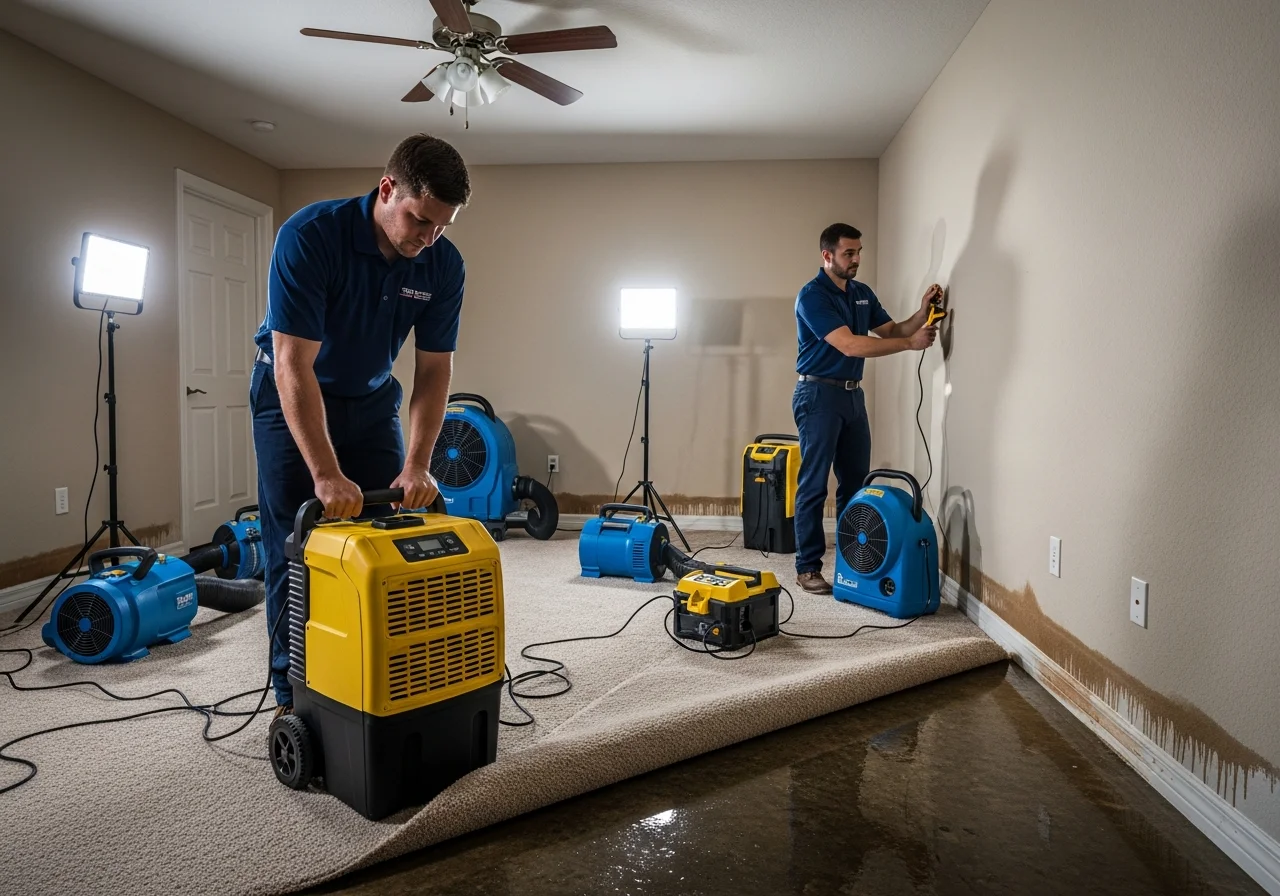
Palm Build dehumidification setup in a Coral Springs condo building — commercial-grade equipment drying multiple affected units simultaneously while containment barriers prevent moisture migration to adjacent spaces.
The Palm Build Difference
Why Coral Springs Properties Choose Palm Build
30-Minute Response from Deerfield Beach
Our Deerfield Beach operations hub is approximately 15 minutes from Coral Springs via the Sawgrass Expressway. We dispatch commercial-scale equipment — truck-mounted extractors, industrial dehumidifiers, large air scrubbers — 24/7/365. For major multi-unit condo losses or large commercial events, we activate additional crews from our Charlotte operations center. Every Coral Springs commercial corridor and condo community is within our 30-minute response zone.
Multi-Unit & Condo Complex Specialists
With 35% of Coral Springs housing in large apartment and condo complexes, multi-unit restoration is not a specialty we claim — it is the work we do every day. We understand how water migrates through shared plumbing risers, floor assemblies, and wall cavities between units. We know how to contain damage in a 20-unit building while keeping the other 1,100 units at Ramblewood East habitable. Our multi-unit protocols address the coordination complexity that single-family restoration contractors simply cannot manage.
Master Policy & HO-6 Insurance Expertise
Coral Springs' condo-heavy environment requires insurance knowledge that goes far beyond standard property claims. We understand the boundary between master policy and HO-6 coverage, document damage by responsibility zone from day one, create separate claim packages for each carrier, and manage the multi-carrier coordination that prevents coverage gaps. We work with Citizens, State Farm, Universal, Tower Hill, and all carriers active in Broward County condo associations.
HOA Board & Property Management Coordination
We work directly with HOA boards, property management companies, and association attorneys on every condo and common area restoration. We provide detailed cost breakdowns for board review, phased restoration options for reserve fund management, special assessment documentation when needed, and regular board-level progress reports. Our Xactimate estimates are formatted for Florida commercial claims processing and aligned with association declaration language.
Flat Roof & Commercial HVAC Expertise
Coral Springs' commercial buildings — strip centers, offices, schools, and condo buildings — share flat roof and commercial HVAC risk profiles. We understand how ponding water degrades built-up roofing membranes, how rooftop HVAC condensate overflow floods ceiling cavities, and how to coordinate with roofing contractors to stop the source while we address interior damage. Our equipment and drying protocols are calibrated for these specific building types.
Florida Condo Statute Compliance (718 & 720)
Florida Statutes 718 (Condominium Act) and 720 (HOA Act) create specific governance requirements for restoration decisions at Coral Springs associations. Board voting thresholds, reserve fund limitations, special assessment procedures, and unit-owner notification requirements all affect how restoration projects are approved and funded. Palm Build's documentation and cost presentation are designed to support boards through the statutory compliance process, not create additional complexity.
Common Questions
Coral Springs Commercial Restoration FAQ
How quickly can Palm Build respond to a commercial emergency in Coral Springs?
Our Deerfield Beach operations hub is approximately 15 minutes from Coral Springs via the Sawgrass Expressway. We typically arrive within 30 minutes with commercial-scale equipment including truck-mounted extractors, industrial dehumidifiers, and large-format air scrubbers. For major commercial and multi-unit condo losses, we activate additional crews. Coral Springs' high concentration of multi-unit housing means commercial-scale water events are more common here than in typical South Florida suburbs.
Who is responsible for restoration in a Coral Springs condo — the unit owner or the HOA?
Responsibility depends on what was damaged and where the water originated. In most Coral Springs condo associations, the HOA's master policy covers common elements — roofs, exterior walls, hallways, elevators, shared plumbing risers, and common area finishes. Individual unit owners carry HO-6 policies covering interior improvements, personal property, and fixtures from the drywall in. When a roof leak damages a unit, the master policy typically covers the source repair and common element damage, while the HO-6 covers interior unit damage. Palm Build documents damage by responsibility zone from day one, creating separate documentation packages for the master policy and each affected unit owner's HO-6 claim.
Does Palm Build handle Ramblewood East and other large condo complexes in Coral Springs?
Yes. Ramblewood East's 1,120 units represent the type of large-scale multi-unit restoration that is our specialty. These complexes have documented chronic issues including aging flat roofs, original plumbing reaching end-of-life, and HVAC condensate problems. We coordinate with HOA boards, property management companies, and multiple insurance carriers simultaneously. Our multi-unit protocol addresses water migration between units, common area containment, and phased restoration that keeps unaffected units habitable during the project.
What types of commercial properties does Palm Build restore in Coral Springs?
We restore all commercial property types in Coral Springs including condo and apartment common areas (lobbies, hallways, fitness centers, clubhouses, pool areas), strip centers and retail along University Drive and Sample Road, mid-rise office buildings, schools and educational facilities, restaurants and food service, medical offices, and HOA-managed community infrastructure. Each property type has specific regulatory, safety, and insurance requirements that inform our restoration approach.
How does commercial insurance work for Coral Springs condo and HOA properties?
Condo and HOA insurance in Florida involves two separate policies working together. The HOA master policy (often called the association policy) covers the building structure, common elements, and shared systems. Individual unit owners carry HO-6 policies covering their interior improvements and personal property. When damage crosses the boundary between common elements and individual units — extremely common in water events — both policies must be activated and coordinated. Palm Build's commercial claims team understands this dual-policy structure and creates separate documentation packages for each carrier, ensuring nothing falls through the gap between master policy and HO-6 coverage.
What makes flat roof commercial buildings in Coral Springs particularly vulnerable?
Flat roofs on Coral Springs commercial buildings — strip centers, mid-rise offices, condo buildings, and schools — are inherently prone to ponding water. Low spots trap rainfall that degrades roofing membranes over time. In Florida's subtropical climate with 61 inches of annual rainfall and year-round UV exposure, flat roof membranes degrade faster than in northern climates. Rooftop HVAC units create additional penetration points and condensate drainage demands. When a flat roof membrane fails, water enters the ceiling cavity and spreads laterally through insulation, often affecting thousands of square feet before becoming visible below.
Can Palm Build work during off-hours to minimize disruption to Coral Springs businesses and residents?
Yes. For commercial properties — strip centers, offices, schools — we schedule disruptive work outside business hours. For condo and apartment complexes, we coordinate with property management to minimize resident disruption, working in common areas during low-traffic hours and scheduling unit-specific work around resident schedules. Our Deerfield Beach hub operates 24/7, so we flex our work schedule around your operational requirements, not the other way around.
How does Palm Build handle the special assessment process after major condo damage in Coral Springs?
When restoration costs exceed HOA reserve funds — common after major water or storm events in large Coral Springs complexes — the board may need to levy a special assessment against unit owners. Palm Build provides detailed cost breakdowns by common element vs. unit-owner responsibility, phased restoration options that can spread costs over time, and insurance documentation designed to maximize master policy recovery before any assessment is levied. We work directly with HOA boards and their attorneys to ensure restoration scope, cost allocation, and insurance recovery are aligned before major financial decisions are made.
Trusted Vendors
Trusted local pros in Coral Springs
Outside our restoration scope, these are the vetted, licensed contractors we trust
alongside our work. Personally evaluated, reference-checked, and recommended by Palm
Build.
Commercial Damage in Coral Springs? We Are 15 Minutes Away.
Palm Build's commercial restoration team dispatches from Deerfield Beach in 30 minutes with industrial-scale equipment and deep expertise in Coral Springs' condo complexes, HOA common areas, strip centers, and commercial buildings. Master policy specialists. Flat roof experts. 24/7 emergency response.