Kitchens and bathrooms account for the majority of reconstruction projects because they contain concentrated plumbing, electrical, and the most expensive finishes in any home. Water damage, kitchen fires, and pipe bursts disproportionately affect these rooms.
Kitchen & Bathroom Rebuild Guide
Kitchen and Bathroom Reconstruction After Property Damage
Kitchens and bathrooms are the most complex rooms to reconstruct — they involve plumbing, electrical, cabinetry, tile, ventilation, and waterproofing that must all work together. This guide covers the rebuild process for these critical spaces and what to expect from start to finish.
- Kitchen
- Bathroom
- Cabinetry
- Plumbing
- Tile
- FL · NC
What you need to know
Kitchen reconstruction after fire typically involves: removing all damaged cabinets and countertops, assessing structural integrity of walls and ceiling, replacing electrical (which is dense in kitchens — outlets, lighting, appliance circuits), new plumbing if affected, and then rebuilding with new cabinets, countertops, backsplash, flooring, and fixtures.
Bathroom reconstruction after water damage requires special attention to waterproofing. Shower pans, tub surrounds, and floor-to-wall junctions must be properly waterproofed before tile is installed. Failure to waterproof correctly is the leading cause of recurring bathroom water damage.
Cabinet selection is a major decision during kitchen reconstruction. Stock cabinets (pre-built, standard sizes) install fastest. Semi-custom cabinets offer more options with 3-6 week lead times. Custom cabinets are built to specification with 6-12 week lead times. Insurance covers like kind and quality — if you had stock, insurance covers stock.
Plumbing and electrical rough-ins must be completed and inspected before any finishes are installed. In kitchens, this includes supply and drain lines for sinks, dishwashers, and ice makers, plus dedicated circuits for appliances. In bathrooms, this includes supply, drain, and vent lines plus GFCI-protected circuits and exhaust ventilation.
Countertop options during reconstruction include laminate (most affordable, insurance standard), quartz (durable, non-porous, mid-range), granite (natural stone, requires sealing), and solid surface (seamless, repairable). Templating happens after cabinets are installed, with fabrication and installation adding 1-3 weeks to the timeline.
Tile installation in wet areas is only as good as the substrate behind it. Cement board (Hardiebacker, Durock) replaces drywall around showers, tub surrounds, and behind sinks. A waterproof membrane — either sheet membrane (Kerdi) or liquid-applied (RedGard) — goes over the cement board before any tile is set. Without this layer, water migrates through grout lines into the wall cavity and causes the same damage you just repaired.
Kitchen and bathroom reconstruction is where the "like kind and quality" insurance rule creates the most homeowner questions. If your kitchen had builder-grade laminate counters and you want quartz, insurance covers up to laminate cost and you pay the upgrade difference. We help you understand the exact dollar gap so you can make informed material decisions before ordering.
From the Field
What this work actually looks like
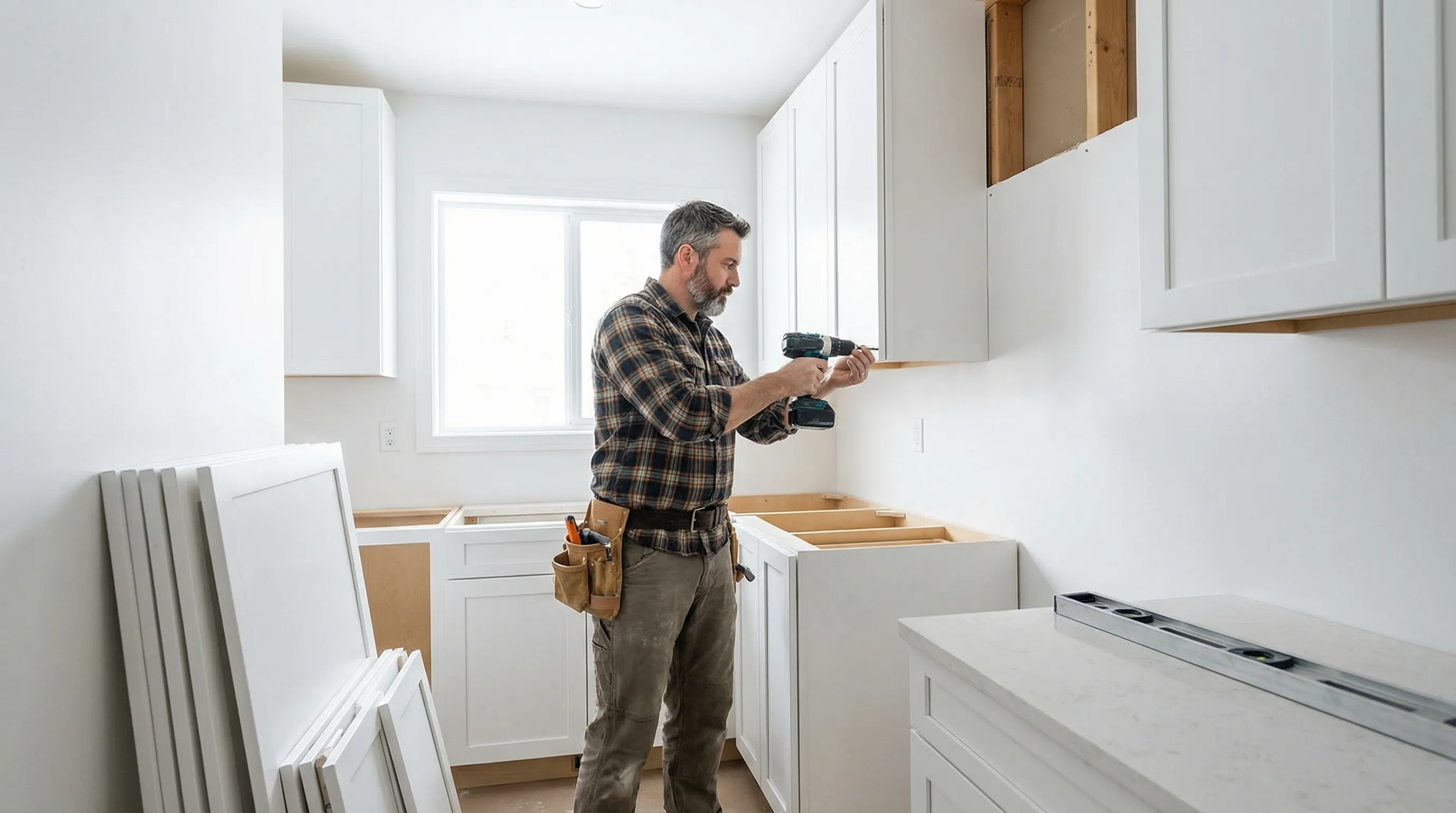
Cabinet installation during kitchen rebuild
Upper and lower cabinets are shimmed, leveled, and screwed into wall studs. Proper cabinet installation requires level walls — which is why drywall must be finished before cabinets arrive.
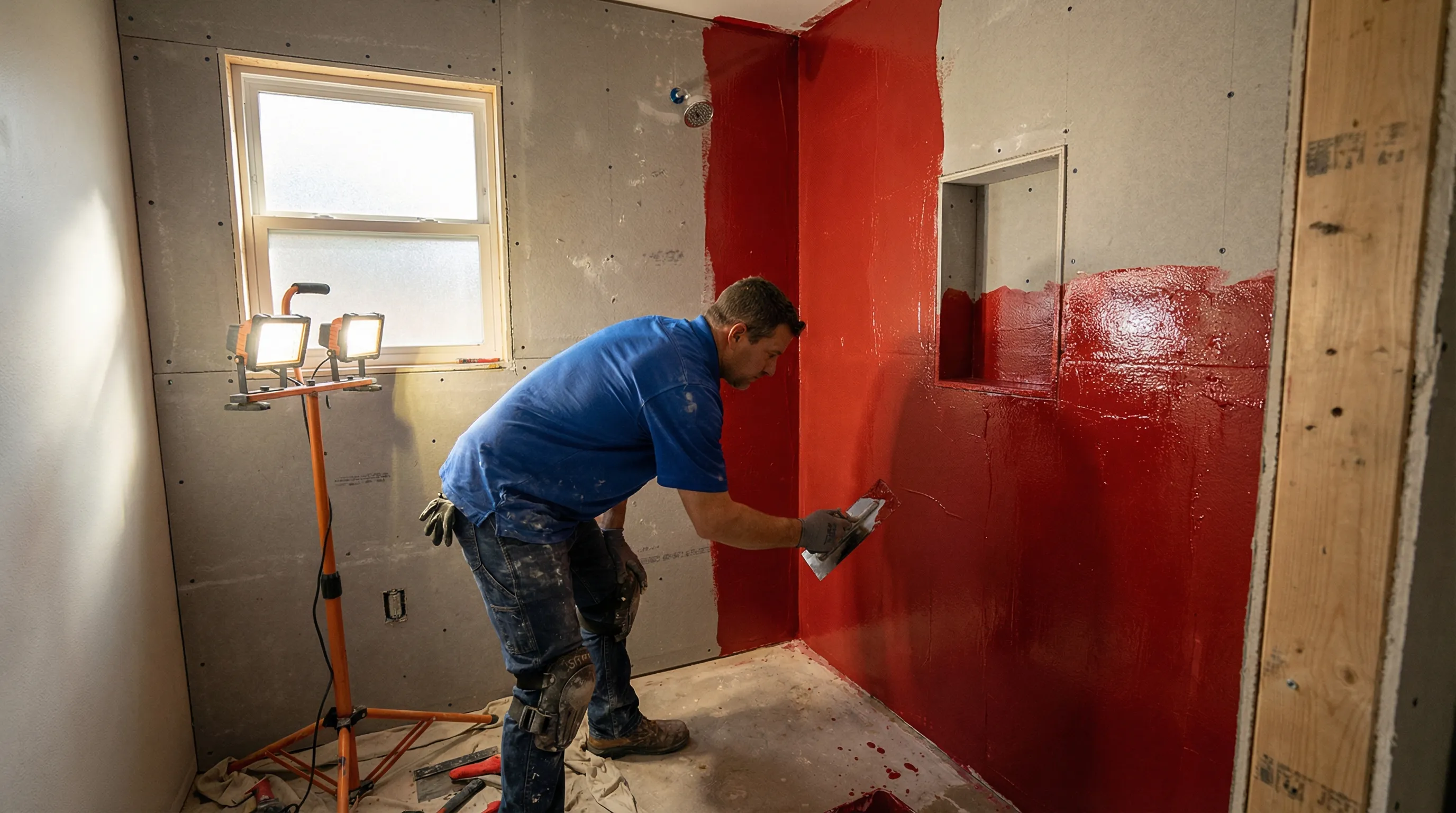
Waterproof membrane application in shower
Liquid-applied waterproofing (RedGard) seals cement board before tile installation. This critical step prevents water from reaching the wall cavity — the #1 cause of recurring bathroom damage.
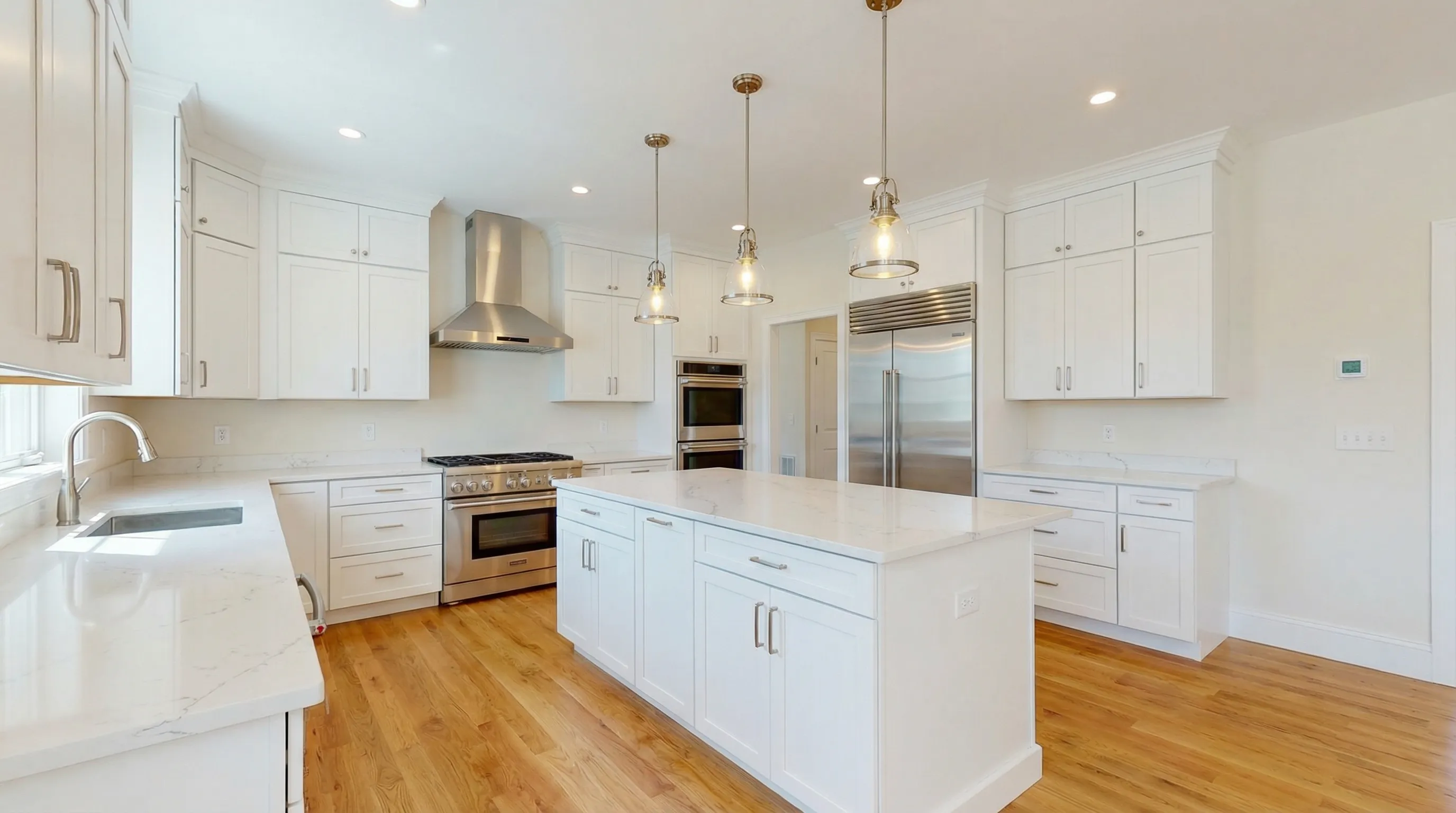
Completed kitchen reconstruction
From charred walls to a fully finished kitchen — new cabinets, quartz countertops, tile backsplash, appliances, and lighting. The result of coordinating trades, inspections, and material lead times.
Professional Process
How this work is done right
Each step ensures quality, code compliance, and a finished result that lasts.
Demolition and assessment
Remove all damaged cabinets, countertops, tile, flooring, and fixtures. Assess framing, subfloor, plumbing, and electrical. Document the existing layout and any modifications needed. This phase reveals hidden damage that affects scope.
Rough-in: plumbing, electrical, HVAC
Install new plumbing supply and drain lines, electrical circuits, and HVAC modifications. Kitchens may need dedicated appliance circuits. Bathrooms need GFCI protection and exhaust ventilation. All rough-ins are inspected before closing walls.
Drywall, cabinets, and tile
Install moisture-resistant drywall, hang and level cabinets, and install tile in wet areas with proper waterproofing. Countertops are templated after cabinets are set. Backsplash tile follows countertop installation.
Fixtures, appliances, and finishing
Install sinks, faucets, toilets, lighting, outlets, and appliances. Connect plumbing and electrical. Apply caulk, grout sealer, and touch-up paint. Final inspection and walkthrough confirm everything works properly.
Cost Guidance
What to expect on pricing
Costs vary by damage extent, material selections, and location. These ranges reflect typical projects in our service areas.
Kitchen reconstruction
$15,000 – $60,000+
Complete kitchen rebuild including cabinets, countertops, flooring, plumbing, electrical, and finishes. Stock cabinetry at the lower end, semi-custom or custom at the higher end.
Bathroom reconstruction
$8,000 – $30,000+
Complete bathroom rebuild including tile, vanity, plumbing fixtures, lighting, ventilation, and waterproofing. Walk-in shower conversions and high-end finishes at the upper end.
Cabinetry (kitchen, installed)
$5,000 – $25,000
Stock cabinets at the lower end, semi-custom in the middle, full custom at the high end. Includes installation and hardware. Soft-close is standard on most new cabinets.
Countertops (installed)
$2,000 – $8,000
Laminate at the low end, quartz and granite in the middle to high range. Includes templating, fabrication, and installation. Edge profiles and sink cutouts included.
Regional considerations
Florida
Humidity-resistant materials are essential in Florida kitchens and bathrooms. Plywood cabinet boxes outperform particleboard in humid climates. Exhaust fans should be oversized for tropical humidity. Tankless water heaters are popular during bathroom reconstruction for space savings.
North Carolina
Energy code requirements apply to water heaters, lighting, and ventilation when bathrooms and kitchens are reconstructed. GFCI and AFCI protection requirements have expanded — reconstruction triggers compliance with current electrical code. Freeze protection for exterior plumbing walls is important.
South Carolina
Coastal SC properties benefit from corrosion-resistant fixtures and hardware in kitchens and bathrooms. Salt air accelerates deterioration of standard chrome and steel finishes. PVC and stainless steel are preferred for plumbing in coastal environments.
Related Guides
Connect this work with the bigger picture
Ready to start your rebuild?
Get a free reconstruction estimate. We assess damage, develop scope with your insurance company, and manage the entire rebuild.