Drywall damaged by water must be replaced when it has been saturated for more than 48 hours, shows visible mold growth, has lost structural integrity (soft or crumbling), or has been contaminated by Category 2 or 3 water. Surface staining alone does not always require replacement — a professional moisture reading determines whether the board is salvageable.
Drywall Repair & Replacement Guide
Drywall Restoration After Water, Fire, and Mold Damage
Drywall is one of the most commonly replaced materials after property damage. This guide covers when drywall needs replacing versus repairing, how texture matching works, moisture verification requirements, and what to expect during the process.
- Water Damage
- Fire Damage
- Mold Remediation
- Texture Matching
- FL · NC
What you need to know
Fire-damaged drywall is replaced based on char depth and structural compromise. Surface smoke staining can sometimes be sealed and repainted, but heat-damaged boards that are cracked, delaminated, or charred through must be removed to studs. Smoke odor trapped in drywall paper facing often requires full replacement even when the board appears intact.
After mold remediation, all drywall that was removed during containment must be replaced. Mold-resistant drywall (green board or purple board) is recommended for areas prone to moisture — bathrooms, kitchens, basements, and any wall cavity that previously had mold.
Texture matching is one of the most visible aspects of drywall repair. Orange peel, knockdown, smooth, skip trowel, and popcorn ceiling textures each require different techniques. When only a portion of a wall is replaced, matching the existing texture seamlessly is critical to a professional result.
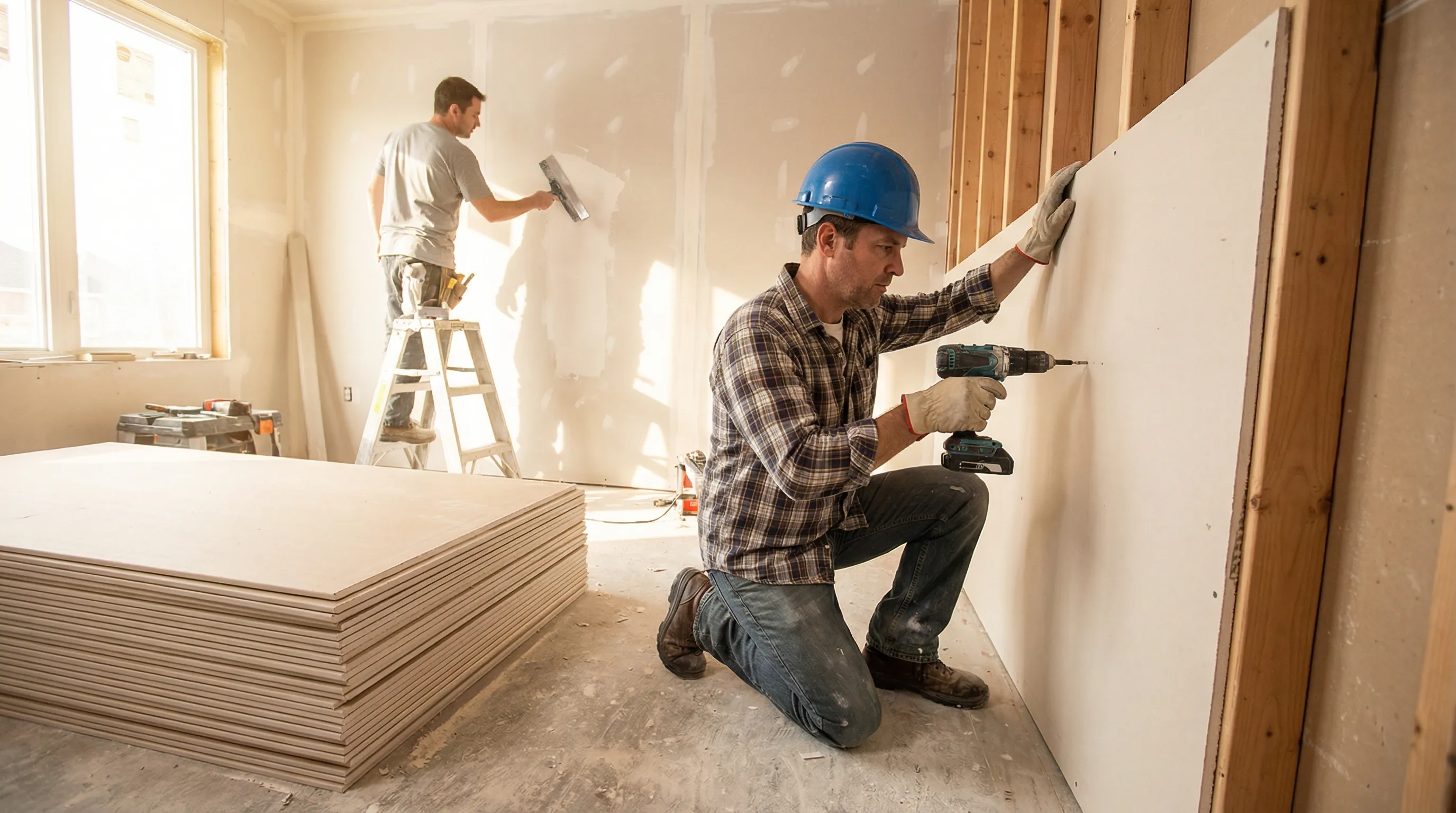
Proper drywall installation follows a specific sequence: hanging boards, taping seams with joint compound, applying multiple coats of mud, sanding, priming, and painting. Rushing this process — especially skipping coats or sanding steps — leads to visible seams, nail pops, and cracking.
Insurance typically covers drywall replacement at "like kind and quality." If your existing drywall was standard 1/2-inch board, insurance covers the same. Upgrading to moisture-resistant or fire-rated board is available — you pay the material difference. Code upgrades (such as fire-rated drywall in garages) may be covered under Ordinance and Law provisions.
Drywall thickness matters during reconstruction. Standard interior walls use 1/2-inch board. Ceilings over 16-inch joist spacing often require 5/8-inch board to prevent sagging. Fire-rated walls (garages, furnace rooms, unit separations) require 5/8-inch Type X drywall. Mixing thicknesses creates uneven surfaces at transitions — something easily avoided by measuring before ordering.
Behind every drywall replacement is an opportunity to inspect and upgrade what is inside the wall cavity. When walls are opened, electricians can add outlets or upgrade wiring, HVAC contractors can seal duct connections, and insulation can be improved. Addressing these items during drywall replacement costs a fraction of opening finished walls later.
From the Field
What this work actually looks like
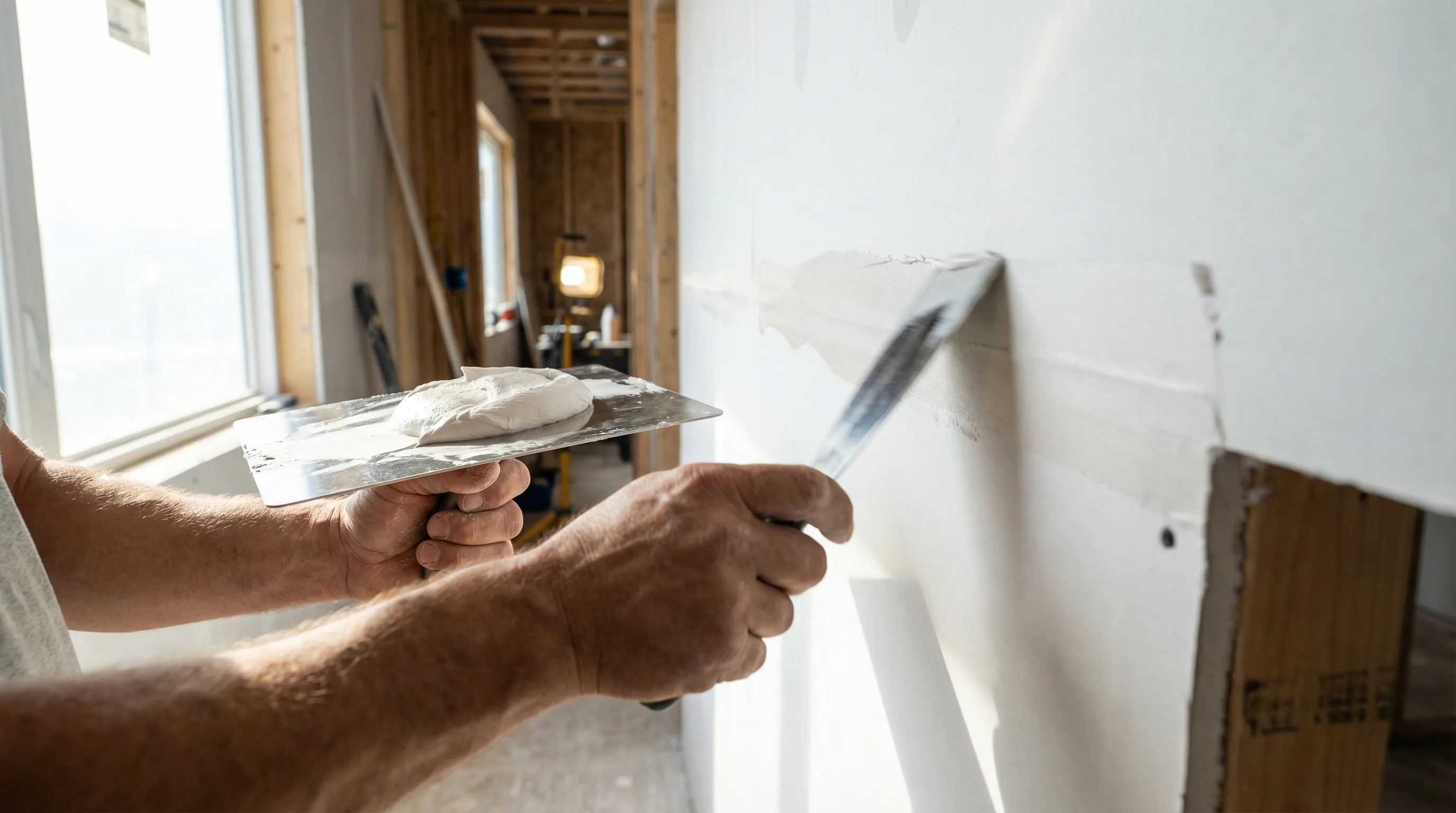
Taping and mudding new drywall seams
Three coats of joint compound are applied and sanded between each coat to create invisible seams. Rushing this process is the most common cause of visible joints.
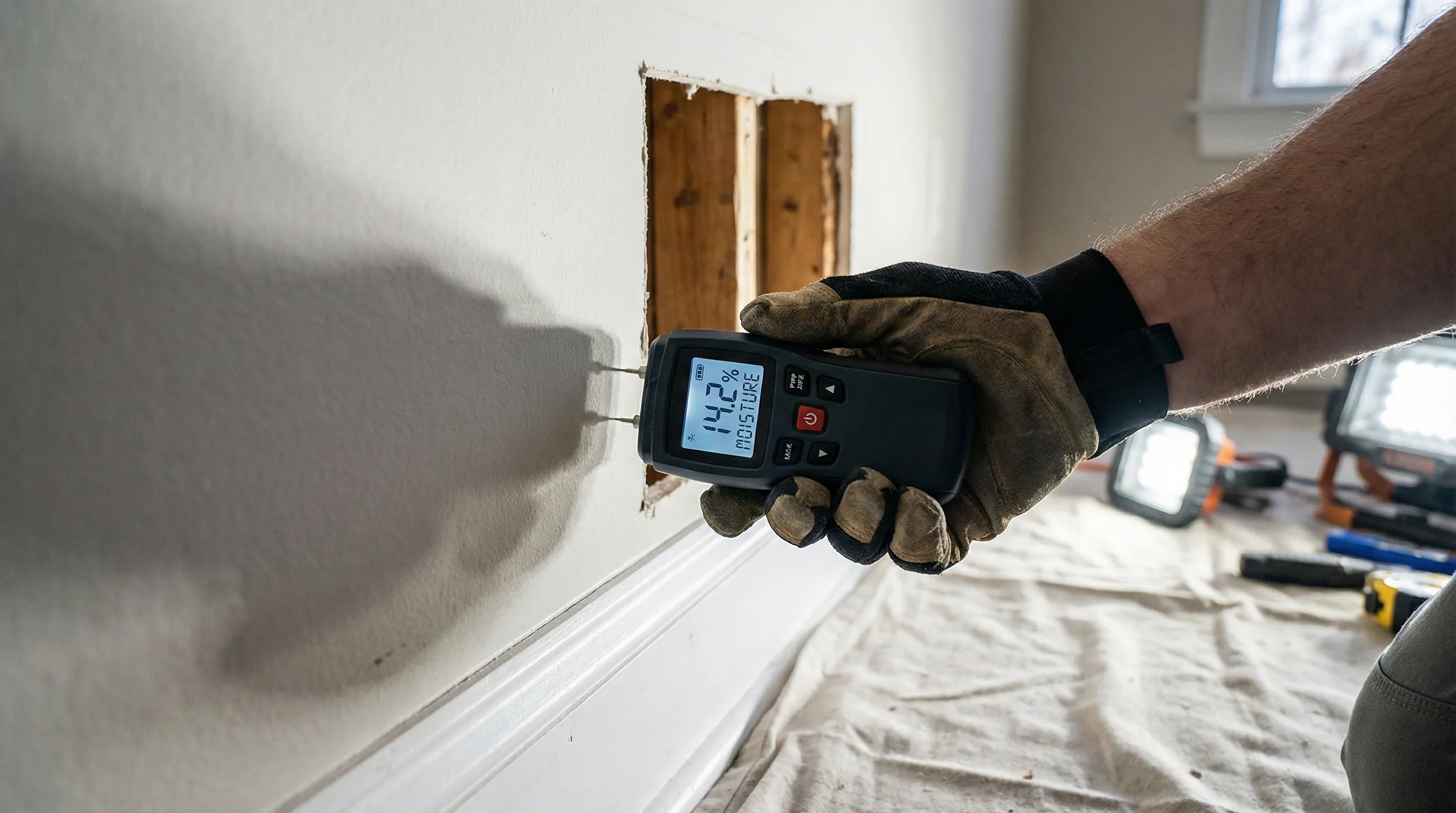
Moisture verification before closing walls
Pin-type moisture meters confirm wall cavities are dry before new drywall is installed. Readings above 16% mean the cavity needs more drying time.
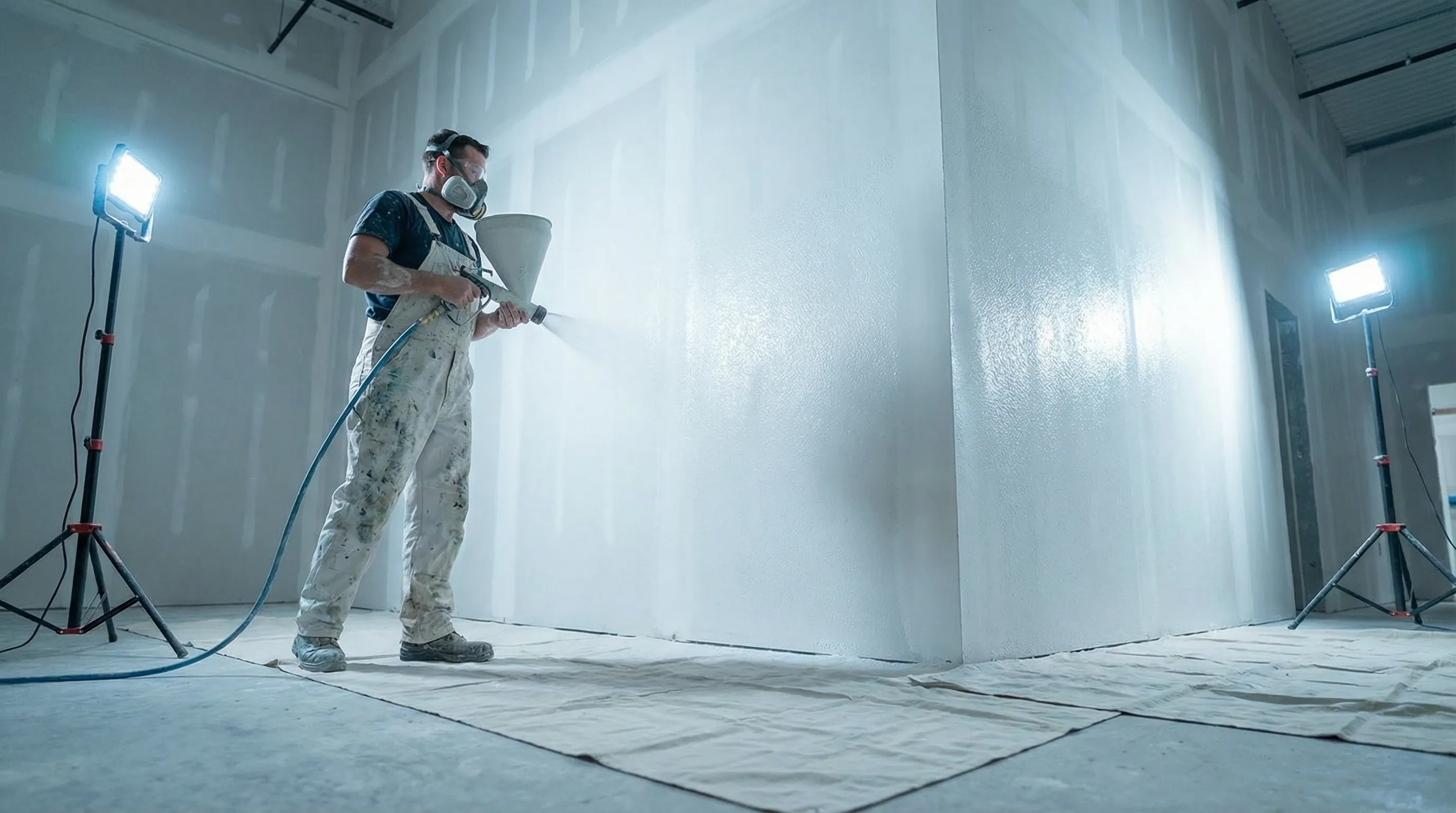
Texture matching to blend new with existing
Hopper gun technique replicates the existing wall texture — orange peel, knockdown, or custom patterns — so repairs are invisible after painting.
Professional Process
How this work is done right
Each step ensures quality, code compliance, and a finished result that lasts.
Damage assessment and moisture verification
Moisture meters confirm whether drywall is salvageable or needs replacement. We map the extent of damage and document the scope for insurance. Mold-affected areas require clearance testing before new drywall is installed.
Removal and preparation
Damaged drywall is removed to the nearest stud edge for clean seams. We inspect the wall cavity for hidden damage to insulation, wiring, or framing. Any cavity issues are addressed before new board goes up.
Installation and finishing
New drywall is hung, taped, and finished with three coats of joint compound. Each coat is sanded smooth. Texture is matched to the existing walls. The process takes 3-5 days to allow proper drying between coats.
Priming and painting
New drywall is primed with PVA primer to seal the surface, then painted to match existing walls. Color matching uses the original paint or a sample from an undamaged area. Two coats ensure consistent coverage.
Cost Guidance
What to expect on pricing
Costs vary by damage extent, material selections, and location. These ranges reflect typical projects in our service areas.
Drywall replacement (per sheet)
$60 – $120
Standard 4x8 sheet installed, taped, mudded, and sanded. Does not include texture or paint. Mold-resistant board adds $10-20 per sheet.
Full room drywall replacement
$1,500 – $5,000
Average room (12x12) with ceiling. Includes removal of damaged board, new installation, finishing, texture matching, and painting.
Texture matching (per wall)
$200 – $600
Varies by texture type. Smooth finish is least expensive. Custom textures like skip trowel require more skill and time.
Fire-rated Type X (per sheet)
$75 – $140
5/8-inch fire-rated board required in garages, furnace rooms, and unit separation walls. Slightly higher cost than standard board, often covered by code upgrade provisions.
Regional considerations
Florida
Humidity requires mold-resistant drywall in all wet areas. Fire-rated Type X drywall is required in garage walls and ceilings. Post-hurricane reconstruction often involves full-home drywall replacement due to water intrusion.
North Carolina
Energy code requirements may require insulation upgrades when walls are opened for drywall replacement. Fire-rated drywall is required in attached garages and shared walls in multi-family construction.
South Carolina
Coastal properties may require mold-resistant drywall throughout due to high ambient humidity. Properties in flood zones may need to document drywall replacement as part of substantial improvement calculations.
Related Guides
Connect this work with the bigger picture
Ready to start your rebuild?
Get a free reconstruction estimate. We assess damage, develop scope with your insurance company, and manage the entire rebuild.