Water-damaged flooring must be replaced when hardwood has cupped, buckled, or delaminated beyond repair; when carpet has been saturated by Category 2 or 3 water; when tile grout has deteriorated allowing water into the subfloor; or when LVP has trapped moisture underneath. The subfloor condition underneath is often more important than the surface material.
Flooring Replacement Guide
Flooring Replacement After Water, Fire, and Storm Damage
Flooring is often the first casualty of property damage and the most visible part of reconstruction. This guide covers subfloor assessment, material options, moisture testing requirements, and what insurance covers for different flooring types.
- Hardwood
- Tile
- Carpet
- LVP
- Subfloor Repair
- FL · NC
What you need to know
Subfloor assessment is the first step. Plywood or OSB subflooring that has swelled, delaminated, or developed mold must be replaced before any new flooring is installed. Walking on the existing subfloor and checking with a moisture meter reveals whether it is structurally sound and dry enough for new material.
Fire-damaged flooring is replaced based on heat exposure, char depth, and smoke contamination. Hardwood near a fire area may appear undamaged but carry deep smoke odor that resurfaces after refinishing. Carpet and pad absorb smoke particles and typically require full replacement even in rooms adjacent to the fire.
Material options during reconstruction include: solid hardwood (most durable, can be refinished), engineered hardwood (more stable in humid climates), luxury vinyl plank (waterproof, cost-effective), porcelain tile (excellent for wet areas), and carpet (bedrooms, offices). Each has different subfloor requirements and installation methods.
Insurance covers "like kind and quality" — if you had standard carpet, insurance covers comparable carpet. Upgrading to hardwood means you pay the difference. However, if your insurance adjuster undervalues your existing flooring, we can supplement with documentation of the original material quality.
Moisture testing before installation is non-negotiable. Concrete subfloors must test below 75% relative humidity (ASTM F2170) or 3 lbs per MVRR. Wood subfloors must be below 12% moisture content. Installing flooring over a wet subfloor voids manufacturer warranties and leads to failure within months.
Acclimation is required for most flooring materials. Solid hardwood needs 3 to 7 days in the installation environment to reach equilibrium moisture content. Engineered hardwood typically needs 48 hours. LVP should sit at room temperature for 48 hours. Skipping acclimation causes expansion, buckling, and gaps after installation — and manufacturers will deny warranty claims.
Transitions between rooms with different flooring types or heights require proper T-molding, reducers, or threshold strips. Poor transitions are trip hazards, look unprofessional, and allow moisture to travel between rooms. During reconstruction, planning transitions before installation prevents costly rework.
From the Field
What this work actually looks like
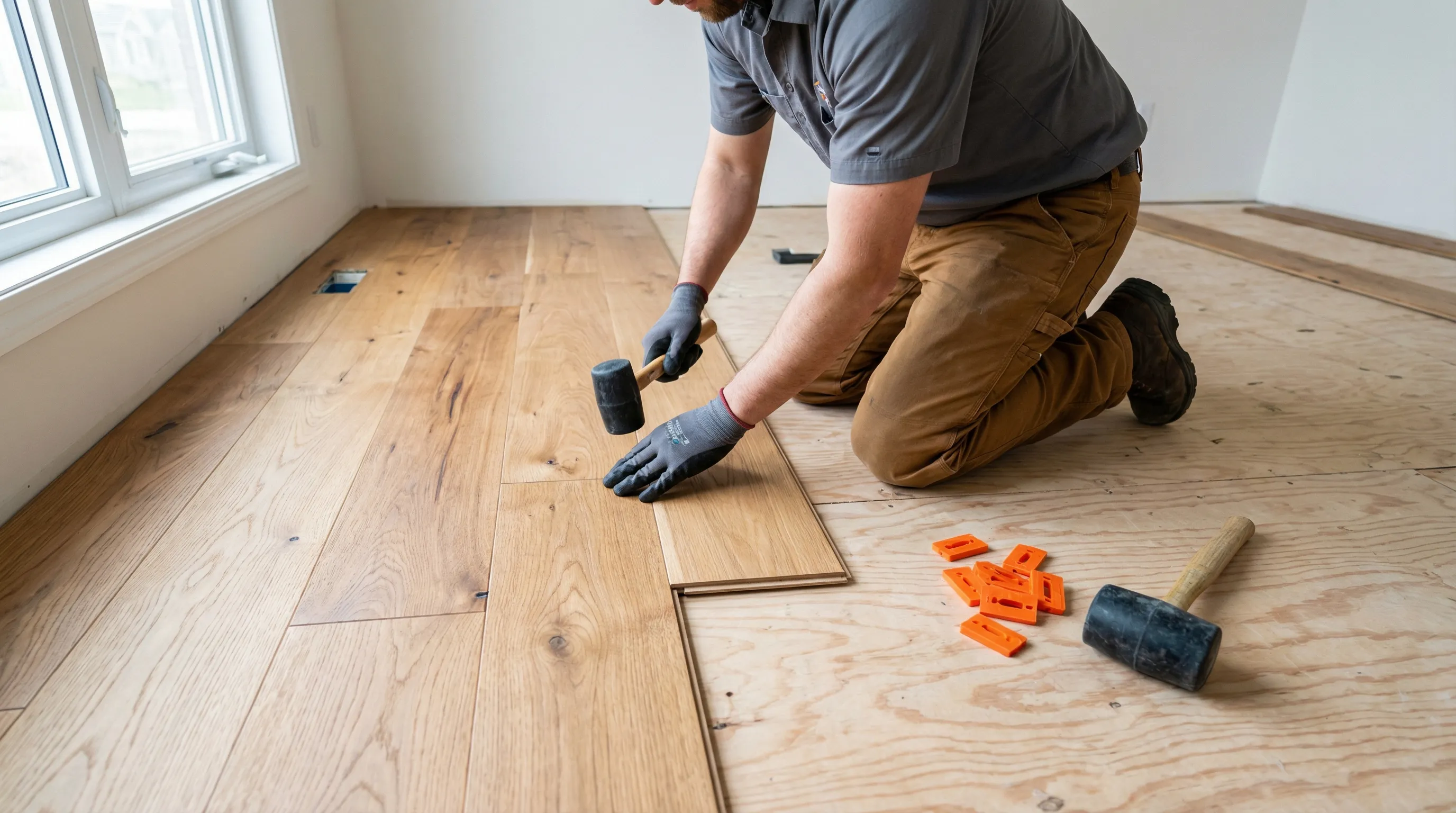
Hardwood plank installation
Tongue-and-groove hardwood being installed over a verified dry subfloor. Proper acclimation and subfloor moisture testing precede every installation.
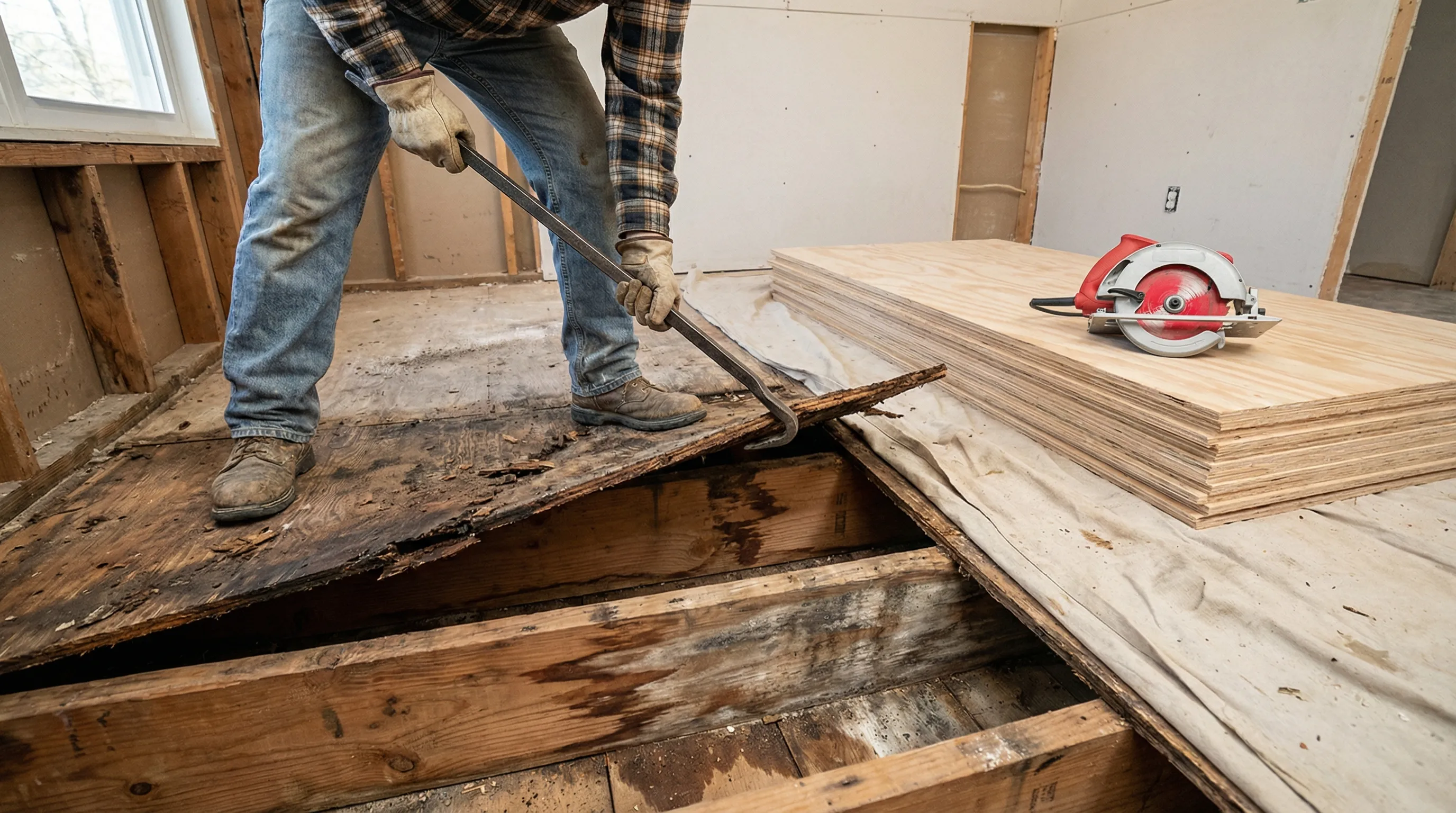
Subfloor replacement after water damage
Water-swelled OSB subfloor must be replaced before new flooring. Joists are inspected for decay and moisture readings are taken to confirm dry conditions.
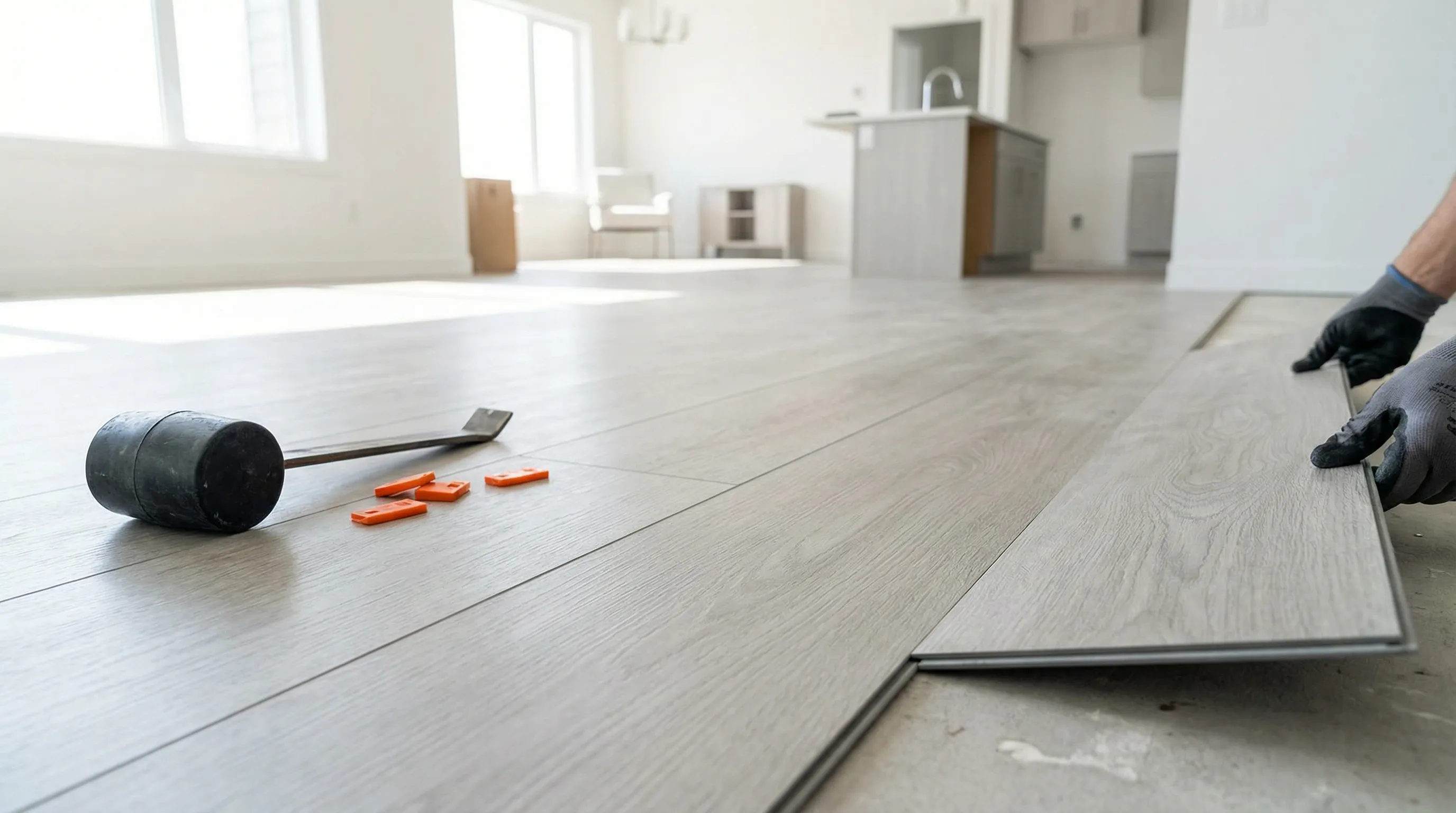
LVP installation — waterproof and durable
Click-lock luxury vinyl plank is ideal for flood-prone areas and slab-on-grade construction. Expansion gaps at walls allow for seasonal movement.
Professional Process
How this work is done right
Each step ensures quality, code compliance, and a finished result that lasts.
Subfloor assessment and preparation
Remove damaged flooring to inspect the subfloor. Moisture test all areas. Replace swelled, delaminated, or mold-affected subfloor sections. Level the subfloor to manufacturer specifications for the chosen flooring material.
Material selection and ordering
Select replacement flooring based on the room function, climate, and budget. For insurance claims, we document the original material quality and match or upgrade. Materials are ordered with lead time factored into the project schedule.
Installation
Each material has specific installation requirements: hardwood needs acclimation (3-7 days), tile requires proper thinset and grout, LVP needs flat subfloor and expansion gaps, carpet needs clean, dry pad. We follow manufacturer specifications for every material.
Finishing and transitions
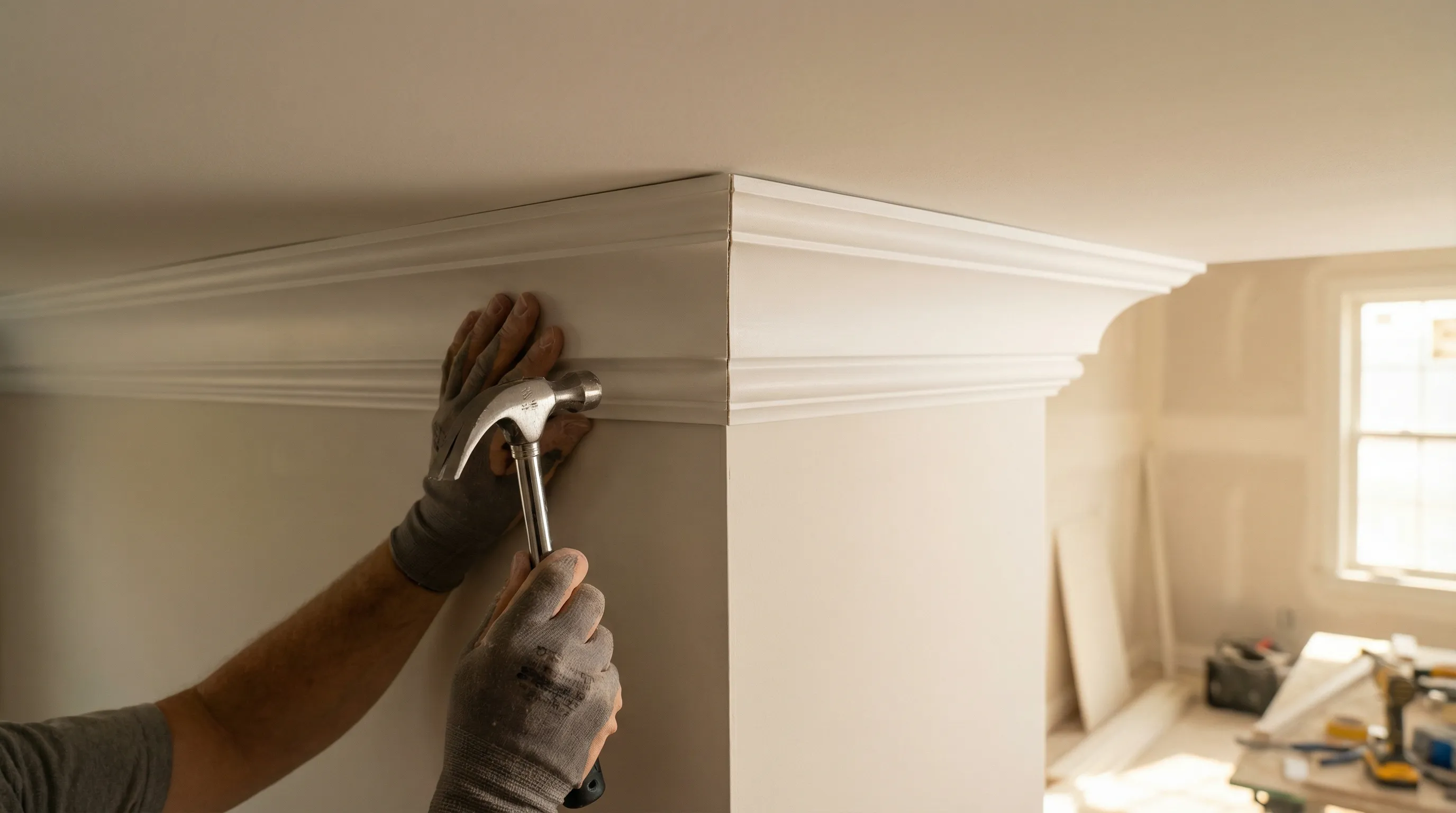
Install baseboards, shoe molding, and transition strips. Sand and finish hardwood (if applicable). Clean all surfaces. Verify the floor is level, secure, and properly transitioned to adjacent areas. Final walkthrough confirms quality.
Cost Guidance
What to expect on pricing
Costs vary by damage extent, material selections, and location. These ranges reflect typical projects in our service areas.
Hardwood flooring (installed)
$8 – $18 per sq ft
Solid or engineered. Includes removal of damaged flooring, subfloor prep, installation, and finishing. Wide plank and exotic species at the higher end.
Luxury vinyl plank (installed)
$4 – $10 per sq ft
Waterproof and durable. Excellent for flood-prone areas and slab-on-grade construction. Includes subfloor prep and installation.
Tile (installed)
$8 – $20 per sq ft
Porcelain or ceramic. Includes underlayment, thinset, tile, and grout. Large format tile and custom patterns at the higher end.
Subfloor replacement
$3 – $8 per sq ft
Removal of damaged subfloor and installation of new 3/4" plywood. Includes leveling compound if needed. Often an additional cost beyond flooring.
Regional considerations
Florida
Slab-on-grade construction is common. Concrete moisture testing is critical before any flooring installation. Engineered hardwood and LVP perform better than solid hardwood in high-humidity environments. Tile is excellent for hurricane-prone areas.
North Carolina
Wood frame construction with crawl spaces means subfloor ventilation and moisture barriers affect flooring performance. Solid hardwood is popular but requires proper crawl space conditions. Post-flood subfloor replacement is common in basement and first-floor applications.
South Carolina
Coastal properties face elevated humidity and flooding risk. Waterproof flooring (LVP, tile) is recommended for ground-floor coastal installations. Properties in flood zones may need to factor flooring replacement into substantial improvement calculations.
Related Guides
Connect this work with the bigger picture
Ready to start your rebuild?
Get a free reconstruction estimate. We assess damage, develop scope with your insurance company, and manage the entire rebuild.