Structural damage means the components that hold up your building — walls, beams, joists, rafters, headers, and foundation — have been compromised. This is different from cosmetic damage. A home can look terrible from smoke or water staining while being structurally sound, or look relatively normal while having critical framing damage hidden inside walls.
Structural Repair Guide
Structural Repair After Fire, Water, and Storm Damage
Structural damage is the most critical component of any reconstruction project. This guide covers how structural damage is assessed, when engineering is required, what framing repairs involve, and how code compliance affects your rebuild scope.
- Framing
- Load-Bearing Walls
- Joist Repair
- Engineering
- FL · NC
What you need to know
Fire weakens wood framing by charring. The rule of thumb is that each 1/8 inch of char reduces load capacity by roughly 20%. A floor joist charred 1/4 inch deep may have lost 40% of its strength. Structural engineers use char depth measurements, deflection testing, and load calculations to determine what must be replaced versus reinforced.
Water damage to structural members happens two ways: immediate saturation weakens connections and fasteners, and prolonged moisture causes rot and fungal decay. Floor joists above crawl spaces and wall studs in flooded areas are the most common structural casualties. Moisture readings above 28% in framing indicate active decay risk.
Storm damage to structure includes roof framing failure (rafters, trusses), wall racking from wind pressure, foundation shifting, and impact damage from fallen trees or debris. Hurricane-force winds create uplift that separates roofs from walls — the connections between these elements are the most critical structural components in wind-prone areas.
Structural engineering assessments are required when: load-bearing walls need modification, foundation damage is suspected, floor deflection exceeds acceptable limits, or the scope of framing replacement is significant. A licensed PE (Professional Engineer) provides calculations and stamped drawings that guide the rebuild and satisfy building inspectors.
Structural repair during reconstruction is not just about restoring what was there — current building codes often require upgrades. Hurricane straps, reinforced headers, proper nail patterns, and engineered connections may all be required even if the original structure predated these requirements.
Load path continuity is the fundamental principle of structural repair. Forces from the roof must transfer through walls, through the floor system, and into the foundation in a continuous chain. A single weak link — a missing hurricane strap, a rotted sill plate, or a compromised header — can cause disproportionate failure under load. Every structural repair we perform considers the full load path, not just the damaged member in isolation.
Temporary shoring is required before any structural member is removed or modified. Removing a damaged load-bearing stud without shoring transfers its load to adjacent members and can cause cascading failure. We install temporary support posts, beams, or wall bracing before any demolition of structural components, and that shoring stays in place until permanent repairs pass inspection.
From the Field
What this work actually looks like
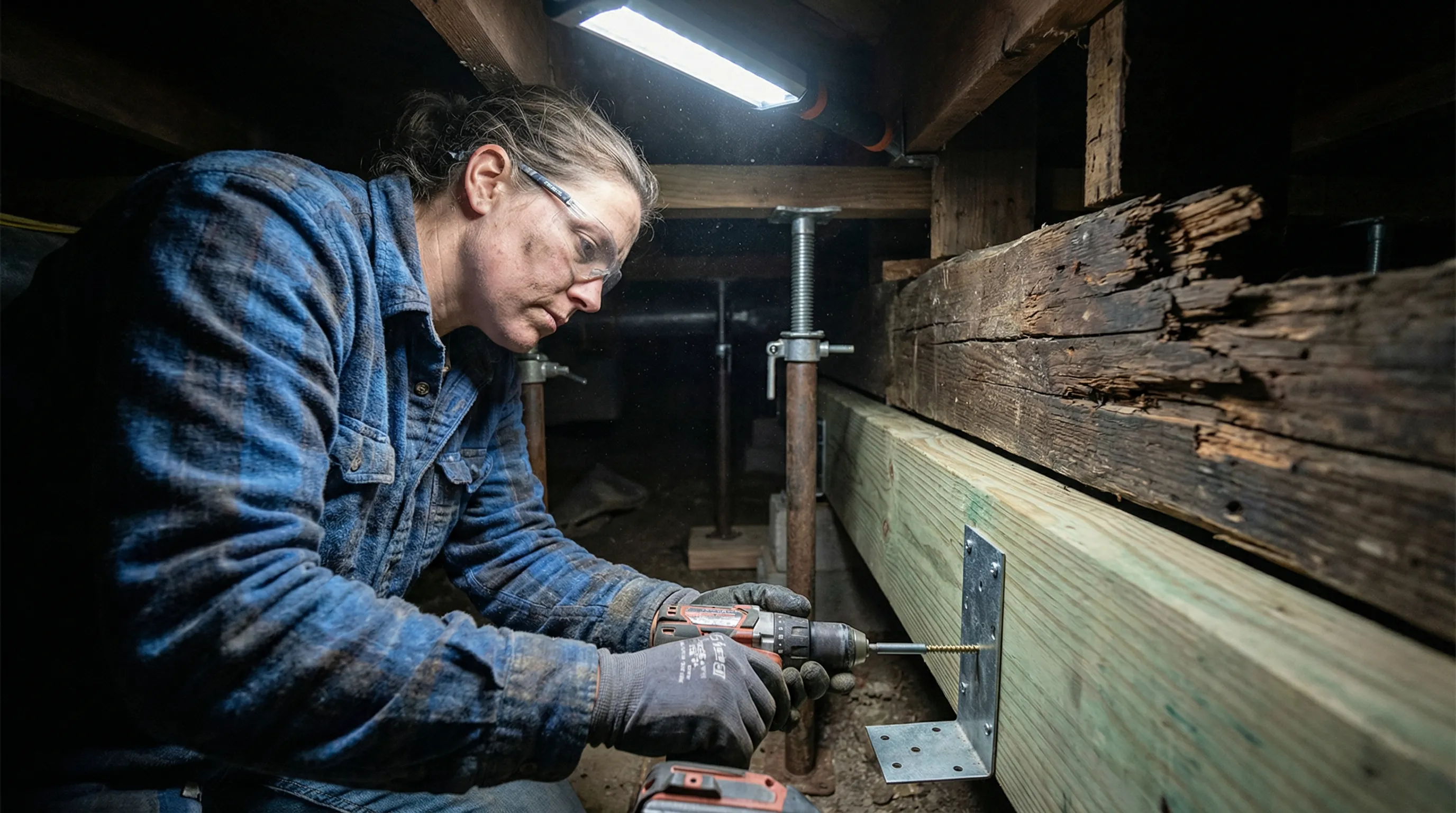
Joist sistering to restore load capacity
Pressure-treated sister joists are bolted alongside damaged members using structural fasteners. Metal joist hangers secure connections to beams per engineering specs.
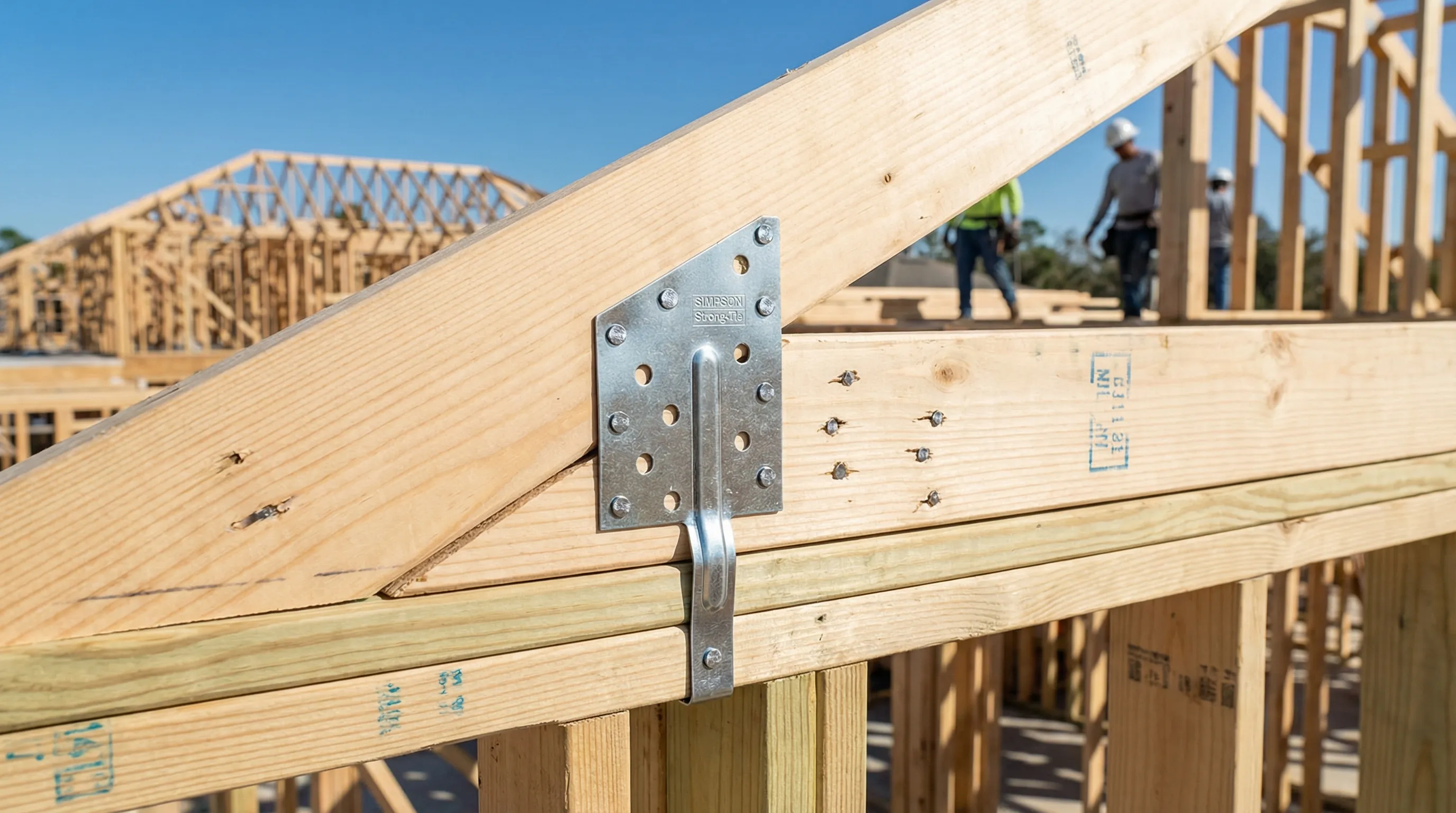
Hurricane strap installation — Florida code requirement
Simpson Strong-Tie connectors create a continuous load path from roof to foundation. Proper nail count and pattern are critical — inspectors check every connection.
New framing during major reconstruction
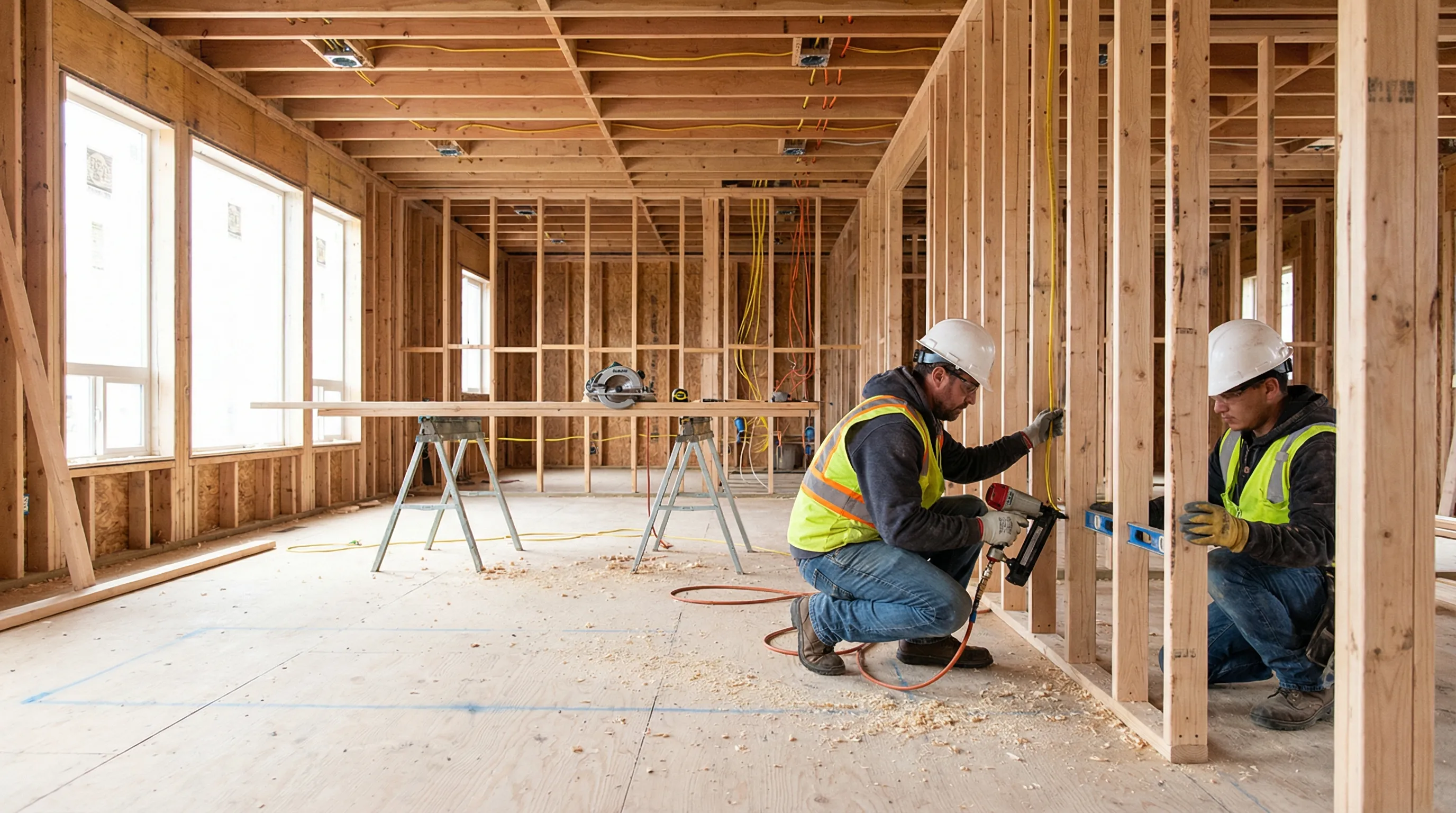
Complete re-framing after fire or storm damage follows engineered plans with current code requirements for member sizing, spacing, and connections.
Professional Process
How this work is done right
Each step ensures quality, code compliance, and a finished result that lasts.
Structural assessment
Expose damaged framing by removing drywall, insulation, and finishes. Document damage with photos, measurements, and moisture readings. Determine whether engineering assessment is required based on damage extent and location of affected members.
Engineering and permits
If required, a licensed structural engineer inspects the site and provides stamped calculations and drawings. Building permits are pulled for structural work. The engineering drawings become the blueprint for repair and the standard for inspections.
Framing repair and reinforcement
Replace or reinforce damaged structural members per engineering specifications. This includes sistering joists, installing new headers, replacing studs, adding hurricane straps, and reinforcing connections. All fasteners and connectors meet code requirements.
Inspection and verification
Building inspector verifies all structural work before walls are closed. Framing inspection must pass before insulation and drywall can proceed. Any corrections are made immediately. Final structural documentation is maintained for your records and insurance.
Cost Guidance
What to expect on pricing
Costs vary by damage extent, material selections, and location. These ranges reflect typical projects in our service areas.
Structural engineering assessment
$500 – $2,500
Licensed PE inspection, calculations, and stamped drawings. Cost depends on complexity and scope. Required for load-bearing modifications and significant framing replacement.
Floor joist repair (per joist)
$200 – $800
Sistering or replacement of individual joists. Includes removal access, new lumber, fasteners, and hardware. Multiple joists reduce per-unit cost.
Load-bearing wall reconstruction
$3,000 – $15,000
Temporary support, removal of damaged section, new framing with proper headers and posts, and connection hardware. Engineering required.
Roof framing repair
$2,000 – $10,000+
Rafter or truss repair, decking replacement, hurricane strap installation. Scope varies significantly by damage extent. Full re-framing at the higher end.
Regional considerations
Florida
Florida Building Code (FBC) requires hurricane-rated connections for all structural components. Roof-to-wall, wall-to-foundation, and rafter-to-ridge connections must meet current wind speed requirements for the specific zone. Wind mitigation inspections are separate from building inspections and affect insurance rates.
North Carolina
Wood frame construction is standard. Structural repairs must meet NC Building Code which references IBC/IRC. Seismic design categories apply in western NC. Energy code requirements may affect insulation and vapor barrier installation when walls are opened for structural work.
South Carolina
Coastal construction in SC follows wind-speed design requirements similar to Florida. Properties in the coastal zone have specific structural connection requirements. Historic district properties (Charleston, Beaufort) may have additional structural preservation requirements that affect repair methods.
Related Guides
Connect this work with the bigger picture
Ready to start your rebuild?
Get a free reconstruction estimate. We assess damage, develop scope with your insurance company, and manage the entire rebuild.