HOLLYWOOD FL — 24/7 HURRICANE & STORM DAMAGE RESPONSE
Storm & Hurricane Damage Restoration in Hollywood, FL
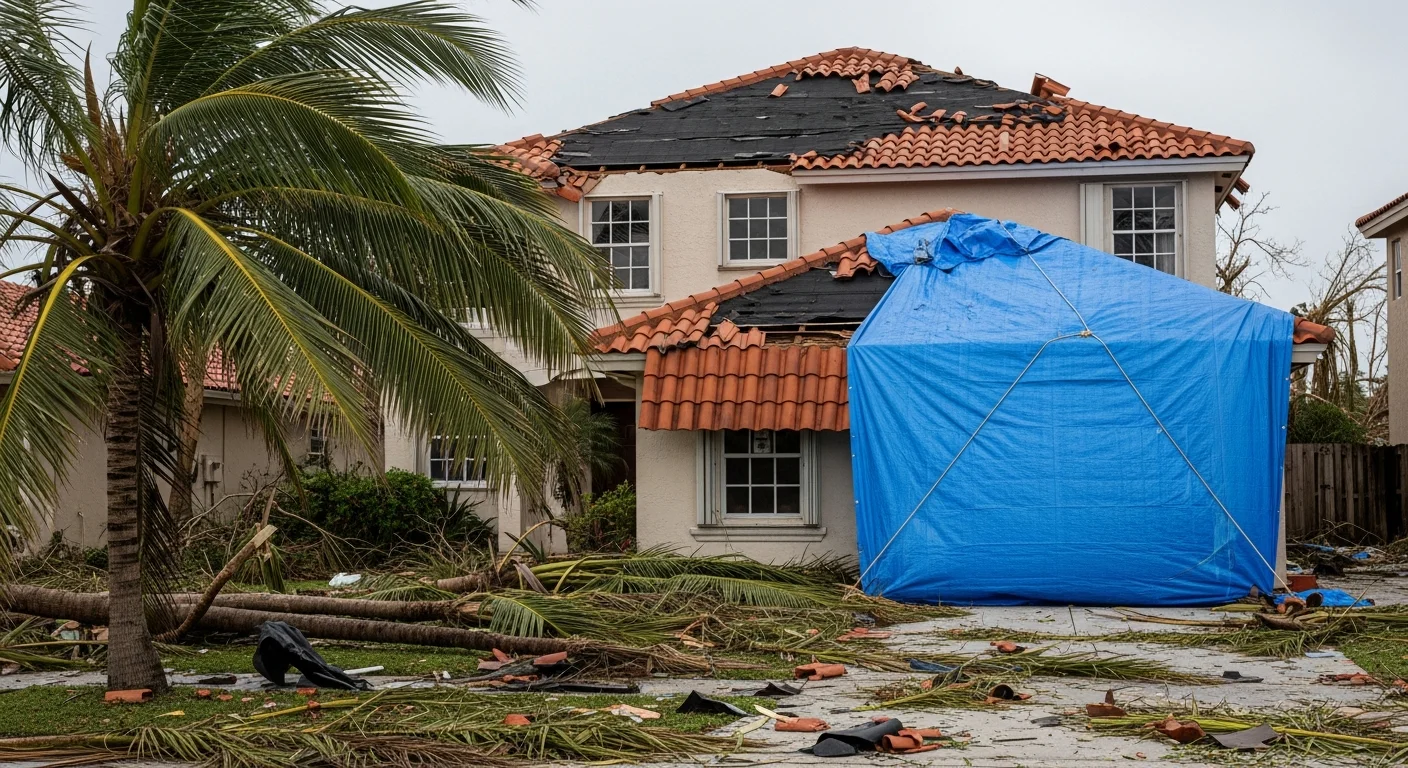
Hollywood sits on a narrow coastal strip between the Atlantic Ocean and the Intracoastal Waterway — making it one of Broward County's most storm-vulnerable cities. The June 2024 floods dumped approximately 20 inches of rain over June 11-12, submerging streets from the Broadwalk to downtown. Hurricane Milton in October 2024 brought gusty winds, dangerous surf, and flooding across the barrier island. With 159,000+ residents, aging tile roofs from the 1960s, and salt air that corrodes building components year-round, Hollywood storm damage demands fast, specialized restoration. Palm Build's Deerfield Beach team responds in 20-30 minutes with emergency tarping, water extraction, and full structural stabilization.
Deerfield Beach Office — 15 mi from Hollywood 20-30 min Response IICRC Certified
Why Hollywood FL Is One of Broward County's Most Storm-Vulnerable Cities
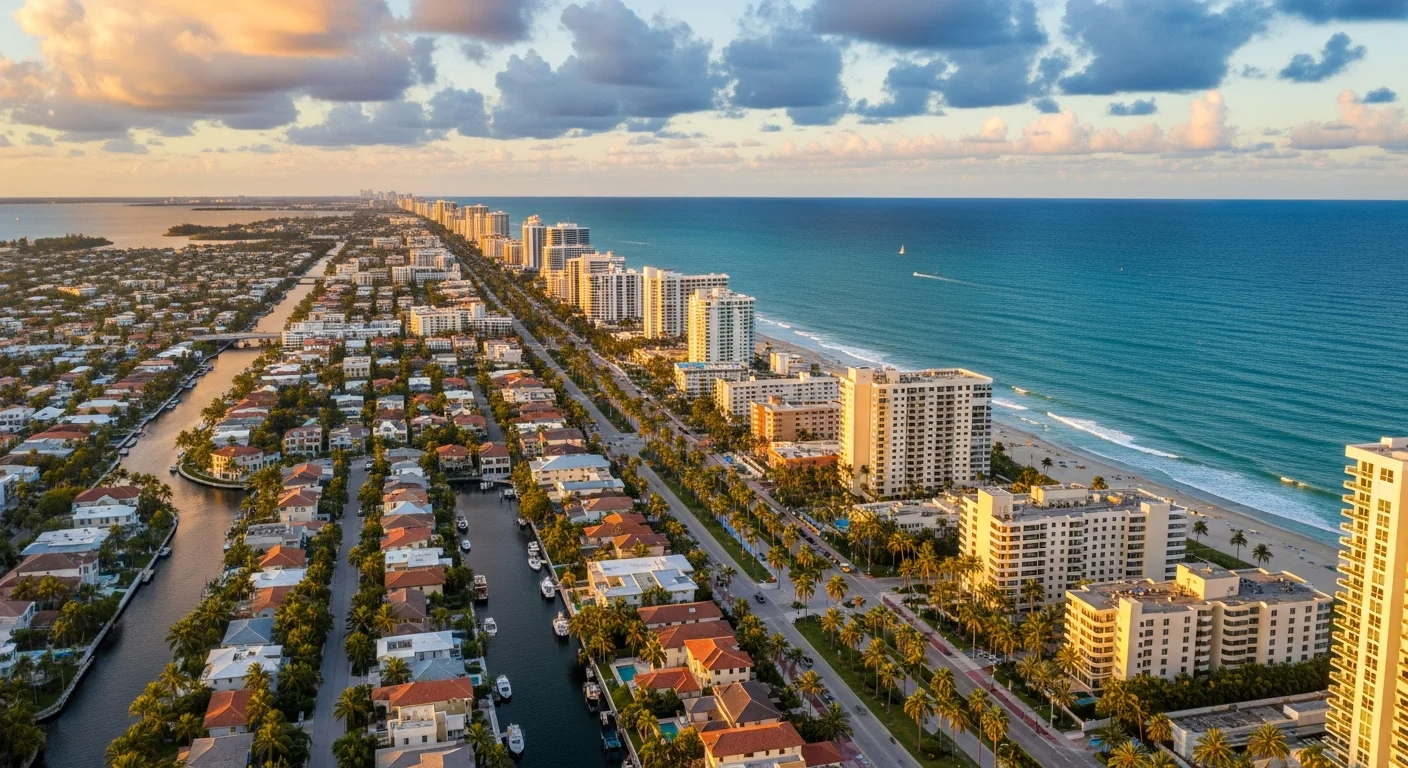
Sandwiched between the Atlantic Ocean and the Intracoastal Waterway, Hollywood faces
storm damage from every direction. The June 2024 floods submerged entire neighborhoods.
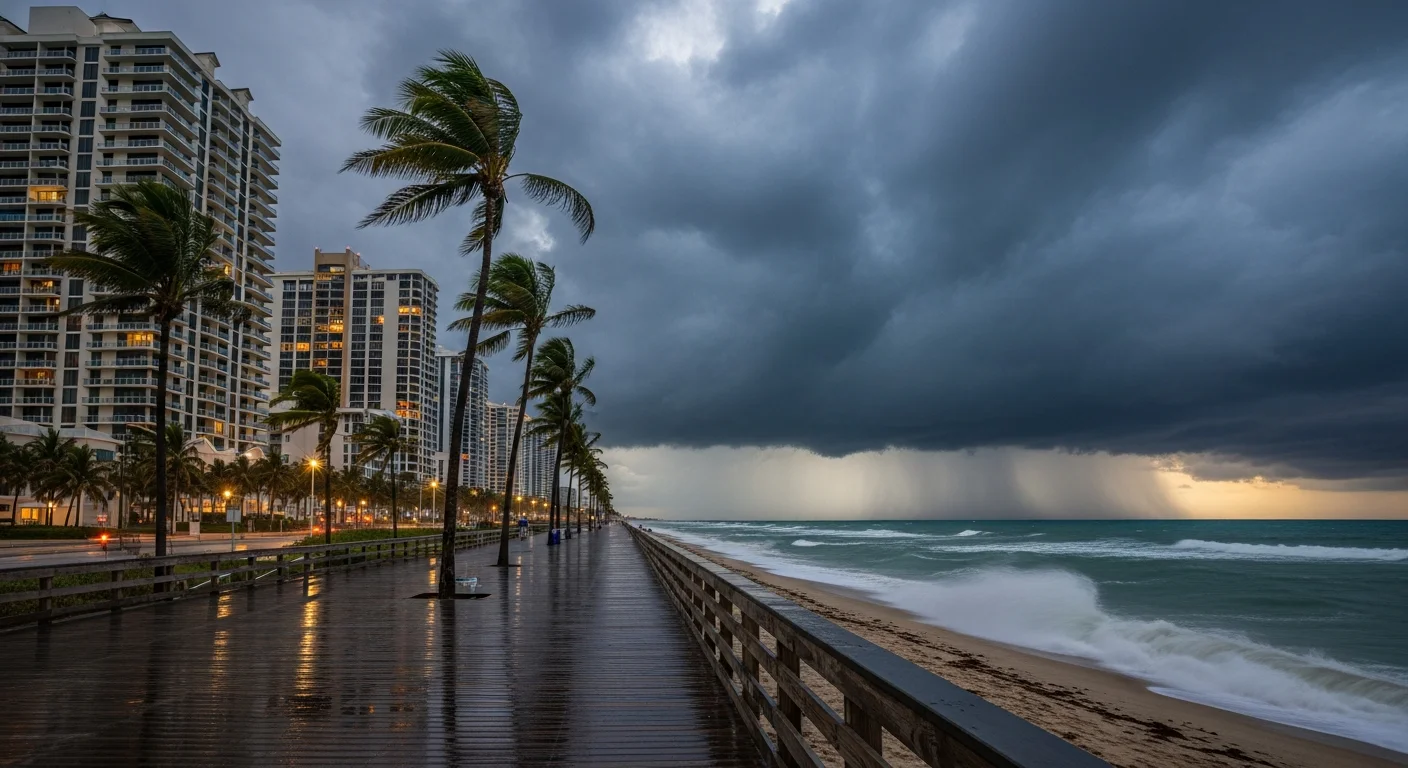
Hurricane Milton in October 2024 battered the Broadwalk with dangerous surf and tidal
flooding. With 159,000+ residents living in homes built primarily in the 1960s and 70s,
every hurricane season puts aging roofs, corroded building components, and overwhelmed
drainage systems to the test.
Dual Water Exposure — Ocean & Intracoastal
2-way
Surge exposure
Hollywood sits on a narrow coastal strip between the Atlantic Ocean and the Intracoastal Waterway. During hurricanes, storm surge pushes seawater from both directions — the ocean from the east and tidal surge through the Intracoastal from the west. This dual exposure means properties across Hollywood face saltwater intrusion risks that inland Broward County cities never experience. The barrier island along Hollywood Beach is particularly vulnerable, with Evacuation Zone A properties facing direct Category 1+ surge.
Evacuation Zones A & B Cover Core Hollywood
Zone A+B
High-risk coverage
Evacuation Zone A encompasses the entire barrier island east of the Intracoastal — Hollywood Beach, the Broadwalk, and all oceanfront condos and homes. Zone B extends from the Intracoastal west to Federal Highway (US-1), covering downtown Hollywood, the Arts District, and Hollywood Lakes. Combined, these two zones contain the majority of Hollywood's highest-value residential and commercial properties. During major hurricane events, these areas face direct storm surge, wind-driven rain intrusion, and saltwater contamination of structures and contents.
Aging Tile Roofs from the 1960s
1969
Median home age
With a median construction year of 1969, most Hollywood roofs are either original or have been replaced once — and many still use concrete or clay tile systems common in mid-century South Florida construction. These tile roofs suffer from decades of UV cycling (expanding in heat, contracting at night), salt air corrosion of the underlayment and fasteners, and brittle tiles that shatter under hurricane-force wind debris. When a Category 1+ hurricane hits, these weakened roof systems fail at lower wind speeds than their rated capacity, allowing wind-driven rain to penetrate the structure within minutes.
Stormwater System Overwhelmed in 2024
70+ mi
Of stormwater pipes
Hollywood maintains 70+ miles of stormwater pipes and 4,600+ catch basins — a system designed for typical South Florida rainfall patterns. The June 2024 floods proved this infrastructure cannot handle extreme events: approximately 20 inches of rain over June 11-12 overwhelmed every drainage point in the city. Streets flooded from the Broadwalk to neighborhoods west of I-95. This event was not a hurricane — it was a rainfall event that exposed the limits of Hollywood's aging stormwater infrastructure and put every property in the city at freshwater flooding risk.
Hollywood's narrow position between the Atlantic and the Intracoastal creates dual storm
surge exposure — a vulnerability unique to coastal Broward County barrier communities.
Storm History
Recent Storms That Shaped Hollywood's Damage Profile
Hollywood has been tested by every type of storm event — from catastrophic rainfall that
overwhelms drainage to direct hurricane strikes that shred aging roof systems. Each
event reveals a different vulnerability in the city's infrastructure and housing stock.
June 2024
Historic Rainfall Event
N/A — Rainfall event
Approximately 20 inches of rain fell over June 11-12, overwhelming Hollywood's stormwater system of 70+ miles of pipes and 4,600+ catch basins. Streets flooded from the Broadwalk to western neighborhoods beyond I-95. Homes, businesses, and vehicles sustained significant water damage across all parts of the city. This was not a hurricane — it was a pure rainfall event that proved Hollywood's drainage infrastructure has critical capacity limits.
Primary damage: Citywide freshwater flooding
Oct 2024
Hurricane Milton
Gusty winds, tropical storm conditions
While Milton's eye tracked across Central Florida, Hollywood experienced gusty winds, dangerous surf, and tidal flooding. The Hollywood Broadwalk sustained impacts from storm surge and high waves. Broward County issued evacuation orders for Zone A (barrier island). Wind-driven rain infiltrated homes with compromised roof systems, and tidal flooding affected low-lying properties along the Intracoastal. The storm demonstrated that even hurricanes that don't make direct landfall in Broward County cause significant damage to Hollywood's coastal infrastructure.
Irma brought sustained tropical storm to Category 1 conditions across Broward County. Hollywood experienced significant wind damage to roofs, trees, and fencing, along with widespread power outages lasting days. Storm surge pushed water up the Intracoastal, flooding properties in Hollywood Lakes and along canal-connected neighborhoods. The combination of wind damage and extended power loss (disabling AC in South Florida heat) led to secondary mold growth in hundreds of Hollywood homes.
Primary damage: Wind damage, power loss, secondary mold
Oct 2005
Hurricane Wilma
Category 2-3 conditions
Wilma crossed South Florida from west to east, hitting Hollywood with Category 2-3 conditions — an unusual track that caught many residents off guard. The storm caused catastrophic roof damage across Hollywood, with tile roofs from the 1960s and 70s sustaining the worst losses. Storm surge flooding affected the barrier island and Intracoastal properties. Power was out for weeks in some neighborhoods. Wilma remains the benchmark storm for Hollywood damage planning and exposed the vulnerability of the city's aging housing stock.
Approximately 20 inches of rain fell over June 11-12, overwhelming Hollywood's stormwater system of 70+ miles of pipes and 4,600+ catch basins. Streets flooded from the Broadwalk to western neighborhoods beyond I-95. Homes, businesses, and vehicles sustained significant water damage across all parts of the city. This was not a hurricane — it was a pure rainfall event that proved Hollywood's drainage infrastructure has critical capacity limits.
Primary damage: Citywide freshwater flooding
Oct 2024
Hurricane Milton
Gusty winds, tropical storm conditions
While Milton's eye tracked across Central Florida, Hollywood experienced gusty winds, dangerous surf, and tidal flooding. The Hollywood Broadwalk sustained impacts from storm surge and high waves. Broward County issued evacuation orders for Zone A (barrier island). Wind-driven rain infiltrated homes with compromised roof systems, and tidal flooding affected low-lying properties along the Intracoastal. The storm demonstrated that even hurricanes that don't make direct landfall in Broward County cause significant damage to Hollywood's coastal infrastructure.
Irma brought sustained tropical storm to Category 1 conditions across Broward County. Hollywood experienced significant wind damage to roofs, trees, and fencing, along with widespread power outages lasting days. Storm surge pushed water up the Intracoastal, flooding properties in Hollywood Lakes and along canal-connected neighborhoods. The combination of wind damage and extended power loss (disabling AC in South Florida heat) led to secondary mold growth in hundreds of Hollywood homes.
Primary damage: Wind damage, power loss, secondary mold
Oct 2005
Hurricane Wilma
Category 2-3 conditions
Wilma crossed South Florida from west to east, hitting Hollywood with Category 2-3 conditions — an unusual track that caught many residents off guard. The storm caused catastrophic roof damage across Hollywood, with tile roofs from the 1960s and 70s sustaining the worst losses. Storm surge flooding affected the barrier island and Intracoastal properties. Power was out for weeks in some neighborhoods. Wilma remains the benchmark storm for Hollywood damage planning and exposed the vulnerability of the city's aging housing stock.
The Hollywood Broadwalk is the city's most visible storm impact zone — wave action and
tidal surge during hurricane events directly affects oceanfront properties and
commercial structures along the beachfront.
Our Hollywood Storm Restoration Process
6-Step Storm Damage Restoration for Hollywood Homes
From the first emergency call through final reconstruction, every step is documented,
insured, and managed by one team. Hollywood's CBS construction, saltwater exposure, and
aging infrastructure require a restoration process built for South Florida's unique
challenges.
01
Emergency Contact & Dispatch
Within minutes
02
Emergency Tarping & Board-Up
Hours 1-4
03
Water Extraction & Removal
Days 1-2
04
Structural Drying & Decontamination
Days 3-10
05
Damage Assessment & Reconstruction Planning
Weeks 2-3
06
Full Reconstruction
Weeks 3-20+
01
Emergency Contact & Dispatch
Within minutes
Call our 24/7 emergency line and a dispatcher assigns the closest crew from our Deerfield Beach operations center — approximately 15 miles from Hollywood. We collect initial damage details, confirm your location and access, and dispatch a team equipped for the specific storm damage reported. For Hollywood properties in Evacuation Zone A or B, we coordinate with local emergency management for access clearance when needed.
02
Emergency Tarping & Board-Up
Hours 1-4
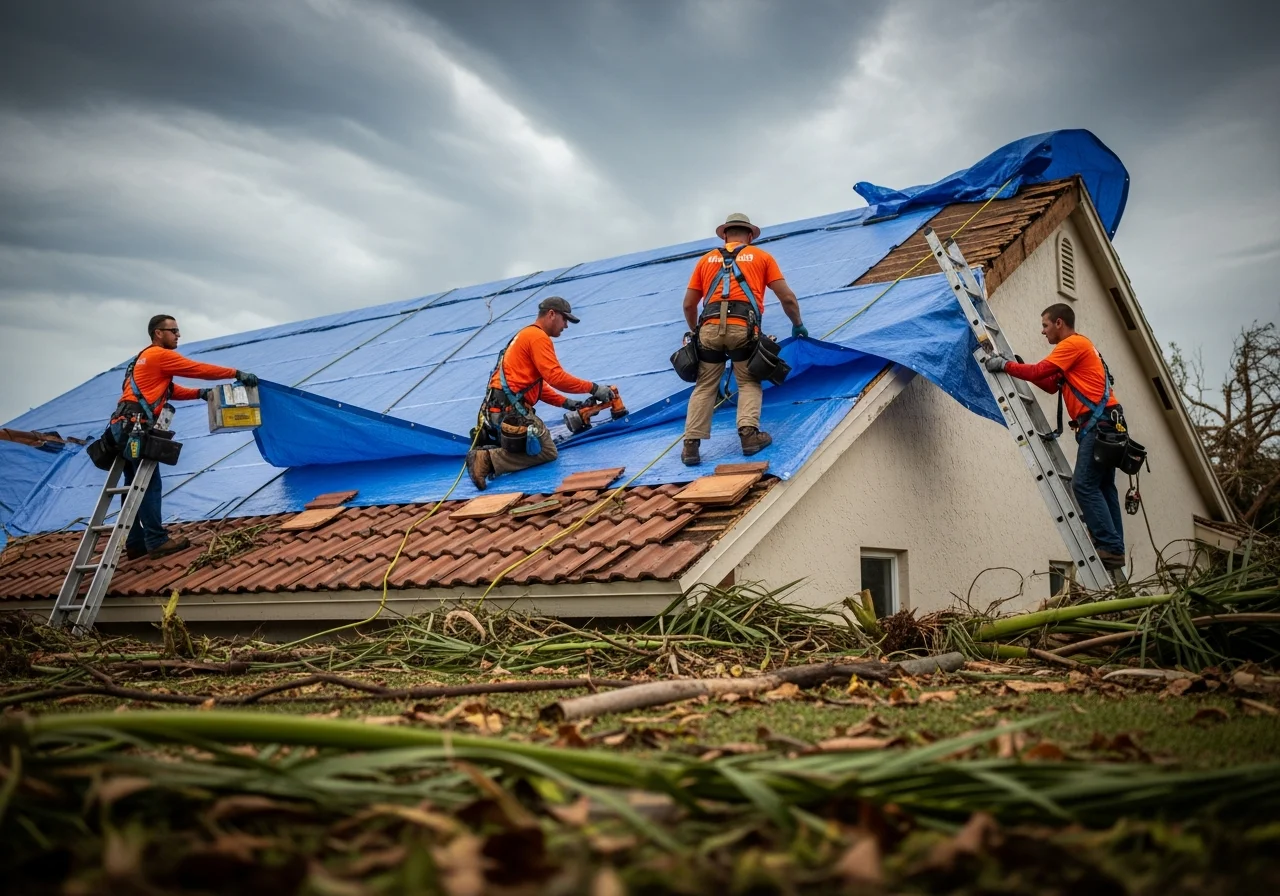
Our first priority is stopping additional damage. Emergency tarping covers exposed roof sections to prevent wind-driven rain intrusion. Board-up secures broken windows and compromised openings. For Hollywood Beach properties facing ongoing surf and tidal exposure, we install temporary flood barriers and sandbag systems. Every emergency measure is photographed and documented for your insurance claim — emergency mitigation costs are covered separately from reconstruction under most policies.
03
Water Extraction & Removal
Days 1-2
Standing water is extracted using truck-mounted pumps for large volumes and portable extractors for targeted areas. In Hollywood, we test water immediately for salt content — properties near the ocean, Intracoastal, or canal systems frequently have saltwater contamination that requires different handling than freshwater. Salt-contaminated water is classified as Category 3 (grossly contaminated) under IICRC standards, requiring more aggressive extraction and demolition protocols.
04
Structural Drying & Decontamination
Days 3-10
Commercial dehumidifiers and air movers are positioned throughout the structure based on moisture mapping readings. For Hollywood's CBS (concrete block and stucco) construction, drying times are typically longer than wood-frame homes because concrete absorbs and holds moisture deep within the block cores. Daily moisture readings track progress until every material reaches target levels. Saltwater-affected structures require antimicrobial treatment and salt neutralization before drying can be effective.
05
Damage Assessment & Reconstruction Planning
Weeks 2-3
Once the structure is dry, our team conducts a comprehensive damage assessment — documenting every affected system with photographs, moisture readings, and structural observations. For Hollywood's 1960s-era homes, this assessment often reveals pre-existing conditions: corroded hurricane straps, deteriorated roof underlayment, and aging electrical panels that must be addressed during reconstruction. We prepare a detailed Xactimate estimate for your insurance carrier with separate line items for storm damage and code-required upgrades.
06
Full Reconstruction
Weeks 3-20+
Reconstruction begins with Broward County permits and proceeds through demolition of non-salvageable materials, structural repair, code upgrades (impact windows, hurricane straps, electrical updates), interior finishing, and final inspection. For Hollywood properties, reconstruction frequently includes salt-corrosion remediation of metal components, CBS stucco repair, and tile roof restoration or replacement. One team manages the entire project from emergency response through move-in — no subcontractor handoffs or project gaps.
When a hurricane tears tiles off your Hollywood roof or wind-driven debris shatters a
window, every minute of exposure means more water damage to your home's interior.
Emergency tarping and board-up is the single most important step in limiting storm
damage — and it is the step most often delayed because homeowners wait for their
insurance company to respond first.
Do not wait for a claims adjuster. Florida law requires insurance carriers to cover
reasonable emergency mitigation costs. Palm Build deploys immediately and documents
everything your carrier needs to reimburse emergency services.
Emergency roof tarping for wind-damaged tile, shingle, and flat roofs
Board-up of broken windows, sliding glass doors, and compromised openings
Temporary flood barriers and sandbag placement for tidal surge exposure
Tree and debris removal from roofs and structures
Temporary power solutions when utility service is disrupted
Waterproof covering for interior contents exposed by roof breaches
Insurance documentation of all emergency measures with photo evidence
24/7 availability throughout hurricane season — June through November
Emergency roof tarping on a Hollywood home — stopping water intrusion within hours
of storm damage to minimize interior losses.
24/7
Emergency service
20-30
Min response
15 mi
From our office
Hollywood Evacuation Zones & Storm Risk
Storm Damage Risk by Hollywood Neighborhood Zone
Hollywood's hurricane evacuation zones define different damage profiles — from direct
ocean surge on the barrier island to freshwater flooding in western neighborhoods.
Understanding your zone determines how storm damage will be classified and what
restoration protocols are required.
Zone A
Barrier Island — East of Intracoastal
Cat 3
Contamination risk
Risk: Highest — Direct storm surge
Zone A properties face the most severe storm damage in Hollywood. Direct storm surge pushes saltwater through ground-floor structures, destroying drywall, insulation, electrical systems, and contents. Wind exposure is unobstructed from the ocean. Saltwater is classified as Category 3 (grossly contaminated) under IICRC standards, requiring complete demolition and removal of all affected porous materials. Post-storm salt crystal deposits continue absorbing atmospheric moisture indefinitely, creating ongoing corrosion even after visible water recedes.
Neighborhoods in this zone:
Hollywood BeachThe BroadwalkOcean Drive condosAll oceanfront residentialHollywood North Beach Park area
Zone B
Intracoastal to Federal Highway
Dual risk
Surge + stormwater
Risk: High — Tidal surge + wind
Zone B properties face tidal surge from the Intracoastal during Category 3+ storms. The water is brackish (mixed salt and fresh), creating contamination that falls between freshwater flooding and direct ocean surge. Wind damage is significant but partially shielded by Zone A structures. The biggest risk for Zone B is flooding from the Intracoastal overtopping its banks combined with stormwater backups from overwhelmed catch basins — exactly what happened during the June 2024 floods. Many Zone B properties also experienced wind-driven rain intrusion through aging roof systems.
Neighborhoods in this zone:
Downtown HollywoodHollywood LakesArts DistrictYoung Circle areaHarrison Street corridor
West of US-1
Outside Evacuation Zones
Not safe
From flooding
Risk: Moderate — Freshwater flooding + wind
Properties outside evacuation zones are not safe from storm damage. The June 2024 floods proved this decisively — neighborhoods well west of Federal Highway experienced severe freshwater flooding from overwhelmed stormwater infrastructure. Wind damage from hurricanes affects these areas equally. The advantage is the absence of saltwater contamination, which simplifies restoration — freshwater flooding is classified as Category 1 or 2 (clean to gray water) and allows salvage of some porous materials that saltwater would destroy. However, Hollywood's aging 1960s construction means wind damage to roofs is equally severe in western neighborhoods.
Neighborhoods in this zone:
Hollywood HillsEmerald HillsOakridgeBoulevard HeightsNeighborhoods west of I-95
June 2024 proved that no Hollywood neighborhood is safe from flooding.
Approximately 20 inches of rain over 24 hours flooded streets from the Broadwalk to
neighborhoods west of I-95 — well outside any evacuation zone. Whether you live on the
beach or in Hollywood Hills, storm damage preparedness is essential.
Insurance & Claims
Storm Insurance Claims in Hollywood FL
Florida storm insurance is unlike any other state. Separate hurricane deductibles, the
wind-vs-flood coverage split, and ordinance-and-law endorsements create a complex claims
landscape — especially in Hollywood, where every storm event produces both wind and
water damage simultaneously.
Hollywood Storm Damage Coverage Quick Reference
Wind damage to roof, walls, and structure(Homeowners (HO-3))
Wind-driven rain through compromised openings(Homeowners (HO-3))
Emergency tarping and board-up costs(Homeowners (HO-3))
Debris removal from wind damage(Homeowners (HO-3))
Storm surge flooding (rising water)(Requires NFIP or private flood)
Tidal flooding from the Intracoastal(Requires NFIP or private flood)
Freshwater flooding from overwhelmed drains(Requires NFIP or private flood)
Sewer backup flooding(Requires separate endorsement)
Hurricane Deductible: 2-5% of Insured Value
Florida homeowners policies carry separate hurricane deductibles — calculated as a percentage of your insured value, not a flat dollar amount. On a Hollywood home insured at $410,600 (approximate median), a 2% deductible means $8,212 out of pocket before any coverage activates. A 5% deductible means $20,530. This is separate from your standard deductible. After major hurricanes, this deductible catches many homeowners off guard — they expect a $1,000-$2,500 deductible and discover it is $10,000-$20,000+.
Wind vs. Flood: The Critical Distinction
In Hollywood, storm damage is almost never just wind or just flood — it is both simultaneously. But your homeowners policy only covers wind damage, and your flood policy only covers flood damage. Insurance carriers will try to attribute as much damage as possible to the coverage you do not have. If you lack flood insurance, they blame the flood. If you lack windstorm coverage, they blame the wind. Palm Build documents the origin of every damage point — wind-driven rain entry versus rising water — to maximize your claim under each policy.
Ordinance & Law: Code Upgrade Coverage
When storm damage triggers reconstruction in Hollywood, Broward County code requires upgrades to current standards — impact windows, hurricane straps, updated electrical. Your standard policy only covers reconstruction to pre-loss condition. The ordinance-and-law endorsement covers the gap between what existed (1960s construction) and what current code demands. This endorsement typically adds 10-25% of your dwelling coverage. Without it, mandatory code upgrades during reconstruction come entirely out of pocket.
Documentation That Drives Claim Approval
Palm Build generates Xactimate-based estimates that speak the same language as your insurance carrier. Every line item is coded to industry standards with separate documentation for wind damage (homeowners claim), flood damage (NFIP/private flood claim), and code-required upgrades (ordinance-and-law claim). This separation is critical in Hollywood, where a single storm event produces damage that falls under two or three different policies. Adjusters who receive clear, properly coded documentation approve claims faster and with fewer disputes.
Need help with a storm insurance claim in Hollywood?
Palm Build's Xactimate-based documentation separates wind, flood, and code-upgrade claims
for maximum coverage under each policy.
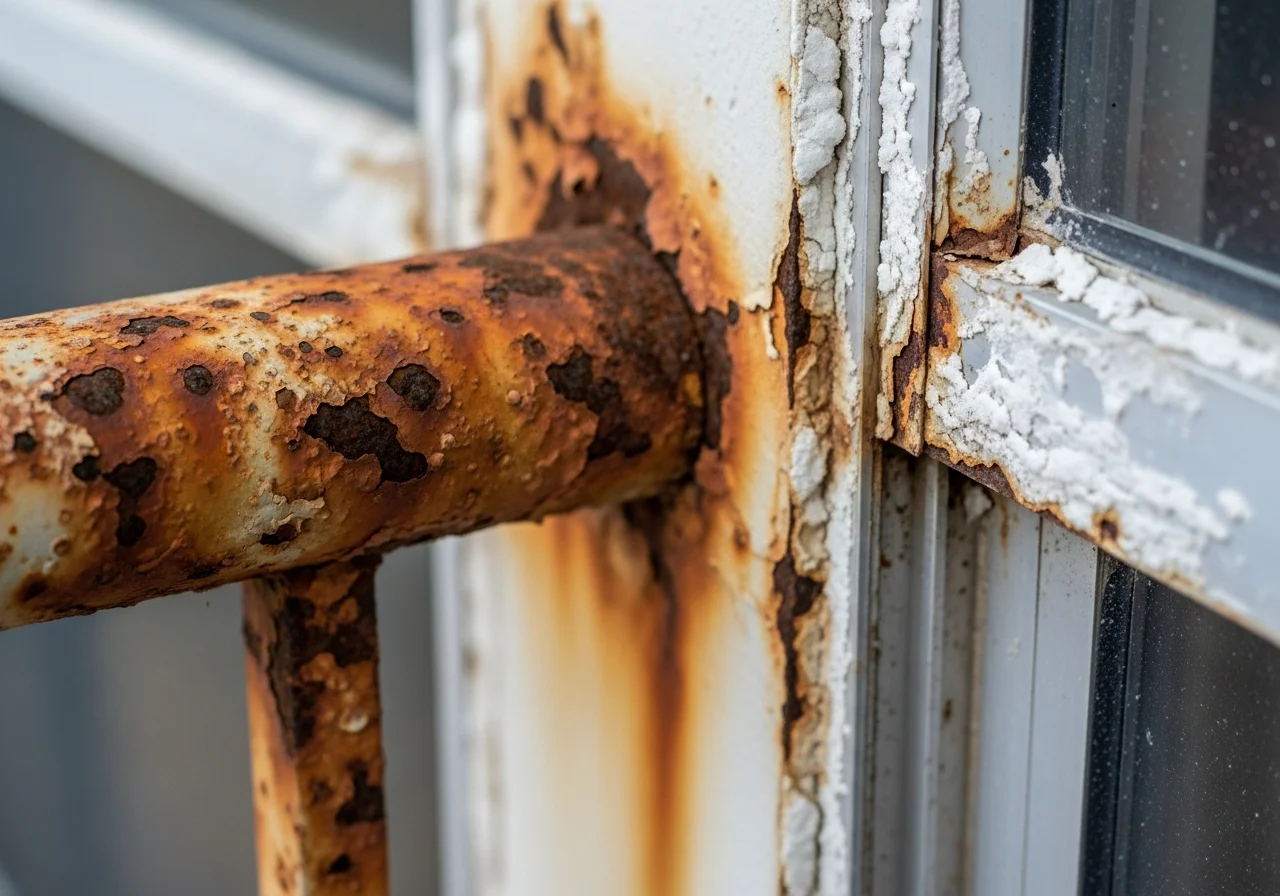
How Salt Air Corrosion Amplifies Storm Damage in Hollywood
Hollywood properties within 2 miles of the ocean experience constant exposure to
salt-laden air — a slow, invisible process that weakens building components for years
before a storm hits. When hurricane winds finally test these corroded connections, they
fail at fractions of their rated capacity. Understanding this compound effect is
critical for proper storm damage assessment and restoration in coastal Hollywood.
Hurricane Straps & Fasteners
Critical
Metal hurricane straps, roof fasteners, and structural connectors corrode from constant salt exposure — reducing their wind-load capacity before a storm even arrives. A hurricane strap rated for 150 mph winds may fail at 90 mph after 20 years of salt corrosion. During post-storm inspection, Palm Build tests every connection point, because the failure is often invisible until the strap is physically stressed.
Roof Flashing & Underlayment
High
Metal flashing around roof penetrations, valleys, and edges corrodes from salt-laden air, creating gaps that allow wind-driven rain to bypass even intact tile or shingle surfaces. The underlayment beneath roof tiles — designed as a secondary water barrier — degrades from salt exposure combined with UV cycling, becoming brittle and perforated years before its rated lifespan.
Electrical Systems & Panels
High
Exterior electrical panels, breaker connections, wiring terminals, and outdoor HVAC disconnects corrode from salt air. During storms, power surges travel through corroded connections, causing arcing and potential fire risk. Post-storm electrical inspection in Hollywood must account for pre-existing corrosion that amplifies surge damage.
AC Condensers & HVAC Components
Moderate
Outdoor AC condenser coils, copper refrigerant lines, and aluminum fins corrode rapidly in Hollywood's salt air. This pre-existing degradation means HVAC systems are more likely to fail after storm events — both from direct damage and from the stress of running 24/7 during South Florida's post-storm heat when dehumidification is most critical for preventing mold growth.
CBS Wall Reinforcement
Moderate
Steel rebar inside CBS (concrete block and stucco) walls absorbs salt through hairline cracks in the stucco exterior. Over decades, the rebar corrodes and expands, creating spalling — visible cracking and delamination of the stucco surface. When storm winds stress these walls, pre-weakened sections fail at lower pressures. Reconstruction must address both the storm damage and the underlying rebar corrosion to prevent recurring failures.
Salt air corrosion on metal building components — a constant, invisible process that
weakens hurricane resistance years before a storm arrives.
Why This Matters for Insurance Claims
Insurance carriers may argue that corrosion-related failures are pre-existing
deterioration, not storm damage. Palm Build documents the difference: a hurricane
strap that corroded over 20 years is maintenance neglect, but a corroded strap that
failed during hurricane-force winds is storm damage — because the wind event caused
the failure. Proper documentation of the failure mechanism is essential for claim
approval.
Salt Corrosion Zone
Properties within 1,500 feet of the ocean experience severe salt corrosion. Properties
within 1 mile experience moderate corrosion. Properties within 2 miles experience
measurable corrosion that affects long-term component lifespan. In Hollywood, where
the barrier island is less than a mile wide, virtually every beachside property falls
within the severe corrosion zone.
Storm Damage in Hollywood
Storm Damage & Restoration in Hollywood FL
From commercial roof failures on Hollywood Boulevard to tidal flooding along the
Intracoastal, storm damage in Hollywood takes many forms. Here is what storm damage
restoration looks like in Broward County's coastal communities.
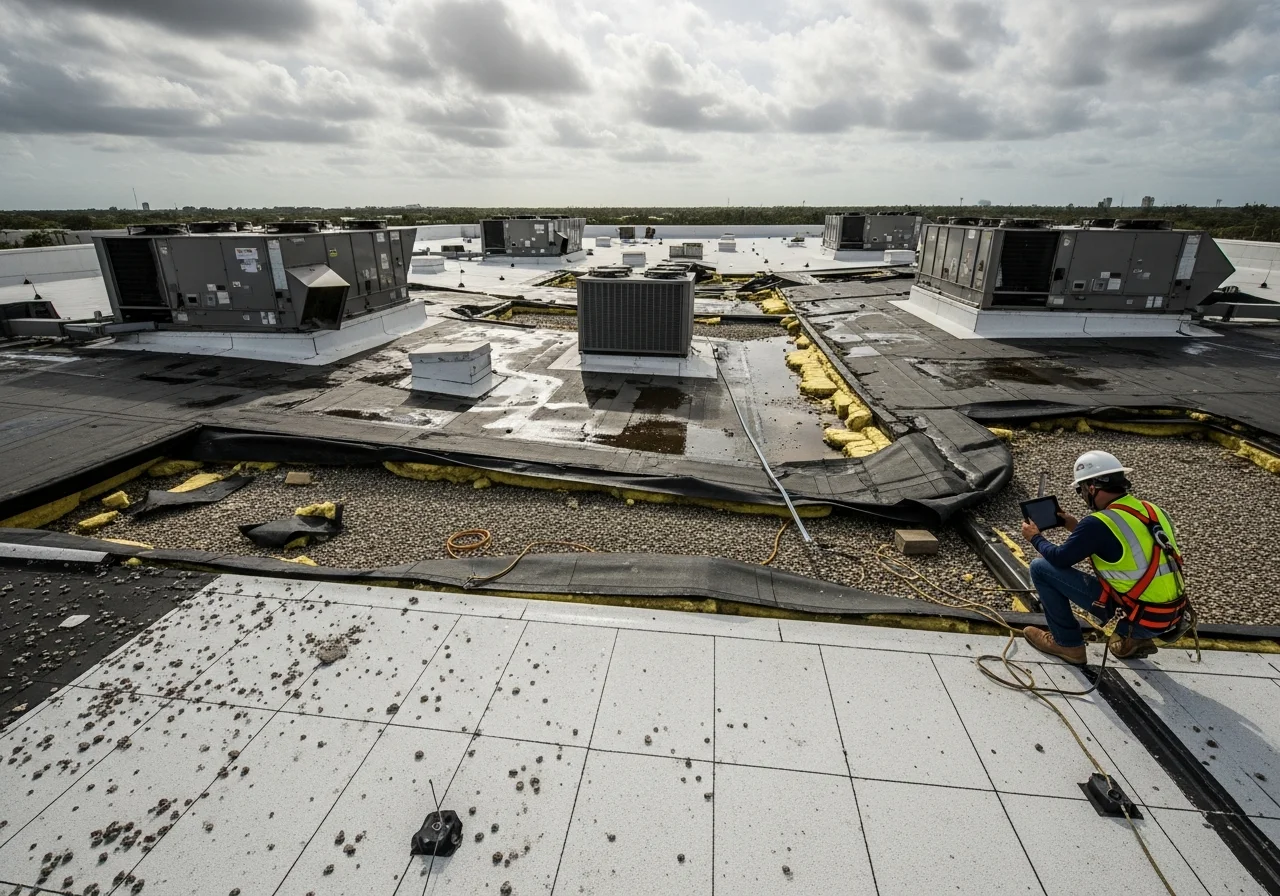
Commercial roof damage in Hollywood — high winds tore away roofing material, exposing the deck to ongoing rain intrusion. Emergency tarping prevents further interior damage while permanent repairs are planned.
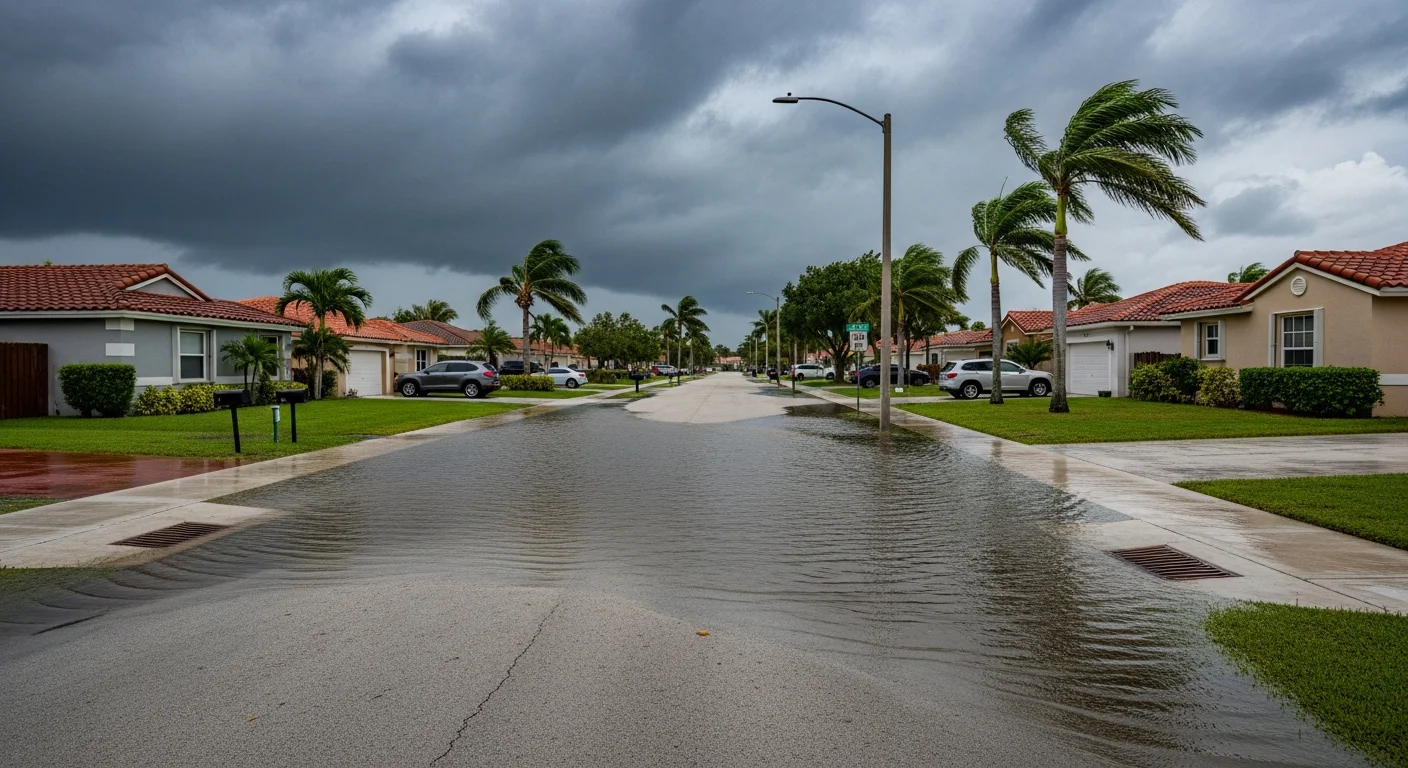
Hollywood street flooding during heavy rain — the city's stormwater system of 70+ miles of pipes cannot handle extreme rainfall events, as the June 2024 floods demonstrated when approximately 20 inches fell in 24 hours.
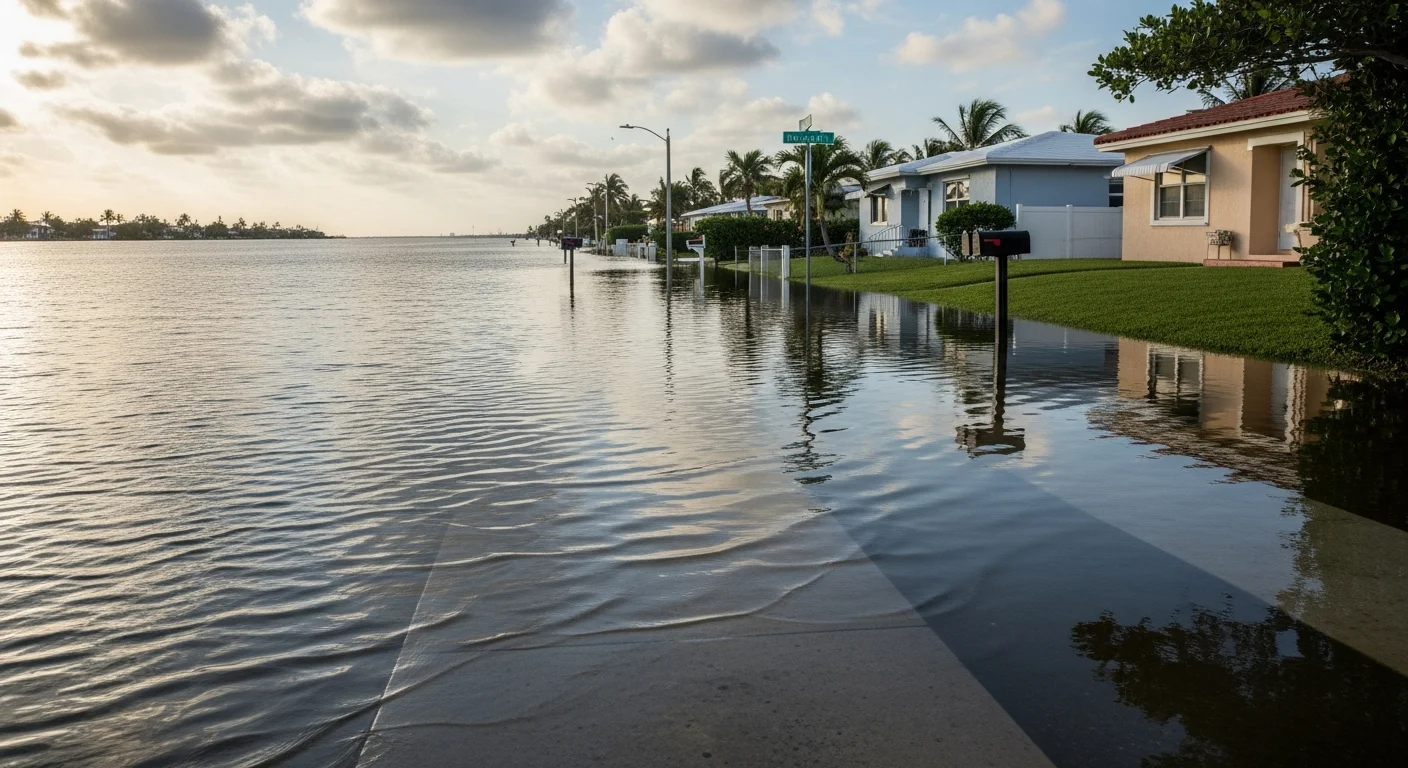
Tidal flooding near the Intracoastal — Zone B Hollywood properties face brackish water intrusion during major storms as the waterway overtops its banks and backs up through drainage infrastructure.
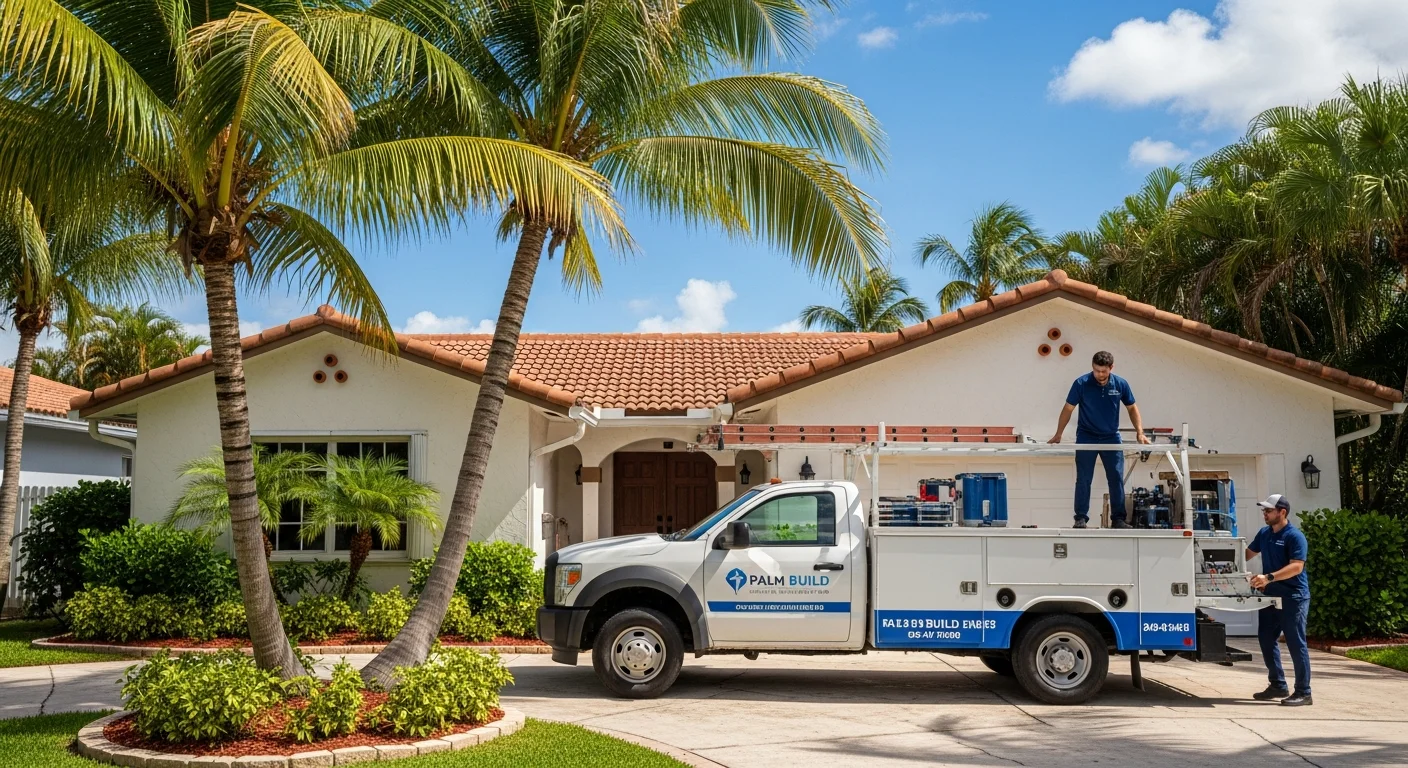
Palm Build on-site in a Hollywood neighborhood — our Deerfield Beach operations center is 15 miles away, allowing 20-30 minute emergency response throughout the city.
The Palm Build Difference
Why Hollywood Homeowners Choose Palm Build for Storm Restoration
After a hurricane or major storm, Hollywood homeowners need a restoration company that
understands CBS construction, salt-corroded building components, complex multi-policy
insurance claims, and the specific damage patterns of a barrier island community. Palm
Build operates daily in this environment from our Deerfield Beach hub — 15 miles from
your door.
15 Miles from Hollywood — 20-30 Minute Response
Our Deerfield Beach operations center is approximately 15 miles from Hollywood — close enough for rapid emergency response, far enough to be outside the impact zone during barrier island events. When a hurricane damages your Hollywood Beach condo or a rain event floods your Hollywood Hills home, our crew arrives within 20-30 minutes under normal conditions. Local presence means we know the neighborhoods, the housing stock, and the specific damage patterns that affect Hollywood properties.
24/7 Emergency Response Through Hurricane Season
June through November, our emergency crews are on standby with pre-staged equipment for rapid deployment throughout Broward County. Before major storms, we activate pre-storm protocols — contacting existing clients, positioning equipment, and preparing for immediate post-storm dispatch. Hollywood homeowners on our pre-storm list receive priority emergency service when the storm passes.
Insurance Coordination for Complex Storm Claims
Hollywood storm claims almost always involve multiple policies — homeowners for wind damage, NFIP or private flood for water damage, and ordinance-and-law endorsements for code upgrades. Palm Build generates separate Xactimate documentation for each coverage, maximizing your total claim across all policies. We work directly with your adjuster and supplement when initial estimates fall short of actual restoration costs.
CBS Construction & Tile Roof Expertise
Hollywood's housing stock is predominantly CBS (concrete block and stucco) with tile roofs — construction methods that require specialized knowledge for proper restoration. Standard contractors experienced with wood-frame construction make critical errors on CBS: improper block replacement, stucco texture mismatches, and incorrect rebar tie-in. Our crews work CBS daily across Broward County and understand the materials, techniques, and code requirements specific to South Florida masonry construction.
Commercial & Condo Storm Restoration
Hollywood's commercial corridor along Hollywood Boulevard and the high-rise condo inventory along the beach require restoration teams experienced with large-loss projects, HOA coordination, and multi-unit damage scenarios. Palm Build handles commercial roof repairs, multi-story water extraction, common-area restoration, and the coordination required when storm damage affects multiple condo units simultaneously.
One Team — Emergency Through Reconstruction
Most restoration companies handle emergency mitigation and then hand off reconstruction to a separate contractor — creating gaps in documentation, delays in project continuity, and finger-pointing between companies. Palm Build manages the entire project from emergency tarping through final Broward County inspection with one team, one project manager, and one continuous insurance file. No handoffs, no gaps, no starting over with a new company mid-project.
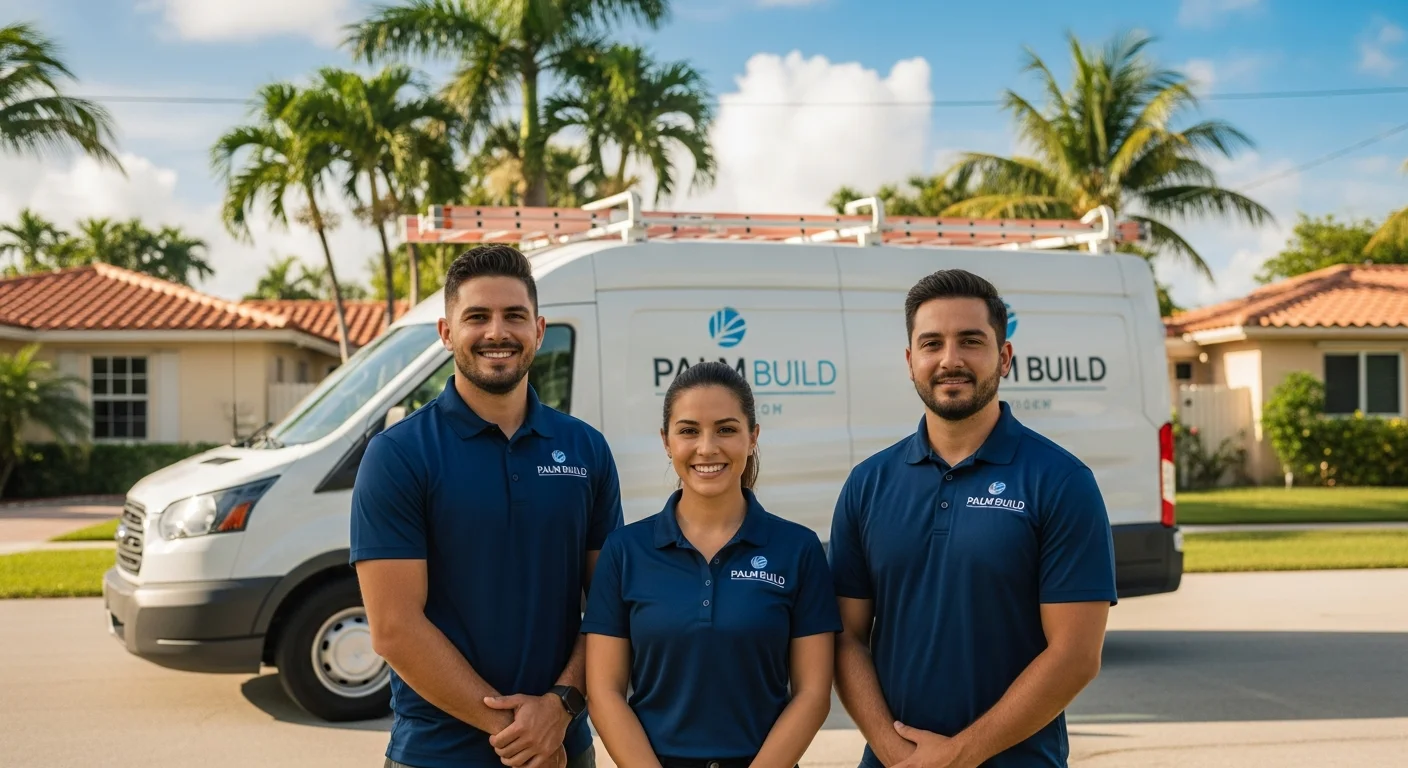
The Palm Build South Florida team — operating from our Deerfield Beach hub with 20-30
minute response to any Hollywood neighborhood.
Common Questions
Hollywood Storm & Hurricane Damage FAQ
How quickly can Palm Build respond to storm damage in Hollywood FL?
Our Deerfield Beach operations center is approximately 15 miles from Hollywood. Under normal conditions, our emergency crew arrives in 20-30 minutes. After major storm events, we activate catastrophe response protocols with pre-positioned crews across Broward County. Pre-storm clients receive priority dispatch. We provide 24/7 emergency tarping, board-up, and water extraction services year-round.
What happened during the June 2024 Hollywood FL floods?
On June 11-12, 2024, Hollywood received approximately 20 inches of rain in 24 hours — overwhelming the city's stormwater system of 70+ miles of pipes and 4,600+ catch basins. Streets flooded from the Hollywood Broadwalk through downtown and into western neighborhoods. The flooding damaged homes, vehicles, and commercial properties across all evacuation zones. This event demonstrated that even properties outside traditional surge zones face catastrophic freshwater flooding during extreme rainfall events.
Does homeowners insurance cover hurricane damage in Hollywood FL?
Wind damage is a covered peril under Florida homeowners policies. However, Florida policies carry separate hurricane deductibles of 2-5% of your insured value. On a $410,600 Hollywood home (approximate median), that means $8,212 to $20,530 out of pocket before coverage activates. Flood damage from storm surge, tidal flooding, or rising water requires separate NFIP or private flood insurance — a critical distinction for Hollywood properties between the ocean and the Intracoastal.
What are Hollywood's hurricane evacuation zones?
Hollywood Evacuation Zone A covers the barrier island east of the Intracoastal Waterway — including Hollywood Beach, the Broadwalk, and all oceanfront properties. These face direct storm surge and saltwater Category 3 contamination risk. Zone B extends from the Intracoastal west to approximately Federal Highway (US-1), covering downtown Hollywood and the Arts District. However, the June 2024 floods proved that neighborhoods well outside surge zones face severe freshwater flooding from overwhelmed stormwater infrastructure.
How does salt air affect storm damage in Hollywood?
Hollywood's oceanfront position exposes building components to constant salt-laden air. This creates pre-existing corrosion on metal fasteners, flashing, hurricane straps, AC components, and electrical connections — weakening them before storms even arrive. When a hurricane hits, salt-corroded roof attachments fail at lower wind speeds, corroded flashing allows water intrusion sooner, and storm surge introduces additional saltwater that compounds existing corrosion. Post-storm restoration in Hollywood must address both the acute storm damage and the chronic salt degradation that made it worse.
How long does storm damage restoration take in Hollywood FL?
Emergency tarping and water extraction: 1-2 days. Structural drying and decontamination: 5-10 days (longer for saltwater intrusion). Roof repair and replacement: 3-8 weeks depending on material availability and Broward County permit processing. Full reconstruction: 8-20 weeks. After major hurricane events, timelines extend due to contractor demand and material shortages across all of South Florida. Hollywood's aging 1960s-era construction often reveals hidden damage during restoration, adding to project duration.
Does Palm Build handle both wind damage and flood damage in Hollywood?
Yes. Storm events in Hollywood rarely produce just one type of damage. A hurricane brings wind damage to roofs and structures, wind-driven rain intrusion through compromised openings, storm surge flooding in coastal zones, and freshwater flooding from overwhelmed drainage. Palm Build handles all damage types as one coordinated project — emergency tarping, water extraction, structural drying, mold prevention, and full reconstruction — with separate insurance documentation for wind (homeowners policy) and flood (NFIP/private flood) claims.
Trusted Vendors
Trusted local pros in Hollywood
Outside our restoration scope, these are the vetted, licensed contractors we trust
alongside our work. Personally evaluated, reference-checked, and recommended by Palm
Build.
Between the Atlantic and the Intracoastal, Hollywood storm damage spreads fast — especially with salt exposure accelerating corrosion on every surface. Palm Build's Deerfield Beach team provides emergency tarping, water extraction, and structural stabilization 24/7, with insurance documentation from the first call.