Multi-building events are defined by the number of structures and units affected, not just the dollar value. A single water main break can flood ground-floor units across 6 buildings simultaneously. A fire in one building can smoke-damage adjacent structures. The coordination challenge grows exponentially with each additional building.
Multi-Building Restoration
Coordinating Restoration Across an Entire Property
When damage affects multiple buildings — whether from a burst water main, widespread fire, or regional storm — standard single-property restoration processes break down. Multi-building restoration requires centralized project management, phased crew deployment, resident coordination, and unified insurance communication across every affected structure.
- Multi-Building
- Apartment Complex
- Campus Events
- Centralized PM
What you need to know
Centralized project management is the difference between organized recovery and chaos. One PM oversees all buildings, maintains a master schedule, coordinates crew assignments across structures, and provides unified reporting to the property owner and insurance carriers. Without central coordination, individual building crews create scheduling conflicts and inconsistent quality.
Occupied building restoration requires additional planning layers. Residents need clear communication about timelines, access restrictions, temporary relocations, and re-entry schedules. Noise, dust, and equipment staging must be managed around occupied units. Emergency egress routes must remain clear throughout the project.
Common area versus unit-level damage requires careful documentation for insurance allocation. Building owner policies typically cover structural elements, roofing, common areas, and building systems. Individual unit policies (renters or condo owners) cover personal property and sometimes interior finishes. HOA master policies add another layer.
Material procurement at multi-building scale requires advance planning. Standard supply house inventory may not cover 40+ units of the same flooring, cabinet style, or paint color. We lock in material orders early in the scope process to prevent delays from backorders that can push timelines by weeks.
Phased restoration allows partial occupancy to continue. Rather than restoring all buildings simultaneously — which strains crew capacity and material supply — phased approaches address the most critical buildings first, restore them to occupancy, then move crews to the next phase.
From the Field
What this work actually looks like
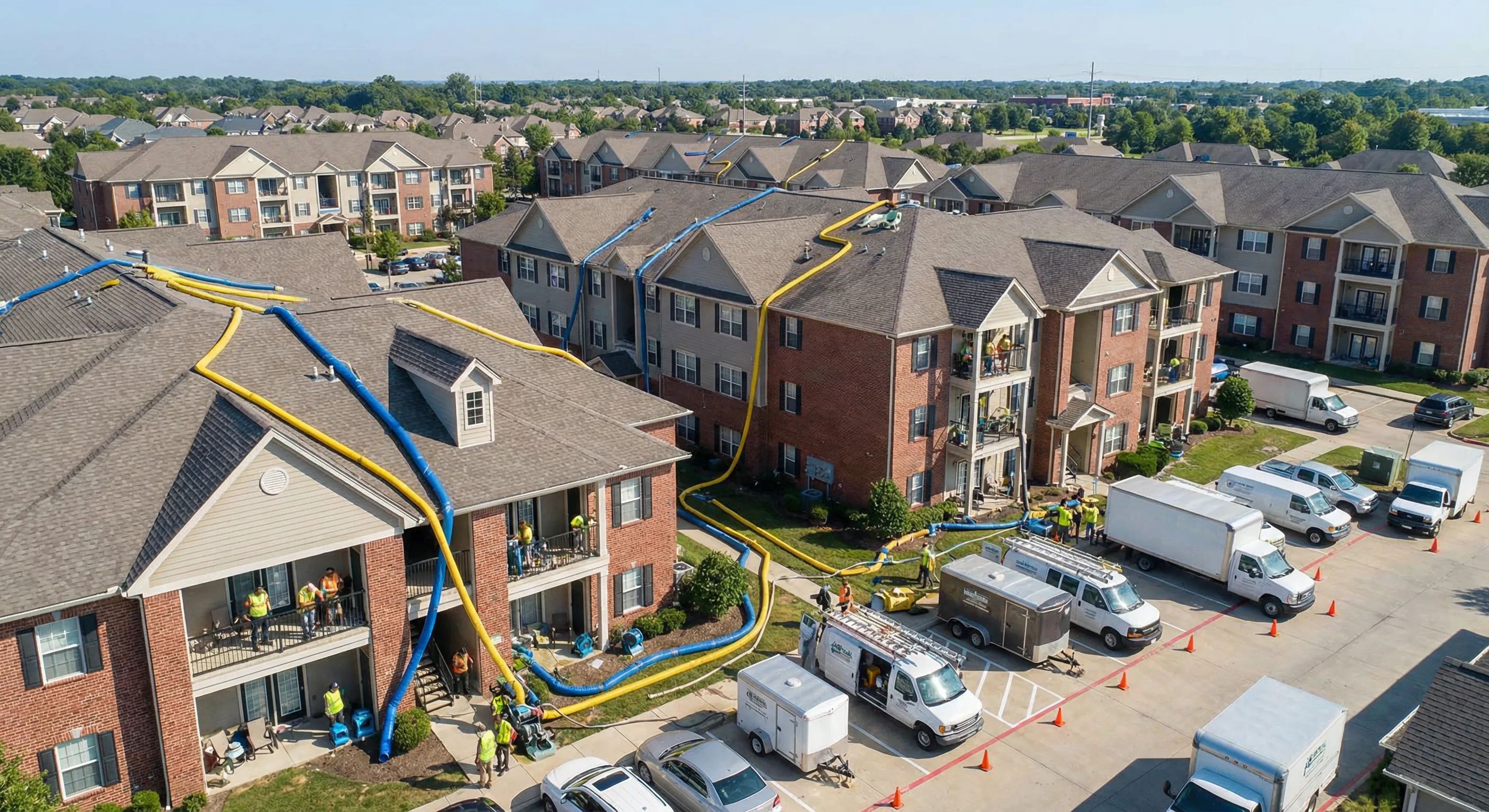
Multi-building water damage restoration in progress
Extraction and drying operations running simultaneously across 6 buildings after a water main failure. Equipment hoses connecting truck-mounted extractors to individual units.
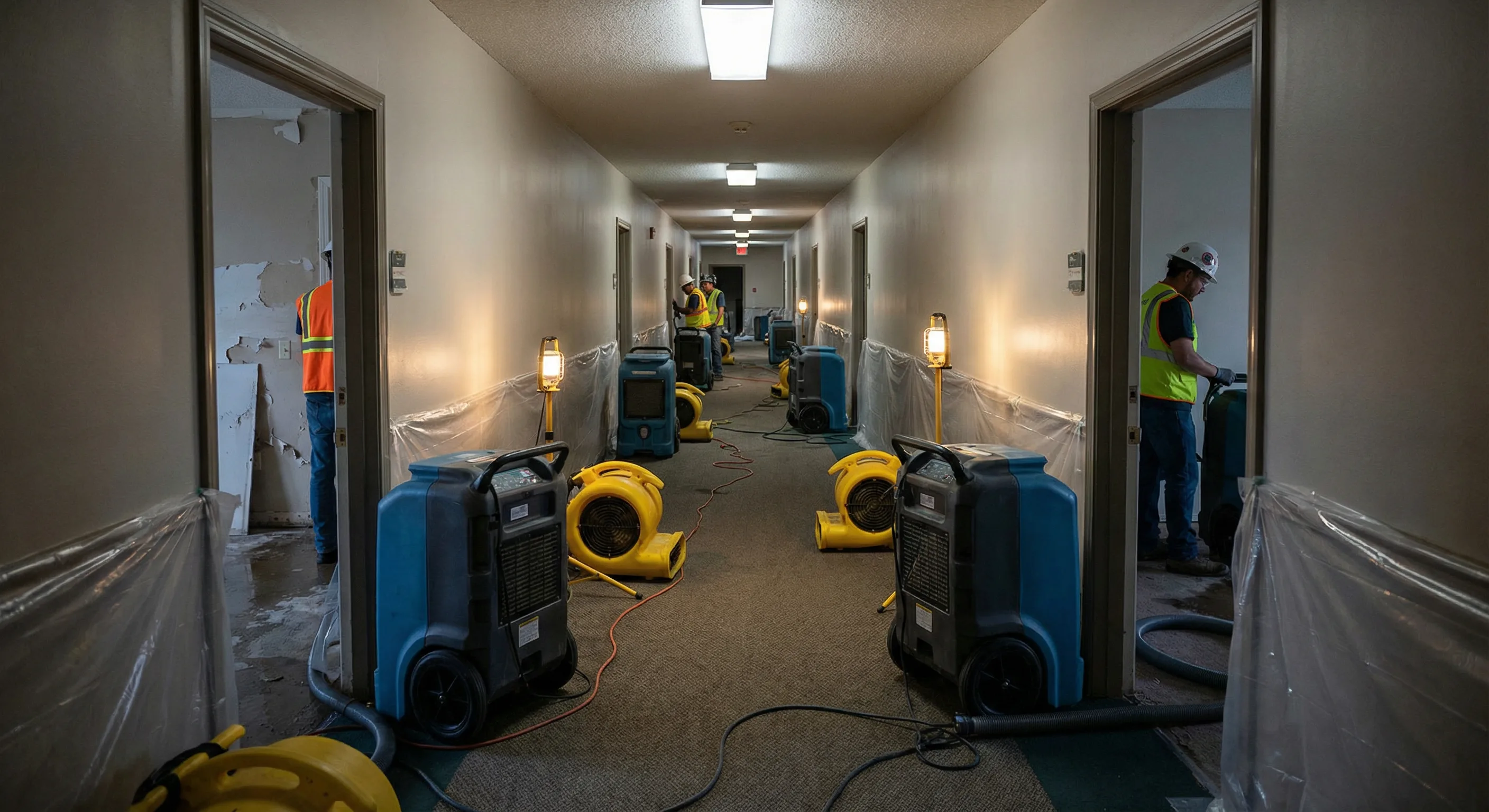
Building-wide drying operation in affected corridor
Commercial dehumidifiers and air movers staged throughout affected hallways. Containment plastic separates work zones from occupied areas on unaffected floors.
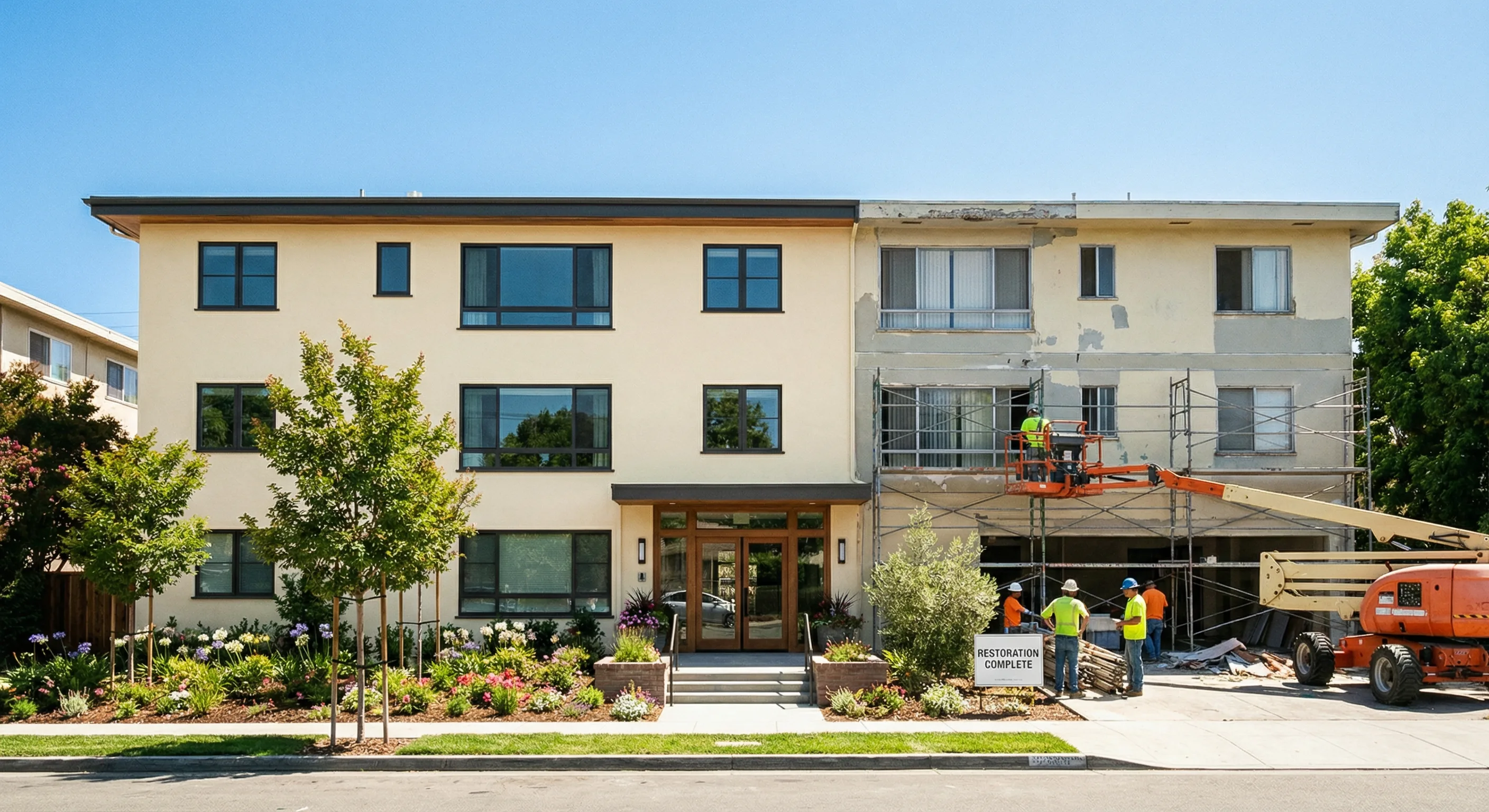
Completed building restoration with final exterior work
First phase building fully restored and returned to occupancy while crews finish exterior work on the adjacent structure. Phased approach minimized total displacement time.
Professional Process
How this work is done right
Each step ensures quality, compliance, and minimal disruption at scale.
Property-wide assessment and unit mapping
Every affected unit and common area is inspected, documented, and classified by damage severity. A master spreadsheet tracks unit number, damage type, affected rooms, moisture readings, and occupancy status for the entire property.
Phased mitigation across buildings
Crews deploy building-by-building in priority order. Emergency extraction and stabilization happen first, followed by structural drying with monitored equipment. Buildings share equipment capacity where possible to maximize efficiency.
Centralized scope and insurance coordination
One scope document covers the entire property with building-level detail. Insurance communication is centralized through the PM to prevent conflicting information. Supplements are submitted with building-wide context, not unit-by-unit.
Phased reconstruction and resident return
Buildings are reconstructed in order, with completed buildings returned to occupancy as crews move to the next phase. Final walkthroughs with property management and residents confirm completion to standards.
Cost Guidance
What to expect on pricing
Large loss restoration costs vary significantly by damage extent, facility type, and number of structures. These ranges reflect typical projects in our service areas.
Small complex (4-8 buildings, partial damage)
$100,000 - $500,000
Water damage affecting ground-floor units in multiple buildings. Includes extraction, drying, selective demolition, and reconstruction of affected units and common areas.
Mid-size complex (8-20 buildings)
$500,000 - $2M+
Widespread water or storm damage requiring building-by-building restoration. Includes multi-phase scheduling, resident relocation coordination, and multi-carrier insurance management.
Large campus event (20+ buildings)
$2M - $10M+
Catastrophe-level damage across an entire property. May involve structural engineering, environmental testing, complete reconstruction of multiple buildings, and multi-year timelines.
Regional considerations
Florida
South Florida apartment complexes face hurricane wind and flood exposure. Many older complexes have flat roofs vulnerable to ponding and membrane failure. Post-storm restoration must comply with current Florida Building Code, which may require wind mitigation upgrades during substantial repairs.
North Carolina
Charlotte-area apartment complexes commonly experience pipe burst events during winter freezes. A single building riser failure can flood 20+ units vertically. Complexes near Charlotte creeks and rivers face periodic flood events that affect ground-floor units across multiple buildings.
South Carolina
Coastal SC complexes face combined hurricane and flood risk. Many Myrtle Beach and Charleston properties are in flood zones, which triggers FEMA substantial improvement rules if repair costs exceed 50% of building value. Student housing near universities adds schedule pressure around academic calendars.
Related Guides
Connect this work with the bigger picture
Need large loss restoration?
Discuss your situation with our large loss team. We assess scope, coordinate with insurance, and deploy the resources your project demands.