Hurricane catastrophe events typically involve 10 to 100+ properties damaged simultaneously within the same geographic area. Each property has its own insurance carrier, adjuster, and scope — but the restoration workforce, equipment, and material supply are finite and shared among all claimants in the region.
Hurricane Catastrophe Response
When a Hurricane Hits a Community, Not Just a Building
Hurricane catastrophe response operates at a fundamentally different scale than individual storm damage repair. Multi-property coordination, pre-positioned equipment, self-sufficient crews, and coordinated insurance management across dozens of structures simultaneously — this is what separates CAT response from standard restoration.
- CAT Response
- Multi-Property
- Storm Surge
- FL & Carolinas
What you need to know
Pre-positioning is critical. CAT-capable restoration companies stage equipment, fuel, generators, and crew housing before a hurricane makes landfall. Companies that wait until after the storm to mobilize arrive days or weeks late when demand is at its peak.
Storm surge damage is categorically different from wind or rain damage. Salt water destroys materials that fresh water would leave salvageable — drywall, insulation, electrical components, and HVAC systems all require full replacement after salt water exposure, not just drying.
Multi-property triage determines restoration priority. Not every building can be addressed simultaneously. We categorize properties by damage severity, structural safety, occupancy status, and business impact to ensure the most critical structures receive resources first.
Self-sufficiency is non-negotiable during CAT events. Local infrastructure — fuel stations, hotels, supply houses, even cell towers — may be down. CAT teams bring their own fuel trailers, portable housing or pre-arranged lodging outside the impact zone, satellite communications, and material stockpiles.
Insurance coordination during CAT events is complex. The same carrier may have hundreds of claims in the same ZIP code. Adjusters are overwhelmed. TPA firms deploy their own field teams. Understanding CAT-specific insurance workflows — including expedited inspections, emergency authorizations, and interim scope approvals — accelerates the entire process.
From the Field
What this work actually looks like
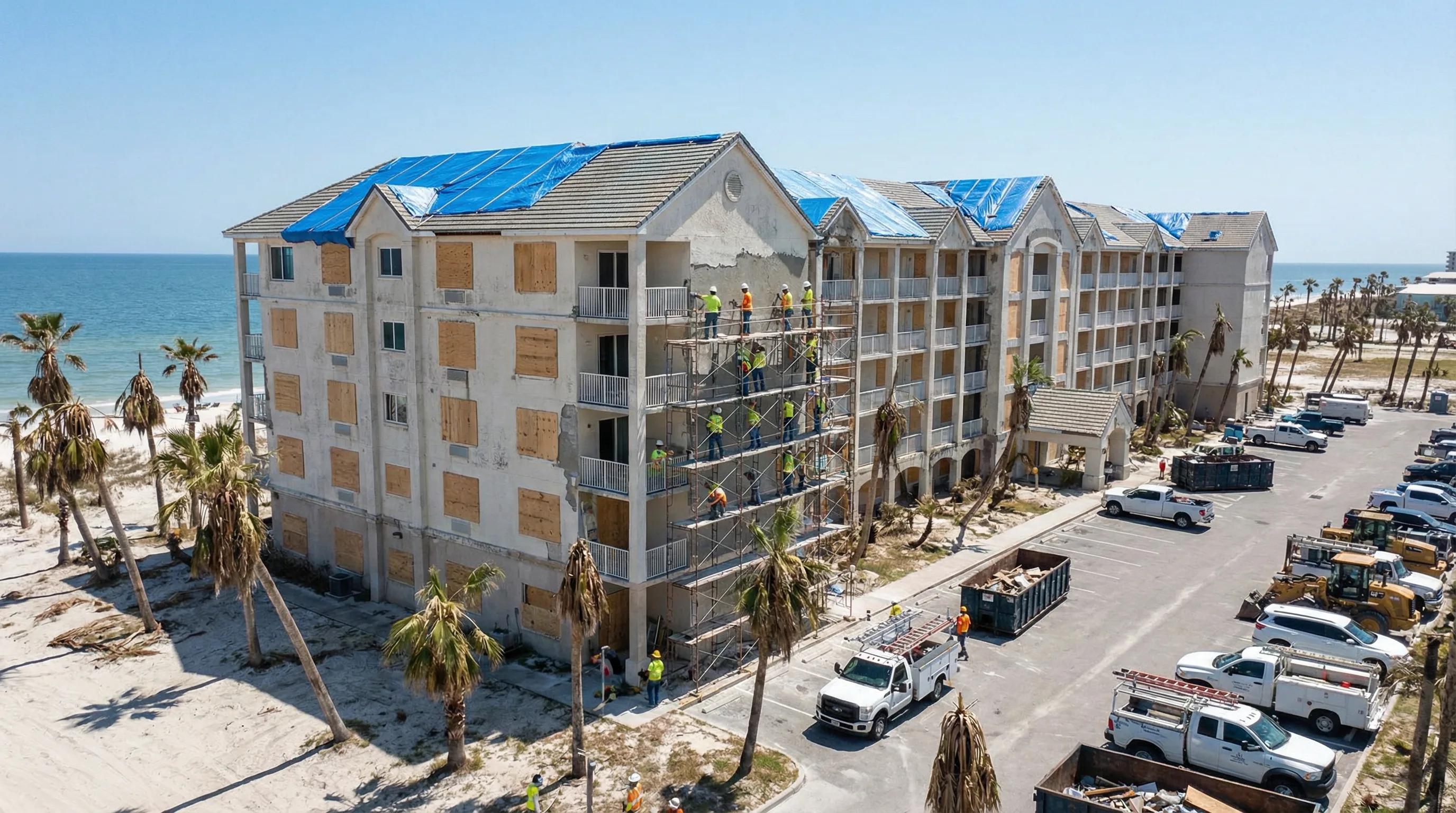
Coastal hotel restoration after Category 3 hurricane
Full exterior restoration including roof replacement, window installation, and structural repairs across 4 stories. Multiple crews working simultaneously on scaffolding.
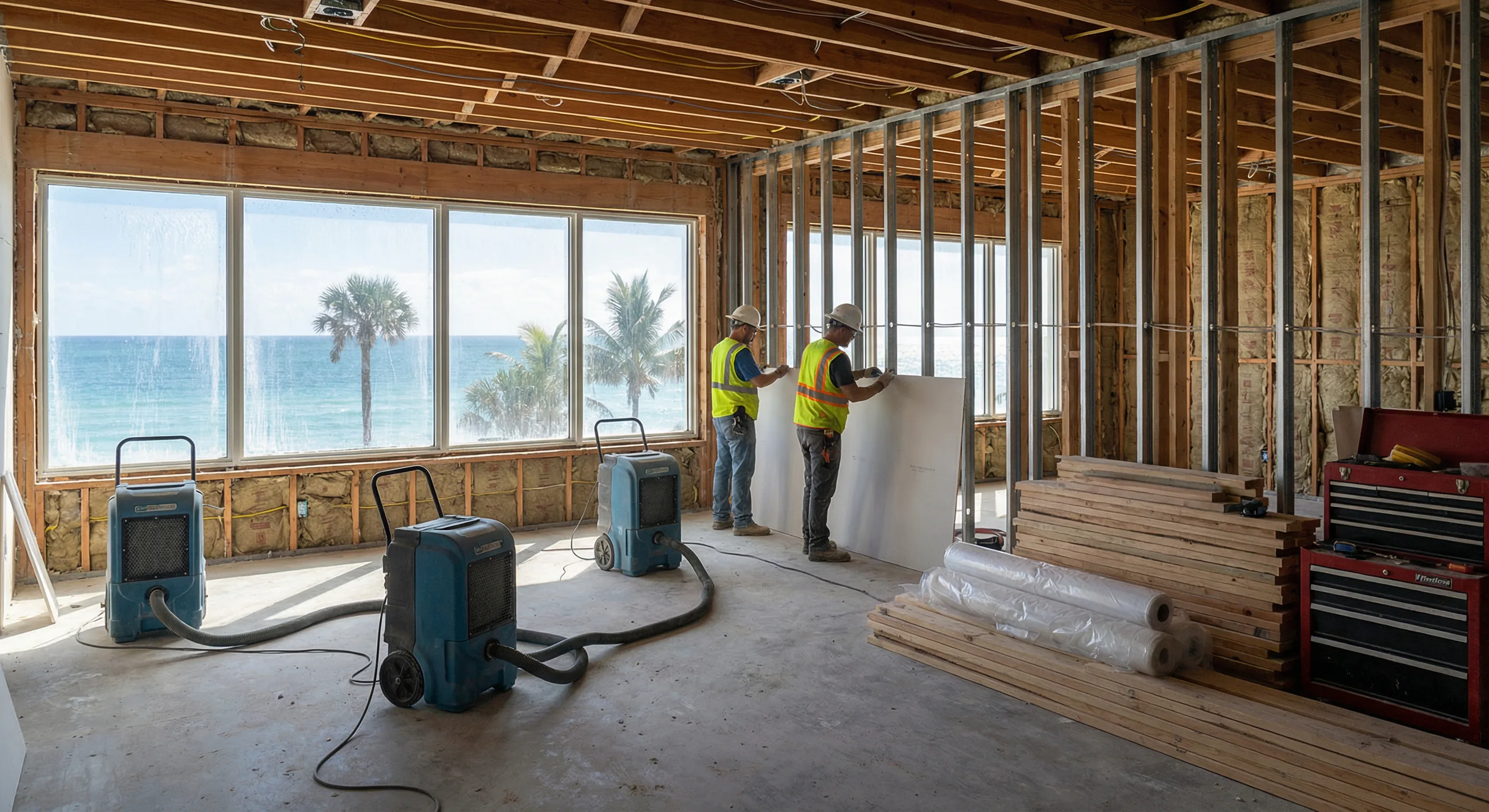
Condo unit reconstruction after storm surge damage
Complete interior gut and rebuild after salt water intrusion destroyed all materials below the flood line. New framing, electrical, and drywall installation in progress.
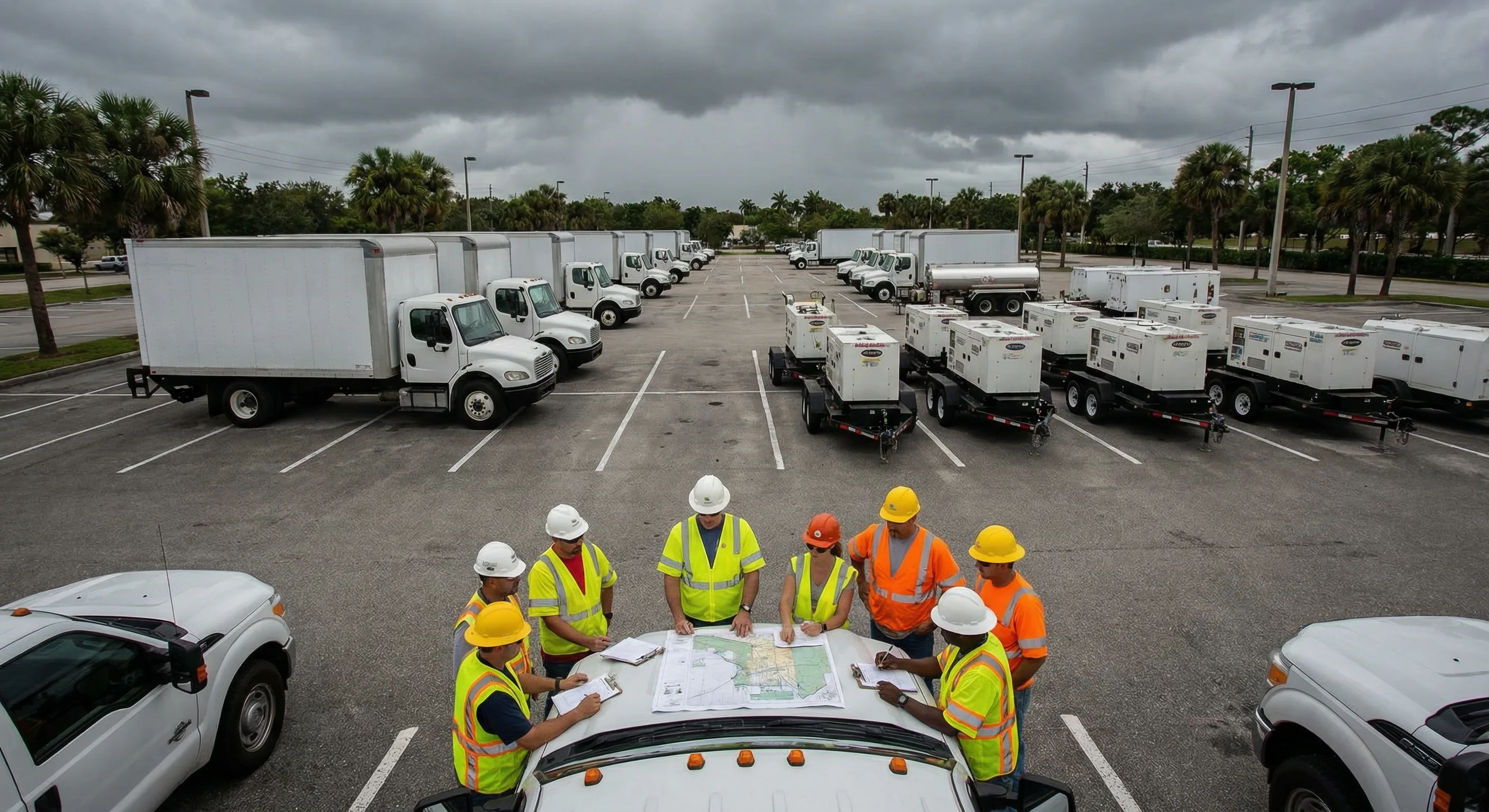
Pre-landfall CAT staging and deployment briefing
Equipment fleet staged and crews briefed on deployment zones before hurricane landfall. Generators, fuel trailers, and extraction equipment ready for immediate dispatch.
Professional Process
How this work is done right
Each step ensures quality, compliance, and minimal disruption at scale.
Pre-storm staging and monitoring
72-48 hours before projected landfall, equipment convoys deploy to staging areas outside the projected impact zone. Fuel, generators, extraction equipment, and drying systems are pre-loaded. Crew assignments and deployment zones are mapped.
Post-landfall assessment and triage
Damage assessment teams sweep assigned zones within hours of safe access. Properties are categorized by severity, structural safety, and priority. Assessment data feeds the deployment plan and initial insurance notifications.
Emergency stabilization across multiple sites
Tarping, board-up, water extraction, and debris removal begin simultaneously across priority properties. Portable generators provide temporary power. Crews operate 24/7 shifts during the initial stabilization phase.
Phased restoration and coordinated reconstruction
Full-scope mitigation and reconstruction proceed building by building according to the priority plan. Insurance coordination, permitting, and material procurement are centralized. Daily reporting keeps all stakeholders aligned.
Cost Guidance
What to expect on pricing
Large loss restoration costs vary significantly by damage extent, facility type, and number of structures. These ranges reflect typical projects in our service areas.
Single coastal property (wind + surge)
$75,000 - $500,000+
Depends on storm surge height, wind damage extent, and whether substantial improvement threshold is triggered. Flood and wind are often separate policies with separate deductibles.
Multi-unit condo complex (20-50 units)
$500,000 - $5M+
Includes common area restoration, individual unit mitigation and reconstruction, structural repairs, and coordination across HOA and individual owner insurance policies.
Hospitality / commercial coastal property
$1M - $10M+
Full-service hotel and resort restoration including guest rooms, common areas, kitchens, mechanical systems, and exterior. Business interruption adds urgency beyond property damage.
Regional considerations
Florida
Florida faces the highest hurricane risk in our service area. Coastal properties from Miami to the Panhandle are vulnerable to both Atlantic and Gulf storms. Post-storm building code requirements — including impact-rated glazing, enhanced roof tie-downs, and flood elevation standards — apply to all substantial repairs.
North Carolina
The Outer Banks and eastern NC coastline are exposed to Atlantic hurricanes and nor'easters. Inland flooding from hurricane remnants can affect properties far from the coast — Florence (2018) demonstrated that river flooding can be more destructive than coastal wind damage in NC.
South Carolina
Charleston and the Lowcountry face combined hurricane wind, storm surge, and inland flooding risk. Historic district properties require coordination with preservation requirements even during emergency restoration. Myrtle Beach and the Grand Strand are high-density hospitality zones.
Related Guides
Connect this work with the bigger picture
Need large loss restoration?
Discuss your situation with our large loss team. We assess scope, coordinate with insurance, and deploy the resources your project demands.