888-245-5155
Call Now 24/7
Coastal flooding aftermath from hurricane storm surge requiring professional restoration

Storm & Hurricane Damage Guide

Hurricane Damage Restoration

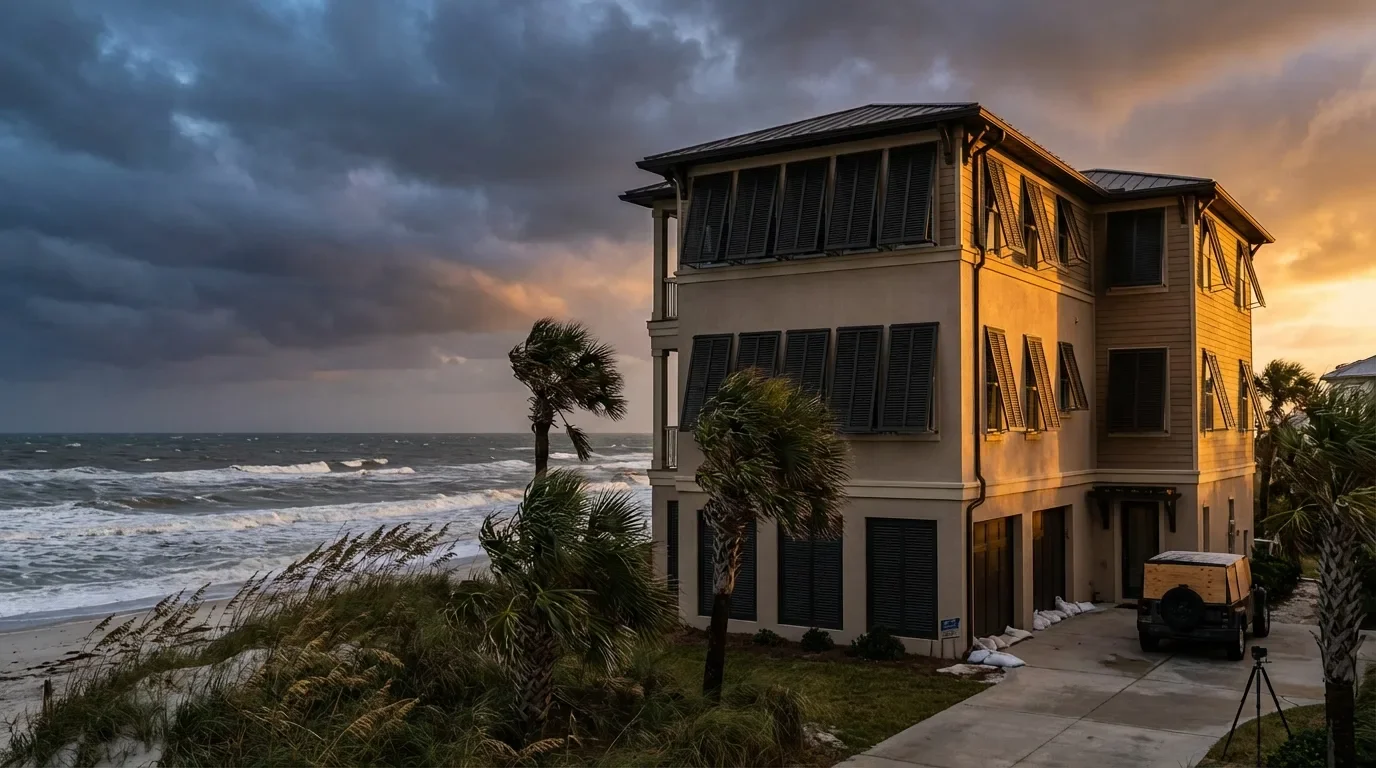
Hurricanes combine wind, rain, storm surge, and flooding into a single catastrophic event. Each damage type requires a different restoration approach—and a different insurance claim strategy. Our teams handle the full scope from emergency tarping through complete reconstruction.

  • Storm Surge
  • Wind Damage
  • Coastal FL & SC
  • 24/7 Response

First-Hour Priorities

What to do immediately

Step 1

Do not enter flood-damaged areas until water recedes

Storm surge water contains sewage, chemicals, and debris. Standing water may hide downed power lines, displaced wildlife, or structural collapse. Wait for official clearance before returning to your property.

Step 2

Document damage before any cleanup begins

Photograph and video all damage from multiple angles. Include waterline marks on walls, roof damage, broken windows, and displaced contents. This documentation is critical for separating wind and flood claims.

Step 3

Separate wind damage from water damage in your records

Wind damage (roof, siding, windows) is covered by homeowners insurance. Flood damage (storm surge, rising water) requires a separate flood policy. The distinction directly affects your claim—document both types separately.

Step 4

Call for emergency tarping immediately

Every hour with an exposed roof means more water intrusion. Emergency tarping is required by most insurance policies as part of your duty to mitigate further damage. Do not wait for the adjuster.

Field Visuals

Scenarios, equipment, and restoration examples

These examples show the conditions and response patterns our teams evaluate during active storm damage restoration.

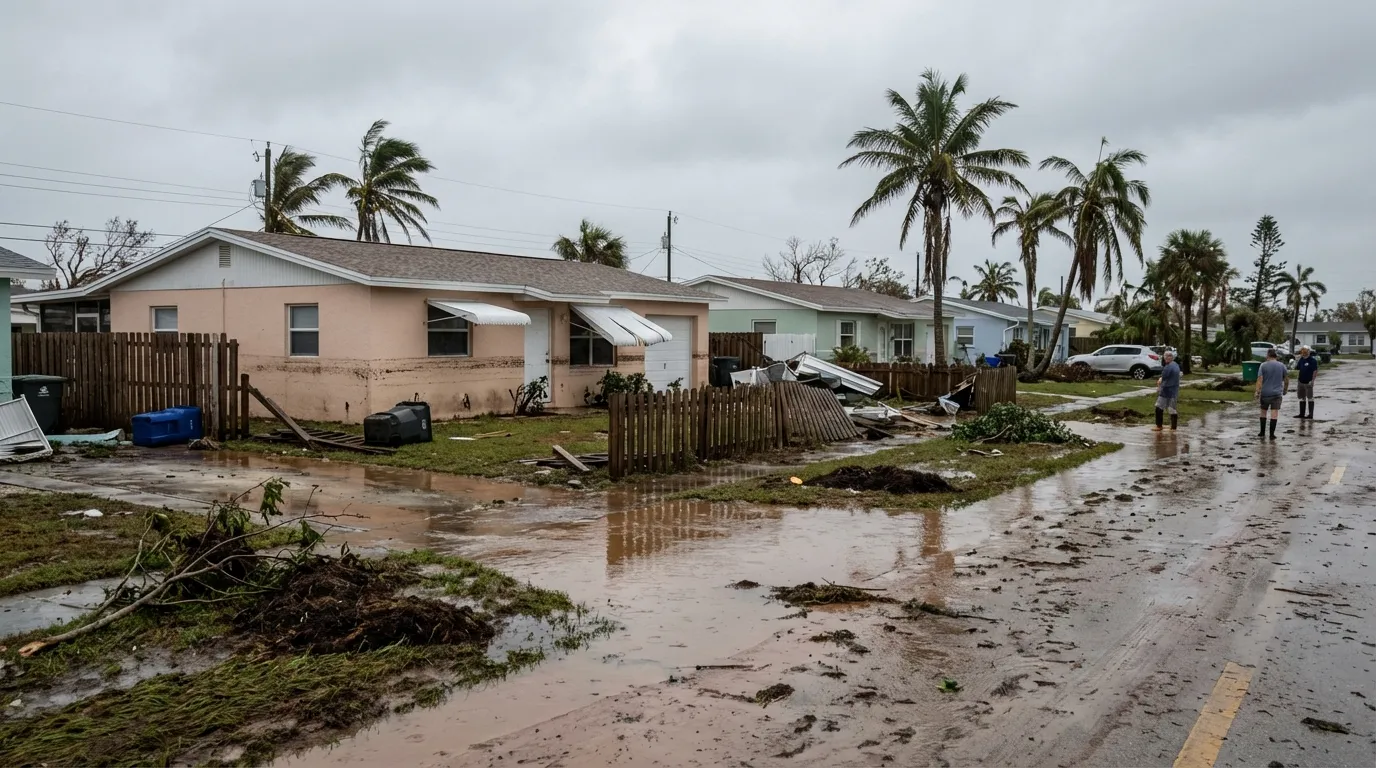
Coastal flooding aftermath from hurricane storm surge in Florida neighborhood

Storm Surge Aftermath

Storm surge pushes saltwater inland, leaving contaminated water and sediment inside homes. Saltwater damage requires specialized decontamination beyond standard water restoration.

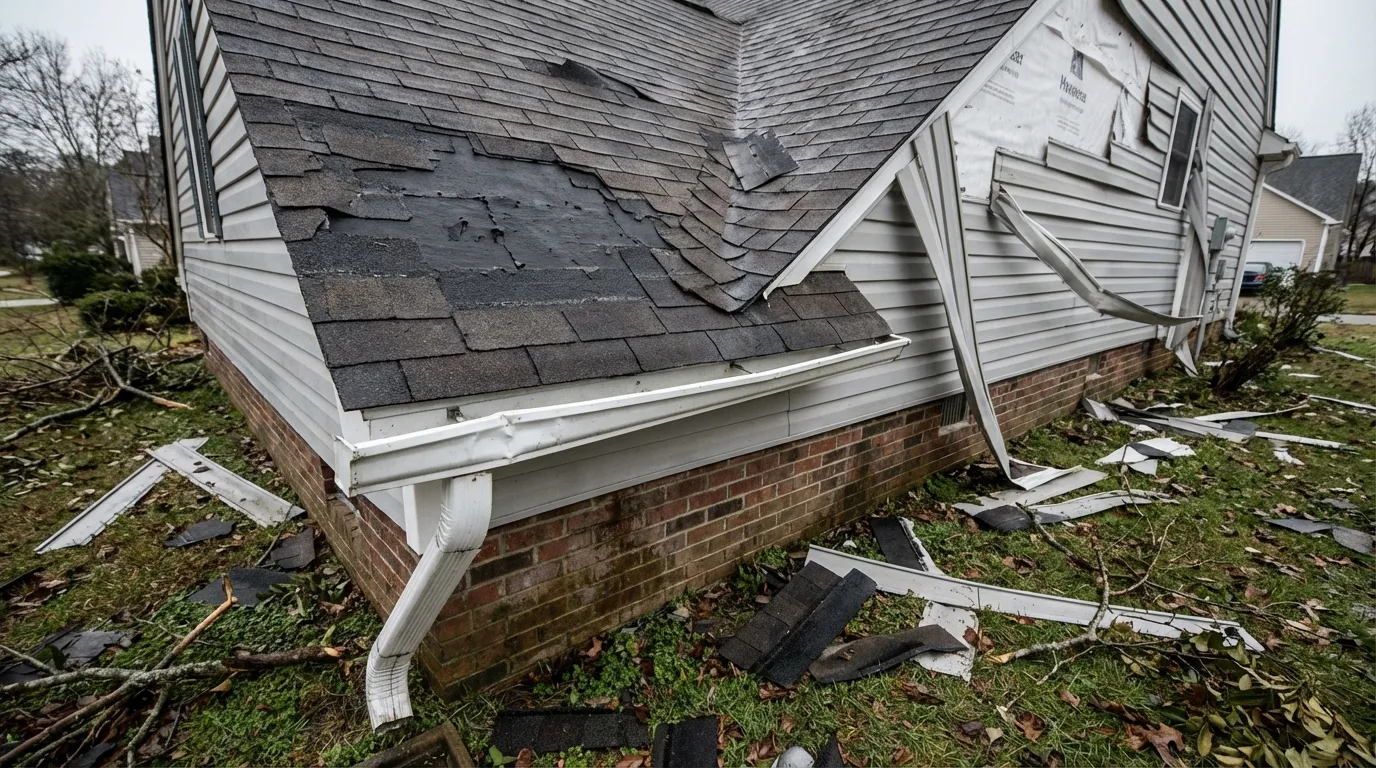
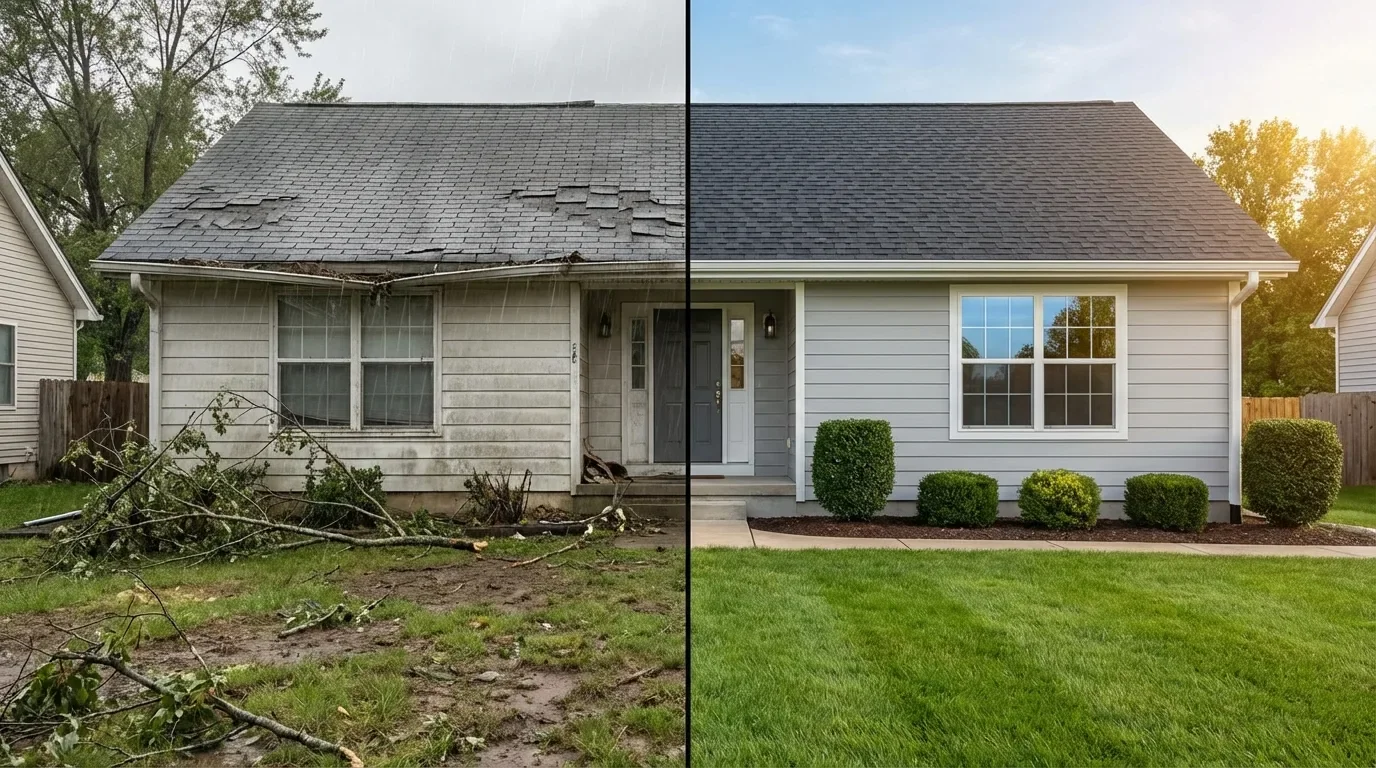
Hurricane wind damage to residential roof with missing shingles and damaged siding

Hurricane Wind Damage

Category 2+ hurricanes routinely strip shingles, tear siding, and breach window seals. The resulting rain intrusion causes secondary water damage within hours.

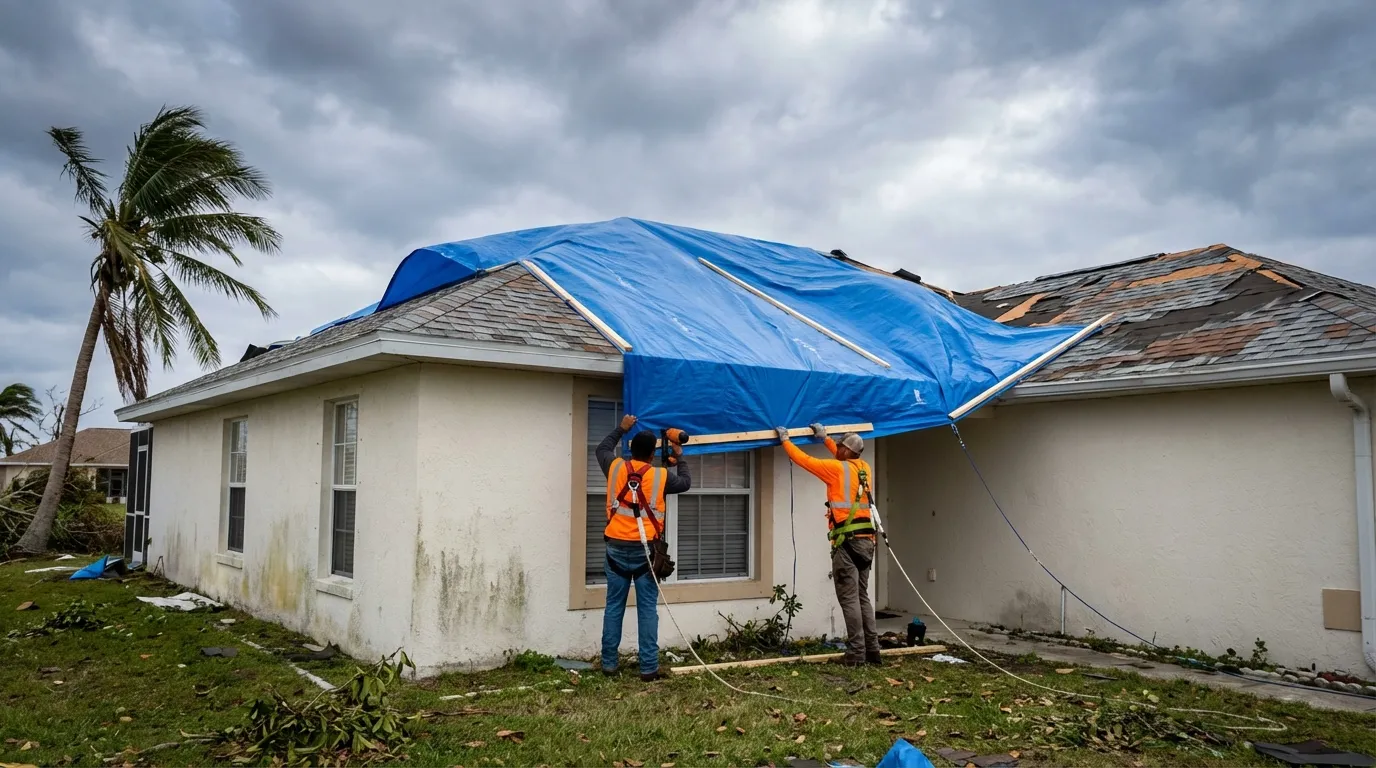
Professional crew installing emergency blue tarp on hurricane-damaged roof

Emergency Tarping Response

Emergency roof tarps prevent rain intrusion after hurricanes remove roofing materials. Our crews deploy within hours of storm passage.

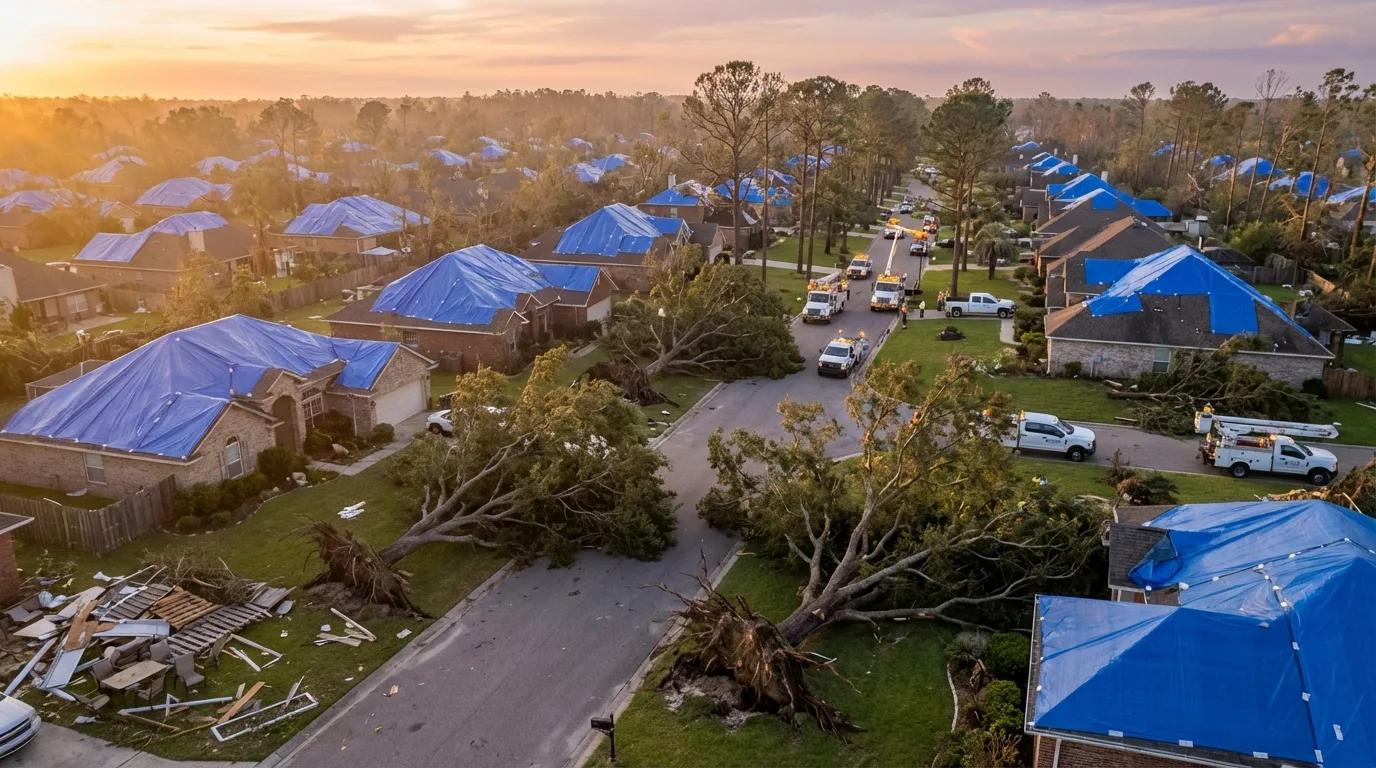
Aerial view of neighborhood after hurricane showing widespread blue tarps and debris

Neighborhood-Scale Damage

Major hurricanes affect entire neighborhoods simultaneously. Our large loss team coordinates multiple crews across affected areas for efficient community-wide restoration.

Technical Workflow

How professional restoration progresses

This sequence keeps decisions measurable, documented, and aligned with insurance requirements and safe reconstruction.

Damage Category Assessment

We evaluate hurricane damage by type: wind (Category 1-5 scale), storm surge depth, rain intrusion points, and debris impact zones. Each category determines the restoration protocol and insurance claim strategy.

Emergency Securing & Water Extraction

Roof tarping and board-up stop further weather exposure. Industrial pumps extract storm surge water. Saltwater extraction requires immediate action—saltwater corrodes wiring, plumbing, and structural fasteners within hours.

Decontamination & Structural Drying

Storm surge introduces biological contaminants that standard drying cannot address. Full antimicrobial treatment precedes commercial-grade dehumidification. Moisture mapping tracks drying progress to IICRC standards.

Reconstruction to Code

Post-hurricane reconstruction often requires upgrading to current building codes—especially in Florida where post-Andrew codes mandate hurricane-rated windows, impact-resistant roofing, and reinforced connections.

Regional considerations

South Florida

Storm surge is the primary hurricane threat along the Atlantic coast and Gulf-facing areas. Post-Andrew building codes (1992+) require hurricane-rated windows and reinforced roof connections. Wind mitigation inspections can reduce insurance premiums significantly.

North Carolina

Hurricanes reaching Charlotte and inland NC weaken to tropical storms but still produce damaging winds and extreme rainfall. Florence (2018) dumped 30+ inches of rain. Inland flooding often exceeds wind damage in these events.

South Carolina

Charleston and the Lowcountry face direct hurricane landfall risk with significant storm surge exposure. Hugo (1989) remains the benchmark. Myrtle Beach and the Grand Strand are particularly vulnerable to coastal erosion during hurricane events.