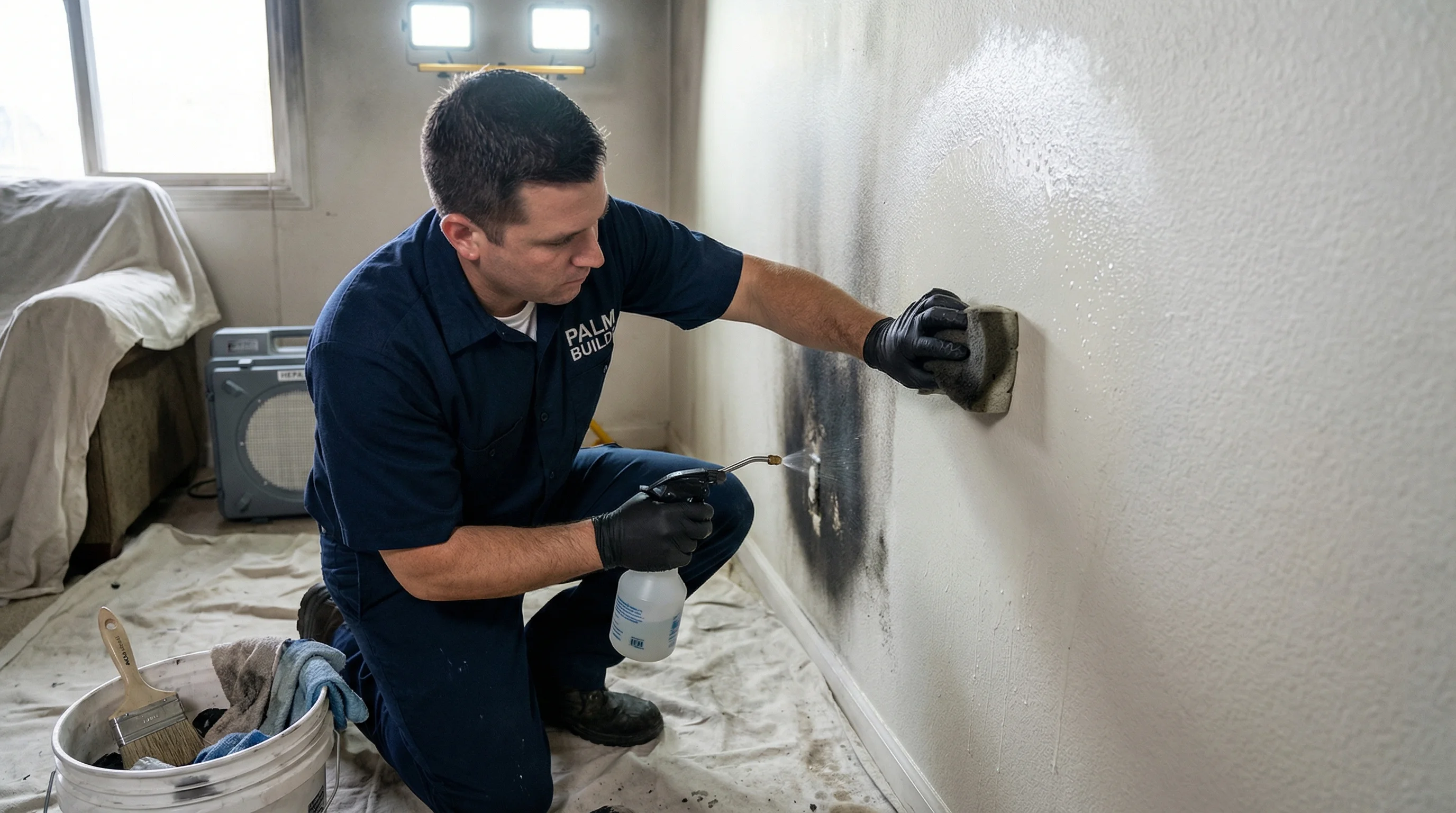
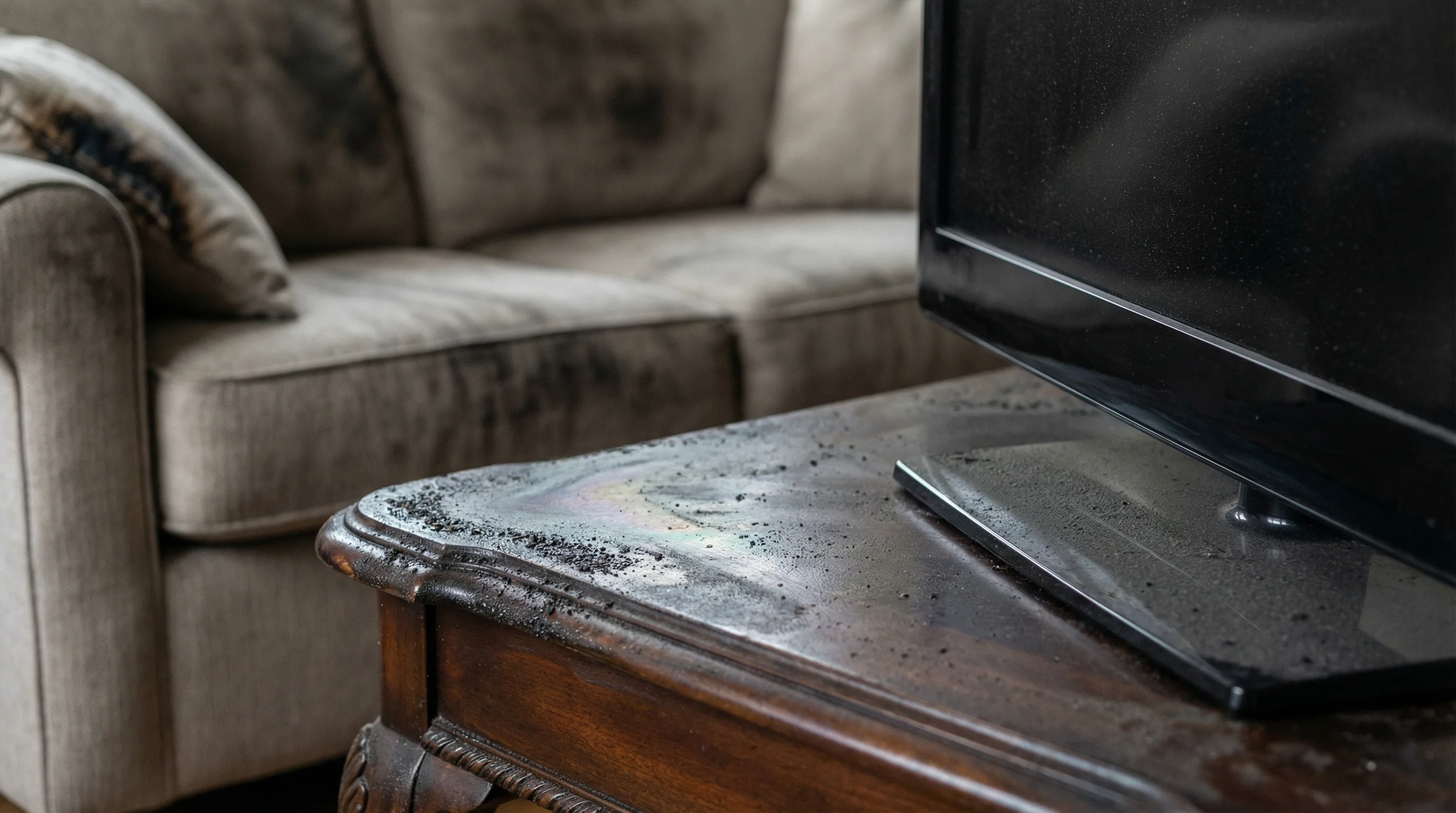
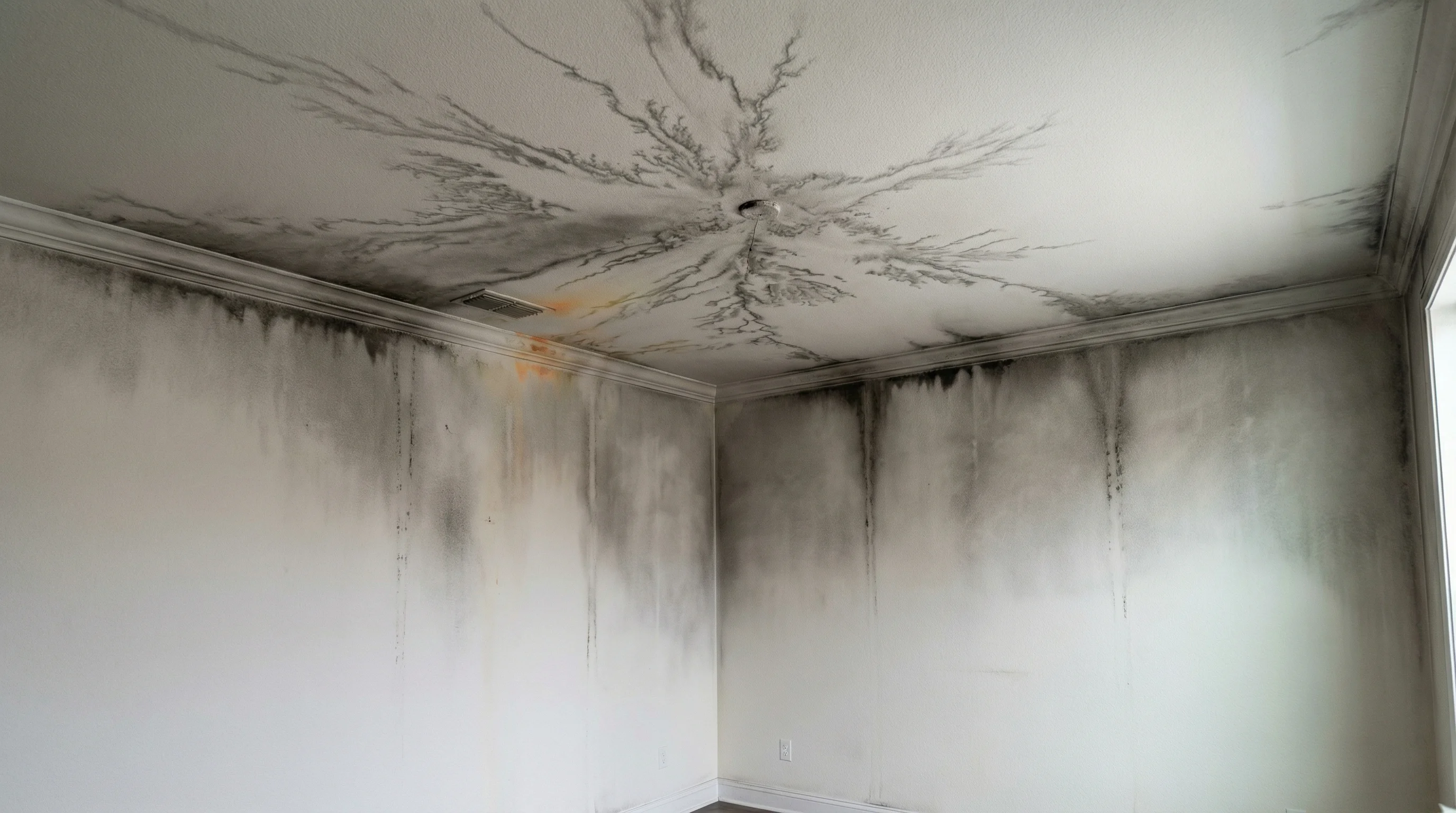
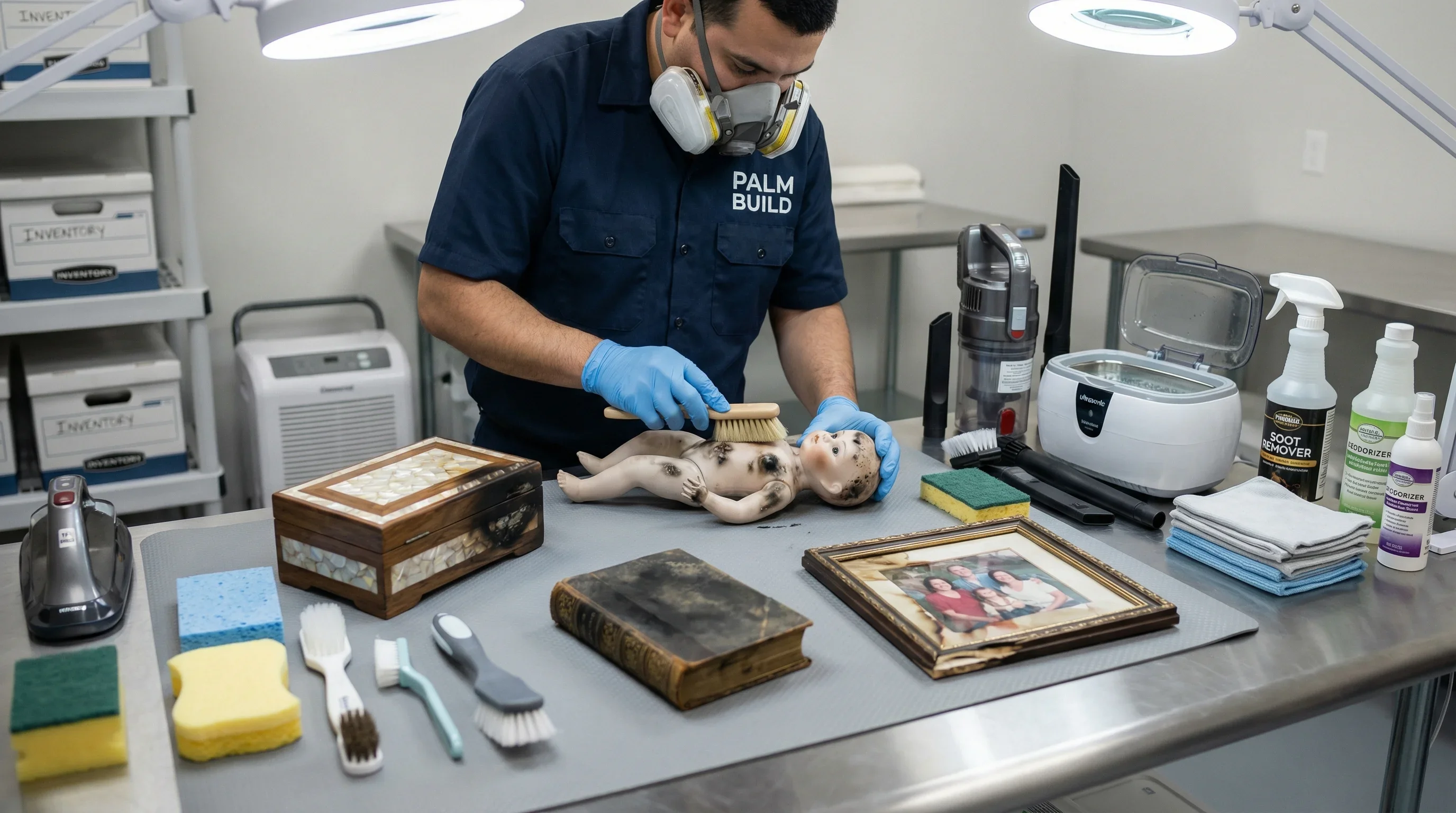
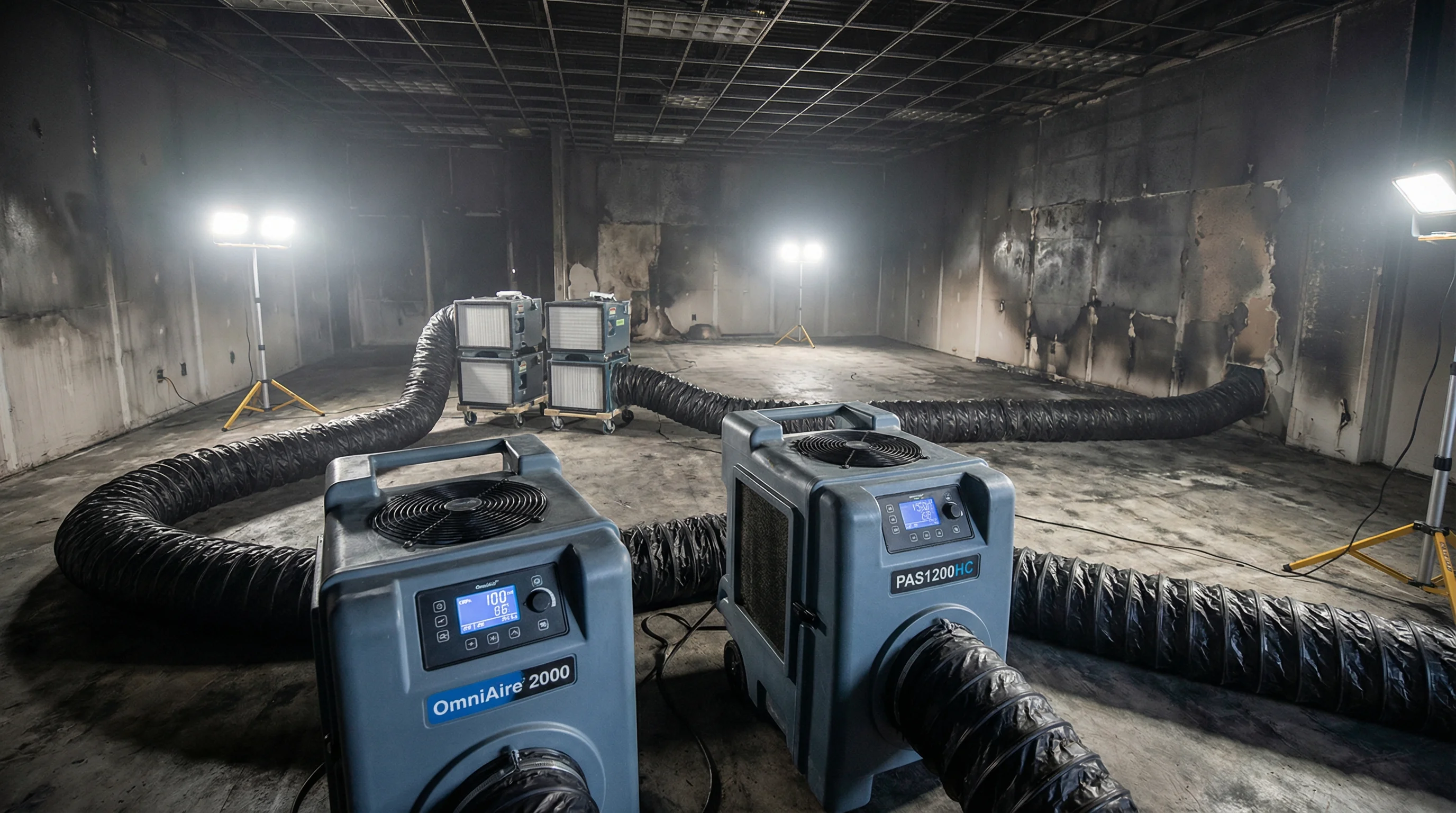
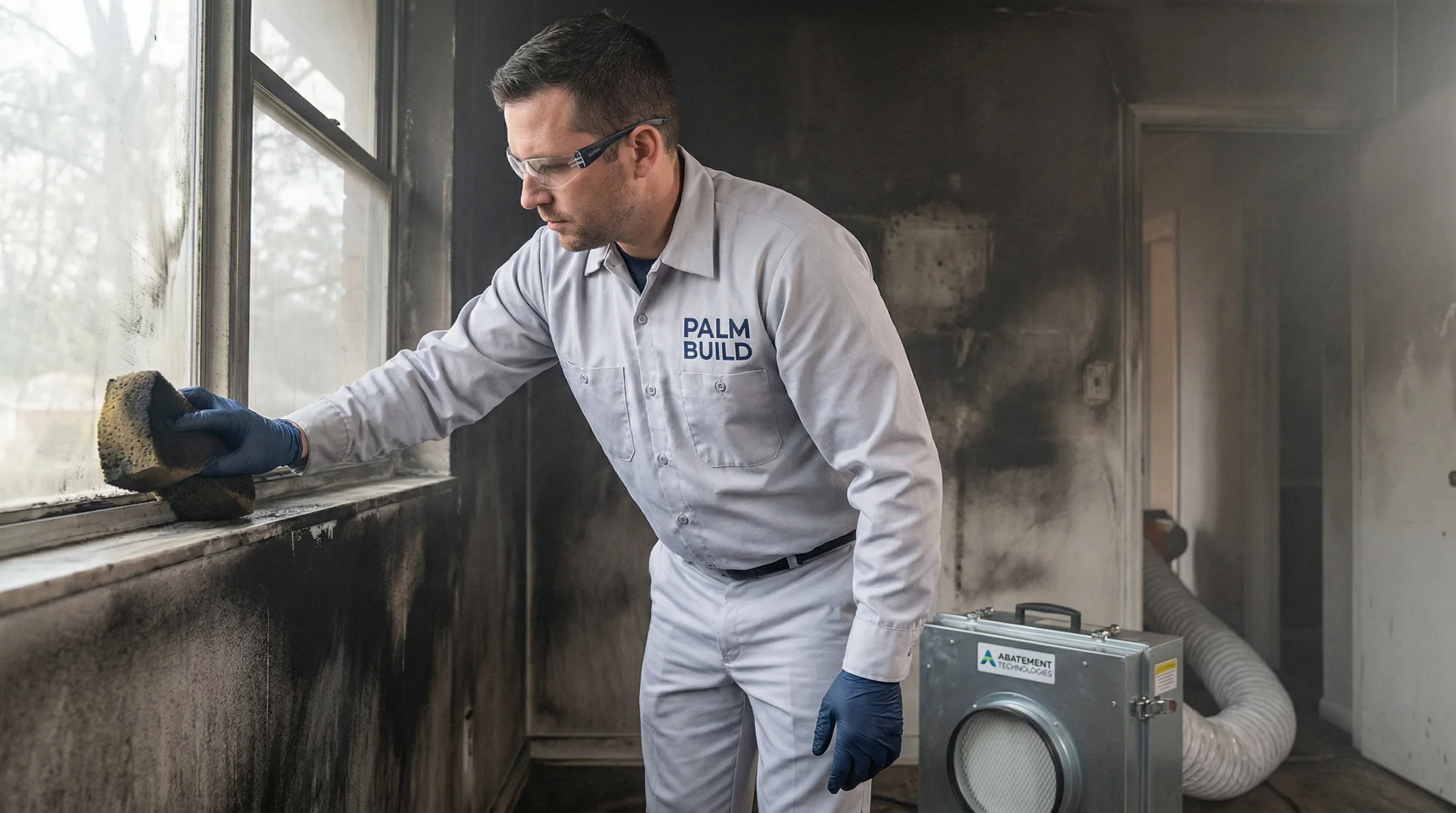
Smoke residue falls into four primary categories, each requiring a distinct cleaning approach. Dry smoke is produced by fast-burning, high-temperature fires fueled by wood and paper. It leaves a fine, powdery residue that can be effectively removed with HEPA vacuuming and dry chemical sponges when caught early. Wet smoke, by contrast, results from slow-smoldering fires involving plastics, rubber, and synthetics. This residue is thick, sticky, and pungent—it smears readily and demands solvent-based or alkaline cleaning agents applied in multiple treatment rounds. Protein smoke, typically from kitchen fires where organic material burns at low heat, leaves a nearly invisible residue that carries an intense, persistent odor and discolors paints and varnishes on contact. Fuel or oil-based soot is the most challenging, arising from petroleum product fires and leaving a dense, black, adhesive residue that penetrates deeply and requires aggressive chemical treatment. Using the wrong cleaning method for the soot type—for example, applying water to dry smoke or wiping wet smoke with a cloth—will set the residue permanently and may render surfaces unrestorable.
Time is a critical factor in smoke damage cleaning because soot is inherently acidic. From the moment residue settles on a surface, it begins a chemical reaction that etches and corrodes the underlying material. Metals develop pitting and oxidation within hours. Painted surfaces yellow and blister. Porous materials like drywall and fabric absorb soot acids progressively deeper, making removal increasingly difficult and eventually impossible without replacing the material. This is why the restoration industry emphasizes a 24- to 48-hour response window—not as a marketing tactic, but as a reflection of the chemistry involved.
Professional smoke damage cleaning always begins with thorough HEPA vacuuming before any wet cleaning methods are introduced. This step is essential because loose soot particles, if disturbed by liquid cleaners or agitation, become airborne or are driven deeper into porous surfaces. HEPA vacuums capture particulates down to 0.3 microns, removing the bulk of surface contamination safely. Only after dry removal is complete do technicians apply surface-appropriate wet cleaning solutions—alkaline degreasers for protein residue, solvent-based agents for wet smoke, or mild detergents for dry soot. This sequenced approach, combined with proper soot type identification, is what separates professional restoration from well-intentioned but damaging DIY attempts that often result in permanent staining, embedded odors, and material replacement that could have been avoided.