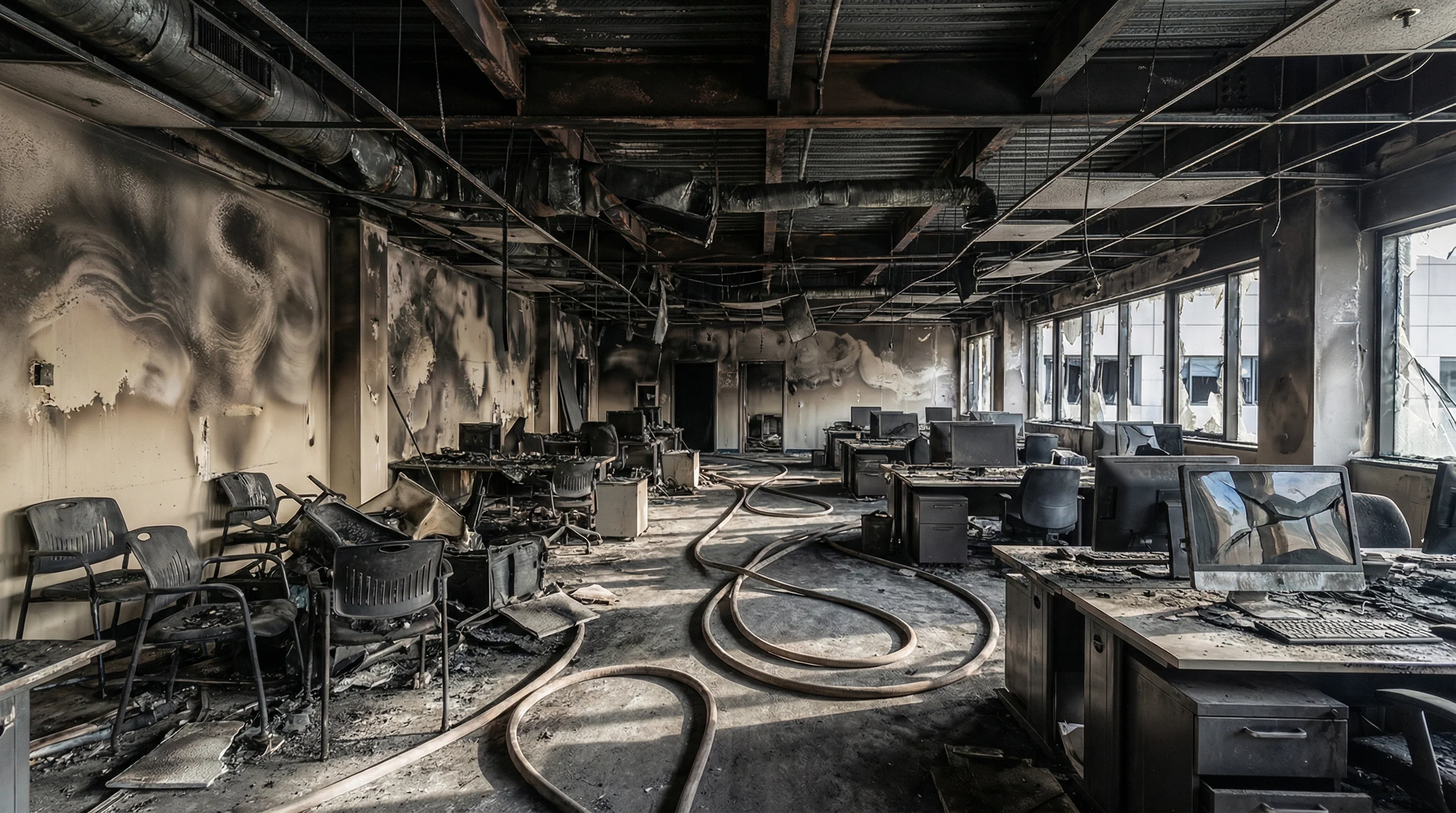
Commercial building fire damage showing smoke-damaged office interior

Fire & Smoke Cleanup Guide

Commercial Fire Damage Restoration

When fire strikes a business, every hour of downtime costs money. Commercial fire restoration requires coordinating multiple trades, meeting building codes, and working within your business continuity plan. Our team manages the entire process from emergency response to final certificate of occupancy.

  • Business Recovery
  • Code Compliance
  • Large Loss
  • Minimal Downtime

First-Hour Priorities

What to do immediately

Step 1

Activate your business continuity plan

If you have a business continuity plan, activate it immediately. Contact key personnel, redirect customer communications, and notify vendors about potential delivery delays. If you don't have a plan, our team can help you manage these logistics while restoration is underway. Early coordination with stakeholders prevents cascading disruptions to your supply chain and client relationships.

Step 2

Document damage for Business Interruption Insurance

Beyond physical damage, document everything related to lost revenue: canceled orders, employee time, temporary relocation costs. Business Interruption (BI) insurance can cover these losses, but thorough documentation is essential. Begin tracking extra expenses from the moment the fire occurs, including temporary staffing, expedited shipping for rerouted orders, and any overtime costs incurred during the recovery period.

Step 3

Secure inventory, records, and sensitive equipment

If safe to access, prioritize securing financial records, customer data, and high-value inventory. Smoke-damaged electronics (servers, computers) should be powered down and sent for professional cleaning—not turned on, as corrosive soot residues can cause permanent circuit damage within hours. If your facility contains regulated materials or sensitive client data, coordinate with your compliance officer to ensure chain-of-custody protocols are followed during equipment removal.

Step 4

Contact a commercial restoration company immediately

Commercial fire restoration requires specialized equipment, larger crews, and experience with building codes and compliance requirements. General contractors often lack the mitigation expertise needed for fire damage. A qualified restoration firm will begin emergency stabilization within hours, not days, and can interface directly with your insurance carrier to streamline the claims process from the outset.

In-Depth Guide

Understanding the process

Commercial fire damage restoration differs fundamentally from residential work in scale, regulatory complexity, and the urgency of business recovery. A residential fire typically affects a single family and structure, while a commercial fire can displace dozens or hundreds of employees, disrupt supply chains, and jeopardize client relationships that took years to build. The restoration process must account for building code compliance across commercial occupancy classifications, fire suppression system repairs or upgrades, ADA accessibility requirements, and industry-specific regulations such as health department standards for food service or HIPAA-compliant data handling for healthcare facilities. Each of these layers adds coordination requirements that demand experienced project management from day one.

One of the most underestimated aspects of commercial fire damage is how HVAC systems spread smoke contamination throughout an entire building. Commercial HVAC units serve large zones and recirculate air across multiple floors or tenant spaces. When a fire occurs, the system pulls smoke, soot particles, and combustion byproducts into the ductwork and distributes them far beyond the fire origin. This means areas with no visible fire damage may still contain hazardous particulate deposits on surfaces, inside wall cavities, and within ceiling plenums. Full HVAC decontamination—including duct cleaning, coil washing, filter replacement, and air handler inspection—is a non-negotiable step before any commercial building can be safely reoccupied. Air quality testing using particle counters and volatile organic compound monitors verifies that indoor air meets occupational health standards.

Phased restoration is the standard approach for minimizing business downtime on commercial fire projects. Rather than waiting for the entire facility to be fully restored, the building is divided into zones that are remediated and reconstructed in sequence. Zones that sustained less damage are prioritized, cleaned, tested, and cleared for occupancy while heavier reconstruction continues in other areas. This requires careful containment planning, negative air pressure management, and coordination with building inspectors who must approve each zone independently. Simultaneously, documentation for commercial insurance claims must be maintained at a level of detail that supports both the property damage claim and any Business Interruption coverage. This includes daily progress logs, labor and material tracking, revenue loss calculations, and evidence of extra expenses incurred to maintain business operations during the restoration. Thorough documentation from the outset directly impacts the speed and completeness of insurance reimbursement.
Field Visuals

Scenarios, equipment, and restoration examples

These examples show the conditions and response patterns our teams evaluate during active fire damage restoration.

Commercial office after fire showing smoke damage to ceiling, walls, and workstations

Commercial Office Fire Damage

Smoke damage in a commercial office space. Ceiling tiles, HVAC systems, and electronics all require professional restoration. The goal is getting the business operational as fast as possible.

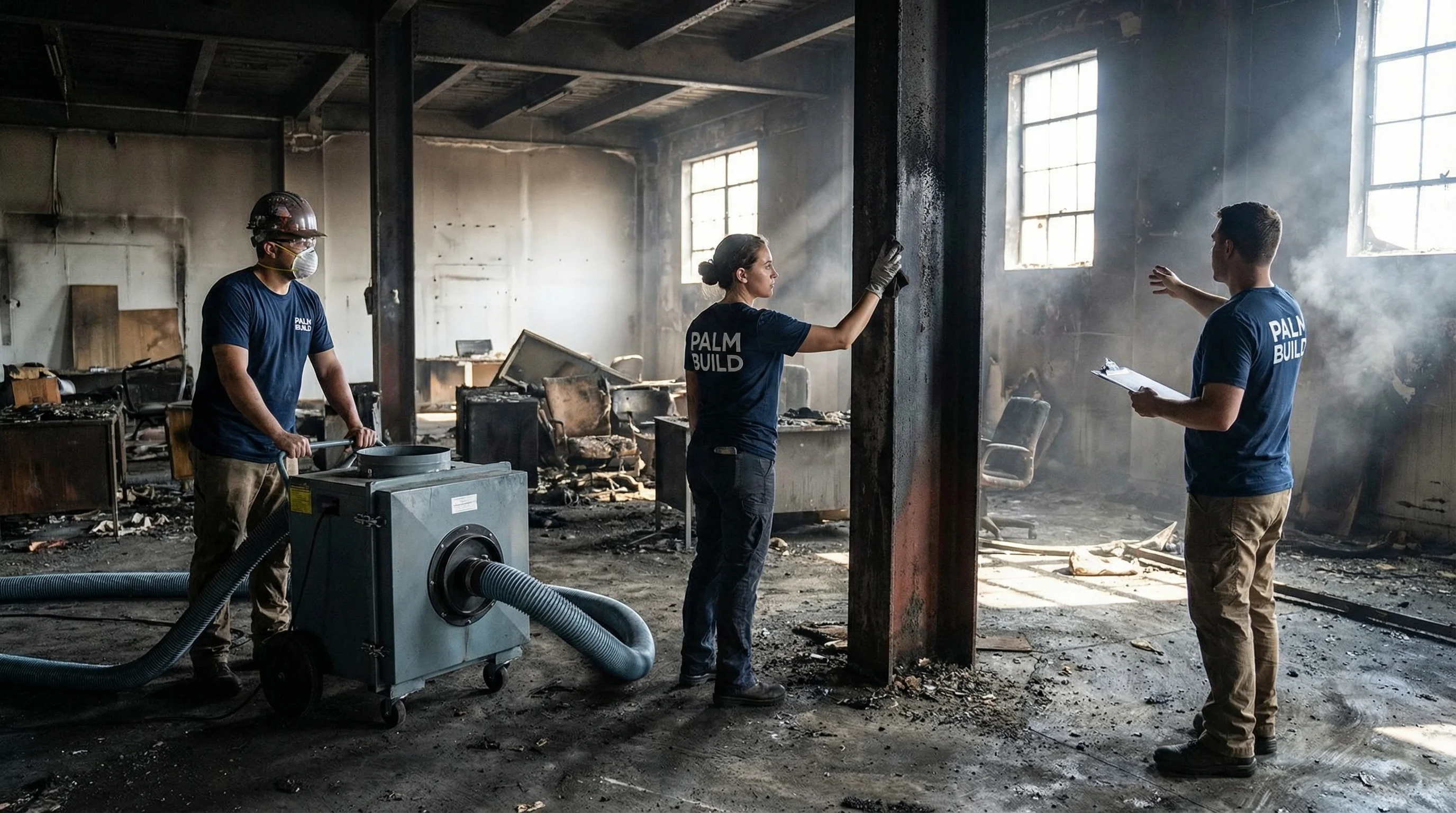
Professional fire restoration crew preparing for large commercial cleanup project

Large-Scale Crew Deployment

Commercial fire restoration requires larger crews working in coordinated shifts. Our team scales to match the scope of the project and your timeline requirements.

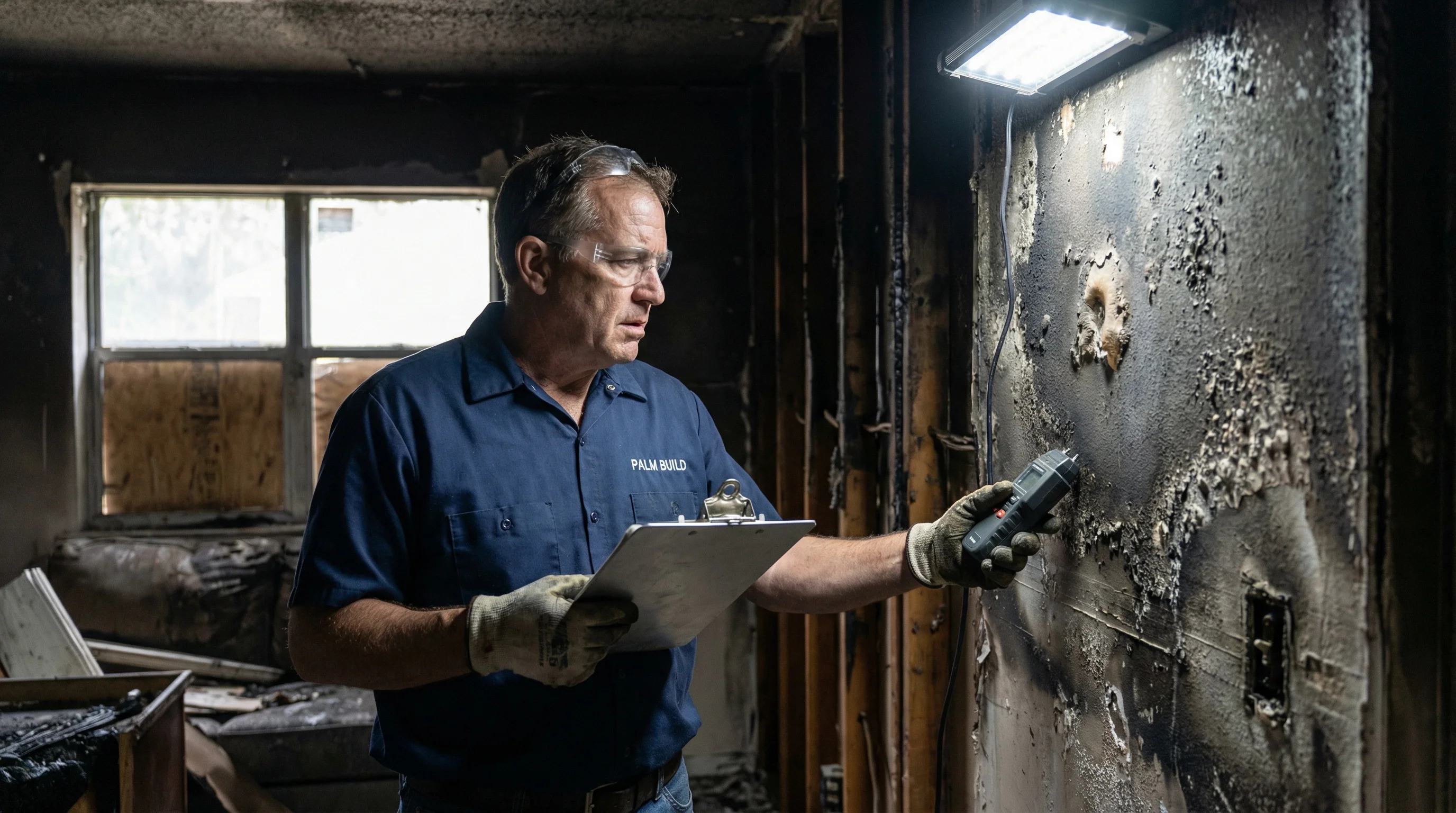
Restoration technician conducting fire damage assessment and inspection of commercial property

Damage Assessment and Inspection

Every commercial fire restoration project begins with a thorough assessment. Technicians document structural integrity, smoke penetration depth, and moisture intrusion from firefighting efforts to build a detailed scope of work.

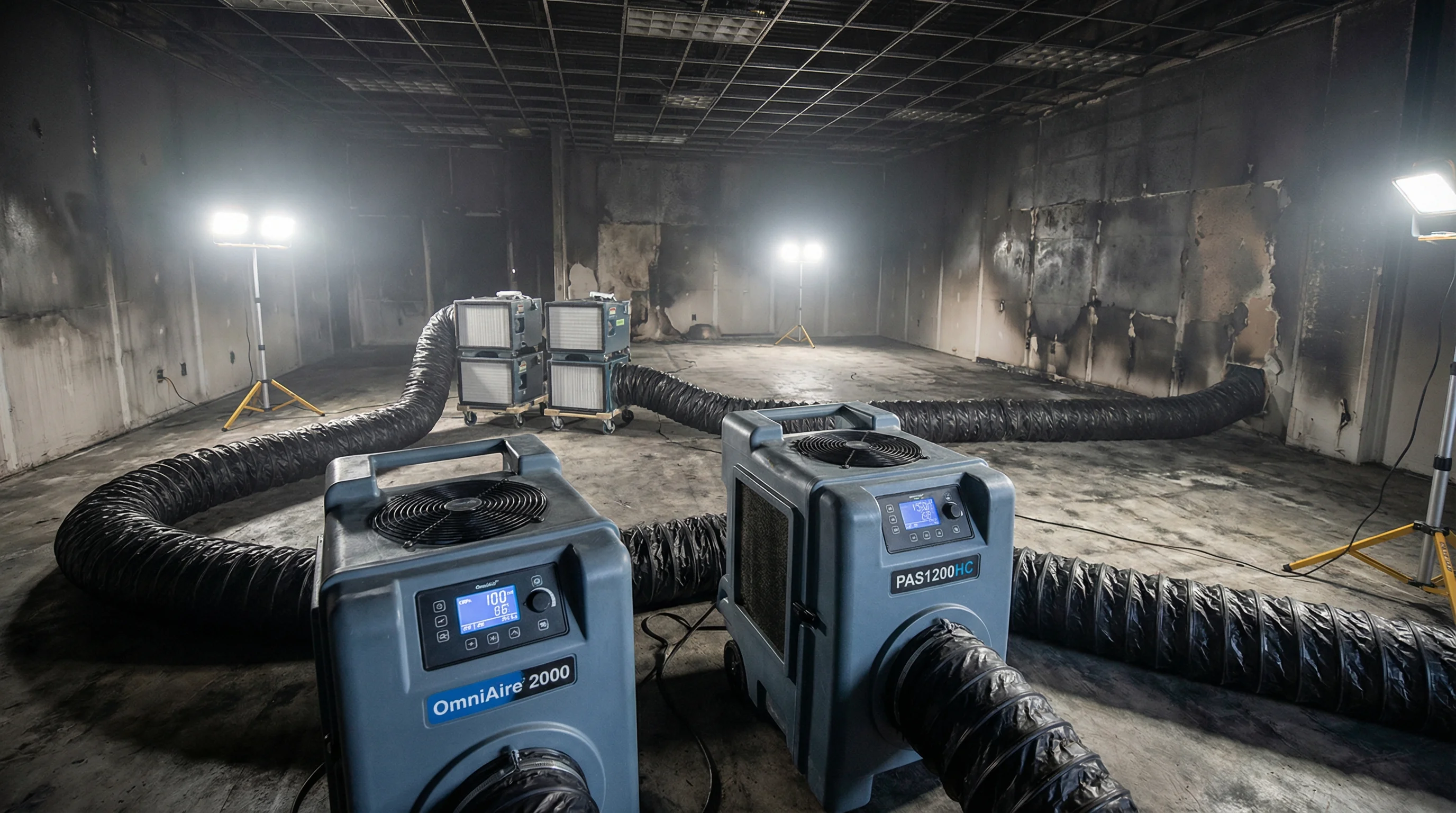
HEPA air scrubber and filtration equipment deployed in commercial building after fire

Air Scrubbing and HEPA Filtration

Industrial-grade HEPA air scrubbers are deployed throughout the facility to remove airborne soot particles and smoke odor compounds. Continuous air quality monitoring ensures the environment meets safe occupancy standards before employees return.

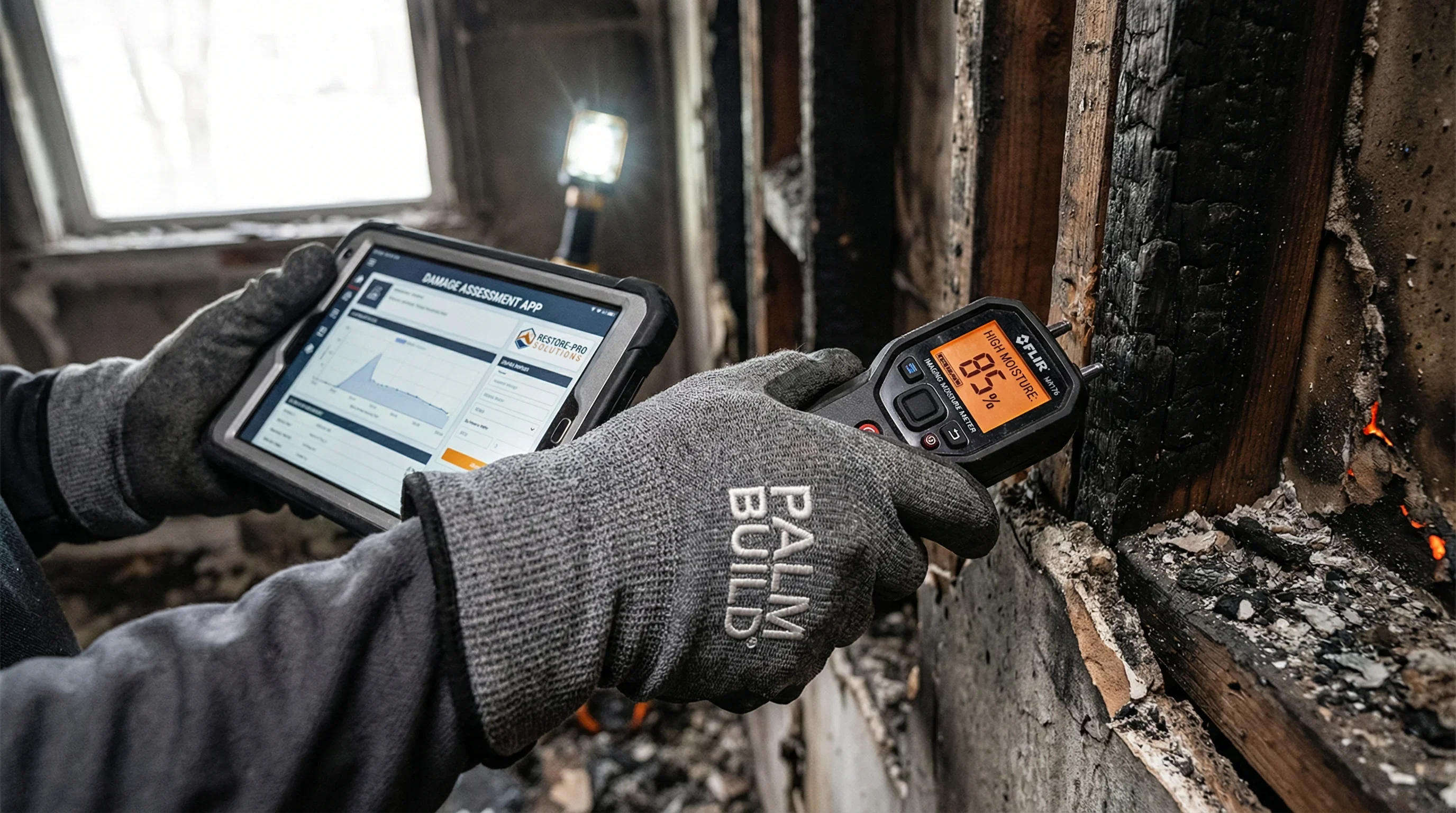
Close-up documentation of fire damage for insurance claim records

Insurance Documentation Close-Up

Detailed photographic documentation of fire and smoke damage is critical for commercial insurance claims. Each affected area is cataloged with measurements, damage classifications, and restoration recommendations that align with insurance adjuster requirements.

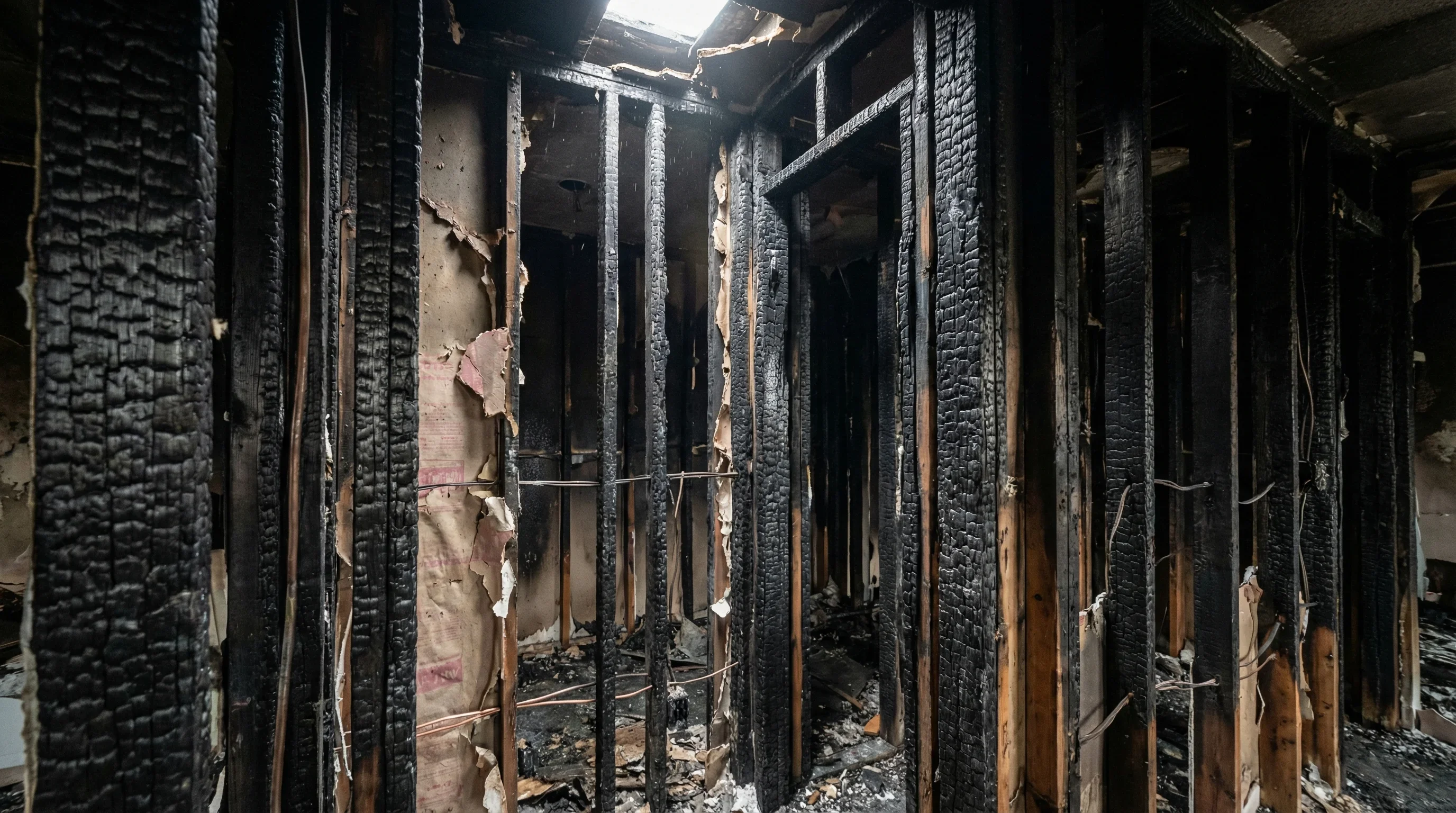
Charred wood and burn marks on structural framing in commercial building

Structural Char and Burn Assessment

Structural members are evaluated for char depth and load-bearing capacity after fire exposure. Wood framing that has charred beyond safe tolerances must be sistered or replaced entirely to meet building code requirements for the reconstruction.

Technical Workflow

How professional restoration progresses

This sequence keeps decisions measurable, documented, and aligned with insurance requirements and safe reconstruction.

Emergency Securing & Assessment

Large-scale board-up, roof tarping, and 24/7 security if needed. Detailed damage assessment with photo documentation, thermal imaging, and moisture mapping for your insurance carrier. This initial assessment also identifies structural concerns that determine whether the building can be partially occupied during restoration or must be fully vacated.

Content & Equipment Salvage

Critical business equipment (servers, machinery, inventory) is cataloged and either cleaned on-site or transported to our facility. Electronics receive specialized anti-corrosion treatment within the first 48 hours to prevent irreversible damage. Inventory is documented with detailed condition reports that support both insurance claims and internal asset tracking.

Structural Smoke & Water Mitigation

Industrial-scale soot removal, HVAC system cleaning, and water extraction from firefighting. Commercial buildings require larger equipment and more extensive ductwork cleaning than residential properties. Air quality testing is conducted throughout this phase to verify that particulate and volatile organic compound levels meet occupational safety thresholds before any area is cleared for reoccupation.

Code-Compliant Reconstruction

Commercial reconstruction must meet current building codes, fire codes, ADA requirements, and industry-specific regulations. We manage permits, inspections, and coordinate all trades through to certificate of occupancy. Phased completion schedules allow portions of the facility to reopen while remaining areas are still under reconstruction, reducing overall business downtime.

Cost Guidance

What to expect on pricing

Costs vary by fire severity, smoke type, affected area, and region. These ranges reflect typical residential and commercial projects in our service areas.

Commercial Fire Damage Assessment

$500 - $2,000

Includes on-site inspection, thermal imaging, moisture mapping, and a detailed scope of work report for your insurance carrier. Larger facilities or multi-story buildings may fall toward the higher end of this range.

Small Commercial Fire Cleanup (Single Room/Suite)

$5,000 - $15,000

Covers soot removal, smoke deodorization, and surface cleaning for a contained fire affecting one room or office suite. Cost depends on smoke type, material damage, and whether water extraction from firefighting is required.

Multi-Zone Commercial Restoration

$25,000 - $100,000+

Full-scale restoration involving multiple areas, structural repairs, HVAC decontamination, and code-compliant reconstruction. Projects at this scale typically involve phased completion to allow partial business operations to resume during the rebuild.

HVAC System Cleaning & Decontamination

$3,000 - $10,000

Commercial HVAC systems circulate smoke particulates throughout an entire building. Ductwork cleaning, filter replacement, coil decontamination, and air handler inspection are required before the system can safely operate.

Business Interruption Documentation Support

$1,000 - $3,000

Professional documentation of revenue loss, extra expenses, and operational disruption to support your Business Interruption Insurance claim. Thorough documentation significantly improves claim outcomes and reimbursement timelines.

Regional considerations

South Florida

Florida commercial properties must meet Florida Building Code (FBC) requirements during reconstruction. Hurricane-rated windows and roofing may need upgrading to current code during the rebuild. South Florida jurisdictions also enforce strict fire sprinkler and alarm system standards for commercial occupancies, which may trigger additional upgrades beyond the original fire damage scope.

Charlotte, NC

North Carolina Building Code requires fire-related reconstruction to meet current energy efficiency and fire safety standards. Our team is experienced with Charlotte-Mecklenburg permitting and inspection processes. Mecklenburg County commercial inspections often require documentation of fire separation assemblies and updated egress plans, which we coordinate as part of the reconstruction management process.

Multi-Location Businesses

For businesses with multiple locations, we coordinate restoration of the damaged site while helping redirect operations to other locations. Our project managers serve as a single point of contact for all trades. This centralized approach ensures that temporary operational changes at unaffected locations are documented for Business Interruption claims, and that the damaged facility is restored on a timeline aligned with your overall business recovery strategy.

Common Questions

Frequently asked questions

How quickly can our business reopen after a fire?

Timeline depends on the severity of the fire and the extent of smoke and water damage. A small, contained fire in a single suite may allow partial reopening within one to two weeks after mitigation is complete. Larger fires involving structural damage and full HVAC decontamination typically require four to twelve weeks. Phased restoration plans can allow unaffected portions of your facility to reopen sooner while work continues in damaged areas.

Does commercial insurance cover fire damage restoration?

Most commercial property insurance policies cover fire damage restoration, including structural repairs, contents cleaning, and smoke remediation. Many policies also include Business Interruption coverage, which reimburses lost income and extra expenses during the restoration period. We work directly with your insurance carrier and adjuster to document the full scope of damage, provide detailed estimates, and ensure the claim reflects all covered losses including temporary relocation and overtime labor costs.

Can you work around our business hours?

Yes. For businesses that can maintain partial operations during restoration, we routinely schedule work during off-hours, weekends, and overnight shifts to minimize disruption. Noise-intensive tasks such as demolition and reconstruction are coordinated around your operating schedule. We also implement containment barriers and negative air pressure zones to isolate active work areas from occupied portions of the building.

What about smoke damage in areas far from the fire?

Smoke travels through HVAC ductwork, elevator shafts, stairwells, and any unsealed penetrations in walls and ceilings. It is common for areas several floors or hundreds of feet away from the fire origin to sustain significant smoke damage. These areas require professional cleaning and deodorization even if no visible fire damage is present. Failure to address secondary smoke damage can result in persistent odor, discoloration of surfaces over time, and potential health concerns for building occupants.

Do we need to meet current building codes during reconstruction?

In most jurisdictions, fire-related reconstruction triggers code compliance requirements for the affected areas. This means that the rebuilt sections must meet current building codes, fire codes, and ADA accessibility standards, even if the original construction predated those requirements. Our team manages the permitting process, coordinates with local building officials, and ensures all reconstruction work passes inspection. We identify code upgrade requirements early in the project so they are included in the insurance claim scope.